After-dark magic on the Savannah Way (no night driving needed)

hero media
The beauty of the desert at night lies in its simplicity, a road trip along the Northern Territory section of the Savannah Way uncovers.

The Savannah Way is a relatively under-the-radar touring route connecting Cairns in Queensland to Broome in Western Australia. It spans about 3700 rutted-road kilometres over unspoilt national parks and barely-there burghs.

We’ve decided to travel along the Northern Territory section of the road trip in a bid to leverage quality over quantity. Long story short, we get it; we witness rivers filled with lurking crocodiles, visit a pub with bras hanging from its ceiling and cruise in boats where barramundi are reeled in.

Why is the Savannah Way better at night?
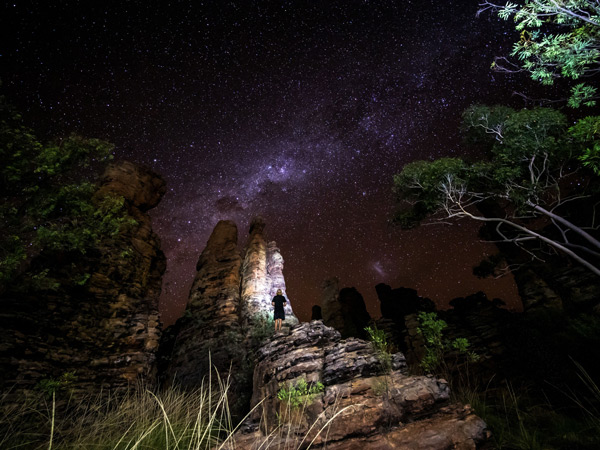
stargazing at Lost City, Savannah Way
Gaze up at a velvety sky confetti’d with stars in the rugged landscape of the Lost City. (Image: Tourism NT/Sean Scott)

One aspect of this adventure that caught us off guard, not just once but again and again, was the brilliance of the night. When the  sun sets and takes its infernally scorching heat with it, it’s a physical relief you register all the way to your bones.

The atmosphere feels softer and thinner; the sounds and smells are changed. Far from unsettling, the murk highlights a droll peacefulness that suggests darkness is just misunderstood, even as a hidden world bursts to life with a gusto rivalling the one that I left behind in Sydney’s thrumming city centre.

Kicking off from Darwin we collect our campervan and load up with supplies, filling our Lilliputian fridge like we’re headed into the apocalypse but with more snacks and fewer survival instincts. We add some comfort items to our stash, too – extra-plush cushions since we’ll be sleeping mainly in the van, DEFCON-level bug spray, boxes of water, head torches, a pack of UNO cards and citronella candles. And a care package from the bottle-o, because sundowners aren’t just for safari.
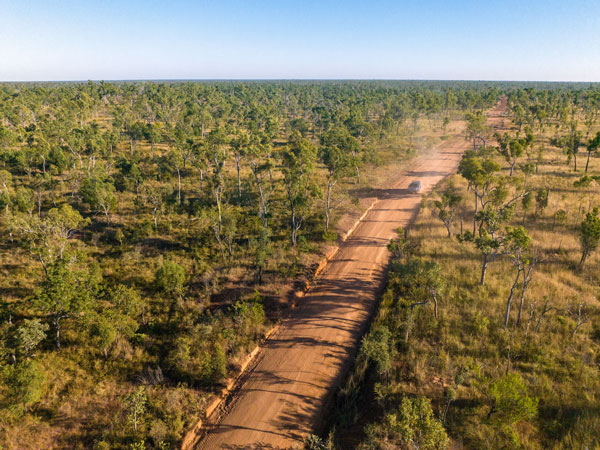
driving the Savannah Way, NT
Tackle the Northern Territory section of the 3700-kilometre Savannah Way. (Image: Tourism NT/Shaana McNaught/Seven Emu Station)

Where to stop during the day

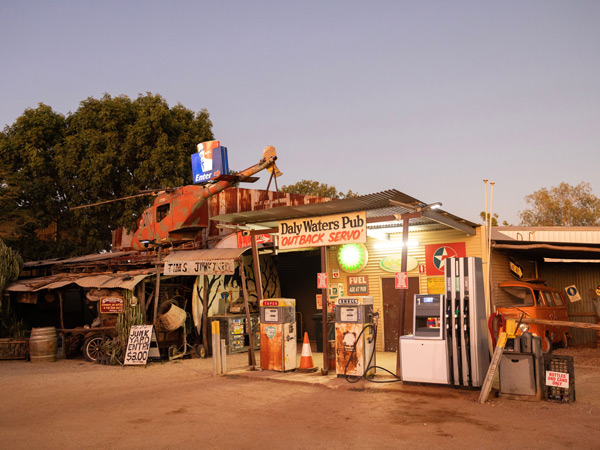
the exterior of Daly Waters Pub, Savannah Way
Detour to the iconic Daly Waters Pub. (Image: Tourism NT/Sean Scott)

The best roads are the back roads in this desert oasis. Our route is meticulously mapped out but leaves spur-of-the-moment opportunity for detours because, sometimes, planning is overrated; it takes us south-west via Highway 1. From Darwin, we follow the Stuart Highway to Daly Waters and then the Carpentaria Highway to Borroloola and Calvert.

One way, it’s about 1200 kilometres, which includes the shuddering, water crossing-laden, coffee-spilling ‘road’ to our most off-grid campsite at working cattle station meets wildlife refuge, Seven Emu Station . Garawa man Frank Shadforth and his family own and operate it and, if my life depended on choosing one place on this trip that floors me with its this-damn-sure-is-the-lucky-country natural grandeur, it’s this one.
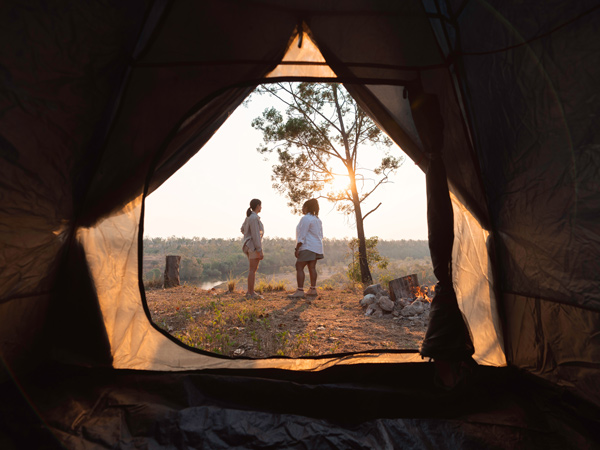
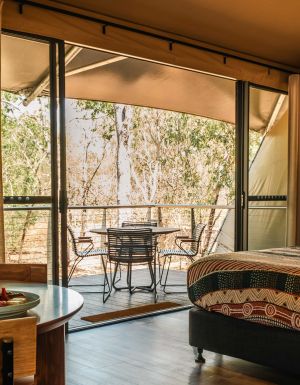
two women standing outside their tent at Seven Emu Station
Stay in the stockmen’s campsites at Seven Emu Station. (Image: Tourism NT/Shaana McNaught/Seven Emu Station)

I’m not sure I’ve ever been somewhere so remote; we may as well have been on another planet. And really, we kind of are. We’ve driven as far as possible before the track surrenders to the Gulf of Carpentaria.

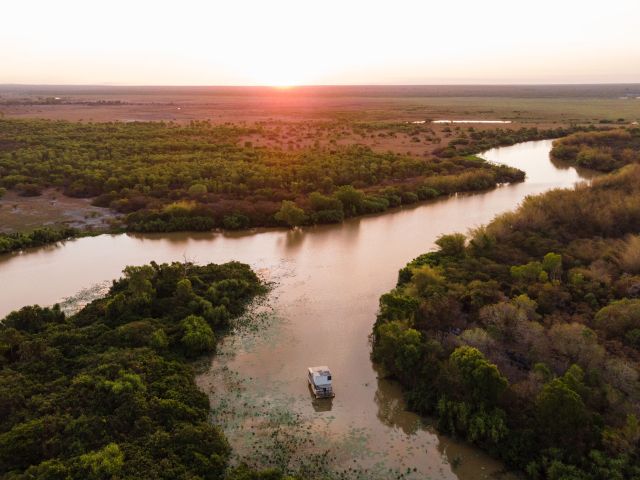
There’s nothing to do here… but there’s everything to do here. We sit clifftop under the rough-hewn bough shed with our backs to the van and the bull shark-infested water of the serpentine Robinson River gleaming like mercury below us. It’s a primordial soup, that water.

Soon, we notice the unmistakably balletic and sinuous swimming style of other river sentinels; crocodiles glide with their slow and deliberate insouciance, and it’s impossible to look away. I’m not sure if seeing them is more terrifying than not seeing them. Either way, it’s revelatory… since we’re so far up the cliff, that is.

In several areas, that fundamental expectation we all have today – internet connectivity – is simply unavailable, and we find ourselves grateful for that because there’s something to relish at each of our modest camping spots.
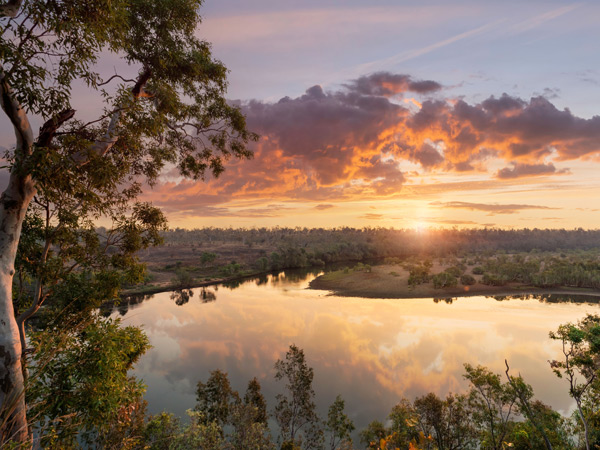
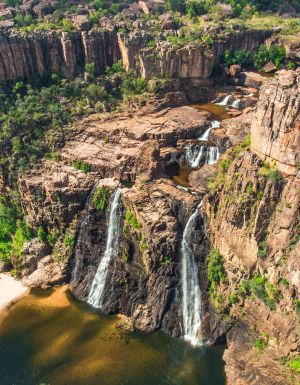
Limmen National Park at sunset
Pass woodlands and billabongs in Limmen National Park. (Image: Tourism NT/Sean Scott)

We’re forced to keep our faces out of our phones and turn them towards one another. The twilight is so lovely that I feel I could drink it. We listen to the cows lowing their evening songs and frogs barking on the billabongs so loudly and in harmony with one another they perfectly mimic a roller coaster climbing its tracks. We may lack a signal, but connectivity? We have that in spades.

How the darkness reveals the NT’s light
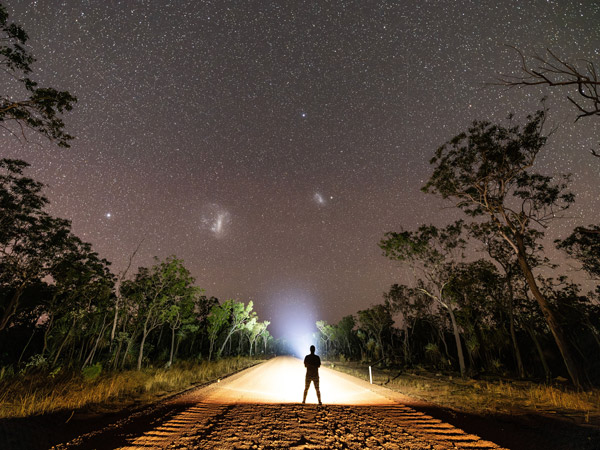
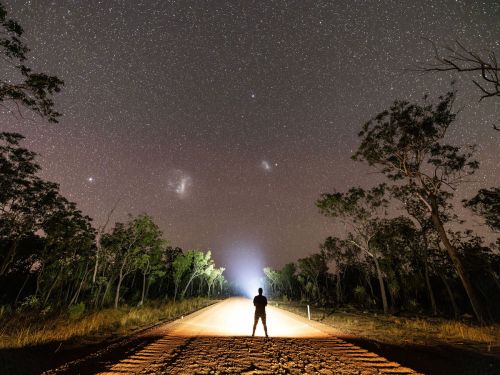
a person standing on the Savannah Way under the stars
Starry night in the NT. (Image: Tourism NT/Sean Scott)

We wear our head torches when the sun goes down. The vast black hole of the Northern Territory desert night is so all-encompassing that it’s hard to even imagine the dawn that’s sure to come. One evening, I’m perched in my chair as usual, listening; my sense of hearing is so strong now, since I can’t see much in the inky black.

I hear the pigs come out. The bats and bandicoots and bilbies. The ground in front of me literally shimmers as though someone has dropped a bag of diamonds from an open fist. Moving closer, I see spiders, a clutter of them to use the collective noun.

They’re translucent and tiny, ducking and weaving and going about their business without much thought to me. Precious gemstones in the dirt, all around us, if we take the time to look. We rush through life, heads down, blind to the wonders beneath our feet.

But if you pause, just for a moment, you’ll see it, too – the beauty in the overlooked, the magic in the mundane, a reminder that the extraordinary is always within reach, waiting for the curious eye to discover it.

Important note: Wildlife is especially active in this region around dusk, dawn and after dark. For your safety and to protect native animals, we strongly recommend avoiding driving at these times. Instead, plan your route so you’re settled at camp before sunset and can enjoy the Savannah Way’s breathtaking night skies from the comfort and safety of your site.

hero media

8 Northern Territory secrets the locals don’t want you to know

Summer transforms the Northern Territory into a lush paradise of colour and life, as a visit during the ‘low-season’ reveals secrets the locals willingly share.

Waterlilies bloom, floodplains are alive with birdlife, waterfalls are gushing, and everywhere the green is dazzling. Summer in the Top End and the Red Centre is a kaleidoscope of unexpected wonders that delight and surprise visitors. Of course, the locals know only too well that the Northern Territory low season is often the best time to see and experience this amazing part of Australia.

Here are some of the reasons why savvy travellers – avoiding the crowds – are discovering a new dimension to the Territory. Remember that you’ll need a Parks Pass to visit national parks.

1. Take a dip in the Florence Falls waterhole

Wander through savanna woodland and monsoon forest to discover the perfect place to cool off – the waterhole at the base of spectacular Florence Falls in the magnificent Litchfield National Park , just 90 minutes’ drive from Darwin. The falls flow year-round but are most spectacular during the summer. Camping is available nearby but bookings are essential and must be made online before you visit.

Surrounded by lush forest, a woman cools off in Florence Falls, just one of many incredible things to do in the Northern Territory.
Cool off beneath the cascading waters of Florence Falls. (Image: Joshua Griffin)

2. Wind down at Buley Rock Hole

Another popular local swimming spot in Litchfield National Park is Buley Rock Hole , open year-round. This is a great place to wind down after exploring everything the park has to offer, including towering termite mounds. Wade through the rock pools, soak up the scenic bush or just lie back and relax as the cool water rolls over you.

Buley Rockhole, Litchfield National Park
Let the cool water wash over you. (Image: Tourism Australia)

3. Tour the Tiwi Islands

The Tiwi Islands , a scenic 80km flight from Darwin across the narrow Clarence and Dundas Straits, reveal a different side to the Territory, with their own distinctive culture. Take a day tour with Tiwi by Design to visit Bathurst Island and learn about creation stories, the Mission days, World War II history and the islanders’ obsession with AFL!

Take a ‘behind-the-scenes’ tour of Tiwi Design’s screen-printing workshop and pick up a great souvenir in the form of art. Choose from contemporary or traditional Tiwi designs and a wide range of work including carvings, paintings, pottery, printmaking, bark paintings and tunga (bark baskets).

A creative moment shared inside Tiwi Design’s screen-printing space.
Take a peek inside Tiwi Design’s screen-printing studio. (Image: Tourism NT)

4. Dine in Darwin

Foodies are spoilt for choice in multi-cultural Darwin. Try Sri Lankan flavours at Ella by Minoli, where Masterchef contestant Minoli De Silva creates delectable dishes, or head to Charlie’s of Darwin for gin-tasting, cocktails and more. Bowls of fragrant laksa, excellent coffee, fresh vegetables and authentic crafts are all part of a weekend visit to Darwin’s Parap Markets , Rapid Creek Markets and the Nightcliff Markets .

Prefer to catch your own dinner? Book a Top End fishing charter to bag a barramundi – and from October register for the annual Million Dollar Fish competition. Hooking one of the tagged barra released each year in waterways across the Territory could win you up to $1 million.

A bowl of Laksa.
Eat your way through multicultural Darwin. (Image: Tourism NT)

5. Up close with Uluṟu

The magnificent monolith Uluṟu is even more magical when the summer rains fall. When it rains on The Rock, the locals come out to watch – consider yourself lucky if that happens when you visit. Waterfalls cascading off the sides of Uluṟu is a sight that relatively few tourists see.

There’s so much to do at Uluṟu, from guided walks to learn the stories of the Aṉangu people and the ancient landscape they live in to scenic flights for a bird’s-eye view or a leisurely walk around the base of Uluṟu. Book ahead to spend the evening wandering through the Field of Light installation by Bruce Munro.

A closer look at Uluru and uncover its ancient stories, sacred sites, and striking natural beauty – one of the most iconic things to do in the Northern Territory.
Discover the details that make Uluṟu truly sacred. (Image: Tourism NT)

6. Drive the Red Centre Way

From Alice Springs, take an epic road trip along the Red Centre Way, taking in Uluru and Watarrka National Park, home to the magnificent Kings Canyon. Allow at least a week to drive through the red heart of Australia by 4WD, a little longer on the sealed road by 2WD vehicle, travelling through ochre deserts, palm-lined valleys and dramatic gorges. Stop off at waterholes for a refreshing dip along the way.

Kings Canyon offers hiking options for all levels of fitness, from the three-hour Rim Walk atop soaring sandstone walls to the gentler Kings Creek Walk. Either way, you’ll have breathtaking views.

SEIT Outback Australia is a small group touring specialist offering exciting, adventurous, exclusive and specialised iconic, pioneering and cultural touring in the Red Centre of Australia, giving you the time to learn, absorb and relax in the heart of Australia.<br /><br />This innovative tour company focuses on providing clients with the ultimate interpretive touring experiences with a range of products and customised touring itineraries for small groups and bespoke private charters.<br /><br />The company bases its philosophies from the key words of Spirit, Emotion, Intellect and Task (SEIT).
Drive through Australia’s heart. (Image: Outback Australia Tours)

7. Take a walk at Kata Tjuṯa

Head out early to tackle the Valley of the Winds Walk at Kata Tjuṯa . This natural wonder, also known as The Olgas, is a labyrinth of soaring ochre domes that glow golden at sunrise and sunset (the walk may be closed during the middle of the day as temperatures rise).

Walking trails range from easy to longer, more difficult tracks. At the Kata Tjuṯa dune viewing area, take in the panoramic view of the domes. The longest of the trails is the Valley of the Winds Walk, a 7.4km circuit that winds between the domes and through creek beds. It’s moderately difficult and steep in places, but offers stunning views – and occasional encounters with kangaroos.

The Valley of the Winds Walk at Kata Tjuta is one of the most awe-inspiring things to do in the Northern Territory, especially at sunrise when the domes glow golden.
Step into the golden light of Kata Tjuṯa. (Image: Tourism NT)

8. Explore Tjoritja/West MacDonnell Ranges

Tjoritja/West MacDonnell National Park lies 135km west of Alice Springs, with many fascinating natural features to beguile visitors. The ‘West Macs’ formations include chasms, gorges and waterholes – take your swimsuit for a dip at Ormiston Gorge waterhole, open year-round. The Ormiston Pound Walk is a three to four-hour circuit that leaves from the visitor centre and loops back along the gorge via the main waterhole. Other places of interest in the park include Simpsons Gap , Standley Chasm , Ellery Creek Big Hole and Glen Helen .

Soaking in the serenity of Ormiston Gorge, these two travellers enjoy one of the most scenic things to do in the Northern Territory.
Take the plunge at Ormiston Gorge waterhole. (Image: Joshua Griffin Litchfield)

Start planning the NT road trip of a lifetime at northernterritory.com