Queensland national park is a croc-spotter’s dream

hero media
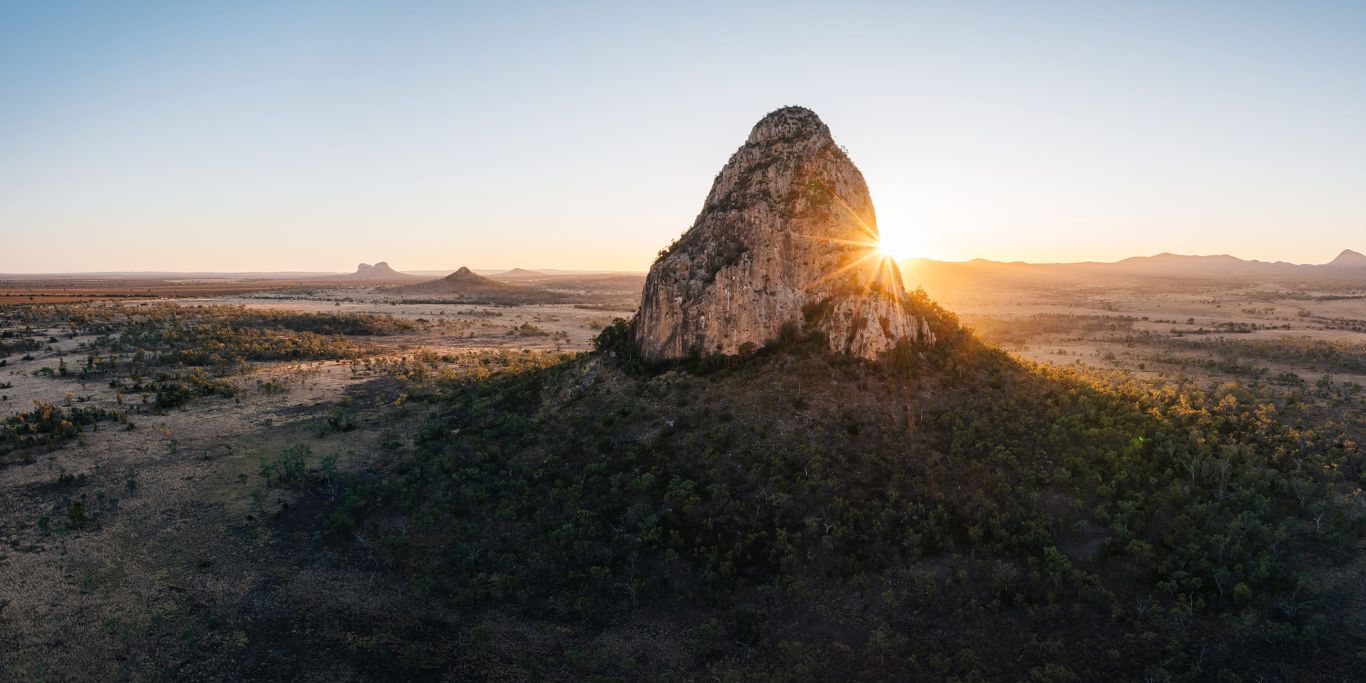
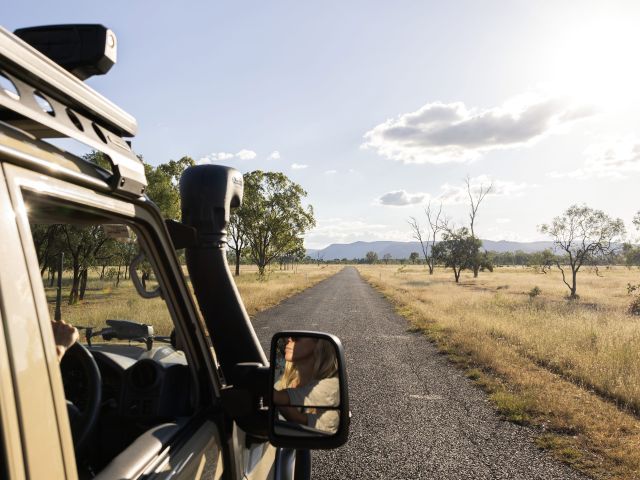
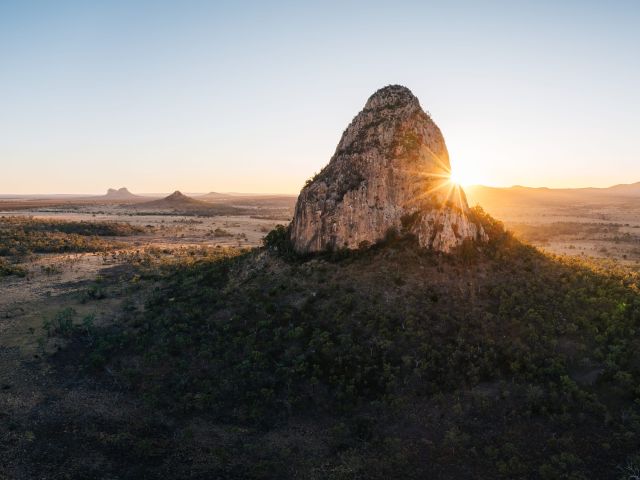
Go searching for crocodiles in Queensland’s second-largest national park and you’ll discover a true adventure territory of sandstone hills, sweeping grasslands, coastal estuaries and more than a few salties.

I’m a little nervous as I walk down towards the Normanby River at Kalpowar Crossing. The waterways around here, inside Queensland’s Rinyirru National Park, are notorious for two resident species.

The first of those, barramundi, are prized by anglers and best cooked over hot coals, with perhaps a squeeze of lemon. The second, estuarine crocodiles, are likely to reverse that scenario.

There’s already a man up ahead standing by the riverbank, though not too close to risk being trapped inside the jaws of a dinosaur. He’s wearing the Cape York Peninsula uniform of garish fishing polo and trucker cap over quick-dry shorts and thongs so, rather obviously, I ask him if he’s come here to fish for barra.

“No chance," he says, shaking his head vigorously. “I’m not going near that water. We’re just happy having a few days’ camping."

I have to admit I’m envious. He and his travelling companions look like they’ve chosen a lovely spot to camp, back from the river among some stately eucalypts. But that river’s proximity would still worry me.

Though I can’t see any, I have little doubt crocs would be lurking somewhere in those waters, waiting patiently for a slip in concentration or a moment’s misplaced bravado. In fact, I’m certain of it, especially after hearing the tragic story about the owner of Laura’s Peninsula Hotel being taken by a croc not far from here a couple of years back.
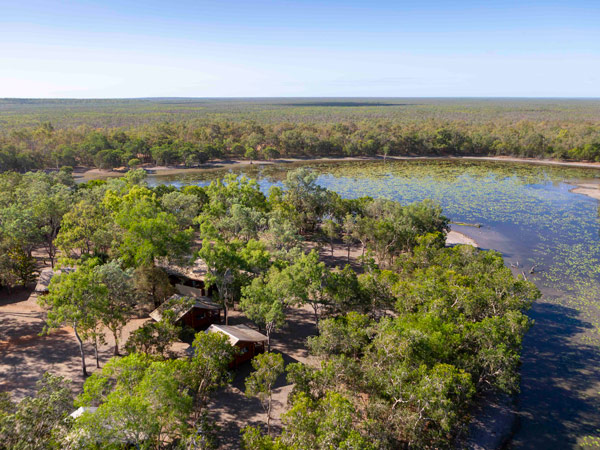
the Lotusbird Lodge by the water
Lotusbird Lodge sits on a lagoon edge. (Image: Mark Daffey)

Our base for exploring Queensland’s second-largest national park over two days is the Outback Spirit-owned Lotusbird Lodge . It’s a little further up the road, just outside its western boundary, where the countryside mirrors that inside the park.
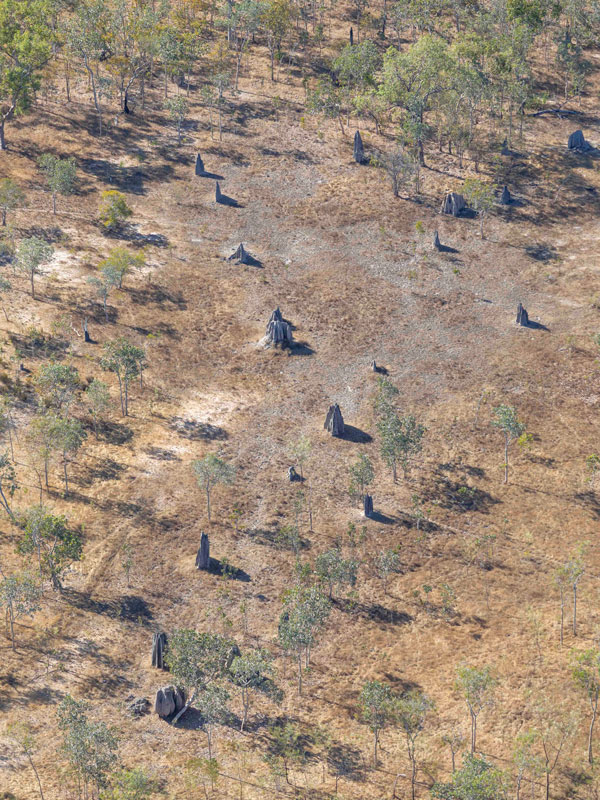
the termite mounds in Rinyirru National Park
Termite mounds as seen from above. (Image: Mark Daffey)

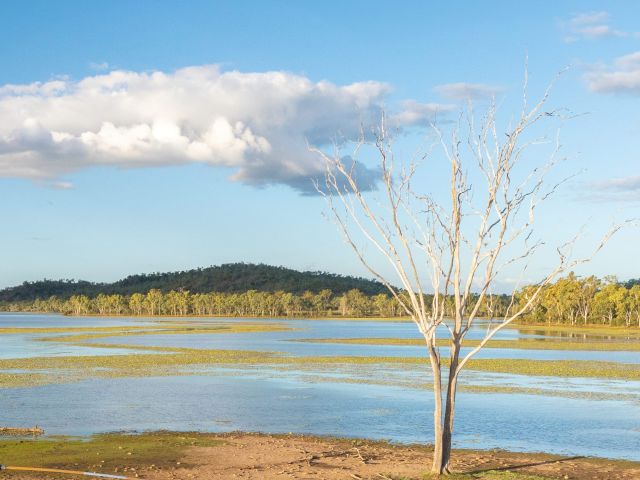
In places, spindly eucalypts and ironwood trees sprout from plains plagued by termite mounds. In others, extensive paperbark forests fringe marshy swamps. The one constant is the presence of water; the park is a natural floodplain.

On my first morning at the lodge, I’m roused by birdsong and jump out of bed to walk down to a blackwater lagoon shaded by Leichhardt, bloodwood and black wattle trees. Wandering-whistling ducks and magpie geese mill around the water’s edge.
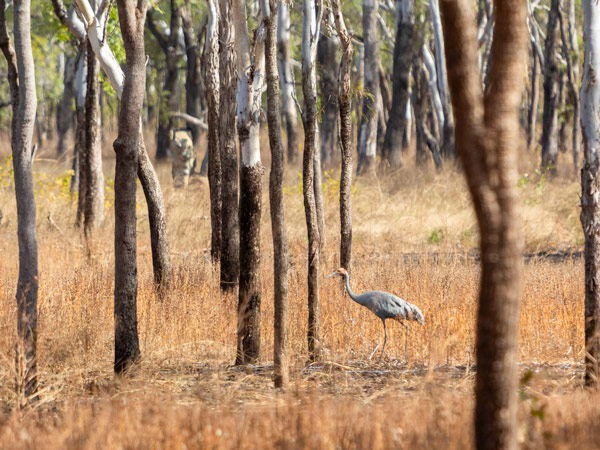
the Brolga waterbird
The brolga, Australia’s largest waterbird. (Image: Mark Daffey)

Black ibises fly overhead. Egrets tiptoe through the shallows and jacanas tap-dance across lily pads on the water’s surface. Darters perch on fallen tree trunks, drying outstretched wings. A shy jabiru keeps watch from the opposite bank.

I can’t see any crocodiles in the water, and nor do any appear to be sunning themselves on the banks. But of course, that doesn’t mean they’re not around.
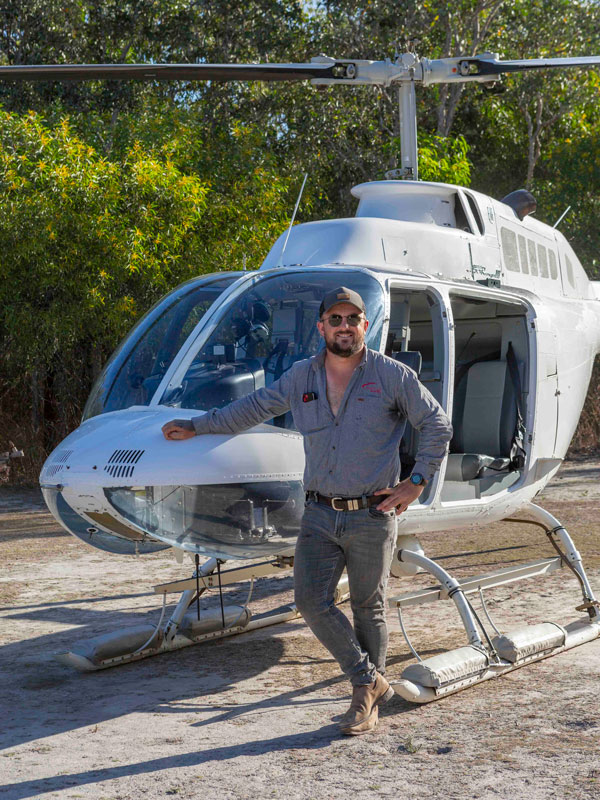
pilot Nathan Summerfield posing beside a helicopter, Cape York Wilderness Adventure
Helicopter pilot Nathan Summerfield. (Image: Mark Daffey)

Lagoons like this are splashed all over the national park, as I discover during a scenic helicopter flight that afternoon. Pilot Nathan Summerfield offers a running commentary as he navigates east over the national park then north, hovering over Saltwater Creek and the North Kennedy River as they coil towards the tidal mudflats bordering Princess Charlotte Bay.
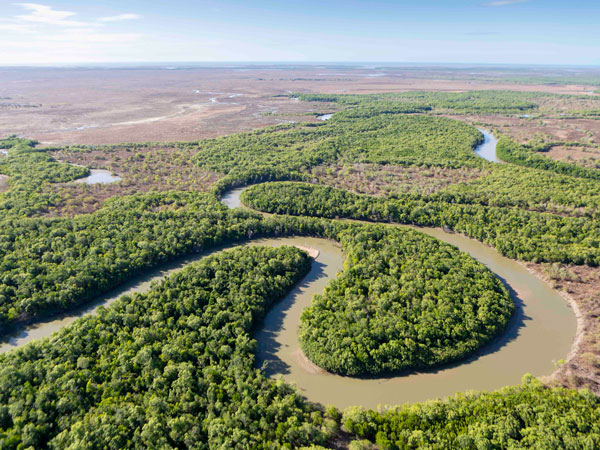
an aerial view of the Kennedy River
The snaking Kennedy River from above. (Image: Mark Daffey)

As we fly over the inky expanses of Sweetwater Lagoon – “the biggest bit of water around here" according to Nathan – I ask him if it would contain any crocs. “Oh, yeah. There are crocs in every piece of water around here," he says. “I won’t even wash my hands in a puddle."

Eventually, I spot one of the reptilian monsters slicing through a forest of green algae in a billabong, leaving a blackened trail behind it.

“All of those lines you see are made by crocs," says Summerfield. There are lines everywhere I look.
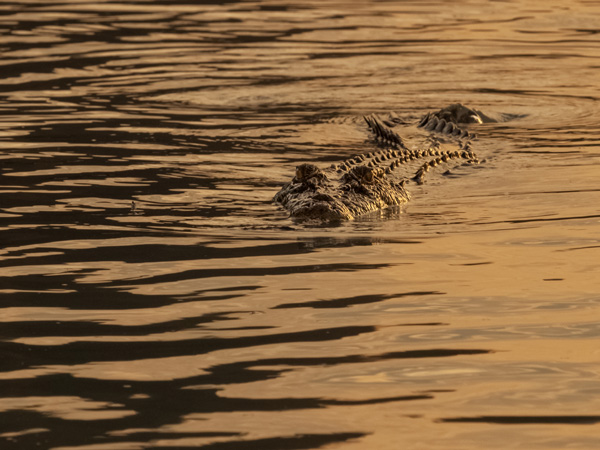
a saltwater crocodile lurking in the water
The national park is notorious for saltwater crocodiles. (Image: Mark Daffey)

As we continue to fly over the marshy northern reaches of the park, I spy more and more crocs drying out on mudflats and on slimy riverbanks. But there are also pelicans and jabirus. And a surprising number of wild cattle and pigs wallow about in the lagoons.

“Crocs don’t need to feed too often," says lodge manager Dan Costantino back at camp. “… the feral pigs are always getting taken." Better them than me.
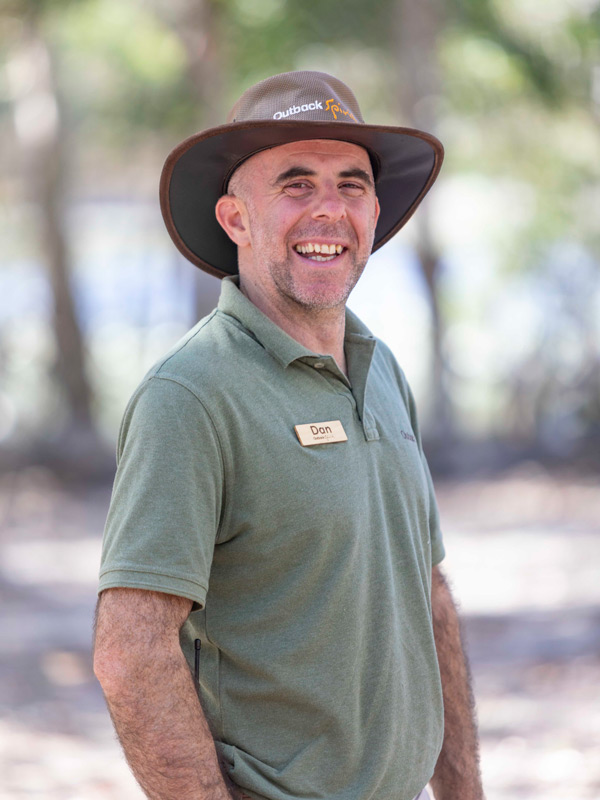
Lotusbird Lodge manager Dan Costantino
Meet Lodge manager Dan Costantino. (Image: Mark Daffey)

A traveller’s checklist

Outback Spirit’s 13-day Cape York Wilderness Adventure tours depart between May and September. The itinerary starts in Cairns/Gimuy and travels north to the tip of Queensland, including stops in Port Douglas, the Daintree, Laura and Thursday Island, among others.
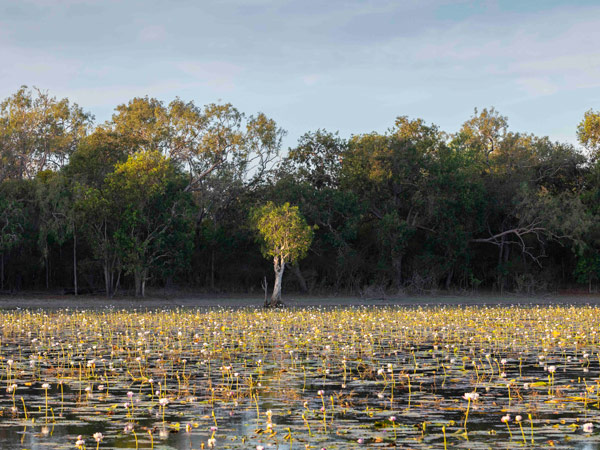
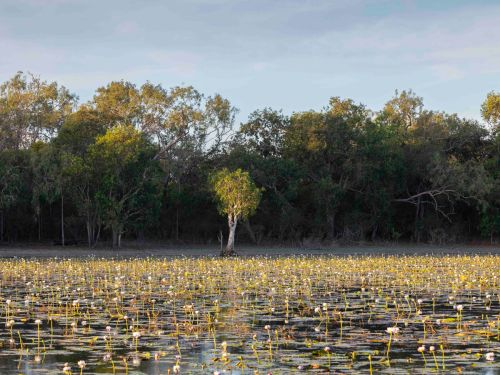
the Blackwater Lagoon covered in lilies
This lilypad-covered blackwater lagoon is the view from Lotusbird Lodge. (Image: Mark Daffey)

Guests stay in comfortable cabin accommodation for two nights at Lotusbird Lodge while they explore Rinyirru National Park. A 45-minute scenic helicopter ride over the national park is included, as well as guided walks and all food and drinks.
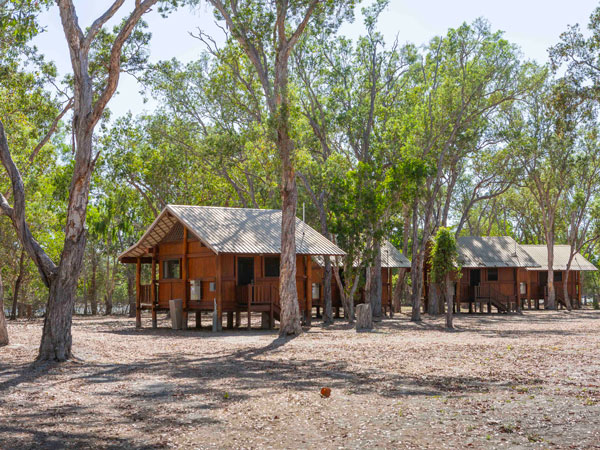
the Outback Spirit’s Lotusbird Lodge
Base yourself at Outback Spirit’s Lotusbird Lodge. (Image: Mark Daffey)
Mark Daffey
Mark Daffey is a writer, photographer and editor specialising in travel and business. He's an avid traveller and a health and fitness nut who loves to explore destinations that are off the beaten track.
See all articles
hero media

8 experiences that make Moreton Bay the best getaway

From the moment you arrive in Moreton Bay, stunning natural vistas, fresh and tasty dining, history and more invite you to stay and play.

Untouched national park, mirror-like lagoons and endless stretches of beaches all make Moreton Bay experiences feel like you’ve stumbled across a secret Queenslanders collectively vowed not to tell. Yet it’s easily accessible. Explore further and discover hinterland farms, ancient rainforest, fresh seafood and more: there’s something on offer for every pace, interest and generation.

Just 20 minutes from Brisbane Airport, it’s hard to believe how underrated this Queensland getaway is. Here’s your ultimate guide to rediscover play with unmissable experiences in Moreton Bay.

1. G’Day Adventure Tours, Bribie Island

G’Day Adventure Tours’ Sea to Table Experience
Explore Bribie Island with G’Day Adventure Tours.

G’Day Adventure Tours’ Sea to Table Experience should be your first agenda item in Moreton Bay. Take a 4WD journey through the sandy tracks of Bribie Island’s beaches to the still, glassy waters of the island’s lagoons. Glide over perfect replicas of paperbarks and fluffy blue clouds mirrored in the lagoon waters in your kayak. Listen as native birdsong echoes around you.

Then, it’s on to Fort Bribie. During the Second World War, these concrete bunkers – now slowly being enveloped by the dunes – were the last line of defence for Moreton Bay.

End the day with a sun-dappled beach picnic of locally caught Queensland prawns and famous Moreton Bay bugs. As you head home, watch the dolphins playfully dart in and out of the surf.

2. Morgan’s Seafood at Scarborough

Morgan’s Seafood
It doesn’t get fresher than Morgan’s Seafood. (Image: Ezra Patchett)

Right on the Scarborough Boat Harbour, you’ll find Morgan’s Seafood . Between the luxury yachts, you’ll also spot trawlers and fishermen delivering their day’s catch right to Morgan’s. The family-owned and operated spot is one of the best places to try the region’s eponymous Moreton Bay bug. Or, sample more of the area’s direct-from-the-boat seafood fresh at their oyster and sushi bar. If you’re lucky, your visit might coincide with a day they’ve caught tuna.

Picture fish caught that day, prepared and then served to you as fresh sashimi as the sun sets over the unique silhouette of the Glasshouse Mountains.

3. Woorim Beach, Bribie Island

woorim beach bribie island
Hang 10, or relax, on Woorim Beach.

On Bribie’s eastern coastline, you’ll find Woorim Beach : aka the closest surf beach to Brisbane. Find a place on the sand by the patrolled area or wander further south to find a quiet spot and while the day away between the shaded dunes, the pages of your book and the peaceful sound of rolling waves.

Ask any local where to grab lunch, and they’ll direct you to Bribie Island Surf Club Bistro . Tuck into a fresh, local seafood platter, just metres from the beach.

4. D’Aguilar National Park

D’Aguilar National Park
Admire the landscapes of D’Aguilar National Park.

D’Aguilar National Park is a 40,000-hectare slice of greenery that stretches from urban Brisbane right up to Woodford (home of the Woodford Folk Festival). The vast expanse of park is home to ancient rainforests, eucalypt forests and shaded swimming spots hidden within gorges and under waterfalls. The area is significant for the Jinibara and Turrbal people, with ceremonial bora rings and dreaming trails all found within the park.

Carve out some time in your itinerary to explore the park’s many trails. The Maiala day-use area is the perfect starting point for walks for all levels of ability.

5. Arcade Wine Bar

arcade wine bar moreton bay
Sit down to a menu inspired by Italy.

Opposite the Redcliffe Jetty and down a laneway, you’ll find an unassuming wine bar. Venture inside and quickly fall in love with Arcade Wine Bar , one of the region’s most beloved local haunts.

Owners Danilo and Matt have a combined 50 years of sommelier experience, which they have poured into the menu, styling and wine list. More than just a hole-in-the-wall wine bar, Arcade Wine is an enoteca (a wine repository), whose walls are lined with bottles upon bottles of Italian wine varietals from every corner of Italy.

Settle in with a wine and work your way through the menu inspired by Danilo’s native Italy: traditional meatballs, their quick-to-sell-out terrine, or a selection of Italian cheeses, charcuterie and arancini.

6. Wamuran & Loop Rail Trail

Away from the ocean, tucked in the hinterland, is the Wamuran & Loop Rail Trail . Perfect for cyclists or walkers, the trail was built to showcase the history of the Caboolture to Kilcoy rail corridor (last operating in 1964) and makes for the perfect family day out. The trail runs for 10.5km and connects Wamuran and Caboolture via an accessible path.

Pass through former railroad, bridges and shaded bushland as you cut from A to B. Plus, visit in winter for a detour along the way to one of the many pick-your-own strawberry farms.

7. Farm Visits

Beaches, mountains and history make an enticing combination. But Moreton Bay also brings hinterland, family-friendly farms to the table. Trevena Glen is one of the area’s most loved, with bunnies, ponies, sheep, alpacas (and more) available to visit for the kids. For the adults, book a horse-riding session and be treated to a grazing platter as you watch the sun set over the mountains of D’Aguilar National Park.

At White Ridge Farm , find camels, putt-putt, train and tractor rides and all kinds of animals. The entire farm is paved, making it accessible for all.

8. Miss Sprinkles

Miss Sprinkles Gelato moreton bay
Pick your scoop at Miss Sprinkles Gelato.

An ice cream at the beach is one of life’s most perfect pleasures. While in town, stop by Miss Sprinkles for the locals’ pick of homemade gelato on the Scarborough foreshore.

The gelato here is made the authentic Italian way and scooped up just across from the beach. Or, settle in at their kitschy pink wooden tables for traditional gelato in the sunshine.  Aside from the homemade gelato, you’ll also find tarts, pies and even doggie gelato.

To start planning your Moreton Bay trip, or for more information, head to visitmoretonbay.com.au.