Exploring Queenland’s Scenic Rim Trail by Mountain Bike

hero media
The only way to experience the rugged landscape of Queensland.

Mountain biking is a little misunderstood. It conjures images of Red Bull-sponsored athletes risking life and limb to get to the bottom of a perilously rocky hill quicker than the next person. And while mountain biking can certainly be this, it’s also so much more.

The Scenic Rim Trail Bike tour

As I was to discover on the Scenic Rim Trail Bike tour, which weaves a path through a spectacular portion of the Brisbane hinterland, mountain biking is also the perfect means by which to see vast, otherwise impenetrable corners of Australia. That’s not to say that it isn’t a trying, lung-busting, but ultimately exhilarating form of travel. If you do not have a bike for the tour, To take a look at Ecosmo Bikes’ complete range of folding bicycles, just click here .
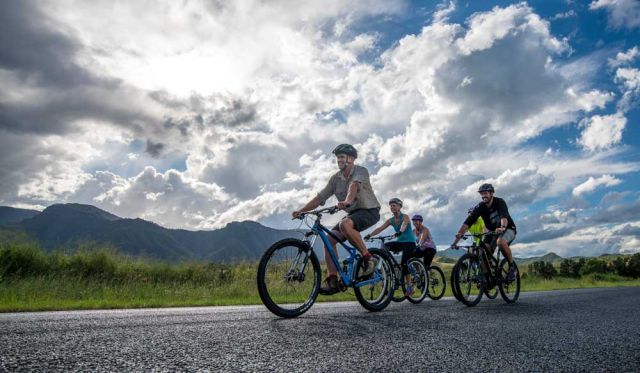
See Australia’s pristine country side by mountain bike (photo: Lara Down).

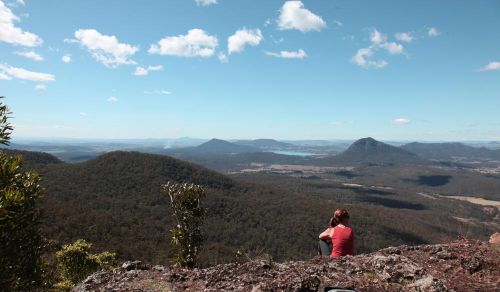
Our snaking journey among the mountains that constitute the periphery of the Scenic Rim, a region of lush bush and farmland hemmed by extinct volcanoes, begins at Spicers Peak Lodge. High up in the hills, it’s a tempting retreat set in a forest clearing with views out across to its namesake Spicers Peak, so called after Peter Spicer who stumbled across it looking for escaped convicts, whose hard labour was helping to create the New World.


The dense vegetation of its slopes are a good indication of the type of terrain we’ll soon be (hopefully) conquering ourselves. Our small group includes the husband and wife team of a mountain biking magazine, Mike and Imogen. Lithe and athletic they look the part, having brought their own gear. I’m starting to wonder whether my claims of being a ‘competent’ rider will hold water over the next three days.


We’ve adjusted suspension settings and seat heights, pulled on Lycra, and it’s off to a nearby practice run. We hurtle through a forest of muddy chicanes and corners of earthen banks; so far so good. Emerging in a field for another run, a shaggy Highland cow blocks my path, like an orange woolly triceratops with long, lethal-looking horns.


“He’ll move out the way," says our guide, Alastair Oakman, coming up fast behind me; a true outdoorsman with a chin to rival that of Bondi Vet.


Not wanting to lose face I continue to ride straight at the beast, closing my eyes and waiting for something unthinkable to happen; it grunts and moves off just in time.

Day one on the trail
lodge plateu walk Queensland bike riding
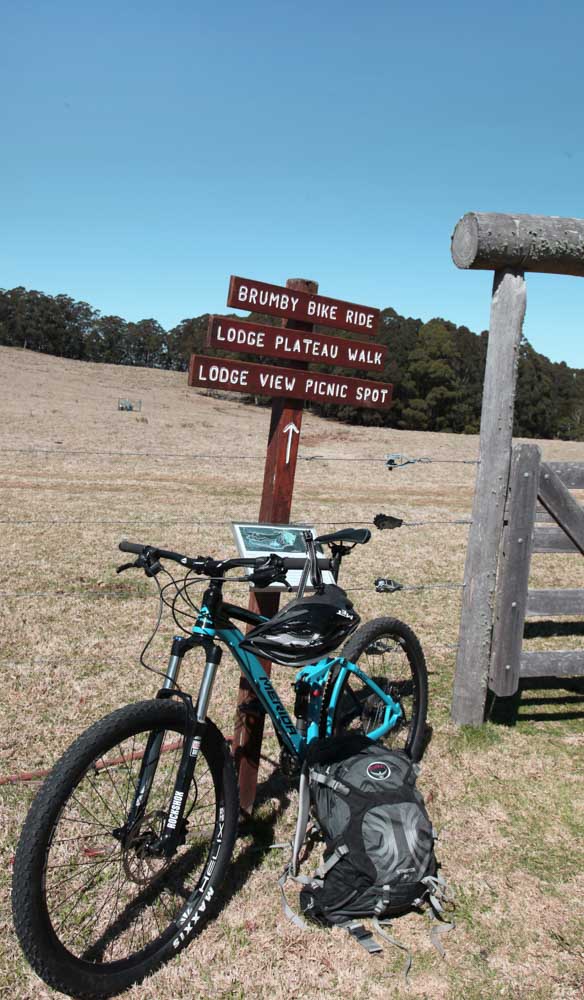
First stop on the trip, the Brumby Track (photo: Lara Down).

Day one begins proper with a series of steep descents over the boulders of the Brumby Track, so called because of a wild horse that roams here; hopefully it won’t feel the desire to get in the way.


This trail is rated blue (intermediate), and it proves to be hairy stuff if you’re new to the sport, standing up to let the suspension take the big hits, the legs slightly relaxed to act as further shock absorbers.


Like all things on the extreme side of adventure, mountain biking is perversely easier (and safer to an extent) the faster you go, the momentum helping to carry you over the rocks. Sitting back and cruising down the trails is a glorious feeling, a little like snowboarding as you lean into corners. I dare to think I’m getting good and relax brakes further to gain ground on the pros up ahead.


We wind our way through elegant forest, itself part of the Spicers Peak estate and a sizeable nature reserve, blasting through the occasional shallow, rocky creek.


Many species of macropod (roos to you and me) can be found on the property, and we dismount to spot rare rock wallabies in a nearby gorge. They’re shy and remain elusive, but the opportunity for respite that our legs receive means we’re all feigning disappointment.

A night at Canopy Eco Lodge

Indeed, after some soul-sapping climbs, it’s a relief to arrive at Canopy Eco Lodge, a series of safari-like canvas tents open to expansive views, all centred round a communal lodge.


We dine here as wallaroos graze in the surrounding fields and relax muscles in the onsen-like hot tub; never before have I been so pleased to experience the glam side of camping – hot water bottles in our beds soothe the symptoms of saddle-bottom.

Day two on the trail
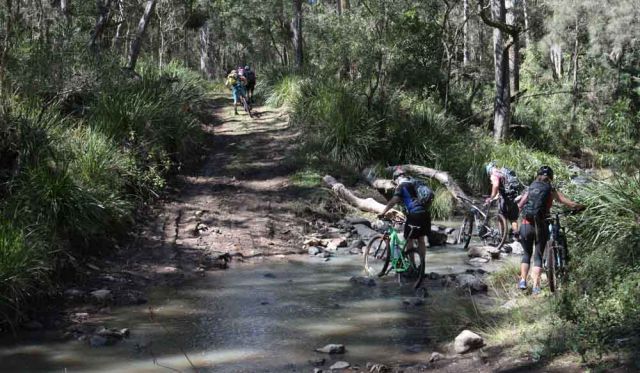
mountain biking Queensland adventure
The forests of the Scenic Rim are laced with flowing creeks, blast through on the bike if you’re brave (photo: Lara Down).

The following morning we’re cycling through ancient rainforest, betrayed by the presence of a tree related to the Jurassic-era Wollemi pine, and we soon reach the World Heritage-listed Spicers Gap Road, an old settler route carved out of the rock and bush by convicts from 1859 to 1865. With spectacular views out across gum tree-floored valleys, I’m told it’s rare to be able to cycle on a piece of national heritage like this.


Lunch is a pie and half-an-hour to admire the view out across the mountains from Governor’s Chair Lookout, farms competing with bush for space at their bases.

A night at Hidden Peaks Eco Camp

Walkers come and go to take in the scene, red-faced from the climb; we’ve covered 10 times as much as them today. Hidden Peaks Eco Camp, our stop for the evening, is a collection of rustic, settler-style huts, each with a pre-made fire in a wood burner ready for you to light and warm up after dinner.


We drink wine and enjoy burgers from the outdoor grill while having a go at chopping wood for our cabin fires. We watch the stars climb and enjoy that sleep you only get after a day of exertion.

Day three on the trail
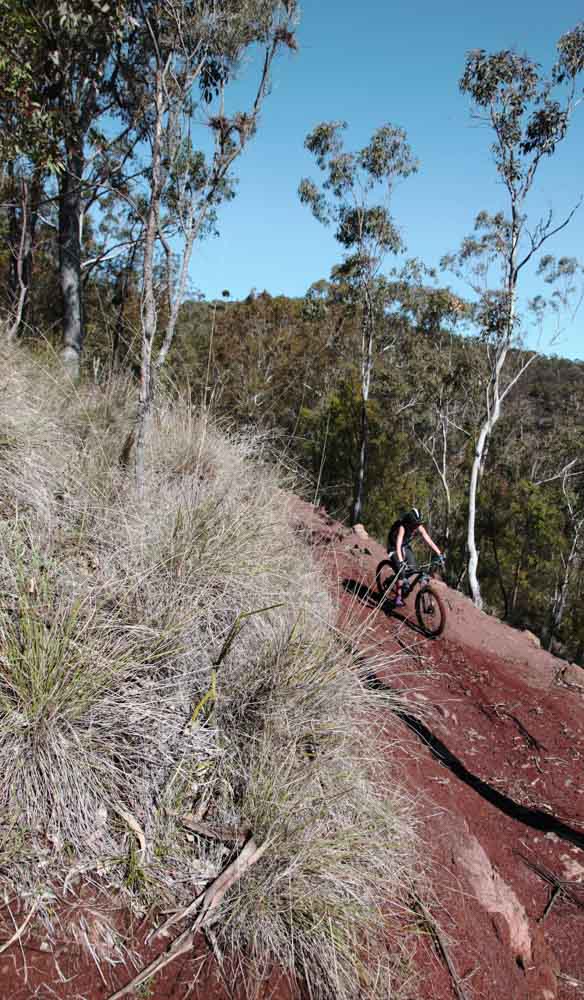
scenic views Queensland bike riding
Expansive views off a steep descent make it hard to keep your eye on the track (photo: Lara Down).

‘Hard yakka’ would best describe the previous day’s climbs, but on day three we learn the origin of the phrase as we drop down a cliff-hugging trail past Yucca plants that, along with outcrops of orange sandstone, make it feel like Arizona.


“‘Hard yakka’ comes from the tough work involved in farming the stuff to make rope," says Alastair before explaining aboriginal uses for it.


We’re soon out of the bush and on part of the Bicentennial National Trail, enabling us to look across to a spine-like ridge of rock forming part of the boundary of the Scenic Rim – in fact part of a massive, extinct volcano.


The gently undulating road makes for an easier third day, as we pass farms and villages.


Falling behind, I ask a stockman whether I’m headed the right way. He gallops over from the herd, his cowboy hat and big moustache like something from the old Wild West, and reassures me that I’m on the right path.

Nearing the end

Our journey is coming to an end, the others will continue on to stay another night. The road feels luxurious compared with he rocky passes and muddy descents of the previous days, as we roll up to an old Lutheran church for lunch.


I remember Imogen enthusing about mountain biking back at Spicers Gap Road: “It’s a big country, and given a few days the mountain bike can take you places you wouldn’t otherwise be able to access on foot."


In our short time we’ve managed to cover this diverse landscape and get among it, with the occasional adrenaline rush thrown in for good measure. And isn’t that what travelling is all about?
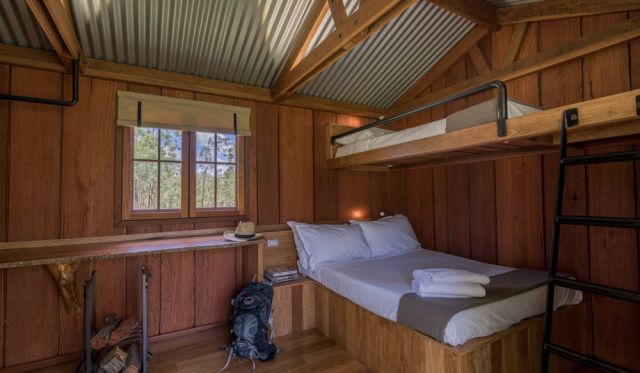
Queensland retreat relax bike riding
After completing what feels like the Tour de France , relax in the Spicers Cumber Cabins (photo: Lara Down).

What you need to know before you go:

Fitness:This trail is graded moderate to hard; there are some lengthy hills to climb and you’ll be cycling a substantial 60 kilometres on day two. We recommend doing some training in the saddle before you leave if you’re fitness isn’t quite what it should be.


Experience: Everyone can ride a bike, right? But if you have no trouble on a road bike then don’t think you’ll immediately be smashing around a mountain bike track. Get some experience of mountain biking, how to handle descents and corners, even climbs, and the Spicers Rim Trail will be all the more enjoyable.


Gear:Padded cycling shorts are essential. Remember to pack some. Your writer forgot… you’ve been warned. Other than that Spicers supplies great Merida 140 dual-suspension bikes along with helmets, gloves, and glasses. All your luggage will be ported to meet you each night.

The details:

Getting there: Guests can meet at Spicers Hidden Vale (617 Grandchester Mount Mort Road, Grandchester) or arrange a pre-booked transfer from Spicers Balfour in Brisbane.


Playing there:The four-day, three-night Scenic Rim Trail Bike Tour now starts at Hidden Vale Adventure Park and finishes at Spicers Canopy. $2290 per person twin share includes three nights’ accommodation, luggage portage and use of bikes and other equipment.


For more information visit scenicrimtrail-bike.com

Daniel Down
Daniel Down previously worked for Australian Traveller as deputy editor. He now channels his passion for the Australian outdoors and natural environment into his role at The Wilderness Society, and there’s nothing he loves to do more at the weekend than getting off-grid.
See all articles
hero media

Unforgettable First Peoples tours and experiences in Victoria

From ancient aquaculture systems to sacred rock art shelters, Victoria’s First Peoples cultural experiences offer a powerful connection to one of the world’s oldest living cultures – where every site, story and smoking ceremony invites a deeper understanding of the land beneath your feet. 

Victoria’s sweeping landscapes hold stories far older than any road map can trace – stories etched into stone, sung through generations and woven into every bend of river and rise of hill. From the lava flows of Budj Bim to the ancient middens of Moyjil/Point Ritchie and the volcanic crater of Tower Hill, the state is home to some of the most significant First Peoples cultural sites in Australia. These places, along with other immersive experiences, offer not only a window into a 60,000-year legacy, but a profound way of understanding Country itself. As more travellers seek connection over checklists, guided tours by Traditional Owners offer respectful, unforgettable insights into a living culture that continues to shape the land and the people who walk it. 

Budj Bim cultural landscape  

Budj Bim Cultural Landscape
Budj Bim Cultural Landscape is on Gunditjmara Country. (Image: Visit Victoria)

Venture beyond the surf and sand of the Great Ocean Road to discover a deeper story etched into the volcanic landscape. At Budj Bim , ancient aquaculture channels built by the Gunditjmara people to trap, store and harvest kooyang (short-finned eel) reveal one of the world’s oldest living cultures. While you’re in the area, head over to the state-of-the-art Tae Rak Aquaculture Centre, where you can observe the eels in a special tank, wander the shores of Tae Rak (Lake Condah), and enjoy a bite at the Bush Tucker Cafe. Also nearby is Tower Hill, a dormant volcano reborn as a wildlife reserve, offering trails through bushland teeming with emus and koalas. 

eel tank
The kooyang (eel) tank at Tae Rak. (Image: Visit Victoria)

Dumawul Kooyoora Walking Tour 

Dumawul walkingtour
Guests are guided through Kooyoora State Park on the Dumawul walking tour. (Image: Visit Victoria)

Step into a timeless landscape with Dumawul’s guided tour through Kooyoora State Park, around an hour’s drive west of Bendigo in north-central Victoria. Led by Djaara guides, this immersive half-day journey breathes life into Country, weaving together stories, bush tucker and ancient rock art. Known to the Dja Dja Wurrung people as Guyura – the ‘mountain of light’ – this dramatic granite range is rich with cultural and spiritual significance.  The adventure begins with a meet-up at the Bridgewater Hotel on the banks of the Loddon River, before guests are welcomed onto Country with a traditional Smoking Ceremony – a powerful ritual that honours ancestors and cleanses those who walk the land. From there, it’s a gentle wander through rugged outcrops and open bushland, with sweeping vistas unfolding at every turn. Along the way, guides share their knowledge of how the Dja Dja Wurrung peoples have cared for and adapted with this land for generations, offering a rare and moving window into an ancient way of life that continues to thrive today.  

Kooyoora walking tour
Knowledge of the Dja Dja Wurrung is shared on the trail. (Image: Visit Victoria)

Kingfisher Cruises  

Kingfisher Cruises
Cruising the Murray with Kingfisher Cruises. (Image: Visit Victoria)

Glide quietly through the Barmah-Millewa forest – the nation’s largest river red gum ecosystem – on a scenic journey along the Murray River and into the Barmah Lakes with Kingfisher Cruises . Led by passionate guides who share stories of the cultural significance of this ancient landscape, these cruises reveal the stories, totems and traditional knowledge of the Yorta Yorta people. As you navigate narrow waterways and spot native birds, you’ll gain a richer understanding of how First Peoples have lived in harmony with this floodplain for tens of thousands of years. It’s a gentle, immersive experience that leaves a lasting impression – one where every bend in the river carries echoes of culture, connection and Country.  

wawa biik 

 Taungurung leaders
Exploring Nagambie with Taungurung leaders. (Image: Visit Victoria)

Translating to ‘hello, Country’ in the language of the First Nations People and Custodians of the rivers and mountains of Taungurung Country in Central Victoria, wawa biik guides a range of authentic and deeply immersive experiences. Leaving from either Nagambie or Euroa, the tours are woven with ancient stories of the Taungurung, telling how a sustained connection and responsibility ensures the continued health of biik – benefitting the people, animals and plants that live in and around the Goulburn River. During the wawa Nagambie experience, guests participate in a Welcome Smoking Ceremony, and enjoy lunch and conversation with two Taungurung leaders as they cruise through the wetlands of tabilk-tabilk (place of many waterholes). The 4.5-hour tour begins at Tahbilk Winery, which is set in the wetlands of Nagambie on Taungurung Country and collaborates with Taungurung Elders to share knowledge of biik. 

Bataluk Cultural Trail  

Bataluk Trail
Cape Conran on the Bataluk Trail. (Image: Visit Victoria)

The Bataluk Cultural Trail winds through East Gippsland like a thread stitching past to present, tracing the deep connection between the Gunaikurnai people and their land. Starting at the Knob Reserve in Stratford, visitors walk among scarred trees and ancient stone tools once used for survival and ceremony. At the Den of Nargun near Mitchell River, the earth holds stories of women’s sacred spaces, cloaked in myth and legend. Further along, Legend Rock at Metung tells of greed and consequence, its surface etched with ancient lore. At Cape Conran, shell middens lie scattered like breadcrumbs of history – 10,000 years of gatherings, stories and saltwater songs still echoing in the wind.  

Healesville Sanctuary  

echidna at Healesville Sanctuary
Get up close with a resident echidna at Healesville Sanctuary. (Image: Visit Victoria)

Set on the historic grounds of Coranderrk Aboriginal Station, Healesville Sanctuary honours the Wurundjeri people of the Kulin Nation through immersive storytelling and connection to Country. Along Wurundjeri Walk, visitors are invited to reflect on the land’s rich First Peoples history, with native plants revealing their traditional uses. Wurundjeri Elder and educator Murrundindi shares culture in-person with the Wominjeka Aboriginal Cultural Experience every Sunday, and most days during Victorian school holidays. Murrundindi’s smoking ceremonies, storytelling and bush tucker knowledge reveal the sacred relationship between people, animals and the environment. Bird-lovers can’t miss the incredible Spirits of the Sky show featuring native birds daily at 12pm and 3pm. 

The Grampians 

Rock art at Bunjil Shelter in The Grampians
Rock art at Bunjil Shelter in The Grampians. (Image: Visit Victoria)

Known as Gariwerd to Traditional Owners, the Grampians is a place of immense cultural and spiritual significance. This rugged landscape holds more than 80 per cent of Victoria’s known First Peoples rock art, offering a powerful window into the region’s deep heritage. Visitors can respectfully explore five remarkable rock art sites: Billimina and Ngamadjidj in the Wartook Valley, Manja Shelter near Hamilton, Gulgurn Manja shelter near Laharum, and the Bunjil Shelter near Stawell, where the creator spirit is depicted. Each site tells a unique story of connection to Country, shared through ancient handprints, dancing figures and Dreaming narratives etched into stone.