This wellness-first stay is MICHELIN’S latest obsession.
Over the last year, MICHELIN has quietly added 14 Australian hotels to its global list of high-quality stays, and this serene bathhouse retreat is the latest. Meet The Sanctuary at Alba Thermal Springs and Spa, the wellness-led stay that shows exactly what MICHELIN is rewarding right now.
MICHELIN does not hand out hotel recognition lightly. So, when the guide adds new stays to its global list, it is worth paying attention. This year, 14 Aussie hotels have been added to its “Selections", bringing the national total to 72. In addition to those, 25 hotels hold One MICHELIN Key, nine have Two MICHELIN Keys, and just one has received the coveted Three MICHELIN Keys.
Why MICHELIN is obsessed with this Mornington Peninsula stay
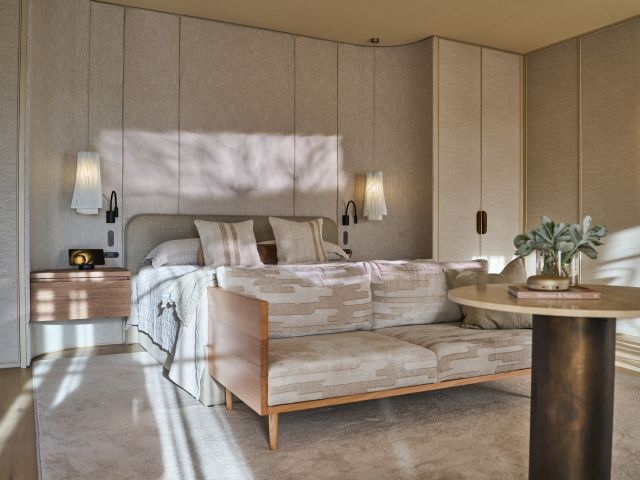
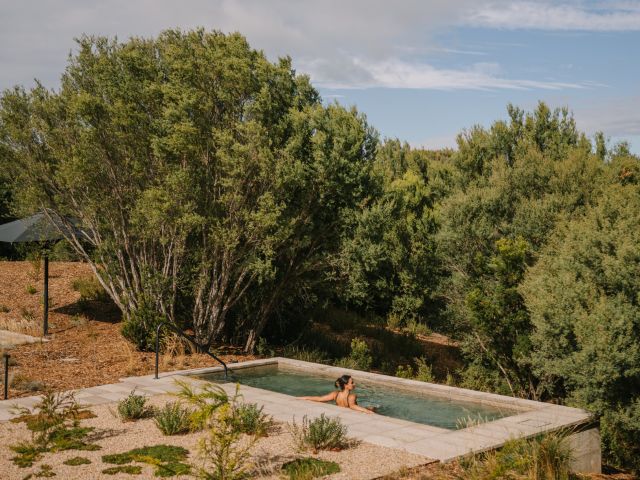
The Sanctuary’s five luxurious stand-alone villas and two additional studio rooms opened in June 2025.
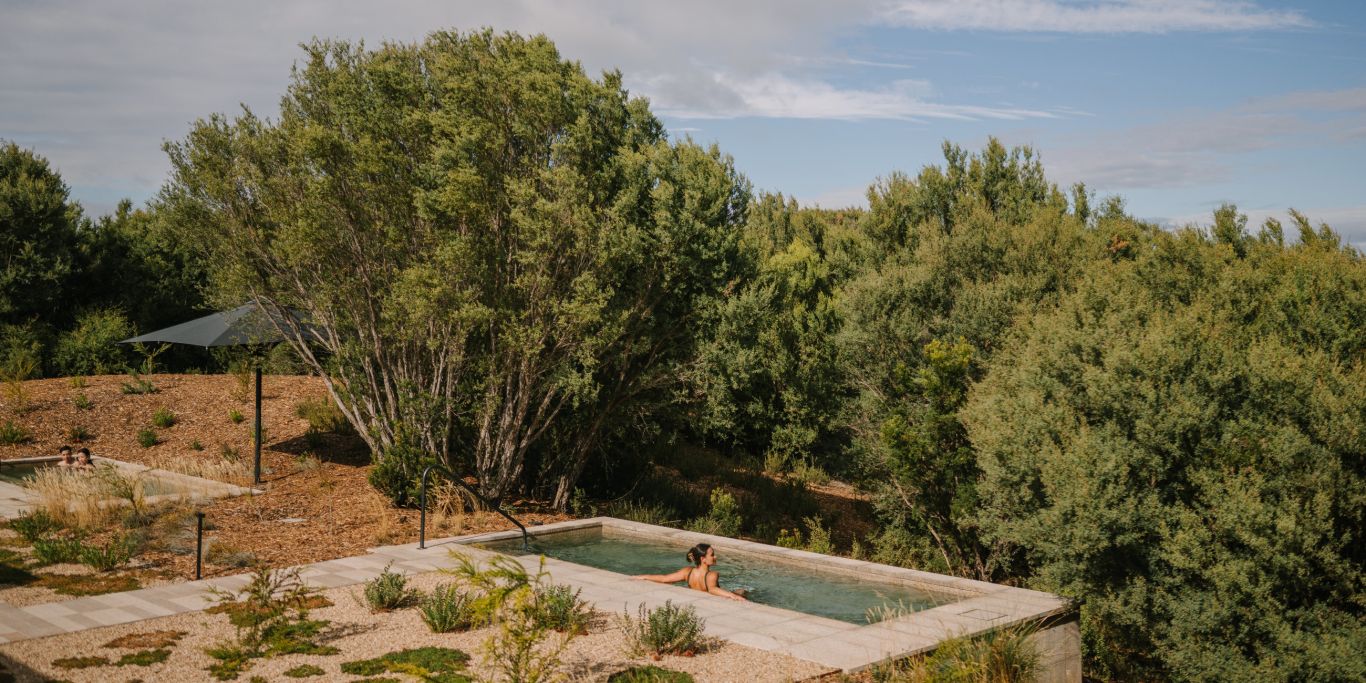
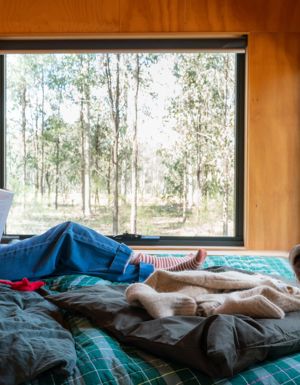
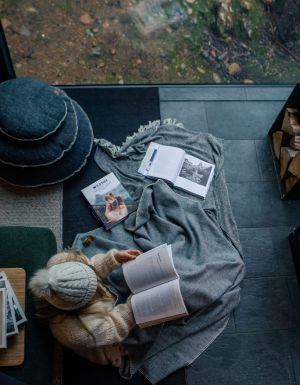
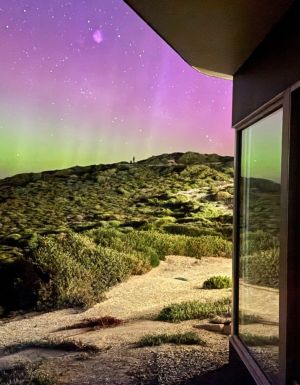
Set among native bushland on the Mornington Peninsula, The Sanctuary is Alba’s luxury accommodation offering. It is calm, pared back and entirely built around wellness. Private villas. Soft lighting. Thermal bathing rituals. Silence that feels intentional.
This is not luxury built to impress on arrival. It’s luxury designed to slow you down.
MICHELIN’s interest here is telling. Across its global hotel coverage, the guide is increasingly drawn to stays that prioritise experience over excess. Nature. Wellbeing. A strong sense of place. The Sanctuary ticks every box.
What MICHELIN “Selections" actually means
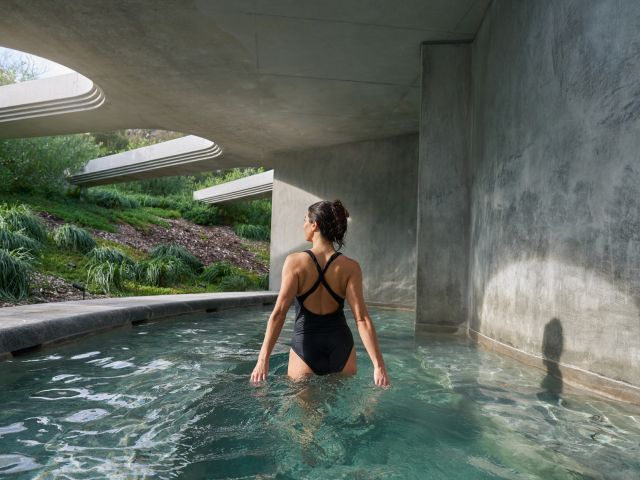
The Sanctuary includes inclusive access to Alba Thermal Springs and Spa for each day of your stay.
MICHELIN’s hotel guide sits alongside its restaurant ratings but follows a different system. Every hotel included in the guide is considered a high-quality stay, assessed by MICHELIN’s inspectors using the same global standards applied worldwide.
From within this collection, the very best are awarded One, Two or Three MICHELIN Keys, the hotel equivalent of MICHELIN Stars for restaurants.
In other words, “Selections" are hotels that have already met MICHELIN’s international benchmark. Keys identify the most exceptional of the exceptional. Many Selection hotels go on to earn Keys later, but all are considered worth travelling for.
Need tips, more detail or itinerary ideas tailored to you? Ask AT.
AI Prompt
The 14 newly added Australian hotels
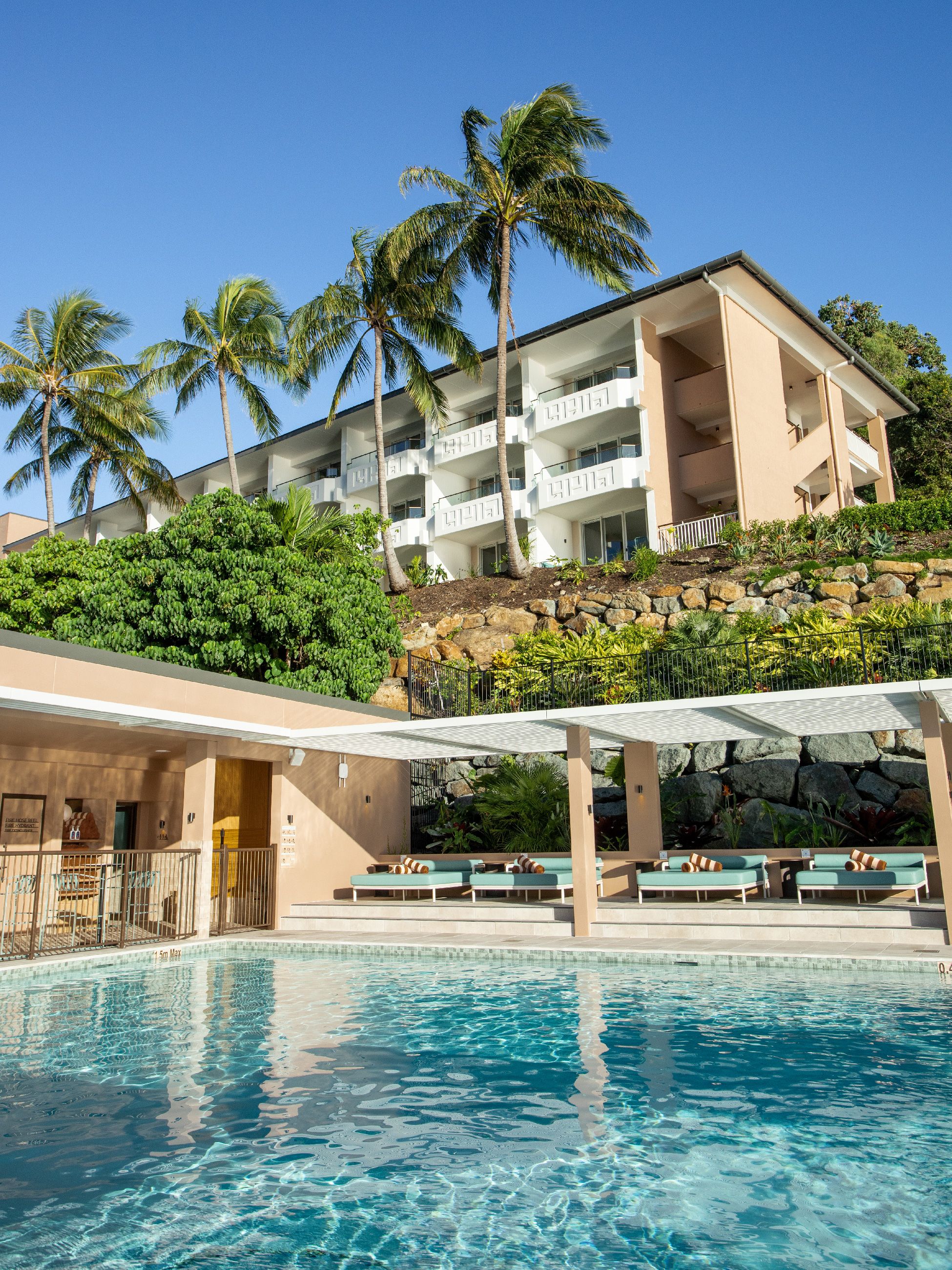
The Sundays is the first new hotel to open on Hamilton Island since 2007.
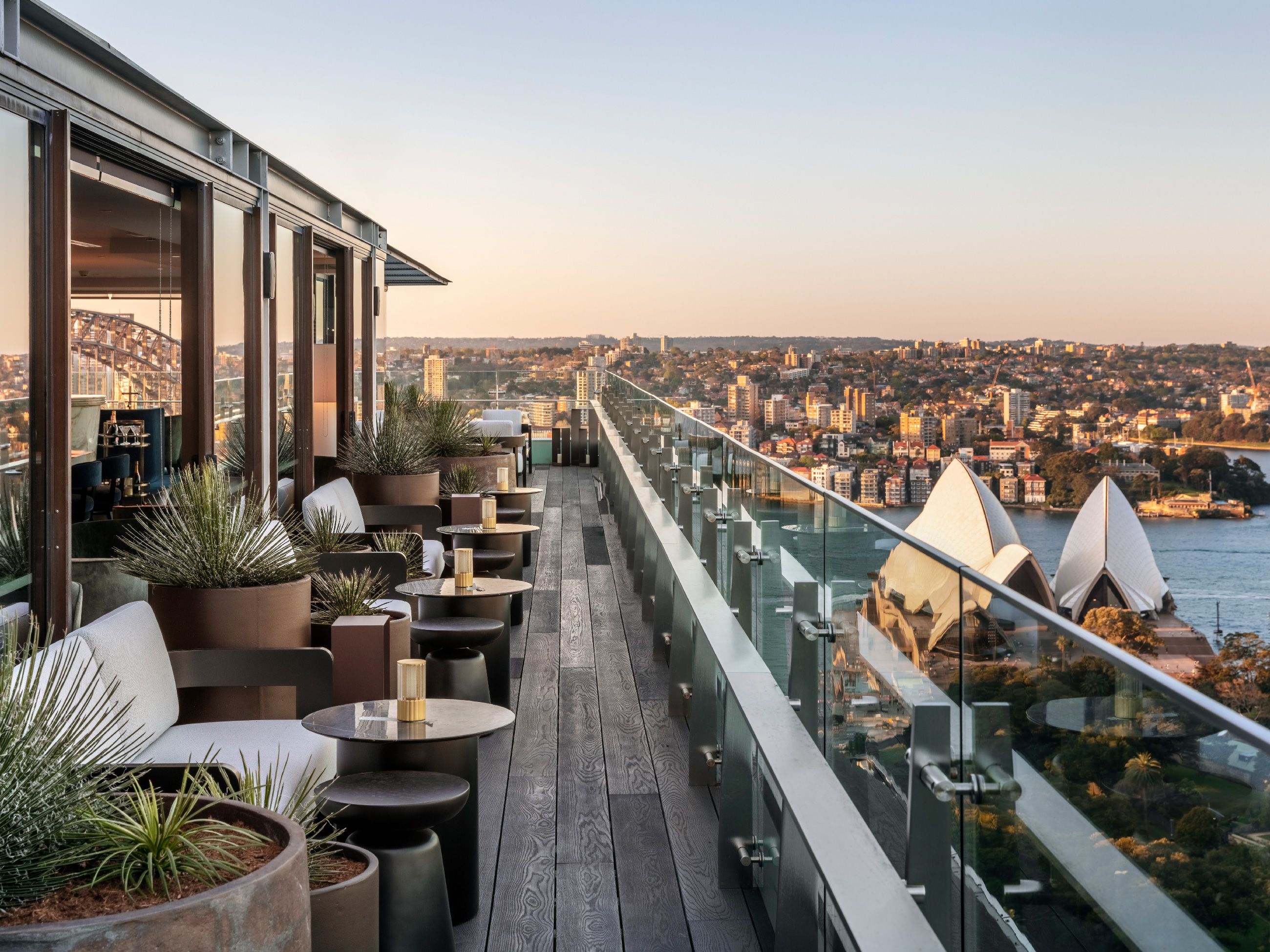
InterContinental Sydney boasts the city’s most spectacular views.
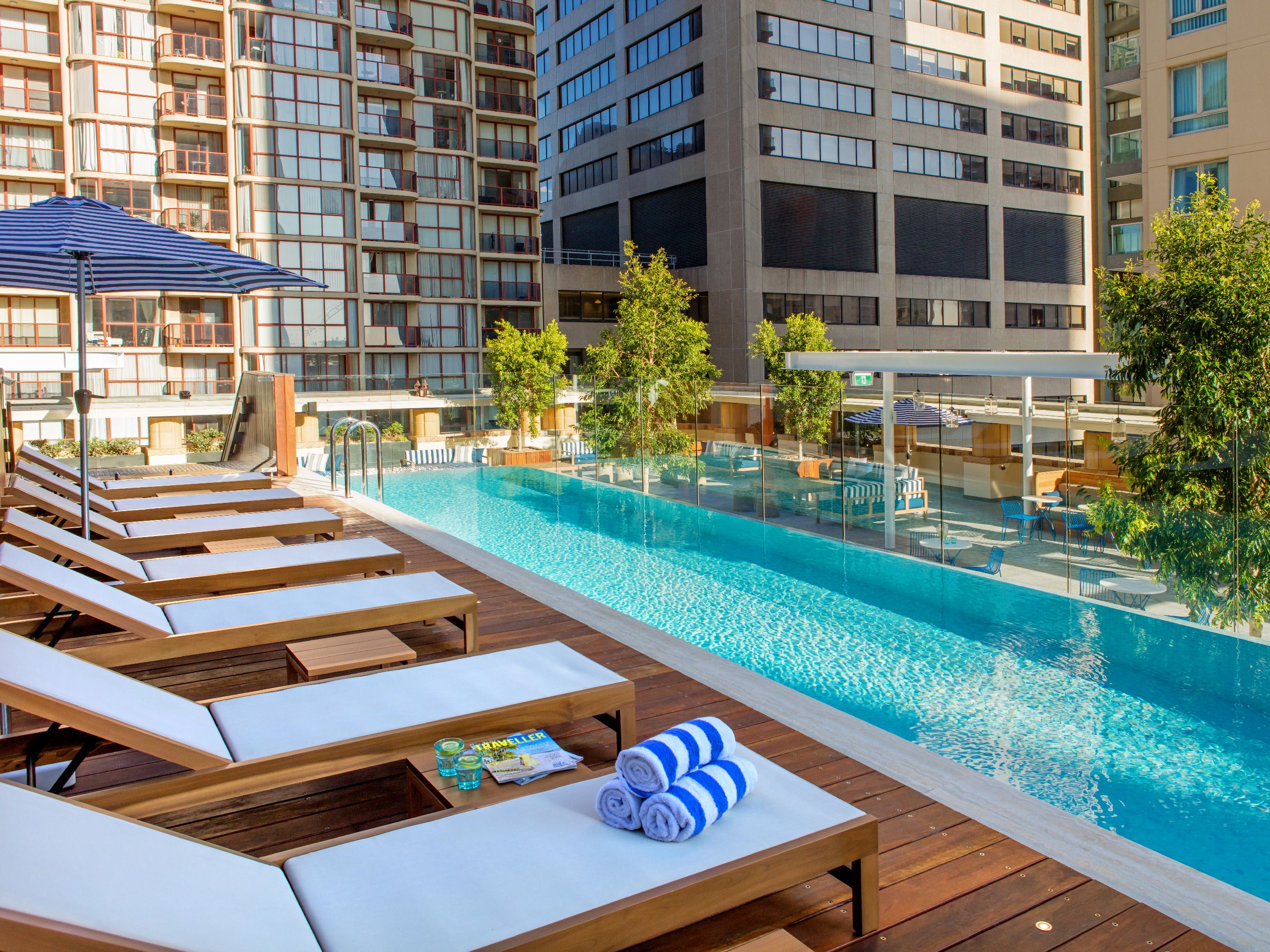
Design-savvy travellers will love Kimpton Margot Sydney.
The Sanctuary at Alba Thermal Springs and Spa, Mornington Peninsula, Vic
Alba Thermal Springs and Spa is a destination in its own right.
The Sanctuary’s moment in the spotlight feels like a turning point. MICHELIN is clearly leaning into wellness-led stays, quiet luxury and hotels that offer something deeper than a beautiful room.
For travellers, this list is a shortcut to what is genuinely worth booking right now. For Australia’s hotel scene, it is confirmation that bathhouses, slow travel and nature-connected stays are no longer fringe experiences.
Want to see more stories from Australian Traveller in your Google search results?
Tick the box next to "Australian Traveller". That's it.
Emily Murphy is Australian Traveller's Email & Social Editor, and in her 4+ years at the company she has been instrumental in shaping its social media and email presence, and crafting compelling narratives that inspire others to explore Australia's vast landscapes. Her previous role was a journalist at Prime Creative Media and before that she was freelancing in publishing, content creation and digital marketing. When she's not creating scroll-stopping travel content, Em is a devoted 'bun mum' and enjoys spending her spare time by the sea, reading, binge-watching a good TV show and exploring Sydney's vibrant dining scene. Next on her Aussie travel wish list? South Australia and The Kimberley.
See the Murray region in an entirely different light by exploring its night-time experiences and attractions.
By day, the mighty Murray River is a majestic and ever-changing sight, with river red gums and wetlands stretching along 2500 kilometres. But by night, its cities, towns, villages and landscapes totally transform.
From Albury Wodonga to Mildura, and everywhere in between, you’ll be in for a multi-sensory and memorable treat encompassing mesmerising light shows, guided ghost tours and vibrant celebrations that capture the nocturnal magic of the river.
This is no ordinary nighttime adventure; the region becomes an entirely different world when the sun sets. Discover six must-do activities along the Murray that can only be enjoyed after dark.
1. Share in ghostly tales
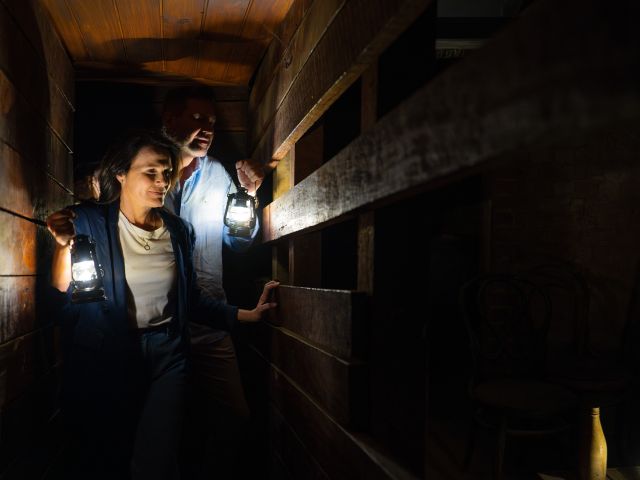
Hold on to your nerve when learning local ghost stories. (Credit: Campaspe Shire Council)
If you’re up for something a little more spine-tingling, Port After Dark in Echuca is your best bet. Rumour has it that the Port of Echuca Wharf and the buildings around it have long been home to lingering ghosts and mysterious events – like the vengeful woman said to haunt an old tramway bridge and spirits searching for stolen money through the town centre.
You can hear all about them on this guided lantern tour, which takes place on Wednesday and Saturday nights after dark. The stories are atmospheric and intriguing – you may even spot a ghost or two yourself. If you’d like a more intimate experience, private tours are also available to groups of 15 or more.
2. Wander art installations
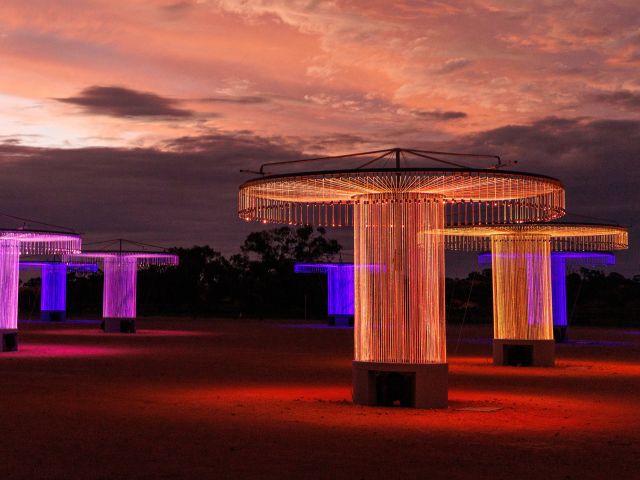
See Bruce Munro’s immersive art installation. (Credit: Serena Munro)
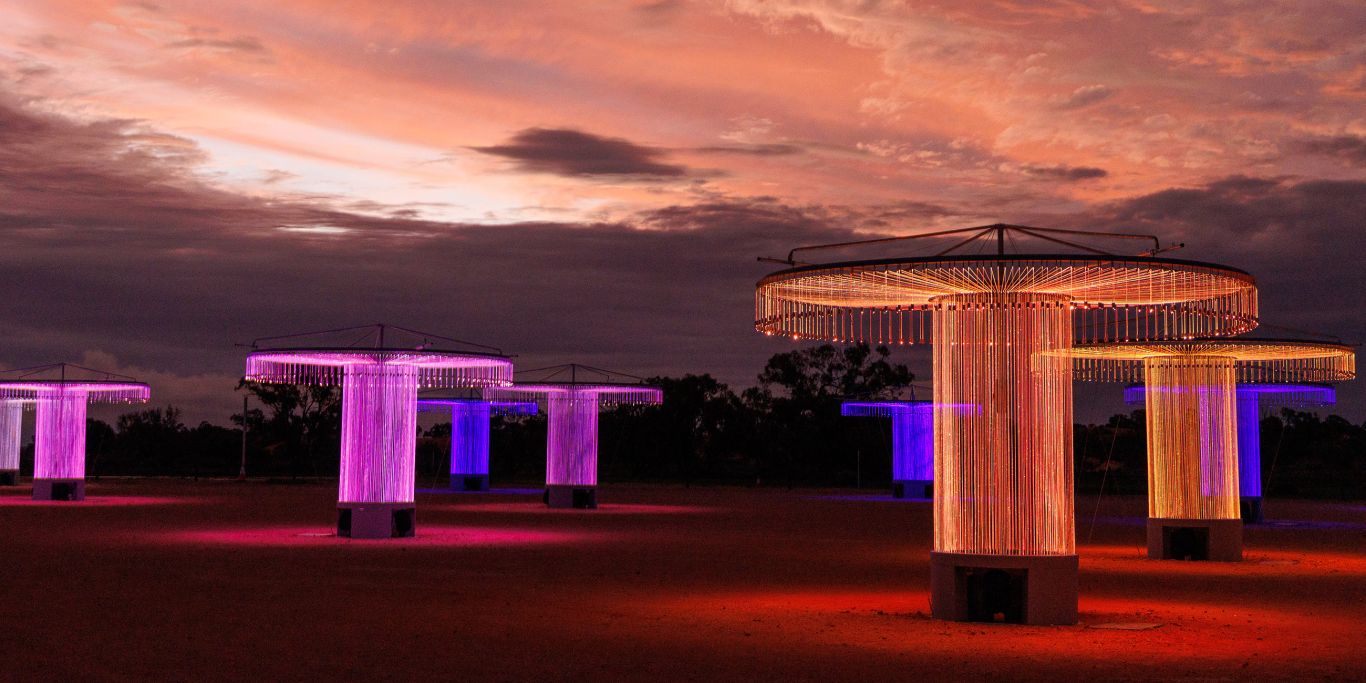
Right near the Perry Sandhills, sits an experience that feels almost otherworldly. Artist Bruce Munro (of Uluru’s Field of Lights fame) has created a Fibre Optic Symphonic Orchestra, a network of 80 Hills Hoists illuminated with fibre optic light combined with the sounds of an orchestra. The clotheslines glow and pulse in time to the specially composed score, immersing you in a dreamscape of light and sound.
For a different light experience, you’ll find stillness at Trail of Lights, also curated by Munro. Located just 30 minutes away on Lock Island in Mildura, thousands of lights stretch over the landscape, spotlighting both the river and a series of Munro’s sculptures. The trail is intended to be a peaceful and meditative setting for wandering and reflecting.
3. Learn through lasers
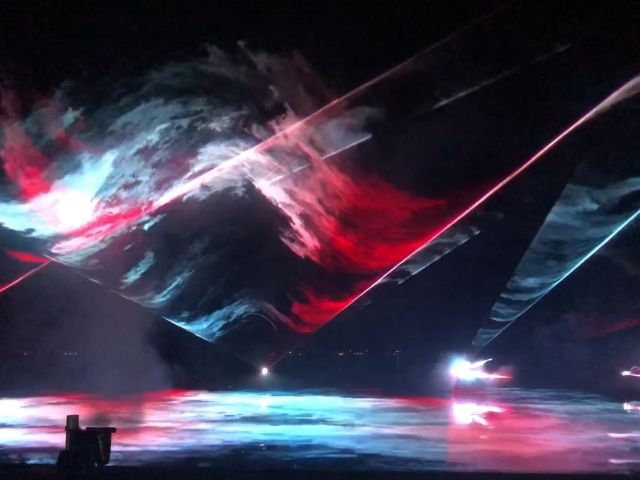
Travel 30 million years into the Murray’s past at Heartbeat of the Murray. (Credit: Ewen Bell)
Discover a fascinating history in this dual act of lights and projections on the banks of the Little Murray River. Legends of the Mallee is a multimedia show in Swan Hill combining lasers and lights, which tells the story of the region’s rich past. Learn about the Wamba Wamba and Wadi Wadi Peoples who first inhabited the area, as well as the figures and events that shaped the Mallee of today.
The river steals the spotlight in the Heartbeat of the Murray, a multimedia spectacle inside the Pioneer Settlement encompassing lights, lasers, sound and special effects against the natural backdrop. Through a sequence of large-scale animated projections, you’ll go back 30 million years to explore the Murray River’s formation before travelling to the present to learn how it supports modern communities.
4. Light up the lake
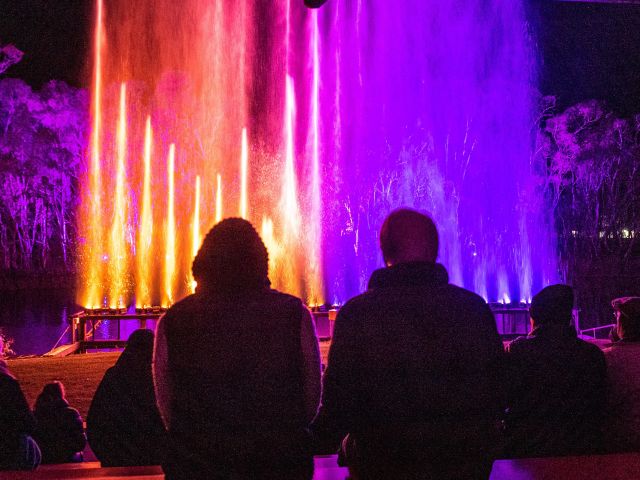
Watch the lights and lasers of Lake Mulwala. (Credit: Mulwala Water Ski Club)
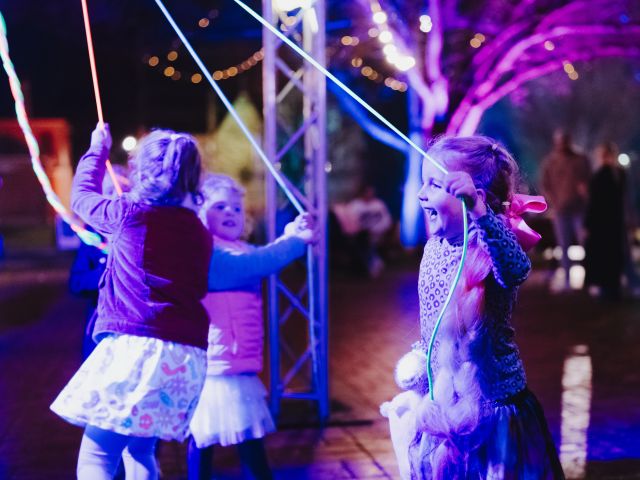
Travelling with kids? Head to Yarrawonga Mulwala and nearby Lake Mulwala for the family-friendly Laser Light & Sound Show. Lights and lasers are projected over the lake and onto curtains of fog, creating a colourful and high-energy visual display. The show suits all ages and tastes, set to a mix of songs that everyone knows and loves.
You can take in the spectacle from either the grassy banks of the lake or book a table at the Mulwala Water Ski Club’s Malibu Deck Cafe, serving pub-style food and refreshing drinks, including excellent classic cocktails. If you’re watching from the foreshore, the show is entirely free, making it a great budget-friendly option.
5. Be captivated by local culture
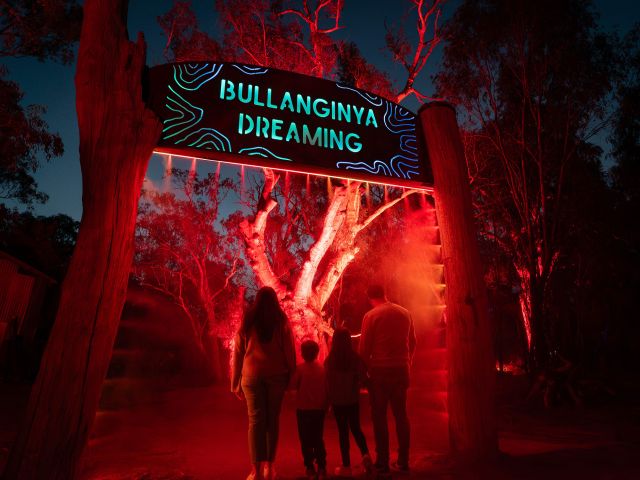
Soak in the culture of the Bangerang People. (Credit: Laser Vision)
Set aside an evening to explore Bullanginya Dreaming in Cobram Barooga – you’ll want ample time to take in the stories and symbolism of this immersive laser light and sound trail. The 1.8-kilometre trail explores the storytelling and culture of the Bangerang People, who have long cared for the lands around Bullanginya Lagoon in Barooga. The trail features 12 activations – each telling a different story – and combines dramatic lights and lasers with water and fire.
Intertwined with the visual displays are Bangerang narratives, giving you meaningful insight into the area’s Indigenous heritage. It’s designed to be explored over 90 or so minutes, encouraging you to move slowly and thoughtfully.
6. Discover a winter glow
See the streets of Albury Wodonga come to life after dark. (Credit: Visit Albury Wodonga)
Albury Wodonga comes alive as the weather drops, with an annual celebration of the season on Saturday, 15 August. WinterGlow takes over the CBD and features a vibrant program of things to see, do, learn, eat and drink.
Take part in hands-on workshops that let you try different art forms and crafts. Feast on street food and winter warmers from local eateries. Browse for artisan wares at the night markets. Watch musical acts on the main stage. Or get involved in different activations, including a silent disco and giant maze. Artificial snow will be falling to add to the festive atmosphere.
Even wandering the streets and laneways and soaking up the late-night energy will leave you feeling enchanted.