Coral spawning in the Great Barrier Reef

hero media
A cruise in the dead of night offers up the perfect opportunity to witness the wonder of nature in all its kinky glory.

We board the Tusa Dive T6, a 24-metre dive vessel, at the city marina, the other voyeurs and me. Soon we’re at sea and heading for Saxon Reef, on the Outer Barrier Reef 55 kilometres north-east of Cairns. It’s five nights after the November full moon, which shines across dark millpond waters at the reef mooring. The sea is a summery 27 degrees Celsius – perfect conditions for our oceanic orgy.


The Great Barrier Reef’s annual mass coral spawning has been called the biggest sexual event on the planet – and even the world’s biggest orgasm on the world’s biggest organism. Over two or three nights at various times between October and December, the waters of individual reefs across the 2300-kilometre Great Barrier Reef suddenly burst with new life – countless egg and sperm bundles released simultaneously by billions of coral polyps in a spectacular explosion of synchronous breeding.
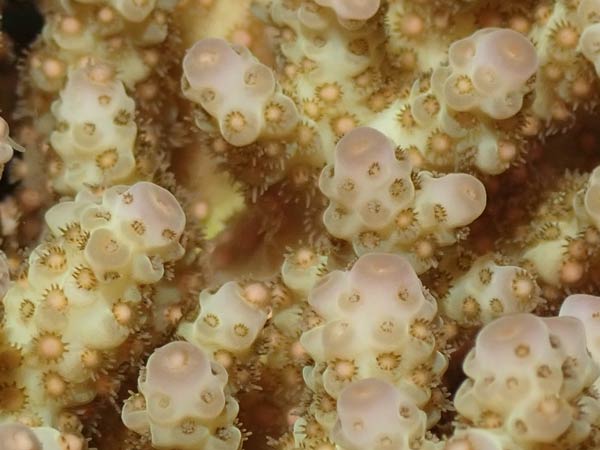
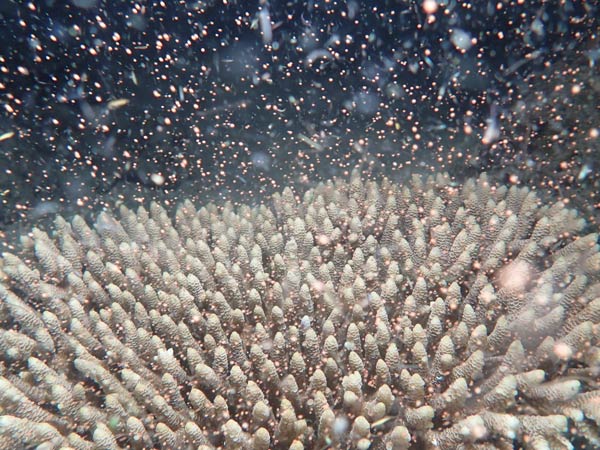
Close up shot of coral ready to release on the Great Barrier Reef
Close up shot of engorged arcropora ready to release. (Image: Gareth Phillips/Reef Teach)

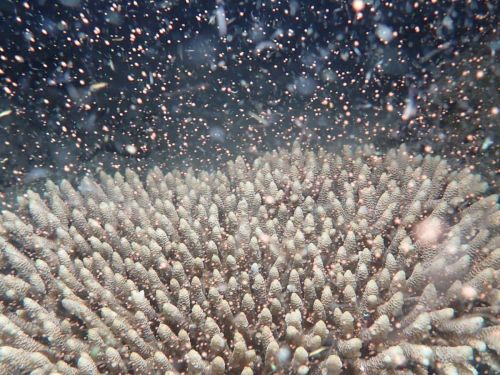
Looking like a blizzard of tiny snowdrops, they bubble to the surface over a few nocturnal hours and form a pungent, pinkish slick. Splitting apart, the egg and sperm bundles fertilise en masse. The result: billions of pinprick-sized coral larvae, which a few days later settle back down on the reef to begin their life’s work of reef-building. Remarkably, this vast, vital aspect of coral life was unknown until 1981, when Australian scientists observed it on the Great Barrier Reef off Townsville.


Forty years later, with mass coral bleaching due to climate change and escalating existential threat, spawning seems a mighty and cheering demonstration of Reef resilience. It’s also emerging as a potential means of safeguarding the future: scientists now use the yearly boom to scoop up millions of healthy newborn corals for resettlement in bleach-depleted areas.
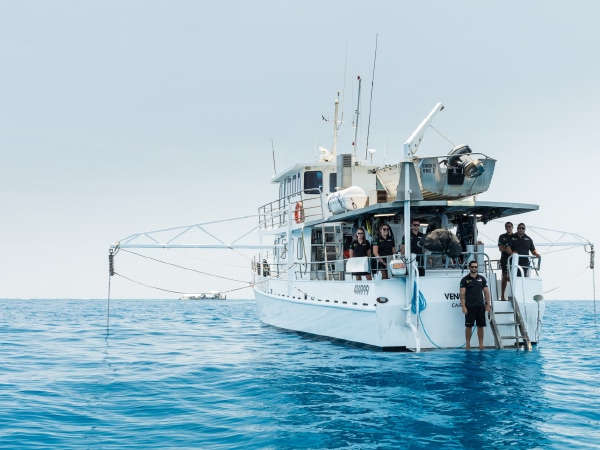
A control vessel monitors the waters during the coral spawning off the coast of Cairns.

A greater goal – to help coral fight deadly bleaching – also harnesses spawn power. Almost all corals keep algae in their tissue to supply vital nutrients. In overheated conditions they lose it and begin to starve – and bleach. During last year’s spawning, the Larval Restoration project mixed large volumes of coral larvae on a Cairns reef with more heat-tolerant algae, enhancing their ability to resist bleaching. Also, supplying algae so early in the life cycle (before it is naturally acquired) speeds growth, boosts health and improves survival chances.


Time to check out chapter one of that life cycle. Donning scuba gear – though plenty onboard choose to snorkel shallower parts instead – we descend into 10 metres of seawater, shadows and coral, lit only by the bright moon and our dive leader’s soft but wide-ranging torchlight. Visibility is excellent; there’s no chance of being lost in the night.
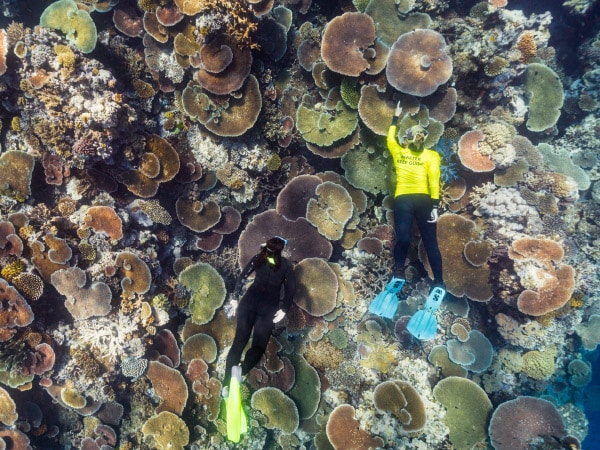
Duck diving on Moore Reef during its November 2019 coral spawning.

A spectacularly flame-patterned eel, thicker than an arm, slithers from its hole in a reef outcrop. A two-metre-long grey reef shark suddenly looms from the blackness and shoots along the sandy channel beside us, dwarfing two whitetip reef sharks alongside it. None pay us any attention; they’re on secret shark business. A trio of giant trevally are more interested, lurking just inside our beam, as if hoping we’ll light the way to prey.


For all these enchantments, the first dive ends with no spawning. We’re a tad early, it seems, but Mother Nature doesn’t publish timetables. Back on the boat, our surface interval passes with a welcome cooked dinner. And then, during the second (10pm) dive, it happens. A broad patch of coral, carpeted by white blobs, is brewing something marvellous. Suddenly we’re inside a snowdome. Rising above the coral are myriad snowy dots, shimmering as they flutter and fly before our eyes. Some seem to shine with an inner light. Against the inky backdrop of the night sea, they could almost be stars or meteors.
Flynn Reef erupts Flynn Reef erupts in an explosion of pink as corals begin their annual spawning on the Great Barrier Reef
Flynn Reef erupts in an explosion of pink as corals release tiny balls containing sperm and eggs into the water. (Image: Gareth Phillips/Reef Teach)

You might think, ‘eeeww, swimming in sperm, no thanks’ – but it’s not like that at all. To hover weightless in the sea while meeting the first flakes of an underwater, upside-down snowstorm at night is a moment of pure wonder and magic. It feels like seeing Santa actually land his sleigh on the roof.
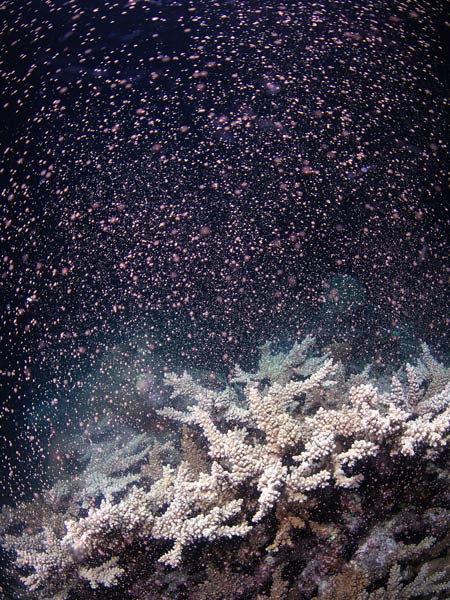
Underwater view of coral spawning on the Great Barrier Reef
The extraordinary event gives the impression of being inside a snowdome. (Image: Gareth Phillips/Reef Teach)

But there’s also a grounding reality amid the sense of unreality, and that feels special too. It’s an intimate encounter with life’s grandeur, with that fundamental, never-say-die impulse to propagate that keeps the primordial cycle going. This is literal immersion in the miracle of life itself, this private moment between me and coral, silent but for my bubbling breath.


We’re not back in Cairns until almost 1am. The cabin lights are out and we’re dozing in the dark, the other voyeurs and me. Midnight has passed and it’s been such a magical night I wonder that the boat hasn’t turned back into a pumpkin. Cinderella went to the ball, and I’ve seen coral spawning.
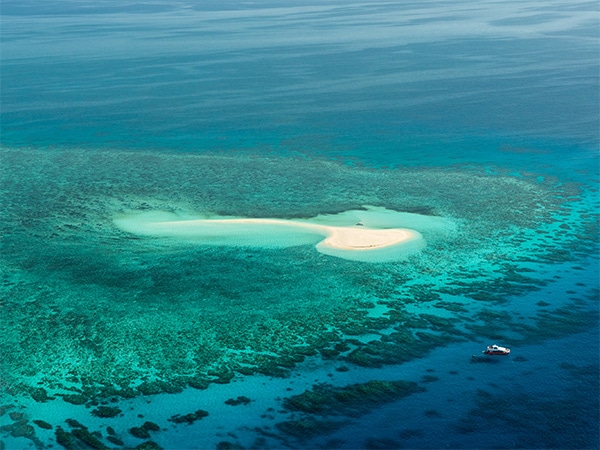
Getting there
The Cairns marina is located within walking distance of most centrally located hotels.


Playing there
Spawning on Cairns’ reefs is usually within a week of the November full moon. Book here


Staying there
The design-focused Bailey in central Cairns is a great option.

Discover the remote Queensland lodgings bringing luxury to the outback

hero media
Adventure and refined Luxury combine at the stunning Rangelands Outback Camp.

Iconic Australian red dirt, ancient rocky landscapes and bursts of greenery and wildflowers all make the small town of Winton, and its surrounds, a sight to behold. Escape the ordinary and unwind in the Queensland outback, where ancient landscapes and off-grid luxury await at Rangelands Outback Camp.

cosy seats in Rangelands Outback Camp
Unwind in the ancient outback.

About Rangelands Outback Camp

Unforgettable 360-degree views of this 95-million-year-old land await at Rangelands; bathed in style and positioned on top of a jump-up (or mesa), your tented camp seamlessly blends into its outback setting.

Set on the 53,935-square-kilometre Rangelands Station – a working cattle property – the abundant wildlife are your only neighbours; kangaroos, echidnas, eagles and other birdlife all call Rangelands home.

Bathed in style, your tented camp seamlessly blends into its outback setting. Indulge with carefully curated menus, personalised service and supersized luxury tents that guarantee a private experience. This exclusive camp only has a maximum of 12 guests at a time.

Here, the aim is pampering. From tasty menus to supersized tents with all the creature comforts, to a range of guided tours around the property and beyond.

Guests are transferred from Winton or Longreach by a dedicated Rangelands driver.

aerial shot of Rangelands Outback Camp tent
Soak in 360-degree views.

Rangelands Outback Camp tours

Join small-group tours and enjoy exclusive access to the ancient Rangelands Rifts with your Rangelands hosts. These incredible rock formations were formed by millions of years of erosion, leaving dramatic channels through the rock. Or explore the surrounds with Rangeland’s touring partner, Red Dirt Tours .

Get sunset birds-eye views over dramatic mesa country in a helicopter, from Queensland’s own Three Sisters to Corey’s Range, stopping at the best lookouts along the way.

Get up close and personal with this rugged land on four wheels, with expert drivers and guides leading guests through famous Bladensburg National Park, visiting Gondwana Stars Observatory and more.

The Winton area is famous for its boulder opals (the second-rarest opal in the world, after black opals), and a stop at the mining community of Opalton sheds a fascinating light on the unique fossicking method used to find them.

A trip to dinosaur country is a must, as this is the place that ramped up Australia’s dino contribution after a fossilised footprint was found in 1962; after more exploration, the discovery of 3300 footprints made it clear this was the world’s only evidence of a dinosaur stampede. Those same footprints are still on display today at Lark Quarry Conservation Park , a 90-minute drive from Winton. Also check out Australia’s largest collection of Australian Dinosaur fossils Australian Age of Dinosaurs, just 30 minutes from Winton. Here, join a tour through a working laboratory, dinosaur canyon and more.

A twice-daily transfer into downtown Winton is offered to guests, where they can explore the Royal Outdoor Theatre, opal shops, Waltzing Matilda Centre and more.

tour being led through Rangeland rifts
Have an exclusive adventure through the Rangeland Rifts. (Image: TEQ)

Sleeping in luxury

After a day of exploring, return to your tranquil tent for a blissful open shower and uninterrupted views from your private deck.

Designed to integrate guests into the surrounding nature, each tent feels like its own private haven. While being off-grid in the outback (in fact, each tent is powered by its own solar panels, with the added support of a backup generator), guests can also luxuriate in comfortable amenities like air conditioning, a supremely comfortable king-size bed and stylish designer touches.

Guests can stroll to the open-air Sunset Deck for breathtaking panoramic views, or to the main lounge and dining tent, where books, on-demand coffee and drinks make it the perfect place to relax after a day in the outback.

inside Rangelands Outback Camp bedroom
Enjoy plenty of space inside, and stunning views outside.

Rangelands Outback Camp dining

As the sun starts to dip below the horizon, gather for drinks and canapés on the expansive Sunset Deck, watching the sun drench the landscape in pinks and oranges as it sinks below the horizon.

Later, head to The Mahal lounge area and dining tent where mealtime magic happens. Savour a gourmet meal made fresh by Rangeland’s onsite chef. The meals use local produce to elevate classic outback dishes, and don’t worry, dietary requirements are happily accommodated.

Enjoy an open bar filled with an expansive hand-selected list of wines and premium beers, with wine pairings offered by Rangelands hosts come dinner time.

Discover more and book your luxurious stay at rangelandscamp.com.