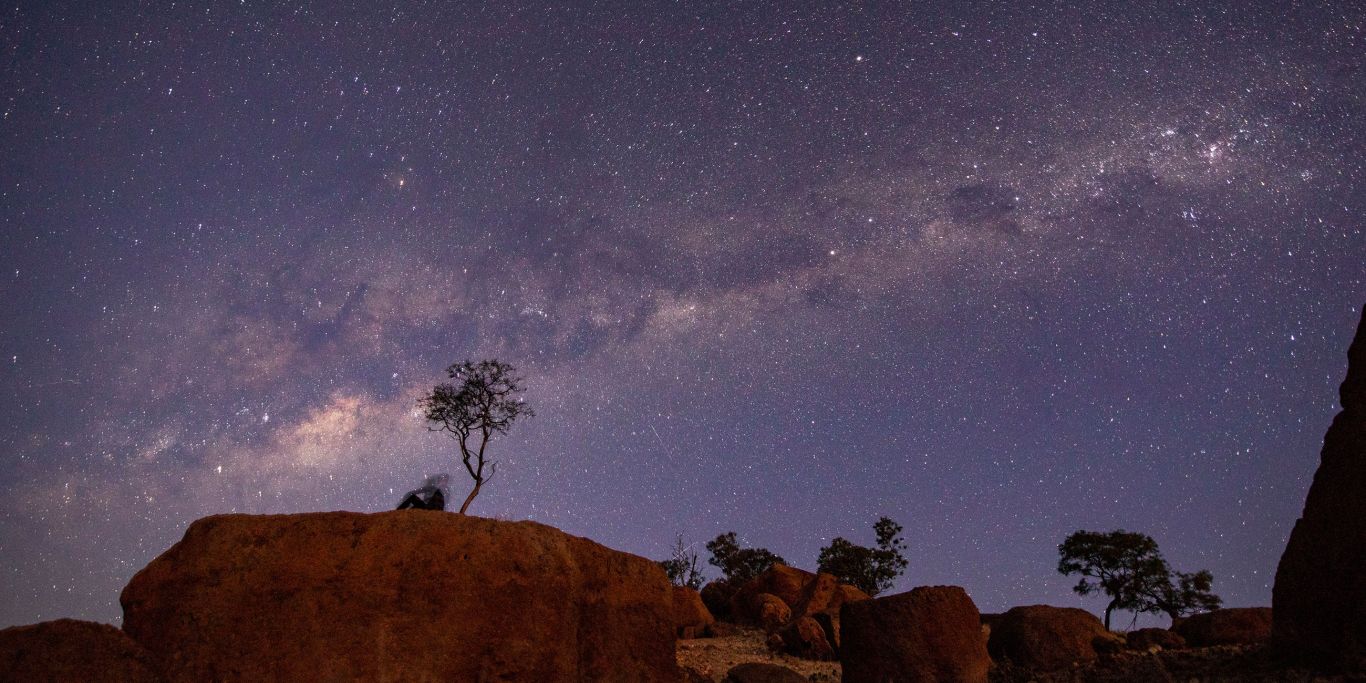

A small outback town in Queensland has been honoured with the state’s first International Dark Sky Community certification.
There is just something about Winton. With links to Waltzing Matilda, Qantas and groundbreaking dinosaur discoveries, now there’s one more reason to visit this small outback town with lots of big character: Winton has earned an International Dark Sky Community certification, making it the first place in Queensland to do so.
Winton has now joined the ranks of the Jump-Up Dark-Sky Sanctuary at the Australian Age of Dinosaurs museum (about a 20-minute drive outside of town), and is the eighth Dark Sky Place in the country.
“This recognition is a proud moment for Winton and our community. Being named Queensland’s first International Dark Sky Community places us on the global map for protecting something truly special – our night skies," shared Winton’s mayor, Cathy White.
How did Winton become a Dark Sky Community?
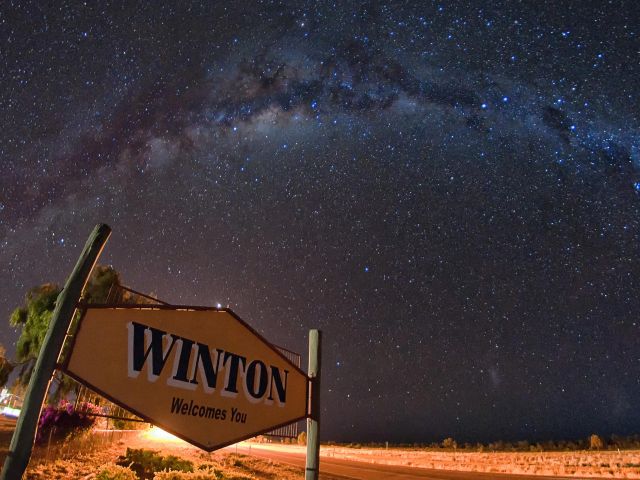
Winton’s International Dark Sky Community certification was awarded by Dark Sky International – an organisation based in America that “certifies communities, parks and protected areas around the world that preserve and protect dark sites through responsible lighting policies and public education". And, according to Marnie Ogg, Dark Sky Strategist and Travel Specialist, “Dark Sky Community status is one of the hardest things to do."
“It’s involving a whole community of people – it’s not just about getting national parks or businesses on board, it’s about getting the whole community onboard."
“This has been a hard yard for Winton," she continued. “You physically have to change the environment, the lighting infrastructure that’s been there for 10-15 years suddenly has to be changed. That doesn’t happen overnight, even in a smaller town like Winton."
White agrees: “This achievement reflects years of collaboration between Council, local organisations and residents, all working together to protect the skies above us".
Ogg says that to achieve this status, there’s a series of checks to go through. Starting by listing all the lights in the community, creating a new policy, and then getting the community onboard.
“It might be that you have a curfew on lights after sunset. So you can use lights for two hours after sunset, then you might turn them off or dim them right down. And then one hour before sunrise, you can start using your lights again."
“We ask people to use warm coloured bulbs. We know from a lot of research that the very bright light we use so we can see very, very clearly is really detrimental to the natural environment at night. We’re effectively blinding nocturnal species, insects and reptiles who need the cover of darkness to do their things. But we know warmer coloured globes can be far less disruptive. So every outdoor light within Winton now has put in warm colour temperature light, or they just don’t put it on if it’s not needed."
What does this mean for Winton?
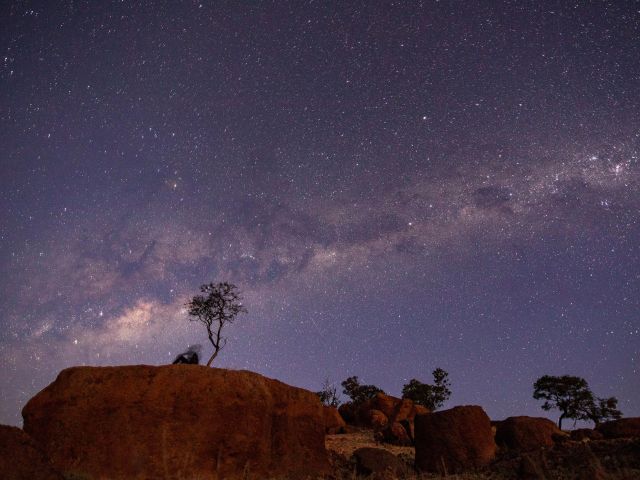
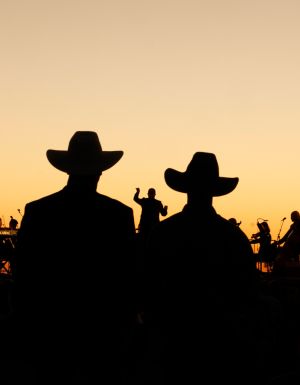
Anyone interested in Australia’s prehistoric past should already have Winton firmly on their must-travel list. Lovers of the arts can also mark the annual Festival of Outback Opera as the perfect time to enjoy the outback scenery with some of the best Opera Queensland talent. Not to mention the Waltzing Matilda Centre , which celebrates Banjo Patterson and his local connections.
This town was already one of the most peaceful places to wake up, letting the local birdlife gently lull you into consciousness as the soft light rises. But Winton’s International Dark Sky Community certification means there’s plenty of reason to stay up late, as well.
“Winton’s dark skies are part of what makes this place unique, and this certification celebrates our shared commitment to preserving them for generations to come," said White.
“As dark skies become increasingly rare around the world, Winton is showing that regional communities can lead the way in protecting the natural night environment."
The rise of Dark Sky Tourism

Increasingly, we’re seeing people choose to travel specifically to enjoy the night sky. And who could blame us? There’s much to admire, not to mention the much-needed chance to take a deep breath, slow down and truly be present. Ogg believes the growing trend can trace its roots back to two things.
“I think it probably kicked off with Covid when telescope sales went up 400 per cent…it was something that people could do in their own backyard. It was a way of connecting to nature," she said.
“The other thing is that the aurora borealis has been at its peak over the last couple of years (it has an 11-year cycle) and people have started to connect to celestial bodies again."
Speaking of celestial bodies, beyond the aurora, 2026 is expected to also bring a total solar eclipse in August, and this year’s Perseid Meteor Shower coincides with a new moon, meaning the shooting stars have the sky to themselves and should be more visible. Plenty of reasons to book a trip to the likes of Winton to enjoy an unpolluted night sky.