This giant coral chest could save the Great Barrier Reef

hero media
If one of the world’s most important ecosystems fails, this clever insurance policy may prove to be its saving grace; take a look inside the world’s first living coral biobank.

It’s the most peaceful nursery I’ve ever seen. Never mind that the babies constantly feed, incessantly tussle and never properly go to sleep. But, then again, it’s hard to sleep when you don’t have a brain.

In three raised ‘cribs’ in the Cairns Aquarium, 392 small pieces of coral resembling tiny trees, sticks of scored calamari dipped in beetroot sauce, and clumps of marshmallow-pink hair billowing in the breeze sit neatly side by side. Attached to metal plates, they grow bigger and stronger every day, thanks to their uncanny ability to clone themselves.

Maintaining life inside a coral chest

The corals live a charmed life, gently rocked by a wave machine, cleaned regularly by their fishy friends, and made to feel at home with lights that mimic sunrise, sunset and cloud cover over the Great Barrier Reef. The only bother is when their neighbour gets too close and they offer a backhanded sting to mark their territory.

“Hmm, we might need to move that one," observes our guide Makayla Grady, as her discerning eye notices the thin tentacle of a fluoro-green coral giving its tank-mate a swift whip on the backside (in a Chucky-like twist, this kind of nursery play can result in fatalities). “We love them, but they can get a bit competitive."
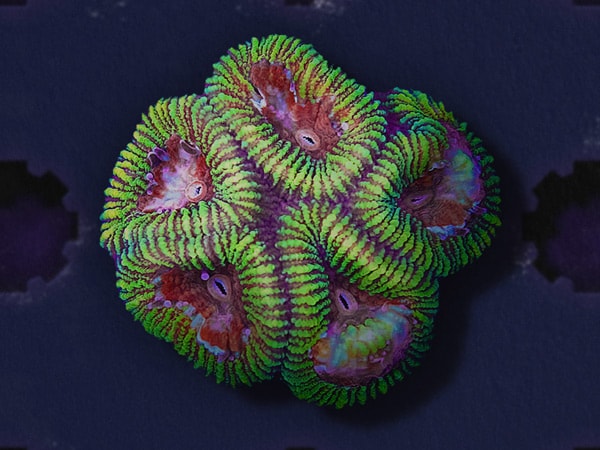
a coral fragment in the Forever Reef Project
Fragments of mature corals from the Great Barrier Reef blossom in the Cairns Aquarium.

Though the little corals in front of us are animals, akin to an upside-down jellyfish – or, most commonly, hundreds or thousands of animals called polyps clustered together, who are peas in a pod with their algal best mates called zooxanthellae (what were their parents thinking) – they’re not babies as such.

Rather, they’re fragments of mature corals living on the Great Barrier Reef, surgically removed by a team of divers (don’t worry, the upside of no brain is no pain), then DNA tested and microchipped like the family dog, so it’s clear who they are and where they come from.

The state-of-the-art nursery they’re subsequently placed in is the world’s first living coral biobank – a facility designed to insure one of the world’s natural wonders. Because, as most of us are aware, climate change is posing a significant threat to reefs worldwide, and time is running out.
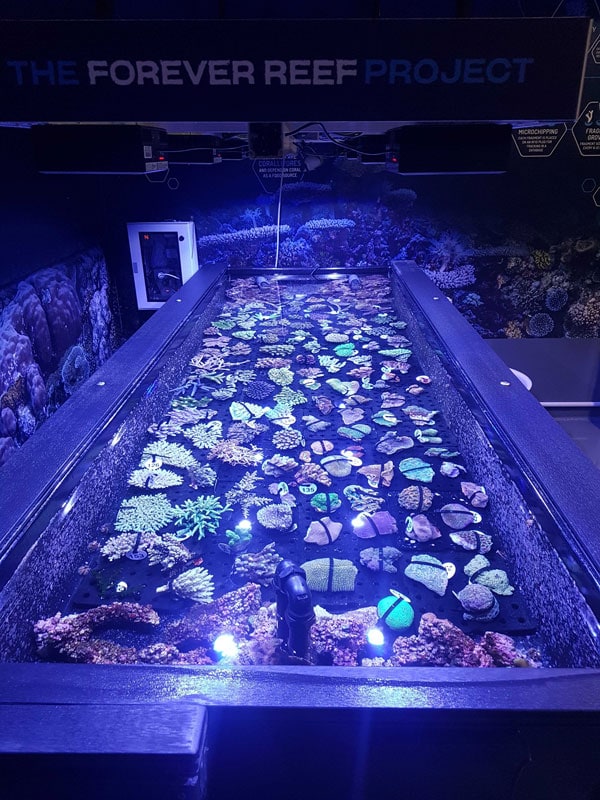
the most recent coral collection for the Forever Reef Project
The recent coral collection is secured in the quarantine tank.

A giant ‘coral ark’ in the making

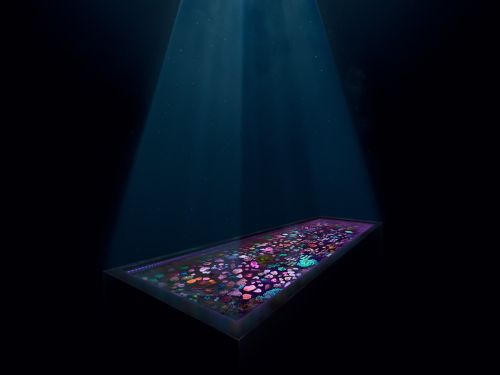
The Cairns living coral biobank, established as part of the Great Barrier Reef Legacy’s Forever Reef Project , aims to ultimately protect all 415 species of hard coral on the Great Barrier Reef, later expanding to include soft and international corals. The full collection is planned to lodge in a giant ‘coral ark’ (inspired by Noah) in Port Douglas, with smaller biobanks run by traditional owner groups dotted along Queensland’s coastline.
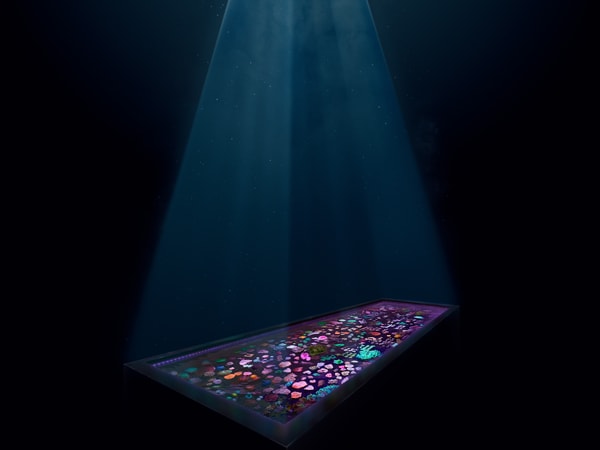
the Forever Reef Project coral facility
The coral specimens are preserved in a living ‘coral ark’.

In a similar vein to the seed vault tucked into a snowy mountain in the Norwegian archipelago of Svalbard – a repository for millions of important seeds from around the world – the biobank will keep our precious corals safe, and they can be replanted on the reef if things go belly up in the big blue.
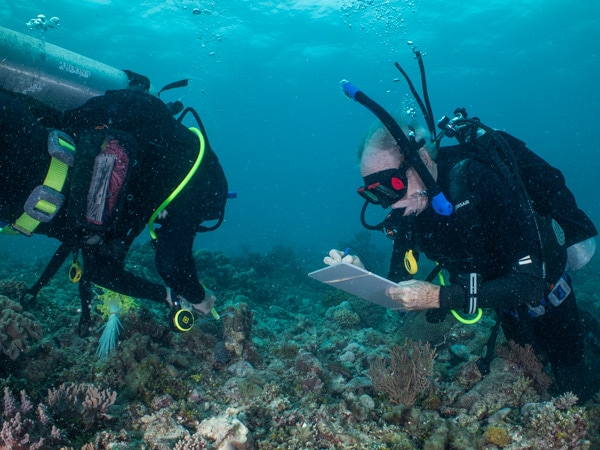
collected corals being brought up to the vessel
Divers bring coral specimens to the vessel.

Biobank tours at Cairns Aquarium

Though the giant ark is still a few years away, the Cairns Aquarium is letting visitors get acquainted with the biobank by offering 30-minute tours through its on-site holding facility. The aim is to help people understand more about the fascinating, but arguably underrated, creatures that underpin the entire ecosystem of the Great Barrier Reef. In short, without coral, the aquatic empire breaks down, impacting everything from the fish, to the sharks, to the whales, to the adorable pygmy seahorses.
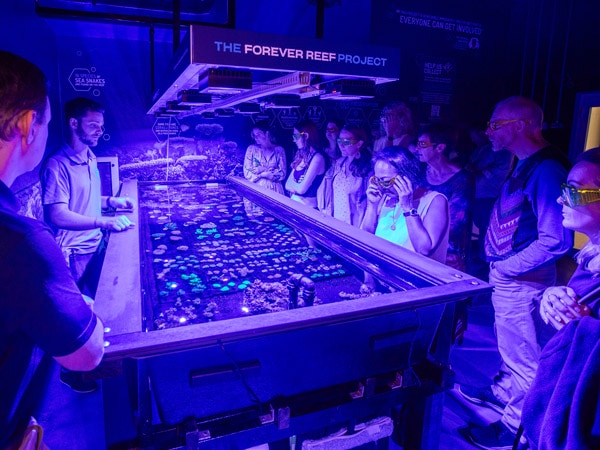
the world's first behind-the-scenes tour of A Living Coral Biobank (the Forever Reef Project)
Visit the world’s first living coral biobank in Cairns.

The ongoing threat to the Great Barrier Reef

Despite their indisputable importance, the flamboyant gardens that landscape the sea received little attention until a mass bleaching event on the Great Barrier Reef in 2016 highlighted their fragile nature.

“Pre-2016, the only real questions I got asked [from guests] were where to find Nemo or how long a turtle lives for," says Great Barrier Reef Legacy operations manager Paul Myers, who has spent 15 years on the reef as a dive instructor. “After the biggest bleaching event on record, the questions became a lot more educated and were more centred around, ‘tell me about the health of the reef, tell me about coral bleaching’."
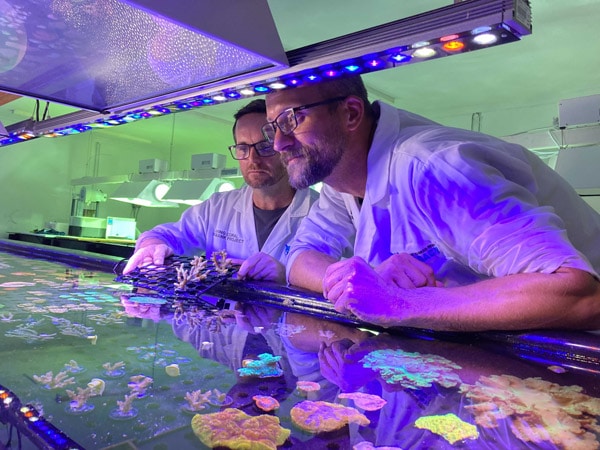
Paul Myers and Cameron Bee inspecting corals in the facility
Paul Myers and Cameron Bee inspect corals in the facility.

Though bleaching became a hot topic, the nuances of the corals it impacted remained largely elusive, with Dr Charlie Veron, a key collaborator on the Forever Reef Project, still one of the few people worldwide who can identify corals to a species level underwater.
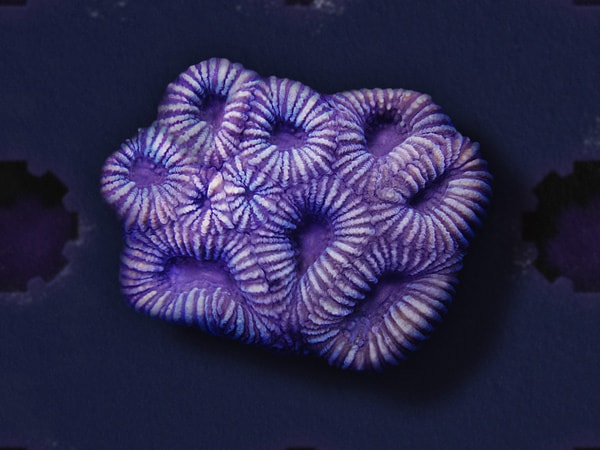
a coral fragment in the Forever Reef Project
The Forever Reef Project is home to precious corals collected from the Great Barrier Reef.

“About two years ago, I did a course on coral ID and there were about 30 people in the room," says Myers. “All of us had been working on the reef for more than 10 years, but none of us knew anything about coral identification. Firstly, it is so tricky, but also, you just don’t get asked."

That’s where the living coral biobank tours play an important role, not just in safeguarding the reef’s corals, but to help educate people on their importance and vulnerability, and, in turn, the importance of tackling climate change. As Cairns Aquarium founder and CEO Daniel Liepnik says, “Addressing climate issues requires changes to human behaviour, and getting people to care is the first step."
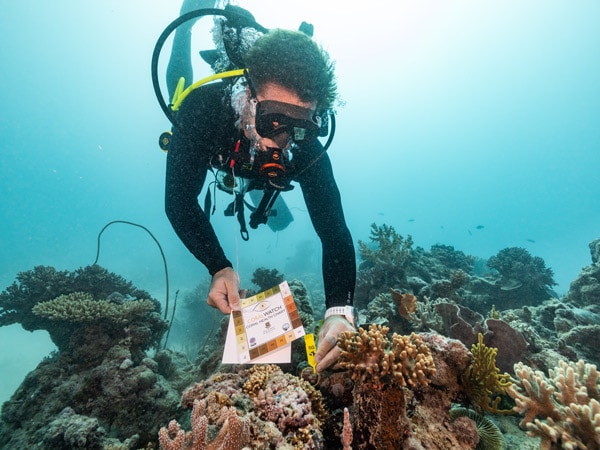
Dr. Dean Miller tagging corals and checking health before collecting
Dr. Dean Miller evaluates the health of the corals prior to collection.

Growing hope for the future of the reef

Unfortunately, climate change is a complex, long-term problem to resolve – and in the context of the Great Barrier Reef and more frequent extreme weather events, time is not on our side. This leaves the biobank as one of the few signals of hope that suggest things might work out okay. “It’s not the solution, but it’s adding resilience to the system," says Myers. “Because if we lose the reef, it’s gone forever."

So although the little, brainless corals in the biobank can never sleep peacefully, knowing they’re tucked away safe and sound in their quiet, comfy cribs means that we can.
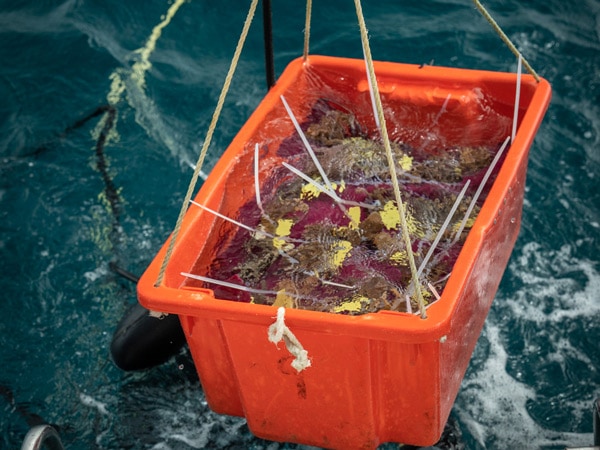
Collected corals being brought up to the vessel
The freshly collected corals are carefully brought up to the vessel. (Image: Martin Stringer)

Living coral biobank tour fees

On top of the regular admission fee, living coral biobank tours at the Cairns Aquarium  are $20 per adult and $14 per child, with all tour fees donated to the Forever Reef Project.

For more travel inspiration, news and tips, read our travel guides on the Great Barrier Reef and Cairns.
Emily McAuliffe
Emily McAuliffe is a Melbourne-based freelance travel writer. She is on the board of the Australian Society of Travel Writers and her writing and photography has featured in many titles in Australia and abroad. She loves nothing more than touching down in a new destination or approaching a familiar place with fresh eyes.
See all articles

Discover the remote Queensland lodgings bringing luxury to the outback

hero media
Adventure and refined Luxury combine at the stunning Rangelands Outback Camp.

Iconic Australian red dirt, ancient rocky landscapes and bursts of greenery and wildflowers all make the small town of Winton, and its surrounds, a sight to behold. Escape the ordinary and unwind in the Queensland outback, where ancient landscapes and off-grid luxury await at Rangelands Outback Camp.

cosy seats in Rangelands Outback Camp
Unwind in the ancient outback.

About Rangelands Outback Camp

Unforgettable 360-degree views of this 95-million-year-old land await at Rangelands; bathed in style and positioned on top of a jump-up (or mesa), your tented camp seamlessly blends into its outback setting.

Set on the 53,935-square-kilometre Rangelands Station – a working cattle property – the abundant wildlife are your only neighbours; kangaroos, echidnas, eagles and other birdlife all call Rangelands home.

Bathed in style, your tented camp seamlessly blends into its outback setting. Indulge with carefully curated menus, personalised service and supersized luxury tents that guarantee a private experience. This exclusive camp only has a maximum of 12 guests at a time.

Here, the aim is pampering. From tasty menus to supersized tents with all the creature comforts, to a range of guided tours around the property and beyond.

Guests are transferred from Winton or Longreach by a dedicated Rangelands driver.

aerial shot of Rangelands Outback Camp tent
Soak in 360-degree views.

Rangelands Outback Camp tours

Join small-group tours and enjoy exclusive access to the ancient Rangelands Rifts with your Rangelands hosts. These incredible rock formations were formed by millions of years of erosion, leaving dramatic channels through the rock. Or explore the surrounds with Rangeland’s touring partner, Red Dirt Tours .

Get sunset birds-eye views over dramatic mesa country in a helicopter, from Queensland’s own Three Sisters to Corey’s Range, stopping at the best lookouts along the way.

Get up close and personal with this rugged land on four wheels, with expert drivers and guides leading guests through famous Bladensburg National Park, visiting Gondwana Stars Observatory and more.

The Winton area is famous for its boulder opals (the second-rarest opal in the world, after black opals), and a stop at the mining community of Opalton sheds a fascinating light on the unique fossicking method used to find them.

A trip to dinosaur country is a must, as this is the place that ramped up Australia’s dino contribution after a fossilised footprint was found in 1962; after more exploration, the discovery of 3300 footprints made it clear this was the world’s only evidence of a dinosaur stampede. Those same footprints are still on display today at Lark Quarry Conservation Park , a 90-minute drive from Winton. Also check out Australia’s largest collection of Australian Dinosaur fossils Australian Age of Dinosaurs, just 30 minutes from Winton. Here, join a tour through a working laboratory, dinosaur canyon and more.

A twice-daily transfer into downtown Winton is offered to guests, where they can explore the Royal Outdoor Theatre, opal shops, Waltzing Matilda Centre and more.

tour being led through Rangeland rifts
Have an exclusive adventure through the Rangeland Rifts. (Image: TEQ)

Sleeping in luxury

After a day of exploring, return to your tranquil tent for a blissful open shower and uninterrupted views from your private deck.

Designed to integrate guests into the surrounding nature, each tent feels like its own private haven. While being off-grid in the outback (in fact, each tent is powered by its own solar panels, with the added support of a backup generator), guests can also luxuriate in comfortable amenities like air conditioning, a supremely comfortable king-size bed and stylish designer touches.

Guests can stroll to the open-air Sunset Deck for breathtaking panoramic views, or to the main lounge and dining tent, where books, on-demand coffee and drinks make it the perfect place to relax after a day in the outback.

inside Rangelands Outback Camp bedroom
Enjoy plenty of space inside, and stunning views outside.

Rangelands Outback Camp dining

As the sun starts to dip below the horizon, gather for drinks and canapés on the expansive Sunset Deck, watching the sun drench the landscape in pinks and oranges as it sinks below the horizon.

Later, head to The Mahal lounge area and dining tent where mealtime magic happens. Savour a gourmet meal made fresh by Rangeland’s onsite chef. The meals use local produce to elevate classic outback dishes, and don’t worry, dietary requirements are happily accommodated.

Enjoy an open bar filled with an expansive hand-selected list of wines and premium beers, with wine pairings offered by Rangelands hosts come dinner time.

Discover more and book your luxurious stay at rangelandscamp.com.