Adelaide to Barossa Valley: the five ways to get there

hero media
Whether you’re cruising down a scenic route, hitching a bus ride, soaring through the skies, or using your mightiest pedal power, the journey from Adelaide to the Barossa Valley is worth every effort

Situated just over 75 kilometres north-east of Adelaide Airport, the magnificent Barossa Valley is bursting with some of the world’s best wineries, cellar doors and foodie experiences. And the good news is there are several ways to make the trip up there. Just one to one-and-a-half hours via car, and far less than that if you’re hopping on a light plane or helicopter, the journey from Adelaide to the Barossa Valley is rarely complicated.

Driving to the Barossa Valley from Adelaide

Got your own set of wheels? The most direct route from Adelaide to the Barossa Valley is via the Northern Connector, which will get you to Tanunda, central Barossa, and home to plenty of restaurants and shops, in around one hour.
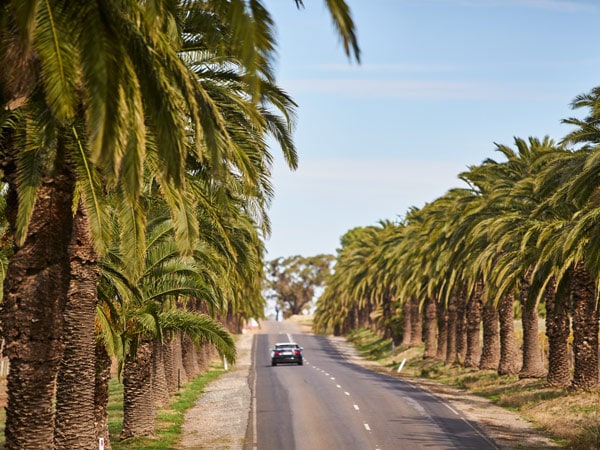
Car driving Seppeltsfield Road in the Barossa
If you want the most direct route, driving is your answer. (Image: South Australian Tourism Commission)

You can also get to Tanunda via Main North Road, which will take you through Lyndoch, home to some of the finest luxury accommodations in the Barossa Valley, before arriving in Tanunda. This route takes about one-and-a-half hours.

If you’re longing for scenery, get onto North East Road from Adelaide Airport and meander through Tea Tree Gully, Chain of Ponds and Williamstown before venturing into the Barossa Valley from the south. It’s another one-and-a-half-hour journey.
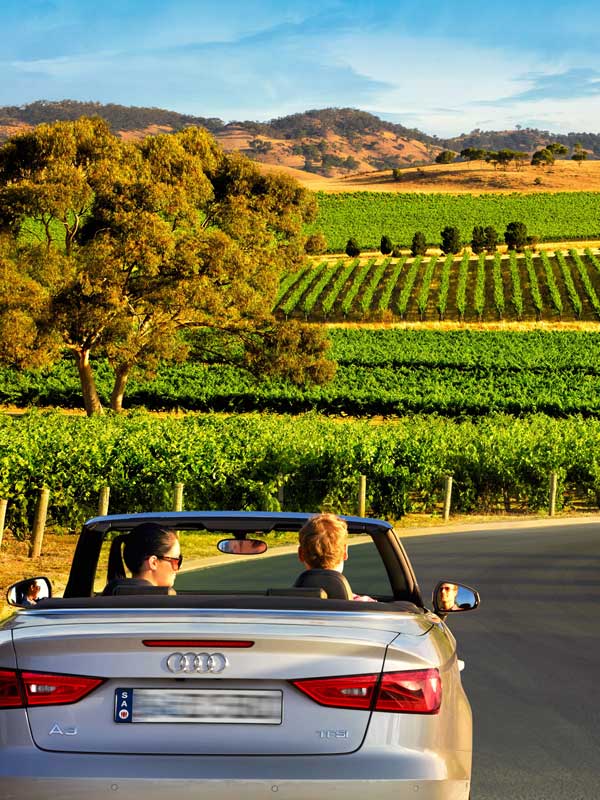
Convertible driving past Kellermeister Wines in the Barossa
There are some good scenic drives on the way to the Barossa. (Image: South Australian Tourism Commission)

Public transport

If you couldn’t manage a car, splitting a taxi from Adelaide Airport to the Barossa Valley between a group won’t set you back as much as you might think. Clocking in somewhere between $150 to $200, it’s obviously as direct a journey as going in your own vehicle.

More affordable, however, is the Adelaide Metro railway service. Catch a one-hour train from Adelaide Railway Station, right in the middle of Adelaide’s CBD, to Gawler Central before transferring to the Barossa via a local LinkSA bus. The 810 bus travels from Gawler Central to Nuriootpa, a top-notch destination for the region’s best winery experiences, via Lyndoch and Tanunda.

Although train and bus services run daily, the journey from Adelaide to the Barossa Valley via public transport is probably the trickiest way to go about things, so check all schedules via their websites just prior to departure day to ensure you’re on track.
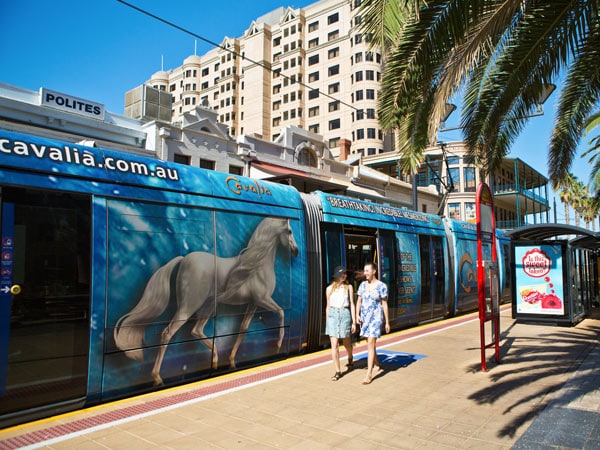
Two women hopping off tram at Moseley Square in Adelaide
Hopping on a train to the Barossa is the most affordable option. (Image: South Australian Tourism Commission)

By air

Getting to Adelaide from anywhere in Australia is easy given Adelaide Airport is serviced regularly with direct flights from cities right across the country. Fly in from Sydney, Melbourne, Brisbane, Perth, Hobart and more by checking the website of your preferred airline for flights. Once you’ve arrived at Adelaide Airport, you can choose from a range of public transport options, in addition to tackling the approximate one-hour journey in your own vehicle or hire car. You’ll find more information on all domestic and international routes, plus regional and charter services on Adelaide Airport’s website .

In the mood for something special? You can also travel via light plane to Parafield Airport, located 45 minutes south of the Barossa Valley and 18 kilometres north of central Adelaide. But if it’s the most luxurious of experiences you’re after, Australia by Air offers private chartered Barossa helicopters. And while we’re talking choppers, don’t miss a spin with Barossa Helicopters , who offer a range of food and wine experiences once you’re in wine country.
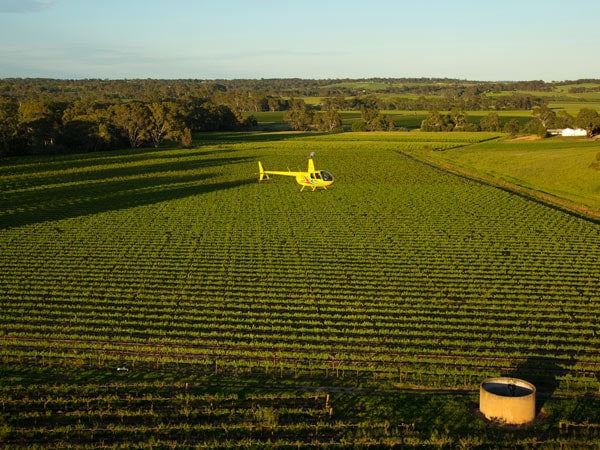
Barossa Helicopters flying above vineyards
There’s no better way to see the Barossa than from above. (Image: Dragan Radocaj)

Tours

Explore the best of the region with your own personal tour guide thanks to a range of brilliant tours that travel from Adelaide to the Barossa Valley. Adelaide Sightseeing is a reliable, highly rated option, offering full-day tours from the CBD to some of the region’s most well-known and best-loved wineries.

There’s also Barossa Unique Tours, which provides trips to and from Adelaide in a fleet of classic wheels; a 1966 Ford Mustang convertible, a Jaguar XF and a motorcycle trike. Barossa Taste Sensations dial the festivities up a notch with their ‘Multi-Day Food and Wine Tour’ of the region. You’ll need to book your own overnight accommodation, but these smooth operators are the ones to know if you’re looking for Barossa’s finest indulgences.
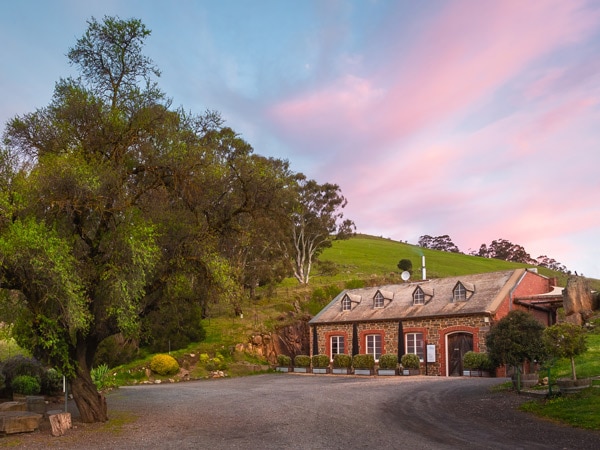
Bethany Wines in the Barossa at sunset
See the region’s best wineries through a tour. (Image: Michael Waterhouse Photography)

Bike

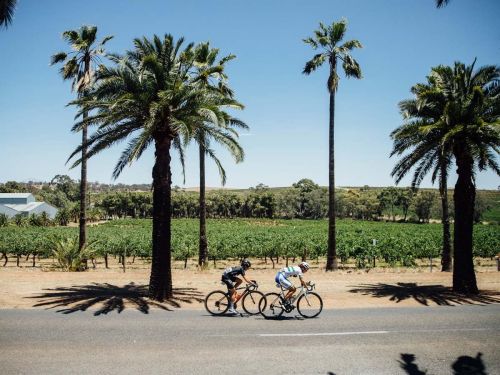
Work for your supper by making your way from Adelaide to the Barossa Valley on a bike. Offering the ultimate scenic route, hopping on two wheels is one of the greatest things to do in this neck of the woods, with various routes winding their way from central Adelaide to wine territory.
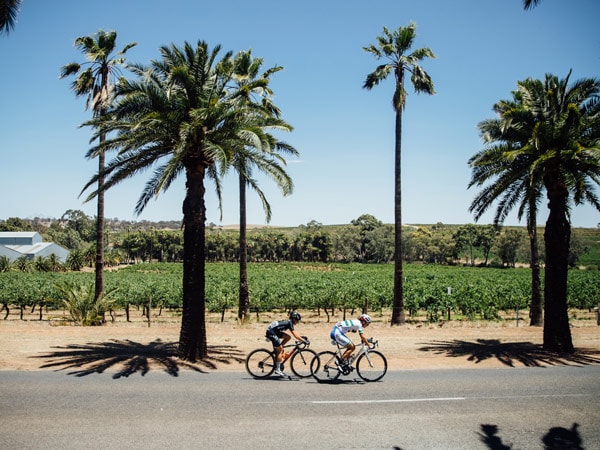
Cyclists riding past vineyards in the Barossa Valley
If you fancy a challenge, make your way from Adelaide to the Barossa Valley on a bike. (Image: South Australian Tourism Commission)

Jump on a train from Adelaide Railway Station in the CBD to Gawler and get on the 40-kilometre, car-free Barossa Trail to Angaston, offering stops in Tanunda and Nuriootpa. You’ll cover some of the region’s best wineries, plus a range of historical sites. There are also various rides from Adelaide along Gorge Road to Williamstown, plus another one along Lower North East Road that links up to Chain of Ponds Road. The South Australian Government offers all the details you’ll need via their ‘Cycle Instead’ initiative .
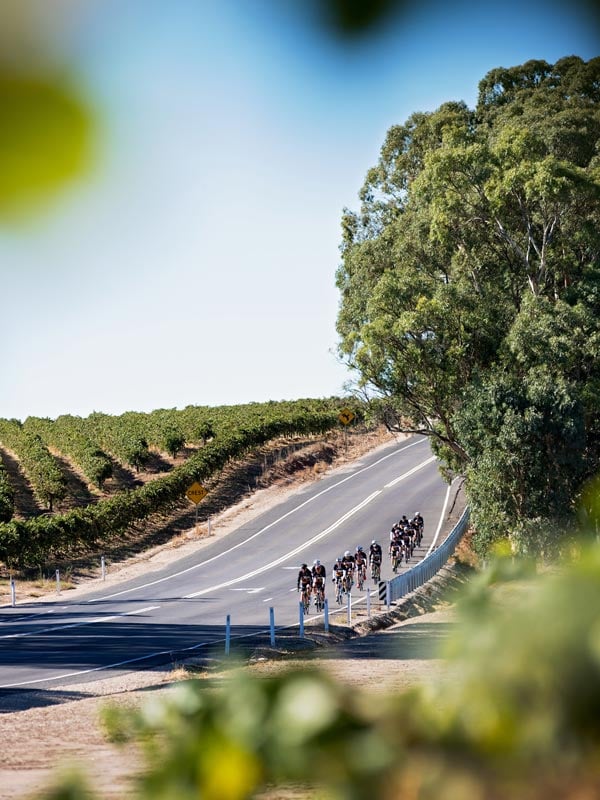
SuperCycle cyclists in the Barossa Valley
The ‘Cycle Instead’ initiative will have you working up a sweat. (Image: South Australian Tourism Commission)

Find more experiences, accommodation, eating and entertainment options in our Barossa Valley travel guide. 

Kristie Lau-Adams
Kristie Lau-Adams is a Gold Coast-based freelance writer after working as a journalist and editorial director for almost 20 years across Australia's best-known media brands including The Sun-Herald, WHO and Woman's Day. She has spent significant time exploring the world with highlights including trekking Japan’s life-changing Kumano Kodo Pilgrimage and ziplining 140 metres above the vines of Mexico’s Puerto Villarta. She loves exploring her own backyard (quite literally, with her two young children who love bugs), but can also be found stalking remote corners globally for outstanding chilli margaritas and soul-stirring cultural experiences.
See all articles

This luxe trawler tour is redefining Victoria’s seafood experience

Victoria’s ‘mussel capital’ is the source of exceptional shellfish used by top chefs far and wide. Step aboard a beautifully refurbished trawler to see how these plump and juicy bivalves are sustainably cultivated.

A curtain is slowly winched from the placid, teal waters just off Portarlington , like a floating garland beside our boat. The ropes heave with blue mussels, the star attraction of our tour. But as we reach to pluck our own, it’s quickly clear they’re not alone; a mass of weird and wonderful creatures has colonised the ropes, turning them into a living tapestry. ‘Fairy’ oysters, jelly-like sea squirts, and tiny, wriggling skeleton shrimp all inhabit this underwater ecosystem.

We prize our bivalve bounty from the ropes, and minutes later the mussels arrive split on a platter. The plump orange morsels are served raw, ready to be spritzed with wedges of lemon and a lick of chilli as we gaze out over the bay. They’re briny, tender and faintly sweet. “This wasn’t originally part of the tour,” explains Connie Trathen, who doubles as the boat’s cook, deckhand and guide. “But a chef [who came onboard] wanted to taste the mussels raw first, and it’s now become one of the key features.”

A humble trawler turned Hamptons-style dreamboat

inspecting bivalve bounty from the ropes
Inspecting the bounty. (Image: Visit Victoria/Hannyn Shiggins)

It’s a crisp, calm winter’s day, and the sun is pouring down upon Valerie, a restored Huon pine workhorse that was first launched in January 1980. In a previous life she trawled the turbulent Bass Strait. These days she takes jaunts into Port Phillip Bay under the helm of Lance Wiffen, a fourth-generation Bellarine farmer, and the owner of Portarlington Mussel Tours . While Lance has been involved in the fishing industry for 30-plus years, the company’s tour boat only debuted in 2023.

holding Portarlington mussels
See how these plump and juicy bivalves are sustainably cultivated.

It took more than three years to transform the former shark trawler into a dreamy, Hamptons-esque vessel, with little expense spared. Think muted green suede banquettes, white-washed walls, Breton-striped bench cushions, hardwood tables, bouquets of homegrown dahlias, and woollen blankets sourced from Waverley Mills, Australia’s oldest working textile mill. It’s intimate, too, welcoming 12 guests at most. And yet there’s nothing pretentious about the experience – just warm, down-to-earth Aussie hospitality.

As we cruise out, we crack open a bottle of local bubbles and nibble on the most beautifully curated cheese platter, adorned with seashells and grey saltbush picked from the water’s edge that very morning. Australasian gannets soar overhead, and I’m told it’s not uncommon for guests to spot the odd seal, pod of dolphins, or even the occasional little penguin.

The sustainable secret behind Victoria’s best mussels

blue mussels off Portarlington
Blue mussels sourced just off Portarlington.

Connie and Lance both extol the virtues of mussels. They’re delicious. A lean source of protein and packed with omega-3 fatty acids, vitamin B12, iron, selenium, and zinc. They’re cooked in a flash (Connie steams our fresh harvest with cider and onion jam). And they’re also widely regarded as one of the most sustainable foods in the world.

Portarlington mussels with lemon and chilli
Mussels served with lemon and chilli.

“Aquaculture is [often] seen as destructive, so a lot of our guests are really surprised about how environmentally friendly and sustainable our industry is,” Lance says. “[Our mussels] would filter 1.4 billion litres of water a day,” he adds, explaining how mussels remove excess nitrogen and phosphorus from the water. “And through biomineralisation, we lock carbon into mussel shells.”

a hand holding a Portarlington mussel
Mussels are a sustainable food.

Despite their glowing list of accolades, these molluscs have long been seen as the oysters’ poorer cousins. “It was a really slow start,” explains Lance, who says that in the early days of his career, “you could not sell mussels in Victoria”.

But word has slowly caught on. Chefs as globally acclaimed as Attica’s Ben Shewry and even René Redzepi of Noma, Denmark, have travelled to these very waters just to try the shellfish at the source, sharing only the highest praise, and using Lance’s mussels in their restaurants.

guests sampling Portarlington mussels onboard
Sampling the goods onboard. (Image: Visit Victoria/Hannyn Shiggins)

According to Lance there’s one obvious reason why the cool depths of Portarlington outshine other locations for mussel farming. “The water quality is second to none,” he says, noting how other regions are frequently rocked by harvest closures due to poor water quality. “We grow, without a doubt, some of the best shellfish in the world.” And with Lance’s bold claims backed up by some of the industry’s greatest names, perhaps it won’t be much longer until more Aussies uncover the appeal of Portarlington’s mussels.