24 things to do on Kangaroo Island

hero media
From spending the night in luxury digs to touring the island on a foodie adventure and some of the best wildlife experiences you’ll find anywhere, there’s no end of things to see and do on this magical South Australian island.

Thanks to its rugged good looks, inviting beaches, iconic natural attractions and accommodation with mesmerising views, Kangaroo Island offers a wonderful mix of things to do.

Got a few days up your sleeve? Whether you’re hankering for a relaxing family holiday or an intimate getaway, Kangaroo Island has become one of South Australia’s most coveted destinations and is the place to be.

Book a trip to Kangaroo Island and check out our recommendations, from world-class wineries to wildlife spotting in wide, open spaces.

1. Stay at Hamilton & Dune

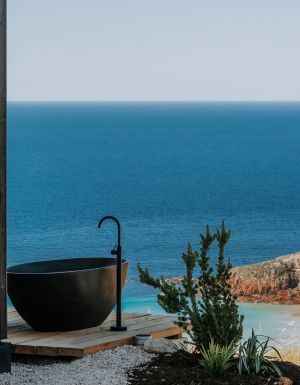
Kangaroo Island is scattered with a range of luxury accommodation, from over-the-top pods to bell tents with all the trimmings. Hamilton & Dune is one of Kangaroo Island’s destination digs: choose between the architecturally designed Dune House, a chic, three-bedroom property where no detail has been overlooked, or Hamilton House, a property that can house larger groups but is a little less ‘designer’. It’s definitely one of our top places to stay on Kangaroo Island.
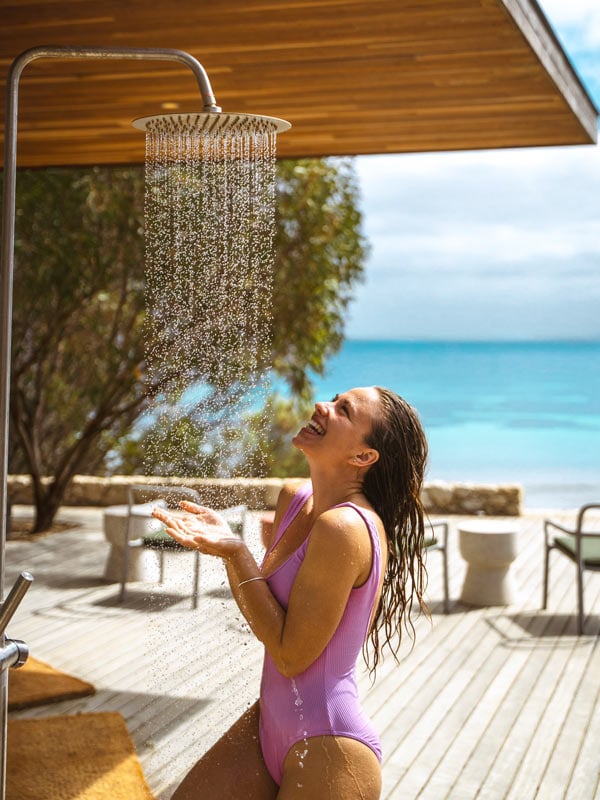
Woman showering in outdoor shower overlooking the ocean at Hamilton & Dune Kangaroo Island.
Shower with a view at Hamilton & Dune. (Image: Sarah Byden & Vinnie Preston)

2. Check out Seal Bay Conservation Park

Wander along the soft sand that makes up Seal Bay Conservation Park and you will come across Australia’s third largest sea lion colony. There are no enclosures on Seal Bay, but there is a wheelchair-accessible boardwalk that leads down to viewing platforms that jut out over Seal Bay, which has been home to the Australian sea lion population for thousands of years. Take a guided tour or go at your own pace.

Seals lay on the beach at Kangaroo Island's Seal Bay.
Seal Bay Conservation Park is Australia’s third-largest sea lion colony. (Image: South Australian Tourism Commission)

3. Visit the teeny penguins of Penneshaw

Kangaroo Island has its own population of little penguins, who can be seen going about their nightly routine over at the Penneshaw Penguin Centre . Take a penguin-friendly torch and walk carefully and quietly to see the world’s smallest penguin in its natural environment.
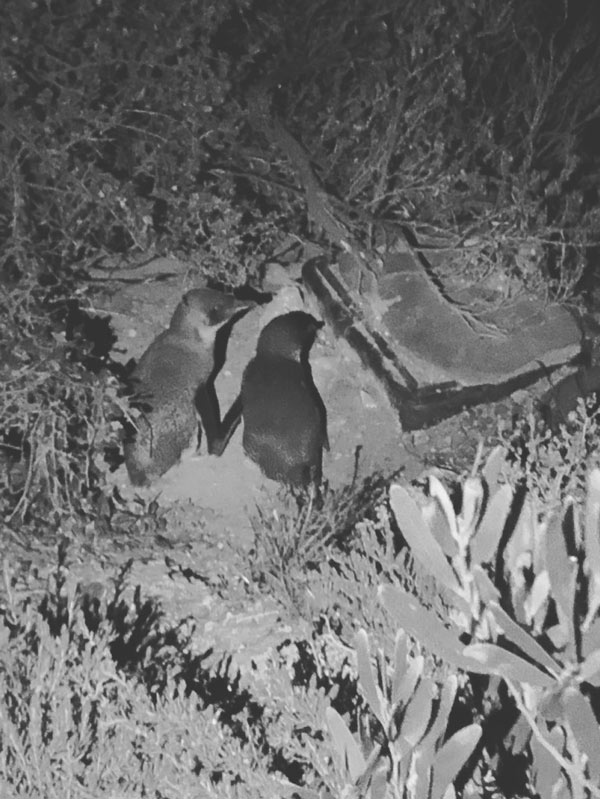
Two penguins holding hands at Penneshaw Penguin Centre.
Penguins hold hands too! (Image: Alana Whennen)

4. Dine at Emu Bay Lavender Farm

Emu Bay Lavender Farm features rows of pretty lavender that unfurl down to a rustic farmgate cafe serving homemade lavender scones and lavender ice cream. It also features in our pick of the most beautiful lavender farms around Australia.

Tea and scones with sprigs of lavender at Emu Bay Lavender Farm.
Indulge in some lavender tea and scones. (Image: Meaghan Coles)

After snapping a few selfies amid the purple-hued field, pop inside to procure aromatic body washes, lavender-filled heat pillows and loose-leafed tea. Visit Emu Bay Lavender Farm between mid-September and mid-May to see the fields painted violet.
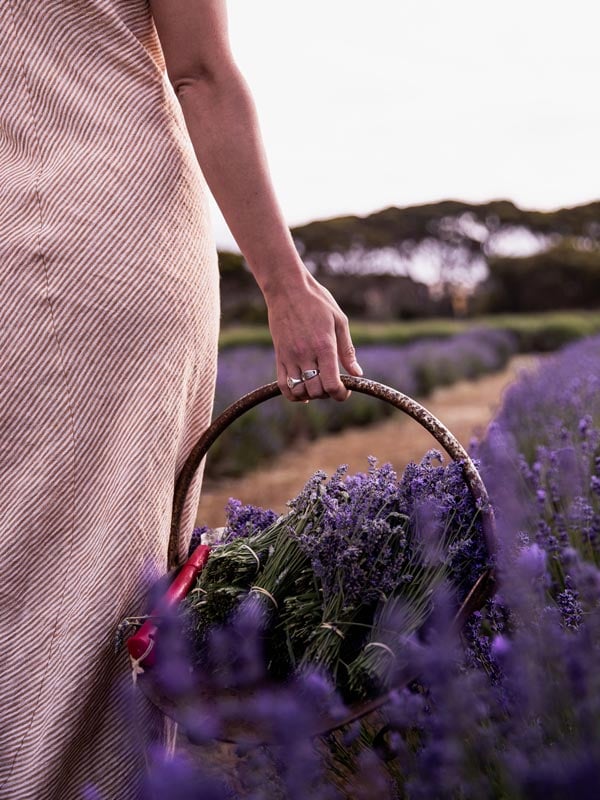
Lady walks with basket full of lavender at Emu Bay Lavender Farm on Kangaroo Island
Emu Bay Lavender Farm is one of the most beautiful lavender farms in Australia. (Image: South Australian Tourism Commission)

5. Swim with wild dolphins

Kangaroo Island Marine Adventures demonstrates its commitment to the environment by not using bait or propellers during its tours. This is good news for eco-conscious travellers who want to frolic and swim with pods of wild dolphins off the coast of KI. Expect to swim and snorkel with between 20 to 50 wild dolphins at any one time as part of the three-hour Island Explorer Tour. If it’s tours you’re after, we’ve also revealed our top picks for Kangaroo Island tours. Give it a read.

A dolphin jumping out of the water at Kangaroo Island.
Swim with a dolphin on Kangaroo Island. (Image: Chris Bray)

6. Go quad biking

Prefer your adventure activities to be land-based? Whether you’re into hooning through the wilderness on a quad bike, sandboarding dunes at Little Sahara or quietly kayaking through picturesque countryside, the team at Kangaroo Island Outdoor Action will not only look after you but leave you wondering why it is you didn’t take up that particular sport of choice all those years ago.

Family having fun on quad bike at Little Sahara Adventure Centre on Kangaroo Island.
Quad biking on sand dunes is a must. (Image: Megan Crabb)

7. Enjoy Vivonne Bay

The beach near Vivonne Bay General Store is often voted as one of the best in the country. And there is nothing more enticing than ordering a whiting burger from the Vivonne Bay General Store and taking it down to the beach to enjoy with your toes in the sand. Wolfing down a whiting burger is considered somewhat compulsory on Kangaroo Island and the Vivonne Bay General Store is famous for them.
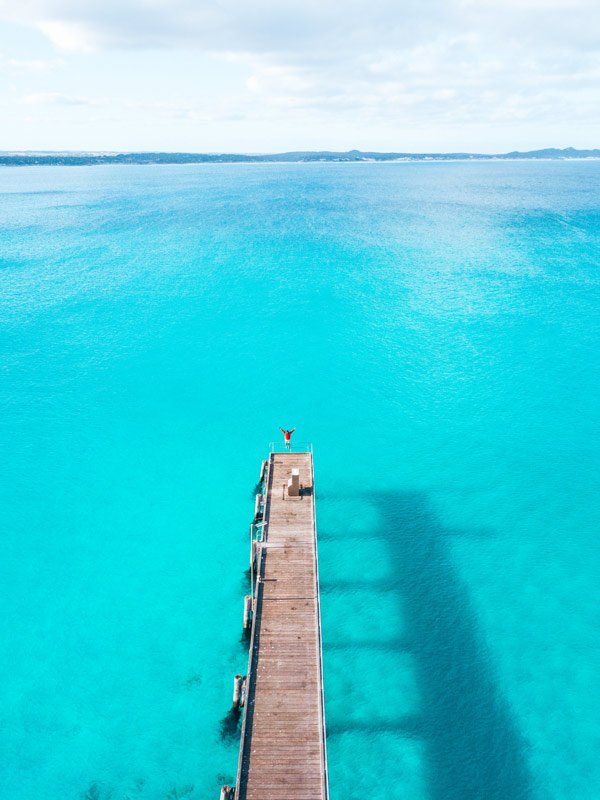
High shot of Vivonne Bay Jetty and the turquoise water around it.
Relax on the Vivonne Bay Jetty. (Image: Mark Elbourne)

8. Invest in the island’s craft beer and gin industry

Kangaroo Island Spirits is Australia’s first craft distillery and the perfect place to kick back and enjoy a tasting tour of wild gin. If you prefer a craft beer, Kangaroo Island Brewery , located just outside Kingscote, serves eight craft beers as well as a decent menu in a relaxed setting. Sunny Sunday afternoon sorted.

Kangaroo Island Brewery worker walks behind bar with rustic scenery.
Kangaroo Island Brewery is the ideal relaxed vibe. (Image: Josie Withers)

9. It’s a notable wine region

Island hop in style around Kangaroo Island onboard the Kangaroo Island Trail Hopper for a hop-on, hop-off tour of key spots around Kingscote, including The Islander Estate Vineyards , where you can pick up a bottle of its award-winning Investor cabernet France. Kangaroo Island Trails also offers a full-day tasting tour that includes a stop at Bay of Shoals Wines . You can also enjoy self-drive the winery trail of Kangaroo Island’s must-visit wineries including Dudley Wines .
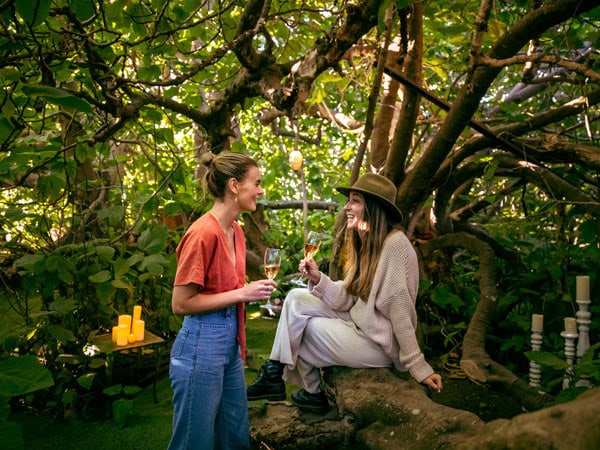
Two women drink wine at Gastronomo Enchanted Fig Tree on Kangaroo Island.
Kangaroo Island Trails includes lunch at Gastronomo. (Image: South Australian Tourism Commission)

10. It’s home to the most quintessentially Australian degustation experience

There’s no place better to take an outside table and enjoy some of the finest KI produce at Sunset Food & Wine as you watch the sunset dip into the scorched earth. Add a few kangaroos to the picture and the odd birdsong and you have the degustation meal of a lifetime.
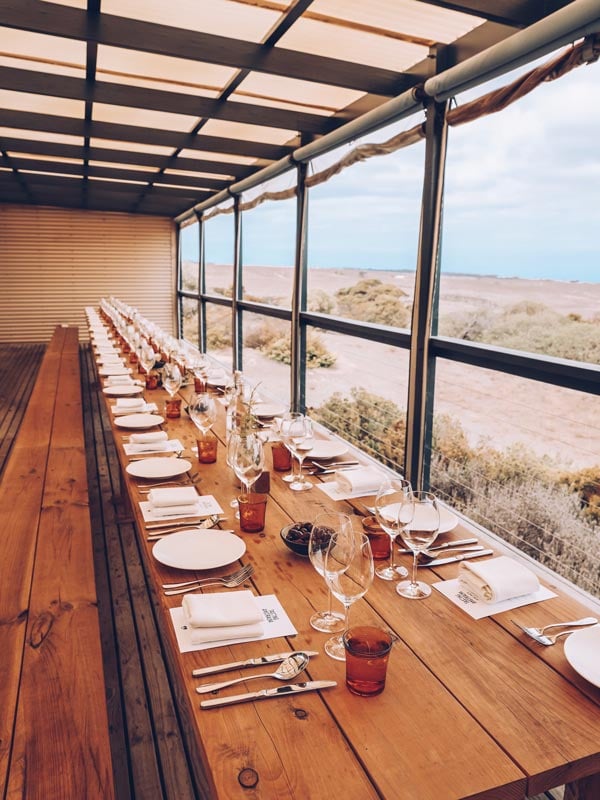
Table set for Sunset Food & Wine
Enjoy the finest Kangaroo Island produce at Sunset Food & Wine. (Image: Elise Cook)

11. There’s no place better to enjoy a road trip

Love to get behind the wheel for an hour or two of outback car karaoke? Amateur chanteuses will be thrilled with the island’s 1,600 kilometres of scenic road – mostly unsealed – snaking its way past soaring cliffs, sand dunes and the ever-present wildlife. It takes two hours and 20 minutes to drive east to west and 45 minutes north to south and yes, you will need a 4WD with powerful brakes (those kangaroos love to hop right out in front of your car).
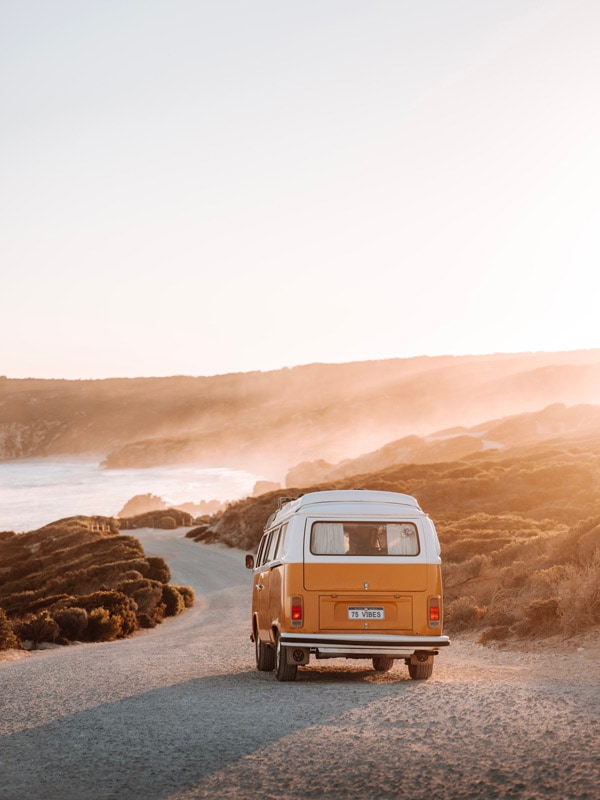
Kombi Van is parked at Pennington Bay on Kangaroo Island.
Kangaroo Island road trips are a must. (Image: Jordan McArthur Mattea Carson)

12. A scenic ferry experience is included

Sure, there are quicker ways to get to Kangaroo Island than taking the SeaLink Ferry from Cape Jervis (around one hour and 40 minutes south of Adelaide), but airlines don’t touch the sides of what the ferry journey across to Penneshaw offers. First, there’s the scenic drive through the Fleurieu Peninsula, and then there are the wonderful people you meet during the crossing. The cherry on top? A post-ferry meal at Millie-Mae’s Pantry , located right by the ferry terminal.
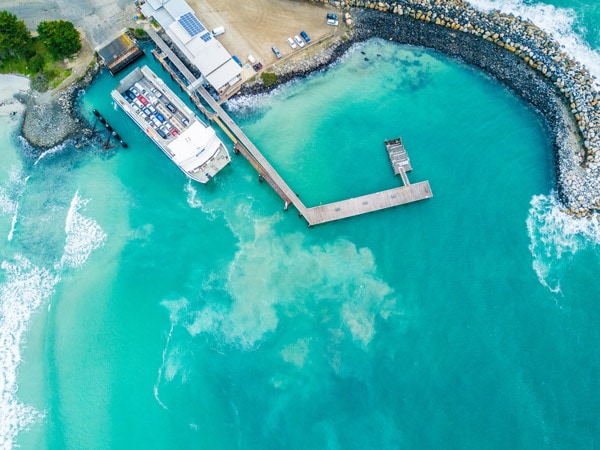
Aerial shot of SeaLink Ferry Terminal on Kangaroo Island.
The scenic SeaLink Ferry is a dream. (Image: Isaac Forman, Serio)

13. Go a-fishing

For die-hard fishing fans, a fishing charter is one of the best ways to experience the waters around Kangaroo Island. Catches can include kingfish, tuna, gummy shark, squid, trevally, and much more. Fishing charters such as Emu Bay Fishing and Kangaroo Island Fishing Adventures are on hand to show you all the top fishing spots that only locals know about.
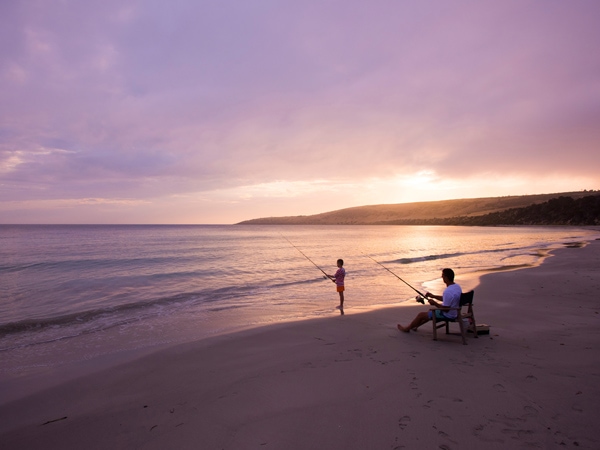
Man and boy fishing at Antechamber Bay on Kangaroo Island.
Fishing on Kangaroo Island is an unforgettable experience. (Image: South Australian Tourism Commission)

14. You can visit Raptor Domain

This popular island conservation centre continues to thrill with its famous demonstrations of birds of prey. Visitors to Raptor Domain can expect one-hour shows featuring everything from wedge-tailed eagles to kookaburras and owls. While the centre rescues many orphaned, injured and sick birds each year, it is also home to snakes and lizards and creepy crawlies and presents a fang-tastic venom/reptile show.
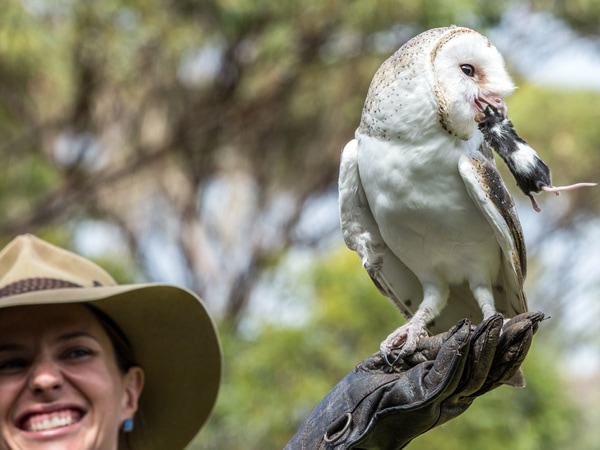
Owl eating a mouse at Raptor Domain on Kangaroo Island.
Watch an owl demonstration at Raptor Domain. (Image: Tourism Australia)

15. Have a thrilling day with the kids

As well as quad biking and sand tobogganing, the Kangaroo Island Shipwreck Trail can be explored by foot or by water if you’re diving. For a laid-back afternoon out, the Emu Ridge Eucalyptus Oil Distillery runs tours around their farm property to learn about the products that are made here.

16. This is the place for food tours

Whether you’re after a quick oyster tour or one that takes up the whole day, Kangaroo Island is still in business. For those who hunger after fresh seafood, The Oyster Farm Shop, located in American River, offers visitors a land-based tour (no trips out to their oyster leases just yet), combined with a shucking demonstration and tastings.

Luxury tour operator Exceptional Kangaroo Island offers excursions such as the one-day small group or private Fine Flavours tour, which takes in everything from oysters to honey, wine, gin, olives and olive oil, and the three-day private Fished, Farmed and Fermented tour, which invites visitors to connect with the island’s local producers as well as its landscapes and wildlife.

Person holding a handful of fresh unshucked oysters at The Oyster Farm Shop on Kangaroo Island.
Don’t resist a stop at The Oyster Farm Shop. (Image: The Oyster Farm Shop)

17. Penneshaw Market Day

If you happen to be on the island on the first Sunday of the month any time from October to April, be sure to check out Penneshaw Market Day – an event that brings the whole town alive with a selection of regional foods, musical entertainment, community activities and artisan arts and crafts. You can also buy local at Kingscote Farmers & Artisans Market and enjoy a foraged breakfast of sorts.

18. Explore the art of the island

The residents here are a creative bunch, and you can spot the best of Kangaroo Island’s art and jewellery at creative hubs like Kangaroo Island Gallery , KI & Co , A.R. Tells a Story Gallery and Fine Art Kangaroo Island .
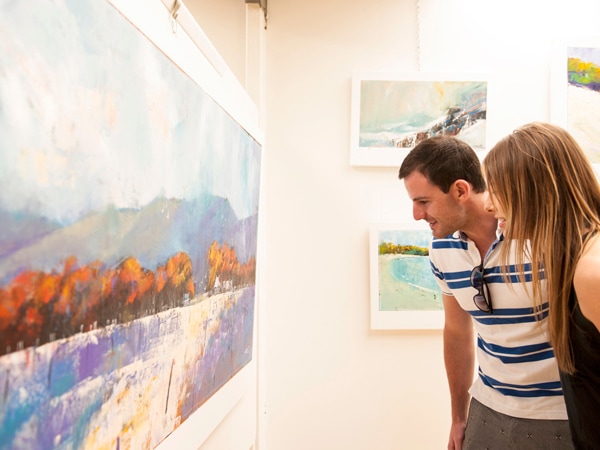
Couple looking at artwork at Shep's Studio in Kingscote on Kangaroo Island.
Immerse yourself in the art of the island. (Image: South Australian Tourism Commission)

19. Support local Australian producers

Fill up your car on the island and kit out your rented accommodation with items you’ve purchased from the local supermarket. Head down to Kingscote gift shop and load up on souvenirs before popping in at every artisan enterprise and dropping cash like a Rothschild. Think Fryar’s Free-Range Eggs , D’Estrees Bakery sourdough, Kangaroo Island Fresh Garlic , Kangaroo Island Oats and Kangaroo Island Sea Salt .
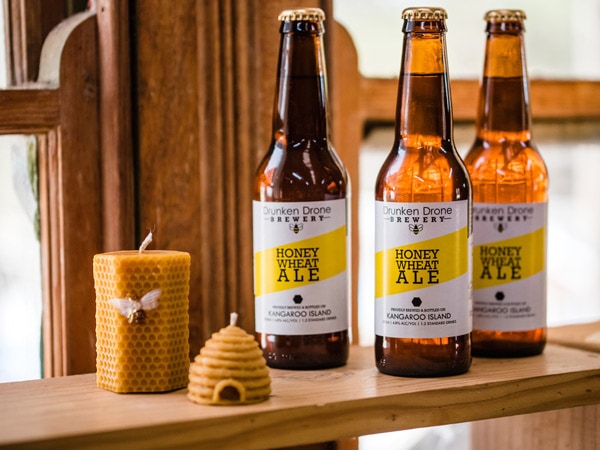
Clifford's Honey Farm Honey Wheat Ale bottles with beeswax candle.
Support local on Kangaroo Island. (Image: Meaghan Coles)

20. Get honey-ed up with the island’s bees

KI is famous for its Ligurian bees, who genetically speaking, have not cross-bred with any other species. Sample the fruits of their labour and purchase some Kangaroo Island honey by visiting Kangaroo Island Living Honey , Clifford’s Honey Farm and The Kangaroo Island Ligurian Bee Co .

Honey drips off a hive frame at Kangaroo Island Ligurian Bee Co
Taste the famous honey made by the Kangaroo Island Ligurian Bee Co. (Image: South Australian Tourism Commission)

21. Have an Instagram-friendly meal

There aren’t many other places to eat more gram friendly than The Fig Tree (formerly Gastronomo: The Enchanted Fig Tree). A sprawling fig tree that dates back over 120 years, this Snelling Beach wilderness eatery offers beautiful surroundings in the soft green leaves of the day or the fairylight-dappled evening. Needless to say, bookings are essential.
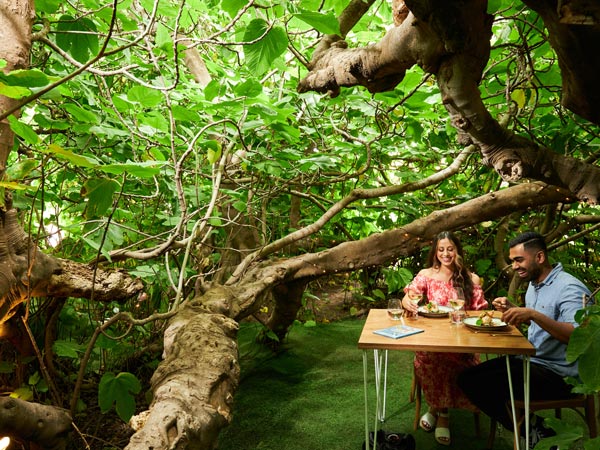
Couple dining at Gastronomo: The Enchanted Fig Tree.
You’ll definitely get the Insta shot at The Fig Tree. (Image: South Australian Tourism Commission)

22. Spot a koala

You can get up close with one of Australia’s cutest residents at the Hanson Bay Wildlife Sanctuary . The sanctuary – which is also home to kangaroos, crimson rosellas, Tammar Wallabies, and echidnas – is one of the best places to witness and learn about the regeneration of Kangaroo Island following the the 2019/20 Black Summer bushfires.

Take a Guided Koala Walk & Bushfire Ecology Tour or a Sunset Noctural Adventure Tour, or book into a beachfront cabin for true immersion in the great outdoors.
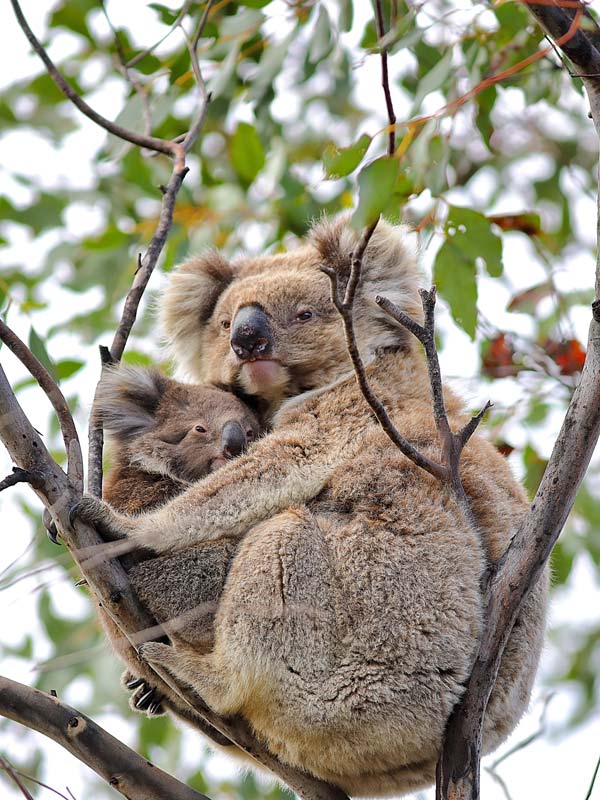
Two koalas cuddling in a tree on Kangaroo Island.
There are plenty of opportunities to see a koala. (Image: Jetabout Holidays)

23. Strap on hiking boots for a walk

From Flinders Chase National Park with the Remarkable Rocks and Admiral’s Arch to the lighthouse in Cape Willoughby Conservation Park , Kangaroo Island has plenty of sites to ramble along to. Wait patiently for a tell-tale ripple on the Platypus Waterholes Walk , or climb Prospect Hill for the highest views on the island . Or go underground with a tour at Kelly Hill Caves Conservation Park .

Cape Willoughby lighthouse.
Take a walk to Cape Willoughby. (Image: Gab Rivera)

Or tackle the Kan­ga­roo Island Wilder­ness Trail, a 66-kilometre five-day walk­, independently or with a licensed operator such as Life’s an Adventure.

24. Beach-hop Kangaroo Island

While beaches like Emu Bay and Vivonne Bay get a big portion of the attention (well-deserved, considering the latter was once voted Australia’s number one beach), there are plenty of other spots on Kangaroo Island to set up your towel as well. Spot dolphins on Snellings Beach, and head through a cave system to get to Stokes Bay.
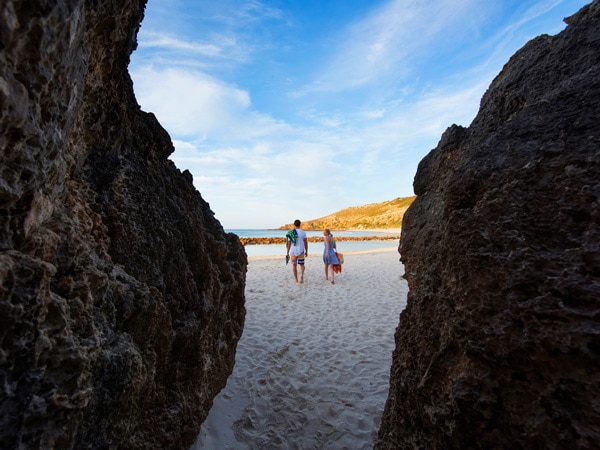
Couple walking through cave to get to Stokes Bay.
Walk through caves to get to Stokes Bay. (Image: South Australian Tourism Commission)

Brown Beach is family friendly with hand barbeque facilities, while the waters of Chapman River offer the chance for a freshwater dip. Fancy a surf? Pennington Bay Beach on the south coast is your best bet to catch some waves while you’re here. Need more? You can check out the entire list of top Kangaroo Island Beaches here.
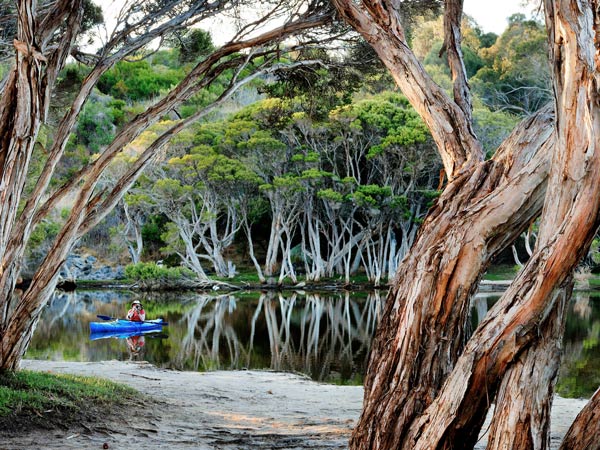
Man kayaking on Chapman River.
Take a dip in Chapman River’s fresh water. (Image: Julie Fletcher)
Additional updates written by Kate Bettes
Head to our Kangaroo Island travel guide for more on what to do while you’re on the ground.
Dilvin Yasa
Dilvin Yasa is a freelance journalist, author and TV presenter whose travels have taken her from the iceberg graveyards of Antarctica to the roaring rapids of Uganda. Always on the lookout for that next unforgettable meal, wildlife moment or 80s-themed nightclub, she is inexplicably drawn to polar destinations despite detesting the cold.
See all articles
hero media

The Macedon Ranges is Victoria’s best-kept food and wine secret

Located just an hour north-west of Melbourne, the largely undiscovered Macedon Ranges quietly pours some of Australia’s finest cool-climate wines and serves up some of Victoria’s best food.

Mention the Macedon Ranges and most people will think of day spas and mineral springs around Daylesford, cosy weekends away in the countryside or the famous Hanging Rock (of enigmatic picnic fame). Or they won’t have heard of the Macedon Ranges at all.

But this cool-climate destination has been inconspicuously building a profile as a high-quality food and wine region and is beginning to draw serious attention from oenophiles and epicureans alike.

The rise of Macedon Ranges wine

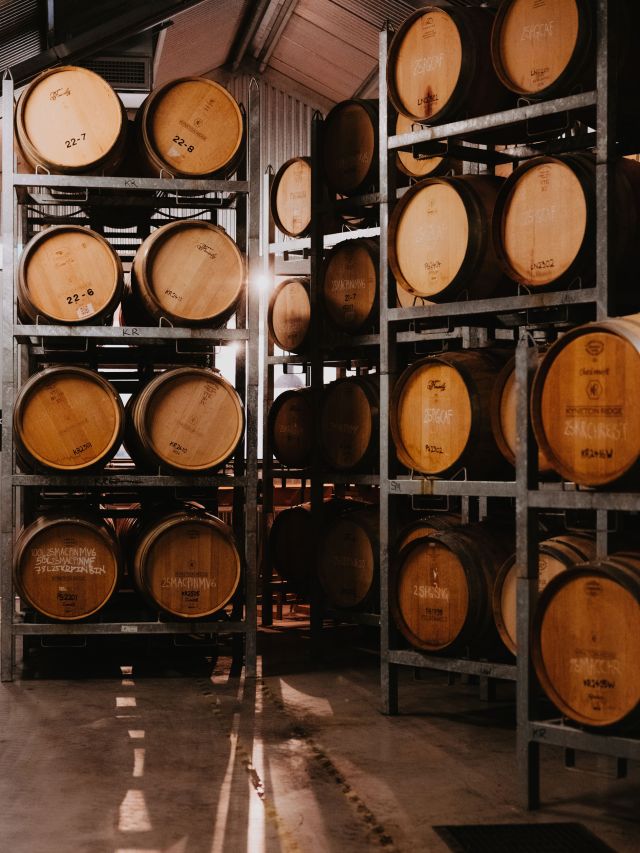
liquid gold barrels at Kyneton Ridge Estate Winery
Barrels of liquid gold at Kyneton Ridge Estate Winery. (Image: Chloe Smith Photography)

With elevations ranging from 300 to 800 metres, Macedon Ranges vineyards are among the highest in the country. This altitude, combined with significant day/night temperature swings, makes for a slow ripening season, in turn nurturing wines that embody elegance and structure. Think crisp chardonnays, subtle yet complex pinot noirs and delicate sparkling wines, along with niche varietals, such as gamay and nebbiolo.

Despite the region’s natural advantages – which vary from estate to estate, as each site embodies unique terroir depending on its position in relation to the Great Dividing Range, soil make-up and altitude – the Macedon Ranges has remained something of an insider’s secret. Unlike Victoria’s Yarra Valley or Mornington Peninsula, you won’t find large tour buses here and there’s no mass marketing drawing crowds.

Many of the 40-odd wineries are family-run operations with modest yields, meaning the wineries maintain a personal touch (if you visit a cellar door, you’ll likely chat to the owner or winemaker themselves) and a tight sales circle that often doesn’t go far beyond said cellar door. And that’s part of the charm.

Though wines from the Macedon Ranges are just starting to gain more widespread recognition in Australia, the first vines were planted in the 1860s, with a handful of operators then setting up business in the 1970s and ’80s. The industry surged again in the 1990s and early 2000s with the entry of wineries, such as Mount Towrong, which has an Italian slant in both its wine and food offering, and Curly Flat , now one of the largest estates.

Meet the new generation of local winemakers

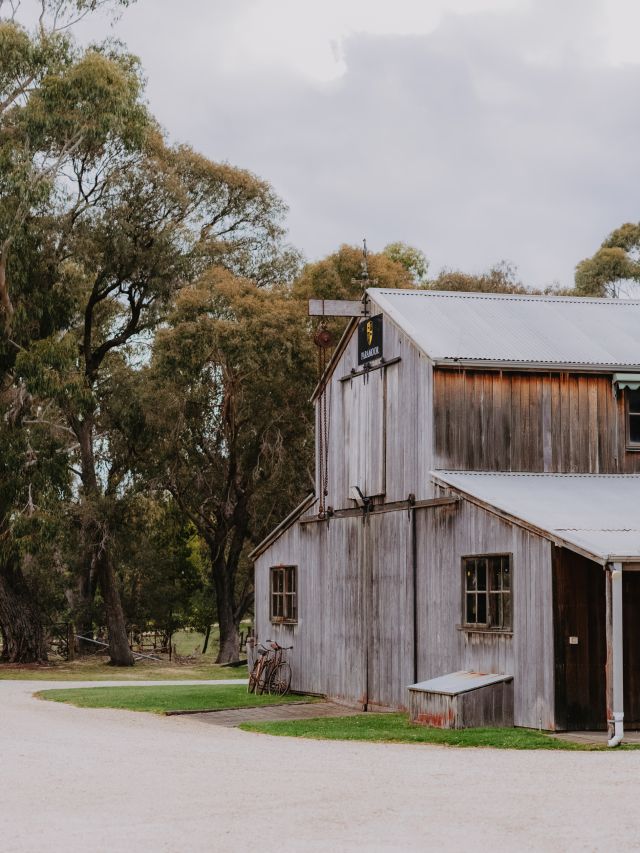
the Clydesdale barn at Paramoor.
The Clydesdale barn at Paramoor. (Image: Chloe Smith Photography)

Then, within the last 15 years, a new crop of vignerons like Andrew Wood at Kyneton Ridge Estate , whose vineyard in 2024 was the first in the Macedon Ranges to be certified by Sustainable Winegrowing Australia; Geoff Plahn and Samantha Reid at Paramoor , who have an impressive cellar door with a roaring fire and studded leather couches in an old Clydesdale barn; and Ollie Rapson and Renata Morello at Lyons Will , who rapidly expanded a small vineyard to focus on top-shelf riesling, gamay, pinot noir and chardonnay, have taken ownership of local estates.

Going back to the early days, Llew Knight’s family was one of the pioneers of the 1970s, replacing sheep with vines at Granite Hills when the wool industry dwindled. Knight is proud of the fact that all their wines are made with grapes from their estate, including a light, peppery shiraz (some Macedon wineries purchase fruit from nearby warmer areas, such as Heathcote, particularly to make shiraz) and a European-style grüner veltliner. And, as many other wineries in the region do, he relies on natural acid for balance, rather than an additive, which is often required in warmer regions. “It’s all about understanding and respecting your climate to get the best out of your wines,” he says.

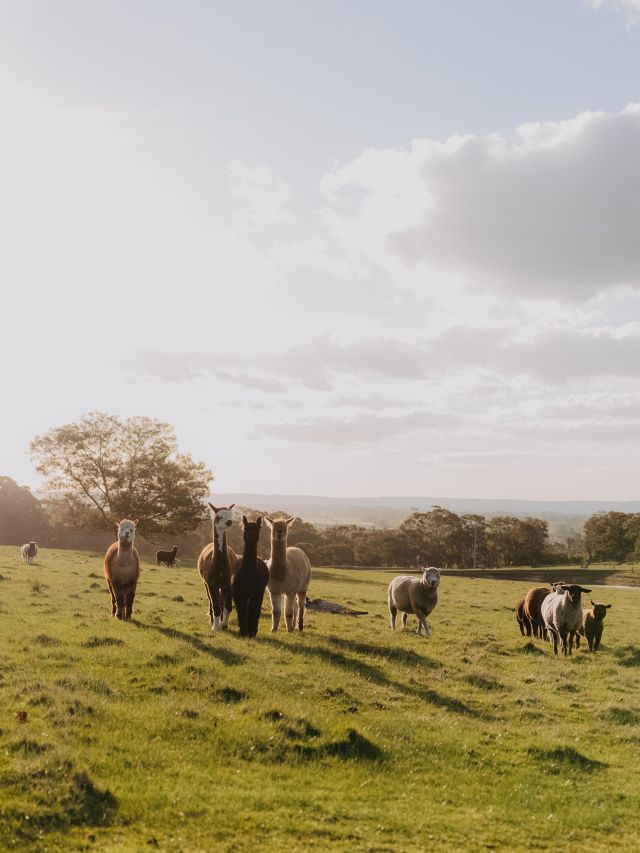
farm animals atKyneton Ridge Estate
Curious residents at Kyneton Ridge Estate. (Image: Chloe Smith Photography)

Throughout the Macedon Ranges, there’s a growing focus on sustainability and natural and low-intervention wines, with producers, such as Brian Martin at Hunter Gatherer making waves in regenerative viticulture. Martin previously worked in senior roles at Australia’s largest sparkling winemaking facility, and now applies that expertise and his own nous to natural, hands‑off, wild-fermented wines, including pét‑nat, riesling and pinot noir. “Wild fermentation brings more complexity,” he says. “Instead of introducing one species of yeast, you can have thousands and they add different characteristics to the wine.”

the vineyard at Kyneton Ridge Estate Winery
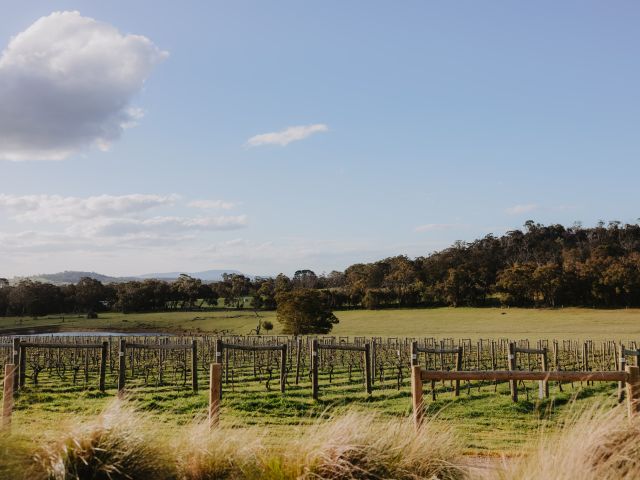
The estate’s vineyard, where cool-climate grapes are grown. (Image: Chloe Smith Photography)

Most producers also focus on nurturing their grapes in-field and prune and pick by hand, thus avoiding the introduction of impurities and the need to meddle too much in the winery. “The better the quality of the fruit, the less you have to interfere with the natural winemaking process,” says Wood.

Given the small yields, there’s also little room for error, meaning producers place immense focus on quality. “You’re never going to compete in the middle [in a small region] – you’ve got to aim for the top,” says Curly Flat owner Jeni Kolkka. “Big wineries try to do things as fast as possible, but we’re in no rush,” adds Troy Walsh, owner and winemaker at Attwoods . “We don’t use commercial yeasts; everything is hand-harvested and everything is bottled here, so we bottle only when we’re ready, not when a big truck arrives.” That’s why, when you do see a Macedon Ranges product on a restaurant wine list, it’s usually towards the pointy end.

Come for the wine, stay for the food

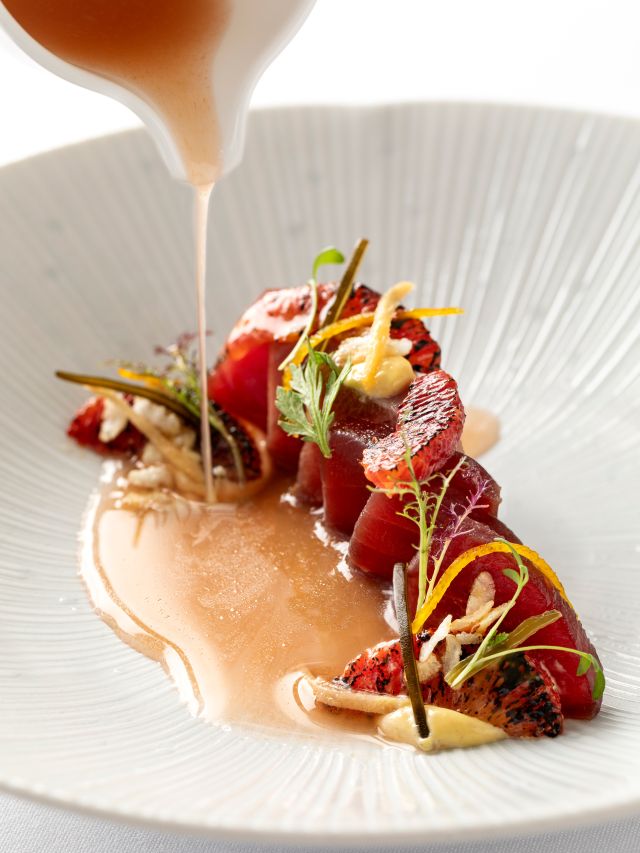
pouring sauce onto a dish at Lake HouseDaylesford
Dining at Lake House Daylesford is a treat. (Image: Chloe Smith Photography)

If wine is the quiet achiever of the Macedon Ranges, then food is its not-so-secret weapon. In fact, the area has more hatted restaurants than any other region in Victoria. A pioneer of the area’s gourmet food movement is region cheerleader Alla Wolf-Tasker, culinary icon and founder of Daylesford’s Lake House.

For more than three decades, Wolf-Tasker has championed local producers and helped define what regional fine dining can look like in Australia. Her influence is palpable, not just in the two-hatted Lake House kitchen, but in the broader ethos of the region’s dining scene, as a wave of high-quality restaurants have followed her lead to become true destination diners.

the Midnight Starling restaurant in Kyneton Ridge Estate Winery
The hatted Midnight Starling restaurant is located in Kyneton. (Image: Chloe Smith Photography)

It’s easy to eat well, whether at other hatted restaurants, such as Midnight Starling in the quaint town of Kyneton, or at the wineries themselves, like Le Bouchon at Attwoods, where Walsh is inspired by his time working in France in both his food offering and winemaking.

The beauty of dining and wine touring in the Macedon Ranges is that it feels intimate and unhurried. You’re likely to meet the winemaker, hear about the trials of the latest vintage firsthand, and taste wines that never make it to city shelves. And that’s worth getting out of the city for – even if it is just an hour down the road.

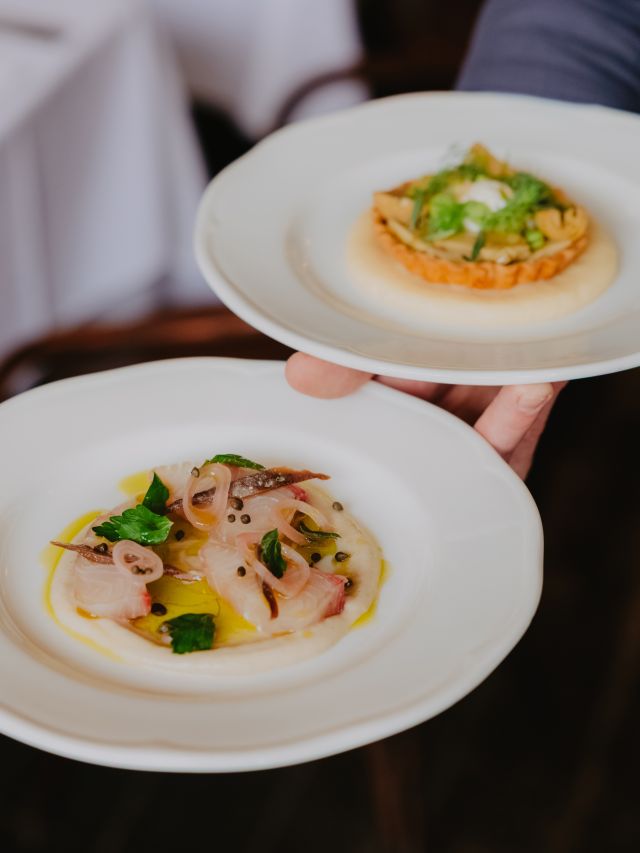
dishes on the menu at Midnight Starling
Delicate dishes on the menu at Midnight Starling. (Image: Chloe Smith Photography)

A traveller’s checklist

Staying there

the accommodation at Cleveland Estate, Macedon Ranges
Stay at the Cleveland Estate. (Image: Chloe Smith Photography)

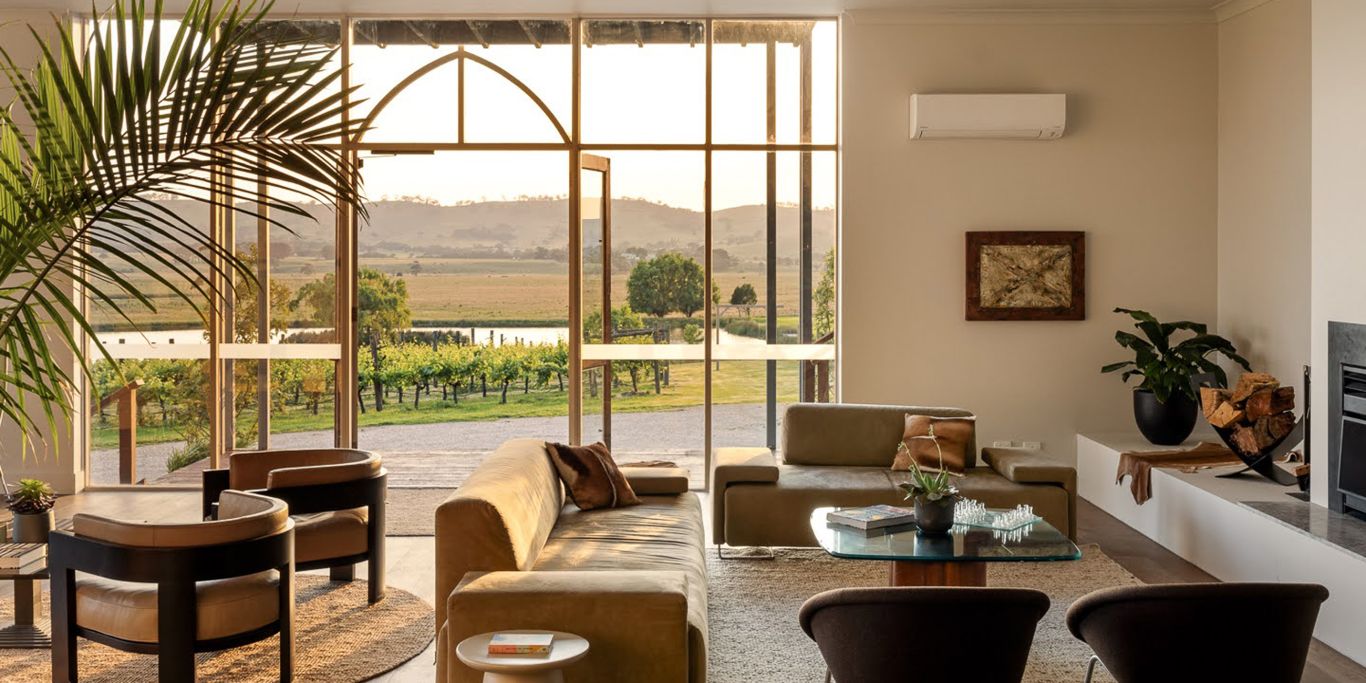
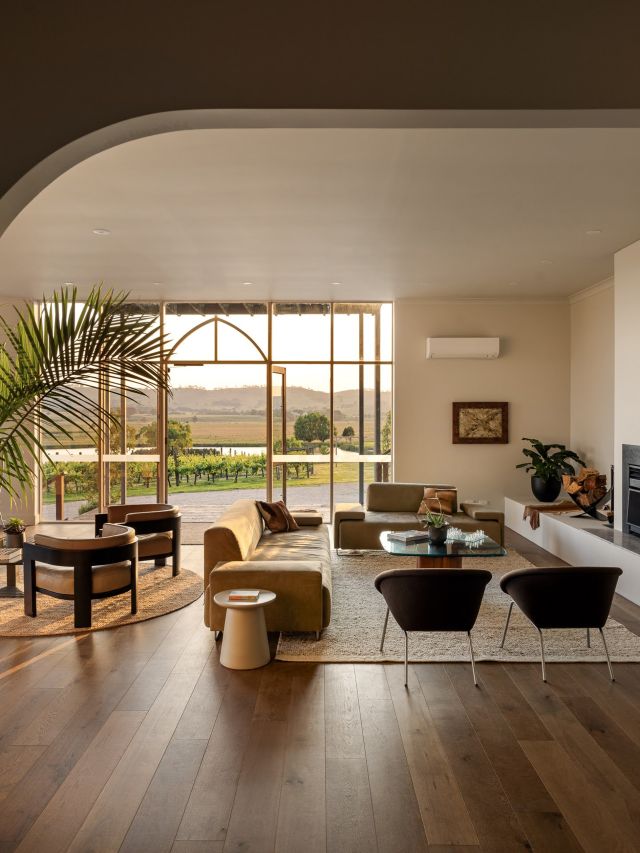
Soak up vineyard views from Cleveland Estate near Lancefield , embrace retro charm at Kyneton Springs Motel or indulge in lakeside luxury at the Lake House .

Eating there

Enjoy a four-course menu at the one-hatted Surly Goat in Hepburn Springs, Japanese-inspired fare at Kuzu in Woodend or unpretentious fine dining at Mount Monument , which also has a sculpture park.

Drinking there

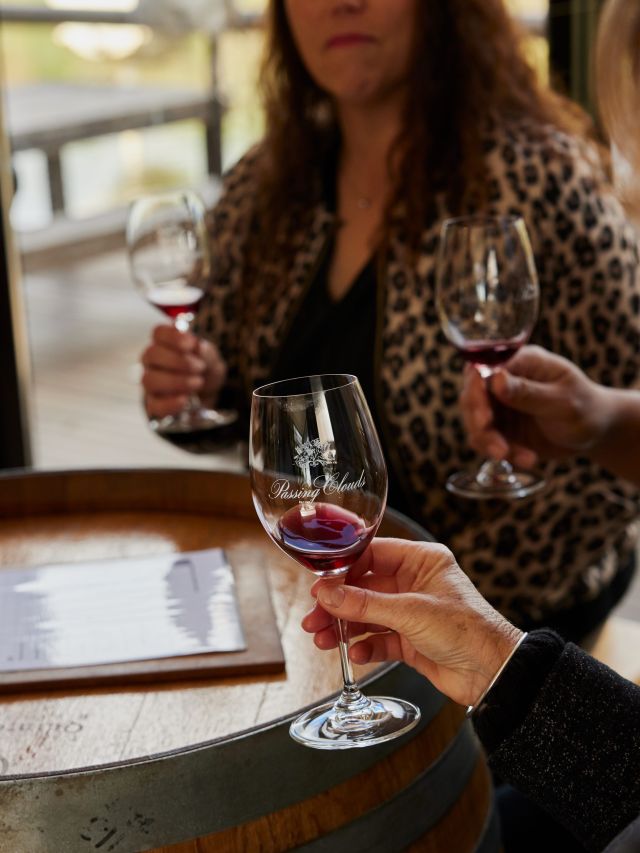
wine tasting at PassingClouds Winery, Macedon Ranges
A tasting at Passing Clouds Winery. (Image: Chloe Smith Photography)

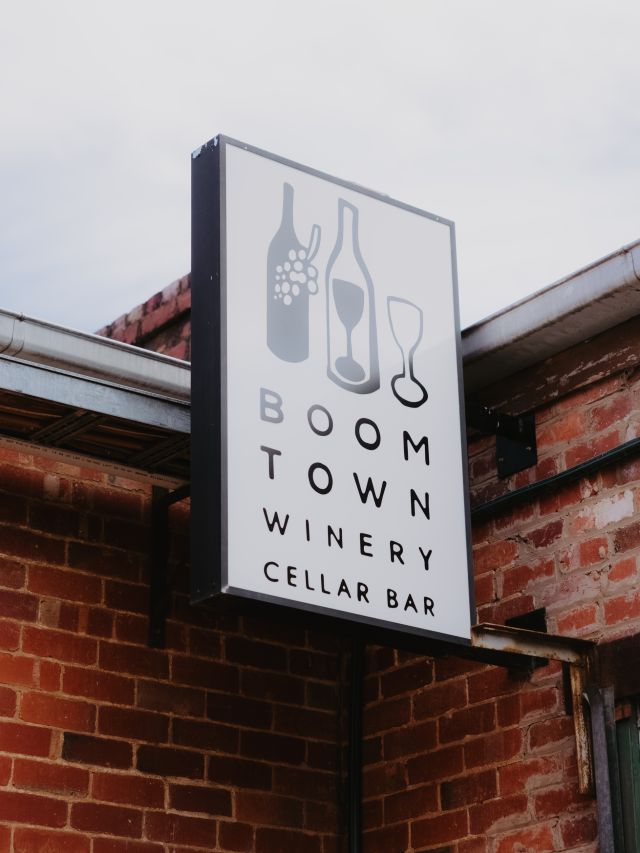
Settle in for a tasting at Boomtown in Castlemaine, sample local drops at the cosy Woodend Cellar & Bar or wine-hop around the many cellar doors, such as Passing Clouds .

the Boomtown Winery and Cellar Bar signage
Boomtown Winery and Cellar Bar. (Image: Chloe Smith Photography)

Playing there

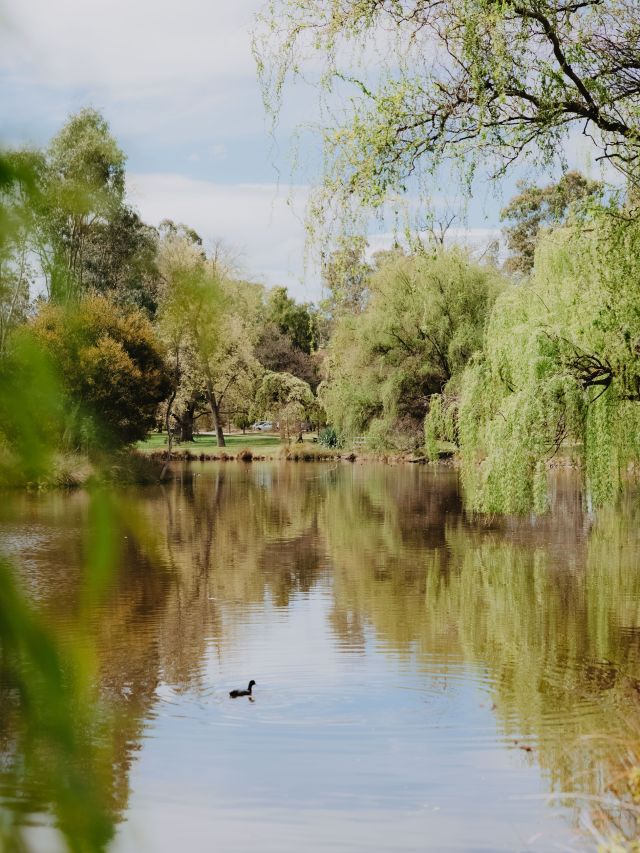
a scenic river in Castlemaine
Idyllic scenes at Castlemaine. (Image: Chloe Smith Photography)

Wander through the seasonal splendour of Forest Glade Gardens , hike to the summit of Hanging Rock, or stroll around the tranquil Sanatorium Lake.

purple flowers hanging from a tree
Purple flowers hanging from a tree. (Image: Chloe Smith Photography)