13 reasons Coober Pedy is delightfully strange

hero media
Opal mining town enigma Coober Pedy is very special place. Very special. Here are 13 reasons why this is Australia’s most delightfully strange town.

1. Blowing up stuff is a proud tradition

Not too much gets blown up these days but back in the 1980s you could buy dynamite over the counter at the local supermarket. The locals would settle disputes by blowing things sky-high rather than with their fists or a trip to court. The said-same courthouse, a police car and a restaurant were all destroyed at one time or another (apparently with no related deaths).

2. No dynamite in the cinema, if you don’t mind

A legacy of that proudly pyrotechnic era is a message which still flashes up before the feature film at the local drive in: ‘Patrons: Explosives Are Not To Be Brought Into This Theatre – The Management’.

3. Surnames are banned

Well, not officially, but they’re not embraced nor encouraged. People go their whole lives out here just being called by their nickname, such as Pommy John or Chicken Man, without anyone ever finding out who they really are. Sometimes it’s best not to ask too many questions – if you get what I mean.

4. No one has a clue how many people live here

There are the two versions of Coober Pedy’s population: the official and the unofficial. The 2011 census stated that were 1695 residents living here. But even the local council laughs at that figure, claiming it to be nearer to “around 3500". So why the difference? Let’s just say that the town is a great place to come to get a “fresh start".

5. It’s like a film set jumble sale
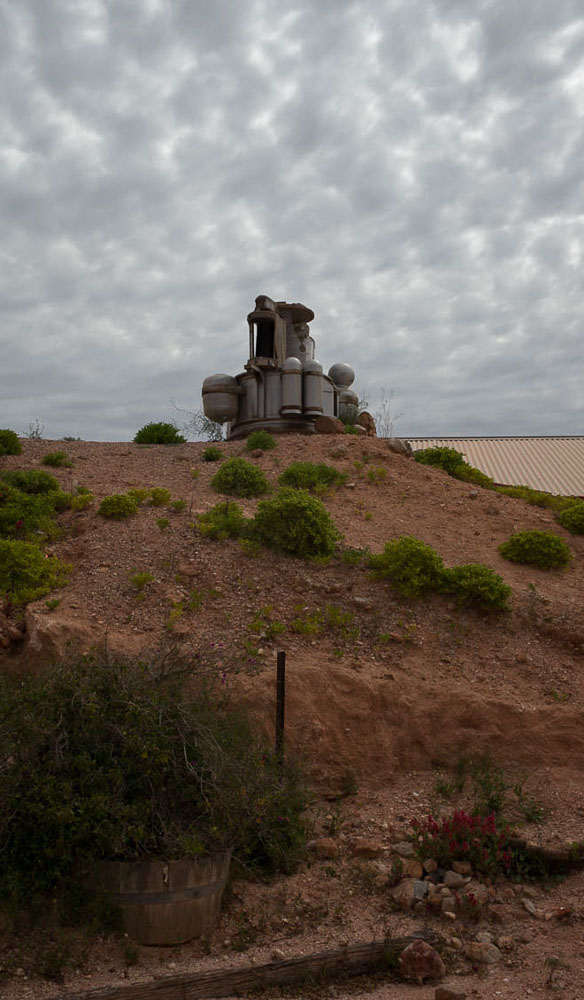
Film prop Red Planet Coober Pedy
Film flotsam: a prop from Val Kilmer’s Red Planet surveys Coober Pedy’s main street (photo: Jonathan Cami).

The landscape around Coober Pedy has doubled for everything from post-apocalyptic wastelands to Mars, starring in films like Mad Max Beyond Thunderdome, Priscilla, Pitch Black (Vin Diesel) and Kangaroo Jack. You’ll stumble across the odd discarded (and the reclaimed) prop just walking around town, such as a Mad Max Interceptor and a ‘blaster’ from Val Kilmer’s flick Red Planet.

6. It’s amazingly multi-cultural
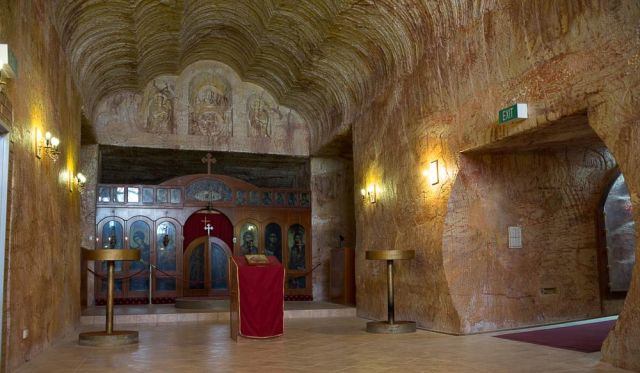
Underground Serbian Orthodox Church Coober Pedy
Subterranean worship: the underground Serbian Orthodox Church, Coober Pedy (photo: Jonathan Cami).

Uncharacteristically for a small Australian country town of only a few thousand souls, Coober Pedy is intensely multicultural. In fact, with 45-plus cultures, from Serbians to Sri Lankans, it could be the most diverse place per capita in Australia. The Greek community is still one of the most dominant.

7. It’s got more opal shops than anywhere else on Earth
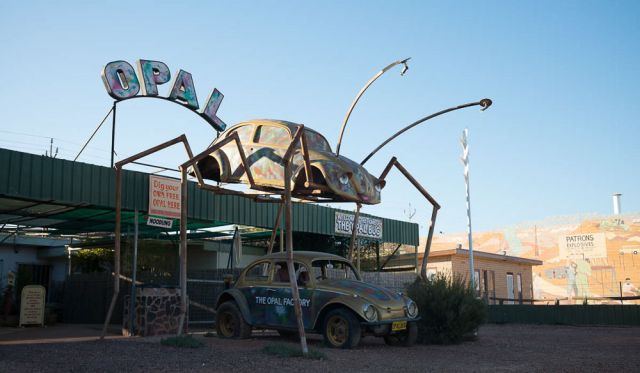
Opal shop Coober Pedy
Opal shops are just one of the many places you can buy the precious gems in Coober Pedy (photo: Jonathan Cami).

Again, another unofficial Coober Pedy statistic which could or could not be true. But we’re not talking about official shops anyway, of which there are plenty, but more the fact that you can buy a precious gem pretty much anywhere in town: from hotels and cafes to, well, other places that don’t offer money-back guarantees; the backbone of the ‘black opal economy’ here.

8. Most holey

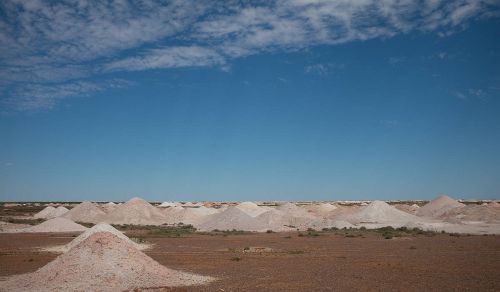
One Coober cliché that lives up to the hype are comparisons with the moon’s surface (because of the countless chasm-like craters from disused mines, each with its own little pile of dirt next to it). There is no ‘backfill’ order in the town (you don’t have to fill in your claim), which gives you an endless choice of where to hide a ‘ratter’ (an opal thief). Well, so the legend goes.

9. Second-chance draw

This lack of a backfill regulation does have an upside, helping out budding and struggling miners who can’t afford the equipment to dig their own claims. It’s estimated that around 40 per cent of opal is found by “secondary" miners and noodlers: people who sift through a mine’s waste dirt. Visitors can do this at a couple of sites in town. You never know.

10. Immortal boots

Legend has it that Coober Pedy’s cemetery, Boot Hill, is named thus because people here work so hard and long that they die, and are buried, with their boots on.

11. Boiling earth
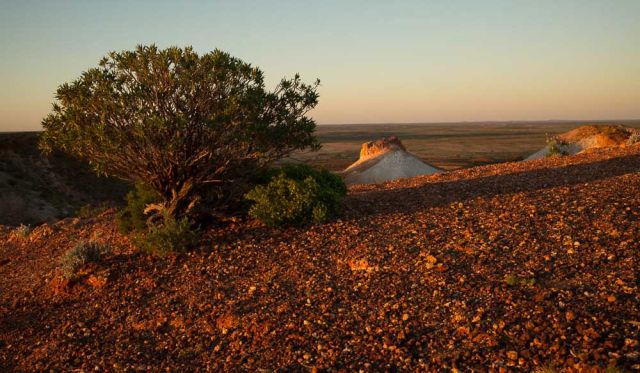
The Breakaways Coober Pedy
The ground near the Breakaways, 30 kilomotres from Coober Pedy, can reach 65 degrees Celsius (photo: Jonathan Cami).

The desert earth of the ‘Moon Plain’ near the Breakaways Reserve, a stunning rock formation and sacred indigenous site about 30 kilometres outside town, can reach temperatures of 65 degrees when the summer air temps hit 45-plus.

12. Natural air-con

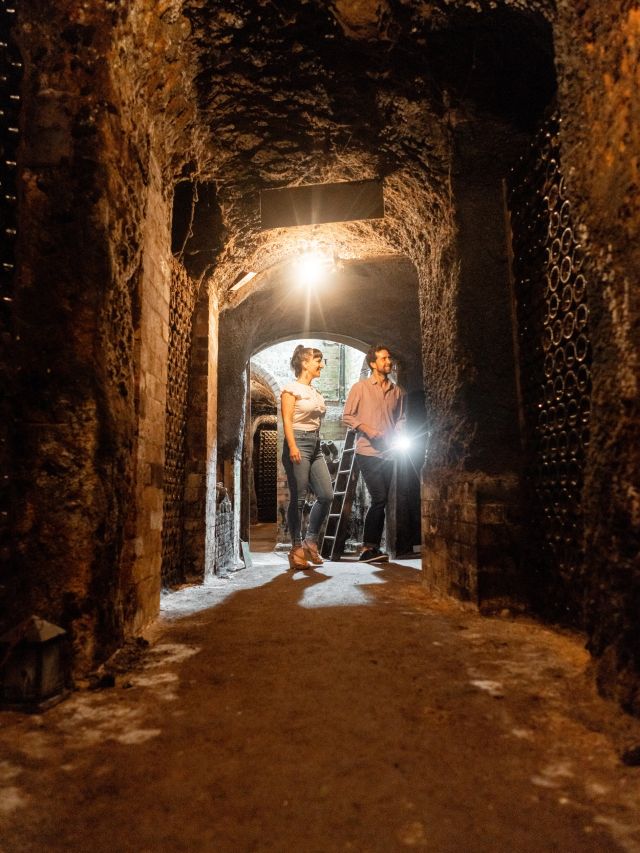
Famously, dugouts (ex-mines or custom-dug underground homes) are the residences of choice in Coober Pedy for one good reason: even when the outside temperatures nudge 50 degrees, the interiors stay in a totally liveable mid-twenties.

13. Underground worship

You can do almost anything underground in Coober Pedy; from eat, drink, visit museums and, of course, worship the denomination of your choice. There are a handful of underground churches including the Serbian Orthodox Church, Anglican Catacomb Church and the Catholic Church of St Peter and St Paul. The catchment area covered by the priest of St Peter and St Paul on his ‘bush run’ is apparently the size of Texas, stretching from the Western Australian border to Birdsville.
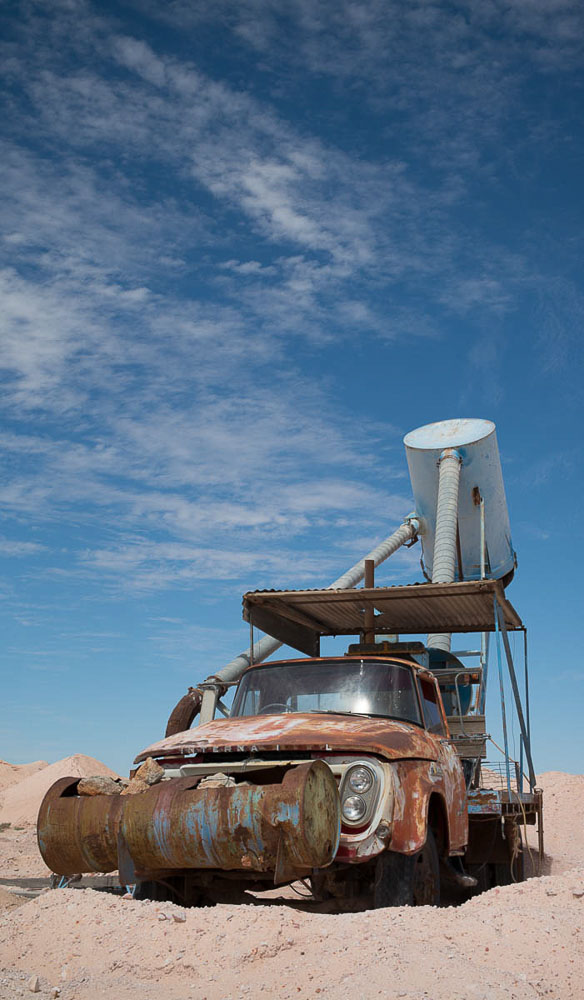
Old mining truck Coober Pedy
An old ‘blower’ retires into the Coober Pedy landscape (photo: Jonathan Cami).


MORE… Get to Coober Pedy the adventurous way. What’s it like to drive the Explorer’s Way
hero media

Mornington Peninsula’s storied past: war, shipwrecks and a runaway convict 

The Mornington Peninsula is a coastline of contrasts, where convict and military history meets shipwrecks, wild seas and adventures above and below the surface.

The Mornington Peninsula can be the kind of place where salt-tangled hair feels like a badge of honour – proof you’ve been somewhere wild, raw and real. Peel back the layers and you’ll discover stories that anchor this region to something other than its famed food and wine.

This land is the traditional Sea Country of the Bunurong/Boon Wurrung people. Long before grapevines were planted and artisanal goods were crafted, the Bunurong Traditional Owners lived in deep connection with the land and sea. Today, places such as Mushroom Reef Marine Sanctuary echo that tradition, with families exploring its rockpools in search of colourful sea stars and crabs at low tide and learning how these fragile ecosystems have been cared for across countless generations.

a group of people visiting the Port Nepean National Park
Take in the rugged coastal landscape at Port Nepean National Park. (Image: Tourism Australia)

A visit to Point Nepean National Park feels like stepping back through time. The fort, built in 1882, protected the narrow entrance to Port Phillip Bay until the end of the Second World War. It was here that the first Allied shot of the First World War was fired – at a German cargo ship trying to escape just hours after war was declared. Nearby, the old Quarantine Station, one of Australia’s first permanent quarantine facilities, established in 1852, still stands. Walking through the hospital and disinfecting complex evokes stories of those who arrived from faraway shores.

Not far from here is a story of survival that inspired the Aussie phrase ‘you’ve got Buckley’s chance’. In 1803, escaped convict William Buckley vanished into the bush near what’s now Sorrento. Everyone thought he had no hope of surviving, but he reappeared 32 years later, having lived with local Aboriginal people.

Even the waters here hold history. The infamous stretch known as The Rip, just three kilometres wide at the entrance of Port Phillip Bay, is among the most treacherous waterways. Countless ships were lost here in the 19th and early 20th centuries, and in 1967, Australia’s own Prime Minister Harold Holt disappeared while swimming off the coast, never to be found.

a seal swimming in Port Phillip Bay
A seal swimming in Port Phillip Bay. (Image: Tourism Australia/Two Palms/Harry Pope)

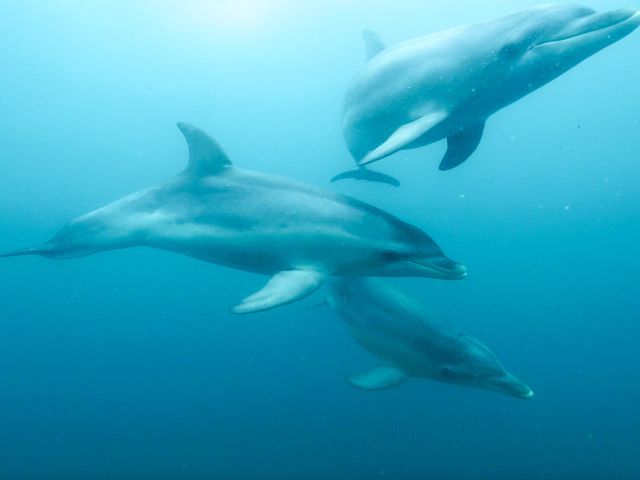
But for all its danger, the sea here also holds extraordinary beauty. Dolphins are often seen near Sorrento’s cliffs, while below the surface, seagrass meadows and rocky reefs teem with life. Marine tours offer a viewing to this underwater wonderland, while back on terra firma, walking trails lead along beaches, through coastal scrub, and over rock pools.

And if you think you’ll forget about the Mornington Peninsula once you’ve left? You’ve got Buckley’s chance.

A traveller’s checklist

Staying there

the suite interior at InterContinental Sorrento
Luxury interiors at the historic InterContinental Sorrento. (Image: Greg Elms)

Point Nepean Discovery Tents is immersive glamping beside the historic Quarantine Station. Or upgrade to luxury at the 1875-built InterContinental Sorrento .

Playing there

an aerial view of Cape Schanck Lighthouse
Make your way to the Cape Schanck Lighthouse. (Image: Tourism Australia/Two Palms/Harry Pope)

Bayplay Adventure Tours offer eco-adventures from snorkelling with sea dragons to kayaking with dolphins and cycling Point Nepean. Cape Schanck Lighthouse is fascinating to explore on a guided tour, which takes you into the lighthouse and keeper’s cottage.

Eating there

Portsea Hotel is a beautifully restored 1876 Tudor-style pub right on the beach, serving seasonal local fare.