What makes Arkaroola Wilderness Sanctuary so special

hero media
With a thriving colony of friendly yellow-footed rock wallabies, jaw-dropping lookout points and some of the clearest night skies on earth, this unique property stands alone even in the wild and ancient landscape of the Flinders Ranges.

From the gently sloping hills around Mount Remarkable, the Flinders Ranges grow progressively more rugged and remote as you head north. By the time you arrive at Vulkathunha-Gammon Ranges National Park some 600 kilometres north of Adelaide, it feels like you’re on another planet. Only a few rugged 4WD tracks created by mineral prospectors traverse this forbidding Martian landscape and the absence of settlements in the area means you can expect gloriously clear night skies. In 2023 Arkaroola Wilderness Sanctuary  became Australia’s second certified Dark Sky Sanctuary and a range of tours and accommodation options make it the obvious base from which to explore the region.

The backstory
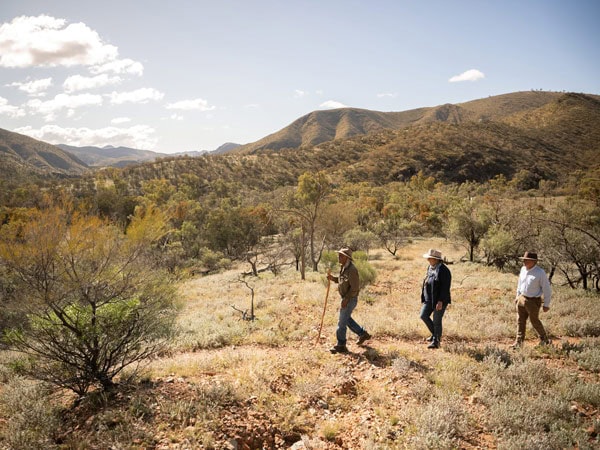
a guided tour at Arkaroola Wilderness Sanctuary
Arkaroola Wilderness Sanctuary lies on the traditional lands of the Adnyamathanha people. (Image: Tourism Australia/ South Australian Tourism Commission)

Arkaroola Wilderness Sanctuary and Vulkathunha-Gammon Ranges National Park lie on the traditional lands of the Adnyamathanha people, who called this region home for tens of thousands of years before the first European explorers arrived in the 1840s. They were quickly followed by prospectors searching for gold, copper and precious stones before the quest for uranium brought several prominent geologists to the region. Among them was Antarctic explorer Sir Douglas Mawson, who declared the region “the gem of the Flinders Ranges" and “a geologist’s paradise".

A densely packed collection of hulking pyramids and razor-sharp peaks, the Gammon Ranges were created by volcanic activity up to 1.6 billion years ago and the landscape is older, wilder and more colourful than the main body of the Flinders Ranges. Mawson considered this open-air museum so important that he lobbied the state government to grant it special protected status, as did his student Reg Sprigg (later Dr Reginald Sprigg AO). When the government declined, he purchased the Arkaroola property in 1967.

Arid conditions and rugged terrain meant that it was never prime pastoral land and over the following years, he destocked the 60,000-hectare property and began removing invasive species to rehabilitate the land. The construction of Arkaroola Village and the Arkaroola Observatory brought tourism to the property, which is still managed by Reg Sprigg’s son Doug. An onsite statue of Douglas Mawson is flanked by rocks from his two favourite places on earth – Arkaroola and Mt Erebus in Antarctica.

Arkaroola accommodation
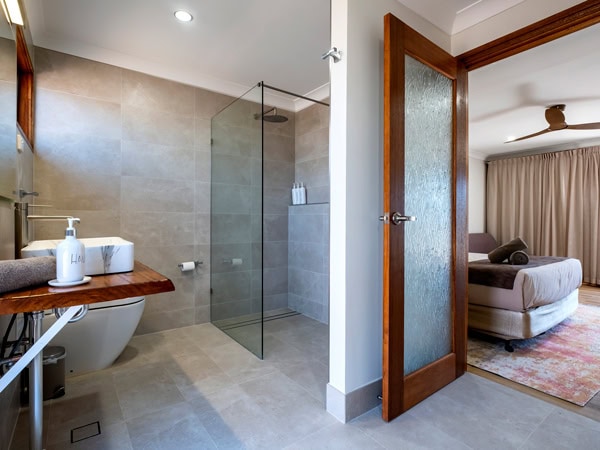
the bathroom and bedroom at Callitris suite, Arkaroola Wilderness Sanctuary
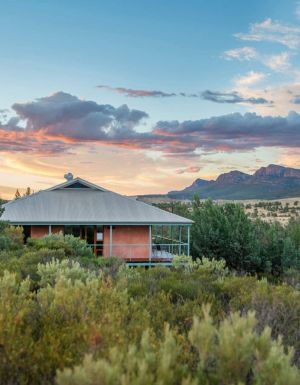
Bed down in the Callitris suite. (Image: Matthew Storer)

Despite the property’s isolation, Reg Sprigg’s vision made him a pioneer of tourism in the region and the Arkaroola accommodation options are surprisingly varied for such a remote location. The modern and well-kept guest rooms come in several sizes: the comfortable Callitris suites have a queen bed, while the roomier Mawson suites can sleep up to four with the addition of a single and trundle bed. With 19 basic rooms built around an enormous common area, the budget-friendly Greenwood Lodge is ideal for larger groups, as are the four standalone cottages.

If you’re towing a caravan, the Arkaroola caravan park has 50 large powered sites and a sprawling 300-hectare campground with plenty of sites arrayed along the banks of a dry creekbed. Guests have access to a camp kitchen, ablution block and laundry as well as the swimming pool and all facilities in Arkaroola Village.

Need tips, more detail or itinerary ideas tailored to you? Ask AT.

AI Prompt

Arkaroola Village and facilities
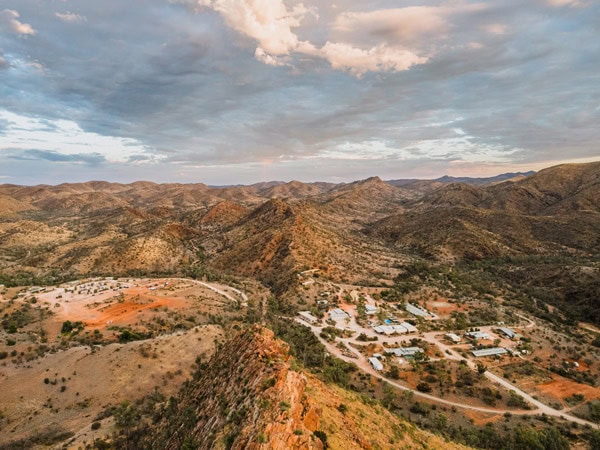
an aerial view of Arkaroola Village
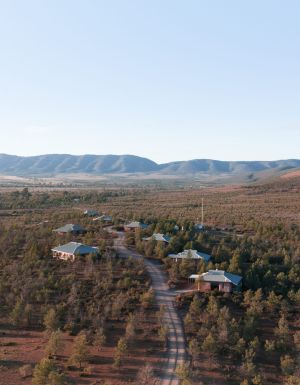
Impressive geological formations surround Arkaroola Village. (Image: Matthew Storer)

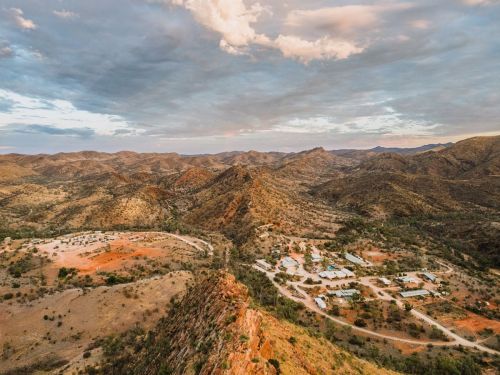
Nestled between several outcrops of deep red rock, Arkaroola Village is a sight for sore eyes after the long, dusty drive in.

A small shop, fuel bowsers (plus an EV charging station), and repair workshop take care of the essentials, while the timber-lined Pick & Shovel bar is the first stop for many visitors and kids will love the in-ground pool out back. The adjoining Native Pine restaurant is filled with artefacts from the property’s rich history and offers a traditional Sunday roast in addition to a range of pub classics. And be sure to visit the small room in the rear to see a collection of rare glow-in-the-dark minerals.

The rest of the village was clearly designed by someone who loves geology – there’s a gem cave, rock gardens and rock walls displaying the many types of local stone and how they were formed. A free museum is packed with astronomical and geological information, but most visitors are more interested in the viewing area out back. Every evening, yellow-footed rock wallabies from a nearby colony hop down to enjoy a free feed, presenting a rare opportunity to see these shy but beautiful mammals up close.

Arkaroola Ridgetop Tour
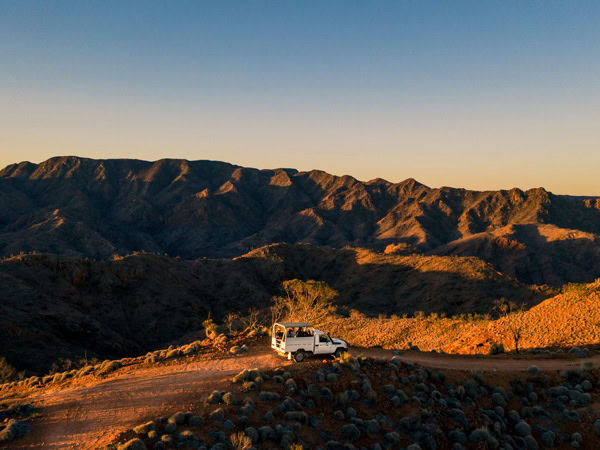
a 4WD driving through the dusty track during the Arkaroola Ridgetop Tour
Join the Arkaroola Ridgetop Tour. (Image: South Australian Tourism Commission)

While the main body of the Flinders Ranges is defined by gorges snaking through a narrow line of sedimentary mountains, the passage of untold millennia has transformed the Gammon Ranges into a complex labyrinth of peaks and troughs. The rough-as-guts 4WD tracks here require tremendous skill to navigate, and the best way to get a feel for the region is from the seat of an open-top Landcruiser on the four-and-a-half-hour Arkaroola Ridgetop Tour.

While experienced guides wrestle their vehicles up the near-vertical trails forged by enterprising uranium hunters, you’ll be free to look out the sides and admire the wilderness of ancient mud volcanoes and jagged pyramids with silvery green foliage spilling down the sides.

Many of the creeks and ponds are carved so deep into the earth that they feel completely enclosed from the outside world, but as you climb upwards, you’ll start to catch glimpses of glittering salt lakes between the brick-red peaks. You might want to find something to cling to when the driver tackles a terrifyingly steep path up an exposed ridge to reach Sillers Lookout, but once up top, you can stretch your legs and enjoy some lamingtons and tea while marvelling at the incredible views created by the sheer 150-metre drop below.

Weekly travel news, experiences
insider tips, offers, and more.

Arkaroola Observatory
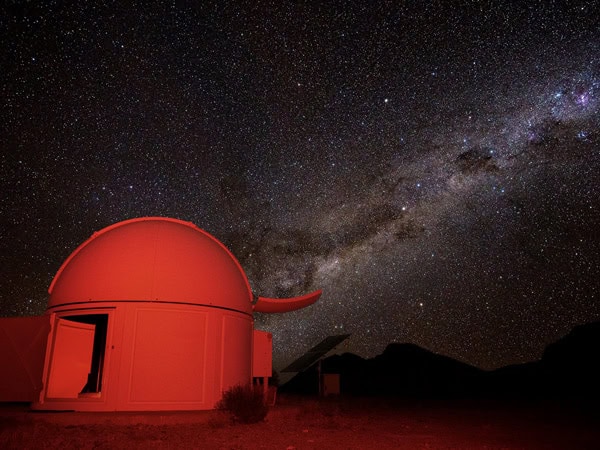
the Arkaroola Observatory under the starry night sky
Enjoy the spectacular light show from the Arkaroola Observatory daily. (Image: Tourism Australia/ South Australian Tourism Commission)

Tucked far away from the bright lights of any city (or even town), Arkaroola Wilderness Sanctuary offers plenty to do long after the sun has set, especially if you’ve timed your visit to coincide with the new moon. The lack of light pollution, arid climate and elevation make for some of the best night skies in the world, and NASA scientists access information from the Arkaroola Observatory daily. Fortunately, you don’t need to be a rocket scientist to enjoy this spectacular light show.

If you’re still finding your way around the cosmos, the 90-minute Under The Stars Stargazing experience includes comfortable reclining chairs and speciality astronomy binoculars so you can gaze at the heavens in comfort as you get your bearings. Or step things up on the Observatory Tour, which uses a high-powered telescope that can see far into the night sky and brings you up close to stars, planets and other celestial bodies. And if you prefer to stay inside, the Digital Astro Experience lets you enjoy a real-time digital representation of the night skies from the comfort of the Ningana Imaging Observatory.
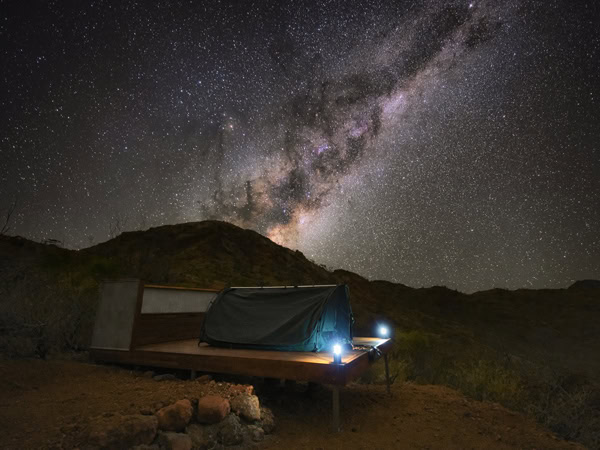
camping under the stars at Arkaroola Wilderness Sanctuary
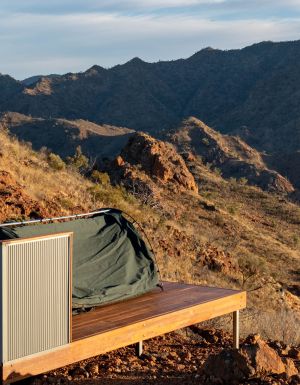
Fall asleep under the whimsical starry night sky. (Image: Matthew Storer)

If you’re after a more exclusive experience, the Arkaroola Ridgetop Tour Sleepout takes you on a 4WD journey to a remote campsite where you can watch the landscape fill with colour over sunset drinks and sit down to a gourmet dinner around the campfire. Then you can spend the evening watching the night skies through a telescope before falling asleep on an open-air swag deck and waking up to sunrise from Sillers Lookout.

Getting to Arkaroola Wilderness Sanctuary
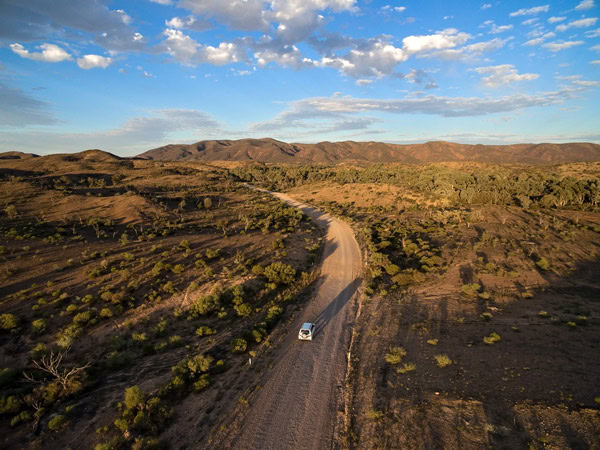
an aerial view of a vehicle driving through Vulkathunha-Gammon Ranges National Park
Pass through beautiful scenery on your way to Arkaroola Wilderness Sanctuary. (Image: South Australian Tourism Commission)

The 630-kilometre drive from Adelaide to Arkaroola Wilderness Sanctuary takes eight hours, so most visitors break up the journey with a stop in the Clare Valley or southern Flinders Ranges. The final section of the road is unpaved, and travellers have two main options. A 150-kilometre dirt track from Blinman passes through beautiful gorges and stark flatlands bordered by salt pans that provide a taste of outback adventure, while the 130-kilometre unsealed road from Copley is graded more frequently and passes the community of Nepabunna.

Either route can be driven with a 2WD, but a raised vehicle with 4WD will make the drive significantly more comfortable, especially as there is no phone reception if you run into trouble. A small shop at Arkaroola Village carries some basic supplies, but it’s a three-hour round trip to the nearest supermarket, so it’s vital to stock up on supplies ahead of time.

For more inspiration and itinerary tips, read our travel guide to the Flinders Ranges.

Alexis Buxton-Collins
Alexis Buxton-Collins spent his twenties working as a music journalist and beer taster before somehow landing an even dreamier job as a freelance travel writer. Now he travels the world from his base in Adelaide and contributes to publications including Qantas, Escape, The Guardian and Lonely Planet. Alexis has never seen a hill he didn't want to climb and specialises in outdoor adventures (he won the 2022 ASTW award for best nature/wildlife story for a feature on Kangaroo Island). When he's not scouring South Australia for the newest wineries and hikes, he's looking for excuses to get back to spots like Karijini and Ningaloo.
View profile and articles
hero media

Red earth, light shows and ancient culture: discover the ultimate NT road trip

(Credit: Tourism & Events NT/ Ben Savage)

    Kassia Byrnes Kassia Byrnes
    The Northern Territory is made for road trips, and this one hits all the highlights.

    Craggy mountain ranges, inviting waterholes, ochre soil: the landscape of the Northern Territory is asking to be explored by road and foot. There are many iconic road trips to choose from here, but none so all-encompassing than the roughly 3000 kilometres of sealed road that make up Explorer’s Way.

    Spend 14 days (or more, to really make the most of it) driving this route from Adelaide, hitting the NT near the small settlement of Kulgera before later finishing in Darwin. Along the way, you’ll find nearly all the territory’s most iconic sights.

    Discover some of the top highlights that make Explorer’s Way one of Australia’s most incredible road trips.

    1. Alice Springs

    echidna at Alice Springs Desert Park
    See the locals at Alice Springs Desert Park. (Credit: Tourism & Events NT)

    Recently hitting the big screen again with the story of The Kanagroo Sanctuary , there’s a lot to surprise you in Alice Springs.

    Three distinct desert habitats – desert rivers, sand country and woodland – are recreated over 1300 hectares at Alice Springs Desert Park . Time your visit for a presentation or a free bird show.

    Later, turn your attention to the skies above, taking a dive into local astronomy at Earth Sanctuary . You’ll find a range of experiences, from a 90-minute toe-dip into the stars through to an overnight adventure.

    Alice Springs packs a surprising punch with its tasty dining options, including pub grub and unique brews at Alice Springs Brewing Co , tapas and pizza at Epilogue Lounge and tasty cafe fare at the quirky Page 27 .

    2. Tjoritja/West MacDonnell National Park

    woman standing at Ormiston Gorge
    Dive into Ormiston Gorge. (Credit: Tourism & Events NT/ Dom and Jesso)

    Beginning 15 minutes from Alice Springs and stretching across 161 kilometres, Tjoritja/West MacDonnell National Park is packed with striking ancient landscapes and inviting water holes.

    Visit Standley Chasm – traditionally known as Angkerle Atwatye, meaning ‘Gap of Water’ – to take in its bold red and orange hues, and to observe the diverse bird species, lizards and wallabies that call it home.

    Cool off in one of several picturesque natural swimming holes, like Ellery Creek Big Hole and Ormiston Gorge.

    3. Uluru & Kata Tjuta

    three women looking at Kata Tjuta at sunset
    Explore Kata Tjuta. (Credit: Tourism & Events NT)

    Visiting the Cultural Heart of Australia is something everybody should experience. There are so many side trips in the Red Centre you could easily spend a week here, but to get the most out of a short time, park the car then get out on foot.

    Take the 10-kilometre Base Walk around the entirety of Uluru or join a free, ranger-guided Mala Walk along part of the base, learning about Tjukurpa (creation stories) and geology as you go.

    For a change of pace, wait until nightfall and wander through the iconic Field of Light display by celebrated artist Bruce Munro, or see the Wintjiri Wiru lightshow that shares the ancient Mala story using drones, lasers and projections.

    4. Tennant Creek

    pson looking at Karlu Karlu (Devils Marbles) northern territory
    See the ancient granite boulders of Karlu Karlu (Devils Marbles). (Credit: Tourism & Events NT/ Dom And Jesso)

    Tennant Creek was Australia’s third-largest gold mining town in the 1930s, and visitors can discover that history at Battery Hill Mining Centre – and even try their own hand at gold fossicking.

    For a completely different side of history, pop into Nyinkka Nyunyu Art & Culture Centre , which preserves and shares Warumungu culture through art, performance, a museum and more.

    Just outside town, find the ancient granite boulders of Karlu Karlu (Devils Marbles). A site integral to important stories held by the Warumungu, Kaytetye, Warlpiri and Alyawarra peoples, the boulders appear to almost have dropped out of the sky and seemingly continue to defy gravity.

    5. Mataranka

    aerial of people swimming in bitter springs northern territory
    Dive into Bitter Springs. (Credit: Tourism & Events NT/ Ben Savage)

    A town made famous by the novel We of the Never Never by Jeannie Gunn (and a movie of the same name), Mataranka is also known for its sandy-bottomed thermal pool, Bitter Springs , within Elsey National Park. Follow a 500-metre loop track around these spring-fed pools that stay a toasty 34°C year-round, before choosing your favourite spot to dive into. Enjoy the local birdlife while you relax.

    Elsewhere in the park, find historical sites, several scenic walks and Roper River, which is perfect for boating and fishing.

    6. Nitmiluk National Park

    Nabilil Dreaming Sunset Dinner Cruise
    Join a sunset cruise with Nabilil Dreaming. (Credit: Tourism & Events NT/ Lachlan Gardiner)

    Nitmiluk National Park is sandstone country, with 13 stunning gorges and plenty of waterfalls waiting to be explored.

    One of the most beautiful spots can be found along the 62-kilometre Jatbula Trail, a five-to-six day bushwalk that follows an ancient Jawoyn songline from Nitmiluk Gorge to Leliyn (Edith Falls). Numbers are restricted and book out quickly, so be sure to plan well ahead. Not up for the hike? Drive right up to the falls and enjoy a dip without the challenge.

    Elsewhere, explore Nitmiluk (Katherine) Gorge. Paddle a kayak through the river running through the canyon, or save your energy on a Nabilil Dreaming Sunset Dinner Cruise , discovering the stories and ways of the Jawoyn people while enjoying a candlelit dinner as the cliffs around you shift colour and glow with the changing daylight.

    Continue your cultural journey at local art centres like Godinymayin Yijard Rivers Art & Culture Centre or Mimi Aboriginal Art & Craft .

    7. Litchfield National Park

    cathedral termite mounds in Litchfield national park
    Be awed by giant cathedral termite mounds. (Credit: Tourism & Events NT/ As We Wander)

    Just over an hour’s drive from Darwin lies the beautiful Litchfield National Park. It’s famous for stunning waterfalls and swimming holes, including Buley Rockhole, Wangi Falls, Florence Falls and Tjaynera Falls.

    Here you’ll also find hundreds of giant – and magnetic – cathedral termite mounds that are truly a sight to see. Ageing up to 100 years old, you won’t find mounds like these outside the northern parts of Australia. Stroll along the accessible boardwalk to see them up close.

    8. Darwin

    darwin street art
    Darwin art is streets ahead. (Credit: Tourism & Events NT/ Mark Fitzpatrick)

    This list wouldn’t be complete without the territory’s capital city: Darwin. Situate yourself upon arrival with a stroll through the main streets, admiring the many art murals by local, interstate and international artists. They’re all remnants of the annual Darwin Street Art Festival , one of Australia’s longest running street art festivals.

    Stop to recharge along Darwin’s Waterfront Precinct , an area of delectable restaurants, public swimming pools and free events. And, of course, it would be wrong to leave the city without enjoying a bowl of laksa at Mindil Beach Sunset Market as the sun goes down.

    Learn more and start planning your Explorer’s Way road trip at northernterritory.com/drive.