13 of the best things to do in the Grampians

hero media
Wondering what are the best things to do in the Grampians? Don’t worry we have you covered with our 13 things you’ll definitely want to see.

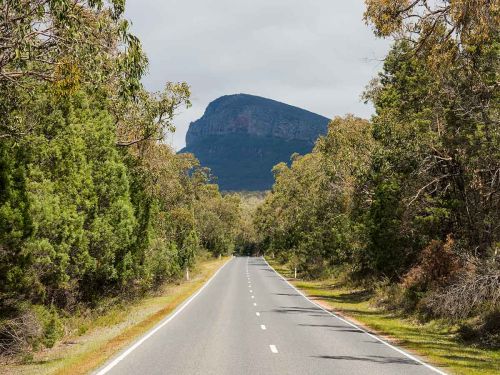
Home to some of the most scenic roads in Australia, the Grampians is stuff of road tripping dreams. The iconic route between Dunkeld and Halls Gap, a 65-kilometre stretch of road so spectacular you’ll want to drive it twice because the views are that good, is just the beginning. Follow this list and go a little deeper.

1. Find “Hope" in St Arnaud

The Grampians may be famous for its soaring peaks and amazing views, but one of the region’s best kept secrets is the historic gold mining town St Arnaud and in particular, its Silo and Art Trail . The trail reveals a collection of nine public works by local artist Kyle Torney. Torney’s most arresting work, titled “Hope", spans two silos and reflects the aspirations of the time.
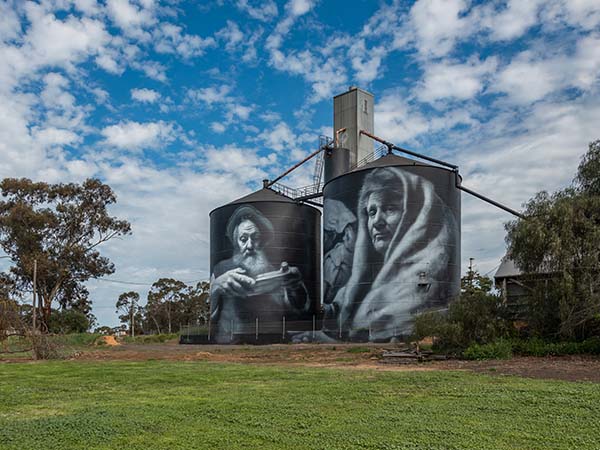
St Arnaud Silo Art, Grampians, VIC, Australia
One of the region’s best-kept secrets is the historic gold mining town of St Arnaud.

2. Be awed by Mad-Dadjug (Mt Abrupt)

When the sandstone ridge of Mad-Dadjug (Mt Abrupt) majestically appears at the end of the road it’s one of the most remarkable – and photogenic – sights on the scenic route through the heart of Grampians (Gariwerd) National Park between Dunkeld and Halls Gap. For truly awesome views, tackle the steep walking track up to the summit. It’s a challenging climb but the rewards are worth the effort.
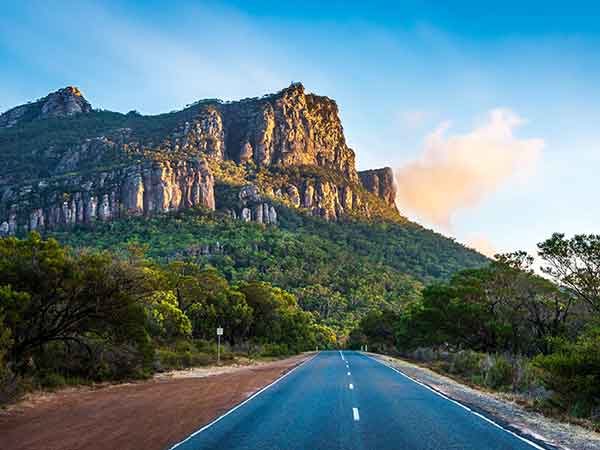
Road, Mt Abrupt, Grampians, VIC
The remarkable drive towards the equally remarkable Mad-Dadjug (Mt Abrupt). (Image: Grampians Tourism)

3. Chill out at Victoria’s largest waterfall

Standing at the foot of Mikunung wira (MacKenzie Falls), it’s hard to believe that these thundering cascades – the largest in the state, and the only falls in the Grampians that flow all year round – are less than 100 kilometres from a desert. It’s one of the park’s most celebrated attractions, but to really get a sense of all that natural power, follow the walking trail from the lookout down to the pool at the base (be prepared to get doused in the mist). If you don’t fancy tackling the 265 steps, the longer but gentler MacKenzie River Walk is easier on the knees.
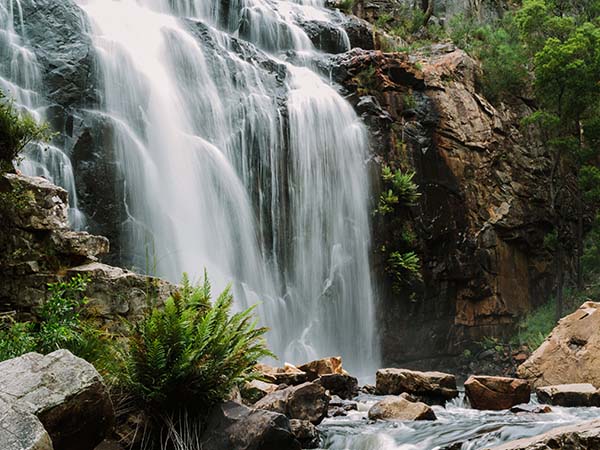
Mackenzie Falls, Grampians, VIC, Australia
These are the only falls in the Grampians that flow all year round. (Image: Visit Victoria)

4. Be humbled by ancient creation stories.

The Grampians region has the largest number of rock art sites in southern Australia  (more than 80 per cent of Victoria’s First Nations art sites are here). One of the most significant is Bunjils Cave , in the Black Range Scenic Reserve near Stawell, the only known rock art depiction of the spirit Bunjil, who created not only the sandstone ranges of Gariwerd, but all the plants and animals as well. Seeing these ancient galleries in real life is a powerful reminder that this place is home to the oldest living continuous culture in the world.
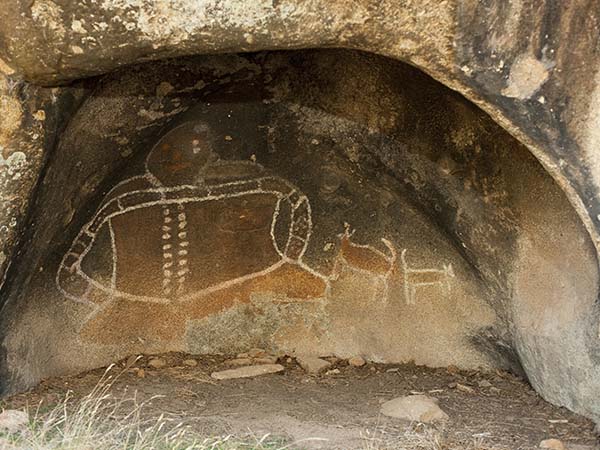
Indigenous Art, Bunjil, Grampians, VIC, Australia
See the only known rock art depiction of the spirit Bunjil.

5. Get in the picture at Framing the Wimmera

There are plenty of views in the Grampians worth framing, but the vistas in the art installation Framing the Wimmera really are next level. Super-sized frames in four of the most picture-perfect locations across the region – at Mount Arapiles, the Grampians, Toolondo Reservoir and the Wimmera River – make glorious locations for road trip snaps, ready to share. Don’t forget to tag #FramingTheWimmera.
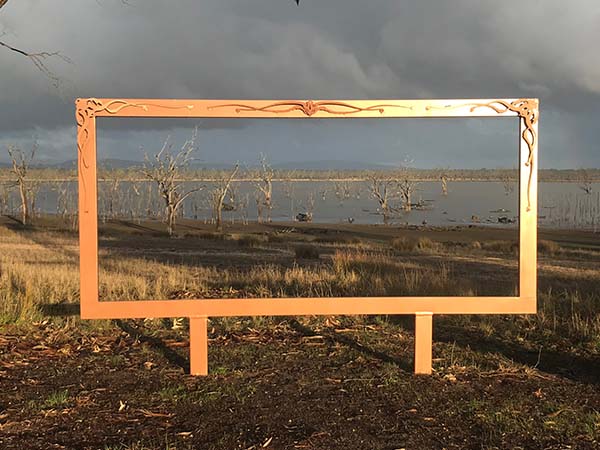
Framing the Wimmera, Grampians, VIC, Australia
Don’t forget to tag #FramingTheWimmera. (Image: Robert Crack)

6. Take a deep dive into the world of olive oil

The Grampians Olive Co is one of the oldest olive groves in Australia. Family run and certified organic, it’s the place to get the good oil on, well, the good oil. Visit the farm, follow the process from tree to bottle, learn how to taste like an olive oil sommelier and stock up on picnic supplies. Need another reason to stop? They also roast their own coffee and serve lunch platters. The mountain views are pretty special too.
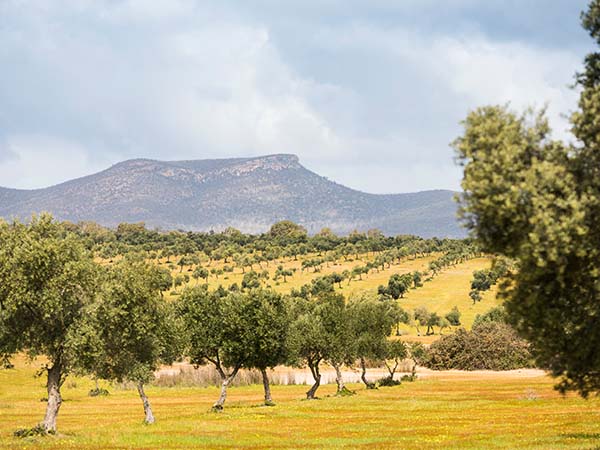
The Grampians Olive Co, Olive Groves in Australia
The Grampians Olive Co is one of the oldest olive groves in Australia.

7. Putt your way through the fern forest at Adventure Golf

You don’t have to be an expert golfer to play around at this course, but you will need a sense of adventure. Rated one of the best adventure golf courses in the world, the 18-hole course has no less than four waterfalls and five ponds, plus a few tunnels and other challenges. Surrounded by the wilds of the national park with its own beautiful gardens, it’s family-friendly fun, although the infamous ‘nerve test’ has been known to spark some serious social rivalry.
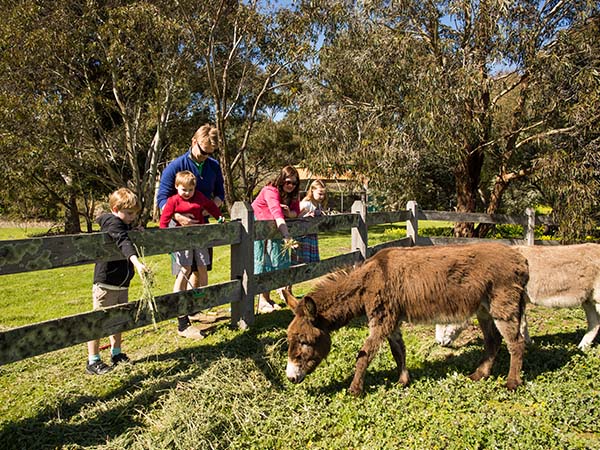
Mini golf at Adventure, Grampians, VIC, Australia
Beyond golf, there are lots of options for family-friendly fun.

8. Pay your respects to the father of football

Here’s something most folks don’t know: Australian rules football was born in Moyston! Cricketing superstar, Thomas Wentworth Wills, who in 1858 co-founded and captained one of the oldest professional sporting clubs in the world, Melbourne Football Club, grew up at Lexington Station, near Moyston. Inspired by the games he played with local Indigenous kids as a child, he helped develop the rules of the game we now call Aussie Rules as a way for cricketers to keep fit in winter.There’s a monument to the sporting great in Moyston, and the gazebo behind it features a six-sided history of the game. It’s one of the stops on the East Grampians Scenic Route .
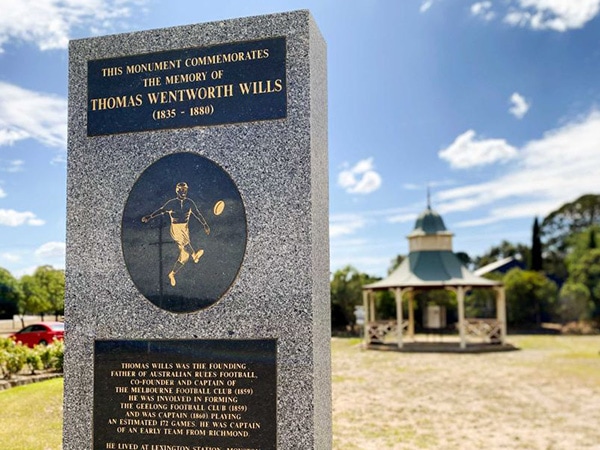
Tom Wills Memorial, Moyston, Grampians, VIC, Australia
Australian rules football was born in Moyston!

9. Take a tour of one of the longest underground wine cellar in the world

Ever wondered how much space you’d need to keep three million bottles of wine? The answer is heaps. A cellar three kilometres long, at least. Seppelt Great Western is home to the longest and largest underground wine cellar in the southern hemisphere and can hold three millions bottles of bubbly. Dug by out-of-work gold miners in the 1860s, the labyrinth of tunnels known as ‘drives’ took more than 60 years to build. The daily tours include a tasting of the region’s famous sparkling shiraz, first made back in 1890.
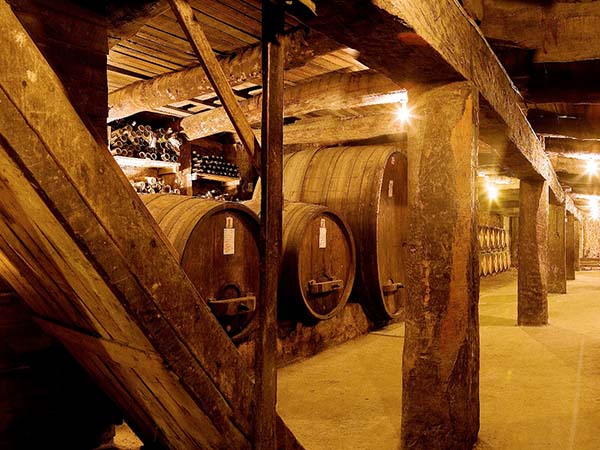
Seppelt Great Western Old Cellar, Grampians, VIC, Australia
Seppelt Great Western is home to the longest and largest underground wine cellar in the southern hemisphere

10. Climb a volcano and peer into a bottomless lake

Something else most people don’t know is that the southern Grampians sit atop the third largest volcanic plain in the world. Take a drive along Mt Rouse Tourist Road near Penshurst and stop at Crater Lake on the way to the top – it was once believed to be bottomless. Follow the walking track up to a viewing platform and stairs to the summit of the now dormant volcano, where you’ll find extraordinary 360-degree views of the lava plain and neighbouring volcanoes Budj Bim (Mt Eccles) and Mt Napier. Learn more about the amazing history of the region at the Volcanoes Discovery Centre in Penshurst.
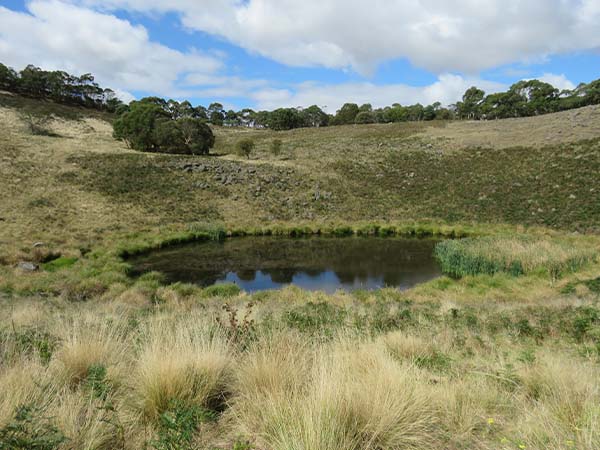
Mount Rouse, Crater Lake, Grampians, VIC, Australia
Take a drive along Mt Rouse Tourist Road near Penshurst and stop at Crater Lake on the way to the top. (Image: Robert Crack)

11. Take a walk on the dark side in Ararat

Delve into Victoria’s dark underbelly on a guided tour of J Ward , Ararat’s Old Gaol and Lunatic Asylum . Built as a goldfields prison in 1859, it became home for the criminally insane once the gold ran out, incarcerating some of the most depraved, desperate and dangerous men in the state. It’s not for the squeamish or easily spooked, as you’ll be chilled by the stories of murderers, ghosts and the rather barbaric treatments for mental illness in the past. It’s proof that real life can be stranger than fiction – and even darker than your favourite Friday night TV crime show.
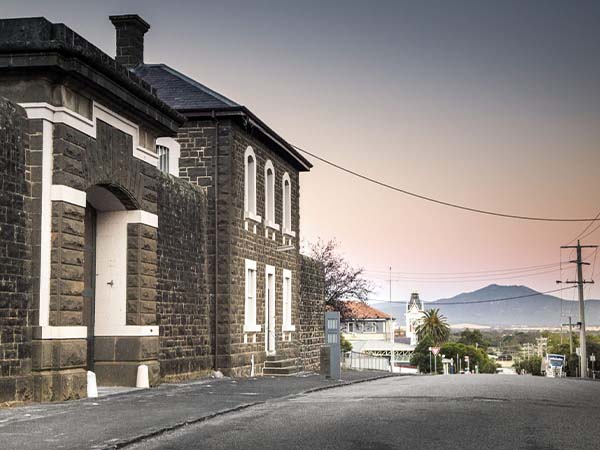
J Ward, Street view, Grampians, VIC, Australia
Delve into Victoria’s dark underbelly on a guided tour of J Ward.

12. Give the big koala a big hug

We all know it’s not a real Aussie road trip without snapping a selfie with a big thing, and big things don’t come more Instagrammable than the giant koala at Dadswells Bridge, roughly halfway between Stawell and Horsham. Standing 14 metres high and weighing in at a whopping 12 tonnes, Sam – named in honour of a real life koala rescued from the Black Saturday bushfires in 2009 – even has his own hashtag. If you really want to impress your friends, pick up a t-shirt while you’re there: there’s a gift shop in his belly.

13. Marvel at a giant shed made of sticks

Not just any shed, the Murtoa Stick Shed is simply marvellous. Built in 1942 as an emergency grain store – the only Second World War emergency store still standing – it’s made of hundreds of hand-hewn poles of mountain ash (big sticks). It feels more like a cathedral than a silo, with its vast gabled interior and long rows of poles casting ethereal shadows. Part of the 200-kilometre Silo Art Trail – soon to become Australia’s biggest outdoor art gallery – you’ll never see anything else like it.
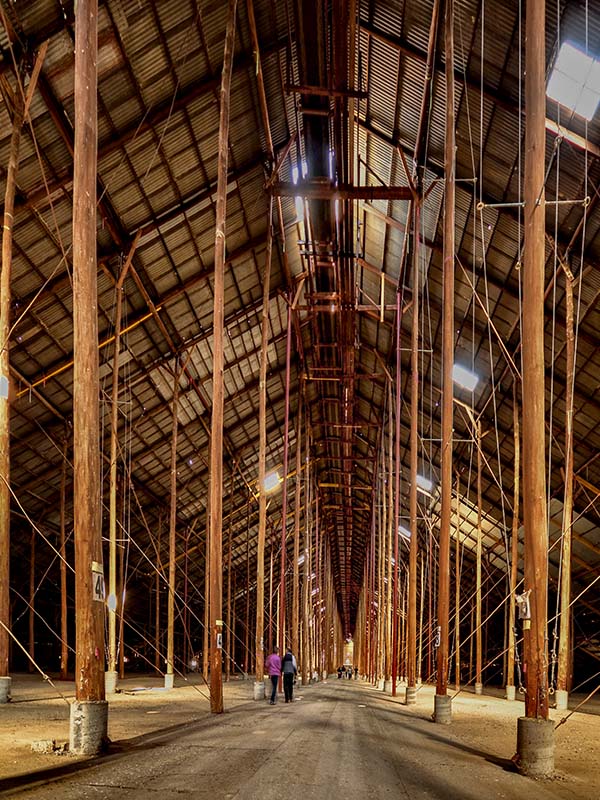
Murtoa Stick Shed, Grampians, VIC, Australia
Built in 1942 as an emergency grain store, Not just any shed, the Murtoa Stick Shed is simply marvellous.
Plan your Grampians road trip at visitgrampians.com.au .
hero media

Heathcote has evolved into the ultimate eco-escape for foodies

From cabins to canvas, craft distillers to destination dining, Heathcote locals reveal their eco-savvy passions in ways that resonate with those seeking to travel lightly. 

Heathcote , on traditional Taungurung Country in Central Victoria, is synonymous with its garnet-hued shiraz, but wine isn’t the only string to its bow. The town itself is sprinkled with heritage buildings from the gold rush era, and beyond that a growing collection of sustainable gastronomy and eco-friendly escapes. Nearby Bendigo, one of only 65 cities in the world recognised as a UNESCO Creative City and Region of Gastronomy, plates up an astonishing calibre of produce, wine and food for its size. Increasingly the entire region is taking up the challenge, though Heathcote in particular shines with its focus on sustainability. 

Pink Cliffs GeologicalReserve
The dramatic landscape of Heathcote’s Pink Cliffs Geological Reserve. (Image: Visit Victoria/Emily Goodfrey)

The eco-stays bringing sustainability to Heathcote 

Yellow BoxWood’s safari-style tents
Yellow Box Wood’s safari-style tents are nestled on 40 hectares of bushland. (Image: Emily Goodfrey)

Andee and Lisa Davidson spent years working in southern Africa before settling in Heathcote. “We had a vision of how this could be,” explains Andee. “We wanted a retreat, but one that was off-grid and environmentally sustainable.” Now, at Yellow Box Wood , two luxury safari-style tents are at the heart of 40 hectares of rolling hills and native bush, with kangaroos, wallabies, echidnas, goanna and birdlife aplenty. It’s all solar-powered, wood for the fire is mainly fallen timber, and water is collected on the carport roof.  No lack of creature comforts though – en suite with rain shower, espresso coffee maker, comfy seating, wood-burning fire all set to go. There’s also a solar-heated, mineral salt pool in a bush setting, walking tracks, and even a mini bush golf course.  On my visit, I put the vision to the test. Cocooned in the plush four-poster bed I can glimpse the stars, while the heater casts a golden glow on the canvas. In the morning, I wake to a blush-pink sunrise, kangaroos feeding and a soundtrack of magpies.

Mt Ida Eco Cabin
Mt Ida Eco Cabin is rustic and simple but oozes comfort. (Image: Graham Hosking)

If a tent is not your style, Stephen and Cally Trompp’s carbon-neutral Mt Ida Eco Cabin might entice with its generous deck and farmland views.   Inside the cabin, corrugated iron walls as rusty as a shearing shed, gleaming (recycled) floorboards, timber truss ceiling (crafted by Stephen), wood-fired heater and an old-school turntable with a pile of vinyls to spin. It’s fun, and a little boho. “Everything is recycled. The cabin takes maximum advantage of the sun in winter. It’s all solar-powered. Don’t panic, though,” says Stephen, “you can still charge your phone and get 4G reception!” Settle into an Adirondack chair on the deck or pedal off on a mountain bike to suss out the wineries.  

A taste of Spain in Central Victoria 

Three Dams Estate
Three Dams Estate make Spanish-style wine.

Another person with a vision is Evan Pritchard at his Three Dams Estate where the wines reflect his deep love of Spain and of Spanish-style grapes, such as tempranillo. Afternoons in the ‘wine shed’ or cantina are matched with music (flamenco is a favourite), Spanish bites from tapas to paella (with Evan on the pans!) and views to Mount Alexander. Sustainability is also a passion. “You don’t need to buy anything. We decided to be off-grid from the start, but it is a lifestyle change,” he says. “You need to think about it and be careful.” Everything here is recycled, reassembled, refurbished. Evan has an electric car (with solar-powered charger), solar-power for the winery, and even a jaunty little electric tractor/forklift. “I love the idea of all the things you can do using the sun.” Sipping a crisp rosado (a Spanish rosé) with Evan in the sunshine, I couldn’t agree more. 

The vineyard redefining sustainable winemaking 

Silver Spoon winery
The Silverspoon Estate winery is completely off-grid. (Image: Graham Hosking)

On the other side of Heathcote, Silver Spoon Estate demonstrates sustainability on a more extensive scale. Tracie and Peter Young’s winery, cellar door, award-winning restaurant and their own house are all solar-powered and off the grid. Sustainability is intrinsic to everything they do.  The property sprawls across 100 hectares, with 20 hectares under vine – shiraz, viognier, grenache, tempranillo. As the climate has changed, so too has the approach. These are dry-grown vineyards. “We prune for drought. That means lower yields but more intense flavours,” says Peter.  The fine-dining restaurant offers sweeping views, a wood-burning fire and a deck for languid lunches. Head chef Ben Hong sources regional, sustainable ingredients and weaves estate wines into the menu – think crispy wild mushroom arancini, viognier-infused chicken breast.   

Silver Spoon’s award-winning restaurant
Silver Spoon’s award-winning restaurant.

Heathcote’s other hidden gems 

Heathcote Wine Hub
Heathcote Wine Hub is housed in a 1855-built timber church.

Not all local wineries have a cellar door, but I find local treasures at the Heathcote Wine Hub , a petite 1855 timber church in the main street, lovingly returned to life by Karen Robertson and Carey Moncrieff.  “Carey is a scrounger,” says Karen. “He doesn’t throw a single thing away.” He does, however, craft things into something quite special. Heritage floors, light-filtering lancet windows and shelves of regional wines create the perfect ambience for wine tasting. Or order a glass and linger over a cheese platter.  

Heathcote is not all wine, of course. Nathan Wheat and partner Vanessa Curtis run Envy Distilling with a committed sustainable ethic – and a serious love of gin. Their small-batch distillery produces grape-based gin, and soon brandy. Distilled water is reused in an ingenious cooling system. All waste is treated on site. They buy excess wine from winemakers to distil and buy recycled barrels. “Distilling with the sun,” as Nathan says. Each Envy gin has its own story. Spicy, award-winning The Dry, is designed to capture the region’s dry, rugged nature. Pull up a stool at the bar (reclaimed timbers and tiles, of course), order a Gin Flight, or kick back with a cocktail and let Nathan share his eco journey.   

Envy gins
Sample gins at small-batch distillery Envy.

A traveller’s checklist 

Getting there

It’s less than two hours’ drive from Melbourne. The scenic route we take goes past Sunbury, then along a splendid country road through Romsey and the magic, boulder-strewn landscape of Lancefield. Watch for kangaroos on the road! 

Staying there

Go off-grid in style at Yellow Box Wood for glamping or try Mt Ida Eco Cabin for a couple’s weekend hideaway. 

Eating there

French dishes at Chauncy
Award-winning French restaurant Chauncy.

At award-winning Chauncy , French chef Louis Naepels and sommelier wife Tess Murray have created a tiny, elegant pocket of rural France. Meticulously restored 1850s sandstone building, sun-drenched dining room, impeccable service, a menu suffused with local flavours and thoughtful wine pairings.  

Fodder is both cafe and social hub. Chef Mo Pun and sister Lalita serve classic Aussie breakfast-to-lunch fare, though their Nepalese heritage sneaks through. 

Playing there

Sanguine Estate
Sip on wines among the vines at Sanguine Estate. (Image: Visit Victoria/Emily Godfrey)

Sanguine Estate ’s cellar door and terrace overlook bucolic vineyards. Its award-winning, dry-grown wines include the distinctive D’Orsa Blanc dessert wine, reflecting the family’s Swiss-Italian heritage. Order a charcuterie board and stay a while. Keep it carbon neutral by cycling some (or all) of the 50-kilometre O’Keefe Rail Trail to Bendigo.  

At Bridgeward Grove , learn about the property’s Old Mission Grove heritage olive trees, do a sommelier olive oil tasting, and stock up on sustainably grown olives and oil. Explore the unique landscape, wildflowers and wildlife of pink cliffs geological reserve.