hero media

16 unique and surprising things to do in Geelong

From 4WD adventuring to conquering Victoria’s largest water park, the best things to do in Geelong and the Bellarine Peninsula set pulses racing.

Been to the boardwalk, done the carousel, got the T-shirt? Me too. Geelong, Victoria’s second-largest city, is undoubtedly one of my favourite spots to take the kids. But what struck me during my last visit was all the grown-up activity going on, particularly when I ventured into the neighbouring Bellarine Peninsula. Ranging from offshore expeditions that highlight the port city’s charms to hot air ballooning over Bellarine’s famed wine country, the best things to do in Geelong and the Bellarine threw me for six.

Here’s my hit list, along with some non-negotiable classics for your next visit.

In short

If you only pick one of the things to do in Geelong, make it the Portarlington Mussel Tour. You’ll score a literal taste of the city while out on that shimmering bay.

1. Comb the bay on a Portarlington Mussel Tour
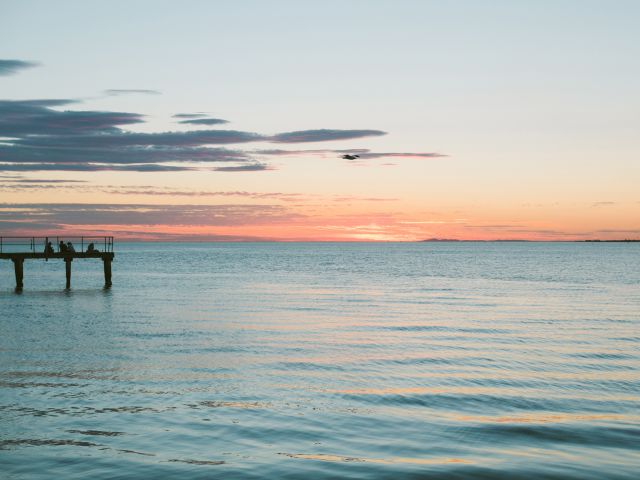
Port Philip Bay at sunset
Port Philip Bay at sunset. (Image: Visit Victoria)

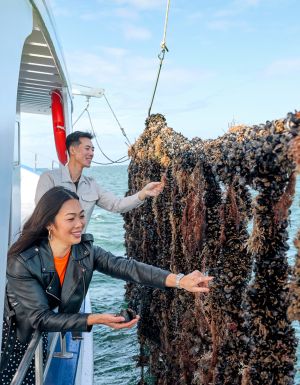
The most delicious of the region’s offshore journeys, a Portarlington Mussel Tour offers seriously unique thrills across beautiful Port Philip Bay. I jump on a 40-year-old vessel to meet Lance, a mussel farmer, and his team who strive to keep my small Classic Mussel Tour group (there are multiple tours to choose from including a sunset cruise) entirely relaxed and showered with delights. The team chat all things mussels before launching into a mussel farming demonstration — where guests are invited to pluck your own morsel — as well as a cooking demonstration and the delivery of beautifully dressed mussels and snacks alongside beer and wine. The three-hour tour wraps with dessert, tea and coffee. It’s priced at $295 per person ($310 pp from May 1st 2026) but check the website for other tour pricing.

2. Cycle the Bellarine Rail Trail
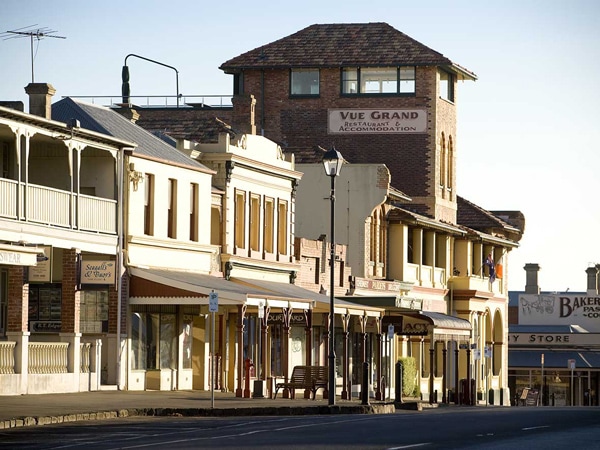
Bellarine
Bellarine Peninsula is an under-the-radar gem of historic seaside villages.

You can’t visit Geelong and not do the Bellarine Peninsula, an under-the-radar gem of historic seaside villages, abundant produce, and cool-climate wineries. The best way to get there, I discovered, was on two wheels. The Bellarine Rail Trail runs 35 kilometres alongside a historic train route from the outskirts of Geelong to picturesque Queenscliff. It took around three and a half hours to cycle one way, and wildflowers set a serene scene amplified by coastal and countryside views.

3. Jump aboard The Bellarine Railway’s night ride
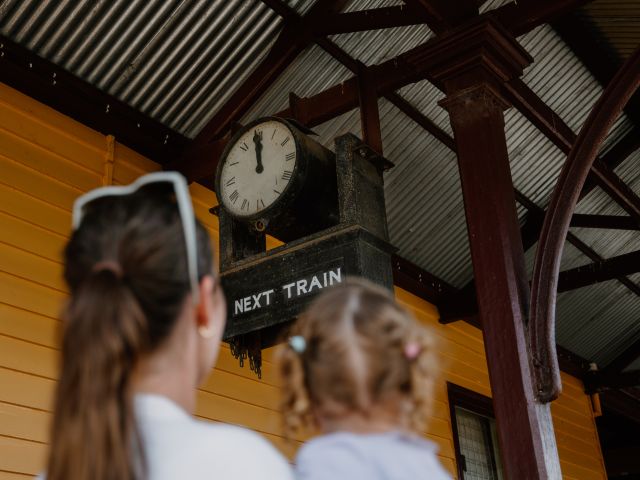
While we’re talking rails, let’s shine a light on The Bellarine Railway’s Steamlight Nights journey. Staged on sporadic winter dates each year (check the website for upcoming rides), the vintage steam train journey departs Queenscliff station before rattling through the night to a (faux) snowy playground where you’ll toast marshmallows over fire pits and dust one another in fluttery flakes. Fairy lights dial up the magic, making the whole thing a winner for adults and children alike. In 2025, adult tickets went for $20 a pop while children were priced at $15 each.

4. Tear up dirt tracks with Ragged Edge 4×4
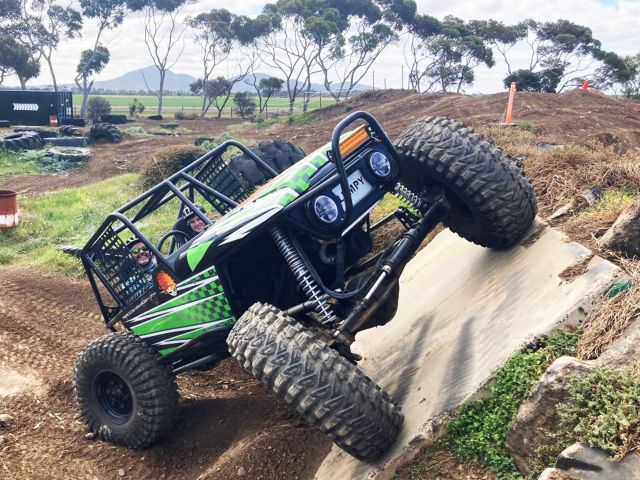
the Ragged Edge 4x4 monster truck
Prepare for an epic road trip with a four-wheel drive in a monster truck.

Switch up the pace in a custom-built monster truck. Ragged Edge 4×4 ’s gnarly wheels offer extreme fun via V8 engines, almighty tyres and four-wheel steering. There are a bunch of packages (including a night drive) and tracks to tackle, all running out of Lara, which is about 20 minutes north of Geelong, but no matter where you land, expect tight turns, vertical rock ledges and other ridiculously hectic obstacles.

5. Cut loose with the kids at Adventure Park
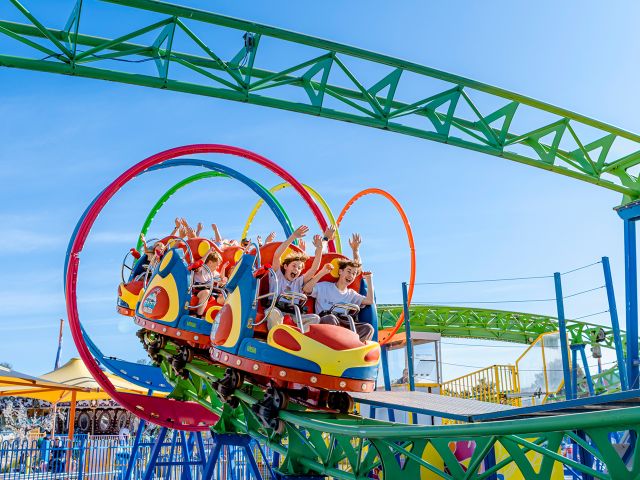
Did you know Geelong is home to Victoria’s largest water theme park? Adventure Park is set to be bigger and better when it opens for summer again in November 2025 (the seasonal attraction turns into a winter wonderland during winter). A total of 21 rides will bring crowds through the doors as highlights including the triple-funnel ‘Tsunami’ water slide and ‘Lazy River’ never fail to get kids grinning.

6. Tour the bay on a Port Philip Ferry
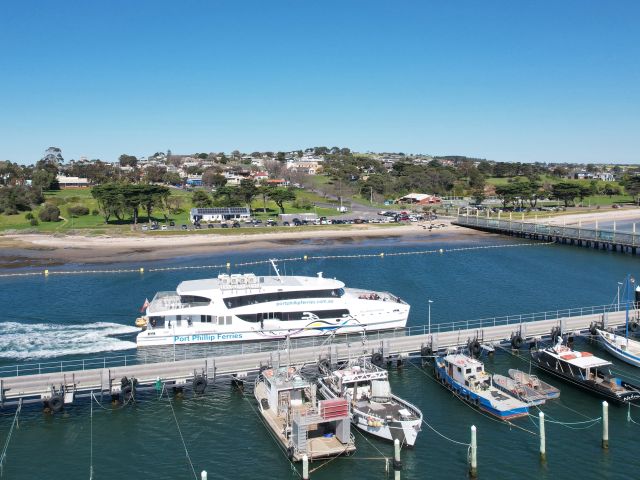
Port-Phillip-Ferry
Port Phillip Ferries connects Melbourne’s Docklands to Geelong via a 90-minute scenic trip.

Geelong is a one-hour drive from Melbourne, but why not catch the ferry instead? Port Phillip Ferries connects Melbourne’s Docklands to Geelong via a 90-minute scenic trip. The ferry itself is modern and clean, and barista-made coffee is plenty welcome. The journey glides across Port Phillip Bay, skirting the Bellarine Peninsula, before arriving smack-bang on the city’s waterfront next to the carousel.

7. Marvel in artworks along the Bollard Trail
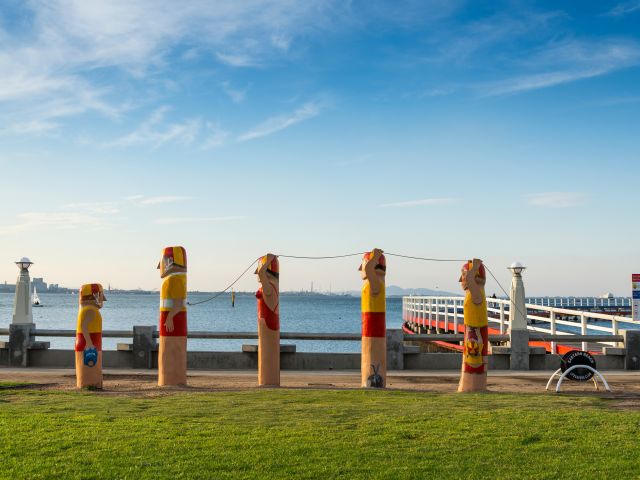
the Bollard Trail at the Geelong waterfront
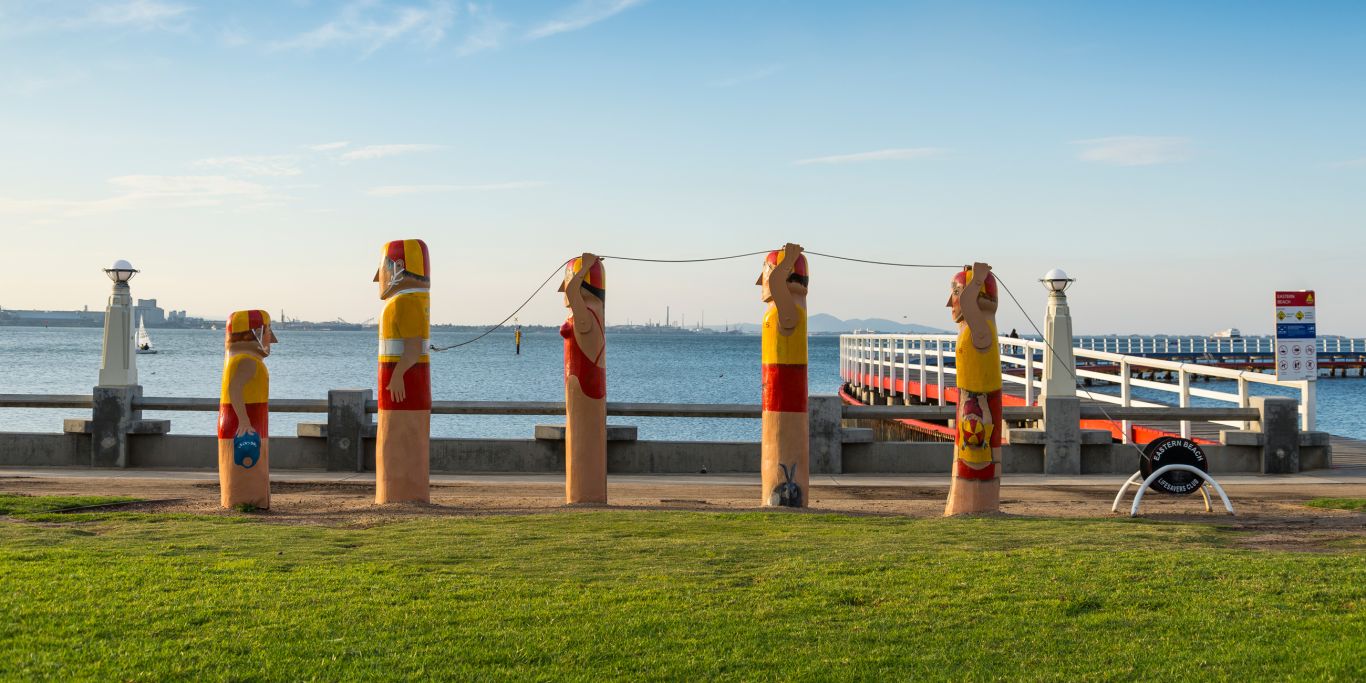
Find over 100 of these colourful characters on the Bollard Trail along the Geelong waterfront. (Image: Visit Victoria)

Keen to get a feel for Geelong’s creative spirit? It runs rife along the Bollard Trail, found at the Geelong waterfront. In the 1990s, the late Melbourne-born artist Jan Mitchell transformed reclaimed timber pier pylons into works of art to showcase the city’s rich history. Her handiwork still stands, a trail of more than 100 colourful characters, each depicting integral pieces of one fascinating tale. The trail runs between Limeburner’s Point to Rippleside Park.

8. Keep creative juices flowing at the Waterfront Art Trail
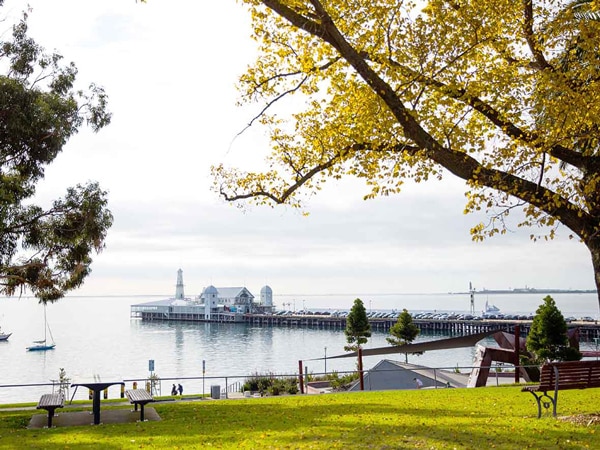
Geelong waterfront
Walk the Waterfront Art Trail.

Tick off the bollards and launch into quirky sculptures, found at the Waterfront Art Trail at 1 Eastern Beach Rd. Encompassing Barcode Fountain, a stainless-steel water feature fitted with blue lighting, Cargo Boxes, packed with curiosities to pay tribute to Geelong imports during the days of early settlement, and more, the art trail is oh so Melbourne (edgy, cool and totally enthralling, in other words).

9. Go hot air ballooning with Liberty Balloon Flights
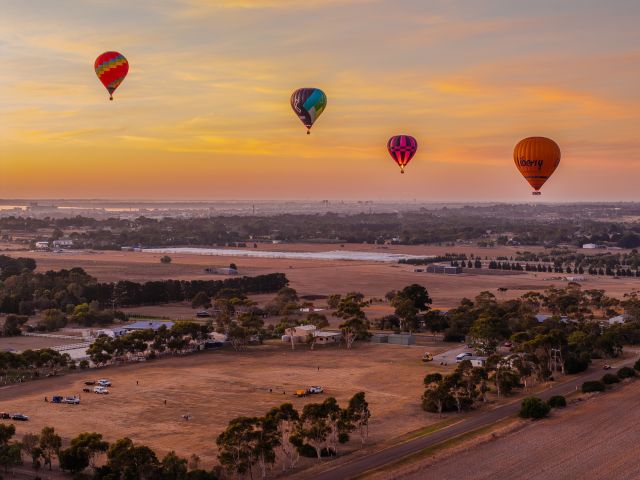
hot air balloons soaring above Geelong at sunset
Soak up all the scenery on a Liberty Balloon Flight. (Image: Dan Powell)

Find fresh perspective with an up-in-the-air spin care of Liberty Balloon Flights . Launching at sunset all year round, the hot air balloons take off from varying locations depending on where the wind blows. Regardless, you’ll likely soar throughout the Bellarine as views out to Port Philip Bay and the ocean endlessly dazzle. The cherry on top is a sparkling wine-fuelled breakfast waiting for you once you’re safely on ground again.

10. Get your artsy hipster on at Little Malop St
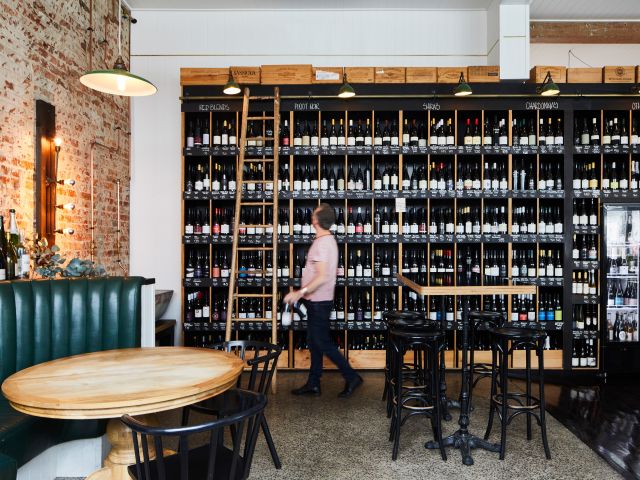
the Geelong Cellar Door at Little Malop St
Geelong Cellar Door has a fantastic range of local craft beer. (Image: Visit Victoria)

Just a few blocks back from the waterfront, Little Malop Street is home to some of the city’s trendiest spots to eat, drink, shop and explore, including Geelong Gallery (more on that standout below). Next door is Geelong’s most architecturally smashing building — the futuristic dome-shaped Geelong Library and Heritage Centre . Across the road, another showstopper: the Geelong Arts Centre , a hub of theatre, music and drama. On the culinary front, don’t miss The Arborist , Sumi Geelong , or Geelong Cellar Door , to name just a few.

11. Soak up serious street art in Geelong
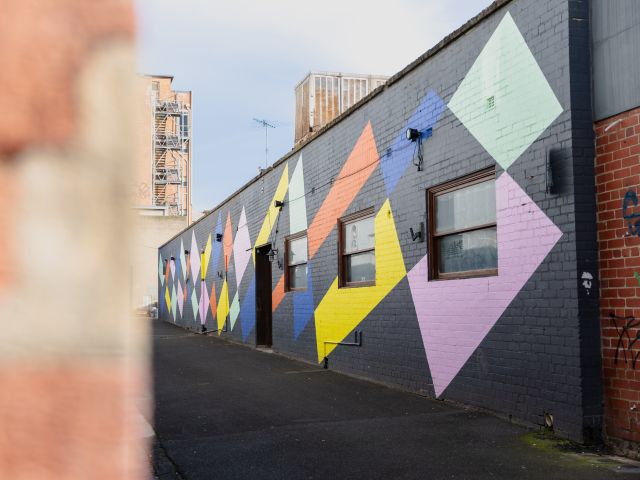
Geelong Street Art
Discover Geelong’s trademark street art hidden down the laneways.

It’s bayside but we’re still in Melbourne. Geelong is famed for its stellar street art, hidden down laneways leading off Little Malop St. Look out for murals depicting significant Geelong identities on Denny’s Place, and a Moi-Yo Miller mural by Michael Cassar on the junction of James Street and Minns Lane. Moi-Yo, born in Geelong, once considered the most beautiful woman in the world, travelled the world as Dante the Magician’s assistant in the 1930s. Meanwhile, a quick stroll to 65 Brougham Street will give you the Unknown Mariner mural by Cam Scale, a tribute to Geelong’s maritime history.

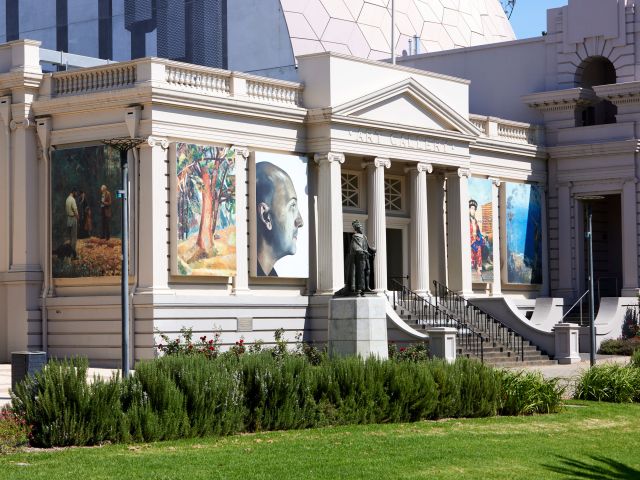
the exterior of Geelong Gallery
Geelong Gallery is one of Australia’s oldest regional art galleries. (Image: Visit Victoria)

Yet another unmissable collective of creativity, Geelong Gallery , established in 1896, is one of Australia’s oldest regional art galleries – and definitely one of the best. Here you’ll discover the annual Archibald Prize, plus dazzling Australian and European painting, sculpture, printmaking and decorative arts collections from as far back as the 18th century.

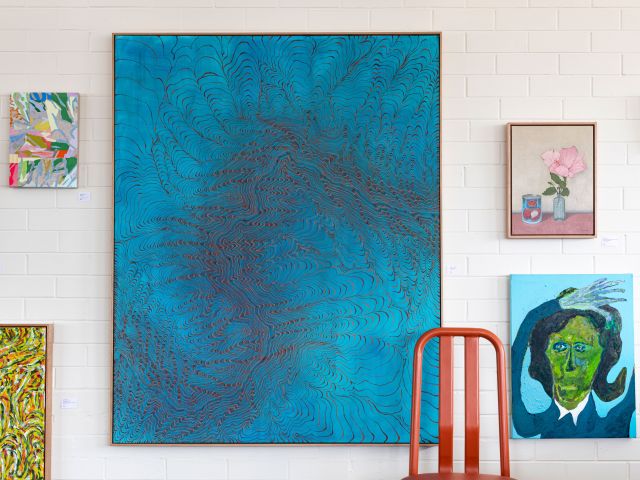
artworks on display at Boom Gallery, Geelong
Boom Gallery showcases the work of local, interstate and international creatives. (Image: Visit Victoria)

Don’t miss Boom Gallery , a dynamic contemporary gallery in Geelong West. The space showcases the work of mostly local, sometimes interstate, creatives which extend to sculptures and jewellery inside a separate object gallery. Check the website for current exhibitions and if something really takes your fancy, regular exhibition openings invite members of the public to celebrate over a wine.

14. Learn something new at the National Wool Museum
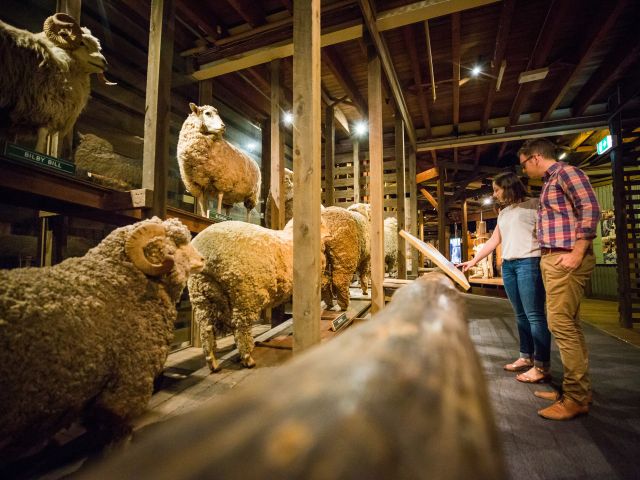
a flock of sheep inside the National Wool Museum, Geelong
The National Wool Museum is Australia’s largest museum dedicated to wool. (Image: Visit Victoria)

The National Wool Museum is housed in a beautifully restored 1872 bluestone wool store close to the waterfront. It’s Australia’s largest museum dedicated to wool and traces the industry’s origins from the 1840s through to today. What I love about the space is its fixed, award-winning ‘On the Land: Our Story Retold’ exhibition, which reveals the history of Australian wool through traditional storytelling out of Wadawurrung Country. The exhibition was crafted by Wadawurrung woman Corrina Eccles, Wadawurrung elder Bryon Powell and Wadawurrung artist Deanne Gilson.

15. Step back in time at The Fyansford Paper Mill
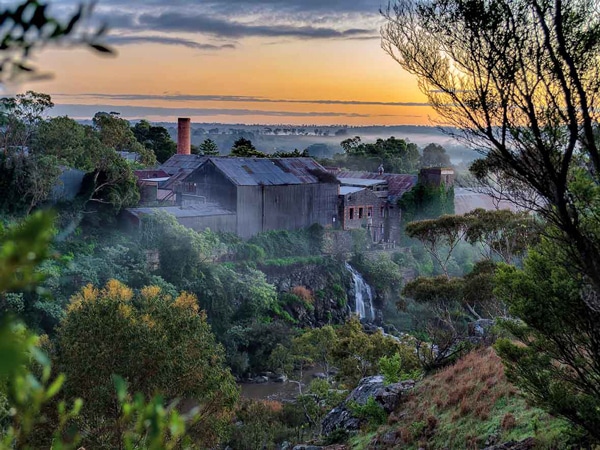
Old Paper Mill
The Old Paper Mills at Fyansford is a restored 1870s bluestone complex.

On the city’s fringe, The Fyansford Paper Mill is worthy of your to-do list. The restored 1870s bluestone complex harks back to the beginnings of Geelong’s industrial era. Today it’s an arts and cultural precinct with more than 15 businesses spanning art galleries, studios, retailers and food. Provenance Wines is a standout, arriving as a cellar door and a restaurant. The entire site is just gorgeous, located on the Barwon River with leafy walks and waterfalls to uncover.

16. Sharpen your skills with a Harvest Experience cooking class
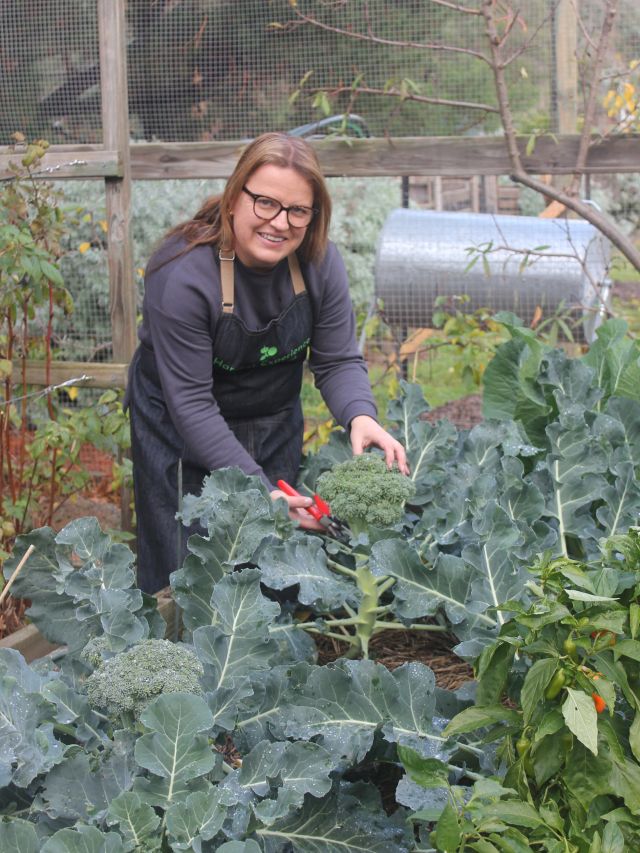
Who knew Geelong was the place to refine your culinary chops? Harvest Experience is a family-run business that strives to show visitors how to live directly off the land. There’s a bunch of classes on offer, but I recommend going the original, full-day ‘Harvest Experience’ where you’ll wander the kitchen garden, harvest produce yourself, learn how to prepare and cook it, and finally, gobble it down. Only six people are signed on at a time, making the experience super intimate and personalised. Other classes include a pizza and mozzarella tutorial and DIY sweet condiments lesson.

Kristie Lau-Adams
Kristie Lau-Adams is a Gold Coast-based freelance writer after working as a journalist and editorial director for almost 20 years across Australia's best-known media brands including The Sun-Herald, WHO and Woman's Day. She has spent significant time exploring the world with highlights including trekking Japan’s life-changing Kumano Kodo Pilgrimage and ziplining 140 metres above the vines of Mexico’s Puerto Villarta. She loves exploring her own backyard (quite literally, with her two young children who love bugs), but can also be found stalking remote corners globally for outstanding chilli margaritas and soul-stirring cultural experiences.
See all articles
hero media

The Macedon Ranges is Victoria’s best-kept food and wine secret

Located just an hour north-west of Melbourne, the largely undiscovered Macedon Ranges quietly pours some of Australia’s finest cool-climate wines and serves up some of Victoria’s best food.

Mention the Macedon Ranges and most people will think of day spas and mineral springs around Daylesford, cosy weekends away in the countryside or the famous Hanging Rock (of enigmatic picnic fame). Or they won’t have heard of the Macedon Ranges at all.

But this cool-climate destination has been inconspicuously building a profile as a high-quality food and wine region and is beginning to draw serious attention from oenophiles and epicureans alike.

The rise of Macedon Ranges wine

liquid gold barrels at Kyneton Ridge Estate Winery
Barrels of liquid gold at Kyneton Ridge Estate Winery. (Image: Chloe Smith Photography)

With elevations ranging from 300 to 800 metres, Macedon Ranges vineyards are among the highest in the country. This altitude, combined with significant day/night temperature swings, makes for a slow ripening season, in turn nurturing wines that embody elegance and structure. Think crisp chardonnays, subtle yet complex pinot noirs and delicate sparkling wines, along with niche varietals, such as gamay and nebbiolo.

Despite the region’s natural advantages – which vary from estate to estate, as each site embodies unique terroir depending on its position in relation to the Great Dividing Range, soil make-up and altitude – the Macedon Ranges has remained something of an insider’s secret. Unlike Victoria’s Yarra Valley or Mornington Peninsula, you won’t find large tour buses here and there’s no mass marketing drawing crowds.

Many of the 40-odd wineries are family-run operations with modest yields, meaning the wineries maintain a personal touch (if you visit a cellar door, you’ll likely chat to the owner or winemaker themselves) and a tight sales circle that often doesn’t go far beyond said cellar door. And that’s part of the charm.

Though wines from the Macedon Ranges are just starting to gain more widespread recognition in Australia, the first vines were planted in the 1860s, with a handful of operators then setting up business in the 1970s and ’80s. The industry surged again in the 1990s and early 2000s with the entry of wineries, such as Mount Towrong, which has an Italian slant in both its wine and food offering, and Curly Flat , now one of the largest estates.

Meet the new generation of local winemakers

the Clydesdale barn at Paramoor.
The Clydesdale barn at Paramoor. (Image: Chloe Smith Photography)

Then, within the last 15 years, a new crop of vignerons like Andrew Wood at Kyneton Ridge Estate , whose vineyard in 2024 was the first in the Macedon Ranges to be certified by Sustainable Winegrowing Australia; Geoff Plahn and Samantha Reid at Paramoor , who have an impressive cellar door with a roaring fire and studded leather couches in an old Clydesdale barn; and Ollie Rapson and Renata Morello at Lyons Will , who rapidly expanded a small vineyard to focus on top-shelf riesling, gamay, pinot noir and chardonnay, have taken ownership of local estates.

Going back to the early days, Llew Knight’s family was one of the pioneers of the 1970s, replacing sheep with vines at Granite Hills when the wool industry dwindled. Knight is proud of the fact that all their wines are made with grapes from their estate, including a light, peppery shiraz (some Macedon wineries purchase fruit from nearby warmer areas, such as Heathcote, particularly to make shiraz) and a European-style grüner veltliner. And, as many other wineries in the region do, he relies on natural acid for balance, rather than an additive, which is often required in warmer regions. “It’s all about understanding and respecting your climate to get the best out of your wines,” he says.

farm animals atKyneton Ridge Estate
Curious residents at Kyneton Ridge Estate. (Image: Chloe Smith Photography)

Throughout the Macedon Ranges, there’s a growing focus on sustainability and natural and low-intervention wines, with producers, such as Brian Martin at Hunter Gatherer making waves in regenerative viticulture. Martin previously worked in senior roles at Australia’s largest sparkling winemaking facility, and now applies that expertise and his own nous to natural, hands‑off, wild-fermented wines, including pét‑nat, riesling and pinot noir. “Wild fermentation brings more complexity,” he says. “Instead of introducing one species of yeast, you can have thousands and they add different characteristics to the wine.”

the vineyard at Kyneton Ridge Estate Winery
The estate’s vineyard, where cool-climate grapes are grown. (Image: Chloe Smith Photography)

Most producers also focus on nurturing their grapes in-field and prune and pick by hand, thus avoiding the introduction of impurities and the need to meddle too much in the winery. “The better the quality of the fruit, the less you have to interfere with the natural winemaking process,” says Wood.

Given the small yields, there’s also little room for error, meaning producers place immense focus on quality. “You’re never going to compete in the middle [in a small region] – you’ve got to aim for the top,” says Curly Flat owner Jeni Kolkka. “Big wineries try to do things as fast as possible, but we’re in no rush,” adds Troy Walsh, owner and winemaker at Attwoods . “We don’t use commercial yeasts; everything is hand-harvested and everything is bottled here, so we bottle only when we’re ready, not when a big truck arrives.” That’s why, when you do see a Macedon Ranges product on a restaurant wine list, it’s usually towards the pointy end.

Come for the wine, stay for the food

pouring sauce onto a dish at Lake HouseDaylesford
Dining at Lake House Daylesford is a treat. (Image: Chloe Smith Photography)

If wine is the quiet achiever of the Macedon Ranges, then food is its not-so-secret weapon. In fact, the area has more hatted restaurants than any other region in Victoria. A pioneer of the area’s gourmet food movement is region cheerleader Alla Wolf-Tasker, culinary icon and founder of Daylesford’s Lake House.

For more than three decades, Wolf-Tasker has championed local producers and helped define what regional fine dining can look like in Australia. Her influence is palpable, not just in the two-hatted Lake House kitchen, but in the broader ethos of the region’s dining scene, as a wave of high-quality restaurants have followed her lead to become true destination diners.

the Midnight Starling restaurant in Kyneton Ridge Estate Winery
The hatted Midnight Starling restaurant is located in Kyneton. (Image: Chloe Smith Photography)

It’s easy to eat well, whether at other hatted restaurants, such as Midnight Starling in the quaint town of Kyneton, or at the wineries themselves, like Le Bouchon at Attwoods, where Walsh is inspired by his time working in France in both his food offering and winemaking.

The beauty of dining and wine touring in the Macedon Ranges is that it feels intimate and unhurried. You’re likely to meet the winemaker, hear about the trials of the latest vintage firsthand, and taste wines that never make it to city shelves. And that’s worth getting out of the city for – even if it is just an hour down the road.

dishes on the menu at Midnight Starling
Delicate dishes on the menu at Midnight Starling. (Image: Chloe Smith Photography)

A traveller’s checklist

Staying there

the accommodation at Cleveland Estate, Macedon Ranges
Stay at the Cleveland Estate. (Image: Chloe Smith Photography)

Soak up vineyard views from Cleveland Estate near Lancefield , embrace retro charm at Kyneton Springs Motel or indulge in lakeside luxury at the Lake House .

Eating there

Enjoy a four-course menu at the one-hatted Surly Goat in Hepburn Springs, Japanese-inspired fare at Kuzu in Woodend or unpretentious fine dining at Mount Monument , which also has a sculpture park.

Drinking there

wine tasting at PassingClouds Winery, Macedon Ranges
A tasting at Passing Clouds Winery. (Image: Chloe Smith Photography)

Settle in for a tasting at Boomtown in Castlemaine, sample local drops at the cosy Woodend Cellar & Bar or wine-hop around the many cellar doors, such as Passing Clouds .

the Boomtown Winery and Cellar Bar signage
Boomtown Winery and Cellar Bar. (Image: Chloe Smith Photography)

Playing there

a scenic river in Castlemaine
Idyllic scenes at Castlemaine. (Image: Chloe Smith Photography)

Wander through the seasonal splendour of Forest Glade Gardens , hike to the summit of Hanging Rock, or stroll around the tranquil Sanatorium Lake.

purple flowers hanging from a tree
Purple flowers hanging from a tree. (Image: Chloe Smith Photography)