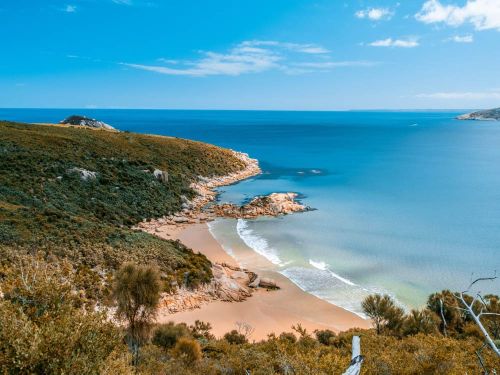
The ultimate guide to Wilsons Promontory National Park

hero media
Located at the southern tip of Australia’s mainland, Wilsons Promontory is a coastal wilderness of golden beaches and bushland trails which serves as one of Victoria’s favourite parks for good reason.

At the southernmost point of mainland Australia lies Victoria’s oldest and one of its most-loved national parks. Wilsons Promontory is a 50,000-hectare coastal wilderness of sandy beaches, granite tors, fern gullies, mountain peaks and native wildlife (think emus, wombats and vividly plumed rosellas), and even harbours a vast inland sand dune system. It is an Aboriginal cultural landscape that remains of major spiritual significance to Victorian Koorie communities today.

Getting to Wilsons Prom

Visit for the day, it’s three hours’ drive from Melbourne in South Gippsland, or stay awhile: the Prom’s main hub is the family-friendly Tidal River (named for the tea tree-stained waterway that curls lazily around it), which offers family-friendly campsites and huts (book ahead, especially in peak season) or hike to a secluded campsite or the historic cottages at the Wilsons Promontory Lightstation.
Wilsons Promontory national park
Marvel at the beauty found within one of Victoria’s favourite parks.

What to do at Wilsons Prom

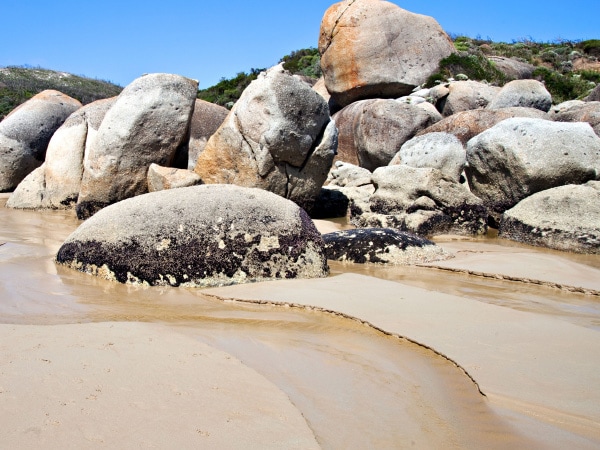
Squeaky Beach

A must-hear sound as much as a must-see sight, powdery white Squeaky Beach gets its name from the noise your feet make as they pad along it. That’s thanks to the fine, rounded grains of quartz sand that compress under your feet as you walk. While here, take a dip in the famously turquoise waters and explore the maze of large granite boulders at the northern end of this iconic beach.

Mt Oberon

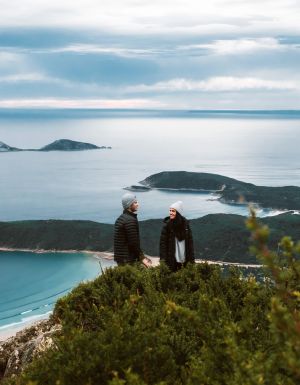
Set your sights on the summit of Mt Oberon for one of the best views in Victoria. This trek is short, at 6.8 kilometres return, and steep as you approach the granite peak where you’ll be rewarded with a panorama of Wilsons Promontory: from its pristine coastline and Tidal River to its offshore islands, gullies and other mountains. For a more rugged and challenging trek, hike Mt Bishop.
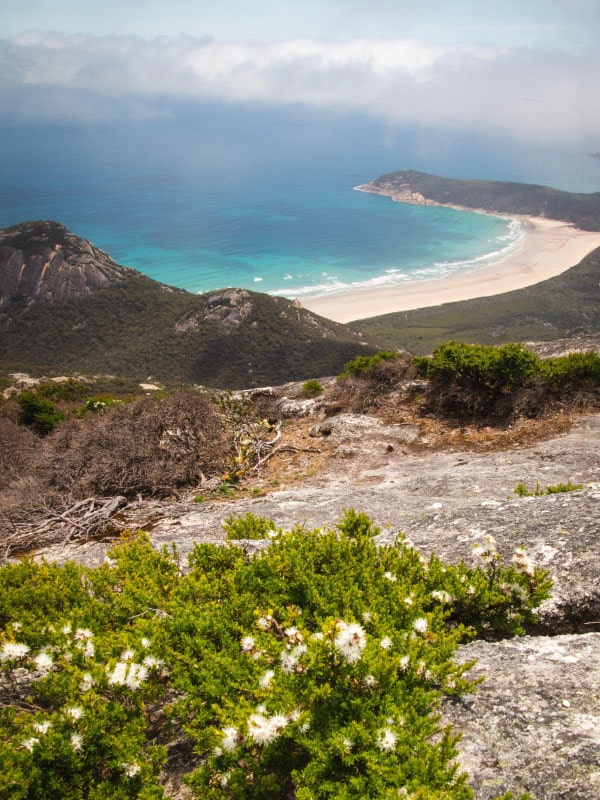
Mt Oberon Wilsons Prom
Views from the summit of Mt Oberon

Whisky Bay

Follow the coastal walk that connects some of Wilsons Prom’s pristine beaches from Squeaky Beach round to Whisky Bay – preferably in time for sunset (also accessible via its own car park). A secluded beach with colourful rock outcrops, its position on the western coast of the peninsula provides the rare opportunity on the east coast of Australia to see the sun go down over the ocean. Watch as sky, sand and sea turn all the shades of a Manhattan, and islands cast perfect silhouettes on the horizon.

Big Drift

One of the most unusual features of Wilsons Prom is rather poetically called the Big Drift: a landscape of vast and ever-shifting sand dunes. Near the park’s entrance yet off the beaten track, to get there it’s a two-kilometre walk from Stockyards Camp along a path that winds through bushland, paddocks and over hills until presenting you with the otherworldly sight. Spend time exploring but keep an eye on where you’ve come from – it can be easy to get lost here.
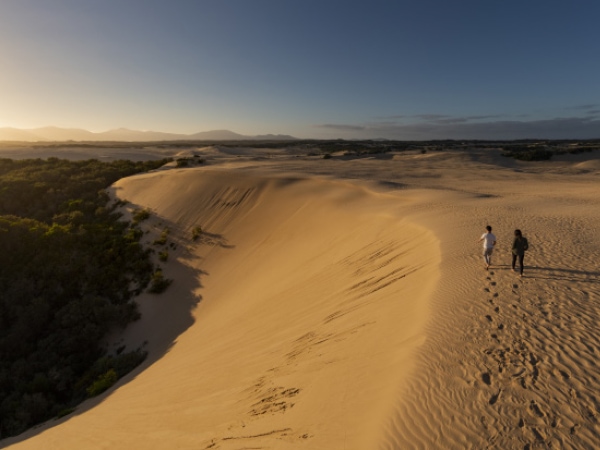
The Big Drift Wilsons Prom
The Big Drift… a landscape of vast and ever-shifting sand dunes.

A Pennicott cruise

Jump aboard one of Pennicott Wilderness Journeys’ amphibious yellow boats to explore the Prom’s rugged coastline and unique wildlife, venture to South Point and take in the granite monolith that is Skull Rock.

Hike to Sealers Cove

No roads lead to this picturesque cove, all sandy shores and forest fringed, so what better excuse to lace up your walking boots? Access to Sealers Cove is only possible via a 25km hike from Telegraph Saddle.

Marine national park

Wilsons Prom is home to Victoria’s largest marine protected area, with waters off the southern coast that harbour a fascinating world ripe for exploration by divers and snorkellers and rivalling the Great Barrier Reef.


Find more memorable things to do at Wilsons Prom here.
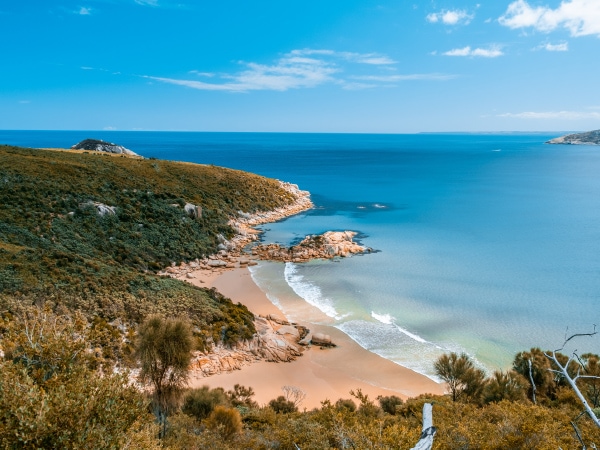
Wilsons Prom
A typical Wilsons Prom view of turquoise waters and golden sands.

Wildlife at Wilsons Prom

Wilsons Promontory is a refuge for native wildlife and a top whale-watching spot to boot.

Wombat

Visitors to Wilsons Prom will delight in seeing the typically reclusive wombat in the wild, and in fact, the portly marsupial can be quite bold and cheeky in its foraging for food at popular camping spot Tidal River; Parks Victoria advises storing food in your vehicle at night so as not to be woken by a furry intruder.

Whales

Tours run seasonally, typically from May to October with peak whale season usually from June to September.

Spot-tailed quoll

Part of a $23 million upgrade of the national park, a 10-kilometre predator-proof fence is being built across the isthmus at the entry to the Prom to create a 50,000-hectare sanctuary for vulnerable native species including the ground parrot, southern brown bandicoot and spot-tailed quoll.

Emu

The mighty emu is another fixture of Wilsons Prom and, while you may count yourself lucky enough to catch a glimpse of one on your travels around the park, up your chances by heading along on the short, sweet and appropriately named Prom Wildlife Walk, where you’ll also see other native wildlife including wallabies, roos and more wombats.

Access to Wilsons Prom

Wilsons Promontory is one of several national parks in Victoria that has free all-terrain wheelchairs; TrailRiders are available to hire so those with mobility limitations can enjoy and explore the wilderness including the views from the summit of Mt Oberon. The Prom, in fact, is one of three parks that offer the use of TrailRiders for going longer and steeper, and has beach wheelchairs too. See parks.vic.gov.au for more information.

Imogen Eveson
Imogen Eveson is Australian Traveller’s Print Editor. She was named Editor of the Year at the 2024 Mumbrella Publish Awards and in 2023, was awarded the Cruise Line Industry Association (CLIA) Australia’s Media Award. Before joining Australian Traveller Media as sub-editor in 2017, Imogen wrote for publications including Broadsheet, Russh and SilverKris. She launched her career in London, where she graduated with a BA Hons degree in fashion communication from world-renowned arts and design college Central Saint Martins. She is the author/designer of The Wapping Project on Paper, published by Black Dog Publishing in 2014. Growing up in Glastonbury, home to the largest music and performing arts festival in the world, instilled in Imogen a passion for cultural cross-pollination that finds perfect expression today in shaping Australia’s leading travel titles. Imogen regularly appears as a guest on radio travel segments, including ABC National Nightlife, and is invited to attend global travel expos such as IMM, ILTM, Further East and We Are Africa.
See all articles
hero media

Mornington Peninsula’s storied past: war, shipwrecks and a runaway convict 

The Mornington Peninsula is a coastline of contrasts, where convict and military history meets shipwrecks, wild seas and adventures above and below the surface.

The Mornington Peninsula can be the kind of place where salt-tangled hair feels like a badge of honour – proof you’ve been somewhere wild, raw and real. Peel back the layers and you’ll discover stories that anchor this region to something other than its famed food and wine.

This land is the traditional Sea Country of the Bunurong/Boon Wurrung people. Long before grapevines were planted and artisanal goods were crafted, the Bunurong Traditional Owners lived in deep connection with the land and sea. Today, places such as Mushroom Reef Marine Sanctuary echo that tradition, with families exploring its rockpools in search of colourful sea stars and crabs at low tide and learning how these fragile ecosystems have been cared for across countless generations.

a group of people visiting the Port Nepean National Park
Take in the rugged coastal landscape at Port Nepean National Park. (Image: Tourism Australia)

A visit to Point Nepean National Park feels like stepping back through time. The fort, built in 1882, protected the narrow entrance to Port Phillip Bay until the end of the Second World War. It was here that the first Allied shot of the First World War was fired – at a German cargo ship trying to escape just hours after war was declared. Nearby, the old Quarantine Station, one of Australia’s first permanent quarantine facilities, established in 1852, still stands. Walking through the hospital and disinfecting complex evokes stories of those who arrived from faraway shores.

Not far from here is a story of survival that inspired the Aussie phrase ‘you’ve got Buckley’s chance’. In 1803, escaped convict William Buckley vanished into the bush near what’s now Sorrento. Everyone thought he had no hope of surviving, but he reappeared 32 years later, having lived with local Aboriginal people.

Even the waters here hold history. The infamous stretch known as The Rip, just three kilometres wide at the entrance of Port Phillip Bay, is among the most treacherous waterways. Countless ships were lost here in the 19th and early 20th centuries, and in 1967, Australia’s own Prime Minister Harold Holt disappeared while swimming off the coast, never to be found.

a seal swimming in Port Phillip Bay
A seal swimming in Port Phillip Bay. (Image: Tourism Australia/Two Palms/Harry Pope)

But for all its danger, the sea here also holds extraordinary beauty. Dolphins are often seen near Sorrento’s cliffs, while below the surface, seagrass meadows and rocky reefs teem with life. Marine tours offer a viewing to this underwater wonderland, while back on terra firma, walking trails lead along beaches, through coastal scrub, and over rock pools.

And if you think you’ll forget about the Mornington Peninsula once you’ve left? You’ve got Buckley’s chance.

A traveller’s checklist

Staying there

the suite interior at InterContinental Sorrento
Luxury interiors at the historic InterContinental Sorrento. (Image: Greg Elms)

Point Nepean Discovery Tents is immersive glamping beside the historic Quarantine Station. Or upgrade to luxury at the 1875-built InterContinental Sorrento .

Playing there

an aerial view of Cape Schanck Lighthouse
Make your way to the Cape Schanck Lighthouse. (Image: Tourism Australia/Two Palms/Harry Pope)

Bayplay Adventure Tours offer eco-adventures from snorkelling with sea dragons to kayaking with dolphins and cycling Point Nepean. Cape Schanck Lighthouse is fascinating to explore on a guided tour, which takes you into the lighthouse and keeper’s cottage.

Eating there

Portsea Hotel is a beautifully restored 1876 Tudor-style pub right on the beach, serving seasonal local fare.