10 of the most entertaining things to do with kids in Ballarat

hero media
Make friends with a meerkat or deep dive a sensory garden – this list of the best things to do in Ballarat with kids is your key to beautiful family memories. 

Whether you need to fill an hour or want to dedicate an entire day to kid-friendly activities, Ballarat has a few tricks up its sleeve. From fun yet educational experiences to pure recreation, the best things to do in Ballarat with kids are made to busy budding brains and little limbs. 

1. Sovereign Hill 
hanging out at Sovereign Hill, Ballarat with kids
Make new memories with your kids at Sovereign Hill. (IImage: Tourism Midwest Victoria)

You may have your own childhood memories from Sovereign Hill as it’s been around since the 1970s, but the magic is even grander nowadays. Transporting visitors straight to the 1850s, the multi-award-winning open-air museum still earns plaudits from adults as it does little ones. The immersive attraction is set across a 25-hectare site (equivalent to the size of some 13 MCGs) and plays host to more than 60 historically recreated brick and timber buildings decked out with antiques, artwork, books and papers. It’s also staffed by costumed actors who can answer your historical questions and pose for photos. 

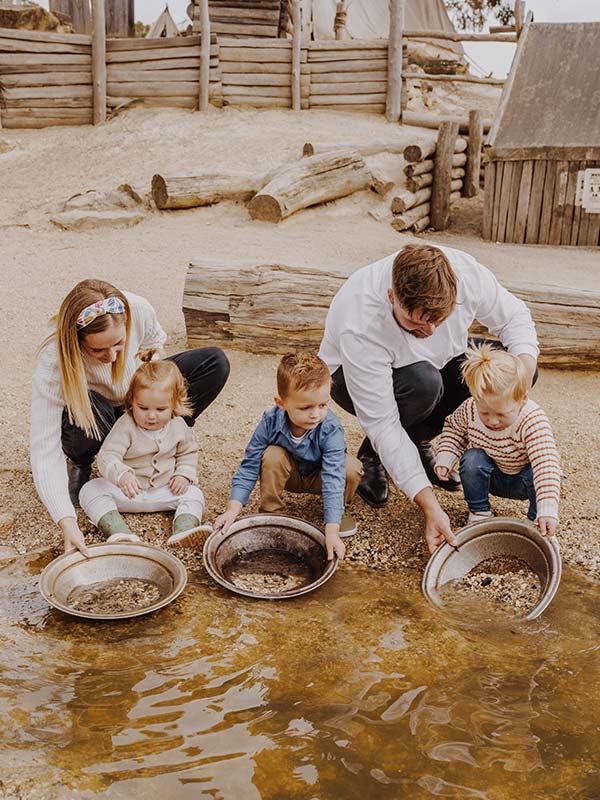
Kids will adore every inch of the time warp with many of the venue’s activity costs included in your ticket entry. Pick up your licence and pan for real gold in a meandering creek, be awed by the Wizard Jacobs Magic Show, try your hand at old-fashioned boiled sweet making or candle dipping, go bowling, pay a visit to one of the workshops that spotlight older trades such as blacksmith and coachbuilder, or journey below the ground with a Red Hill Mine Tour and get a glimpse into what life was like for intrepid miners that descended upon Victoria’s goldfields in the 1800s. 

Even the snacks are on brand with wood-fired and oven-baked pies, pasties and sausage rolls available. There’s also a bar serving up its own homebrew and the fancier New York Bakery restaurant to keep grownups satisfied. It’s worth putting aside an entire day to tick everything off, and it’s well worth noting that Sovereign Hill can accommodate those with additional accessibility needs. 

Cost: Adult $52.50, child $33, family of four (2 adults and 2 children) $145.50, family of three (1 adult and 2 children) $103, additional child $28.50

2. Ballarat Tramway Museum 
Visiting Ballarat Tramway Museum with kids
Let the young ones experience history in century-old trams. (Image: Tourism Midwest Victoria)

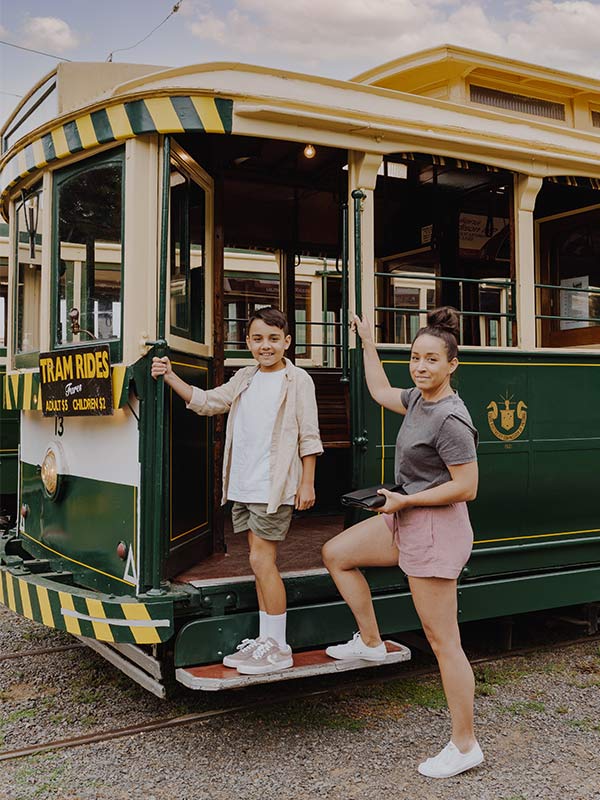
While we’re exploring Ballarat’s unique roots, consider the Ballarat Tramway Museum in the Ballarat Botanic Gardens as a source of inspiration for young minds. Yet another interactive thing to do with kids, the hot spot invites you to jump aboard 100-year-old trams that roll you around Lake Wendouree. Luring crowds since 1971, the museum also boasts seven tramcars to stickybeak, plus a handful of separate exhibitions and experiences. There’s also a gift shop selling miniature replicas and other toys, and the attraction is fully accessible with a tram (No. 1029) that’s tailored to welcome those with access needs. 

Cost: Adults cost $15, children cost $7 and families cost $40 

3. Ballarat Wildlife Park 
visiting Ballarat Wildlife Park with kids
This park is a must-visit for wildlife lovers. (Image: Visit Victoria)

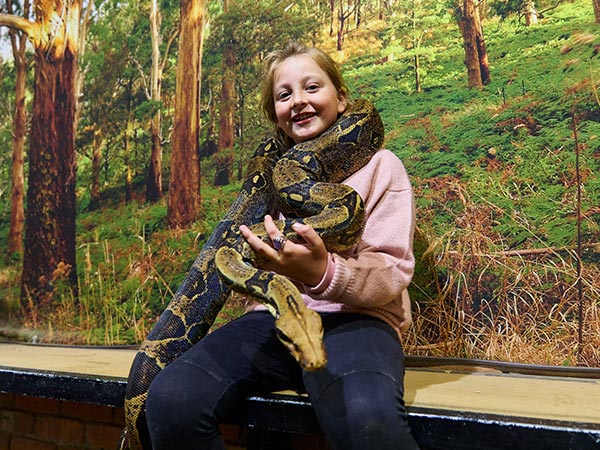
Set among 15 hectares of natural bushland and flowing with interactive activity, the family-run Ballarat Wildlife Park is bound to kill more than a few hours. Home to more than 100 free-roaming kangaroos, this popular activity will see your littlies discovering exotic creatures (hello tigers, penguins and meerkats) in addition to cuddling up to our famed native critters. And it’s not just those sleepy roos stealing your gaze. Wombats, dingoes, koalas, crocodiles, snakes and Tasmanian devils are all residents, so check out the day’s events schedule to help you learn more about your favourites. Delight your kids one step further with an animal encounter, providing them with one-on-one time with a giant tortoise, koala, cassowary and more. 

Cost: Adults cost $40, children aged 5-15 cost $20 and families of two adults and up to four children cost $100 

4. Tuki Trout Farm 

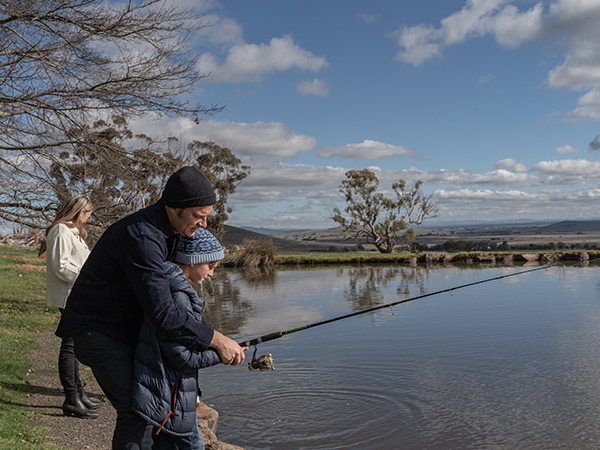
catching fish with kids at Tuki Trout Farm, Ballarat
A kid’s first catch is a memorable moment. (Image: Tourism Midwest Victoria)

Jump in the car early to smash out the 40-odd minutes it’ll take you to find Tuki Trout Farm just out of Ballarat proper. Ambitious anglers will delight in the attraction’s trout-filled pond where all your supplied gear (think rods, bait and nets) will help even the inexperienced attract a nibble or few. The odds are so good that visitors are encouraged to bring their own cooler box and containers to help carry catches back to the accommodation with ease. Best of all, once you do reel a sucker in, the team clean and package it up for you. How easy is that? 

Cost: Adults cost $14, children cost $10 and families cost $55 

5. Kryal Castle 

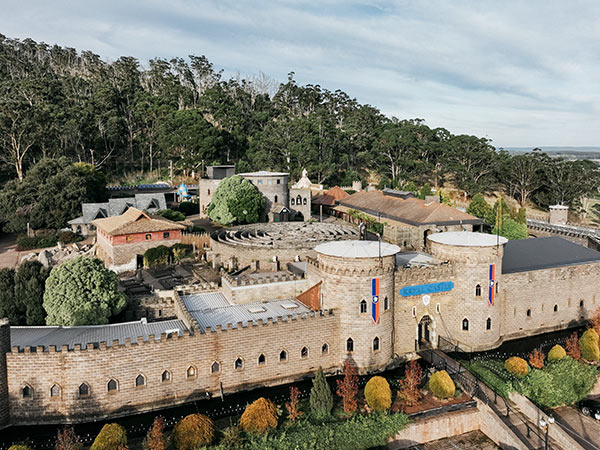
visiting Kryal Castle with kids
The enchanting castle will let the kids’ imagination run wild. (Image: Visit Victoria)

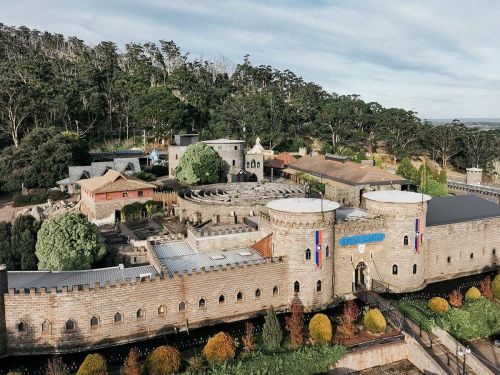
The kooky attraction you never knew you needed, Kryal Castle is a replica medieval castle with various activities on offer. Kids can try their hand at archery at the indoor range, find their way through the stone maze, watch on as knights in full armour face off in trials of jousting on horseback, explore the Torture Museum (if they’re 13 or over), go axe throwing, tiptoe around the Dragon Garden and Dragon Labyrinth, climb the Wizard’s Tower and even more. You can also stay overnight in one of the castle suites or a cabin, tiny house or camping site if you prefer. 

Cost: Adult $42, concession $37.50, child (3-15 years) $31.30, family of four (2 adults and 2 children) $124.

6. Eureka Aquatic Centre 
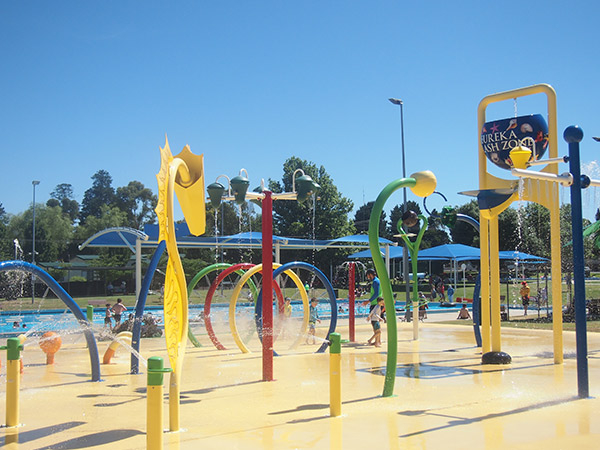
fun with kids at Eureka Aquatic Centre in Ballarat
Keep the kids cool and entertained with water activities.

Wear out little bodies at the Eureka Aquatic Centre , where warm days are best spent splashing around the venue’s three outdoor pools: a heated 50-metre pool, a learn to swim pool, and a shaded toddlers’ pool. There’s also an outdoor water play park as big and epic as those typically found in BIG4s (giant drop bucket included) and an outdoor playground and barbecue facilities. Post-swim, laze about the shaded areas that line the pool. 

Cost: Adults cost $7.20, children aged 5-15 cost $6.30 and families cost $18.90 

7. Lake Wendouree Adventure Playground
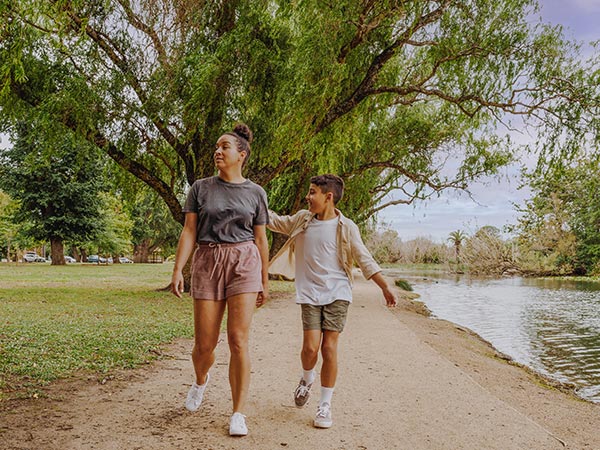
Lake Wendouree playground at Ballarat
Pass by a fun adventure playground as you stroll around the lake. (Image: Tourism Midwest Victoria)

Located on the banks of lovely Lake Wendouree, and just across the road from the Ballarat Botanical Gardens (more on that shortly), lies the Lake Wendouree Adventure Playground. A castle-like structure, it features slides, several different kinds of swings, monkey bars, forts, climbing structures, tunnels, and more. Once you’ve exhausted the playground’s assets, take one of the walking tracks around the lake, which is home to ducks and swans. 

Cost: Free 

8. Ballarat Botanical Gardens 
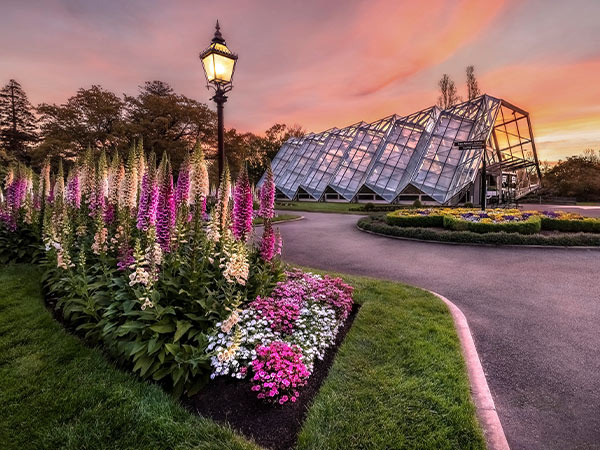
strolling around Ballarat Botanical Gardens with kids
The gardens are the perfect backdrop for your family photos. (Image: Visit Victoria)

Ballarat’s sprawling green lung, the Ballarat Botanical Gardens , cover some 40 hectares. Added to the Victorian Heritage Register in 2010, it invites ankle biters to run loose across manicured lawns (also a great place for a summer family picnic) or wander among the vivid seasonal floral displays hosted in the Robert Clark Conservatory. Encourage interactive learning within the Sensory Garden, designed to stimulate sight, sound, smell and touch with its diverse range of plants, all chosen for their unique texture, colour or scent. The website even has its own Garden Explorer guide to all the species you might encounter along the way. 

Cost: Free 

9. Inclusive Play-Space 
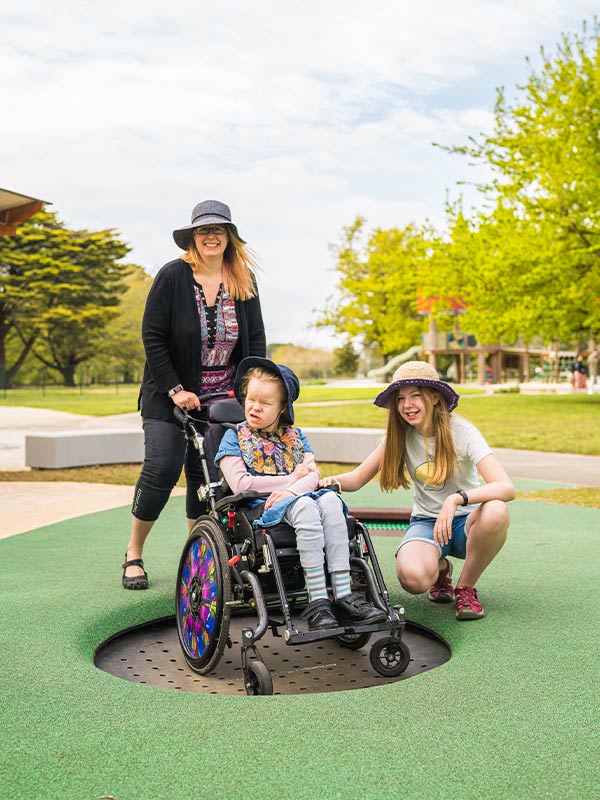
Inclusive Playspace at Ballarat
This playground enables children and adults of all abilities to socialise and play. (Image: City of Ballarat)

More commonly known as Livvi’s Place Ballarat, the brilliant Inclusive Play-Space offers all abilities access to very cool play equipment. Think a splash zone, flying foxes, sand play equipment and even musical instruments. The park’s amenities are naturally inclusive, too, such as the Adult Changing Place, plus the entire space is fenced so you can take a well-deserved load off. (Kind of, for a bit, anyway.) 

Cost: Free 

1o. Gold Rush Mini Golf 
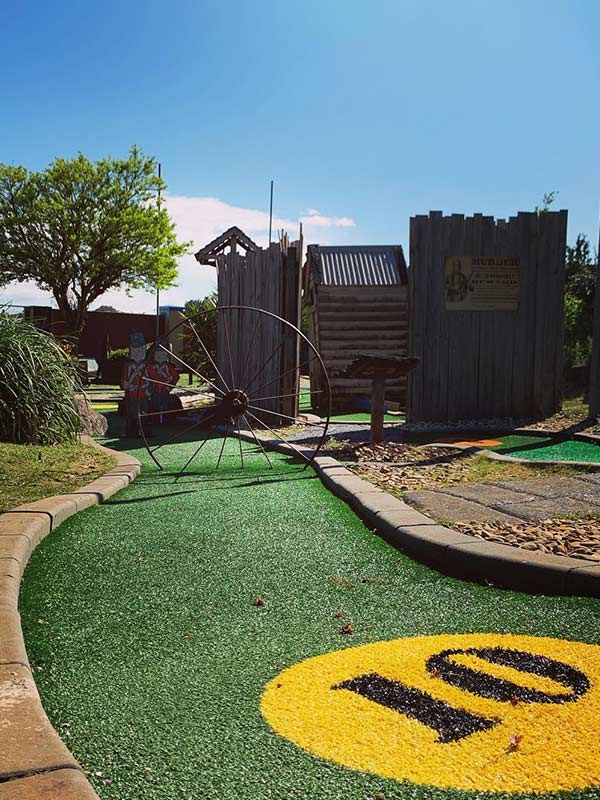
Gold Rush Mini Golf in Ballarat
The outdoor and indoor courses offer fun for the whole family.

Home to two themed (and licensed) 18-hole courses, Gold Rush Mini Golf is a good spot to mop up free time together as a family. There’s both an indoor and an outdoor course. The former is named ‘Lost World’ and is an eclectic mishmash of the Jurassic period and the Middle Ages, while the latter is modelled on Ballarat’s gold rush history and features worn timber facades, props and Ballarat streetscapes. There’s also arcade games on site. 

Cost: Adults cost $16 for one course, children aged between 3-13 cost $10 for one course and families cost $46 for one course 

Discover the best restaurants in Ballarat for a family feed

Chloe Cann
Chloe Cann is an award-winning freelance travel and food writer, born in England, based in Melbourne and Roman by adoption. Since honing her skills at City St George's, University of London with a master's degree in journalism, she's been writing almost exclusively about travel for more than a decade, and has worked in-house at newspapers and travel magazines in London, Phnom Penh, Sydney and Melbourne. Through a mixture of work and pleasure, she's been fortunate enough to visit 80 countries to date, though there are many more that she is itching to reach. While the strength of a region's food scene tends to dictate the location of her next trip, she can be equally swayed by the promise of interesting landscapes and offbeat experiences. And with a small person now in tow, travel looks a little different these days, but it remains at the front of her mind.
See all articles
hero media

Inside Geelong’s glow-up from factory town to creative capital

Abandoned mills and forgotten paper plants are finding second lives – and helping redefine a city long underestimated. 

Just 15 years ago, Federal Mills was a very different place. Once among the most significant industrial sites in Victoria, the historic woollen mill was one of a dozen that operated in Geelong at the industry’s peak in the mid-20th century, helping the city earn its title as ‘wool centre of the world’. But by the 1960s global competition and the rise of synthetic fabrics led to the slow decline of the industry, and Federal Mills finally shuttered its doors in 2001. Within a few years, the abandoned North Geelong grounds had become makeshift pastoral land, with cows and goats grazing among the overgrown grass between the empty red-brick warehouses. It was a forgotten pocket of the city, all but two klicks from the bustle of the CBD.  

Geelong cellar door wine bar
Geelong has shed its industrial identity to become an innovative urban hub with reimagined heritage spaces. (Image: Ash Hughes)

Federal Mills: from forgotten factory to creative precinct 

Today, the century-old complex stands reborn. The distinctive sawtooth-roof buildings have been sensitively restored. An old silo is splashed with a bright floral mural, landscapers have transformed the grounds, and the precinct is once again alive with activity. More than 1000 people work across 50-plus businesses here. It’s so busy, in fact, that on a sunny Thursday morning in the thick of winter, it’s hard to find a car park. The high ceilings, open-plan design, and large multi-paned windows – revolutionary features for factories of their time – have again become a drawcard.  

Paddock Bakery andPatisserie
Paddock Bakery and Patisserie is housed within the historic wool factory. (Image: Gallant Lee)

At Paddock , one of the precinct’s newer tenants, weaving looms and dye vats have been replaced by a wood-fired brick oven and heavy-duty mixers. Open since April 2024, the bakery looks right at home here; the building’s industrial shell is softened by ivy climbing its steel frames, and sunlight streams through the tall windows. Outside, among the white cedar trees, families at picnic benches linger over dippy eggs and bagels, while white-collar workers pass in and out, single-origin coffee and crème brûlée doughnuts in hand. 

Geelong: Australia’s only UNESCO City of Design 

Paddock Bakery
Paddock Bakery can be found at Federal Mills. (Image: Gallant Lee)

“A lot of people are now seeing the merit of investing in Geelong,” says Paul Traynor, the head of Hamilton Hospitality Group, which redeveloped Federal Mills. A city once shunned as Sleepy Hollow, and spurned for its industrial, working-class roots and ‘rust belt’ image, Geelong has long since reclaimed its ‘Pivot City’ title, having reinvented itself as an affordable, lifestyle-driven satellite city, and a post-COVID migration hotspot.  

And the numbers stand testament to the change. In March 2025, and for the first time in its history, Greater Geelong became Australia’s most popular regional town for internal migration, overtaking Queensland’s Sunshine Coast. Current forecasts suggest Geelong will continue to outpace many other Australian cities and towns, with jobs growing at double the rate of the population.

Tourism is booming, too. The 2023-24 financial year was Geelong and The Bellarine region’s busiest on record, with 6.4 million visitors making it one of the fastest-growing destinations in the country. It’s not hard to see why: beyond the city’s prime positioning at the doorstep of the Great Ocean Road, Geelong’s tenacity and cultural ambition stands out.  

As Australia’s only UNESCO City of Design, Geelong is swiftly shaking off its industrial past to become a model for urban renewal, innovation, sustainability and creative communities. The signs are everywhere, from the revitalisation of the city’s waterfront, and the landmark design of the Geelong Library and Heritage Centre and Geelong Arts Centre, to the growing network of local designers, architects and artists, and the burgeoning roster of festivals and events. That’s not even mentioning the adaptive reuse of storied old industrial buildings – from Federal Mills, to Little Creatures’ brewery ‘village’ housed within a 1920s textile mill – or the city’s flourishing food and wine scene.  

The rise of a food and wine destination  

boiler house
Restaurant 1915 is housed within a restored former boiler house. (Image: Harry Pope/Two Palms)

Traynor credits now-closed local restaurant Igni, which opened in 2016, as the turning point for Geelong’s hospo industry. “[Aaron Turner, Igni’s chef-patron] was probably the first guy, with all due respect, to raise the bar food-wise for Geelong,” he says. “People now treat it really seriously, and there’s clearly a market for it.” While Igni is gone, Turner now helms a string of other notable Geelong venues, including The Hot Chicken Project and Tacos y Liquor, all within the buzzy, street art-speckled laneways of the CBD’s Little Malop Street Precinct. Many others have also popped up in Igni’s wake, including Federal Mills’ own restaurant, 1915 Housed within the cavernous boiler house, 1915’s interior is dramatic: soaring, vaulted ceilings with timber beams, exposed brick, a huge arched window. The share plates echo the space’s bold character, playing with contrast and texture, with dishes such as a compressed watermelon tataki, the sweet, juicy squares tempered by salty strands of fried leeks, and charred, smoky snow peas dusted with saganaki on a nutty bed of romesco. 

Woolstore
The Woolstore is a new restaurant and bar housed within a century-old warehouse. (Image: Amy Carlon)

 The Woolstore , one of The Hamilton Group’s most recent hospo projects, opened in February. It occupies a century-old riverside warehouse and exudes a more sultry, fine dining ambience. Much like Federal Mills, the blueprint was to preserve the original brickwork, tallowwood flooring and nods to the building’s former life. That same careful consideration extends to the well-versed, affable waitstaff as well as the kitchen. Head chef Eli Grubb is turning out an eclectic mix of ambitious and indulgent mod Oz dishes that deliver: strikingly tender skewers of chicken tsukune, infused with hints of smoke from the parrilla grill, and glazed with a moreish, sweet gochujang ‘jam’; nduja arancini fragrant with hints of aniseed and the earthy lick of sunny saffron aioli; and golden squares of potato pavé, adorned with tiny turrets of crème fraîche, crisp-fried saltbush leaves, and Avruga caviar, to name but a few stand-out dishes.  

Woolstore menu
Woolstore’s menu is designed for sharing.

Breathing new life into historic spaces  

On the city’s fringe, hidden down a winding side road with little fanfare, lies a long-dormant site that’s being gently revived. Built from locally quarried bluestone and brick, and dating back to the 1870s, the complex of original tin-roofed mill buildings is lush with greenery and backs onto the Barwon River and Buckley Falls; the audible rush of water provides a soothing soundtrack. Fyansford Paper Mill is one of few complexes of its time to survive intact. It feels steeped in history and spellbindingly rustic.  

“We were looking for an old industrial place that had some charm and romance to it,” explains Sam Vogel, the owner, director and winemaker at Provenance Wines which moved here in 2018. When he first viewed the building with his former co-owner, it was in such a state of disrepair that the tradie tenant occupying the space had built a shed within it to escape the leaking roof and freezing winter temperatures. “To say it was run down would be an understatement,” he notes. “There was ivy growing through the place; the windows were all smashed. It was a classic Grand Designs project.” 

Provenance Wines
Provenance Wines moved to Fyansford Paper Mill in 2018. (Image: Cameron Murray Photography)

The team has since invested more than a million dollars into their new home. Where paper processing machinery once sat, wine barrels are now stacked. Vaulted cathedral ceilings are strung with festoon lights, and hidden in plain sight lies a shadowy mural by local street artist de rigueur Rone – one of only three permanent works by the artist.

While the award-winning, cool-climate pinot noir, riesling and chardonnay naturally remain a key draw at Provenance, the winery’s restaurant is a destination in itself. Impressed already by whipsmart service, I devour one of the most cleverly curated and faultlessly executed degustations I’ve had in some time. It’s all prepared in a kitchen that is proudly zero-waste, and committed to providing seasonal, ethical and locally sourced meat and produce under head chef Nate McIver. Think free-range venison served rare with a syrupy red wine jus and a half-moon of neon-orange kosho, shokupan with a deeply savoury duck fat jus (a modern Japanese take on bread and drippings), and a golden potato cake adorned with a colourful confetti of dehydrated nasturtiums and tomato powder, and planted atop a sea urchin emulsion.  

handcrafted pieces
Bell’s handcrafted functional pieces on display.

The complex is home to a coterie of independent businesses, including a gallery, a jeweller, and its latest tenant, ceramicist Elizabeth Bell, drawn here by the building’s “soul”. “There’s so much potential for these buildings to have new life breathed into them,” says Bell, whose studio is housed within the old pump room. “Even people in Geelong don’t know we’re here,” she says. “It’s definitely a destination, but I like that. It has a really calming atmosphere.”  

A Melbourne transplant, Bell now feels at home in Geelong, which offers something Melbourne didn’t. “If this business was in Melbourne I don’t think it would’ve been as successful,” she notes. “It’s very collaborative in Geelong, and I don’t think you get that as much in Melbourne; you’re a bit more in it for yourself. Here it’s about community over competition.”  

Elizabeth Bell
Ceramicist Elizabeth Bell has a store in Fyansford Paper Mill.