A rich art, music and epicurean culture adds another layer of interest to the compelling old Goldfields towns of Castlemaine, Maldon and their surrounds.
On a sunny Sunday evening in early autumn it’s hard to imagine many places I’d rather be than at the Theatre Royal in Castlemaine. There’s a band playing in its rambling back garden (home to Love Shack Brewing Co .), casting all-round good vibes to a laid-back audience of friends and young families.
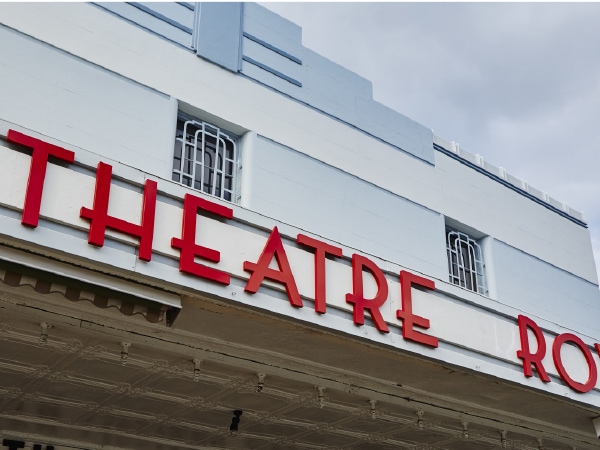
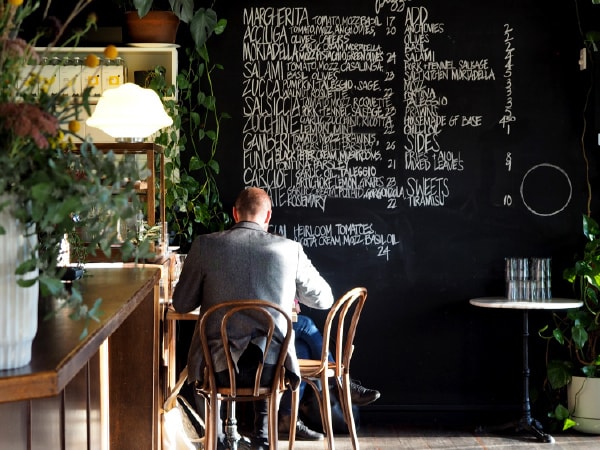
Out the front of the building’s striking facade, an Art Deco beauty rendered in 1938, people chat animatedly over craft beer at street-side seating as I head indoors for dinner at Lola, which had me at the promise of ‘good pizza, nice wine’. I pass through the old foyer, repurposed as an espresso and wine bar with a vintage ice-cream cart serving Lavezzi gelato from Melbourne’s Lygon Street, and sit down in a plant-filled nook that doubles as a boutique bottle shop. Light streams in through the windows, highlighting the posters on the wall that tell of the alternative music luminaries – from Dirty Three and Cosmic Psychos to Smog and Joanna Newsom – that have played the gig space here, which also serves as an independent cinema showcasing arthouse films and new releases. Built in 1854 and having seen several redevelopments in its lifetime due to fire, today the Theatre Royal is run by musicians Tim Heath and Felicity Cripps and is a dynamic hub in this central Victorian town rich in arts, music and epicurean culture.
After my meal it’s a quick walk round the block back to where I’m staying. Recently converted from a framer’s store to a three-bedroom crash pad on a quiet lane steps from the action, 11 Union Street taps straight into Castlemaine’s creative spirit with its wall of record sleeves on display from floor to soaring ceiling. It forms part of the Castlemaine Boutique Accommodation portfolio of beautifully restored properties that each reveal a different side to this historic old goldfields town: from six-bedroom Corvah House, built at the height of the gold rush, and its row of red-brick terrace houses next door, to the grand mansion of Campbell House , built in 1882 by a Scottish settler who made his fortune in timber and ironmongery.
Around an hour and a half’s drive or train ride from Melbourne, Castlemaine was established on the lands of the Dja Dja Wurrung people upon the discovery of gold at nearby Specimen Gully in 1851. The Mt Alexander district would prove to be one of the world’s richest shallow alluvial goldfields – shaping the state of Victoria forever – and Castlemaine, like Bendigo 40 kilometres to its north and Ballarat 80 kilometres to its south, became a hugely important gold mining settlement.
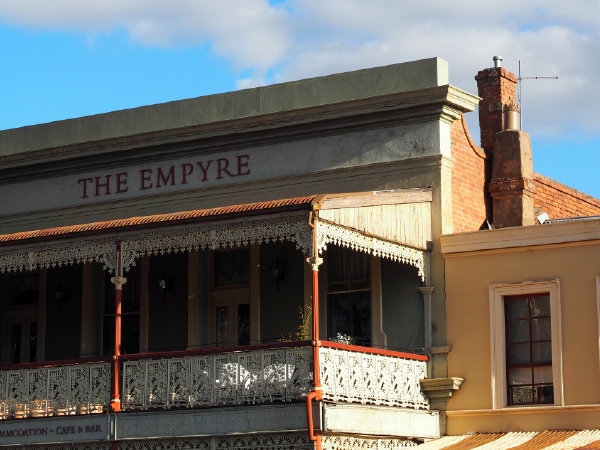
This legacy can be read today in the town’s heritage streetscape, which has been artfully reinvented by an infusion of all manner of galleries, eateries, stores and venues tucked under just about every roof. Mostyn Street alone is an eclectic shopping strip that includes the quirky and eco-friendly giftware of Merchants of Mostyn ; boutique Rike Design, run by an Austrian set and costume designer; the expansive Stoneman’s Bookroom and a newly opened indie beer and wine shop, Fermentus. Then there’s the Empyre Hotel , strikingly elegant with its sage green facade, leadlight windows and wrought-iron lacework verandah, offering luxe accommodation and a design-driven bar. And a few blocks away on Templeton Street, I have breakfast that morning at a cafe nestled in the historic fire station and named for the patron saint of firefighters, Saint Florian. From its street-side seating I admire the leaves on the plane trees turning fire-engine red in tune with the building, and tuck into poached apricot crumpets as a local tells me about the long history of permaculture in the area and the community culture of harvesting and sharing backyard produce.
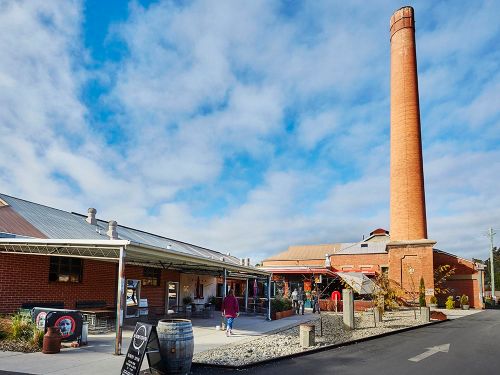
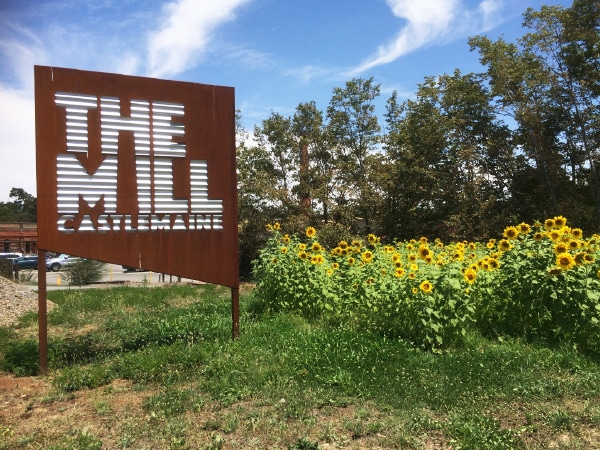
Elsewhere in town – opposite the graceful Botanical Gardens, one of Victoria’s earliest – an old industrial site that started life as the Castlemaine Woollen Mill in 1875 is today a hub for food and artisan manufacturing and an expression of this creativity and community spirit. With many strings to its bow across a sprawling red-brick site, The Mill incorporates makers of everything from furniture to bath soaks to ethical underwear within its artisan precinct, while its vintage precinct is a treasure trove to get lost in for hours. And within its food precinct lies a whole village’s worth of specialty producers including a Viennese coffeehouse and roastery, craft brewery, winemakers, sourdough baker, smallgoods maker, chocolatier and ice-cream maker. It’s no coincidence that Castlemaine and its surrounding towns fall under Bendigo’s distinction of being Australia’s first UNESCO Creative City of Gastronomy. This designation celebrates the region’s rich food culture and commitment to local and sustainable produce, and can be experienced everywhere from farm gates to cellar doors and farmers’ markets to right here at The Mill.
“There’s very much a sense of community that we’d find in France," says artisan cheesemaker Ivan Larcher, who moved to Castlemaine with his wife Julie and young children last year to set up a cheesemaking factory and school with the aim of creating a new wave of small-scale cheesemaking across Australia; in a town that passionately supports local, people pop into their adjacent Long Paddock Cheese store to stock up on its range of organic cow’s milk cheeses and products like buttermilk and crème fraiche as if it’s been here forever and not just a few months.
The community similarly embraced Edmund Schaerf and Elna Schaerf-Trauner’s vision of transposing a Viennese coffeehouse to the Victorian goldfields. Taking in the remarkable interior of Das Kaffeehaus – where each element, from the tear-drop chandelier to the vignettes arranged around a series of banquettes, is a heartfelt tribute to a different aspect of Austrian culture – I savour melt-in-the-mouth apfelstrudel and sip a kleiner mokka. Coffee is freshly roasted in an adjoining space that harnesses the old red-brick chimney that towers above it. Das Kaffeehaus was one of the first businesses to move into The Mill five years ago and has seen the site evolve around it. It works because it has grown organically. “Because there’s soul," says Elna. “And the soul is the people, the people with passion who want to create something that’s truly theirs and reflects a part of themselves. Then [visitors] will see it and feel it, and for me nothing is more beautiful than when people get it."
Creativity, community and collaboration are at the core of brewery and taproom Shedshaker. Also one of The Mill’s original residents, it is run with passion by Jacqueline Brodie-Hanns and her partner, Hunters & Collectors drummer Doug Falconer, and does double duty as a dynamic arts and live music venue. Alongside its handcrafted, small-batch craft beers it serves a locally sourced menu that includes pizzas and inventive vegan food – try the deep-fried miso-glazed eggplant fingers with ginger-infused whipped tofu – with many ingredients so local they’re sourced straight from their neighbours at this reinvented heritage space. And while ventures such as The Mill are now giving visitors a way to tap into Castlemaine’s unique culture, the culture itself isn’t new. “It’s a very progressive community and it has been for at least 40 years," says Jacqueline. “In the ’70s this community really embraced off-grid living, so there’s been a huge history of sustainable housing in this region, and [since then] artists and musicians have been coming here in droves."
Castlemaine State Festival was founded in 1976 by arts patron Berek Segan and has grown to become Australia’s longest running flagship regional arts festival, building on a creative legacy forged in the gold rush – which inspired a wave of refined artistic pursuits, from instrument-making to crafts – and setting the town on course to be the vibrant centre of arts it is today.
Galleries proliferate here including ever-evolving creative space Lot19; Falkner Gallery with its printmaking, painting, drawing and photography spanning the two floors of an 1860 building; Buda Historic Home and Garden, home to the creative Leviny family and boasting fascinating history, art and artefacts; organic cafe and arts hub Cream Town; and the new Brickworks Gallery Castlemaine at the original site of the Castlemaine historical artists’ commune. The latest artistic incursion on the landscape will happen when the Old Castlemaine Gaol, built in 1861 high on a hill above town, is unveiled as an arts precinct by artists David and Yuge Bromley.
In a place full of lovely buildings, I’m struck by the beauty of the Castlemaine Art Museum (CAM): a jewel-box of a purpose-built gallery that dates back to 1931 and has the charming Art Deco architecture and atmosphere to match. Its collection of Australian art includes work by impressionists Frederick McCubbin and Arthur Streeton, modernist painters Margaret Preston and Clifton Pugh, and photographers Max Dupain and Olive Cotton, alongside a museum collection of historical artefacts that tell the tales of the region. Gallery manager Naomi Cass, former director of Melbourne’s Centre for Contemporary Photography, is reinvigorating this space with a dynamic program that focuses on engagement with the community and local artists, not least with the Traditional Owners of the land the Dja Dja Wurrung, and juxtaposing traditional and contemporary work to create new ways of seeing.
The museum’s foundation over 100 years ago (in 1913) speaks to what makes the town itself endure today. “The origin of this gallery arises out of people coming together, driven by a lot of the women in the district, and thinking about what a good society needs," says Naomi. And when contemplating the appeal of Castlemaine – the kind that makes you want to buy a house here, not just spend the weekend – an observation she makes strikes a chord: “It’s strangely contemporary yet beautifully historical." And that, I think to myself, is exactly how it feels.
Contemporary country in Maldon
A trip to Castlemaine isn’t complete without exploring the other towns nearby, connected by a landscape of gently rolling green and gold. Don’t miss Chewton (six kilometres south-east), with its live music roster at funky Red Hill Hotel , and the apple-growing hub of Harcourt (18 kilometres north), with craft cider, boutique wines and world-class mountain biking.
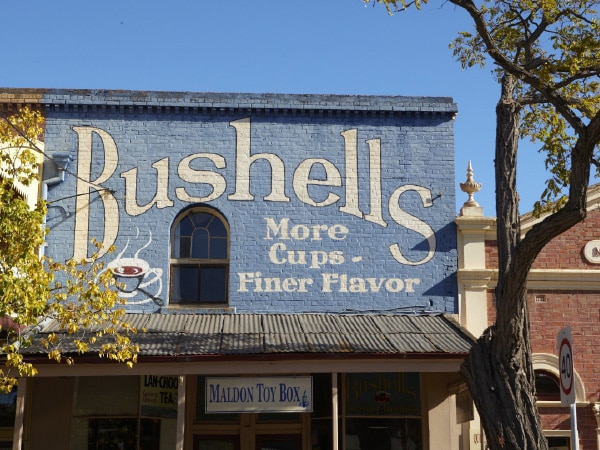
I spend a morning in delightful Maldon, a 15-minute drive north-west of Castlemaine, which enjoys the distinction of having been made Australia’s first National Trust-listed ‘Notable Town’ in 1966. Its heritage streetscape hewn straight from the gold rush is today remarkably intact, with ghost signs – such as the striking blue Bushells one that adorns a building on the main street – adding extra character.
Well underway, the Maldon Streetscape Revitalisation Project includes shopfront restoration and the placement of all power underground so that the town will look like it once did.
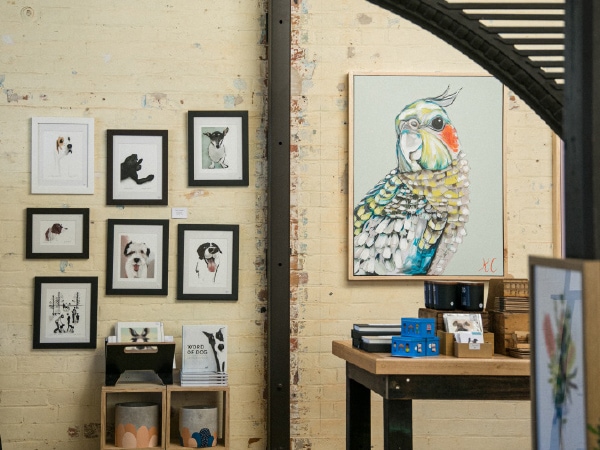
Inside the old stores is an eclectic range of businesses with specialisms such as old-fashioned lollies (The Maldon Lolly Shop ), yarn (The Wool Stash ) and French deli foods (Le Sel ) as well as artfully curated boutiques such as homewares and general store Much Ado Maldon , and retail gallery and gift store Portia & Co.
In 1860, Maldon had a population of 10,500 with 40 pubs. Today there are 1500 residents and two pubs including the quintessential Kangaroo Hotel , with good pub grub made with high-quality local produce and a commitment to hosting live music. I’m shown around town by Jamie Heffernan from Maldon Getaways and Experience Maldon who, with years of hospitality experience working with Sofitel under his belt, now manages a portfolio of unique properties around town, from gold-rush cottages to stylish retreats, and runs a range of experiences from architectural sculptural walks to a cultural tour of nearby Mt Tarrengower with a Dja Dja Wurrung elder.
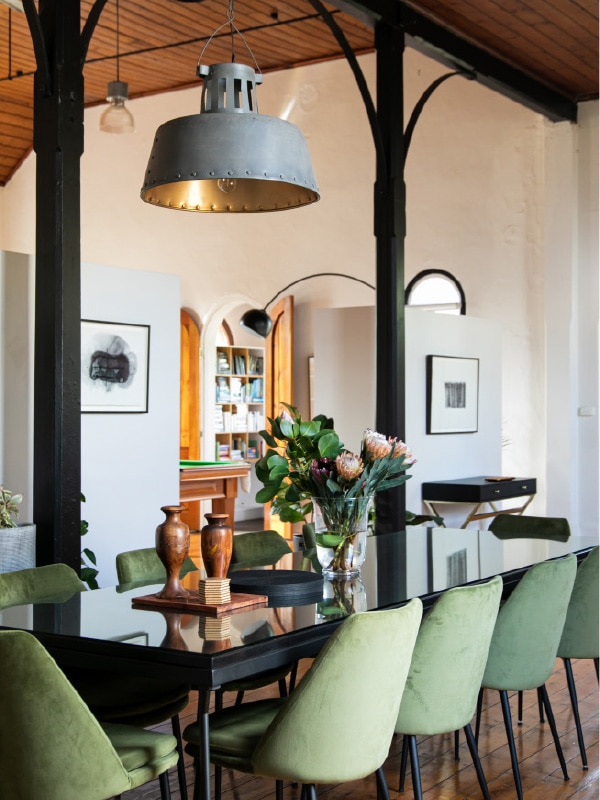
We peek inside one of his most stunning properties, Sunday House : an impeccably styled four-bedroom stay in an 1865 architecturally converted Welsh Baptist church.
Not far away, another old church – this one Gothic Revival in style – now houses fine art gallery Cascade Art in another example of artful restoration that this town and region excel at.
Getting there
Castlemaine is one and a half hours by car or train from Melbourne, and 30 minutes by car or train from Bendigo.
Staying there
Choose from one of Castlemaine Boutique Accommodation or Maldon Getaways’ unique properties. Check into the design-driven boutique Empyre Hotel in the heart of Castlemaine, or book a room at the iconic Northern Arts Hotel , recently taken over by Maggie Fooke, former owner of Fitzroy institution Brooklyn Arts Hotel in Melbourne.
Playing there
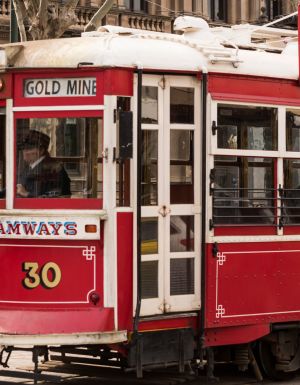
Learn more about the history of the region with a day out on the Victorian Goldfields Railway aboard a steam heritage train linking Castlemaine and Maldon, and visit the Mount Alexander Diggings National Heritage Park to view the relics and remains of the region’s gold mining past. Explore the landscape by foot or mountain bike on the Goldfields Track, which meanders along 210 kilometres from near Ballarat to Bendigo through some of central Victoria’s most beautiful forests, deep gorges and fern-lined rivers, and historic towns including Castlemaine. For more on the region, head here.