Top Towns for 2022: Where to eat, stay and play in Lorne

hero media
With its laid-back vibe and location along one of Australia’s iconic coastal roads, there are many reasons that Lorne remains a perennial favourite. It’s not hard to see why it came in at no.30 on your list of Top 50 Aussie Towns.

Find the complete list of the Top 50 Aussie Towns here.

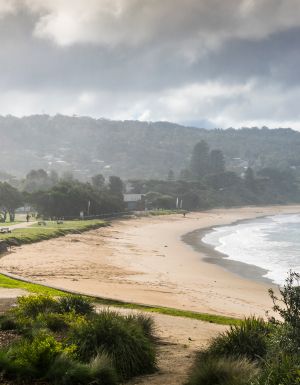
A scenic seaside town on the world-famous Great Ocean Road, Lorne has a casual, coastal vibe with an emphasis on soaking up the good life. Whether it’s food, culture or the great outdoors, Lorne’s beachside restaurants, bushwalks and waterfalls will lure you back again and again.
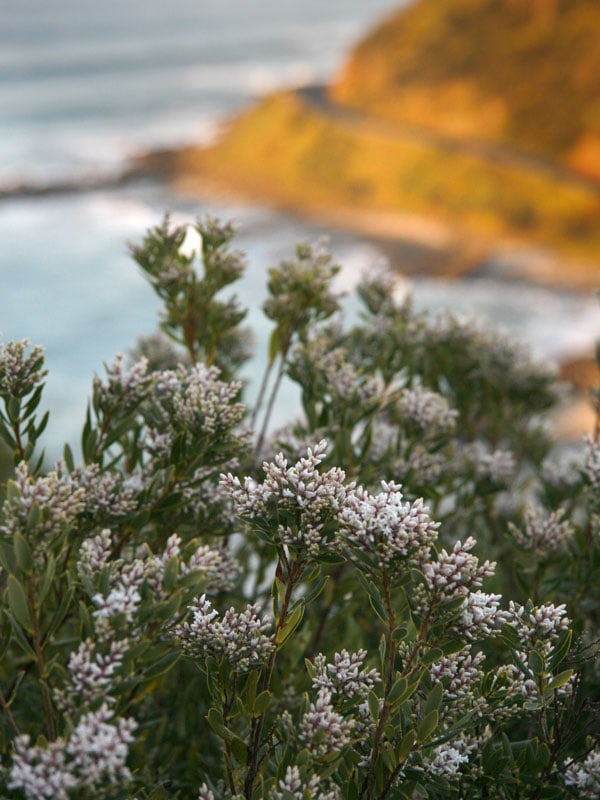
Flowers in front of the ocean in Lorne.
Lorne is incredibly picturesque. (Image: Visit Victoria)

Eating there

Savour views of Louttit Bay and the hinterland from the beer garden at the Lorne Hotel, the beloved 146-year-old pub on the high corner of town. Order a satisfying steak or fish and chips, or dial it up a notch with a spiced lamb shank.

Enjoy seasonal Cantonese and Thai flavours at Coda upstairs. Sydney-based Merivale group has just bought the pub, so foodies have some new restaurants to look forward to. Cafes line the main street to fuel Melburnian coffee addicts.
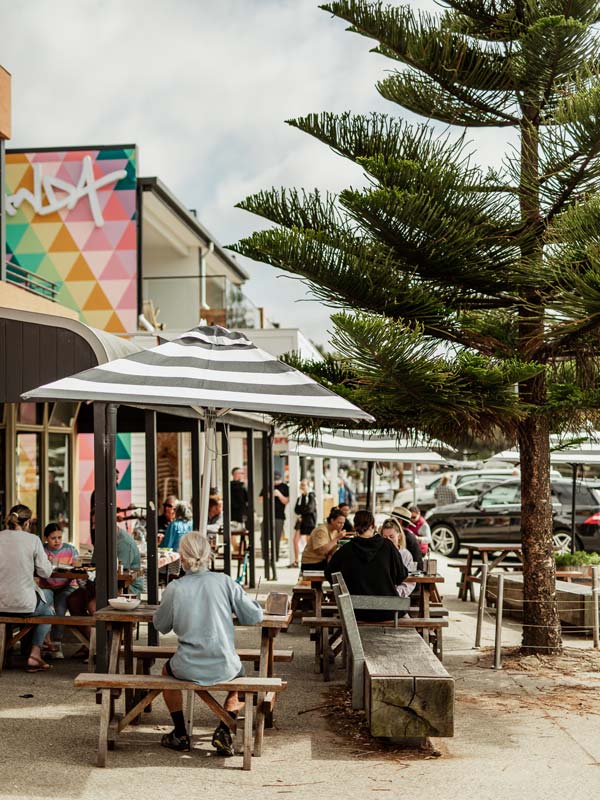
People sitting on benches drinking at a pub in Lorne.
Not a bad spot for a refreshing drink. (Image: Visit Victoria)

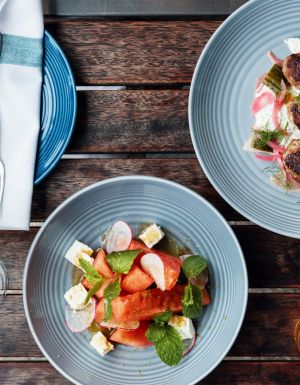
Summer days are made even sweeter with handcrafted ice-creams and sorbets from Gelato Gelato. Feast on local calamari with beetroot tzatziki or a slow-cooked lamb shoulder with garlic labneh at Greek restaurant Ipsos. Save space for the patsavoura, a dessert of orange custard encased in flaky filo pastry served with masticha ice cream.
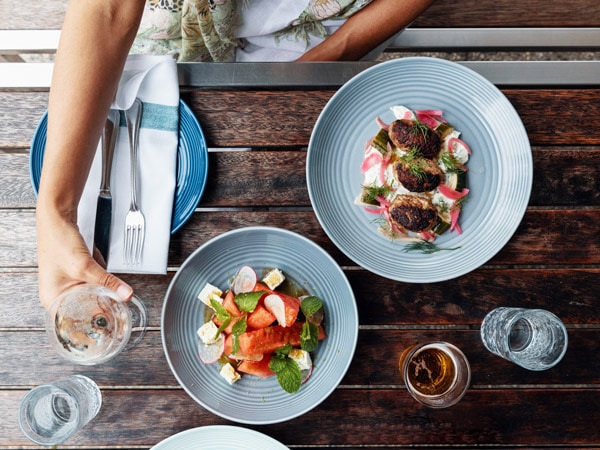
High shot of Greek food at Ipsos Lorne
Ipsos is a dining institution along the Great Ocean Road. (Image: Visit Victoria)

Need tips, more detail or itinerary ideas tailored to you? Ask AT.

AI Prompt

Staying there

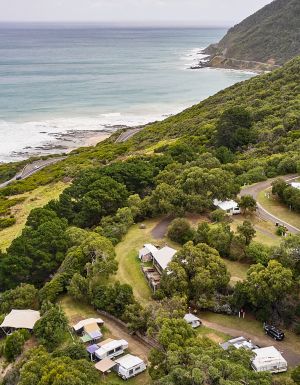
From backpackers, riverside campgrounds and caravan parks, to tiny eco houses, Airbnbs, standard motel accommodation, luxury apartments, tranquil cottages among the gum trees with a peek of an ocean view, and boutique five-star accommodation, Lorne has something for every style of traveller, and every budget.

The Lorne Mantra is the only beachfront property in town. With a gym, swimming pool, tennis courts and an Endota day spa, it’s great for conferences, weddings and larger gatherings.
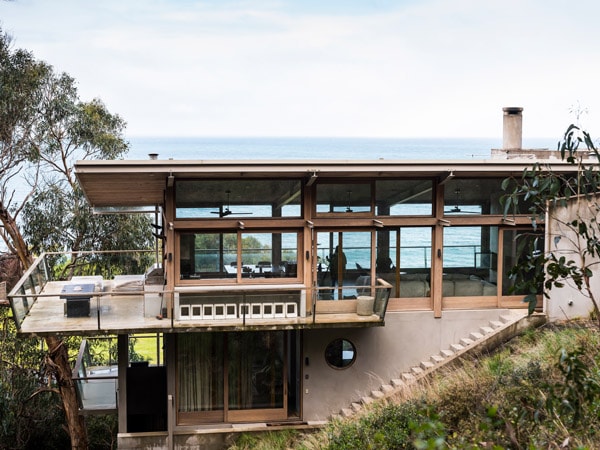
Ocean House Accommodation Lorne
Stay overlooking the ocean in Lorne. (Image: Visit Victoria)

Playing there

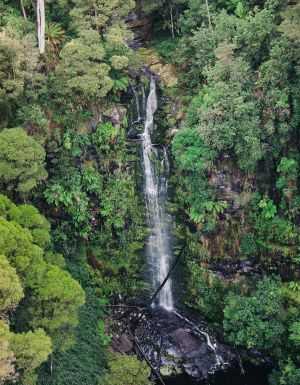
You can immerse yourself in nature in Lorne, which is surrounded by the Otways National Park. When not swimming, surfing or fishing, walk to either Sheoak Falls or Erskine Falls. Tall ferns shade paths that lead through gullies and past cascading waterfalls.

Also tucked away in the hinterland is the Qdos fine art gallery, which hosts a rotation of curated exhibitions. The tranquil on-site cafe is bathed in light and looks out onto the forest.

Each year in January, the Lorne Surf Life Saving Club holds the pier to pub ocean swimming race, the largest event of its kind in the world. The 145-kilometre Great Ocean & Otway Classic Ride also passes through the town.

The vintage Lorne Theatre plays a combination of blockbuster and arthouse films. Kids will love the town’s imaginative playground, skate park and grassy foreshore area for picnics and playtime. Don’t miss Live Wire Park, home of Australia’s most extreme zipline, high ropes courses and rock-climbing walls.
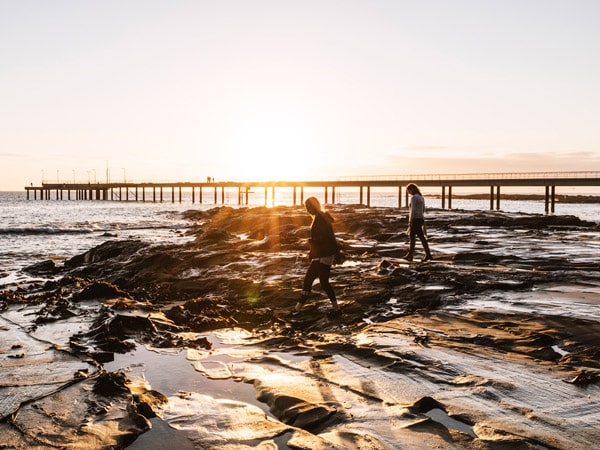
People walking along ocean pools by Lorne Pier
Lorne Pier is a local attraction. (Image: Visit Victoria)
Explore more of Lorne in our travel guide or find out which other towns made it into your Top 50.
Danielle Norton
Danielle Norton is a freelance writer who has travelled since she was an infant. She loves to meet people and immerse herself in the destinations she visits. Her stories bring her readers along for the journey so they can experience the sights, sounds, smells and tastes of the world too.
View profile and articles
hero media

The iconic Victorian beach where true Aussie surf culture was born

    Craig Tansley Craig Tansley
    Torquay’s Bells Beach is considered one of the best surf beaches in the world.

    It’d be easy to think Australian surf culture was born around the right-hand point breaks of the Gold Coast and Byron Bay. These regions seem the epitome of how the world views Aussie surfers – bronzed (or burnt), languishing in warm water and sunshine. The reality is a lot different.

    The rise of surf culture along Victoria’s coastline

    surfers at Bells Beach in Australia
    Surfers stand on the shore at Bells Beach, where the country’s biggest surfing competition is held each year. (Image: Getty/Filed Image)

    True Aussie surf culture was born on the chilly waves of Victoria’s winters, when huge swells from the Great Southern Ocean hit cliff-lined beaches along the Great Ocean Road. These beaches were the ultimate proving ground – surfers from all over Australia arrived in panel vans and VWs to do battle with the biggest waves they could find.

    huge swells from the Great Southern Ocean at Bells Beach
    Surfers take advantage of the huge swells from the Great Southern Ocean at Bells Beach. (Image: Tourism Australia/Cameron Murray)

    There are surf breaks all along this very picturesque coast – but those around Torquay were most revered. The ultimate test of a surfer’s ability – and durability – however, was Bells Beach: Australia’s answer to Hawai‘i’s Pipeline. Just beyond, the breaks at Jan Juc and Winkipop beckoned.

    an aerial view of surfers at Bells Beach
    Hit the waves along the picturesque coast. (Image: Tourism Australia)

    Torquay became surfing’s Silicon Valley: HQ for the entire Australian surf culture revolution. Four young locals worked out of their backyards in Torquay to create two of the world’s biggest surf labels – Rip Curl and Quiksilver, which soon became the region’s biggest employers.

    surfers out at Bells Beach
    Surfers out at Bells Beach, Victoria’s most famous beach. (Image: Tourism Australia/Cameron Murray)

    Rip Curl started sponsoring the Bells Beach Pro in 1973 – and have done ever since. It’s been going since 1962 – making it the world’s longest continually run surfing contest. Held every Easter, it’s part of the world surfing tour. Spectators line its 30-metre-high cliffs to watch the world’s best take on enormous waves – it’s the ultimate coliseum for the sport and has inspired generations of Aussie surfers to join the list of heroes whose names are on its iconic bell.

    Follow the waves through Victoria’s surfing heartland

    Australian National Surfing Museum, Torquay
    The Australian National Surfing Museum in Torquay. (Image: Tourism Australia)

    Just behind Torquay’s main drag, you can see all that history on display at the world’s best surf museum – the Australian National Surfing Museum. Here you can take your time absorbing the 100-year-or-so history of Australian surfing and check out the 150-strong surfboard collection.

    surfboards on display at Australian National Surfing Museum
    The museum holds surfing memorabilia, including a room dedicated to the history of boards. (Image: Tourism Australia)

    But classic Aussie surf culture can be observed in everyday life all over the Great Ocean Road and Torquay. Surfing dictates life here; no work is done until the big swells have come and gone. Just being here provides a window into 60-odd years of rebellion against convention; for no-one likes nine-to-five living on the Great Ocean Road.

    surfing memorabilia at Australian National Surfing Museum
    The varied displays celebrate the Bells Beach competition, surfing legends and Aussie surf culture. (Image: Tourism Australia)

    There’s less panel vans and VW Beetles these days, but surf culture still rules life. Surfers run this coast; you’re better off keeping out of their way when they’re running down past you to face the biggest swells – then hear them swap stories at cafes, restaurants and bars all around you.

    surfing at Bells Beach
    The beach near Torquay is Australia’s answer to Hawai‘i’s Pipeline. (Image: Visit Victoria/William Watt)