hero media

The mesmerising story of Hanging Rock explained

Is the film/book Picnic at Hanging Rock real or imagined? Australian Traveller’s rock hound, Kerry van der Jagt, steps back in time to investigate this and other geological questions about the Macedon Ranges enigma.  

Short answer: A picnic spot in Victoria where schoolgirls disappeared.

Long answer: Hanging Rock is located around 80km to the north of Melbourne in the Hesket Plains near Mt Macedon. It’s 718m above sea level and 105m above the surrounding plain. It’s also one of the best examples in the world of a volcanic feature known as a mamelon (French for nipple).

It was formed six million years ago (in the Tertiary period) when a stiff type of lava formed a rounded pile of layers on the surface as it was squeezed through a narrow vent in the Earth’s surface.

The type of lava is unique in that it has an extremely high soda content. Over the years the action of rainwater has formed an unusual rock known as solvsbergite (soda trachyte).

The same rock type is also found at the nearby Camel’s Hump at Mt Macedon. The mamelon has been exposed to weathering, which has resulted in the rock formation that can be seen today. These include: Stonehenge, McDonald’s Lookout and The Eagle.

Aerial view of Hanging Rock
Aerial view of the impressive Hanging Rock formation. (Image: Visit Victoria)

Is Picnic at Hanging Rock real or imagined?

Hanging Rock is best known from Joan Lindsay’s narrative, Picnic at Hanging Rock (1967), about the mysterious disappearance of a group of local schoolgirls during an excursion to the Rock on February 14, Valentines Day 1900. And like any decent Australian mystery, the bodies were never found!

The author, in the opening to the first edition, states: “Whether Picnic at Hanging Rock is fact or fiction my readers must decide for themselves." At the time of the incident, organised searches for the three students and their teacher were carried out but only one girl was ever found.

Clearly she’s leaving the mystery open. My take is that the schoolgirls (and Miss McCraw) were crushed under a slab of rock that fell during a mini landslide, or they fell down a deep crevice or chimney. Either way, Hanging Rock is an eerie place and an extraordinary geological formation.

Today it remains a mystery shrouded in tales that flick between folklore and fact. The novel was eventually made into a movie directed by Peter Weir in 1975 and received international acclaim. A new adaption of Lindsay’s novel was turned into a six-part television series, starring Natalie Dormer aired in 2018.

A scene from Peter Weir's film adaption of Picnic at Hanging Rock. (Image: Atlantic/Allstar)
A scene from Peter Weir’s 1975 film adaption of Picnic at Hanging Rock. (Image: Atlantic/Allstar)

Need tips, more detail or itinerary ideas tailored to you? Ask AT.

AI Prompt

Fast facts about Hanging Rock

You probably know: Annual events such as art exhibitions, movie nights under the stars, car shows, concerts, craft markets and family-friendly festivals are held at Hanging Rock.

But did you know: The type of rock, solvsbergite, is extremely unusual and, outside of the Macedon region, is only found in Norway and Sweden.

And did you also know: During filming of Picnic at Hanging Rock, watches and clocks of the cast and crew behaved badly. Some stopped, others ran fast, some slow.  In Joan Lindsay’s novel, the watches of the schoolgirls stopped at noon (cue Twilight Zone music).

What else can you do at Hanging Rock Reserve?

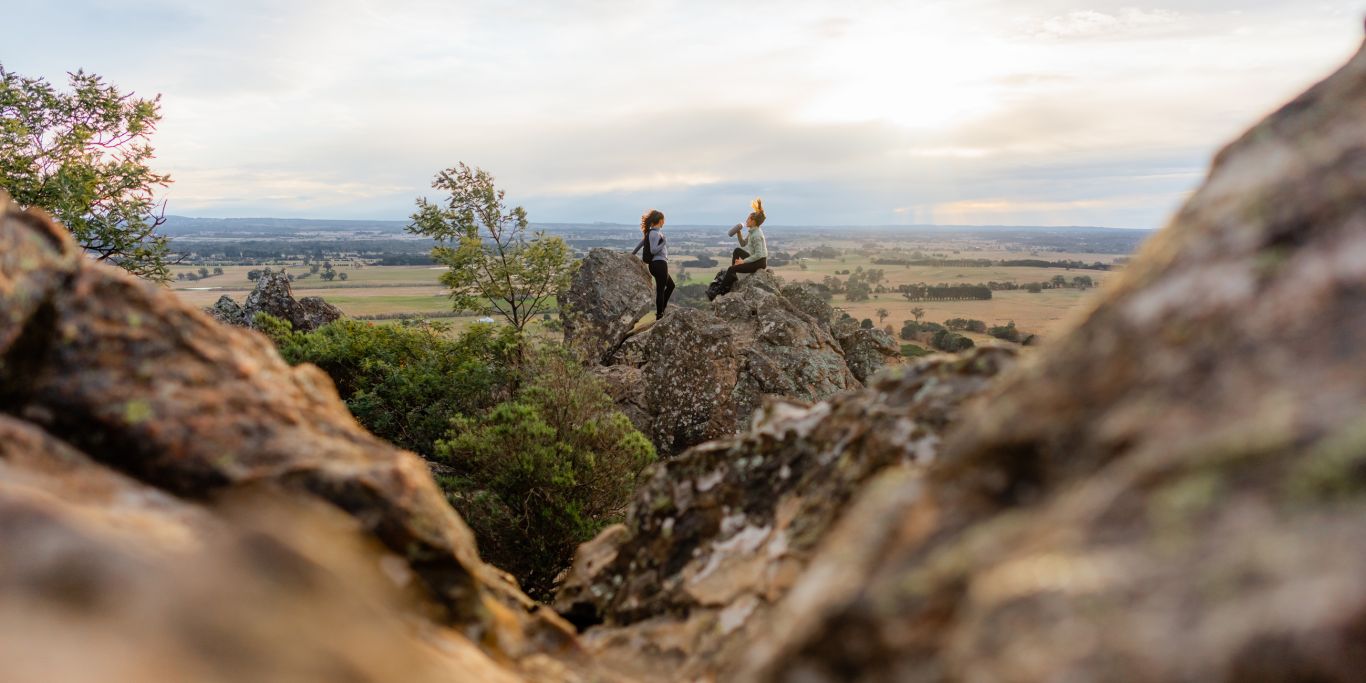
Many folks take the relaxed route and set up for the day at one of the many BBQs (they’re free to use) scattered throughout the scenic reserve and simply admire the views of the soaring monoliths. The famous Pinnacle Walk to the summit is a popular activity as is the nocturnal ranger-guided walking tour.

Two women at the Summit of Hanging Rock.
The Pinnacle Walk to the summit. (Image: Visit Victoria)

There are three dedicated walks to enjoy at Hanging Rock: The Pinnacle Trail, Base Walking Trail and the Creek Walking Trail. Each trail showcases the reserve’s distinctive beauty; expect to see granitic boulders, curious mammals, and unique volcanic rock formations. The Pinnacle Trail to the summit is quite the highlight! Note: the pathways are quite wide and people of average fitness will reach the top relatively easily in about an hour.

Kangaroos at Hanging Rock
Curious kangaroos at the base of Hanging Rock. (Image: Visit Victoria)

The ranger-guided Hanging Rock night walking tour offers the opportunity to see gliders, koalas, wallabies and more exploring their natural surroundings. So, if adventuring after dark is your thing, this tailored tour will surely appeal.

This article was originally written by Kerry van der Jagt and updated by Roxanne Williams.

Want to see more stories from Australian Traveller in your Google search results?

  1. Click here to set Australian Traveller as a preferred source.
  2. Tick the box next to "Australian Traveller". That's it.
Roxanne Andrews
Roxanne Andrews is a freelance travel writer and editor based in Yamba, Australia. Topics of expertise include; sports tourism, luxury travel, arts & culture, cuisine & dining, wellness, the adventure sector and all things marine. A professional scribe who occasionally goes gonzo to capture the moment.
View profile and articles

This hidden region in Victoria is home to a peaceful lake trail

    Craig Tansley Craig Tansley

    Video credit: Tourism Australia

    From pink salt landscapes to oases fringed by forests of red gums, the lakes of this rural region are astounding. 

    You’re going to find peace and quiet when you take a road trip through the lakes of the Wimmera Mallee region. Whether it’s mirror-like pink salt lakes that look like an inland sea, or lakes fringed by forests of red gums that showcase Victoria’s arid beauty, there’s a lake for you out here somewhere.  

    1. Lake Tyrrell  

    Lake Tyrrell
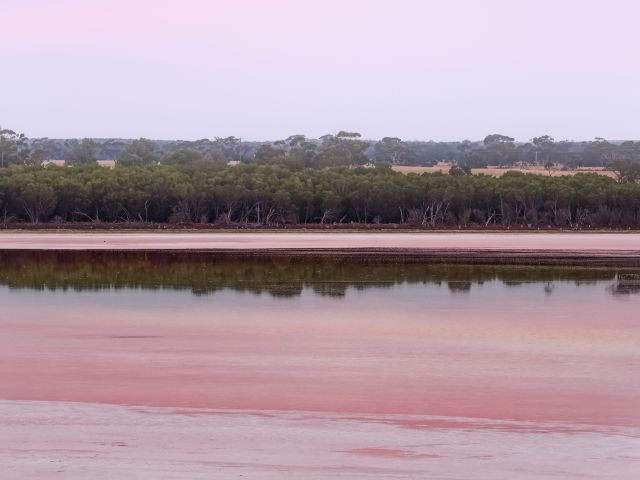
    The colours of Lake Tyrrell blend into the sky. (Image: Visit Victoria/Anne Morely)

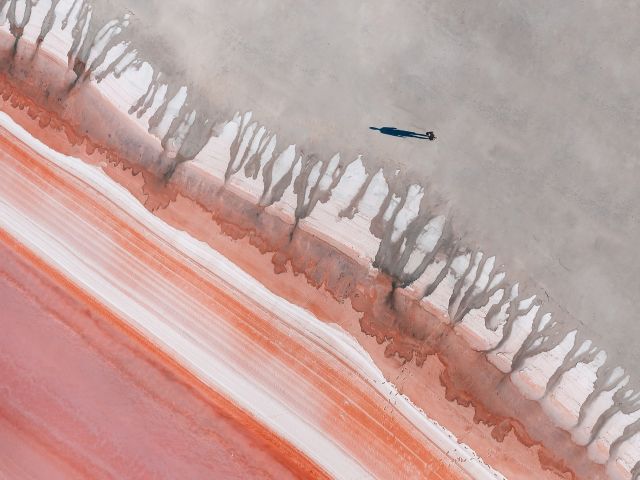
    Located in the dead heart of the Mallee, Victoria’s largest salt lake, Lake Tyrrell, is a landscape photographer’s dream – especially at sunrise and sunset when the pink salt flats look like a gigantic mirror. It’s easy to camp or park a caravan nearby, too, though the tiny town of Sea Lake is just south (with accommodation). In winter, shallow water covers the salt, creating surreal reflections of the sky.  

    2. Nhill Lake  

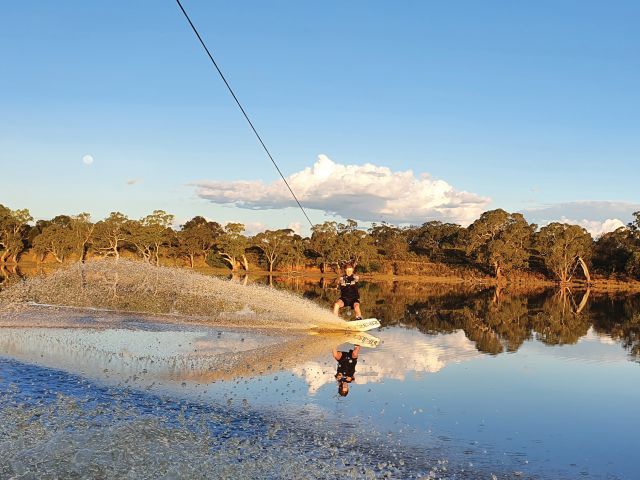
    There’s a permanent water source here, so there’s always plenty of water for water skiing, swimming and fishing (the trout and redfin fishing here is legendary). Located beside the pretty heritage town of Nhill with its main street of historic buildings, there’s options for eating and drinking right next door. There’s also a barbecue area with plenty of shady picnic spots and a boardwalk for walking around the lake.  

    3. Lake Bringalbert  

    Lake Bringalert
    Lake Bringalert is a great spot for aquatic adventures.

    Located south-west of the pretty Mallee town of Kaniva, Lake Bringalbert epitomises the best of ‘outback’ Victoria. It’s ringed by red gums and red mallee and feels completely hidden from the world – you’ll barely ever see another person. There’s basic camping on its foreshore and Kaniva offers more accommodation options. It’s the perfect lake for swimming, kayaking and skiing, and the stars at night come without even a hint of city glow.  

    4. Lake Hindmarsh 

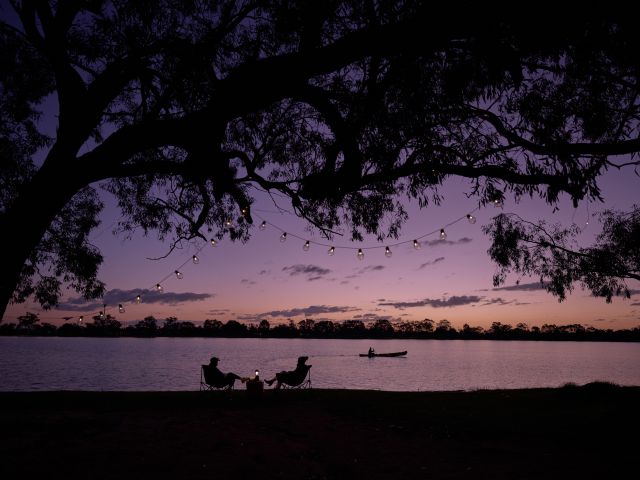
    If you’re a bird fan, you’ll love Lake Hindmarsh. Located north of Dimboola, Victoria’s largest natural freshwater lake is like an inland sea full of pelicans, swans and numerous species of ducks – but it also teems with everything from spoonbills to parrots. Sunsets here will blow your mind – the lake is a mirror for the pinks and golds you’ll see on the horizon. There’s free camping spots along the foreshore if you’d like to really contemplate the magic of the lake.  

    5. Pink Lake 

    pink lake
    The Pink Lake is most vivid after rain. (Image: Visit Victoria/Anne Morely)

    Also known as Loch Lel, the summer months offer up some seriously vivid pink water colour at this lake north of Dimboola. The pink varies throughout the year, but is best after rain (hence why summer is the time to visit).

    pink lake
    Pink Lake, also known as Loch Lel, is located near Dimboola in the Grampians. (Image: Tourism Australia)

    There’s plenty of birds, including wedge-tailed eagles, but you’re as likely to spot big lace monitors, kangaroos and echidnas. Nearby, check out the uber-cute heritage town of Dimboola and its eclectic shops, and Little Desert National Park, full of walking trails through mallee heathland. 

    6. Lake Lascelles 

    Lake Lascelles
    You can camp at Lake Lascelles.

    On a hot summer’s day, there’s nowhere better for a cooling dip, kayak or boat ride. You can camp by the lake, or at powered caravan sites – or the pretty town of Hopetoun offers numerous accommodation options a short walk away. At night you’ll see the lights of Hopetoun reflect off the lake. Fish for yellow belly, redfin or catfish, or try water-skiing. There’s also a great walking trail around the lake, where there’s more birds than you can count.