It’s officially turtle season in Ningaloo – here’s how to experience it

Witness one of nature’s sweetest spectacles without leaving a trace.

Every year from late October to March, something magical happens off Western Australia’s coast. In the shallows of Ningaloo Reef, hundreds of sea turtles gather to mate in the warm waters. It’s a once-in-a-lifetime spectacle – and one that you can experience firsthand.

What happens during turtle season?

There’s a reason why locals and tourists head to Ningaloo Reef at this time of year, one of Australia’s top UNESCO World Heritage-listed sites. Each spring and summer, it becomes a stage for one of nature’s most extraordinary cycles of life. Hundreds of sea turtles are arriving ahead of a five-month reproductive journey – from mating to nesting and finally, hatching.

Turtles at Ningaloo Reef, Western Australia
Hundreds of turtles migrate to Ningaloo Reef each year. (Image: Tourism Western Australia)

The warmer temperatures, combined with the environmental conditions at Ningaloo, perfectly align with the turtles’ breeding and birthing period. It begins around mid-October, when adult turtles migrate to breeding areas and males court females. Copulation then takes place in the water.

Afterwards, the female returns to shore to catch her breath and nest – digging a chamber in the sand using her flippers. She can lay up to 100 eggs here, which then incubate in the warm sand. The hatchlings emerge from their shells around 60 days later, using the brightest horizon (often the moonlit sea) and the sound of waves to find their way to the ocean.
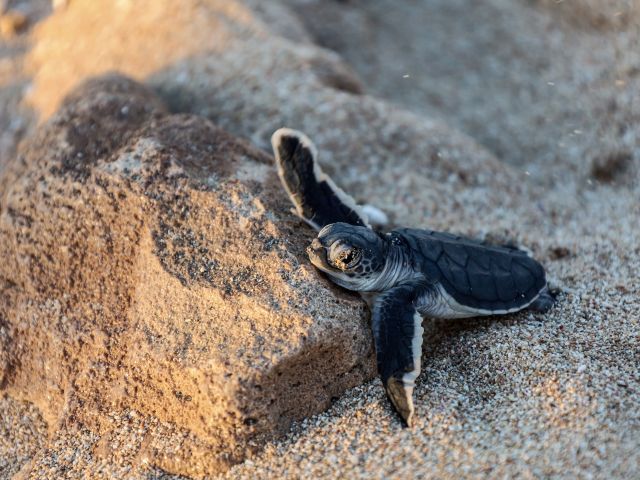
Turtle hatchling at Ningaloo Reef, Western Australia
Baby hatchlings wriggle their way to the sea. (Image: Getty/Elsa Lassalle)

The best part? You can witness all three stages of this cycle – a truly unforgettable sight that few get to tick off the bucket list. Nature and wildlife lovers can watch as turtles mate, nest and hatch at Ningaloo Reef – as long as it’s done the right way.

How to experience turtle season responsibly

Turtle reproduction is an incredible process, but it often involves risks for both mother and baby. And while many of these challenges are simply part of nature’s design, others can stem from human activity. Being a mindful visitor goes a long way and can help protect these gentle creatures.
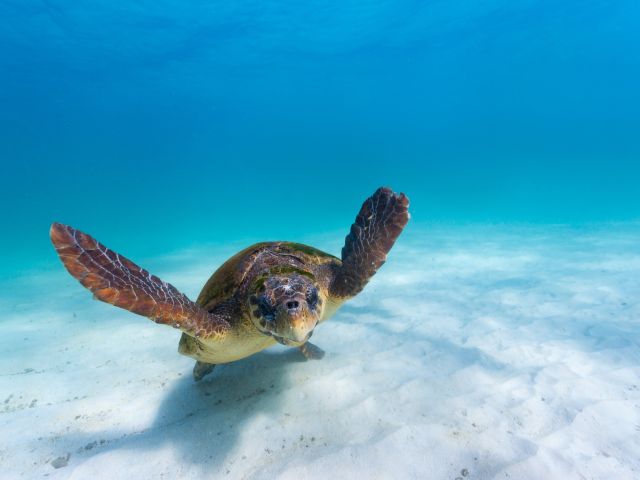
Turtles at Ningaloo Reef, Western Australia
Be sure to follow all turtle-watching guidelines. (Image: Tourism Western Australia)

The most responsible way to experience turtle season is by booking a guided tour, which is also a great way to see Ningaloo Reef itself. These excursions are led by well-trained experts who know how to protect the turtles and minimise disturbances while ensuring guests have the best opportunity to catch a glimpse.

Local company Exmouth Adventure Co runs a four-hour Summer Sunset Turtle Watching Tour from $145 per person. As the sun sets, you’ll enjoy a quick snack while learning about the turtle watching ‘Code of Conduct’ developed by WA’s Department of Biodiversity, Conservation and Attractions . Then, you’ll head down to the beach with your guide to quietly observe nesting females using your newfound knowledge.
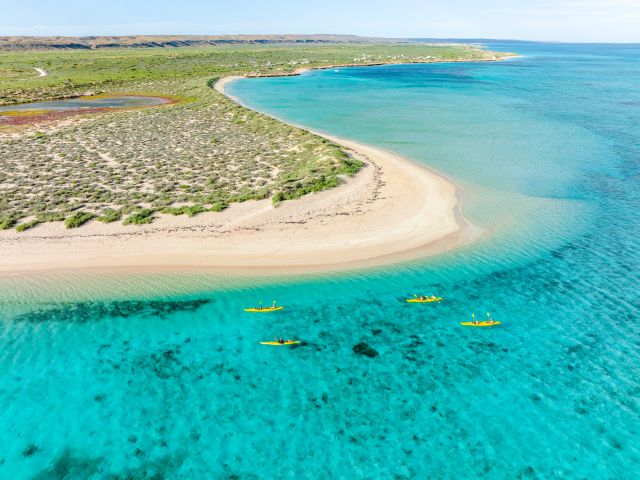
Kayaking along Ningaloo Reef, Western Australia
Join a kayaking tour with Exmouth Adventure Co to spot turtles safely. (Image: Tourism Western Australia)

To make it a full weekend escape, book a stay at Sal Salis, the luxurious and eco-conscious beachfront camp on the shores of Ningaloo Reef. Here, guests can join guided night walks or kayaking adventures to spot turtles from a safe distance. If you miss the season, visit Ningaloo Aquarium and Discovery Centre to meet injured turtles and support their rehabilitation.
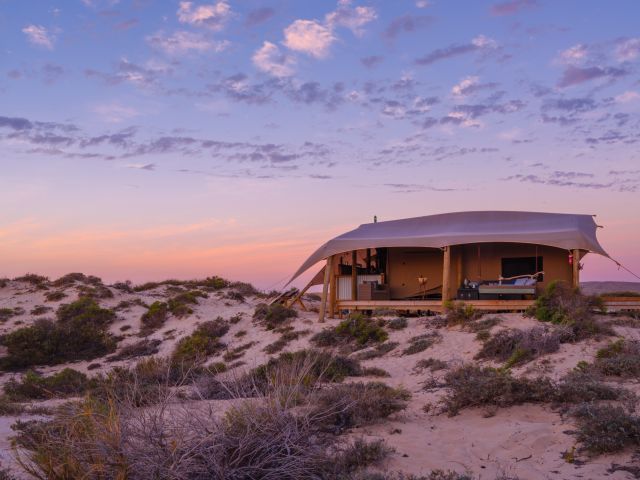
Sal Salis at Ningaloo Reef, Western Australia
Stay at Sal Salis, where turtles can hatch mere metres away. (Image: Tourism Western Australia)

There are a few more important things to remember before booking your turtle-spotting trip. Keeping a respectful distance is crucial at all times. During mating, females may pair with multiple males. Once ashore, they need time to rest and catch their breath before nesting. If startled by humans, they may retreat to the water too soon, which can be fatal.

When hatching season arrives, distance remains key. Hatchlings can easily become disoriented and head the wrong way if distracted. If you’re observing at night, avoid using artificial light such as torches or lamps; baby turtles rely on the moon’s natural glow to find their way to the ocean. Touching the turtles at any time is strictly prohibited.

By following a few simple rules, listening to your guide and remaining patient, you could be rewarded with one of the most unforgettable wildlife experiences of your life.

Taylah Darnell
Taylah Darnell is Australian Traveller's Writer & Producer. She has been passionate about writing since she learnt to read, spending many hours either lost in the pages of books or attempting to write her own. This life-long love of words inspired her to study a Bachelor of Communication majoring in Creative Writing at the University of Technology Sydney, where she completed two editorial internships. She began her full-time career in publishing at Ocean Media before scoring her dream job with Australian Traveller. Now as Writer & Producer, Taylah passionately works across both digital platforms and print titles. When she's not wielding a red pen over magazine proofs, you can find Taylah among the aisles of a second-hand bookshop, following a good nature trail or cheering on her EPL team at 3am. While she's keen to visit places like Norway and New Zealand, her favourite place to explore will forever be her homeland.
See all articles
hero media

6 reasons the best way to experience the Kimberley is by cruise

This remote corner of Australia is one of the world’s last frontiers. This is how to see it properly.

Vast, rugged and deeply spiritual, the Kimberley coast in Australia’s North West feels a world away from everyday Australia – and there are countless ways to explore it. But if you want to reach ancient rock art, hidden gorges and lonely waterfalls, it has to be by boat. Whether you’re aboard a nimble expedition vessel or a luxury yacht with all the trimmings, exploring by the water brings exclusive experiences, shows unique views and makes travel easier than any other mode. And that’s just the beginning of Australia’s North West cruises.

The True North Adventure Cruise in between sandstone cliffs.
Adventure starts where the road ends.

1. Discover Broome, and beyond

Explore your launchpad before you set sail: Broome. Here camels and their riders stride along the 22 kilometres of powdery Cable Beach at sunset. That’s just the start.

At Gantheaume Point, red pindan cliffs plunge into the turquoise sea, whose low tide uncovers fossilised dinosaur footprints. Broome’s pearling history runs deep. Japanese, Chinese, Malay and Aboriginal divers once worked these waters, and their legacy lives on in boutiques where South Sea pearls still shine.

If the moon’s right, you may catch the Staircase to the Moon over Roebuck Bay. Or simply kick back with a cold beverage and a film under the stars at Sun Pictures , screening since 1916.

Ride a camel along Cable Beach as the sun sinks into the Indian Ocean, casting golden light across the sand and sea.
Ride a camel along Cable Beach. (Image: Nick Dunn)

2. Unmatched access to The Kimberley

Once you’re onboard, expect a backstage pass to some of the most isolated places on Earth. No roads. No ports. No phone reception.

At Horizontal Falls/ Garaanngaddim, 10-metre tides surge through twin gorges like a natural waterpark ride that’ll make your palms sweat. Then there’s Montgomery Reef/ Yowjab: a giant living platform of coral and seagrass, where the sea pulls back to reveal waterfalls, sea turtles and ospreys.

Up north, King George Falls/ Oomari rage 80 metres down red cliffs. Zodiac boats often nudge in closer so you can feel the spray on your sun-warmed cheeks. You might even fly in to reach Mitchell Falls/ Punamii-unpuu, a four-tiered cascade where you can swim in freshwater pools above the drop.

Come spring, some itineraries veer west to Rowley Shoals: an atoll chain of white sand and reef walls. Then it’s up the winding Prince Regent River to King Cascade/ Maamboolbadda, tumbling over rock terraces, and into a Zodiac to view the Gwion Gwion rock art, whose slender, ochre-painted figures are older than the pyramids.

A cruise drifts beneath King George Falls, where sheer sandstone cliffs frame the thunderous plunge into turquoise waters.
Get closer to the Kimberley than ever before.

3. Taste the Kimberley with onboard hospitality

You might spend your days clambering over slippery rocks or charging past waterfalls. But when you’re back on the water, it’s a different story. Meals are chef-prepared and regionally inspired: grilled barramundi, pearl meat sashimi, mango tarts, and bush tomato chutney. One night it’s barefoot beach barbecues with your shipmates; the next, alfresco dining on the ship.

Small expedition ships each have their own personality, but many carry just 12 to 36 guests, making being out on the water a whole other experience. You might sink into a spa on the foredeck or sip coffee in a lounge while watching crocodiles cruise by. It’s choose-your-own-relaxation, Kimberley style.

4. Expert-led excursions through the Kimberley

These voyages are led by people who know the Kimberley like the back of their sunburnt hand. Attenborough-esque naturalists might gently tap your shoulder to point out rare birds or tell the story beneath a slab of rock. Historians can explain exactly how that rusted World War II relic came to rest here.

If your ship has a helipad, you might chopper straight to a waterfall-fed swimming hole. If not, you’ll still be hopping ashore for that wet landing at a secret creek.

Then come the evenings: songlines shared by Traditional Owners under the stars, or astronomy sessions that link what’s overhead with what’s underfoot and what’s within.

A small group glides through Kimberley’s rugged coastline by boat, passing ancient cliffs.
Explore with naturalists and historians by your side.

5. Relax in luxurious lodgings

Just because you’re off-grid doesn’t mean you have to rough it. These Kimberley vessels are small in size, but mighty in luxury. True North’s ships come with their own helicopters and a no-sea-days policy, so you’re always in the thick of it. Try the luxurious offerings from Ocean Dream Charters for exploration in style. Kimberley Quest offers a fast boat for easy, off-ship adventures. On the larger end of the scale, Coral Expeditions has open-deck bars and curated wine cellars. And then there’s Ponant’s luxury yachts sleek and incredibly stylish French sailing yachts.

A helicopter soars above the sea, with a sleek cruise ship gliding in the distance.
See the Kimberley from sky to shore.

6. The adventure continues with pre- and post-cruise experiences

You’ve already come this far – so, why not go further? Broome makes it easy to ease in before you board, or wind down when your voyage ends, and there is no reason to stop there.

Head an hour and a half south to Eco Beach to stay off-grid and off the clock. Join a Yawuru guide for a mangrove walk or ocean forage. Dive even deeper into Broome’s pearling past at Willie Creek or Cygnet Bay, where divers and craftspeople still pull the seawater-slicked gems from the deep.

If you’re still craving adventure, it’s time to go further. Soar over the Buccaneer Archipelago, or detour inland with a 4WD trip along the Gibb River Road. Book a scenic flight over the Bungle Bungles. Or – because you never know when you’ll be back – do all three.

aerial of people walking on eco beach in the kimberley western australia
Stay off grid at Eco Beach. (Image: Tourism WA)

Find out more about your trip to Australia’s North West at australiasnorthwest.com .

It’s officially turtle season in Ningaloo: here's how to experience it - Australian Traveller