The hidden treasures of the outback town of Kununurra

hero media
A laid-back outback town with hidden treasures? In Western Australia, Fleur Bainger finds Kununurra’s far-flung retreats, magnificent rock formations and colossal waterfalls are the rewards for those who go in search of them.
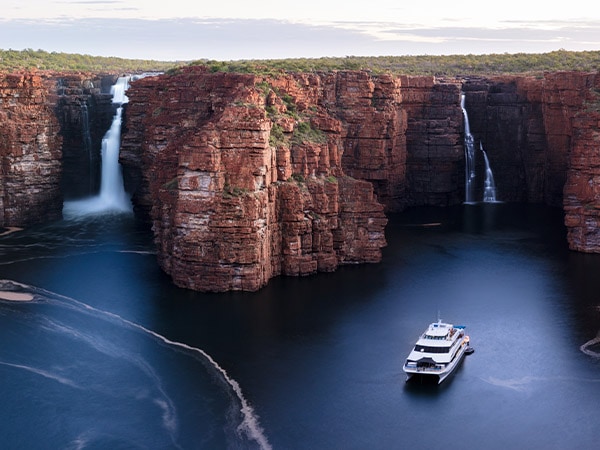
A boat making its way on King George Falls
The spectacular King George Falls. (Image: Tourism Australia)

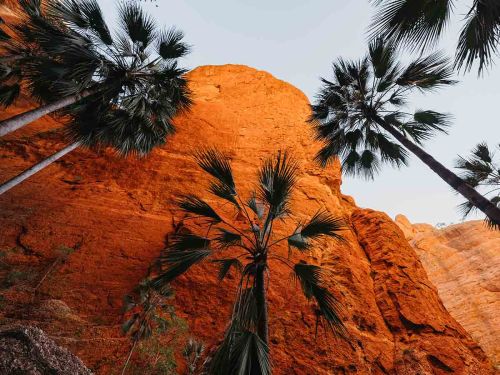
Lurking through the looming rock domes of the Bungle Bungles by moonlight is not something that happens on a regular basis. In fact, I’ve had to cajole my guide to take me under the night’s blanket of Kimberley stars. Still, his eyes did light up at the suggestion and now I see why. Totally alone, we follow a dirt path between rugged 350-million-year-old forms. Hundreds of them have been sculptured and horizontally banded in black and orange by the greatest artist of all, Mother Nature. Some rise 300 metres tall, throwing huge oval shadows emboldened by the full moon.
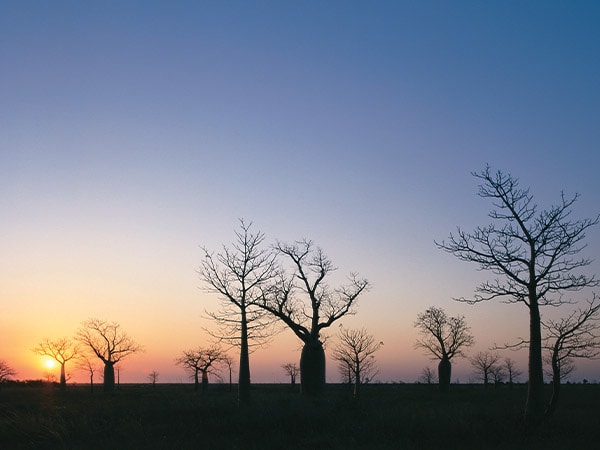
Boab Trees during sunset
Boab trees dot the horizon at sunset near Kununurra. (Image: Tourism Western Australia)

Purnululu National Park

Purnululu National Park, which holds the Bungle Bungle Range and thoroughly deserves its UNESCO World Heritage status, feels about as remote and raw as it gets. Yet it’s only about 300 kilometres from Kununurra, the eastern Kimberley’s civic hub. The outback town of 5000 people is lined with saffron-red dirt, facing a lake rippling with barramundi and surrounded by fields of chia, sandalwood and mango trees. It’s a place that isn’t fancy or posh; instead, it garners instant affection for being its true-blue self. Even the pink diamond boutiques (the world’s rarest diamond was mined nearby until 2020) are unpretentious.
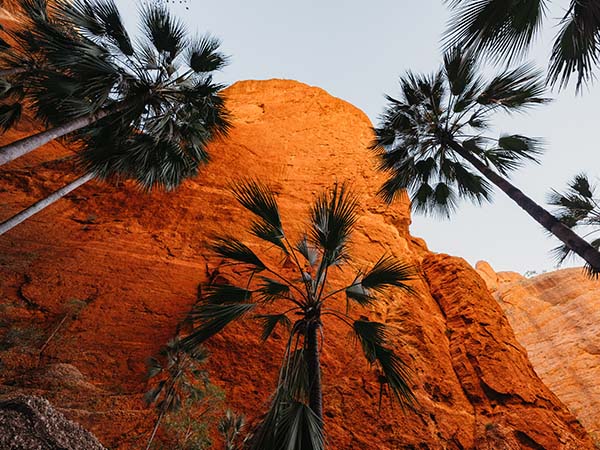
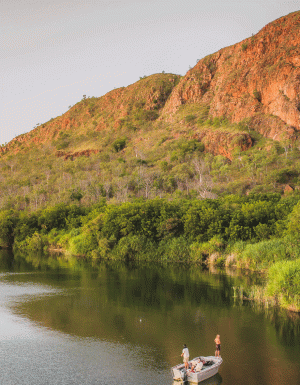
Kununurra, Lake Argyle
Kununurra is a place that deserves more attention. (Image: Tourism Western Australia)

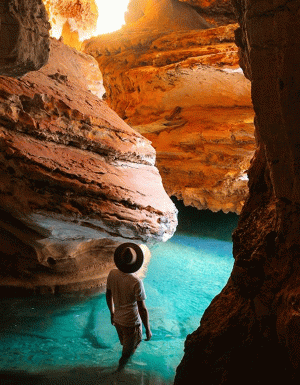
Despite its many wonders – from dramatic waterfalls to hideaway gorges and the largest island-studded lake in the southern hemisphere – Kununurra remains under the radar for most Australians. Hit by the COVID-19 yo-yo – forgotten in 2020, swamped in 2021, and now fearful of the impact WA’s unpredictable borders might have in 2022 – Kununurra is a place that deserves more attention. Even, if you ask me, equal billing with its dramatically different neighbour, beachy, buzzy Broome. So, let’s get acquainted.
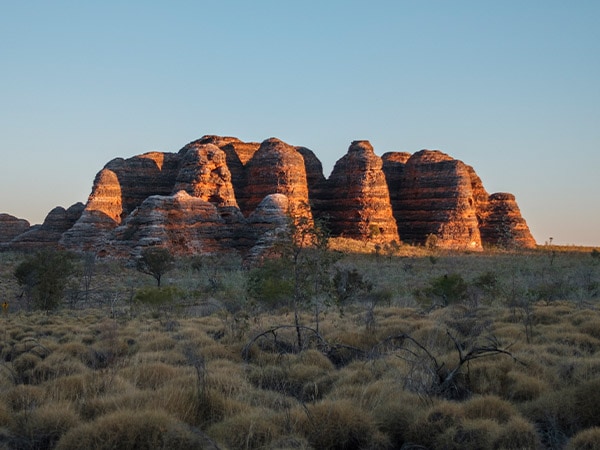
Bungle Bungle Range in Purnululu National Park
Marvel at the Bungle Bungle Range in Purnululu National Park. (Image: Tourism Western Australia)

Marveling from above

While driving into the Bungle Bungles from Kununurra is a top-shelf adventure, flying comes with the bonus of understanding the scale of the rock forest from above. Most aerial tours take in Lake Argyle, the aforementioned lake so big it inundated more than 70 mountains when it was dammed, turning them into uninhabited islands. I’ve opted for a special chopper jaunt that includes a James Bond-style landing on one of the isles’ elevated sides. I emerge to wrap-around views of flat, velvety water, rubbly red islets and glimpses of the nearby resort’s famous infinity pool. The pilot is a local, sporting the regional uniform of cobalt workman’s shirt and subdermal tan, and he’s clearly at home touching down anywhere I point. He tells me pilots come from everywhere to supercharge their flying hours in Kununurra; the airport is a hive of light aircraft, float planes and helicopters.
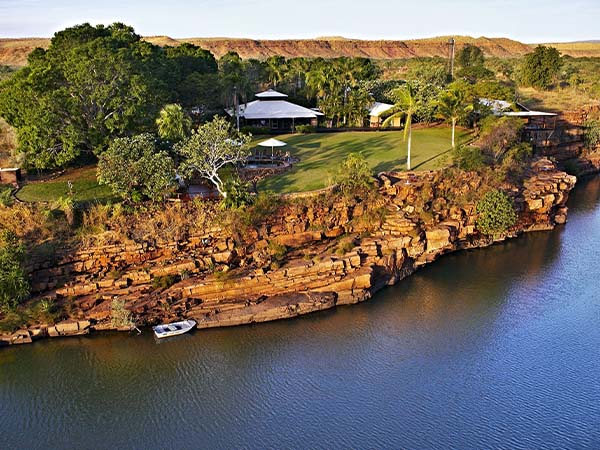
An aerial view of the El Questro Homestead located on the Chamberlain River, near Kununurra
An aerial view of the El Questro Homestead located on the Chamberlain River, near Kununurra. (Image: Tourism Western Australia)

I take his word for it and join a scenic flight over the King George Falls, twin cascades that plummet 100 metres down, flanked by dramatic red cliffs. From above, I can trace the waterway winding inland through the vast, boab-dotted landscape, collecting the wet season’s abundant rains before dumping them over the edge. We land just beyond, at the bush hideaway, Faraway Bay. The solar-powered retreat, rebuilt after a wet-season cyclone in 2005, is relatively simple given its nightly price tag. But as I relax into the casual Kimberley vibe, I realise it’s an exact fit for this barely populated wilderness. Overlooking an empty beach (save for a resident croc or two), the handcrafted dipping pool and swinging hammock become coveted spots when I’m not hiking through scrub to rarely seen rock art or sitting around the campfire talking food with the chef.
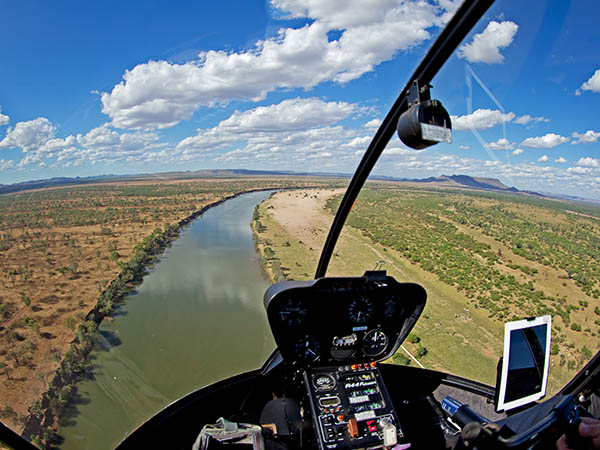
View from the HeliSpirit
Chart the course of the Lower Ord River with HeliSpirit.

Need tips, more detail or itinerary ideas tailored to you? Ask AT.

AI Prompt

Marveling from the water

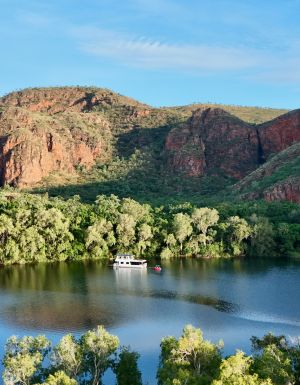
One day, we boat along the King George River, reaching the falls some 12 kilometres in. This time we’re at toe level, an entirely different and rather humbling perspective. The vessel nudges up to the splintering water and we allow ourselves to be saturated with heavy, gravity-bound droplets. It’s thrilling.
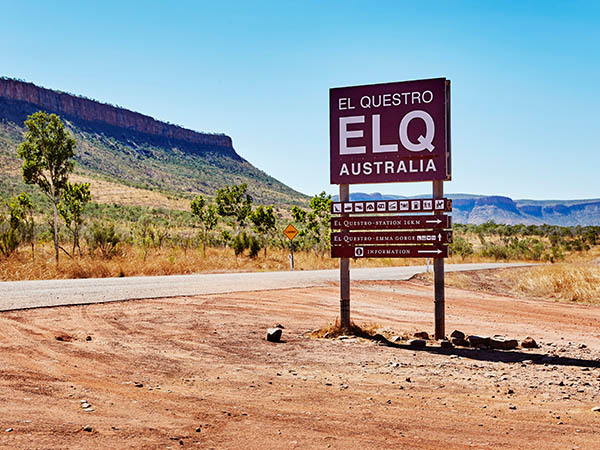
Road to El Questro
Take the iconic drive along the Gibb River Road to El Questro.

Before I move on, I have to share Faraway Bay’s other little secret: the spring-fed showers. Essentially a water tank with no roof and open to the front, each private outdoor ‘en suite’ spells out the freeing nature of the Kimberley’s secluded environment. Showering gleefully by night as I’m enveloped by black amplifies the Milky Way to a brightness I can’t tear my eyes from.
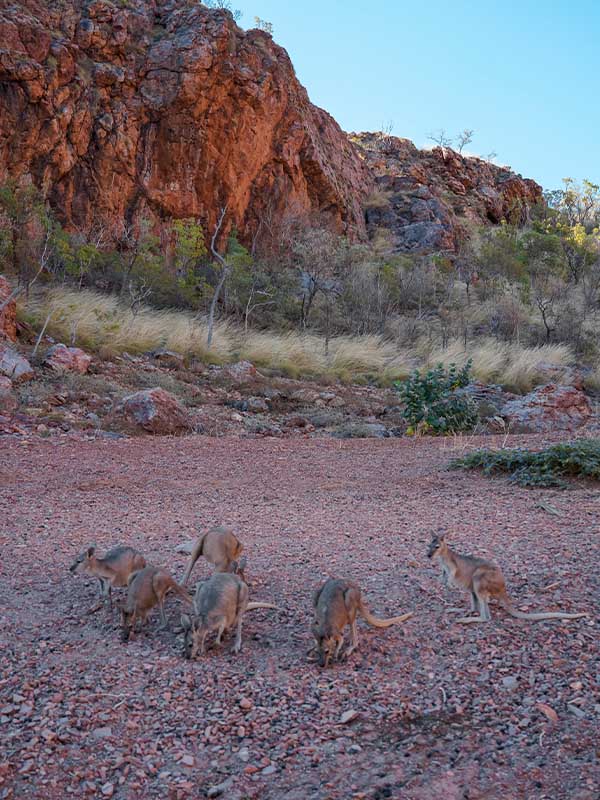
local wildlife at Lake Argyle
Meet the local wildlife at Lake Argyle. (Image: Tourism Western Australia)

Gibb River Road

Returning to Kununurra, I round off my epic exploration with a 4WD trip to El Questro Station, which lies 110 kilometres away, off the rough-and-ready Gibb River Road. The drive alone captivates: the Cockburn Ranges, which have been likened to a rock fortress, gaze down in weathered red greatness, moving behind us as we turn to rev through the Pentecost River. Opposite is the vast cattle station turned wilderness park, loved for its multi-tiered access: exclusive at the homestead, casual at the station and basic in the campgrounds. The lure is, of course, nature, with gorges, cliffs and springs open to all. Its egalitarian nature is very Kununurra, and spreads to guests who greet each other on hikes and chatter beside waterholes. Like its setting, it is a special, spirited place, one that deserves everyone’s attention.
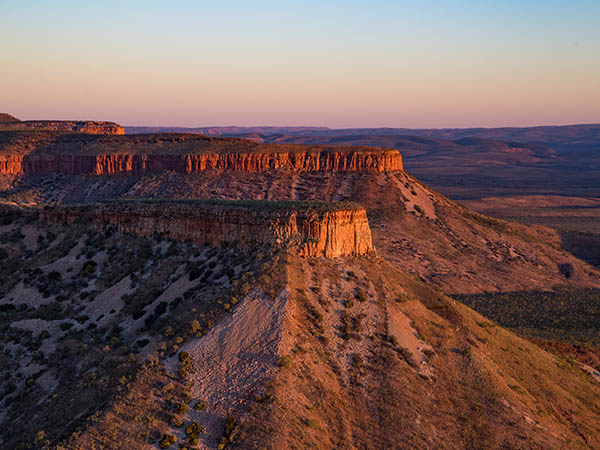
The captivating Cockburn Ranges
See the captivating Cockburn Ranges. (Image: Tourism Western Australia)

A traveller’s checklist

Getting there

You can fly direct to Kununurra from Perth, Darwin and Broome with Airnorth and Qantas.

Weekly travel news, experiences
insider tips, offers, and more.

Staying there

While in town try Freshwater Apartments, then 4WD to El Questro and fly to Faraway Bay.

Eating there

Must-tries include local mango smoothies and anything with chia seed and boab tuber. Head to Wild Mango Cafe & Gelato for lunch and Hotel Kununurra for dinner in the beer garden.
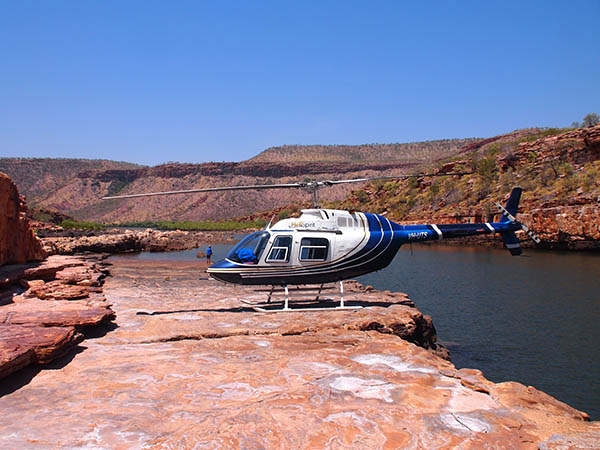
HeliSpirit chopper
Up and away with HeliSpirit.

Playing there

Take a Helispirit chopper adventure and scenic flight with Aviair or Kingfisher Tours.

When to go

Kununurra is at the eastern tip of the Gibb River Road. It enjoys two distinct seasons: the dry (April to October) and the wet (November to March). As you’d expect, the dry is clear, sunny and toasty while the wet, commonly known as ‘waterfall season’ here, is a hot and humid period of lightning storms, downpours and rushing waterfalls.
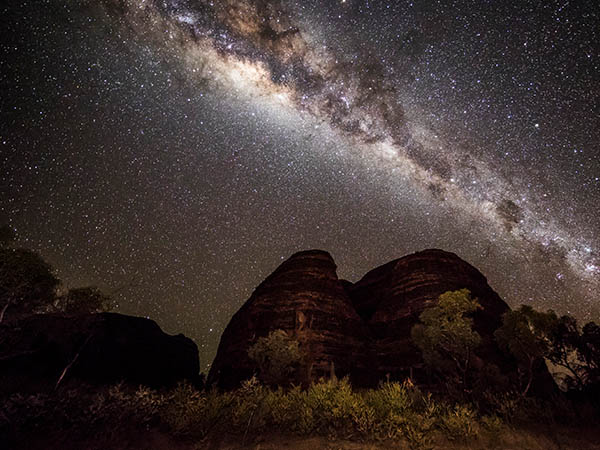
Starry sky at the Bungle Bungle Range
The Bungle Bungle Range, lit up by the starry night sky (Image: Tourism Western Australia)

Want to see more stories from Australian Traveller in your Google search results?

  1. Click here to set Australian Traveller as a preferred source.
  2. Tick the box next to "Australian Traveller". That's it.
Fleur Bainger
Fleur Bainger is a freelance travel writer and journalism mentor who has been contributing to Australian Traveller since 2009! The thrill of discovering new, hidden and surprising things is what ignites her. She gets a buzz from sharing these adventures with readers, so their travels can be equally transformative.
View profile and articles
hero media

Exploring an icon: inside the massive upgrade to Broome’s famous Cable Beach

(Credit: Tourism WA)

    Lucy Cousins Lucy Cousins
    With unhurried mornings, long, sun-filled afternoons, evenings shaped around sunset, this iconic beach offers an all-day experience (and it’s about to get even better).

    As the sun slowly rises over the languid waves and fine sand of Broome’s Cable Beach, the morning colours shift from rich apricot to pale gold and frosty pearl. Remnants of life reveal themselves in the subtle shadows – crab claw marks, towel impressions, footprints. Life here is unhurried, but don’t be fooled. This town is continually shifting like the desert dunes that surround it.

    And with a $75 million upgrade – offering easier and more inclusive access for people of all abilities – it’s getting even better.

    Cable Beach upgrade foreshore redevelopment stage 1
    Discover the Cable Beach redevelopment.

    The addition of comfortable and welcoming spaces has begun (and will continue). This means visitors will be able to spend longer enjoying this beautiful environment, while knowing that the upgrade will create a more environmentally protected setting that preserves the natural character visitors come for. Come sunset, soak it in all the better thanks to the already improved foreshore areas, made for lingering while the light changes. And for the kids, a new splash park and accessible dry playground will make it easy to while away the hours.

    Think you know what a day at this beach is like? Think again.

    Morning colours

    car on cable beach at sunrise
    Cable Beach comes alive after sunrise. (Credit: Tourism WA)

    As the sun colours the sky, Cable Beach shows signs of life (and not just the aquatic kind). Locals and visitors alike float in the cool water as it laps the shore, landlubbers explore the coast on foot, runners pace and beachside yoga classes bring quiet movement to the day.

    When the sky is blue and the sun is firmly in position, head down to the well-known Cable Beach House for a long, slow breakfast overlooking the ocean. Think fresh tropical fruit, eggs cooked your way and strong coffee in the warm morning breeze.

    Afternoon adventures

    camel train on cable beach in broome at sunset
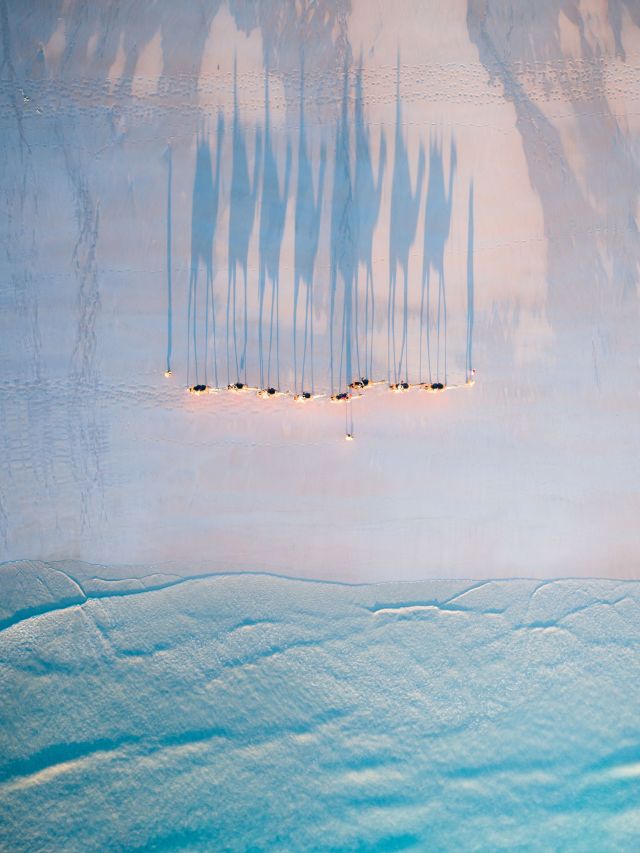
    Join a camel train at sunset. (Credit: C J Maddock)

    When you’re ready to explore, carve a path along the Minyirr Park Trail – a gentle 1.5-2km track through coastal bushland with spectacular views of the dunes. Refuel at the nearby Spinifex Brewery for lunch with its low-key, outdoor beer garden. There’s even an outdoor playground if you’re travelling with young humans.

    Walk off your lazy lunch by watching (or joining) one of the beach soccer or volleyball games, or even try Silent Beats Broome – a silent walking disco through the dunes. Or book a spot on the famous camel trains, watching the sun drop below the horizon along the way. They’re a constant reminder of the fascinating history, landscape and cultural mix in this part of the country.

    Evening degustation

    server at Cable Beach Club
    Stop into the Cable Beach Club. (Credit: Tourism WA)

    As the day closes, watch the world-famous Cable Beach sunset from the appropriately named Sunset Grill at Cable Beach Club. This open-air terraced dining spot overlooking the beach is the kind of place where the view takes centre stage.

    While you sip on a lychee, lime & lemonade mocktail or a local beer, enjoy the bustle of life and nature outside as the day comes to an end.

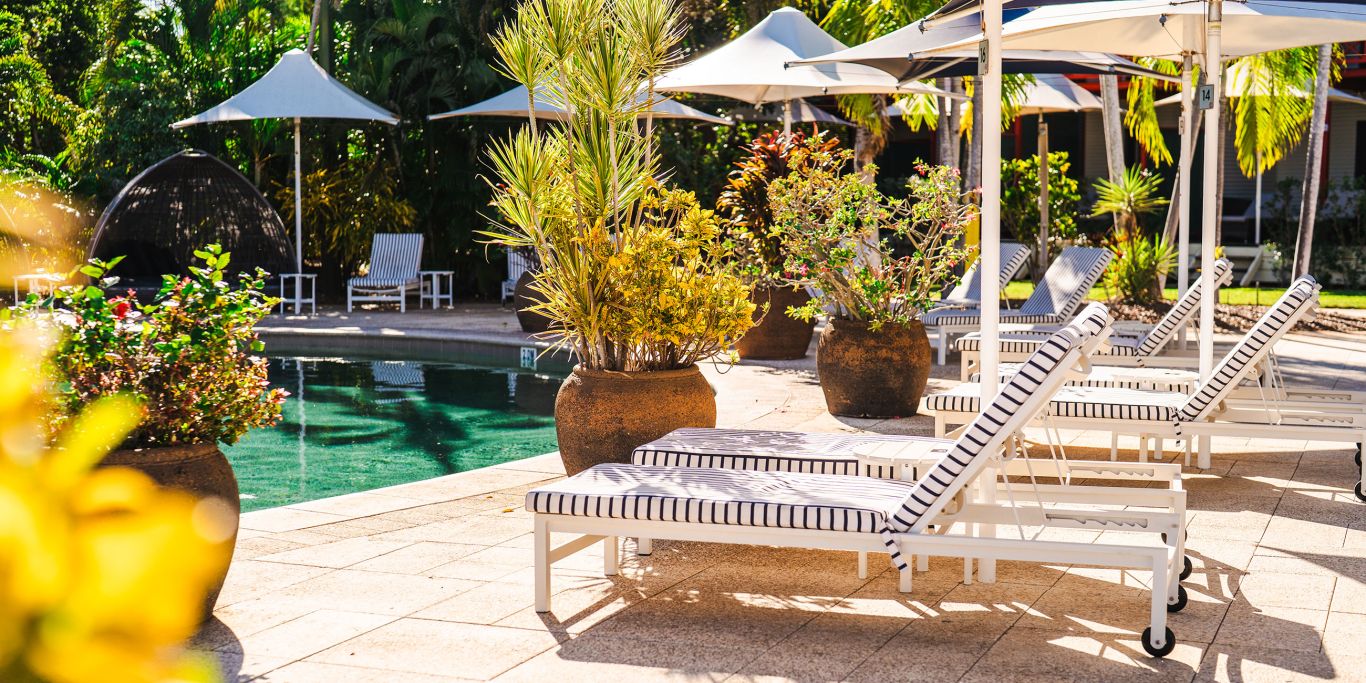
    For dinner, nab a table at the Bali Hai Cafe, where they offer pan-fried crispy barramundi, Abrolhos Island scallops and deep-sea snow crab. When you’re ready for bed, check in to Pinctada Hotel Broome – a lush, tropical resort with palm-dotted gardens and a large, lagoon-style pool to cool off in.

    Beyond the beach

    Beyond the wide, open beach and never-ending sky of Cable Beach, there are many more reasons to visit North West Australia. These are just a few.

    Unmatched experiences

    Shinju Matsuri Festival's popular Long Table Dinner on cable beach
    Join Shinju Matsuri Festival’s popular Long Table Dinner. (Credit: Tourism WA)

    Engage with the history of the land and its people on an Indigenous cultural tour exploring everything from the local wildlife to the tastes of bush tucker. To understand the importance of pearling to this town, take a tour of Chinatown, or head outside of town to the live pearl harvests at Willie Creek or Cygnet Bay Pearl Farm, one of Australia’s oldest pearl farms.

    Learn why Japanese pearlers were central to Broome’s pearling success and visit the largest Japanese cemetery in Australia, where 900 Japanese pearlers were buried – a testament to the risks and rewards of this dangerous profession.

    And book ahead every spring for when communal tables, freshly cooked local fare and festoon lighting fill the beach for the extremely popular Long Table Dinner on Cable Beach. It’s a highlight of the Shinju Matsuri Festival, along with the Floating Lanterns Matsuri, where you can personalise a lantern and gently release it into the sea to honour those you love.

    Dining discoveries

    Matso’s Broome Brewery
    Settle in for Matso’s famous ginger or mango beer. (Credit: Tourism WA)

    Further your culinary adventure at the laid-back Sunday Sesh at Matso’s Broome Brewery. Chow down on smoked crocodile or Aussie barramundi while kicking back to a local DJ as the heat of the day fades.

    For more tunes, the beautiful outdoor Bay Club at the Mangrove Hotel is a great choice for dinner with live music, DJs or an event that stretches on into the early hours. Still hungry? Pop by Johnny Sausage for Italian-influenced meals paired with impeccable wines.

    Natural beauties

    Gantheaume Point cabnle beach broome
    Experience the striking colours of Gantheaume Point. (Credit: Tourism WA)

    Avoid the crowds and head to Town Beach for a quieter vantage point to see the phenomenal Staircase to the Moon – a natural illusion where the rising full moon is reflected on the tidal flats, creating a shimmering ‘staircase’ stretching up to the sky.

    Just south of Cable Beach are the deep red cliffs and dramatic ocean views of Gantheaume Point, where 130-million-year-old dinosaur footprints can be seen, revealed at low tide. Or head to Roebuck Bay to visit the internationally significant wetlands, where vast tidal flats are home to shorebirds and coastal fauna.

    Between October and March, watch turtles nesting and hatchlings emerge from the sand. You’ll be holding your breath as they make their way down to the shoreline, ready to start their life in one of Australia’s most beautiful landscapes.

    For more on Cable Beach and Australia’s North West, visit australiasnorthwest.com.