‘Nothing like I expected’: 6 surprising things about Esperance

hero media
One of Australia’s most remote coastal towns has been attracting intrepid travellers for a while. Quentin Long realised his dream of visiting and was surprised by what he found.

I have been covering Esperance for 20 years. Every time I published the emblematic image of the kangaroos on the impossibly white sand of Lucky Bay with that ridiculously translucent blue-green water I was overwhelmed with itchy feet and desire.

I would mention Esperance to a grey nomad or van lifer or callers on radio and the reaction was always the same: gasps of delight followed by declarations of love for the beaches, the town and the people.

Flying into Esperance my expectations are totally wrong. This is agricultural wheatbelt country, not outback red sand. Over the next three days, I discover it’s not the only thing about Esperance I get wrong. From its not-pink Pink Lake to the ingenuity of its people in this remote corner of Australia; they’re intimately aware they can only rely on themselves so if they want something – great beer, olive oil, live music or arts – they will have to do it themselves. And they do.

Let me tell you why this WA town is nothing like what I expected and better than I imagined.

1. Cape le Grande is more beautiful than you could imagine
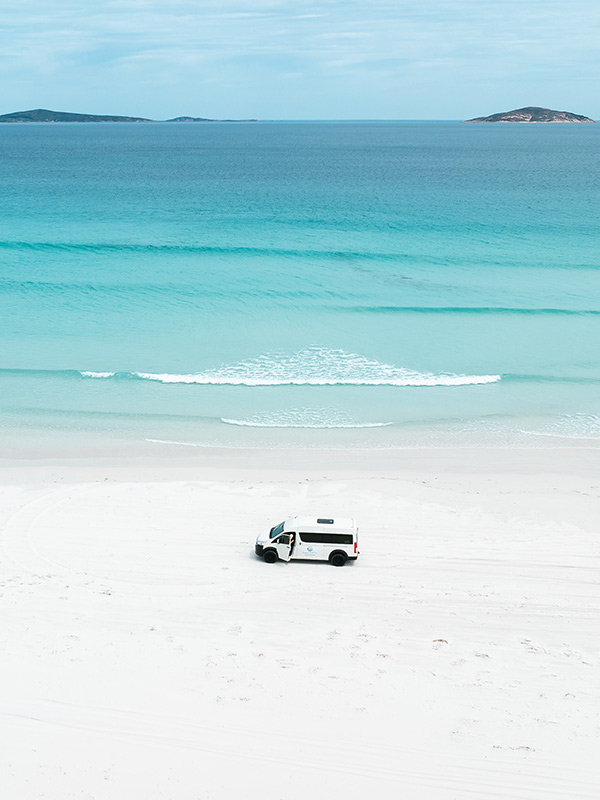
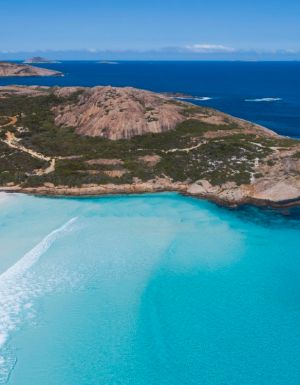
Esperance coastal tour on Cape Le Grand National Park
The park’s iconic beaches are a paradise for the tranquility-seeker. (Image: WTTC Esperance)

For once, the photos are not as good as the reality. Endless squeaky white sand with rolling turquoise water across an empty beach; it is far more serene than your imagination can conjure.

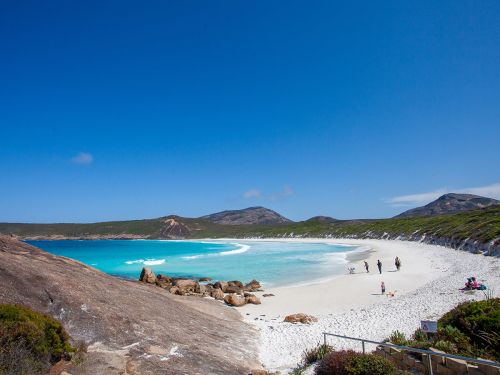
2. Lucky Bay is not the most beautiful beach in the region
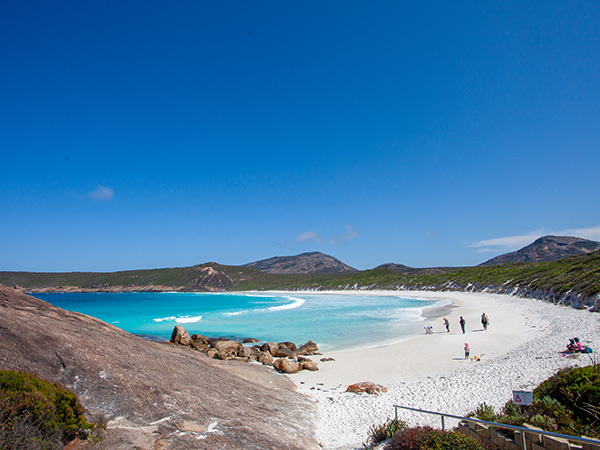
Hellfire Bay in Esperance
Come to Hellfire Bay for the white sand and je ne sais quoi. (Image: Quentin Long)

At the risk of inviting hate mail, sorry Lucky Bay but Hellfire Bay gets my pick for the most beautiful beach. Same incomprehensibly white sand. Same turquoise water. But it is more protected from the elements, making swimming here easier, and there’s more to look at.

Sure the kangaroos on Lucky Bay generate more likes on Instagram but now that the parkrangers are policing tourists feeding them, they are less likely to be getting their toes sandy. (You’re more likely to spot them up at the campground if you must know.)

3. Esperance has a dedicated gig manager
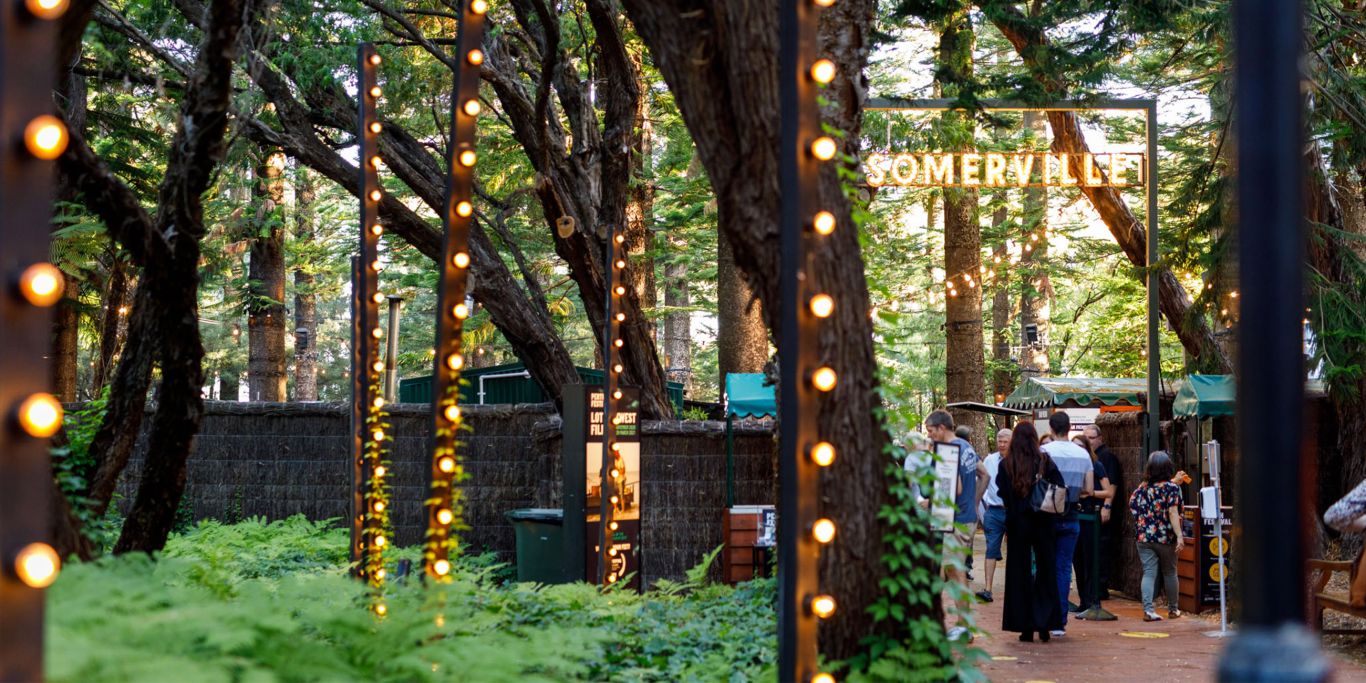
Esperance's dedicated live gig manager
Esperance’s local gig scene is managed by a dedicated musician. (Image: WTTC Esperance)

‘Kyza’ is not some mad Birkenstock-and-socks German backpacker who never left, he’s Kyron Smithson, an Esperance local musician who books all the live gigs under his management company Kyza Presents.

What other regional town in Australia has a dedicated entertainment manager? Just think about it. For a town of 15,000 souls to have a dedicated gig manager they must have a few venues and musos. Plus Kyza will book travelling bands into local hotspots, and he manages the online gig guide .

4. Esperance has an arts scene
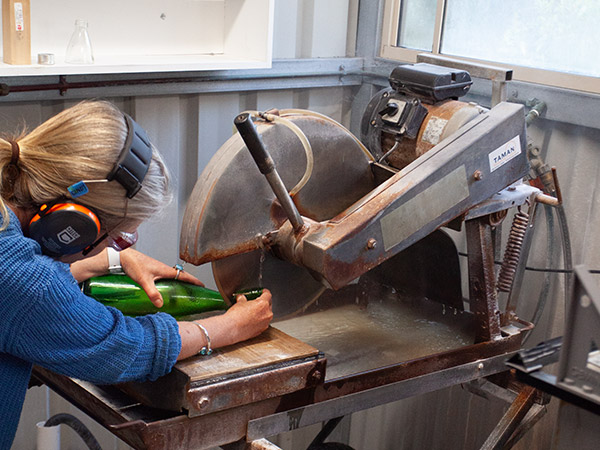
local art in Esperance
Local artist Cindy Poole repurposes glass bottles into gorgeous art creations. (Image: Quentin Long)

Step into Cindy Poole’s ‘shed’ with a little caution; glass art is expensive and fragile.

While the Esperance native and former high school PE teacher turned glass artist is winning commissions from across the world she is more interested in solving our problem with the bottle.

Not what is inside the bottle but what happens to the bottle afterwards. She takes glass bottles and turns them into artworks, a product she describes as ReValued Glass.

And you can too. Step (carefully) into the actual studio where she will assist you in turning a bottle into a glass, vase or whatever takes your fancy. The pick of her works for me is the jewellery that comes from ‘ReValued’ Sapphire Gin bottles; I am coming with my own next time.

But Cindy is only a small piece of the art scene (yes it is a scene) in Esperance. The heart of the arts in Esperance is the Cannery Arts Centre . They play host to exhibitions and artists in residence programs, as well as weekly workshops.

5. Esperance has a food scene you have to taste to believe
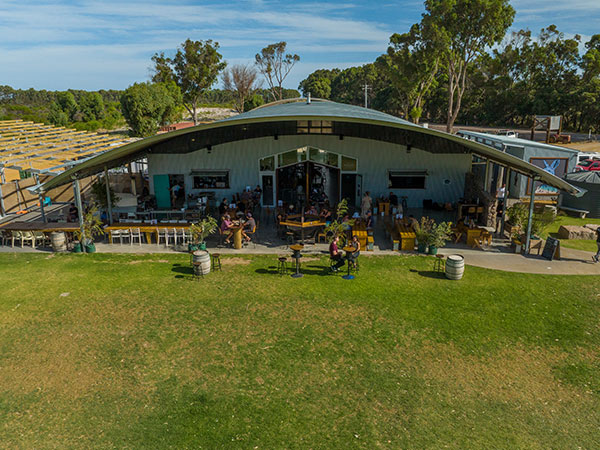
Lucky Bay Brewery in Esperance
Lucky Bay Brewery highlights local produce in its cuisine. (Image: Quentin Long)

To appreciate what the producers are creating you have to literally be there – hardly any of it gets to Perth let alone the East Coast.

Perhaps the best example is Lucky Brewery . They only use local products. That includes barley and wheat from local farmers and even the water is harvested from the brewery, restaurant and beer garden’s roof.

Co-owners and partners Robyn Cail and Nigel Metz describe their philosophy as ‘paddock to pint’. And the fruit of this philosophy is almost entirely consumed by lucky locals.

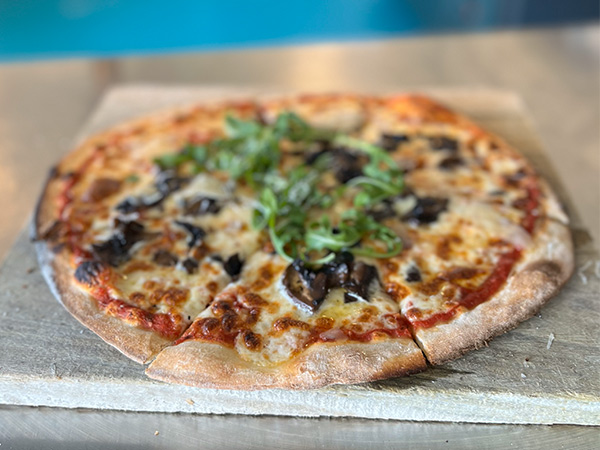
But the dedication to local goes way beyond the brew; the restaurant serves mostly local produce (the pizzas are made from local wheat and are outstanding) and they are the one constant in Kyza’s gig guide. Every Friday and Sunday, come rain, hail or no drinkers, they pay to have live music.
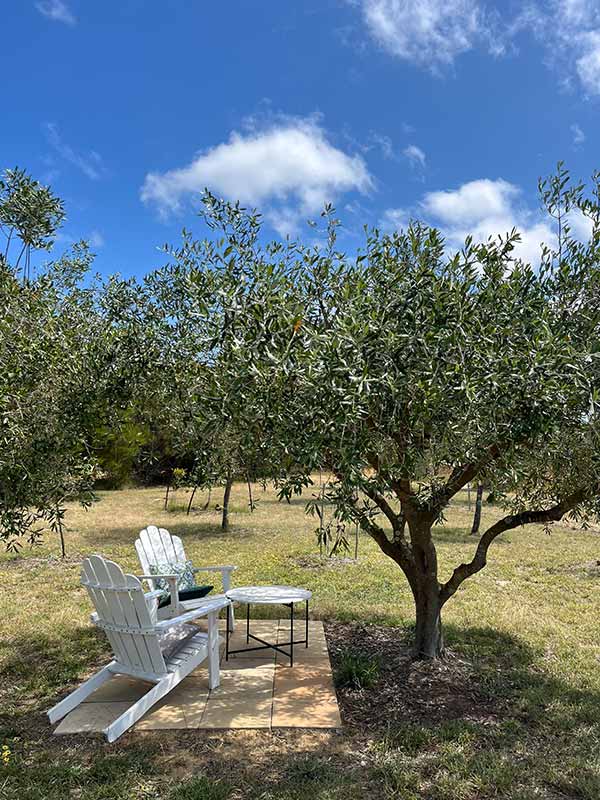
Yirri Grove at Esperance
Relax and enjoy the sunshine at Yirri Grove. (Image: Quentin Long)

Yirri Grove Olive Farm is the ‘active retirement’ of former Kalgoorlie shed builders Anne and Shane O’Neill.

Instead of shipping their olives 700 kilometres to Perth to process and losing the ability to produce EVO (Extra Virgin Olive Oil), they bought the smallest commercial grade processor from Italy to convert their grove of Kalamata, Manzanillo, Frantoio and Barnea into green gold.

Today you can wander the grove, book a tasting of the varieties and blends (the have very pronounced and different characteristics) or even stay in the Heyscape tiny cabin  onsite but to partake in it you have to be there – it is not sold in supermarkets or outside the region.

6. There are pink lakes but the lake called Pink Lake is not pink
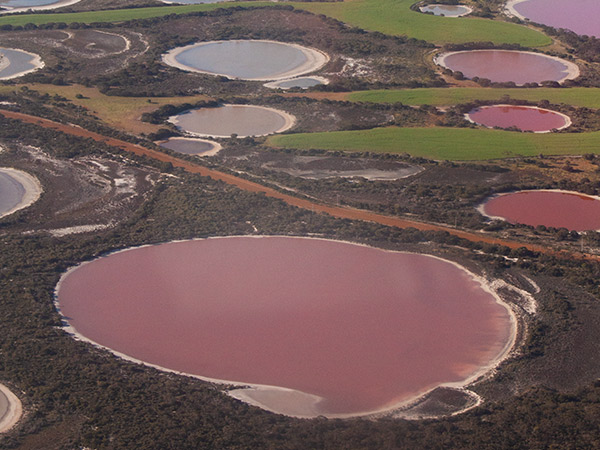
pink lakes in Esperance
The scale and colour of the pink lakes are best appreciated from above. (Image: Quentin Long)

Yep, only in WA. There is a lake called The Pink Lake but for some reason, the algae that gave it its rosy hue died about 20 years ago. It even spawned a suburb of Esperance called Pink Lake.

However, there are thousands of much smaller lakes dotted across the area. Many of these are in fact pink but have no name.

Quentin Long
Quentin Long is the Co-Founder and Managing Director of Australian Traveller Media. Quentin is a sought-after travel media commentator. He is Australia’s most trusted source for travel news and insights, having held weekly radio segments across the country since 2006, and regularly appearing on Channel 9’s Today and A Current Affair programs from 2010. Don't ask him his favourite travel experience as that's like asking him to choose a favourite child. However he does say that Garma Festival is the one travel experience that changed him the most.
See all articles
hero media

7 Kimberley experiences that need to be on your bucket list

From thundering waterfalls to ancient Indigenous art, Kimberley’s raw beauty will take your breath away.

Wild, pristine, and shaped by nature, the Kimberley Coast is one of Australia’s most spectacular landscapes. A remote and rugged frontier that remains a bucket list destination for many travellers. Its most breathtaking attractions – including Montgomery Reef, King George Falls and Horizontal Falls – are accessible only by sea or air, making a guided expedition cruise aboard Silversea’s luxury expedition ship, Silver Cloud, the ideal way to explore it.

From its intricate intertidal zones to ancient rock art, extreme tides and rare wildlife found nowhere else in Australia – or the world – this journey offers an unparalleled exploration of one of Earth’s last true wildernesses.

Why Silversea?

Silversea offers a 10-day expedition departing Broome, or an extended 16-day expedition voyage from Indonesia, including landings on the hidden gems of Palopo Sulawesi and Komodo. Accompanied by expert guides and specialists in marine biology, history and geology, guests gain a deeper understanding of the Kimberley’s dramatic landscapes, rich cultural heritage and extraordinary biodiversity.

Silversea offers one of the experiential travel industry’s leading crew-to-guest ratios. Along with all-suite accommodation (80 per cent with private verandah), 24-hour butler service, a swimming pool and four dining options. Silver Cloud also has an experienced crew of multilingual expedition guides and specialists in marine biology, history and geology to enhance your Kimberley Experience.

silversea cruise ship pool deck
Take a dip in the pool deck.

1. Koolama Bay

​​Before visitors see King George Falls, they hear them – a growing rumble in the distance, steady and foreboding as the Zodiac glides through the gorge, the sound echoing off sheer rock formations. At 80 meters tall, the twin cascades carve through the red cliffs, churning the waters below in a spectacular finale – but Koolama Bay holds secrets beyond its striking scenery.

Named after a ship that beached here following an aerial attack by Japanese bombers in World War II, the bay may seem desolate, yet it teems with life. With Silversea’s expert guides on their 10-day Kimberley itinerary, guests gain a sharper eye for its hidden wonders – rock wallabies darting across the cliffs, crocodiles lurking among dense green mangroves, and high above, the silhouette of a bird of prey circling the sky.

King George Falls at koolama bay excursion on Silversea Kimberley Cruise
Take a shore excursion to see King George Falls.

2. Freshwater Cove / Wijingarra Butt Butt

Connect with Country on a wet landing at Freshwater Cove, also known as Wijingarra Butt Butt. Considered one of the most special experiences on both the 16-day and 10-day Kimberley cruises, Silversea guests are welcomed by the traditional Indigenous custodians of the land, painted with traditional ochre, and invited to take part in a smoking ceremony.

Located on the mainland near Montgomery Reef, Wijingarra Butt Butt holds deep cultural significance to the local Indigenous community. Here, rock formations along the shore represent spiritual ancestors, and guests are guided to a nearby rock overhang filled with ancient art, where traditional owners share the stories and meaning behind these sacred paintings.

welcome to country on freshwater cove during silversea kimberley cruise
Take part in a smoking ceremony. (Image: Tim Faircloth)

3. Vansittart Bay (Jar Island)

Modern history, ancient culture and mystery converge in Vansittart Bay, which is also known as Jar Island. Here, the first thing to catch the eye is the dented, silver fuselage of a World War II-era C-53 plane – a striking relic of the past. Yet, the true cultural treasures lie just a short hike away where two distinct styles of Indigenous rock art – Gwion Gwion and Wandjina – can be found.

The Wandjina figures, deeply connected to Indigenous traditions, stand in stark contrast to the enigmatic Gwion Gwion (Bradshaw) paintings, which date back more than 12,000 years. Significantly different in form and style, the two different styles create a striking juxtaposition, offering a rare glimpse into the region’s rich and complex past.

aerial view of Vansittart Bay, See it in you Silversea Kimberley Cruise.
Explore ancient Gwion Gwion rock art at Vansittart Bay. (Image: Janelle Lugge)

4. Horizontal Falls

Part illusion, part natural phenomenon, the Kimberley’s much-lauded Horizontal Falls aren’t a waterfall, but a tidal and geographic spectacle that visitors have to see to comprehend. Known as Garaanngaddim, the phenomenon occurs when seawater rushes through two narrow gaps- one just twenty metres wide, and the other seven metres in width, between the escarpments of Talbot Bay.

With each tidal shift,  the force of the water creates whirlpools, furious currents and the illusion of a horizontal cascade as thousands of gallons of water are pushed and pulled in through the gap every six hours with relentless movement, making this one of the Kimberley ’s most mesmerising natural wonders.

Horizontal Falls are described as "One of the greatest wonders of the natural world". They are formed from a break in-between the McLarty Ranges reaching up to 25m in width. The natural phenomenon is created as seawater builds up faster on one side of the gaps than the other, creating a waterfall up to 5m high on a King tide.
Watch whirlpools and furious currents collide. (Image: Janelle Lugge)

5. Montgomery Reef

As the tide turns in Montgomery Reef, magic happens. With the Kimberley’s legendary tides varying up to ten metres, at low tide the submerged reef almost appears to rise from the depths: exposing up to four metres of the sandstone reef.

The impact is otherworldly: as the water drains, waterfalls cascade on either side of the channel,  turtles left exposed scramble and dive, and fish leap in search of sanctuary in shallow pools. Meanwhile, the dinner bell rings for the migratory seabirds dugongs, reef sharks and dolphins that scavenge and feast in the area.

Using zodiacs, guests cruise through one of the world’s most significant inshore reef systems navigated by experienced guides, exploring the most intricate and fascinating parts of a 300-square-kilometre-wide biodiversity hotspot.

aerial view of boat going along Montgomery Reef
Witness seabirds, dolphins and reef sharks on the hunt.

6. Mitchell Falls by Helicopter

Experiencing the Kimberley by sea allows you to feel the power of the tides, but travelling by helicopter reveals the sandstone tapestry of the Kimberley, a landscape geologists believe is over 1.8 billion years old.

One of Silversea’s most popular optional excursions , guests who opt to fly into the interior from the onboard helipad soar up above the rust-coloured landscape of the Mitchell plateau, taking in one of Australia’s most scenic waterfalls: Mitchell Falls, a series of four emerald-coloured pools gently cascades into each other, before plunging down to the river below.

Seeing the landscape from above reveals a landscape weaved and shaped by the power of the freshwater wet season, juxtaposed to the constant lapping of the relentless and powerful tide on the coast.

aerial view of mitchell falls on silversea helicopter excursion
See emerald pools cascade into the river below. (Image: Tim Faircloth)

7. Indigenous Art Caves, Wandjina Art

The Kimberley Region of Western Australia is home to some of the most striking and significant

Indigenous rock art in Australia. Dotted throughout the landscape are caves, cliffs and rock overhangs depicting the striking, ethereal image of Wandjina, the rainmaker spirit and creation being central to many of the Dreamtime stories in this region.

Some of the paintings are regularly repainted by traditional custodians, while others are believed to be over 4,000 years old. Each artwork serves as both a cultural record and a living connection to the past, offering a rare opportunity to engage with the enduring traditions of the Kimberley’s Indigenous communities.

Freshwater Cover Rock Art the kimberleys
Walk among cultural records preserved in stone. (Image: Tim Faircloth)

See the best of this incredible part of the world on a Silversea Kimberley cruise. Book your 10- or extended 16-day expedition voyage at silversea.com