The ultimate guide to visiting the fascinating Fremantle Prison

hero media
When holidaying in Fremantle, itineraries likely revolve around the beach, bars and restaurants. But if you can tear yourself away from the white sand and gourmet food for a day, a trip to the historical Fremantle Prison is one you won’t forget.

Fremantle Prison – which is the largest convict-built structure in Australia and the most intact convict establishment in the southern hemisphere – is the only World Heritage-listed building in Western Australia. With an impressive range of tours (including an underground adventure through tunnels quarried by convicts), it’s a fascinating place for history buffs and true crime fanatics alike. You can even stay the night in a prison cell if you’re really eager.

Heading to the charming portside city of Fremantle? Here’s everything you need to know about visiting the iconic Fremantle Prison.

The history of Fremantle Prison

Fremantle Prison was built as a convict barracks in the early 1850s. Convicts themselves built the prison out of the limestone quarried from the site itself, with the first prisoners moving into the main cell block in 1855.

The building included four levels of cells, with each cell measuring barely more than two and a half square metres. This exceptionally small cell size was because the cells were intended to be used for overnight accommodation only, as the convicts were sent to work outdoors during the day. However, the cell walls being built with thick limestone – rather than corrugated iron cell partitions like other prisons of the time – made the cells very cramped even just for sleeping, not to mention poorly ventilated.
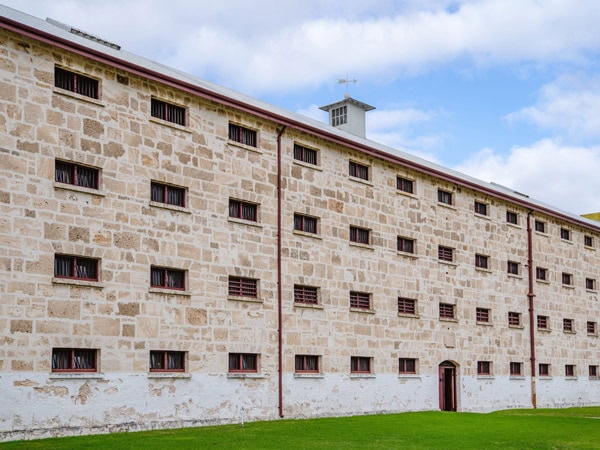
the exterior view of Fremantle Prison
Fremantle Prison was built as a convict barracks in the early 1850s. (Image: Tourism Western Australia)

Fremantle continued being used as a prison right up until 1991 and saw more than 10,000 prisoners pass through its doors. Inmates included convicts sent from Great Britain, colonial prisoners and prisoners of war. In addition, during the Second World War, the Australian Defence Department used part of the prison to detain many Italian Australians deemed ‘enemy aliens’ due to Italy’s alliance with Germany. The Prison was a place of hangings, floggings, dramatic convict escapes and prisoner riots.

A Royal Commission was launched into the prison in the 1980s following a number of riots and concerns over conditions, with the facility ultimately being shut down in 1991.

After its closure, the WA state government embarked on a long-term conservation plan to ensure the prison’s preservation for future generations.
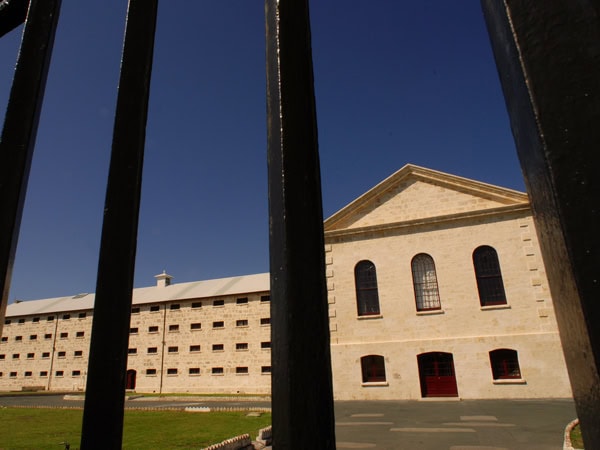
the exterior view of the Fremantle cell
Fremantle Prison is the only World Heritage-listed building in WA. (Image: Fremantle Prison)

Why you should visit Fremantle Prison

Fremantle Prison’s significance stems from the fact that it is substantially – and impressively – still intact. The fabric of the Main Cell Block, perimeter walls, hospital and eastern workshop, gatehouse and three of the cottages on The Terrace is little altered from its convict era. Few enhancements were made over the years to allow the site to continue to operate as a prison into the ’90s, however, they didn’t significantly alter the structure. Consequently, the original fabric of Fremantle Prison has an incredibly high integrity.

A visit to Fremantle Prison will leave you captivated for hours. Within the Prison walls is the Prison Cafe, operated by the team renowned for popular Fremantle restaurants Emily Taylor and Sailing for Oranges, and a fascinating Visitor Centre showcasing actual footage of prison life and panels depicting the prison’s history, riots and reform programs.
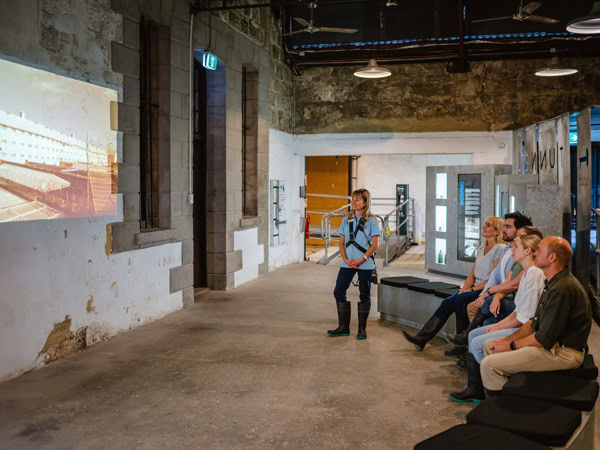
guests attending a briefing session before the tunnels tour at Fremantle Prison
Travel back in time. (Image: Tourism Western Australia)

Head over to the Convict Depot, situated in the former prison superintendent’s backyard, to find out if you have a convict past. Visitors can search for convict ancestors on a fully interactive Convict Database, and explore hundreds of photographs and articles relating to the convict era.

There is also a constant roster of exhibitions at the Prison, including things like prisoner art and colonial artefacts. And of course, you grab a souvenir from the award-winning gift shop on your way out – the convict teddy bears are rather cute, and the collection of history books is fascinating.
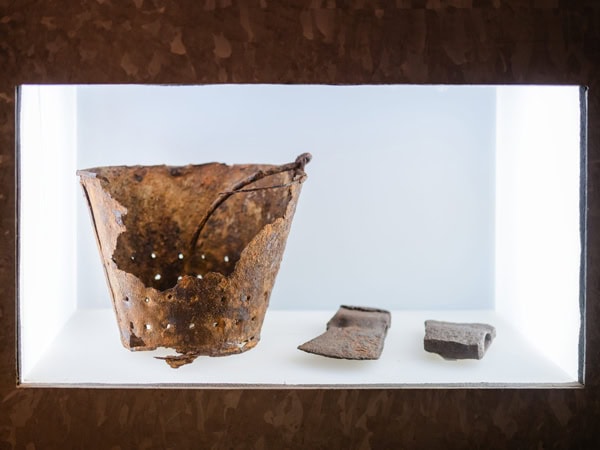
artefacts on display, Tunnels Tour with Fremantle Prison
Browse the artefacts on display. (Image: Tourism Western Australia)

Best Fremantle Prison tours

Visitors to Fremantle Prison can step inside and do time on one of the compelling tours.

Convict Prison tour

This tour gives visitors an overview of the history of the prison, from its construction to its decommission. You’ll learn about the 10,000 men who were transported to the Prison from Great Britain, how they built their own prison and helped shape the future of Western Australia.

Opening hours: Daily, every hour from 10am until 5pm.
Duration: One hour 15 minutes.
Pricing: $23 per adult.

Behind Bars tour

This tour takes visitors back in time through the Main Cell Block and inmate exercise yards. As you walk through the facility in their shoes, you learn about the daily routine of prisoners and the realities of life on the inside.

Opening hours: Daily, every hour from 10.30am until 4.30pm.
Duration: One hour 15 minutes.
Pricing: $23 per adult.
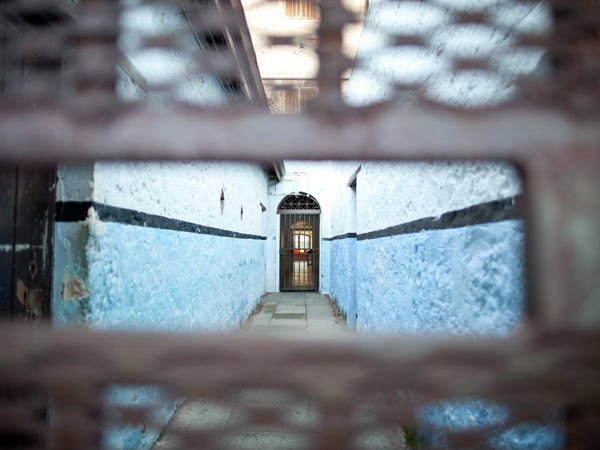
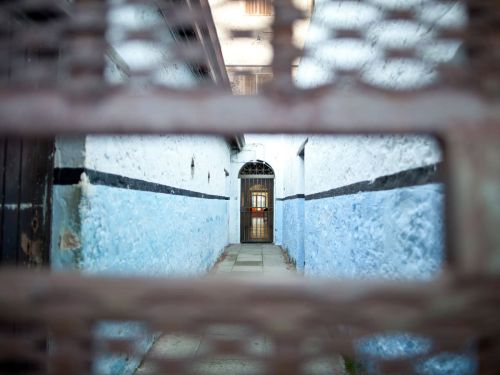
peeking through a small hole in the corridor of Fremantle Prison
Get a glimpse of Fremantle Prison’s fascinating history. (Image: Tourism Western Australia)

True Crime tour

For the true crime fanatics, this tour uncovers the real life stories of some of the Prison’s most notorious inmates – from bushrangers, thieves and murderers, to serial killers, bank robbers and escape artists.

Opening hours: Daily, every hour from 11.45am until 4.45pm.
Duration: One hour 15 minutes.
Pricing: $23 per adult.

Tunnels Tour

Not one for the faint-hearted (or claustrophobic), the tunnels tour sees visitors don a hardhat and overalls and descend below the Prison to explore a labyrinth of tunnels built by prisoners.

Guides lead the trek through dry sections of the tunnels on foot, before boarding replica convict punts to explore the submerged passageways accessible only by boat.

Opening hours: Saturdays and Sundays only at 9am, 10.40am, 12.20 pm, 1.40pm, and 3.25pm.
Duration: Two hours 30 minutes.
Pricing: $66 per adult.
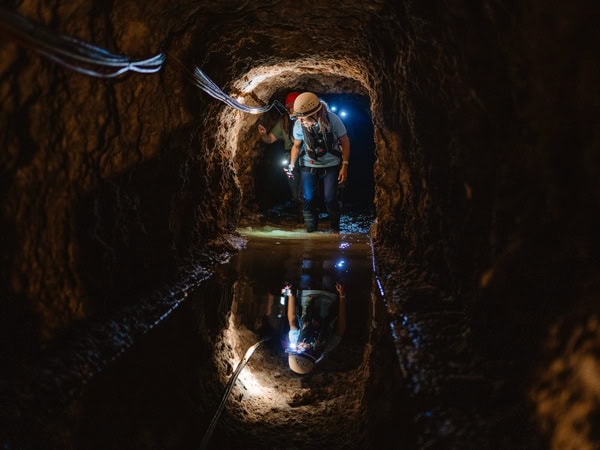
the Tunnels Tour at Fremantle Prison
Trek through the tunnels on foot. (Image: Tourism Western Australia)

Torchlight Tour

Another one for those who are feeling brave, the Torchlight Tour takes visitors to the darkest side of Fremantle Prison. Guides lead you through the prison after dark, regaling you with tales of the loneliness, pain and suffering, of executions gone wrong, of the innocent unjustly imprisoned and the guilty punished.

Opening hours: Every Wednesday and Friday evening – April-Oct from 6.30pm, Nov-March from 7pm.
Duration: One hour 30 minutes.
Pricing: $29 per adult.
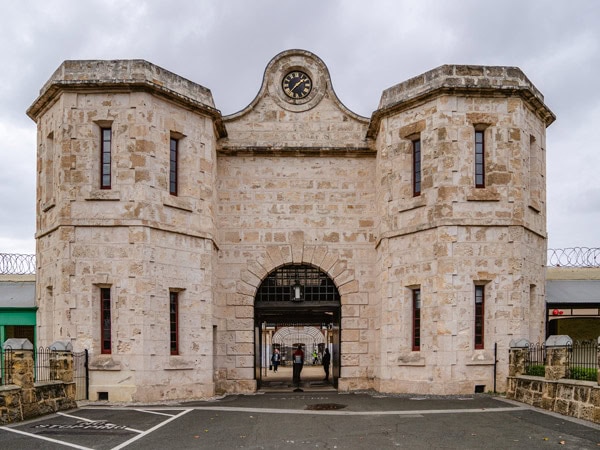
the facade of Fremantle Prison
More than 10,000 prisoners have passed through the doors of Fremantle Prison. (Image: Tourism Western Australia)

Staying at Fremantle Prison

If after all that you still can’t get enough, visitors can also stay overnight at the Prison at the YHA Fremantle Prison – even being able to stay in actual prison cells. If that’s a bit much for you, they have additional purpose-built rooms, either shared dorm-style or private rooms with ensuites. Whatever you choose, you’ll be staying the night in a UNESCO World Heritage site.
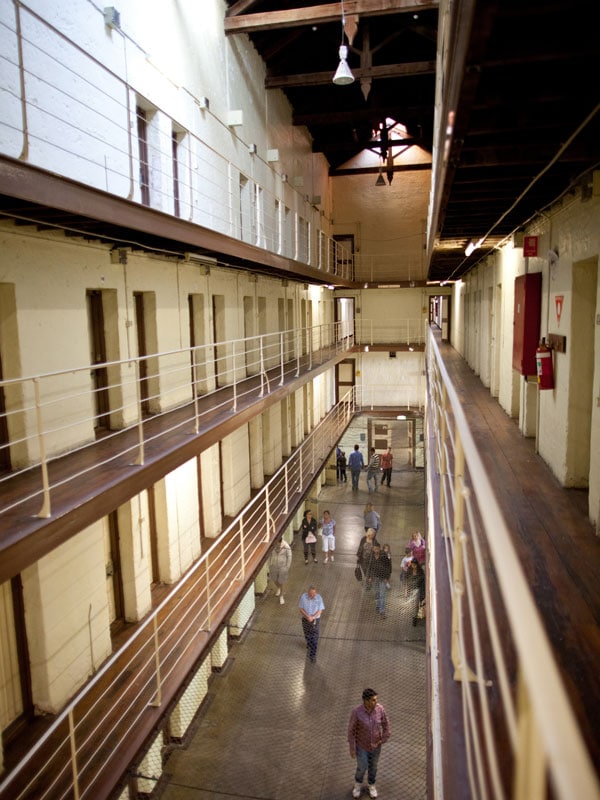
the rooms and corridor inside Fremantle Prison
Sleep in either shared dorm-style or private rooms with ensuites. (Image: Tourism Western Australia)

What you need to know

Fremantle Prison is open seven days a week. It’s centrally located in Fremantle, a short walk from Fremantle Train Station, the cappuccino trip and Fishing Boat Harbour. Book your tours in advance.
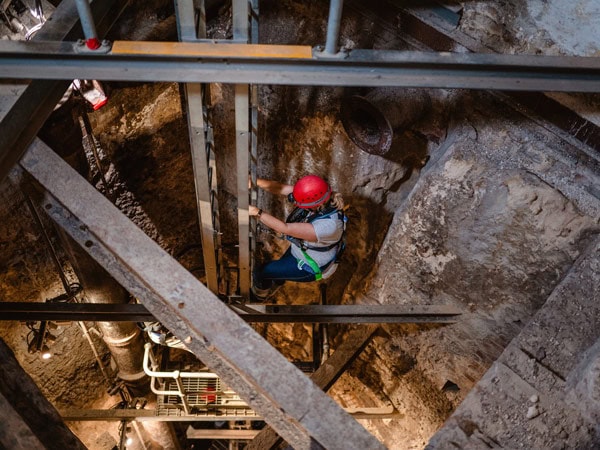
a man going down the tunnel at Fremantle Prison
A visit to Fremantle Prison is guaranteed to astonish history buffs. (Image: Tourism Western Australia)

Address: 1 The Terrace, Fremantle.
Opening hours: 9am–5pm, seven days a week.
Price: Entry to Fremantle Prison Gatehouse is free and includes access to the Convict Café, Gift Shop, Prison Gallery, Convict Depot and Museum. Tours incur an additional charge.

Prefer to stay elsewhere? Check out our guide to the most charming Airbnbs in Fremantle.
Kirsty Petrides
Kirsty Petrides is a writer, wine-lover and cheese enthusiast. Whether she’s hunting down the best restaurant in Albania, foraging the Marrakech markets for spices or camping in the middle of Patagonian wilderness, she loves to seek out the authentic side of the places she visits, and share that with readers through her writing.
See all articles
hero media

6 reasons the best way to experience the Kimberley is by cruise

    Kate BettesBy Kate Bettes
    This remote corner of Australia is one of the world’s last frontiers. This is how to see it properly.

    Vast, rugged and deeply spiritual, the Kimberley coast in Australia’s North West feels a world away from everyday Australia – and there are countless ways to explore it. But if you want to reach ancient rock art, hidden gorges and lonely waterfalls, it has to be by boat. Whether you’re aboard a nimble expedition vessel or a luxury yacht with all the trimmings, exploring by the water brings exclusive experiences, shows unique views and makes travel easier than any other mode. And that’s just the beginning of Australia’s North West cruises.

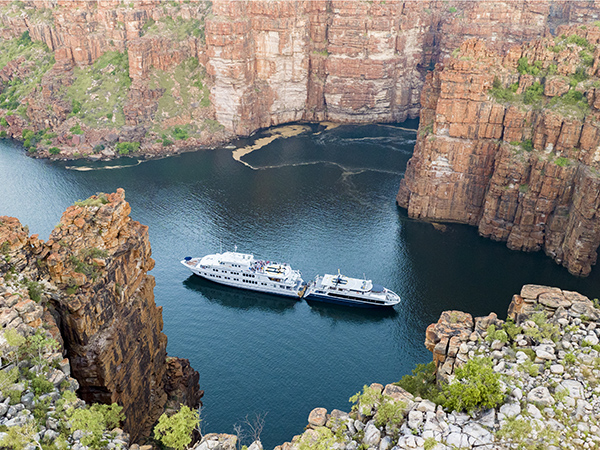
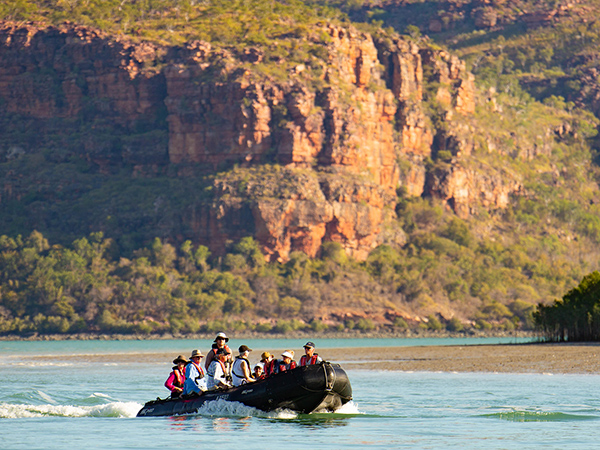
    The True North Adventure Cruise in between sandstone cliffs.
    Adventure starts where the road ends.

    1. Discover Broome, and beyond

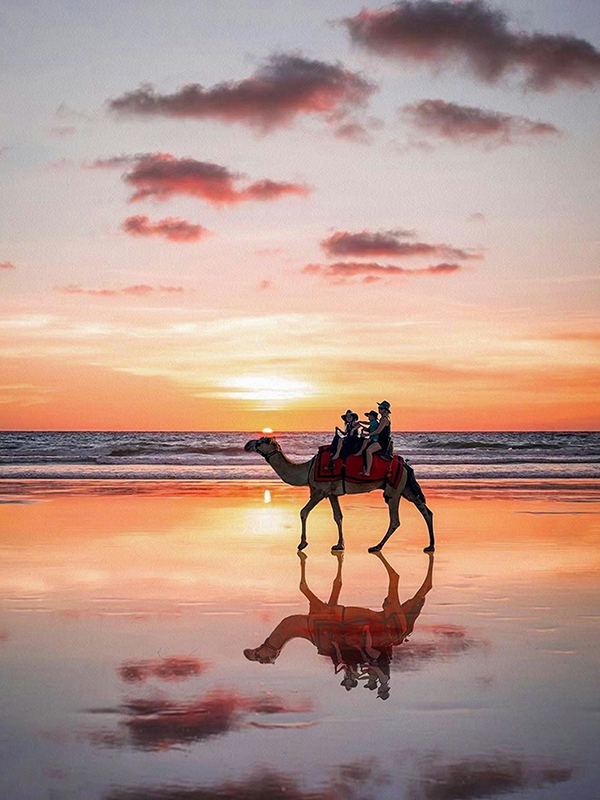
    Explore your launchpad before you set sail: Broome. Here camels and their riders stride along the 22 kilometres of powdery Cable Beach at sunset. That’s just the start.

    At Gantheaume Point, red pindan cliffs plunge into the turquoise sea, whose low tide uncovers fossilised dinosaur footprints. Broome’s pearling history runs deep. Japanese, Chinese, Malay and Aboriginal divers once worked these waters, and their legacy lives on in boutiques where South Sea pearls still shine.

    If the moon’s right, you may catch the Staircase to the Moon over Roebuck Bay. Or simply kick back with a cold beverage and a film under the stars at Sun Pictures , screening since 1916.

    Ride a camel along Cable Beach as the sun sinks into the Indian Ocean, casting golden light across the sand and sea.
    Ride a camel along Cable Beach. (Image: Nick Dunn)

    2. Unmatched access to The Kimberley

    Once you’re onboard, expect a backstage pass to some of the most isolated places on Earth. No roads. No ports. No phone reception.

    At Horizontal Falls/ Garaanngaddim, 10-metre tides surge through twin gorges like a natural waterpark ride that’ll make your palms sweat. Then there’s Montgomery Reef/ Yowjab: a giant living platform of coral and seagrass, where the sea pulls back to reveal waterfalls, sea turtles and ospreys.

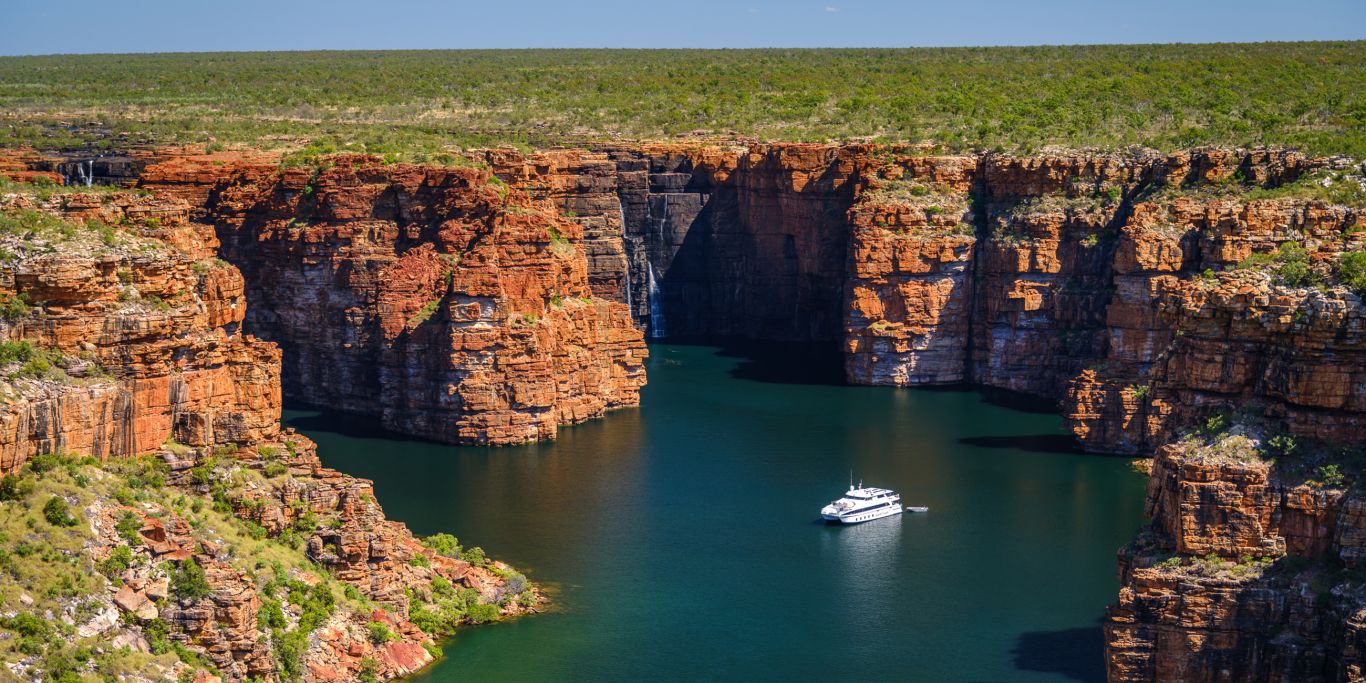
    Up north, King George Falls/ Oomari rage 80 metres down red cliffs. Zodiac boats often nudge in closer so you can feel the spray on your sun-warmed cheeks. You might even fly in to reach Mitchell Falls/ Punamii-unpuu, a four-tiered cascade where you can swim in freshwater pools above the drop.

    Come spring, some itineraries veer west to Rowley Shoals: an atoll chain of white sand and reef walls. Then it’s up the winding Prince Regent River to King Cascade/ Maamboolbadda, tumbling over rock terraces, and into a Zodiac to view the Gwion Gwion rock art, whose slender, ochre-painted figures are older than the pyramids.

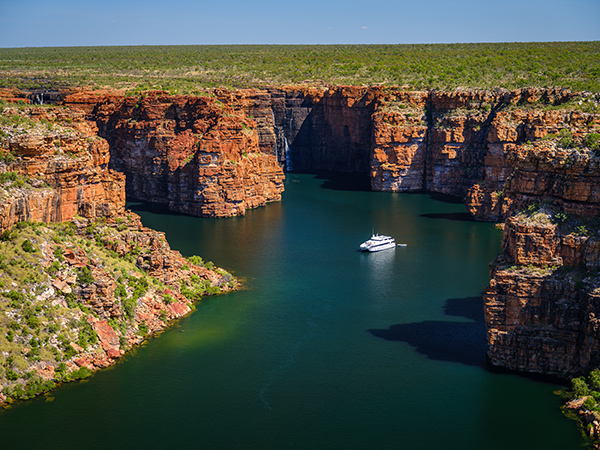
    A cruise drifts beneath King George Falls, where sheer sandstone cliffs frame the thunderous plunge into turquoise waters.
    Get closer to the Kimberley than ever before.

    3. Taste the Kimberley with onboard hospitality

    You might spend your days clambering over slippery rocks or charging past waterfalls. But when you’re back on the water, it’s a different story. Meals are chef-prepared and regionally inspired: grilled barramundi, pearl meat sashimi, mango tarts, and bush tomato chutney. One night it’s barefoot beach barbecues with your shipmates; the next, alfresco dining on the ship.

    Small expedition ships each have their own personality, but many carry just 12 to 36 guests, making being out on the water a whole other experience. You might sink into a spa on the foredeck or sip coffee in a lounge while watching crocodiles cruise by. It’s choose-your-own-relaxation, Kimberley style.

    4. Expert-led excursions through the Kimberley

    These voyages are led by people who know the Kimberley like the back of their sunburnt hand. Attenborough-esque naturalists might gently tap your shoulder to point out rare birds or tell the story beneath a slab of rock. Historians can explain exactly how that rusted World War II relic came to rest here.

    If your ship has a helipad, you might chopper straight to a waterfall-fed swimming hole. If not, you’ll still be hopping ashore for that wet landing at a secret creek.

    Then come the evenings: songlines shared by Traditional Owners under the stars, or astronomy sessions that link what’s overhead with what’s underfoot and what’s within.

    A small group glides through Kimberley’s rugged coastline by boat, passing ancient cliffs.
    Explore with naturalists and historians by your side.

    5. Relax in luxurious lodgings

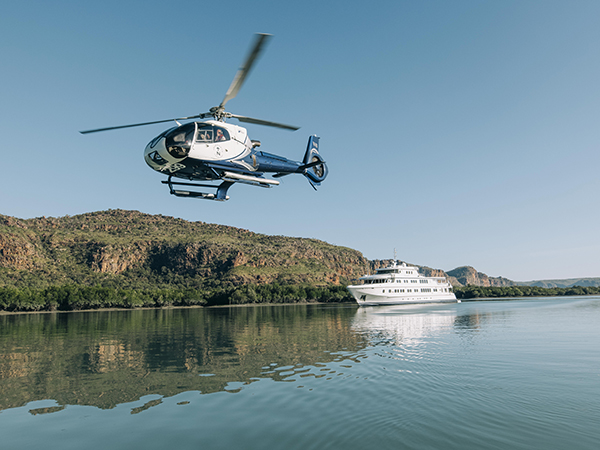
    Just because you’re off-grid doesn’t mean you have to rough it. These Kimberley vessels are small in size, but mighty in luxury. True North’s ships come with their own helicopters and a no-sea-days policy, so you’re always in the thick of it. Try the luxurious offerings from Ocean Dream Charters for exploration in style. Kimberley Quest offers a fast boat for easy, off-ship adventures. On the larger end of the scale, Coral Expeditions has open-deck bars and curated wine cellars. And then there’s Ponant’s luxury yachts sleek and incredibly stylish French sailing yachts.

    A helicopter soars above the sea, with a sleek cruise ship gliding in the distance.
    See the Kimberley from sky to shore.

    6. The adventure continues with pre- and post-cruise experiences

    You’ve already come this far – so, why not go further? Broome makes it easy to ease in before you board, or wind down when your voyage ends, and there is no reason to stop there.

    Head an hour and a half south to Eco Beach to stay off-grid and off the clock. Join a Yawuru guide for a mangrove walk or ocean forage. Dive even deeper into Broome’s pearling past at Willie Creek or Cygnet Bay, where divers and craftspeople still pull the seawater-slicked gems from the deep.

    If you’re still craving adventure, it’s time to go further. Soar over the Buccaneer Archipelago, or detour inland with a 4WD trip along the Gibb River Road. Book a scenic flight over the Bungle Bungles. Or – because you never know when you’ll be back – do all three.

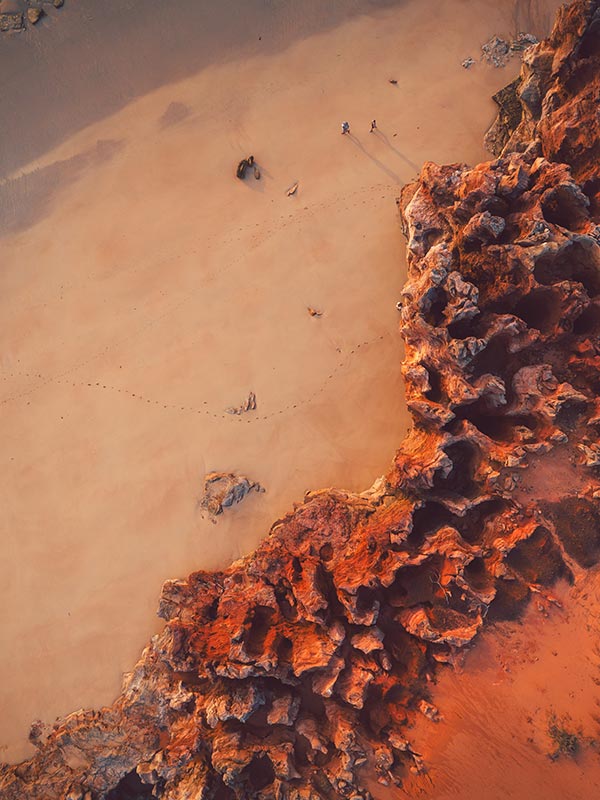
    aerial of people walking on eco beach in the kimberley western australia
    Stay off grid at Eco Beach. (Image: Tourism WA)

    Find out more about your trip to Australia’s North West at australiasnorthwest.com .