Everyone knows Rottnest Island in summer, but almost nobody knows Rottnest Island in spring.
Everyone knows the Rottnest of summer: packed ferries, full beaches, crowds jostling for the perfect quokka selfie. It’s a brilliant way to spend a summer’s day, and there’s good reason it’s the island’s most popular season. But go in spring instead, and you’ll find a completely different island.
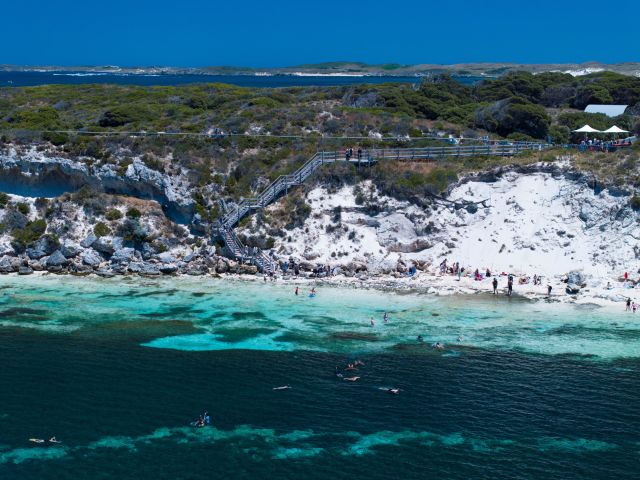
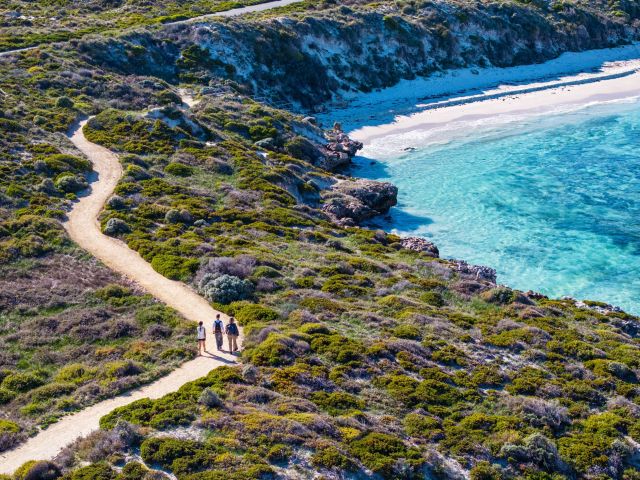
Parker Point is one of many turquoise bays to explore. (Credit: Rottnest Island Authority)
Same limestone coastline, same turquoise bays, same resident quokkas going about their business, just quieter, greener, and running to an entirely different rhythm. Vivid wildflowers pushing up through the scrub, humpback whales moving past the coastline and hiking trails at their most alive. This is Rottnest in spring, and after experiencing a weekend of it, it’s my pick for WA’s best-kept travel secret.
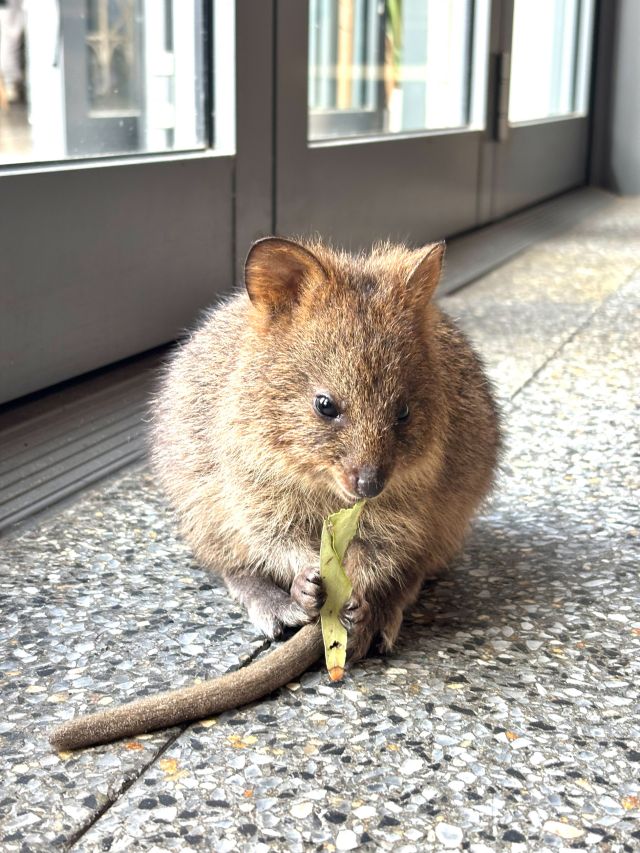
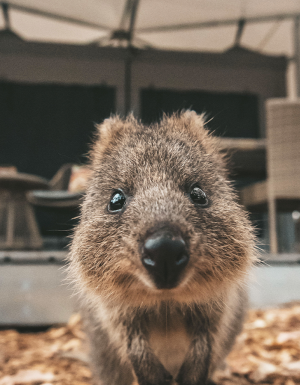
The quokkas are here all year round. (Credit: Kirsty Petrides)
Whale-watching and seal-spotting at the West End
Here’s the part you genuinely can’t get in summer: humpback whales migrating past Rottnest’s west end.
We based ourselves in the island’s main settlement for a few nights, and from there, a hop-on hop-off bus runs straight out to the West End; the best place on Rottnest to see spring’s whale migration for yourself.
Watch for whales breaching. (Credit: Rottnest Island Authority)
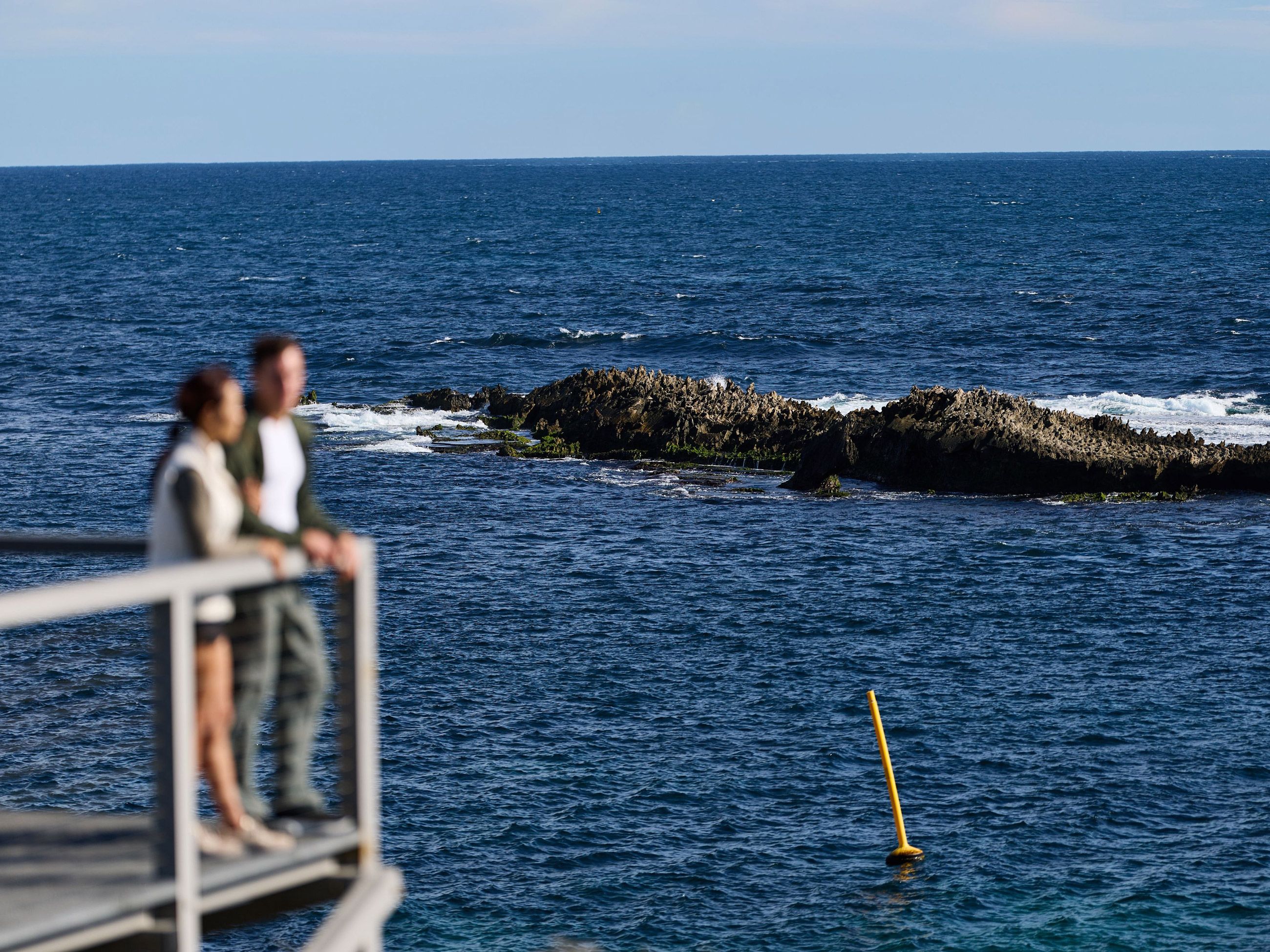
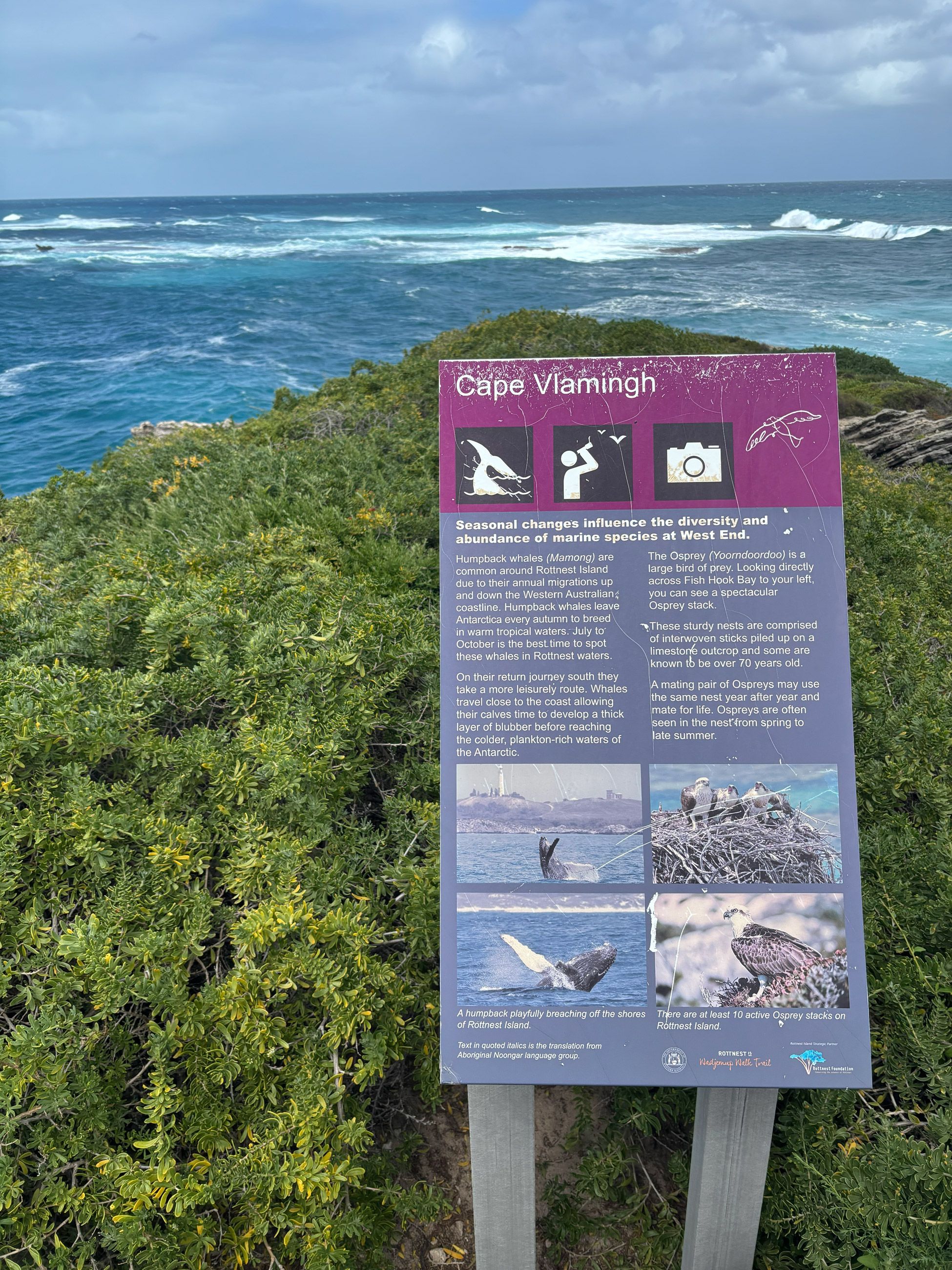
Cape Vlamingh is a great lookout for whale watching.(Credit: Kirsty Petrides)
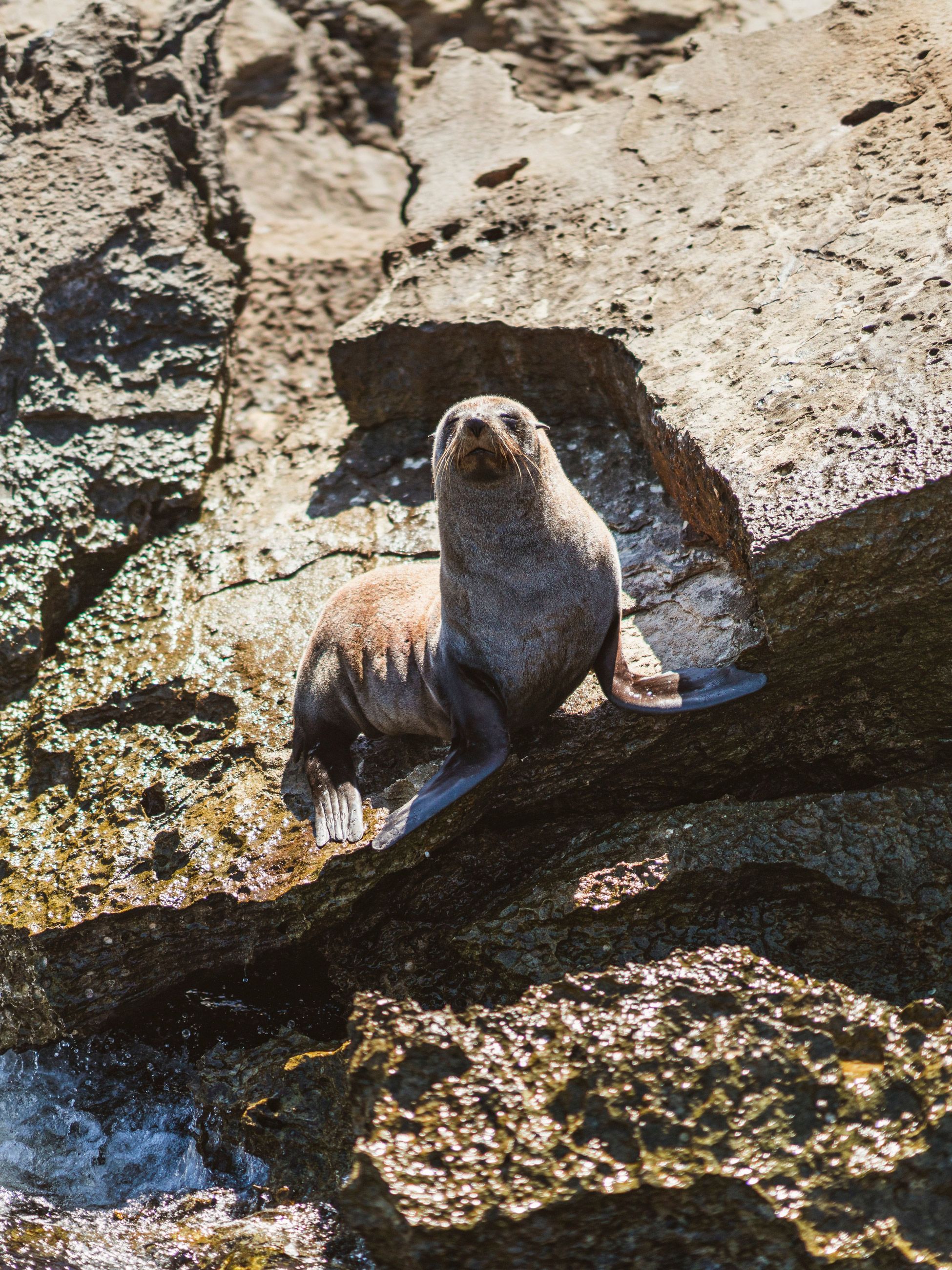
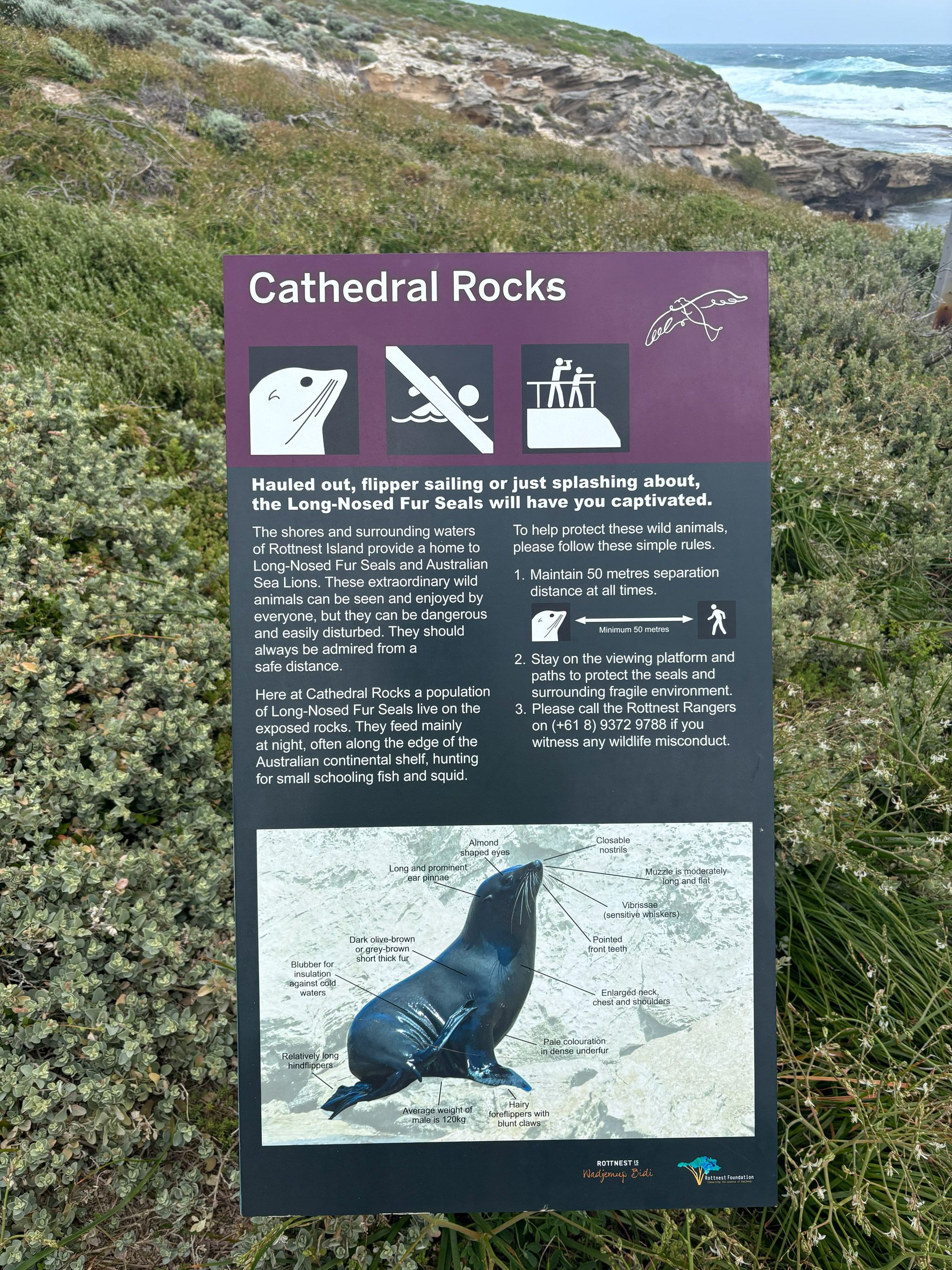
Spot seals sunbathing at Cathedral Rocks. (Credit: Tourism Australia)
Observe the seals from a safe distance. (Credit: Kirsty Petrides)
The whales travel up and down the WA coast annually, but it’s their return journey south from July to October that brings them closest to the island’s shores – the mothers keep their calves near the coastline to build up a layer of blubber before the colder, plankton-rich waters of the Antarctic. By summer, they’re long gone.
At Cape Vlamingh, signs tell you exactly what to look for. We stood at the lookout, eyeing the water intently. Binoculars aren’t necessarily needed; you can definitely spot the humpbacks without them – but a pair would make the experience all the more thrilling.
A short walk away at Cathedral Rocks, a viewing platform overlooks a colony of long-nosed fur seals hauled out on the rocks below (visitors are asked to keep a 50-metre distance, as the seals are wild and easily disturbed). We watched a handful frolicking in the shallows, seemingly fishing for lunch, utterly unbothered by anything except each other.
Need tips, more detail or itinerary ideas tailored to you? Ask AT.
AI Prompt
Hiking the wildflower-laden trails
Rottnest Island has five signposted walking trails collectively known as the Wadjemup Bidi, and the hop-on hop-off bus runs from the main settlement out to the various trailheads. We tackled the Ngank Wen Bidi and a stretch of the Karlinyah Bidi along the island’s northern beaches, and in spring, both are transformed.
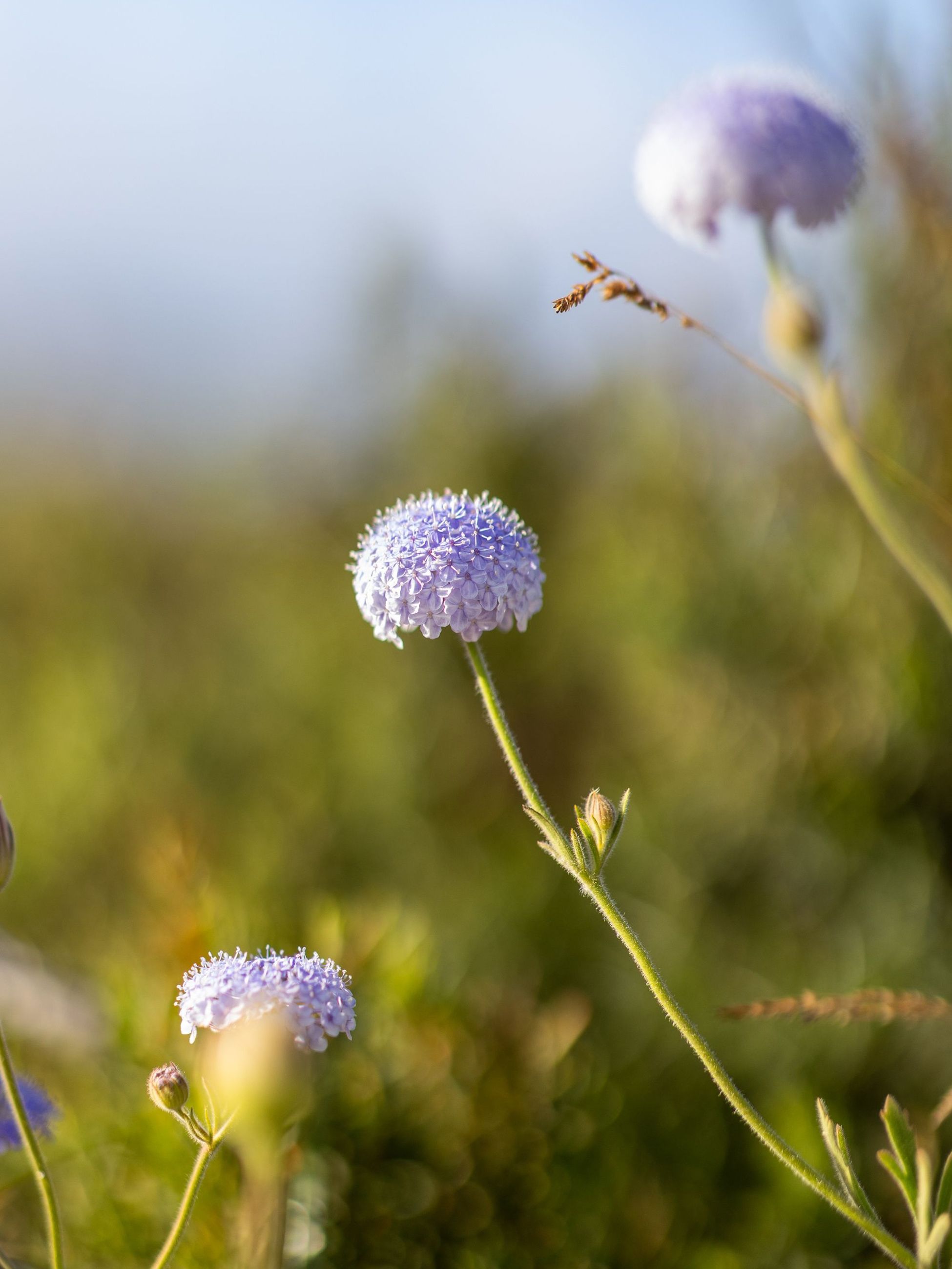
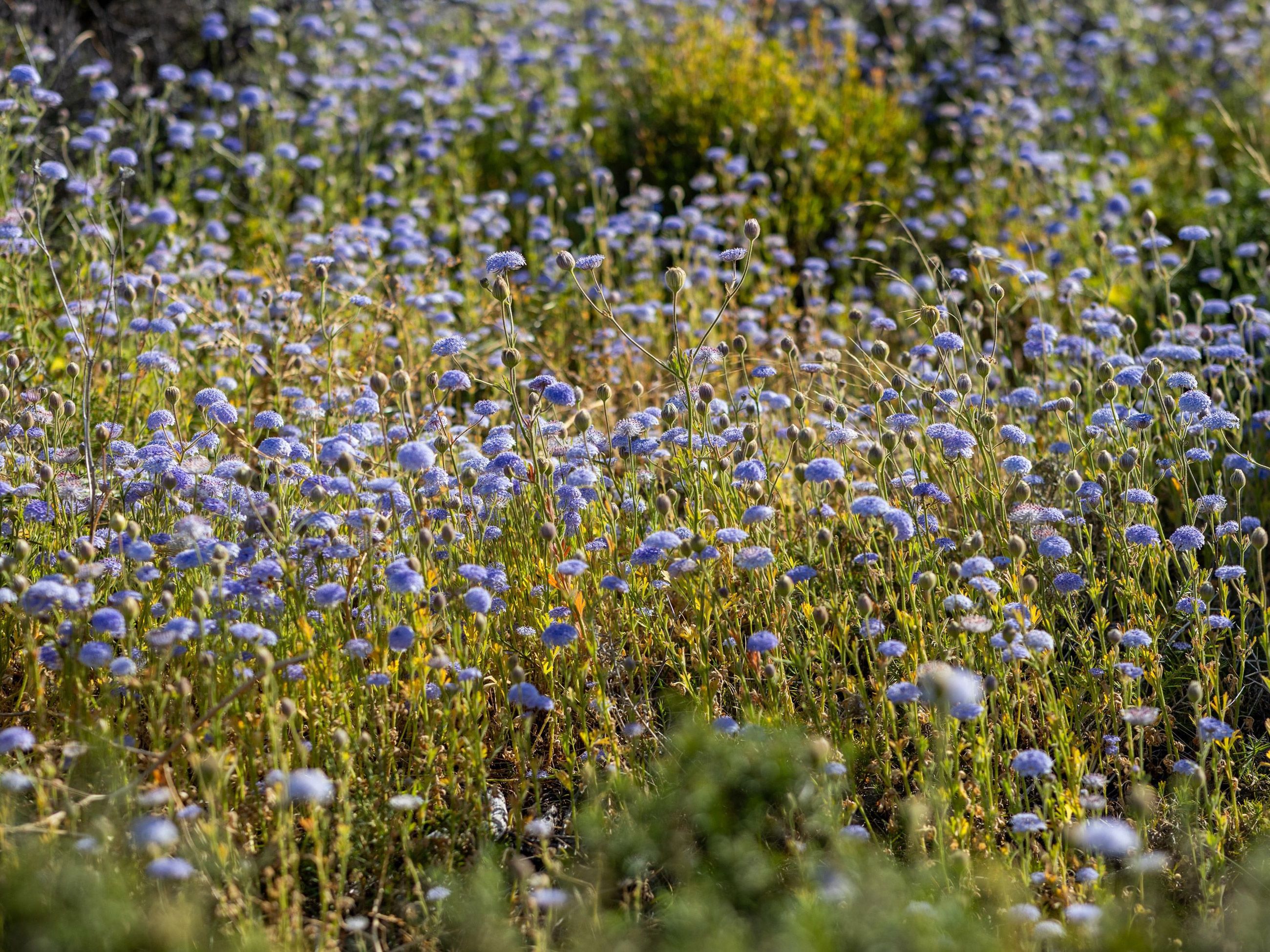
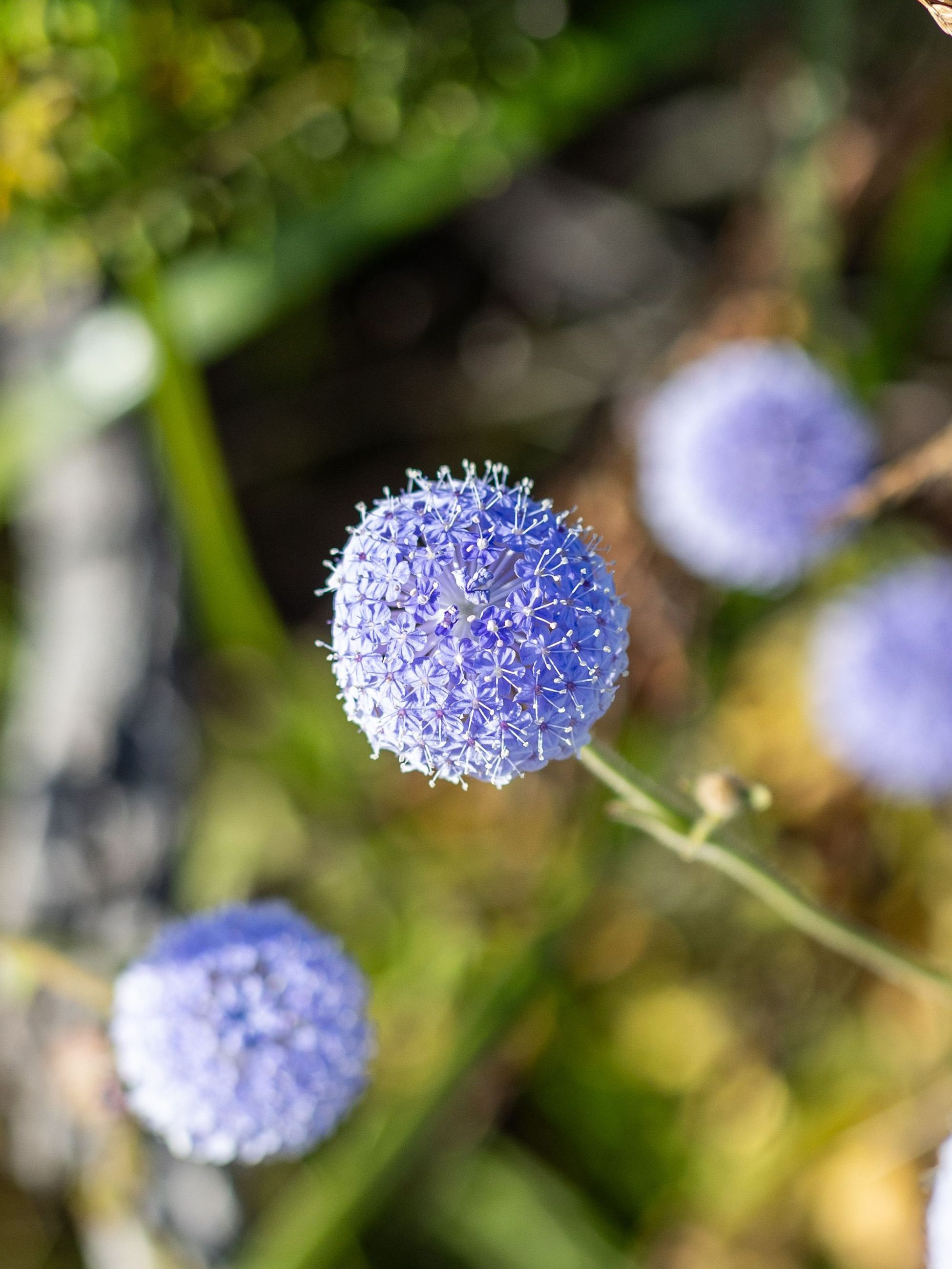
The soft lilac coloured flowers only appear for a short time. (Credit: Rottnest Island Authority)
Fields of Wadjemup Daisy bloom in spring. (Credit: Rottnest Island Authority)
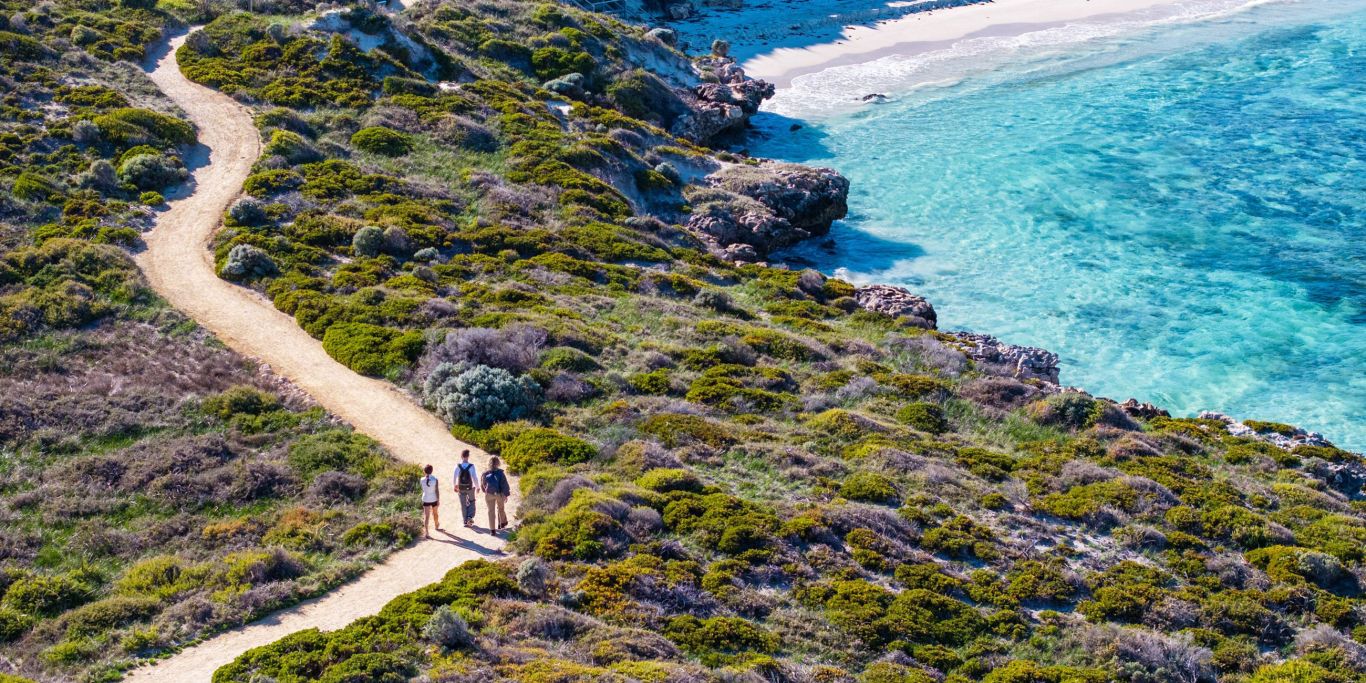
Hiking in the spring delivers cooler climates and wildflowers. (Credit: Rottnest Island Authority)
The scrub either side of the trails is studded with wildflowers, mostly ‘coastal pigface’ (Carpobrotus virescens), a daisy-like flower of vivid fuchsia – the kind of colour that stops you mid-stride. They bloom for a few short weeks each spring before the heat arrives and the colour is gone until next year. It’s not a nicer version of the summer trail; it’s a completely different one.
Sunset at Samphire’s Beach Club bar to yourself
The island isn’t short on great places to stay, but our first pick was Samphire, located right in the main Thompson Bay settlement. It’s a sleek, low-key luxury stay with a decidedly grown-up feel, even though it’s not officially adults-only. It’s the kind of place that makes the case for a slower Rottnest all on its own.
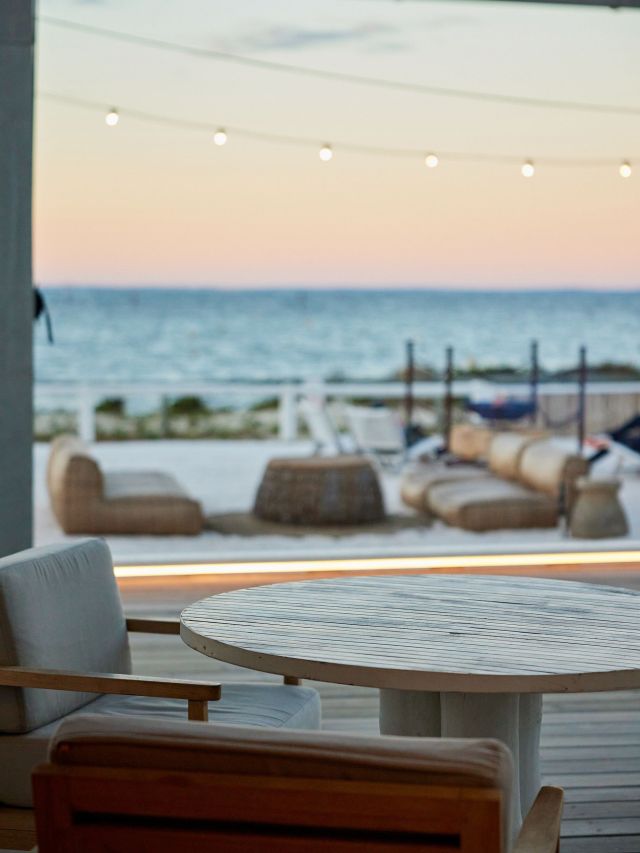
Samphire’s Beach Club bar is the busiest spot at sunset come summertime – but not in spring. (Credit: Rottnest Island Authority)
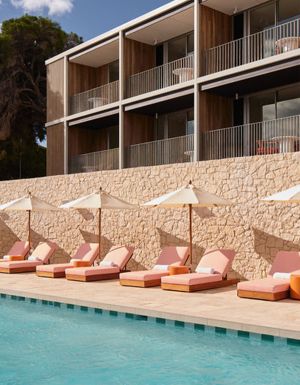
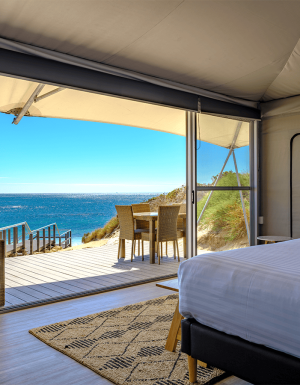
We stayed in one of the Poolside rooms, looking out over Samphire’s lagoon-style pools, with interiors that lean into the island’s raw, rugged landscape: natural textures, muted tones, timber panelling and jute soft furnishings.
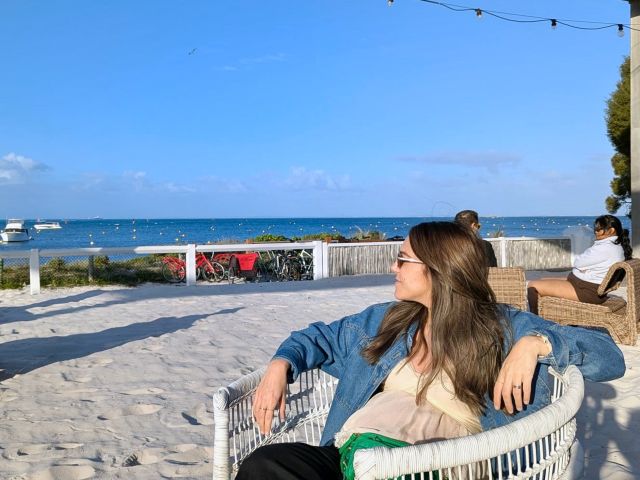
The writer enjoying the Samphire Club, a guests-only lounge. (Credit: Kirsty Petrides)
The Samphire Club, the guests-only lounge stocked with coffee, baked treats and board games, is the perfect way to spend a slow spring afternoon. And the sand-between-your-toes Beach Club bar, usually the busiest spot at sunset come summertime, is all yours to settle into with a drink after a long day of hiking.
Weekly travel news, experiences insider tips, offers, and more.
Rottnest Island dining without the wait
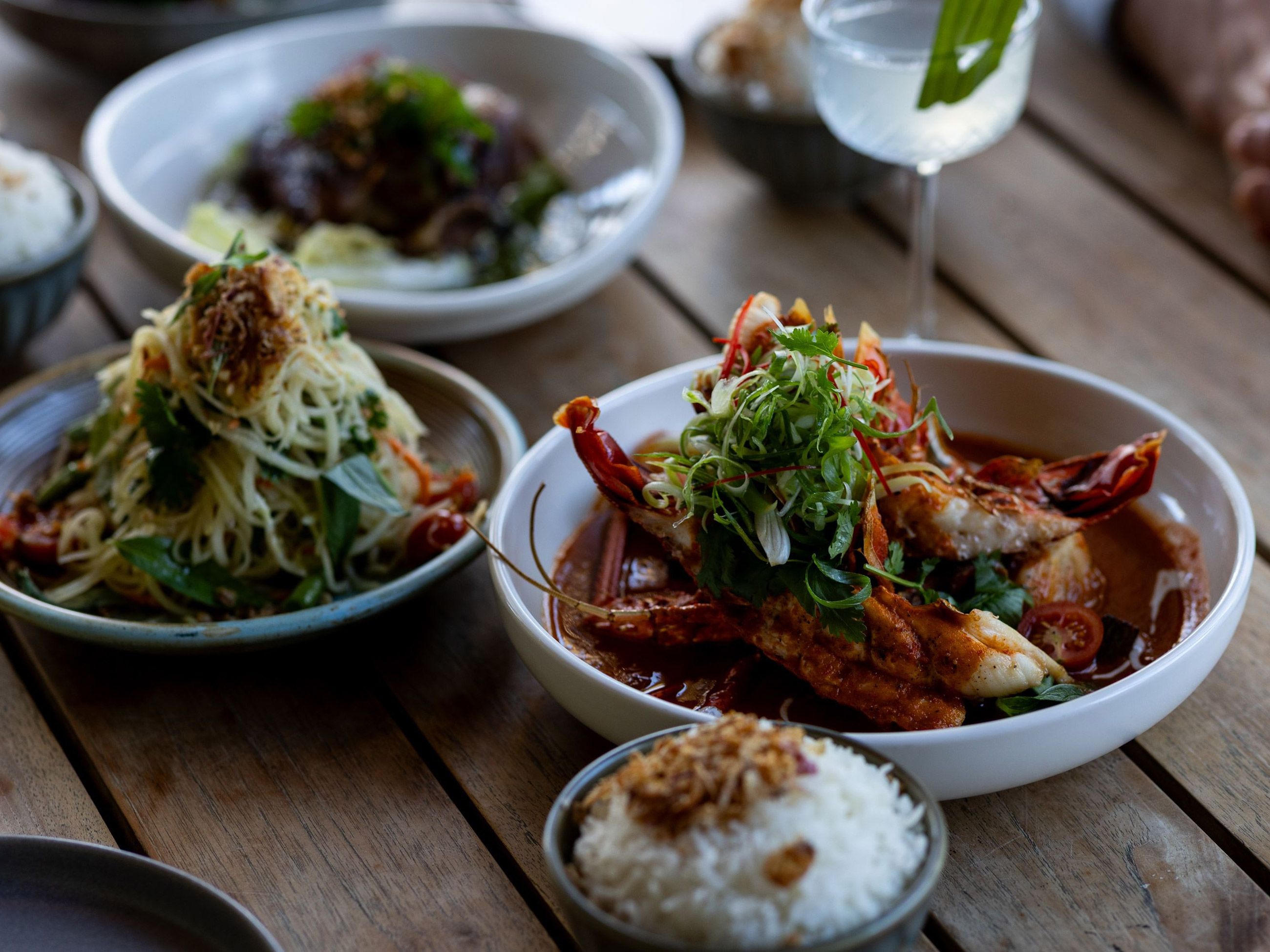
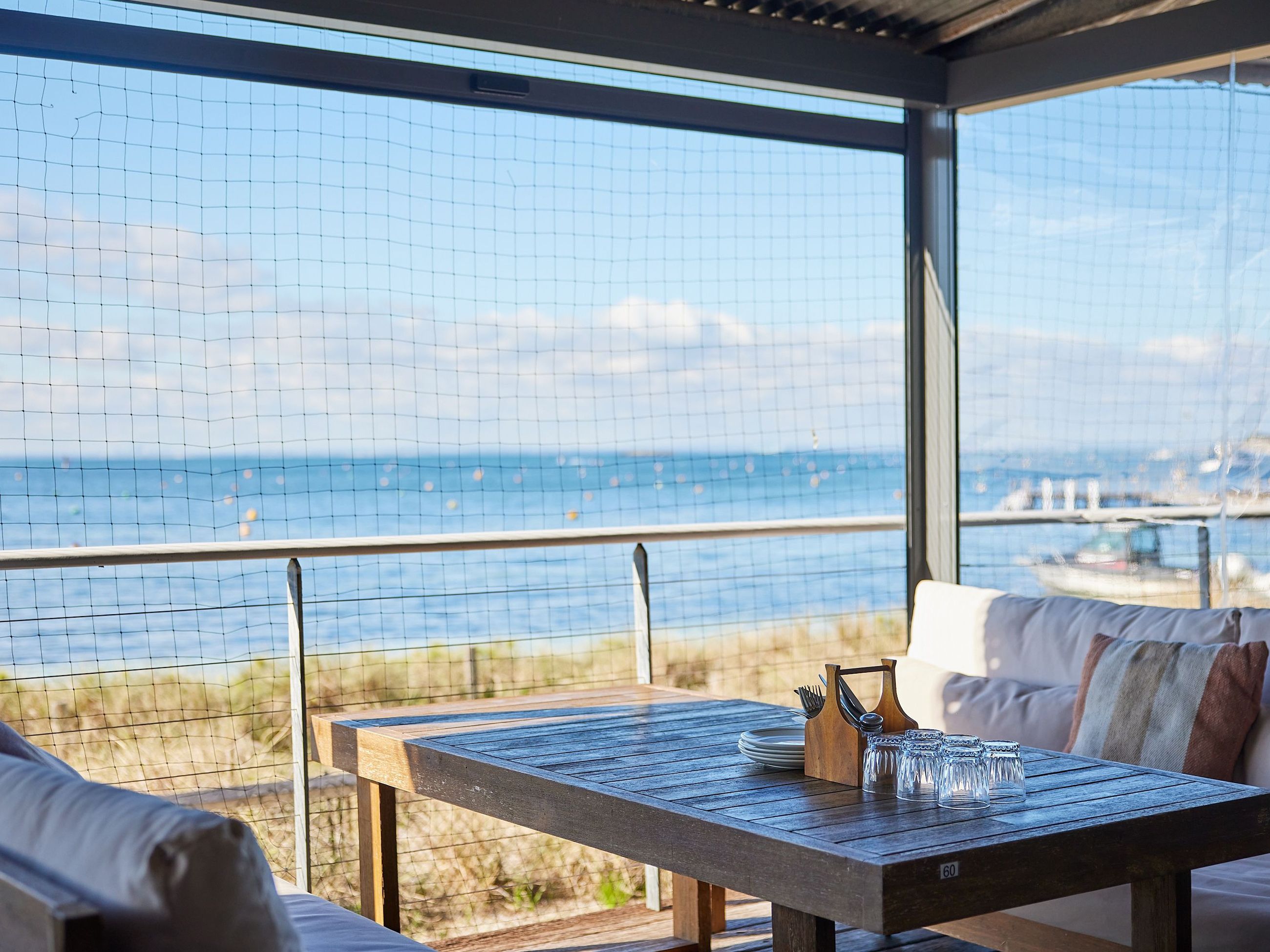
Dinner on night one was at the Samphire’s neighbouring Hotel Rottnest, arguably the most picturesque pub in the state, with every table offering a view of Thompson Bay. The next was at Lontara, Samphire’s in-house restaurant, for confident Asian-fusion cooking with five-star service.
Find Asian-fusion cuisine served at Lontara, Samphire’s in-house restaurant. (Credit: Rottnest Island Authority)
Isola, the island's popular Italian restaurant has knockout water views. (Credit: Rottnest Island Authority)
Order Isola's Taglierini blue swimmer crab pasta. (Credit: Rottnest Island Authority)
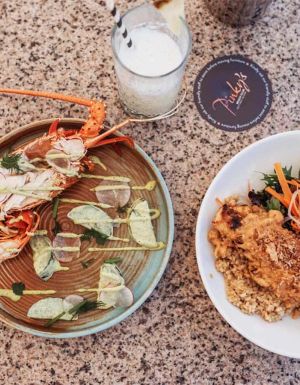
However, if you only eat one meal on Rottnest, make it at Isola, home to some of the best Italian food in WA. For lunch, we got the Taglierini, a traditional long, thin ribbon pasta from northern Italy, tossed with blue swimmer crab, fresh tomato, a hint of chilli, garlic and basil, finished with cream and Great Southern EVOO. Paired with a glass of Italian Vermentino, it’s reason enough to book the ferry. In peak season, it’s the kind of lunch you’d book months in advance. In spring, there’s a real chance you can just walk in.
Why spring, not summer
Hiking in spring means uncrowded trails and cooler weather. (Credit: Rottnest Island Authority)
The case for Rottnest Island in spring: Whales passing the coastline that won’t be there by January. Wildflowers blooming for a few short weeks and then gone. Fewer people jostling for a spot at the bar or a table at dinner. Temperate weather that actually invites you onto the trails rather than off them.
The case against Rottnest Island in summer: Rottnest in summer is exactly as good as everyone says it is, but the drawbacks can’t be overlooked. Rottnest in spring, however, is a version of the island most people have never even thought to visit – and it deserves its moment, too.
Want to see more stories from Australian Traveller in your Google search results?
Tick the box next to "Australian Traveller". That's it.
Kirsty Petrides is a writer, wine-lover and cheese enthusiast. Whether she’s hunting down the best restaurant in Albania, foraging the Marrakech markets for spices or camping in the middle of Patagonian wilderness, she loves to seek out the authentic side of the places she visits, and share that with readers through her writing.
Trade early morning phone alarms and city chaos for bucolic serenity and gastronomic delights.
Peaceful birdsong and coastal winds meet rolling green hills and turquoise waters; there’s no better place to start your day than in Western Australia’s Denmark. This picturesque coastal town, a 4.5-hour drive from Perth along the pristine Rainbow Coast, offers bucolic bliss in spades.
A hidden retreat lies just a 10-minute drive from the town centre, inviting guests to slow down and connect with nature. At Heyscape Denmark, the ultimate refuge from the rat race and the perfect setting for a rural escape await.
Whether it’s for a refreshing weekend away or a regenerative week-long sojourn, this idyllic pocket of the world will leave you feeling anew.
Where to stay
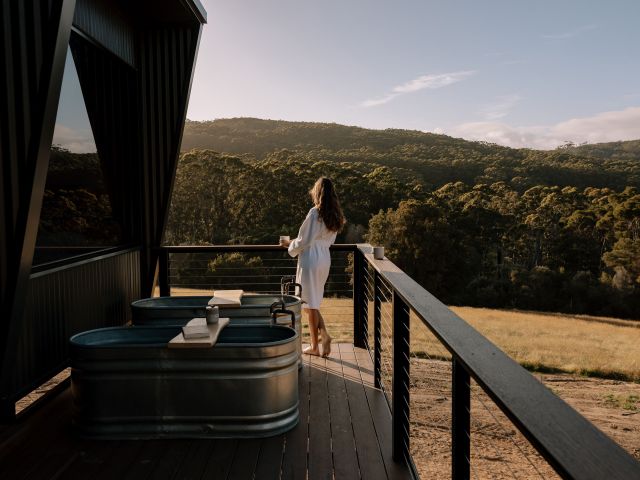
Make the most of outdoor baths. (Credit: Jarrad Seng)
Located on the 880-acre Raintree Estate, Heyscape Denmark is an award-winning, off-grid cabin retreat ideal for anyone craving time in nature while also enjoying sustainable, luxury comfort. Just 15 are sensitively embedded in the rural environment, ensuring privacy and the perfect setting to switch off. Choose from one-bedroom, two-bedroom or 4-person cabins. Four-legged friends can also join in on the fun with pet-friendly cabins available.
Check in, to check out.
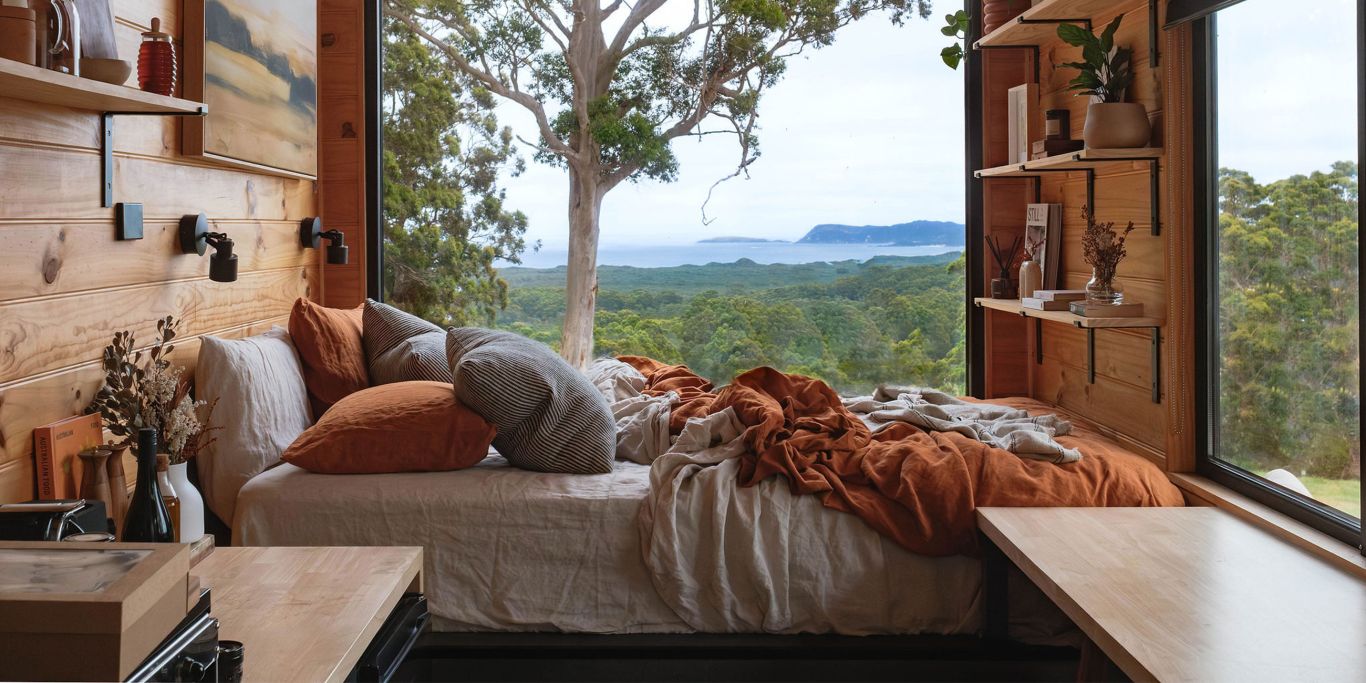
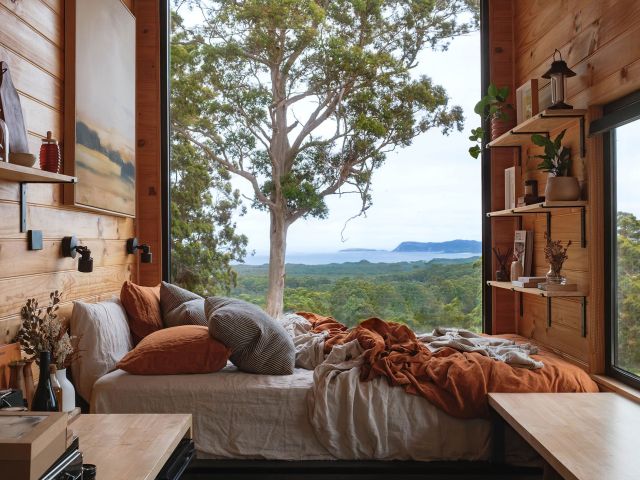
The modern accommodations are well-appointed with queen beds dressed in lush linen and pillows; a bathroom with a warm shower, flushable toilet and botanical shampoo and conditioner; and an indoor kitchenette with a Nespresso coffee maker. Outside, find timber decks with seating to spot resident kangaroos from, Heston Blumenthal barbecues for whipping up delicious meals using local produce, and outdoor baths to soak up incredible nighttime skies – Denmark’s lack of light pollution makes it an exceptional spot for stargazing and viewing the Milky Way. Floor-to-ceiling windows frame sweeping Great Southern Ocean, William Bay National Park and Karri tree views.
Wellness is at the forefront of Heyscape Denmark with thoughtful touches including Note to Self prompts, gratitude cards and a botanical sleep spray ready to help you unwind. And for the ultimate weekend of R&R, two-bedroom cabins are fitted with saunas.
Where to eat
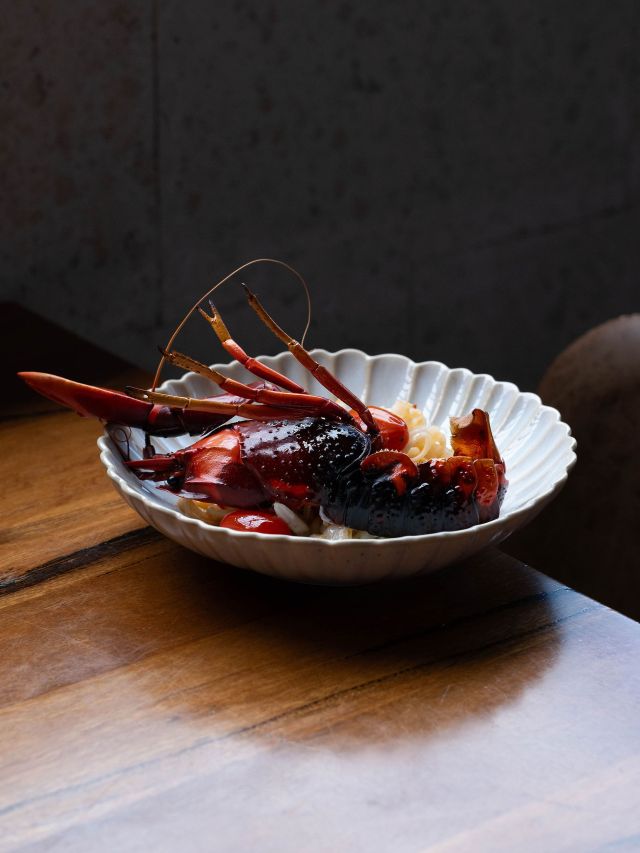
Catch your own freshwater crayfish, then have a chef prepare it for you.
The Great Southern region’s Mediterranean climate and nutrient-rich soils make for some of the most incredible produce in the world – and a stay at Heyscape Denmark lets you sample the very best of it. The estate farms over 200 black Angus cattle, marron – a freshwater crayfish endemic to the South-West of Western Australia –, hemp and French black truffle.
Just steps from these cabins sits the estate’s paddock-to-plate restaurant, The Dam. Featuring lofty jarrah ceilings, polished concrete and expansive windows revealing calming dam views, it’s a stunning spot for lunch or dinner, alongside an outdoor playground to keep little ones happy and busy.
Acclaimed chef Jason Jujnovich utilises ingredients from Raintree Estate’s regenerative farm in his hyper-local, Modern Australian menu. Seasonally changing dishes include the likes of wagyu beef lasagna and pistachio crumbed chicken cotoletta. Or join in for pizza night on a Friday, where the mushroom and truffle pizza is an easy winner.
Meals are designed to be paired with sips from the property’s innovative Cannabis Botanical Distillery, which concocts house-made hemp spirits and seltzers using ingredients grown onsite. Taste unique drops such as the Sativa Gin with warm citrus and pepper notes and the Pineapple Passion seltzer.
Another stand-out gastronomic offering is Heyscape’s Marron Catch & Cook Experience, which lets you hand-catch freshwater crayfish from the property’s pristine dams and have them prepared and cooked to perfection for you by chefs. Those wanting to enjoy a meal from the comfort of their cabin can fire up the barbecue and grill their fresh catch or order a gourmet dinner box with mouthwatering wagyu steak and antipasti against golden peaceful sunset views.
Things to do
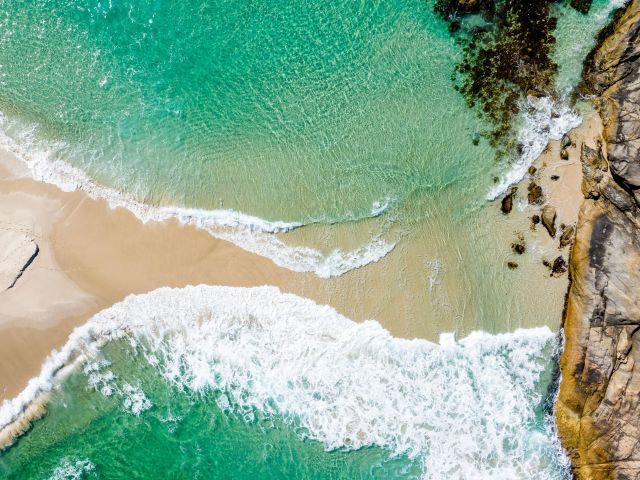
Spend a day enjoying the idyllic Lights Beach. (Credit: Tourism WA)
There’s no shortage of things to do in Denmark, and basing yourself at Heyscape Denmark puts you within easy access to it all. Nature lovers are spoiled with unbeatable spots for swimming and snorkelling, plus coastal hiking trails at William Bay National Park – a protected coastal reserve with approximately 1734 hectares of stunning landscapes ready to be explored.
Hire an e-bike from the property and cycle just 15 minutes to the unbelievably clear waters and white sands of Greens Pools, a naturally sheltered beach. Or the idyllic Lights Beach, which features three beaches, dunes, natural wading pool and scenic walking trails. Keen surfers should turn their attention to Ocean Beach with its world-class surf breaks.
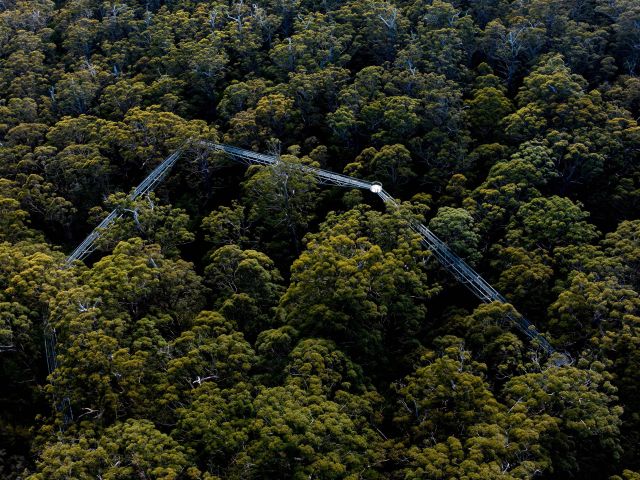
Wander the Valley of the Giants Tree Top Walk. (Credit: Tourism WA)
Stroll past towering Karri and giant Red Tingle trees on the Valley of the Giants Tree Top Walk. The 600-metre walkway rises 40 metres above the ancient forest floor and meanders through the hardwood trees, endemic exclusively to the Great Southern region.
Denmark is also a haven for creatives, and Butter Factory Studios is a must-stop on any itinerary. The contemporary art gallery, working artist studio and gift shop are housed within a historic building where workshops and exhibitions support and showcase creators from the region.
With the winning trifecta of delicious food, a pristine environment, and secluded accommodation, Denmark proves to be the ultimate destination for relaxation.