Hiking the serpentine trails of Wadjemup Bidi on Rottnest Island

hero media
They’re cute, they’re cuddly and they even smile for the camera, but quokkas are far from the only attraction on Rottnest Island.

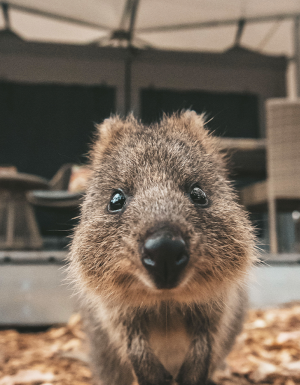
There’s a man on the floor, contorting himself at strange angles under a pub table. It would be an alarming sight anywhere else, but on Wadjemup/Rottnest Island you get accustomed to people pulling questionable moves in pursuit of that prized holiday souvenir: a quokka selfie. The fuzzy marsupials reign ‘Rotto’, as WA locals fondly refer to it, and yes, their fathomless eyes and cheesy grins are irresistible. But I suspect their spell may also be Machiavellian: perhaps their charms are purposefully deployed to distract from Rottnest’s other natural beauties?
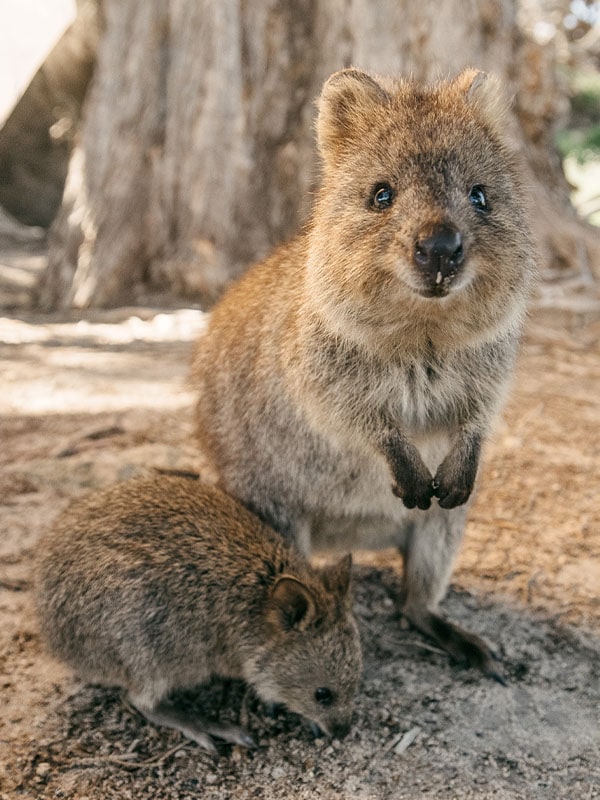
Quokka in Rottnest Island, Western Australia
Resist the urge to pat a quokka. (Image: Tourism Western Australia)

Being a seasoned Rotto fan, I’m all but immune to the ways of the quokka. I raise my eyebrows at a seagull, who’s also (fruitlessly) posing inside the glass at the beach-facing Hotel Rottnest. We share a look that says, “Aren’t humans nuts?" This trip, I’m swapping selfies for car-free Rottnest’s serpentine walking trails that trace some 45 kilometres of barely peopled parts of Wadjemup – the Whadjuk Noongar name for the island.

Hiking the trails of Wadjemup Bidi

The low-impact Wadjemup Bidi – bidi meaning track – is split into five sections that roam along sandy beaches and tranquil lagoons, push up scrubby hills to lighthouses and lookouts, and weave around scratchy rocks with views of fur seals, whales and dolphins.

It’s impressive, packing that much trail into an island only 11 kilometres long, not least because its creation came after significant cultural collaboration. I’m tackling the 9.7-kilometre Gabbi Karniny Bidi leg, which takes in samphire heaths, arching woodlands and boardwalks seeming to levitate over pancake-flat salt lakes. I could do it alone, but local experts The Hike Collective has guided options, so I join a small group of enthusiastic explorers.

Quietly launched in 2018, the trail is still very much under the radar. We see less than a handful of other souls on our four-hour journey. Lissa Rossetti leads the way. Once a home economics assistant, she says a health scare led to an epiphany and hiking was the answer. “I watched an indie film on the Camino Trail in Spain and came out and said, ‘I think I need to walk’," she says. “When I’m in nature, I connect with it. I say hello to the birds and I whisper to the wind."
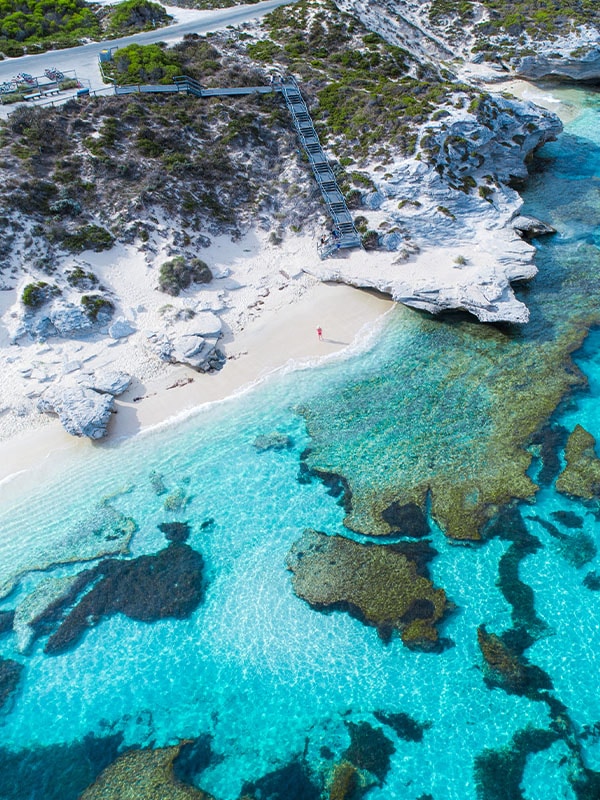
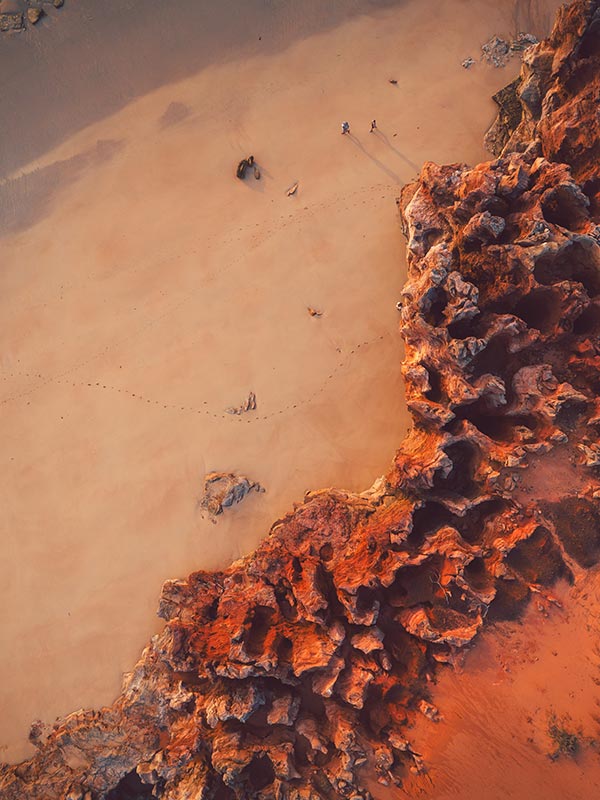
Henrietta Rocks, Rottnest Island, Western Australia
Walking the beach next to turquoise waters at Henrietta Rocks. (Image: Tourism Western Australia)

Learn the island’s history

It’s a poetic introduction as we puff up a steep rise, rewarded with a periphery-pushing outlook of the island’s untrammelled interior. A monument details the island’s early visitors, Dutch navigators who came, saw and departed. “The first sailors reported good woodland and lots of bush cats," says Lissa. “Then, in 1696, Willem de Vlamingh and his crew stopped in. They said it was full of rats and faeces and ‘Let’s get out of here’."

The rats, as you’ve probably guessed, were actually quokkas, but the name stuck and Rottnest it is today. But well before then – artefacts suggest at least 27,000 years back – Aboriginal people walked these lands. Even after its separation from the mainland about 7000 years ago, the connection is strong. “Aboriginal culture believes Wadjemup is a place of transition between the physical and the spiritual world," says Lissa, as we move through low coastal scrub where scents waft from grassy to saline and sugary honey blossom. “Once someone has died, their spirit comes to the island, then it’s taken by whales to its final resting place." In keeping, the word Wadjemup translates to ‘place across the water where the spirits are’.
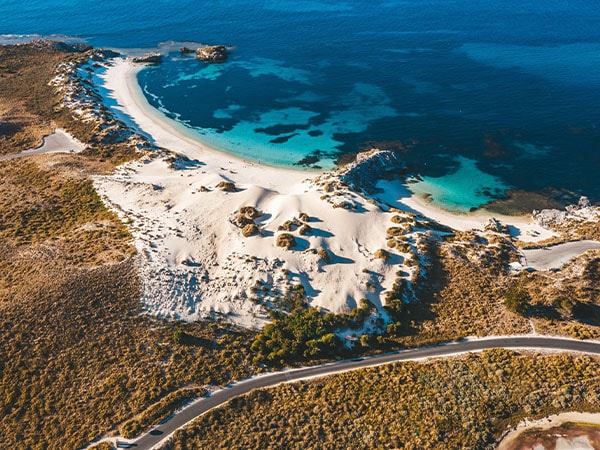
Rottnest Island, Western Australia
Heighten your appreciation for Wadjemup/Rottnest Island by going on an eco-friendly tour. (Image: Tourism Western Australia)

We take a lake-rim boardwalk that’s made from single-use plastic bags, one of many sustainability efforts incorporated into the Class A nature reserve. Within view is a wind turbine generating green energy – part of a plan to have renewables power 75 per cent of the island’s energy needs. Even the trail’s signposts are fashioned from recycled waste.

See Wadjemup Lighthouse

We reach Wadjemup Lighthouse , perched at the island’s highest point and pause for breath before staggering to Signal Ridge. During the Second World War, the Women’s Royal Australian Naval Service would relay light-flashed messages from surrounding vessels to the mainland. Rottnest was twice transformed into a defence base during global wartimes; historical army barracks and guns can still be seen today.
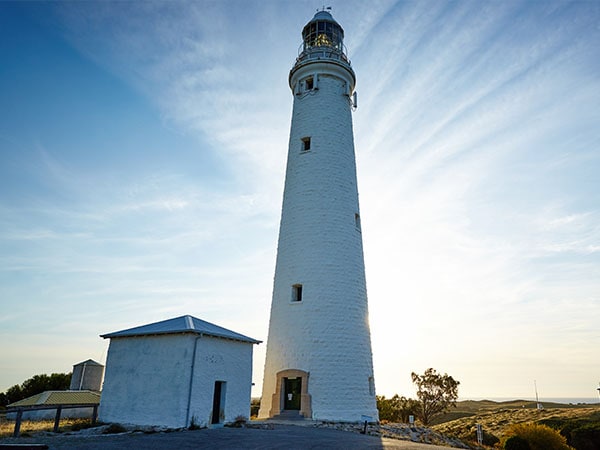
Rottnest Island, Western Australia
There are incredible views to be had when walking to locations such as Wadjemup Lighthouse. (Image: Tourism Western Australia)

Cool off at pretty beaches and bays

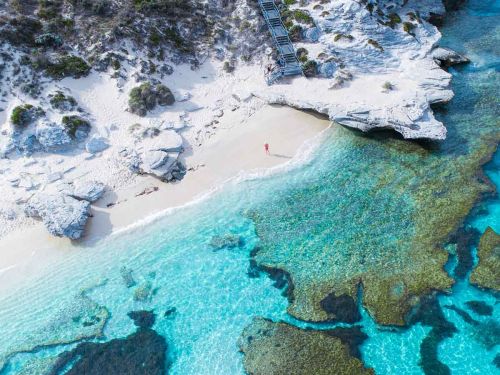
With our calf muscles enjoying the descent, we take a bend towards what I reckon is Rottnest’s most idyllic beach – and there are 63 to choose from. Little Parakeet Bay is a secluded pocket edged with limestone cliffs in tones of grey and ivory that plunge towards pale sands. Our coastal route leads to other little finds – bijou bays I’ve never laid eyes on – and I mentally bookmark them for future dips.
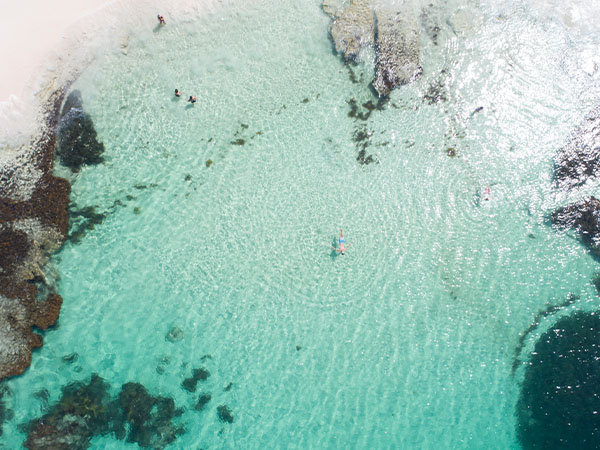
Parakeet Bay, Rottnest Island, Western Australia
Postcard-pretty Little Parakeet Bay. (Image: Tourism Western Australia)

Retreat to Samphire Rottnest

I’m feeling very much in holiday mode by the time we return to the main settlement, Thomson Bay (named after the island’s first European residents who arrived in 1831, Robert Thomson, his wife and eight of their 12 children). Perth’s CBD skyline sits on the horizon, hazy across the ocean. “The tranquillity of Rotto is what I love," says Lissa. “Sometimes you only have a night here and you get that rested feeling. It’s a place of restart, of refresh."

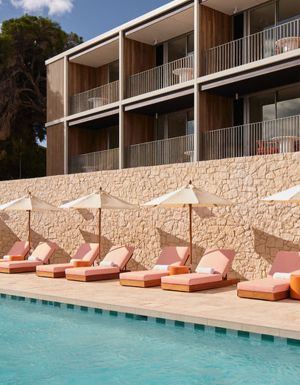
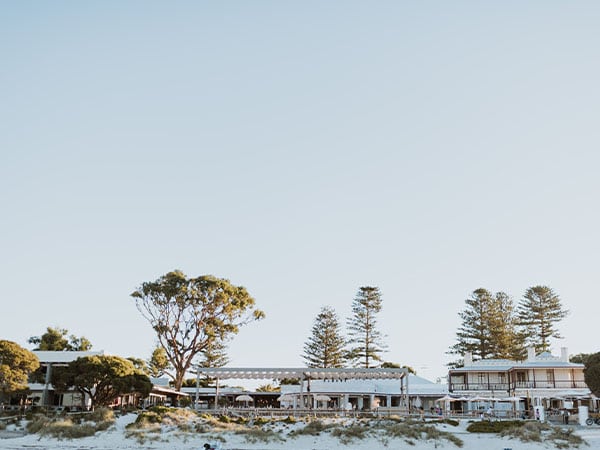
It seems as good an excuse as any for a pick-me-up nap, after I retreat to the balcony of my room at the island’s newest accommodation, Samphire Rottnest . Following a rocky opening in 2020, the coastal-glam resort has settled into its skin. Dressed in beach tones, airy rooms are lulled by bubbling pool sounds below, with native plant gardens and retained mature trees hugging the day beds and cabanas. Its mod-Asian restaurant Lontara is so good people ferry across just to dine there (and hey, it’s only a 19-kilometre jaunt).

I rise at dawn for a jog which, like eschewing the quokkas, is a very un-Rottnest thing to do. I circle around a tall woodland that holds the graves of hundreds of Aboriginal people: leaders, warriors and lawmen who had been sent to the island’s penal settlement for about 100 years from the late 1830s. Put to hard labour, they built stone walls and colonial buildings, yet many never made it home. I pay my respects to the souls laid here, one of 17 protected Aboriginal heritage sites.

I cool off with a plunge into Samphire’s pool, then whoosh, onto the ferry with a renewed bounce in my step, marvelling at what a difference only 24 hours on Rottnest Island can make – even without a quokka selfie.
Samphire Rottnest Island Western Australia
Stay at Samphire Rottnest. (Image: Jillian McHugh)

Conscious Traveller tip

Rottnest Island may well be WA’s most sustainable place. As the only EarthCheck Certified Sustainable Destination in the state, the solar and wind-powered holiday isle (which also produces its own desalinated water) has just committed $62 million to upgrade its water and energy infrastructure. With plans to double the existing solar farm’s capacity and expand wind turbine power, it’s projected some 4000 tonnes of carbon emissions will be cut each year.
Cycling Trail, Rottnest Island, Western Australia
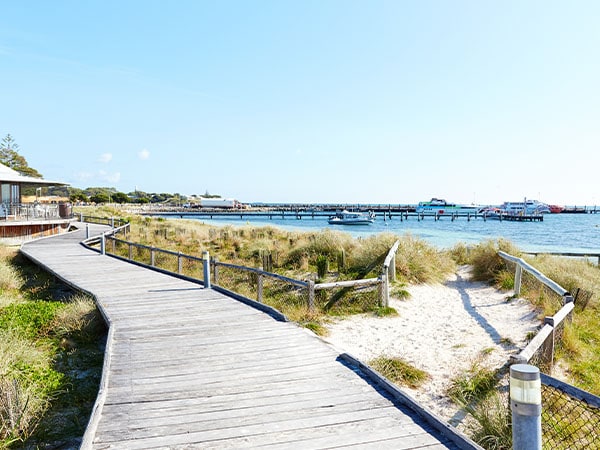
Rottnest Island has a wonderful network of walking and cycling trails. (Image: Tourism Western Australia)
Fleur Bainger
Fleur Bainger is a freelance travel writer and journalism mentor who has been contributing to Australian Traveller since 2009! The thrill of discovering new, hidden and surprising things is what ignites her. She gets a buzz from sharing these adventures with readers, so their travels can be equally transformative.
See all articles
hero media

7 Kimberley experiences that need to be on your bucket list

From thundering waterfalls to ancient Indigenous art, Kimberley’s raw beauty will take your breath away.

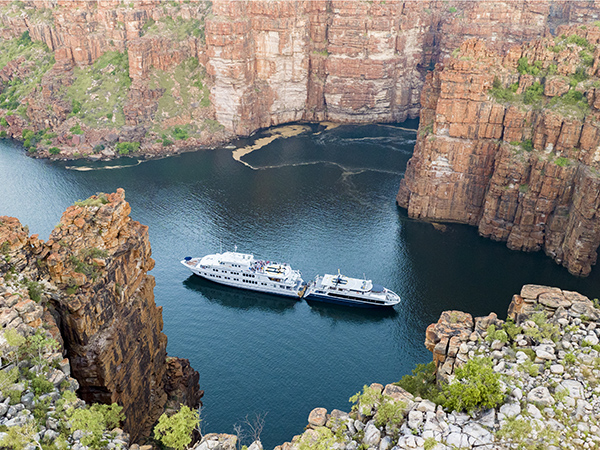
Wild, pristine, and shaped by nature, the Kimberley Coast is one of Australia’s most spectacular landscapes. A remote and rugged frontier that remains a bucket list destination for many travellers. Its most breathtaking attractions – including Montgomery Reef, King George Falls and Horizontal Falls – are accessible only by sea or air, making a guided expedition cruise aboard Silversea’s luxury expedition ship, Silver Cloud, the ideal way to explore it.

From its intricate intertidal zones to ancient rock art, extreme tides and rare wildlife found nowhere else in Australia – or the world – this journey offers an unparalleled exploration of one of Earth’s last true wildernesses.

Why Silversea?

Silversea offers a 10-day expedition departing Broome, or an extended 16-day expedition voyage from Indonesia, including landings on the hidden gems of Palopo Sulawesi and Komodo. Accompanied by expert guides and specialists in marine biology, history and geology, guests gain a deeper understanding of the Kimberley’s dramatic landscapes, rich cultural heritage and extraordinary biodiversity.

Silversea offers one of the experiential travel industry’s leading crew-to-guest ratios. Along with all-suite accommodation (80 per cent with private verandah), 24-hour butler service, a swimming pool and four dining options. Silver Cloud also has an experienced crew of multilingual expedition guides and specialists in marine biology, history and geology to enhance your Kimberley Experience.

silversea cruise ship pool deck
Take a dip in the pool deck.

1. Koolama Bay

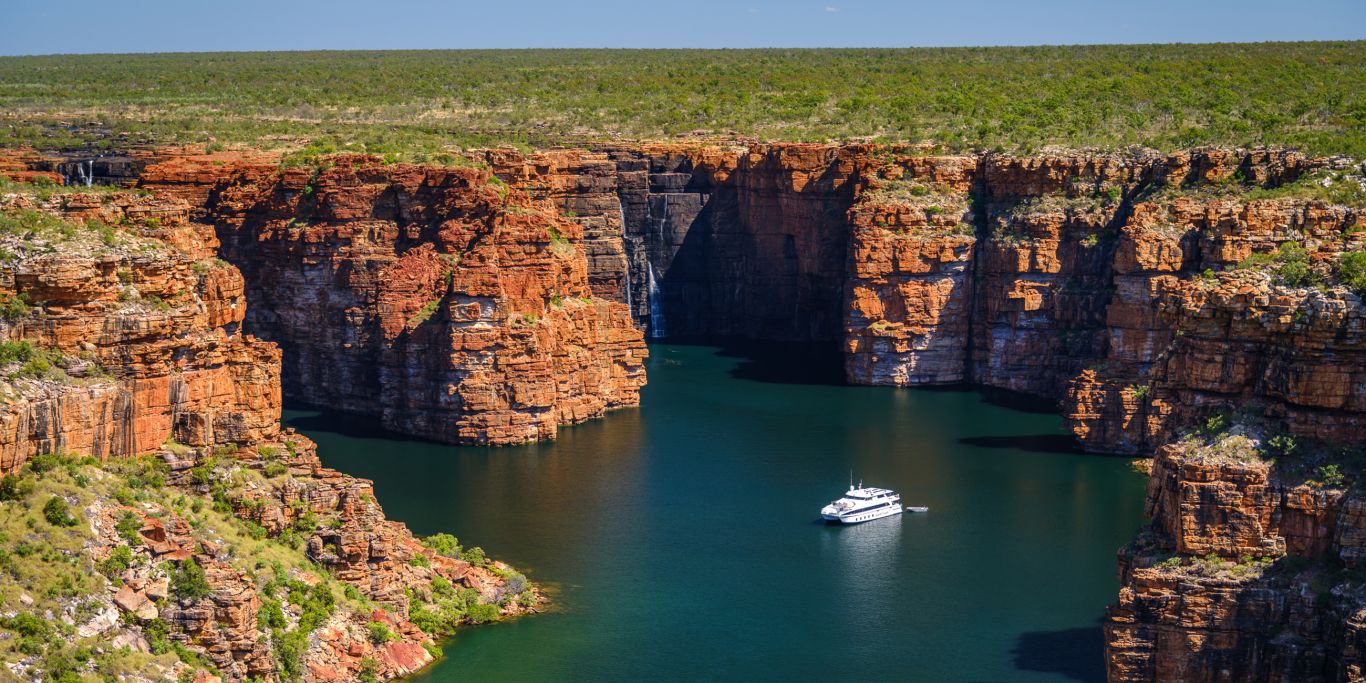
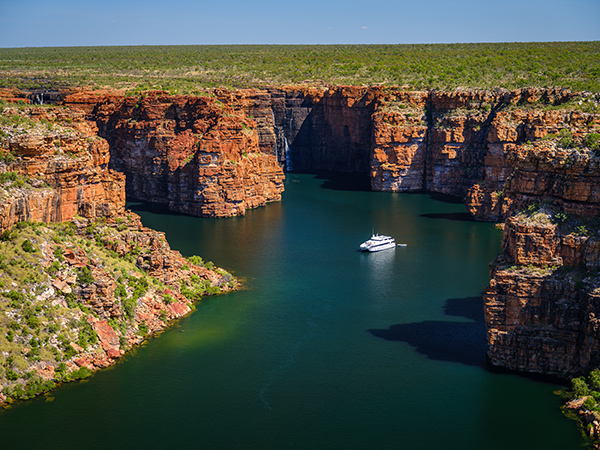
​​Before visitors see King George Falls, they hear them – a growing rumble in the distance, steady and foreboding as the Zodiac glides through the gorge, the sound echoing off sheer rock formations. At 80 meters tall, the twin cascades carve through the red cliffs, churning the waters below in a spectacular finale – but Koolama Bay holds secrets beyond its striking scenery.

Named after a ship that beached here following an aerial attack by Japanese bombers in World War II, the bay may seem desolate, yet it teems with life. With Silversea’s expert guides on their 10-day Kimberley itinerary, guests gain a sharper eye for its hidden wonders – rock wallabies darting across the cliffs, crocodiles lurking among dense green mangroves, and high above, the silhouette of a bird of prey circling the sky.

King George Falls at koolama bay excursion on Silversea Kimberley Cruise
Take a shore excursion to see King George Falls.

2. Freshwater Cove / Wijingarra Butt Butt

Connect with Country on a wet landing at Freshwater Cove, also known as Wijingarra Butt Butt. Considered one of the most special experiences on both the 16-day and 10-day Kimberley cruises, Silversea guests are welcomed by the traditional Indigenous custodians of the land, painted with traditional ochre, and invited to take part in a smoking ceremony.

Located on the mainland near Montgomery Reef, Wijingarra Butt Butt holds deep cultural significance to the local Indigenous community. Here, rock formations along the shore represent spiritual ancestors, and guests are guided to a nearby rock overhang filled with ancient art, where traditional owners share the stories and meaning behind these sacred paintings.

welcome to country on freshwater cove during silversea kimberley cruise
Take part in a smoking ceremony. (Image: Tim Faircloth)

3. Vansittart Bay (Jar Island)

Modern history, ancient culture and mystery converge in Vansittart Bay, which is also known as Jar Island. Here, the first thing to catch the eye is the dented, silver fuselage of a World War II-era C-53 plane – a striking relic of the past. Yet, the true cultural treasures lie just a short hike away where two distinct styles of Indigenous rock art – Gwion Gwion and Wandjina – can be found.

The Wandjina figures, deeply connected to Indigenous traditions, stand in stark contrast to the enigmatic Gwion Gwion (Bradshaw) paintings, which date back more than 12,000 years. Significantly different in form and style, the two different styles create a striking juxtaposition, offering a rare glimpse into the region’s rich and complex past.

aerial view of Vansittart Bay, See it in you Silversea Kimberley Cruise.
Explore ancient Gwion Gwion rock art at Vansittart Bay. (Image: Janelle Lugge)

4. Horizontal Falls

Part illusion, part natural phenomenon, the Kimberley’s much-lauded Horizontal Falls aren’t a waterfall, but a tidal and geographic spectacle that visitors have to see to comprehend. Known as Garaanngaddim, the phenomenon occurs when seawater rushes through two narrow gaps- one just twenty metres wide, and the other seven metres in width, between the escarpments of Talbot Bay.

With each tidal shift,  the force of the water creates whirlpools, furious currents and the illusion of a horizontal cascade as thousands of gallons of water are pushed and pulled in through the gap every six hours with relentless movement, making this one of the Kimberley ’s most mesmerising natural wonders.

Horizontal Falls are described as "One of the greatest wonders of the natural world". They are formed from a break in-between the McLarty Ranges reaching up to 25m in width. The natural phenomenon is created as seawater builds up faster on one side of the gaps than the other, creating a waterfall up to 5m high on a King tide.
Watch whirlpools and furious currents collide. (Image: Janelle Lugge)

5. Montgomery Reef

As the tide turns in Montgomery Reef, magic happens. With the Kimberley’s legendary tides varying up to ten metres, at low tide the submerged reef almost appears to rise from the depths: exposing up to four metres of the sandstone reef.

The impact is otherworldly: as the water drains, waterfalls cascade on either side of the channel,  turtles left exposed scramble and dive, and fish leap in search of sanctuary in shallow pools. Meanwhile, the dinner bell rings for the migratory seabirds dugongs, reef sharks and dolphins that scavenge and feast in the area.

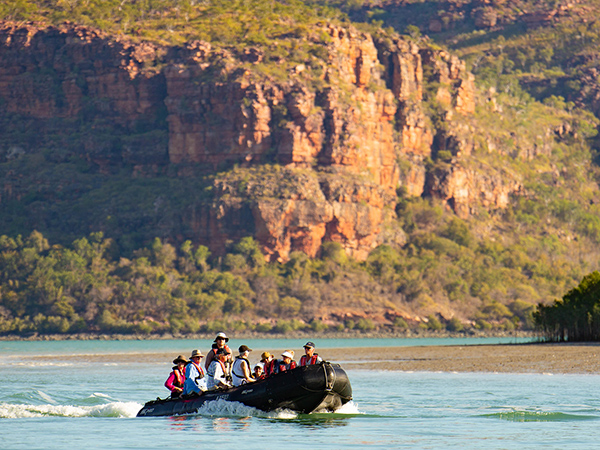
Using zodiacs, guests cruise through one of the world’s most significant inshore reef systems navigated by experienced guides, exploring the most intricate and fascinating parts of a 300-square-kilometre-wide biodiversity hotspot.

aerial view of boat going along Montgomery Reef
Witness seabirds, dolphins and reef sharks on the hunt.

6. Mitchell Falls by Helicopter

Experiencing the Kimberley by sea allows you to feel the power of the tides, but travelling by helicopter reveals the sandstone tapestry of the Kimberley, a landscape geologists believe is over 1.8 billion years old.

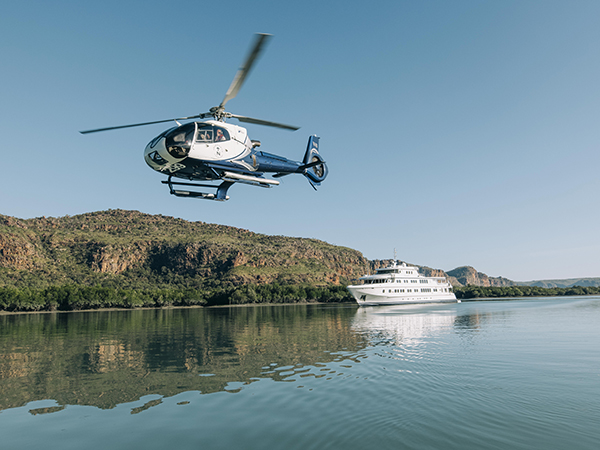
One of Silversea’s most popular optional excursions , guests who opt to fly into the interior from the onboard helipad soar up above the rust-coloured landscape of the Mitchell plateau, taking in one of Australia’s most scenic waterfalls: Mitchell Falls, a series of four emerald-coloured pools gently cascades into each other, before plunging down to the river below.

Seeing the landscape from above reveals a landscape weaved and shaped by the power of the freshwater wet season, juxtaposed to the constant lapping of the relentless and powerful tide on the coast.

aerial view of mitchell falls on silversea helicopter excursion
See emerald pools cascade into the river below. (Image: Tim Faircloth)

7. Indigenous Art Caves, Wandjina Art

The Kimberley Region of Western Australia is home to some of the most striking and significant

Indigenous rock art in Australia. Dotted throughout the landscape are caves, cliffs and rock overhangs depicting the striking, ethereal image of Wandjina, the rainmaker spirit and creation being central to many of the Dreamtime stories in this region.

Some of the paintings are regularly repainted by traditional custodians, while others are believed to be over 4,000 years old. Each artwork serves as both a cultural record and a living connection to the past, offering a rare opportunity to engage with the enduring traditions of the Kimberley’s Indigenous communities.

Freshwater Cover Rock Art the kimberleys
Walk among cultural records preserved in stone. (Image: Tim Faircloth)

See the best of this incredible part of the world on a Silversea Kimberley cruise. Book your 10- or extended 16-day expedition voyage at silversea.com