This family-oriented stay integrates with Rottnest Island’s landscape and heritage, offering a laidback vibe with year-round appeal.
As the ferry speeds toward Rottnest Island, a pang of nostalgia hits me. I haven’t been here since I was a child, when my family spent sun-soaked days splashing in the crystal-clear waters, licking ice creams, and eagerly spotting quokkas. This time, I’m here for a different reason: to stay at the much-talked-about The Lodge Wadjemup . And I couldn’t have been more excited.
Now that the entire resort is officially open, after a phased rollout, here’s what you can expect.
Where is The Lodge Wadjemup?
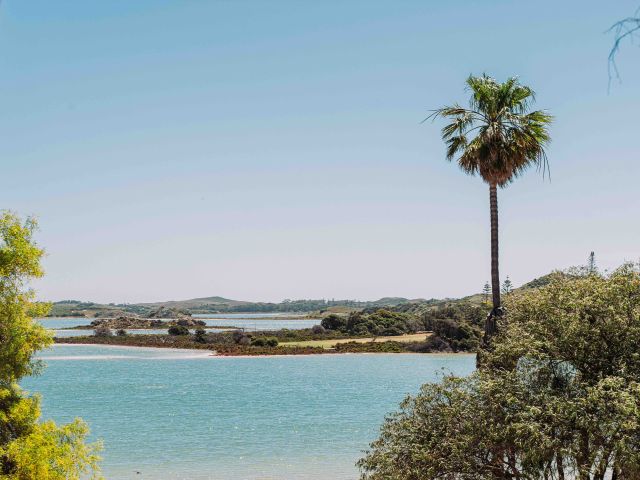
The resort sits next to one of the island’s lakes.
The Lodge Wadjemup sits beautifully on the western end of Rottnest Island (Wadjemup), the traditional land of the Whadjuk Noongar people. The island is one of Australia’s most striking destinations, with impossibly clear waters and white sand beaches – I’d argue they are some of the best in the world. The main ferry terminal is just a few minutes’ walk away, along with the island’s restaurants, cafes and beaches. There are no beach views from the resort, but there are lovely lake views.
The best way to explore Rottnest Island is by bike, and Rottnest Island Pedal & Flipper Hire – just a couple of minutes’ walk away – is the go-to place to pick up your wheels, whether you prefer electric or traditional bikes (make sure to get a basket attachment to carry your belongings). Some of my favourite beaches and bays I cycled to were Salmon Bay, Shark Bay Beach and Lovers Cove. It’s also worth going the extra mile to Cathedral Rocks where you can view the resident long-nosed fur seal colony from the viewing platform.
The island is filled with thousands of resident quokkas, and visitors will be pleased to find there are plenty of them hopping around the resort who will happily let you take a selfie if you are gentle and respectful of their space.
What is the style and character of The Lodge Wadjemup?
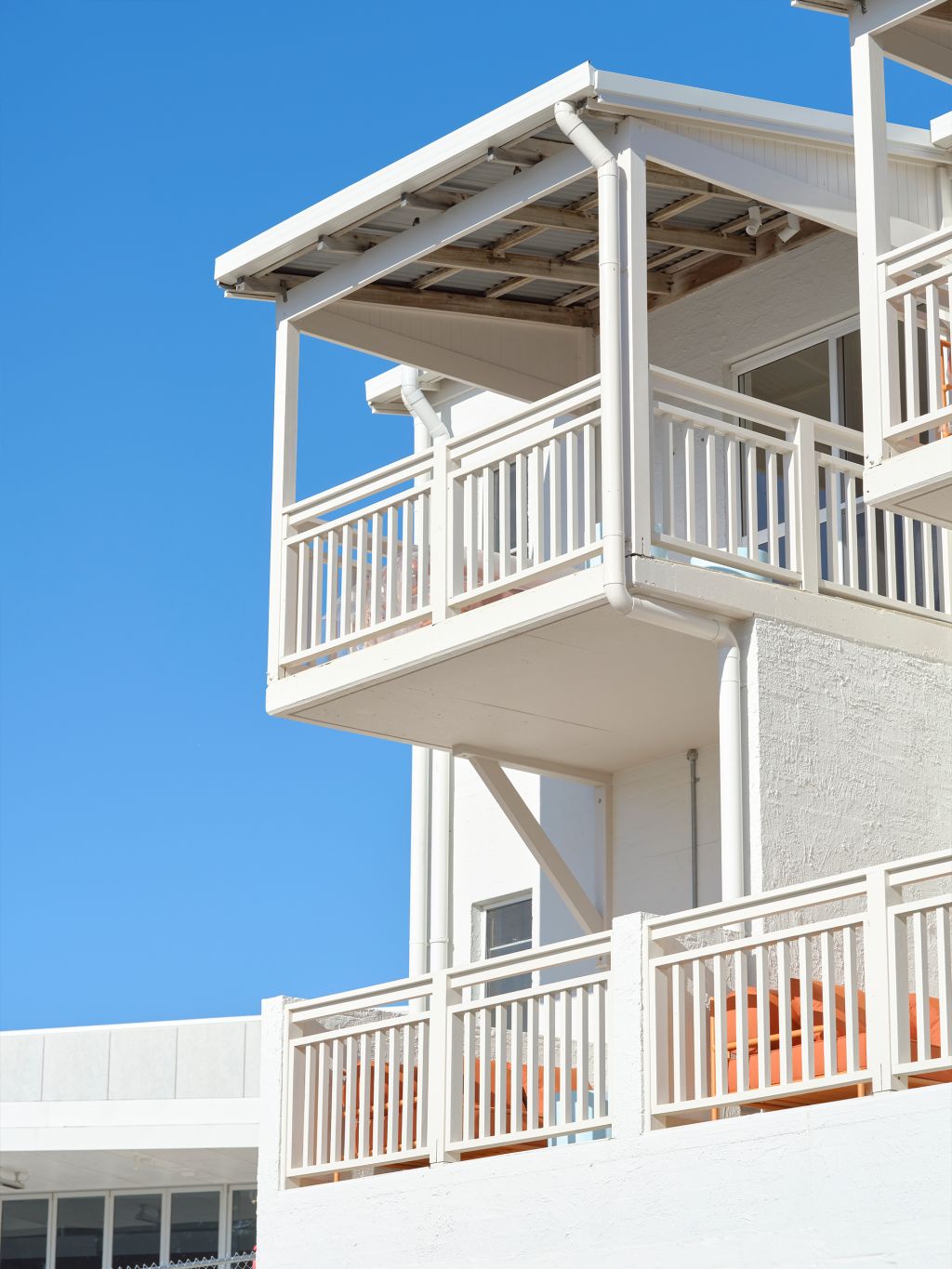
The building's exterior is light and bright.
The design blends old and new. (Image: Shot by Thom)
On an island with as much significance as Rottnest, design decisions shouldn’t be made lightly, so it’s pleasing to see the resort respects the island’s history and rugged coastline. The development was guided by Cultural Heritage consultant David Collard (Wardong) and Nyungar elders, who helped establish a cultural heritage framework.
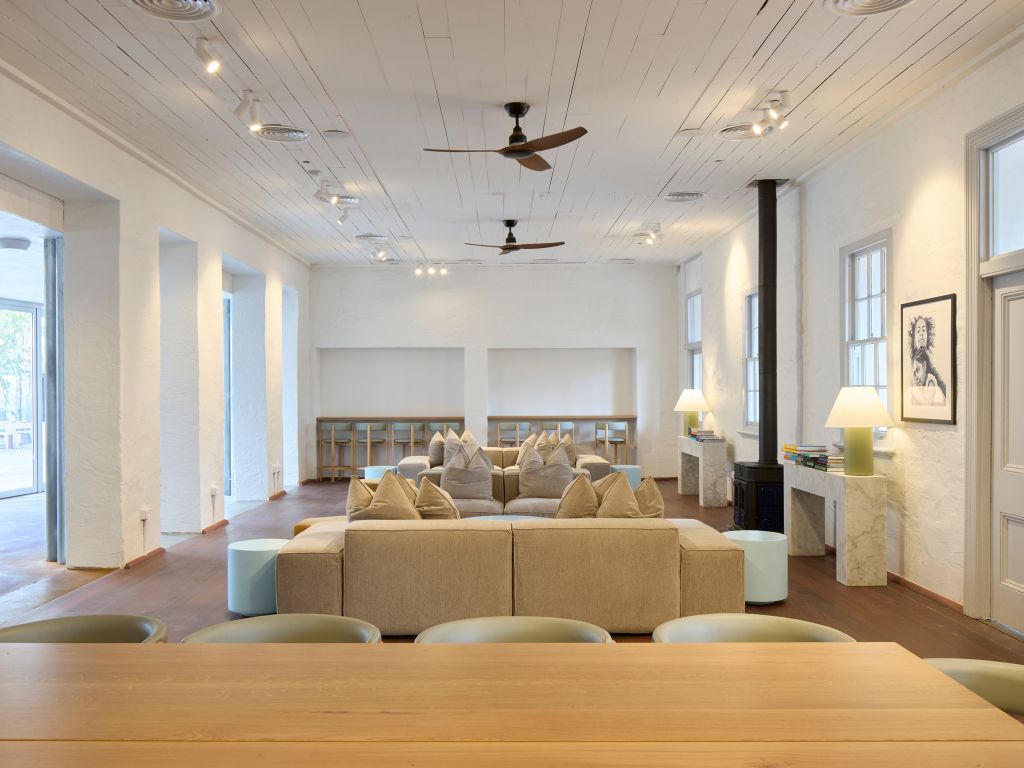
Comprised of multiple buildings, including a 143-year-old heritage structure and a sleek, contemporary structure, The Lodge Wadjemup seamlessly blends old and new and is considered a low-impact development.
Designer Anna Fogarty and interior designer Lauren Tarrant of Laurent Tarrant Design sensitively took cues from the island to inform the resort’s interior design, styling and branding. The overarching aesthetic is breezy, coastal chic with Wadjemup’s native flora, limestone cliffs and salt lakes reflected in the colours, materials and finishes.
The contemporary wing of the hotel features a sleeker design.
Cork, light timber joinery and natural stone are complemented by soft greens, coral pinks, sand and bleached blues, creating a calm, beach‑inspired atmosphere that welcomes sandy feet. Furniture from high-end brands such as MCM House and tiling and stone from Surface Gallery bring an elevated feel, while artworks by First Nations artists add depth and cultural meaning.
Climate-responsive architecture was at the forefront, executed through large bi-fold doors and open layouts that maximise natural ventilation, and a two-level building height maximum to preserve the island’s sightlines.
What are the rooms like at The Lodge Wadjemup?
Weekly travel news, experiences insider tips, offers, and more.
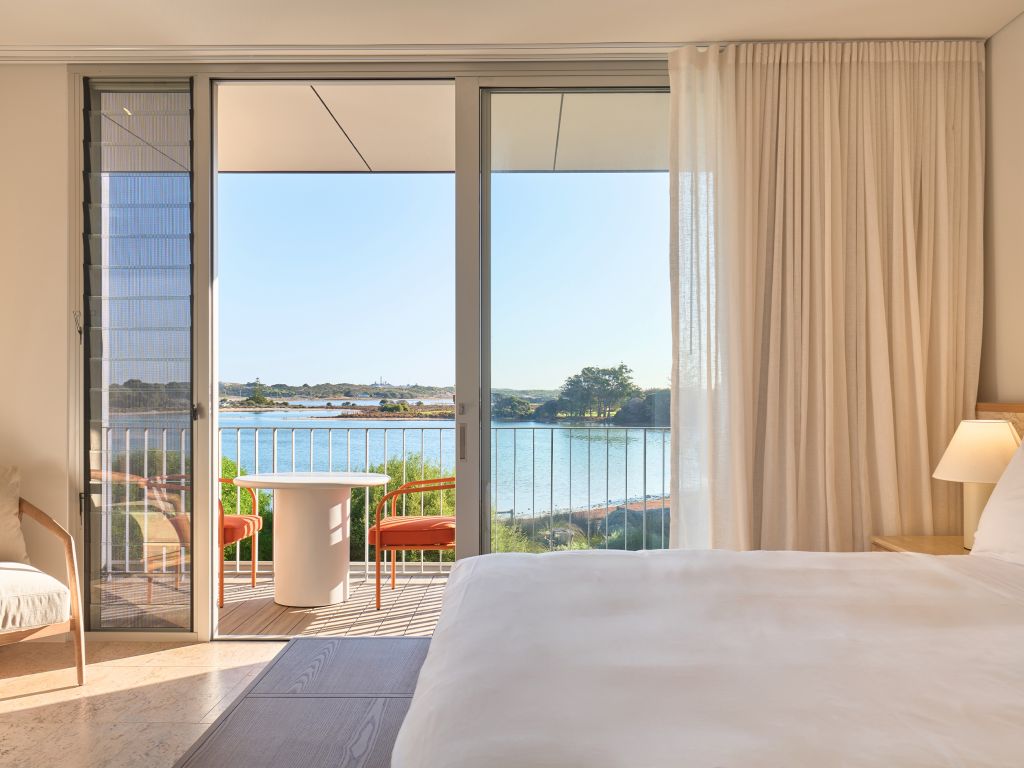
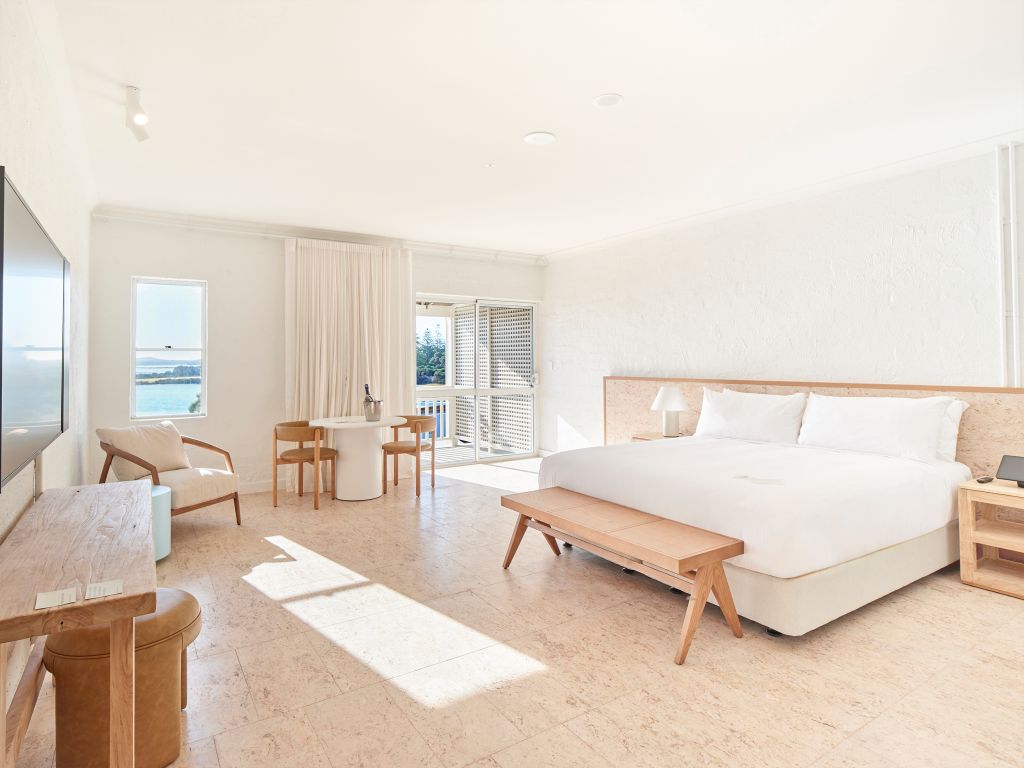
A Poolhouse Room with lake views. (Image: Shot by Thom)
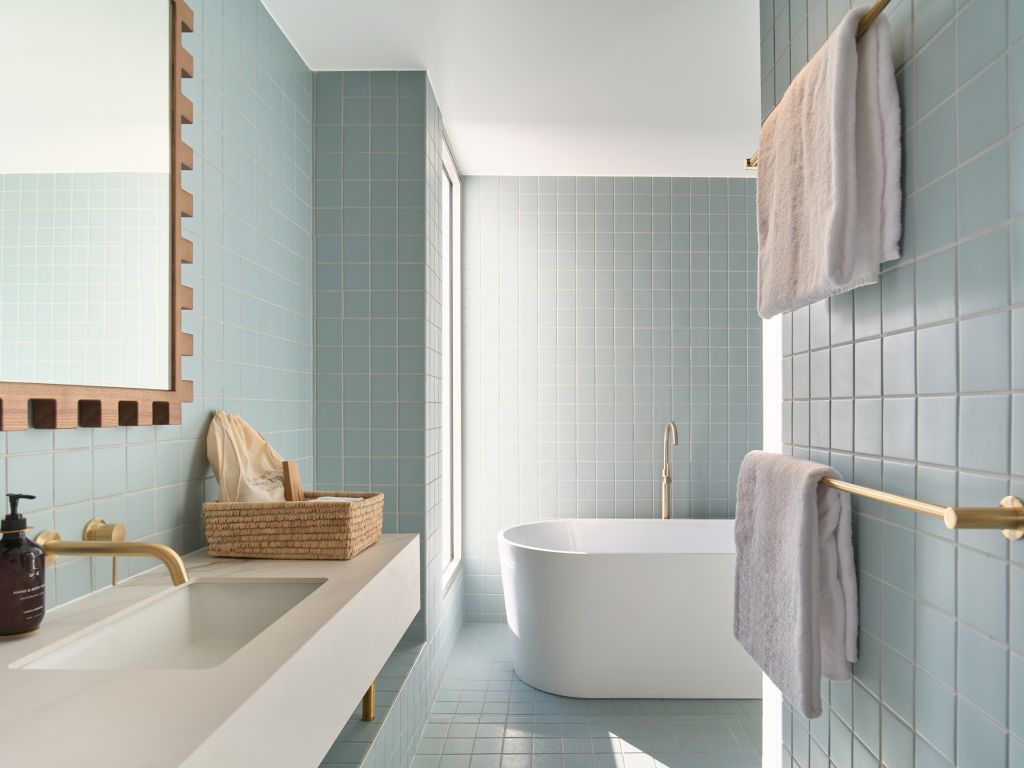
Some of the Poolhouse Rooms feature freestanding baths. (Image: Shot by Thom)
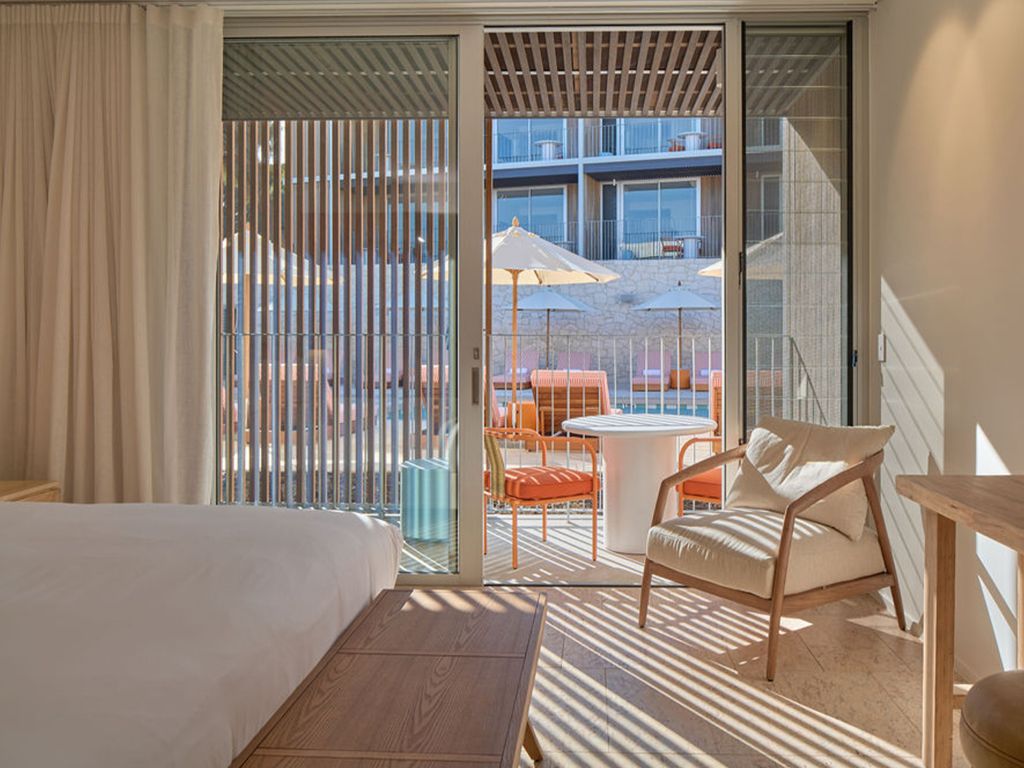
Poolside rooms offer direct access. (Image: Shot by Thom)
Neutral tones prevail, creating a calm atmosphere.
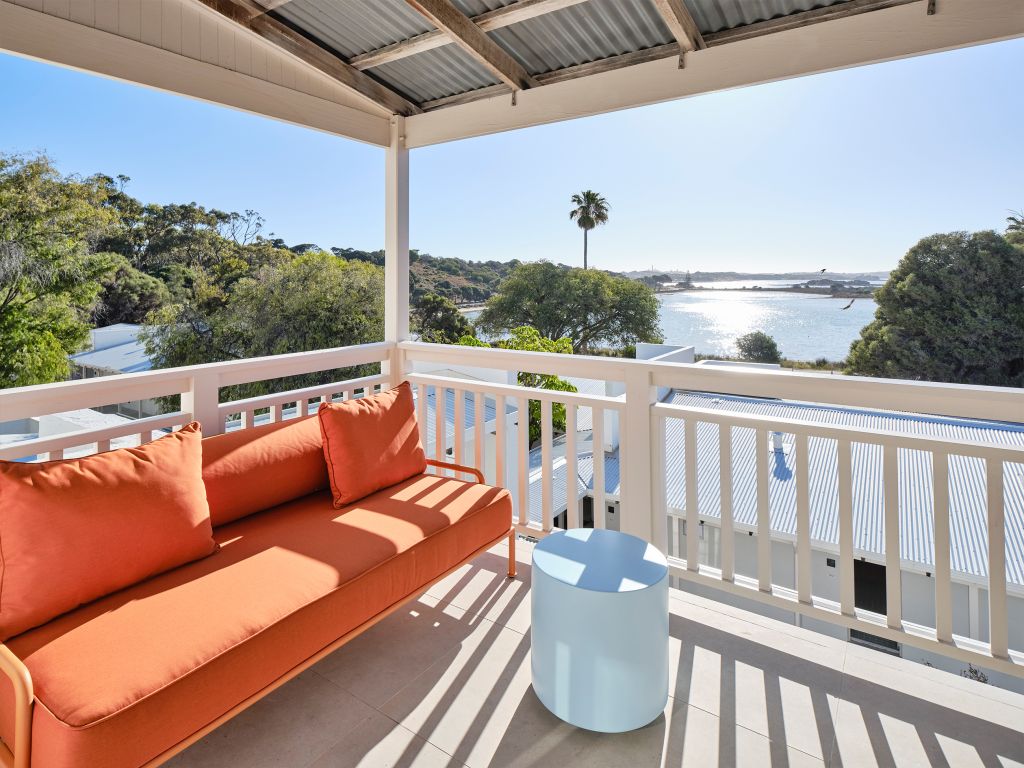
Lake Rooms afford peaceful views.
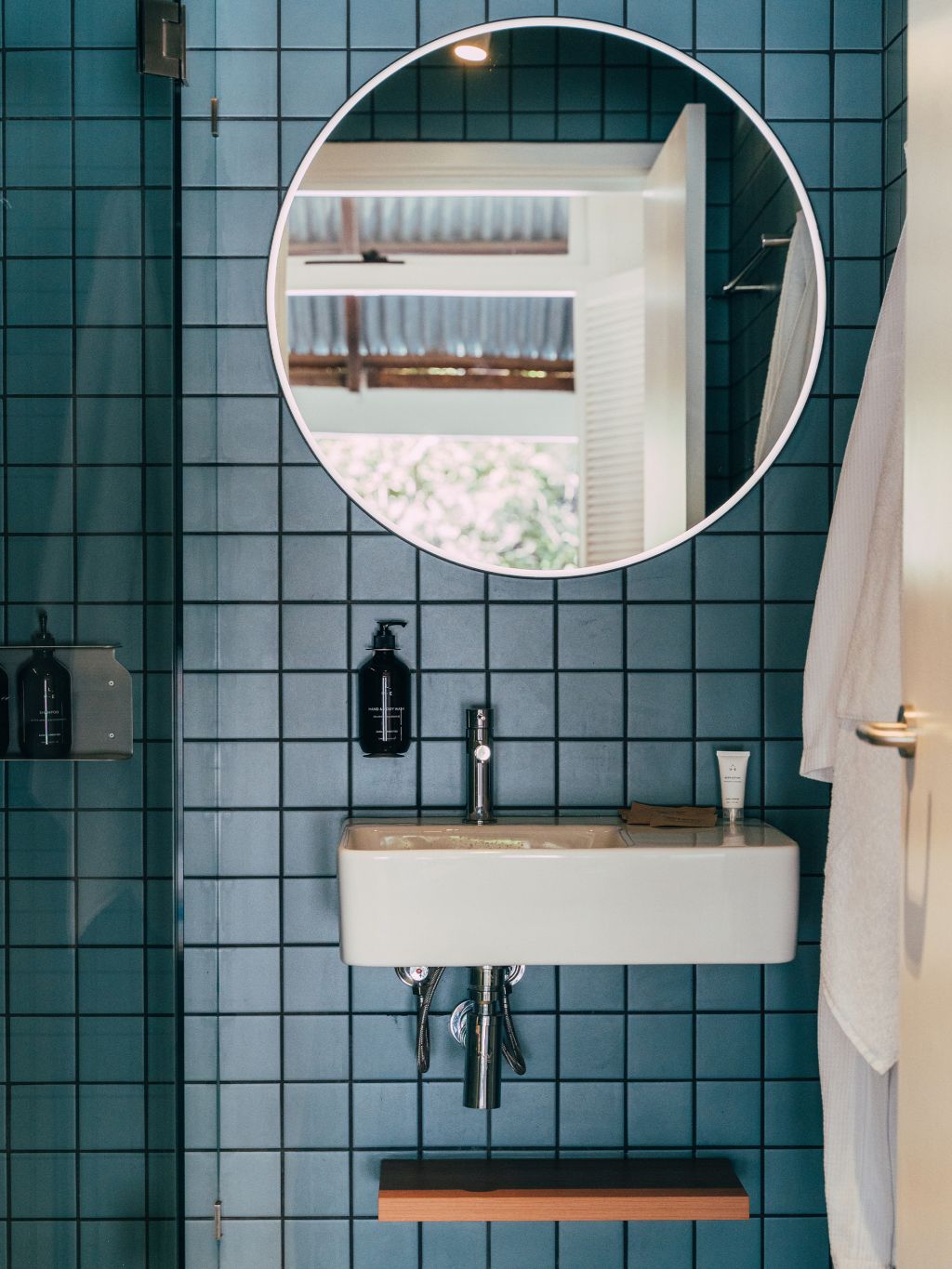
Courtyard Rooms feature stylish bathroom.
The Lodge Wadjemup offers a variety of room styles to suit all types of guests, whether you’re a young family needing extra room or a couple looking for peace and quiet. There are three distinct sections to the property’s accommodation offerings: Courtyard, Lakeside and Poolside. The 31 Courtyard rooms are fully equipped and situated within a refurbished 143-year-old heritage building. The 32 Lakeside rooms are contemporary and offer stunning lakeside views, while the 46 Poolside rooms are part of a brand-new build.
My room is located in the new Poolside wing and boasts a lovely view of the pool. The light-filled space is relaxed and neutral-toned, fitted with a minibar (Nespresso machine included) and a balcony with seating – I spent a significant amount of time here wrapped in the room’s blue linen dressing gown. Many of the poolside rooms come with baths and can be interconnected, making them perfect for families or groups.
What facilities does The Lodge Wadjemup have?
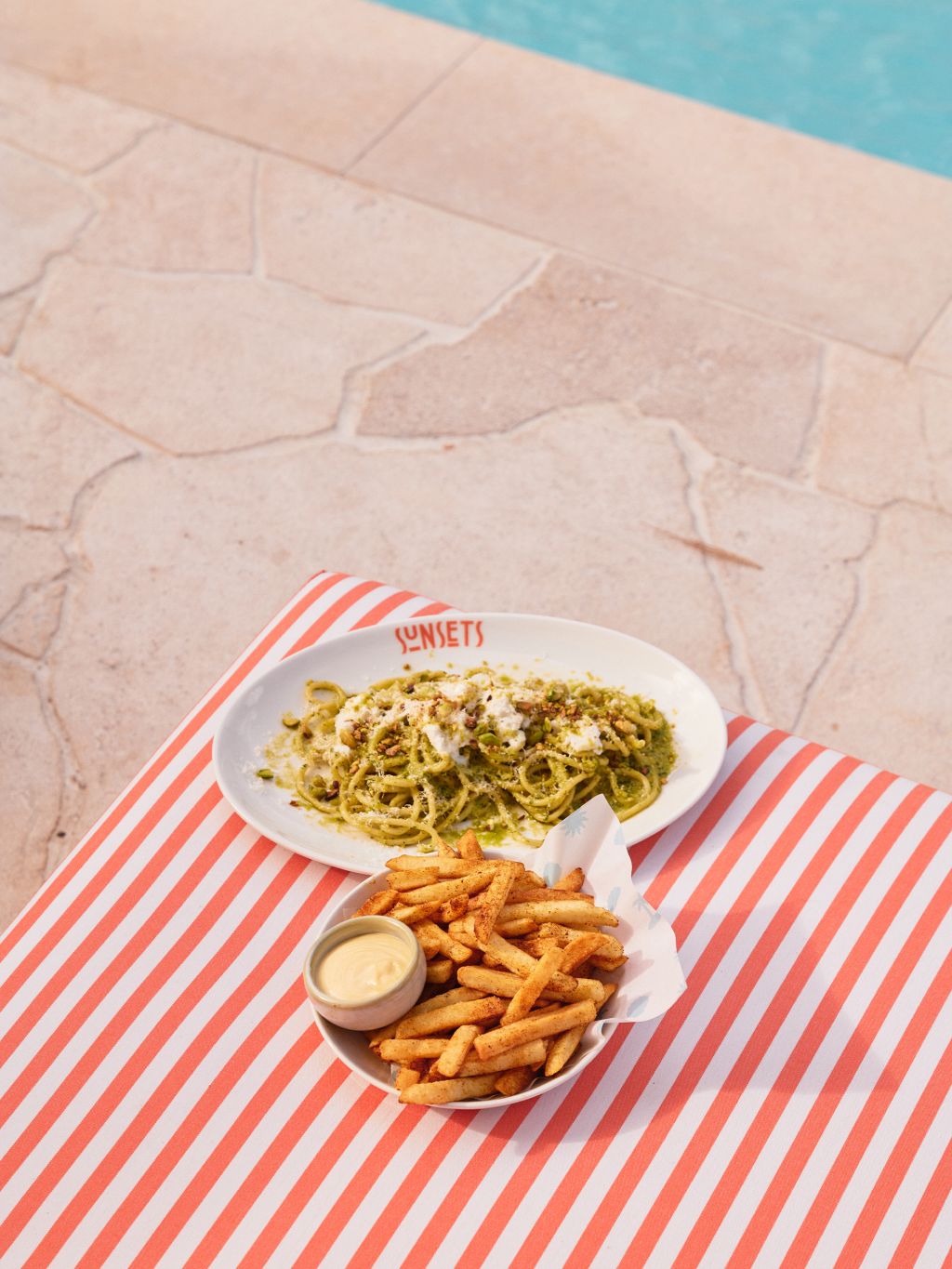
Indulge in poolside snacks from the onsite restaurant. (Image: Shot by Thom)
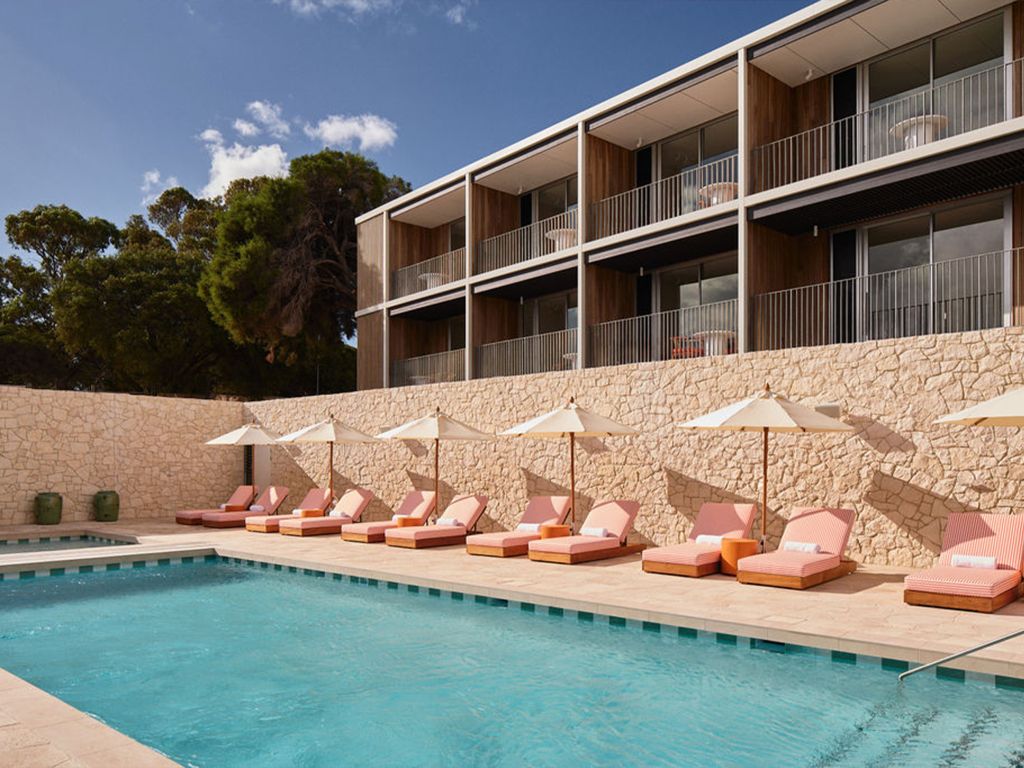
Spend your days relaxing poolside. (Image: Shot by Thom)
Enjoy refreshing dips. (Image: Shot by Thom)
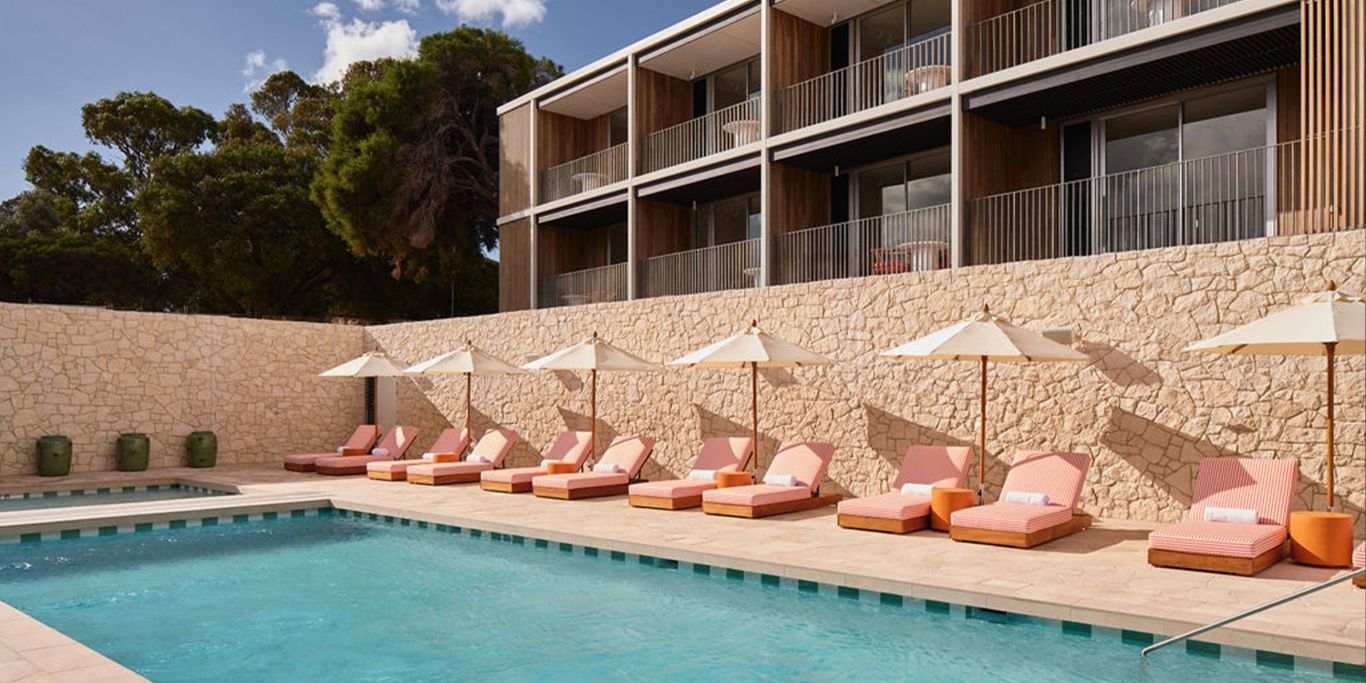
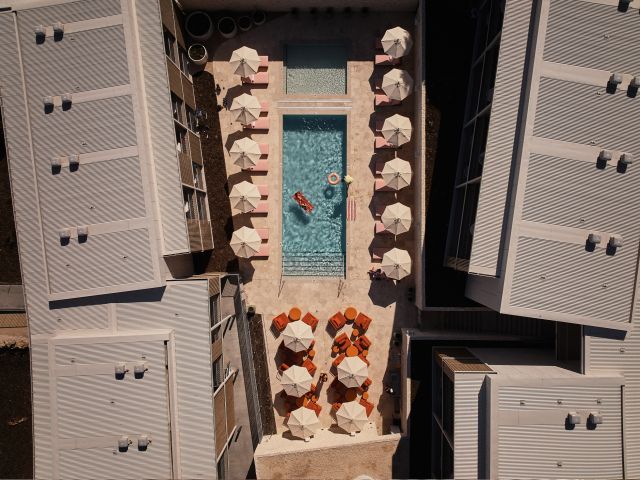
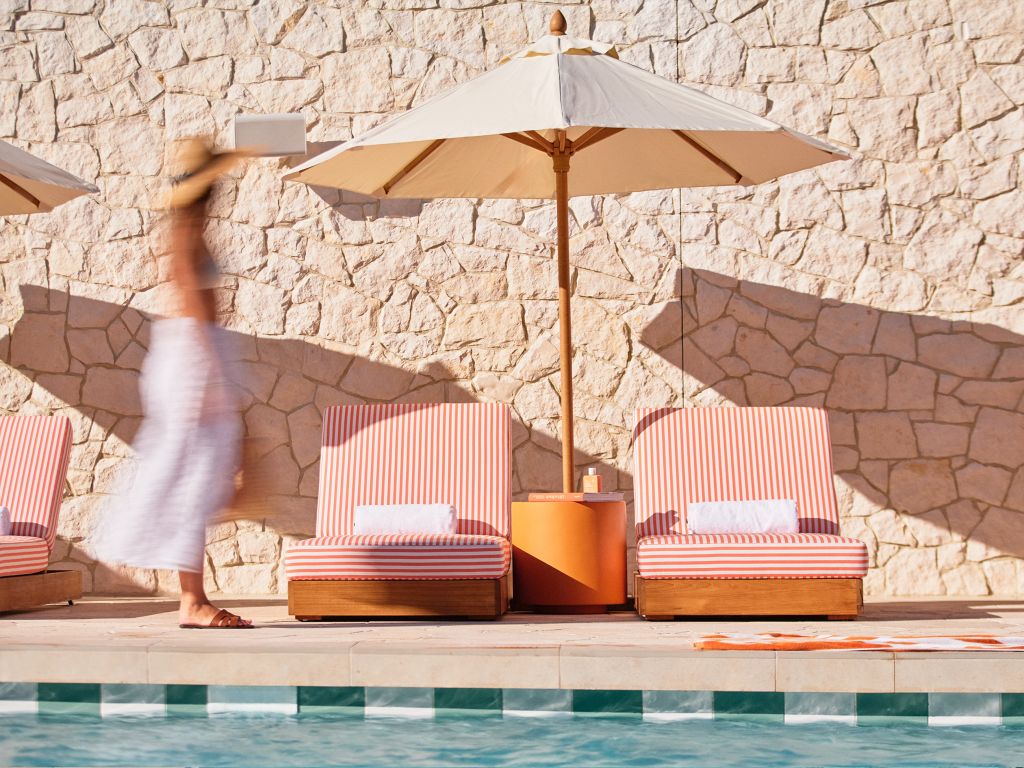
While it’s tempting to spend every moment on Rottnest’s white-sand beaches and in its turquoise waters, The Lodge Wadjemup is equally well equipped for guests who choose to stay put, and I enjoyed just relaxing at the resort. The heated swimming pool exudes beach club vibes with orange and cream striped sun loungers and parasols.
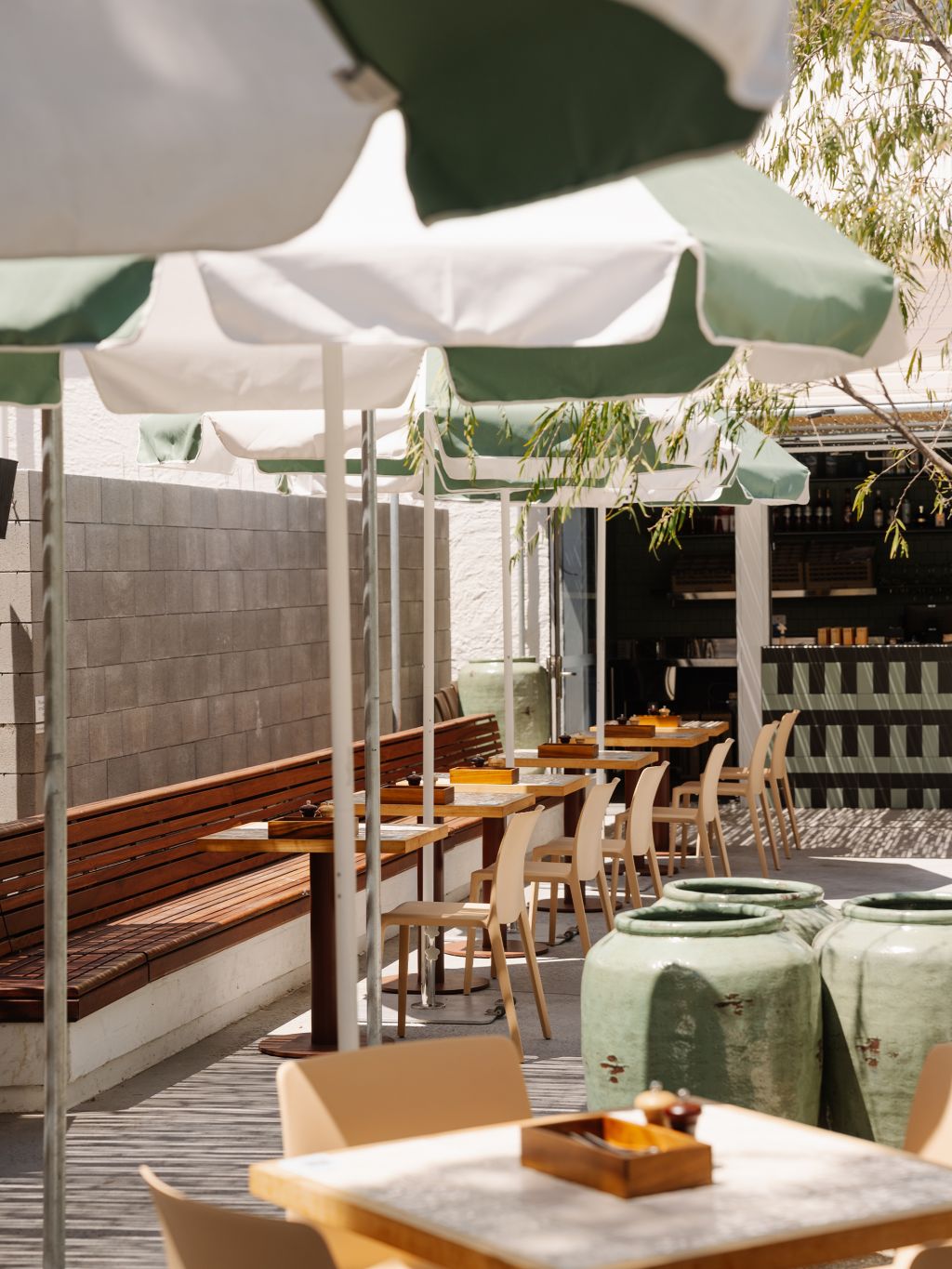
Chef Mat Powell (Il Lido Cottesloe, George Calombaris Group Melbourne) oversees the onsite dining, including the relaxed Pelican Deli – part coffee spot, part soft serve kiosk – and Sunsets Bar & Restaurant. The latter serves breakfast, lunch, and dinner, with the late afternoon and early evening offering sparkling views as the sun sets over the island.
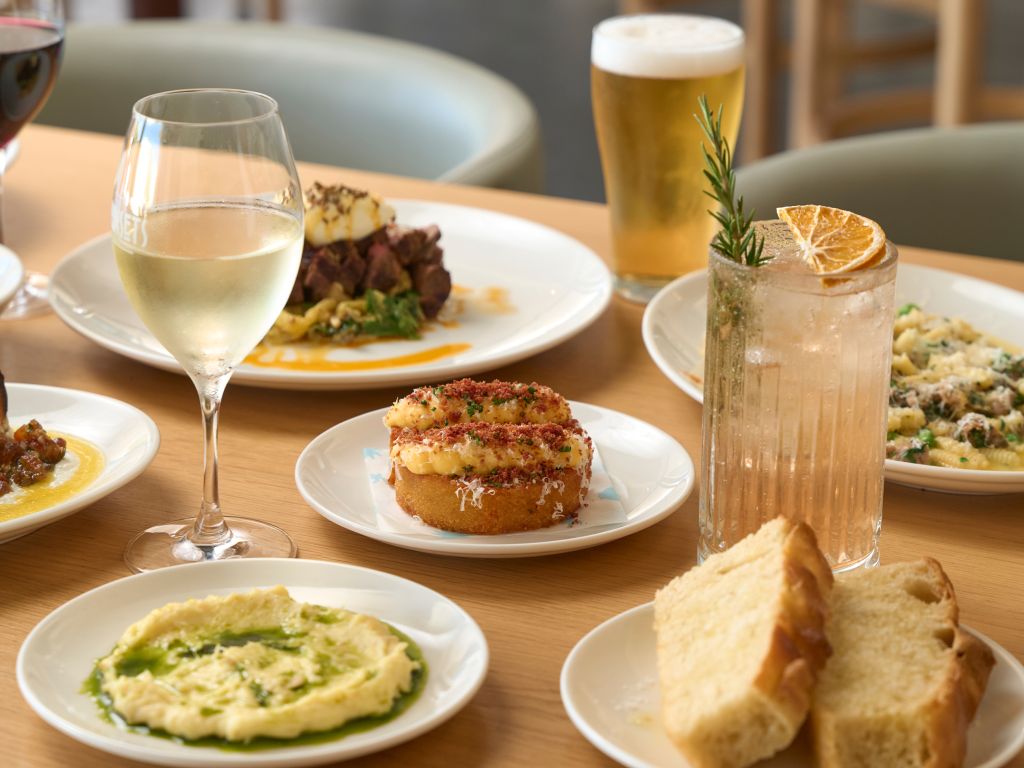
I recommend grabbing a few spritzes and relaxing in the large outdoor area before heading inside to enjoy a Mediterranean-inspired feast – Albany rock oysters, burrata with peach and basil, linguine with Shark Bay crab, and, of course, a decadent banana split with soft serve, cherries, candied nuts, and caramel. The menu caters for fussy little ones, and there’s live music every Saturday and Sunday from midday to 6pm.
Enjoy relaxed bites in the Sunsets courtyard.
Sunsets Bar & Restaurant serves Mediterranean-inspired fare. (Image: Shot by Thom)
A central courtyard with relaxed seating acts as a communal outdoor space for guests staying in the Courtyard Room wing.
A special area of The Lodge Wadjemup is the Gathering Ground, a dedicated space for events and ceremonies that acknowledges the significant cultural history of Rottnest. Here, you will find artworks created by Aboriginal artists Kaedisha Westberg, Tjyllyungoo, Lance Chadd, Nigel Chadd and Trish Robinson, evocative of the island’s natural beauty, wildlife and Nyungar stories.
Reception is stocked with items travellers may have left at home, such as sunscreen, towels, USB cords, international adaptors and natural deodorant, as well as cute souvenirs to take home.
Does The Lodge Wadjemup have access for guests with disabilities?
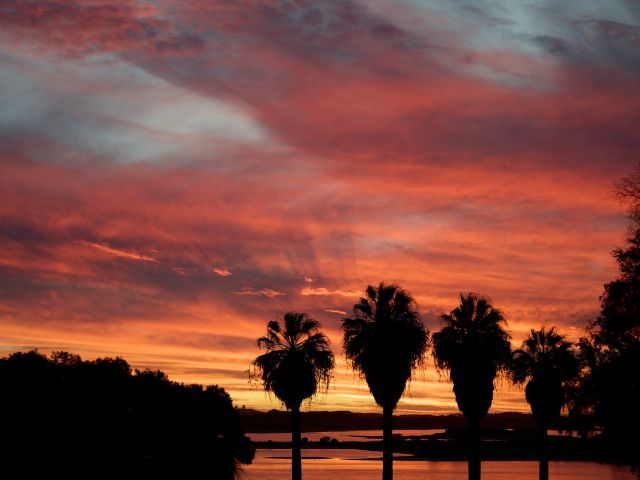
The aptly named Sunsets Bar & Restaurant offers breathtaking views of the sunset.
Rottnest Island is considered an accessibility-friendly island, and The Lodge Wadjemup has accessible poolside rooms available. Note that ferries from Perth CBD are not accessibility friendly, but certain voyages from the terminal at North Fremantle are (approximately 40 minutes’ drive from Perth Airport).
Is The Lodge Wadjemup family-friendly?
The Lodge Wadjemup is, at its core, designed for families, and during my stay, I can’t help but reflect on how ideal it would have been for my own family if it had been open during our visits.
Details
Best for: Families
Address: Boreham Wy, Rottnest Island WA 6161
Price per night: From $359
Rachael Thompson is Australian Traveller's Evergreen Editor and a self-proclaimed cheese and Chablis connoisseur. In her role, she creates and manages online content that remains relevant and valuable over time. With a background in publishing and e-commerce in both interior design and travel, Rachael is dedicated to curating engaging content that informs and inspires. She began her career at Belle magazine, then went on to become Senior Content Producer at Homes to Love focusing on Australian House & Garden and Belle, followed by Editor at Bed Threads. Her work has also appeared in Qantas Travel Insider. When she's not writing, editing, or optimising content, Rachael enjoys exploring the city's newest restaurants, bars, and hotels. Next on her Aussie travel wish list are Uluṟu-Kata Tjuṯa National Park and Lord Howe Island.
This remote corner of Australia is one of the world’s last frontiers. This is how to see it properly.
Vast, rugged and deeply spiritual, the Kimberley coast in Australia’s North West feels a world away from everyday Australia – and there are countless ways to explore it. But if you want to reach ancient rock art, hidden gorges and lonely waterfalls, it has to be by boat. Whether you’re aboard a nimble expedition vessel or a luxury yacht with all the trimmings, exploring by the water brings exclusive experiences, shows unique views and makes travel easier than any other mode. And that’s just the beginning of Australia’s North West cruises.
Adventure starts where the road ends.
1. Discover Broome, and beyond
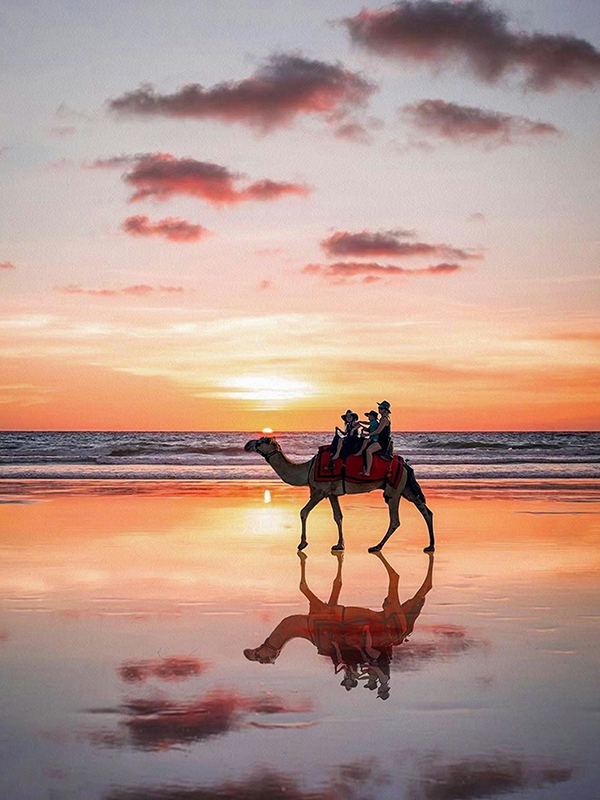
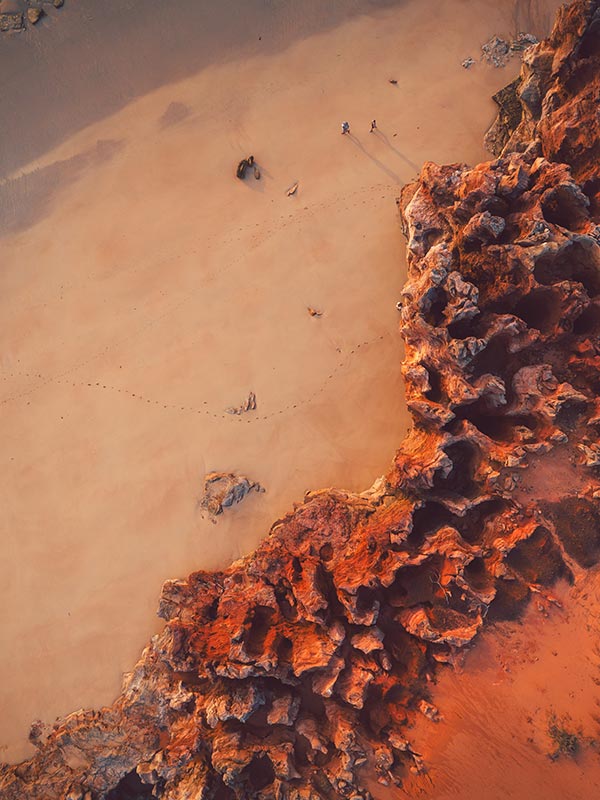
Explore your launchpad before you set sail: Broome. Here camels and their riders stride along the 22 kilometres of powdery Cable Beach at sunset. That’s just the start.
At Gantheaume Point, red pindan cliffs plunge into the turquoise sea, whose low tide uncovers fossilised dinosaur footprints. Broome’s pearling history runs deep. Japanese, Chinese, Malay and Aboriginal divers once worked these waters, and their legacy lives on in boutiques where South Sea pearls still shine.
If the moon’s right, you may catch the Staircase to the Moon over Roebuck Bay. Or simply kick back with a cold beverage and a film under the stars at Sun Pictures , screening since 1916.
Ride a camel along Cable Beach. (Image: Nick Dunn)
2. Unmatched access to The Kimberley
Once you’re onboard, expect a backstage pass to some of the most isolated places on Earth. No roads. No ports. No phone reception.
At Horizontal Falls/ Garaanngaddim, 10-metre tides surge through twin gorges like a natural waterpark ride that’ll make your palms sweat. Then there’s Montgomery Reef/ Yowjab: a giant living platform of coral and seagrass, where the sea pulls back to reveal waterfalls, sea turtles and ospreys.
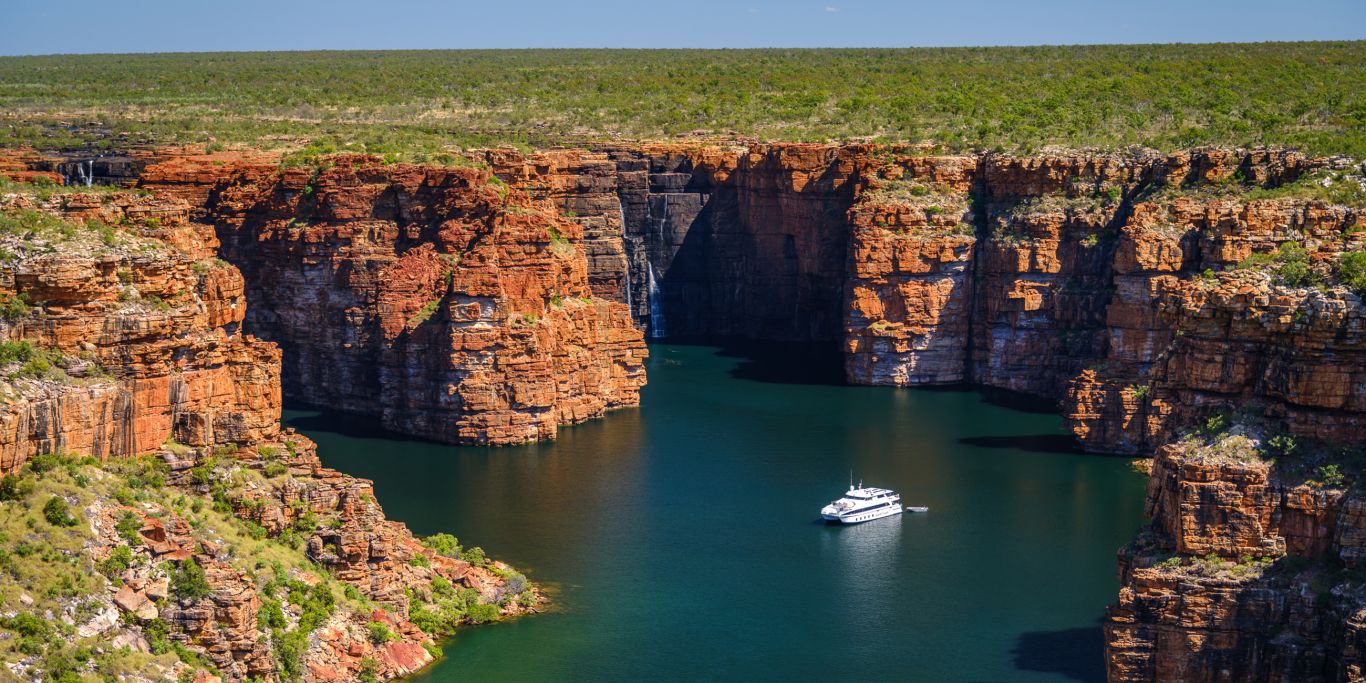
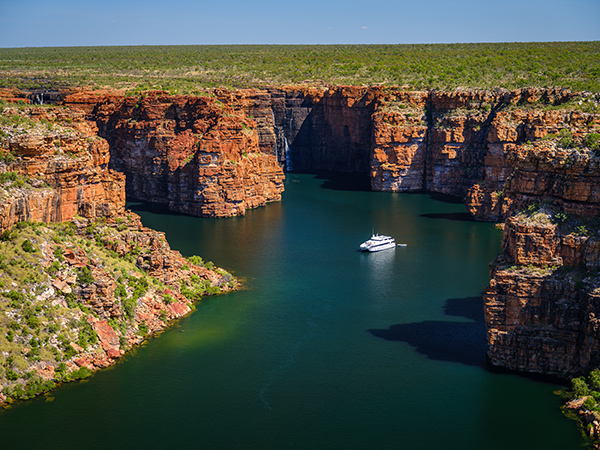
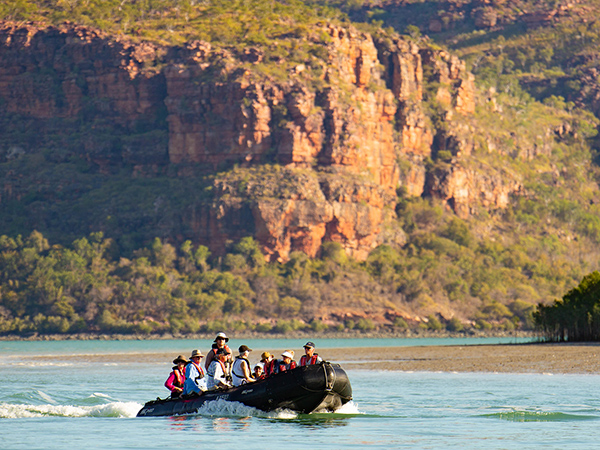
Up north, King George Falls/ Oomari rage 80 metres down red cliffs. Zodiac boats often nudge in closer so you can feel the spray on your sun-warmed cheeks. You might even fly in to reach Mitchell Falls/ Punamii-unpuu, a four-tiered cascade where you can swim in freshwater pools above the drop.
Come spring, some itineraries veer west to Rowley Shoals: an atoll chain of white sand and reef walls. Then it’s up the winding Prince Regent River to King Cascade/ Maamboolbadda, tumbling over rock terraces, and into a Zodiac to view the Gwion Gwion rock art, whose slender, ochre-painted figures are older than the pyramids.
Get closer to the Kimberley than ever before.
3. Taste the Kimberley with onboard hospitality
You might spend your days clambering over slippery rocks or charging past waterfalls. But when you’re back on the water, it’s a different story. Meals are chef-prepared and regionally inspired: grilled barramundi, pearl meat sashimi, mango tarts, and bush tomato chutney. One night it’s barefoot beach barbecues with your shipmates; the next, alfresco dining on the ship.
Small expedition ships each have their own personality, but many carry just 12 to 36 guests, making being out on the water a whole other experience. You might sink into a spa on the foredeck or sip coffee in a lounge while watching crocodiles cruise by. It’s choose-your-own-relaxation, Kimberley style.
4. Expert-led excursions through the Kimberley
These voyages are led by people who know the Kimberley like the back of their sunburnt hand. Attenborough-esque naturalists might gently tap your shoulder to point out rare birds or tell the story beneath a slab of rock. Historians can explain exactly how that rusted World War II relic came to rest here.
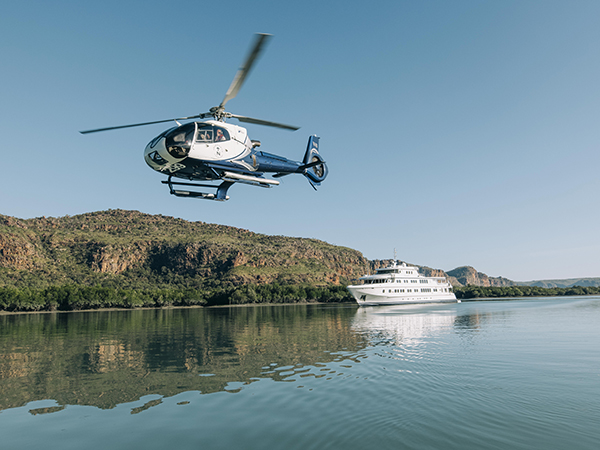
If your ship has a helipad, you might chopper straight to a waterfall-fed swimming hole. If not, you’ll still be hopping ashore for that wet landing at a secret creek.
Then come the evenings: songlines shared by Traditional Owners under the stars, or astronomy sessions that link what’s overhead with what’s underfoot and what’s within.
Explore with naturalists and historians by your side.
5. Relax in luxurious lodgings
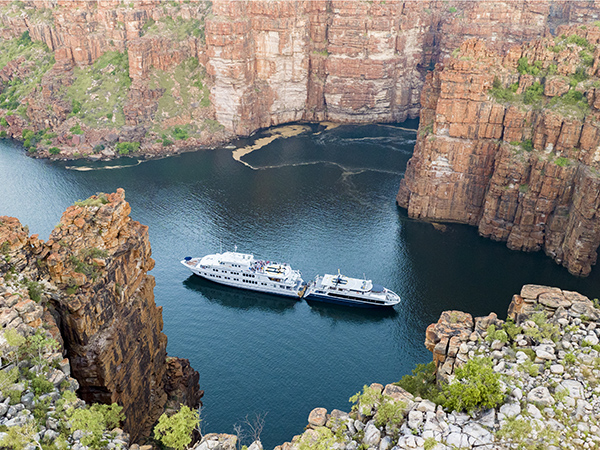
Just because you’re off-grid doesn’t mean you have to rough it. These Kimberley vessels are small in size, but mighty in luxury. True North’s ships come with their own helicopters and a no-sea-days policy, so you’re always in the thick of it. Try the luxurious offerings from Ocean Dream Charters for exploration in style. Kimberley Quest offers a fast boat for easy, off-ship adventures. On the larger end of the scale, Coral Expeditions has open-deck bars and curated wine cellars. And then there’s Ponant’s luxury yachts – sleek and incredibly stylish French sailing yachts.
See the Kimberley from sky to shore.
6. The adventure continues with pre- and post-cruise experiences
You’ve already come this far – so, why not go further? Broome makes it easy to ease in before you board, or wind down when your voyage ends, and there is no reason to stop there.
Head an hour and a half south to Eco Beach to stay off-grid and off the clock. Join a Yawuru guide for a mangrove walk or ocean forage. Dive even deeper into Broome’s pearling past at Willie Creek or Cygnet Bay, where divers and craftspeople still pull the seawater-slicked gems from the deep.
If you’re still craving adventure, it’s time to go further. Soar over the Buccaneer Archipelago, or detour inland with a 4WD trip along the Gibb River Road. Book a scenic flight over the Bungle Bungles. Or – because you never know when you’ll be back – do all three.