hero media

This is how to plan a WA wildflower road trip, according to experts

Professional photographers and road-trip enthusiasts Charlotte and James Maddock give Australian Traveller their top tips for experiencing WA’s wildflower season at its best.

Every spring, Western Australia erupts with colour, fragrance and, of course, adventure. Wildflowers bloom in the thousands and a good old-fashioned road trip beckons. We’re no stranger to a road trip, having explored all corners of our great state by road over the last decade – from crossing the never-ending Nullarbor in the south to traversing the iconic Gibb River Road in the north. But wildflowers offer something different, something unique: unexpected joy in the most unsuspecting of places.

We’ve always found ‘the journey is the destination’ to be somewhat of a cliché – quietly wondering where these people are travelling to if it’s not the ultimate highlight of the trip. But a wildflower road trip opened our eyes, and not just figuratively. Everywhere you look is like a painting, and we constantly fight the urge to pull over time and time again. Our trusty kombi is the perfect companion – slow, steady and always up for an adventure.

Where should people start?
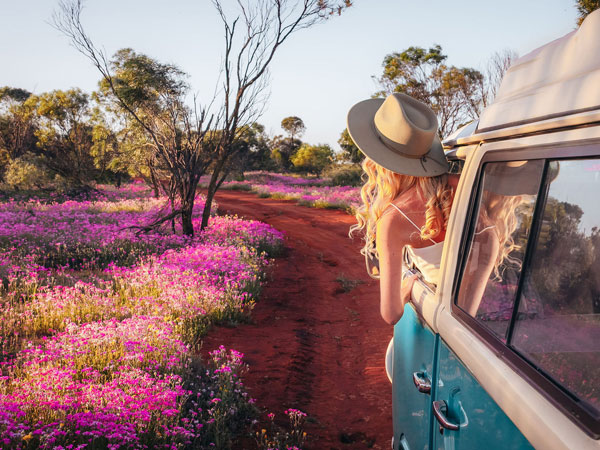
woman looking out of van window at the wildflowers, WA
Cruising the back roads of Morawa as Western Australia’s landscape explodes with colour. (Image: Charlotte & James Maddock)

The ideal starting place is WA’s aptly coined ‘Wildflower Country’ – designated as the nine local government areas from Moora to Mullewa. The whole region is bursting with thousands of species of wildflowers, including the iconic and resilient wreath flower. Coalseam Conservation Park is also a must-see; the whole area covered with carpets of flowers and designated walking trails to take you up close and personal.
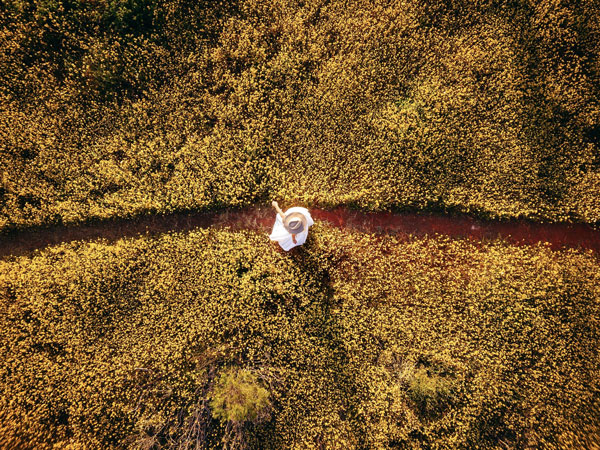
a woman walking along Coalseam Conservation Park
Walking trails at Coalseam Conservation Park slice through nature’s colourful display. (Image: Charlotte & James Maddock)

From here, we ditch the bitumen and embrace the adventure, following unassuming dirt roads into the heart of Western Australia’s outback. North of Pindar lies the most exquisite display of wreath flowers you will find anywhere in the world. They sit, totally unassuming, crowding the roadside far from civilisation.
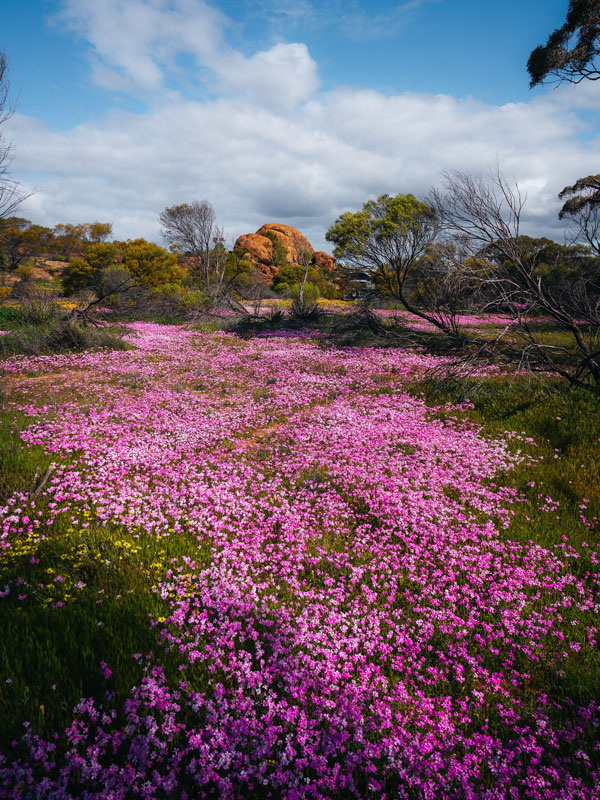
carpets of pink everlastings at Eaglestone Rock, WA wildflower season
Eaglestone Rock provides the perfect backdrop to carpets of pink everlastings. (Image: Charlotte & James Maddock)

It becomes a ritual to stop at each country town, and not just for their bakeries. The wildflower enthusiasts in the visitor centres know all the best spots and gleam with pride when giving you a mud map, photocopied and annotated with nothing but love. This information is essential for those hunting the more elusive wildflowers, such as the donkey orchids or spider orchids.
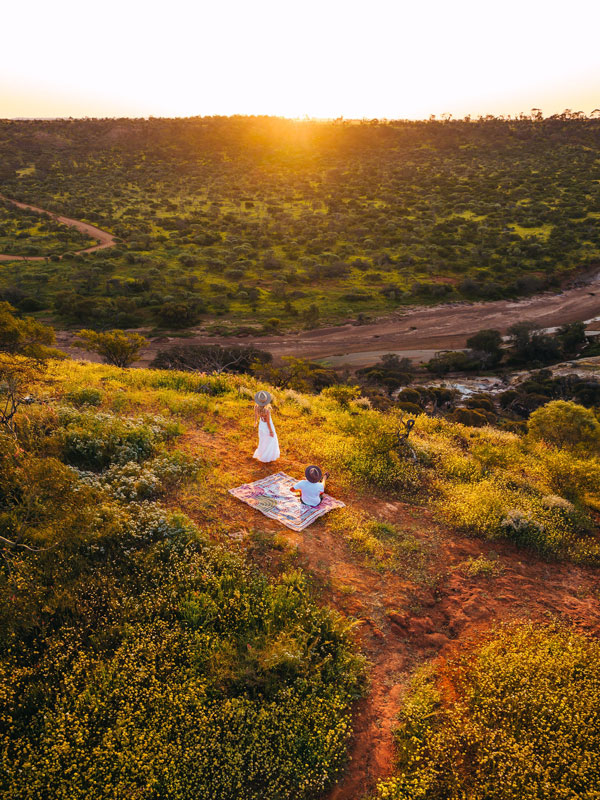
a couple having a picnic at Irwin Lookout, WA
Picnic dreams from Irwin Lookout while surrounded by a rainbow of blooms. (Image: Charlotte & James Maddock)

Need tips, more detail or itinerary ideas tailored to you? Ask AT.

AI Prompt

Where can people stay?
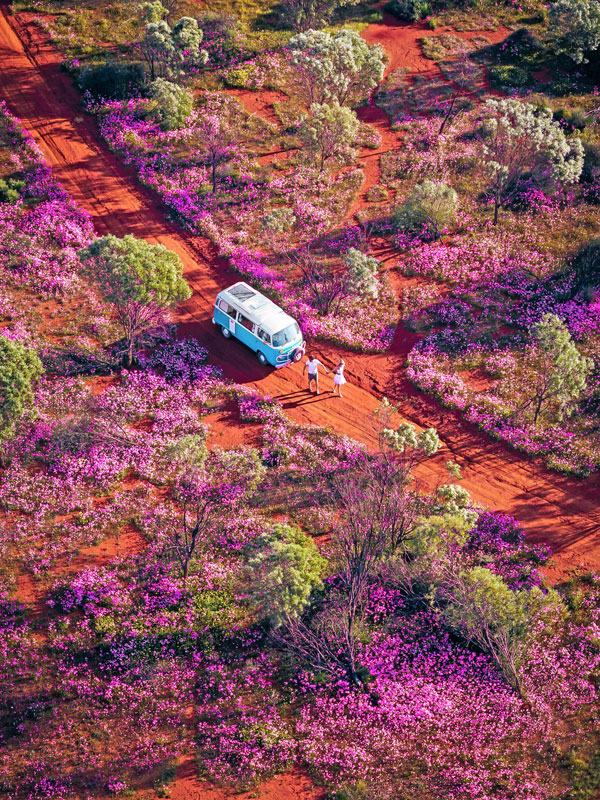
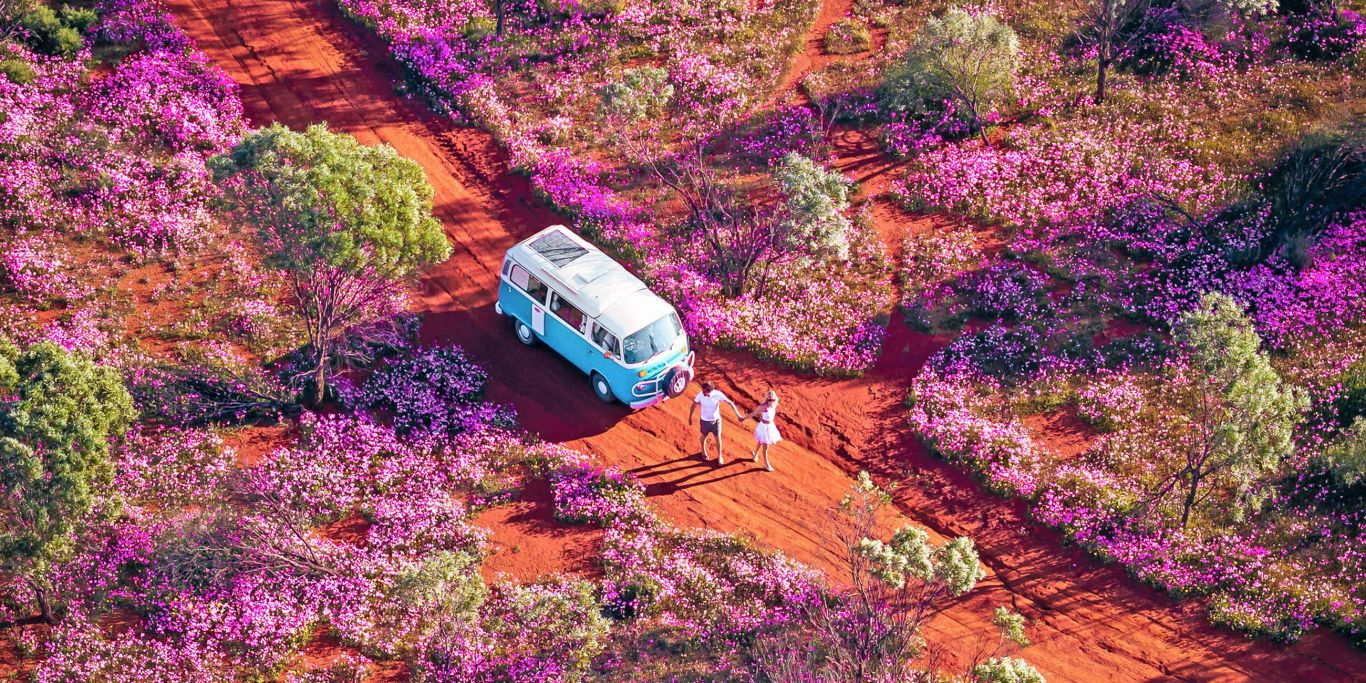
a van parked in a field of wildflowers in WA
The vibrant colours of wildflowers contrast with the red earth of WA’s outback. (Image: Charlotte & James Maddock)

Personally, we are drawn further east to WA’s Wheatbelt where the crowds get smaller, the distances longer and granite outcrops scatter the landscape. The water runoff from dramatic rock formations causes wildflowers to grow in abundance and provides the perfect backdrop for photos. The local shires here also allow free camping, so we can snap away at dusk and dawn. Our favourite spots are Eaglestone Rock in Nungarin, Datjoin Rock in Beacon and Elachbutting Rock in the Shire of Westonia.
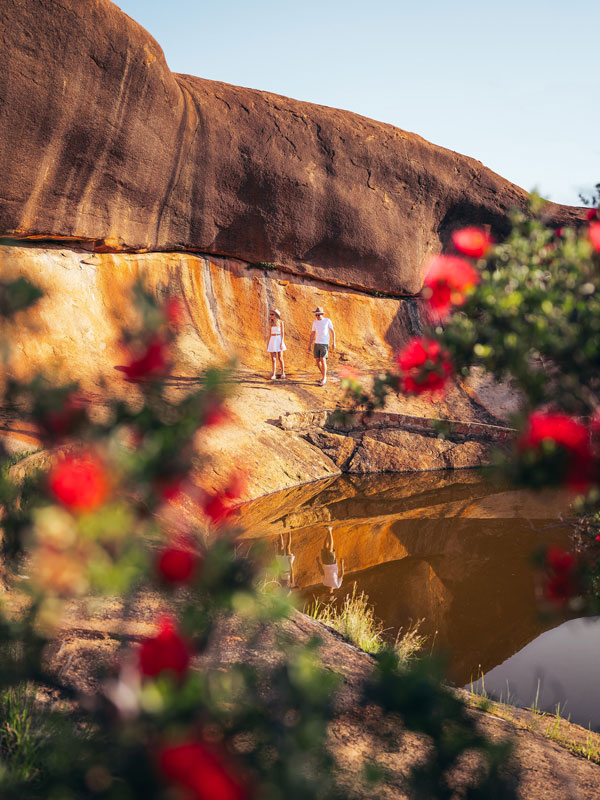
Charlotte & James Maddock at Beringbooding Rock, WA wildflower season
Add Beringbooding Rock to your wildflower itinerary. (Image: Charlotte & James Maddock)

Evenings at these campsites are the highlight of our road trip, as we capture the wildflowers among the setting sun before lighting a campfire for the evening. Is there a better feeling than sharing stories by the fire in the middle of the outback with just the sounds of the bush and billions of stars twinkling above? We don’t think so.
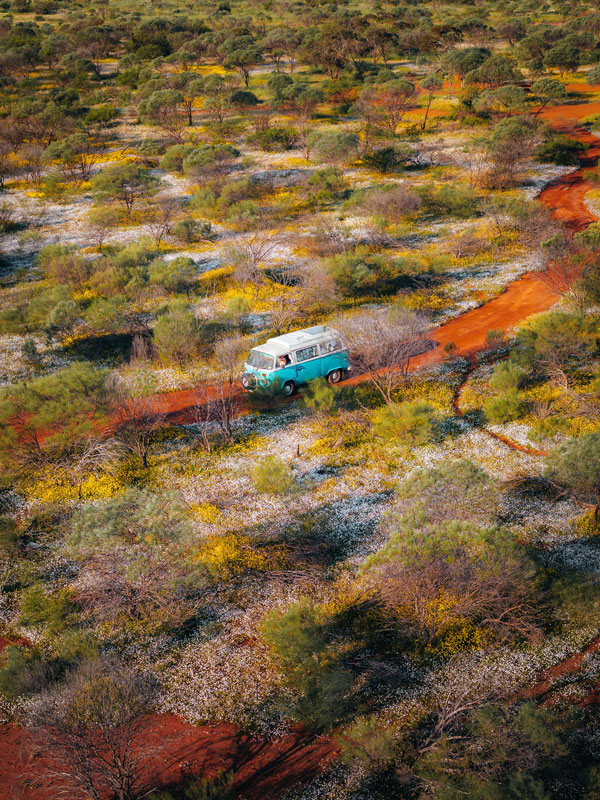
driving through Mullewa’s wildflower country
Drive through Mullewa’s wildflower country when it is awash with colour. (Image: Charlotte & James Maddock)

Our road trip mantra has always been to leave no trace, but it’s even more vital in wildflower season. We watch our every step, sticking to existing paths and taking only photos (lots and lots of them). It’s on us – all of us – to leave this colourful painting exactly as nature intended it.
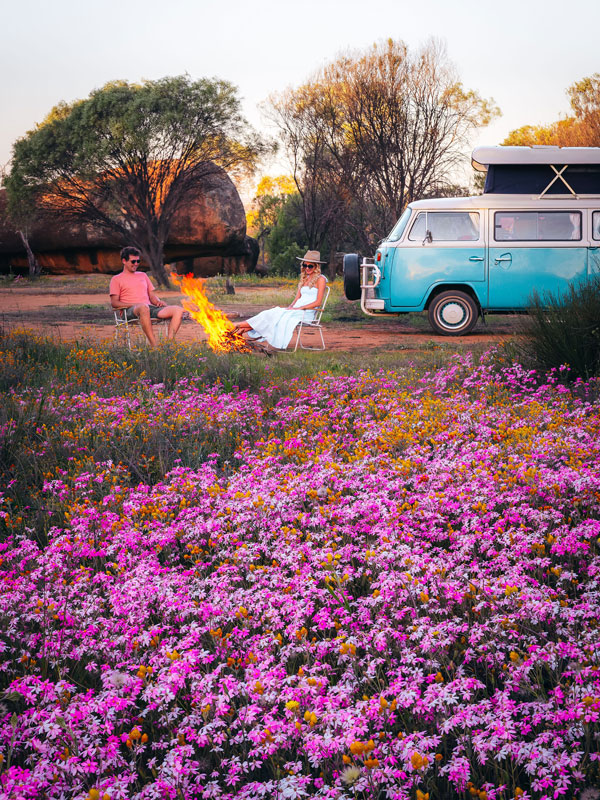
campfire at Datjoin Rock
Evenings around the campfire at Datjoin Rock, one of many free campsites in the Golden Outback. (Image: Charlotte & James Maddock)

Top tips from the experts:

  1. The season typically starts late July in the Gascoyne region, with the blooms moving southwards through the Wheatbelt in late August/early September, and then through to the South West in late September/early October.
  2. The visitor centres (there’s usually one in every town) have the best handle on what’s blooming and where the hotspots are. They often compile and release weekly reports on their websites.
  3. Embrace the power of social media. Thousands of enthusiasts share their experiences and photos to dedicated wildflower Facebook groups. These posts can provide live reports on bloom activity.
  4. Be careful when pulling over to the side of the road, especially on highways.
  5. Pack antihistamines, which are useful on windy days.
  6. Please tread carefully, follow existing paths and do not pick the wildflowers.
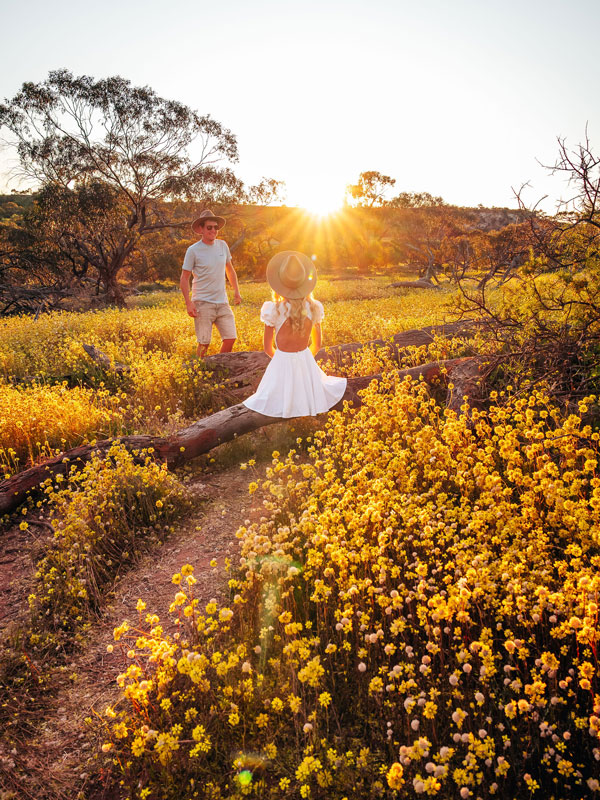
Charlotte & James Maddock enjoying the wildflower season in WA
Wildflowers grow in abundance in the ‘Wildflower Country’. (Image: Charlotte & James Maddock)

For more WA road-trip adventures, follow @cjmaddock on Instagram

Want to see more stories from Australian Traveller in your Google search results?

  1. Click here to set Australian Traveller as a preferred source.
  2. Tick the box next to "Australian Traveller". That's it.
Australian Traveller

Australian Traveller

View profile and articles
hero media

Exploring an icon: inside the massive upgrade to Broome’s famous Cable Beach

(Credit: Tourism WA)

    Lucy Cousins Lucy Cousins
    With unhurried mornings, long, sun-filled afternoons, evenings shaped around sunset, this iconic beach offers an all-day experience (and it’s about to get even better).

    As the sun slowly rises over the languid waves and fine sand of Broome’s Cable Beach, the morning colours shift from rich apricot to pale gold and frosty pearl. Remnants of life reveal themselves in the subtle shadows – crab claw marks, towel impressions, footprints. Life here is unhurried, but don’t be fooled. This town is continually shifting like the desert dunes that surround it.

    And with a $75 million upgrade – offering easier and more inclusive access for people of all abilities – it’s getting even better.

    Cable Beach upgrade foreshore redevelopment stage 1
    Discover the Cable Beach redevelopment.

    The addition of comfortable and welcoming spaces has begun (and will continue). This means visitors will be able to spend longer enjoying this beautiful environment, while knowing that the upgrade will create a more environmentally protected setting that preserves the natural character visitors come for. Come sunset, soak it in all the better thanks to the already improved foreshore areas, made for lingering while the light changes. And for the kids, a new splash park and accessible dry playground will make it easy to while away the hours.

    Think you know what a day at this beach is like? Think again.

    Morning colours

    car on cable beach at sunrise
    Cable Beach comes alive after sunrise. (Credit: Tourism WA)

    As the sun colours the sky, Cable Beach shows signs of life (and not just the aquatic kind). Locals and visitors alike float in the cool water as it laps the shore, landlubbers explore the coast on foot, runners pace and beachside yoga classes bring quiet movement to the day.

    When the sky is blue and the sun is firmly in position, head down to the well-known Cable Beach House for a long, slow breakfast overlooking the ocean. Think fresh tropical fruit, eggs cooked your way and strong coffee in the warm morning breeze.

    Afternoon adventures

    camel train on cable beach in broome at sunset
    Join a camel train at sunset. (Credit: C J Maddock)

    When you’re ready to explore, carve a path along the Minyirr Park Trail – a gentle 1.5-2km track through coastal bushland with spectacular views of the dunes. Refuel at the nearby Spinifex Brewery for lunch with its low-key, outdoor beer garden. There’s even an outdoor playground if you’re travelling with young humans.

    Walk off your lazy lunch by watching (or joining) one of the beach soccer or volleyball games, or even try Silent Beats Broome – a silent walking disco through the dunes. Or book a spot on the famous camel trains, watching the sun drop below the horizon along the way. They’re a constant reminder of the fascinating history, landscape and cultural mix in this part of the country.

    Evening degustation

    server at Cable Beach Club
    Stop into the Cable Beach Club. (Credit: Tourism WA)

    As the day closes, watch the world-famous Cable Beach sunset from the appropriately named Sunset Grill at Cable Beach Club. This open-air terraced dining spot overlooking the beach is the kind of place where the view takes centre stage.

    While you sip on a lychee, lime & lemonade mocktail or a local beer, enjoy the bustle of life and nature outside as the day comes to an end.

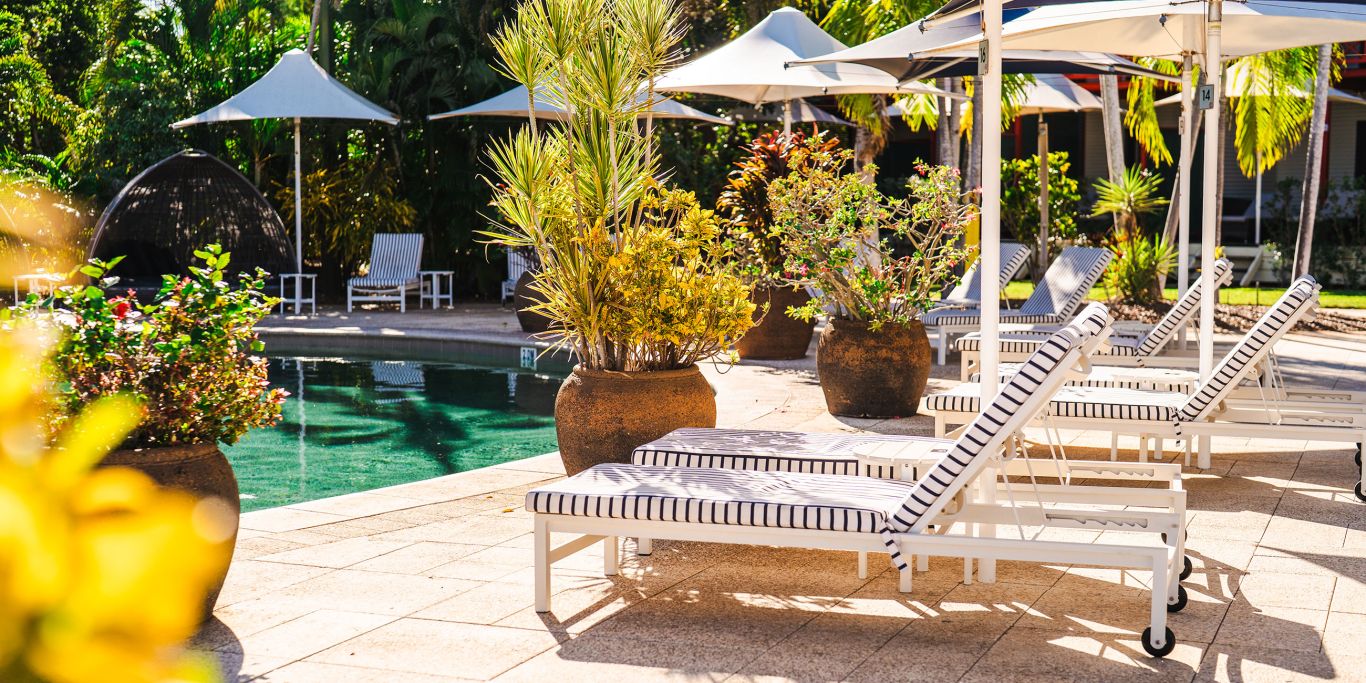
    For dinner, nab a table at the Bali Hai Cafe, where they offer pan-fried crispy barramundi, Abrolhos Island scallops and deep-sea snow crab. When you’re ready for bed, check in to Pinctada Hotel Broome – a lush, tropical resort with palm-dotted gardens and a large, lagoon-style pool to cool off in.

    Beyond the beach

    Beyond the wide, open beach and never-ending sky of Cable Beach, there are many more reasons to visit North West Australia. These are just a few.

    Unmatched experiences

    Shinju Matsuri Festival's popular Long Table Dinner on cable beach
    Join Shinju Matsuri Festival’s popular Long Table Dinner. (Credit: Tourism WA)

    Engage with the history of the land and its people on an Indigenous cultural tour exploring everything from the local wildlife to the tastes of bush tucker. To understand the importance of pearling to this town, take a tour of Chinatown, or head outside of town to the live pearl harvests at Willie Creek or Cygnet Bay Pearl Farm, one of Australia’s oldest pearl farms.

    Learn why Japanese pearlers were central to Broome’s pearling success and visit the largest Japanese cemetery in Australia, where 900 Japanese pearlers were buried – a testament to the risks and rewards of this dangerous profession.

    And book ahead every spring for when communal tables, freshly cooked local fare and festoon lighting fill the beach for the extremely popular Long Table Dinner on Cable Beach. It’s a highlight of the Shinju Matsuri Festival, along with the Floating Lanterns Matsuri, where you can personalise a lantern and gently release it into the sea to honour those you love.

    Dining discoveries

    Matso’s Broome Brewery
    Settle in for Matso’s famous ginger or mango beer. (Credit: Tourism WA)

    Further your culinary adventure at the laid-back Sunday Sesh at Matso’s Broome Brewery. Chow down on smoked crocodile or Aussie barramundi while kicking back to a local DJ as the heat of the day fades.

    For more tunes, the beautiful outdoor Bay Club at the Mangrove Hotel is a great choice for dinner with live music, DJs or an event that stretches on into the early hours. Still hungry? Pop by Johnny Sausage for Italian-influenced meals paired with impeccable wines.

    Natural beauties

    Gantheaume Point cabnle beach broome
    Experience the striking colours of Gantheaume Point. (Credit: Tourism WA)

    Avoid the crowds and head to Town Beach for a quieter vantage point to see the phenomenal Staircase to the Moon – a natural illusion where the rising full moon is reflected on the tidal flats, creating a shimmering ‘staircase’ stretching up to the sky.

    Just south of Cable Beach are the deep red cliffs and dramatic ocean views of Gantheaume Point, where 130-million-year-old dinosaur footprints can be seen, revealed at low tide. Or head to Roebuck Bay to visit the internationally significant wetlands, where vast tidal flats are home to shorebirds and coastal fauna.

    Between October and March, watch turtles nesting and hatchlings emerge from the sand. You’ll be holding your breath as they make their way down to the shoreline, ready to start their life in one of Australia’s most beautiful landscapes.

    For more on Cable Beach and Australia’s North West, visit australiasnorthwest.com.

    The Ultimate Guide to WA’s Wildflower Season | Australian Traveller