Top 10 unique accommodation offerings around Australia

hero media
Top 10 unique accommodation offerings from our 100 Incredible Experiences (right here in your backyard) special issue.

Having stayed in amazing accommodation across the country, the Australian Traveller team is often asked what our favourite places are. Contrary to popular opinion, what we consider to be the ‘best’ is not always the most luxurious or au courant; these days, we prefer accommodation with a difference. Here, we’ve collated 10 of the most unique and beautiful stays around the country.

1. Retreat to the mountains – Moonbah Huts, Moonbah Valley, NSW

Who hasn’t dreamt of staying in a cute stone cabin nestled in the snow in the mountains? Moonbah Huts are located on the outskirts of Jindabyne in NSW’s Snowy Mountains. On the banks of the Moonbah River, each of these two charming huts boasts a large open fireplace, underfloor heating, and an indoor bathroom. Depending on the season, the area is fabulous for getting out and about, whether it be fly fishing, horseriding, bushwalking, snowshoeing, and, of course, skiing.


Who will love it? Great outdoors enthusiasts. There’s no television reception, but when you can read a book on this sweet verandah, taking in some of the crispest air you’ll ever breathe, why would you need it? 

2. Sleep in a Scandi-style Federation house – The Estate, Trentham, Victoria

This estate is an absolute treat for the eyes: raw, simple styling inspired by Scandinavian design, fresh white walls, dark floors, natural wood, a glorious blend of old and new furnishings… this 1902 Federation house sits less than an hour from Melbourne, in Trentham, a small town nestled midway between Woodend and Daylesford at the top of the Great Dividing Range. Guests stay in one of three chic bedrooms cosying up in bespoke pure linen. The lounge area is just as cushy with oversized sofas layered with blankets and cushions, large wool rugs, and an open fireplace; there’s a second fireplace in front of the tub in the central bathroom.


Who will love it? Cooks. The gardens surrounding the house are pretty and practical – there’s an array of herbs and veggies fresh for picking, as well as a mini orchard, an idyllic spot for a long lingering lunch. 

3. Enjoy a remote outback oasis with some frills – Karijini Eco Retreat, Karijini National Park, WA

Deep in the heart of the rugged Pilbara region is Karijini National Park, a breathtaking oasis of pristine pools and dramatic gorges dating back a staggering 2500 million years. despite being utterly remote (its nearest town, Tom Price, is 60 kilometres away), visitors are not left to rough it in a swag, unless you want to, of course. Karijini Eco Retreat is a sustainable getaway, 100 per cent owned by the Gumala Aboriginal Corporation.


Who will love it? Happy glampers. Just a short walk from some of the park’s incredible natural attractions including Joffre Gorge, the retreat offers comfortable tents, an al fresco restaurant and bar.

4. Stay in a surf shack like no other – Roozen Residence, Margaret River, WA

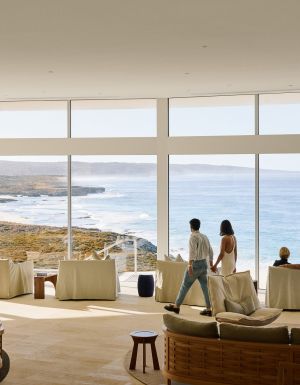
The Roozen Residence is a stunning architecturally designed home that overlooks surfers’ favourite Prevelly Beach in the Margaret River region. The house has a relaxed industrial vibe; its exterior is resplendent in cement render and copper, the interior with polished terrazzo floors and crisp white walls.


Who will love it? Surfers. Owner and artist Ron Roozen (whose art graces the walls), and designer, Dale Jones-Evans (the man behind Bennelong at the Opera House), are surfing fanatics. With 180º ocean views, you can check the surf from almost every room and watch as surfers ride world-class breaks into shore. 

5. Feel a million miles away – Marion Bay House, Marion Bay, Tasmania

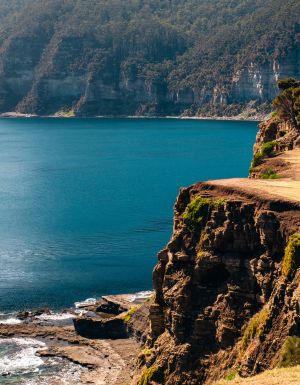
The work of award-winning architects, the simplistic design of Marion Bay House was inspired by weathered rural farm buildings, built with natural timbers, cement sheeting, and rugged, rough-sawn macrocarpa. The interiors are spacious, with large windows inviting the dramatic landscape in. Despite being just an hour from Hobart, you’ll feel completely secluded.


Who will love it? Design devotees. Suspended from the ceiling, the fireplace can rotate 360⁰ to warm any area in the living/dining space – it’s so unique, it was exhibited in Stockholm’s Museum of Modern Art in 2000. 

6. Rent an historic seaside cottage – Dickebusch, Patonga

This humble fibro–weatherboard cottage built in 1929 is an enigmatic stay located in the quiet seaside suburb of Patonga on NSW’s Central Coast. Its unusual name was chosen to commemorate the son of its original family who died in the First World War and was buried in Dickebusch, Belgium. Though the outside retains its original form, the interior has been almost completely rebuilt by its current owners, the same people behind Australian design brand Koskela.


Who will love it? Families. Just a couple of quiet blocks from the beach, one block from the lake, and surrounded by national park, this is the perfect family weekender and the complete antidote to city living. See koskela.com.au/accommodation

7. stay in a restored convict cottage – Ratho Farm, Bothwell, Tasmania

In the 1860s, a well-travelled English writer described the house on Ratho Farm as one of the most picturesque and ideally English homes outside of England. Snuggled in the highlands of Bothwell just an hour from Hobart, Ratho Farm has survived an interesting history; past guests (some uninvited) include bushrangers, golfing royalty and exiled Irish nationalists. The restored colonial farm buildings and convict cottages retain elements of its remarkable past with original masonry and carpentry.


Who will love it? Golfers. The farm is home to Australia’s oldest golf course, which has been consistently played on since the 1800s. 

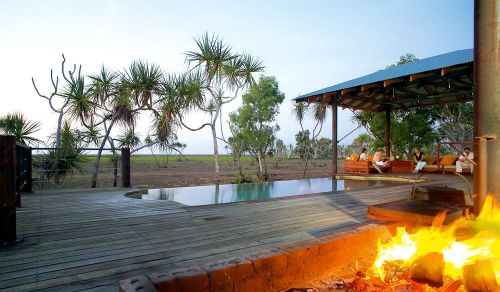
8. Have a wild (luxurious) adventure – Bamurru Plains, Kakadu, NT

On the edge of Mary River floodplains in Kakadu National Park, this exquisite lodge offers a uniquely Australian experience, one they like to call ‘wild luxury’. Complementing the natural beauty of this biodiverse area, Bamurru Plains  lodge has creature comforts such as safari bungalows, fine food and wine, an infinity pool, and a well-stocked library.


Who will love it? Adventurers. This is an extraordinary experience where you can discover abundant wildlife and some 236 bird species by foot, 4WD and airboat. 

9. Get stranded (by choice) on a remote island – Haggerstone Island, Queensland

Live out your Robinson Crusoe fantasies at this private island, which lies 600 kilometres north of Cairns in the Great Barrier Reef. Getting to Haggerstone is an adventure via private charter, but once here, life is simple with the only necessities cossies and bare feet. You’re not a complete castaway, though, with a very civilised bar, fireplace, wine cellar and library in the main house to share with just a handful of lucky guests. The accommodation itself is made up of a host of individually designed rustic lodges sitting within a tropical canopy with views of the pristine Coral Sea.


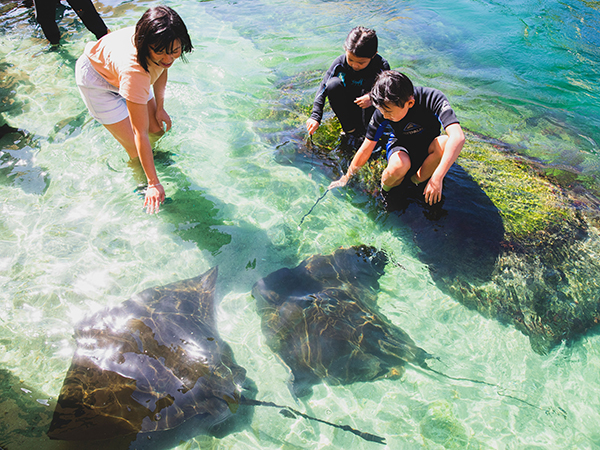
Who will love it? Castaways. This island is a place where coconuts are abundant, Champagne is served at sundown, and the only other locals you’ll likely meet are turtles, rays and the abundant sardine population. 

10. Make like a Bond villian – Alkira, Cape Tribulation, Queensland

Located on 28 hectares of rainforest in Cape Tribulation, with direct access to a private beach, this incredible house sits at the point where two World Heritage areas, the Great Barrier Reef and Wet Tropics, meet. This otherworldly piece of architecture comes with a kitchen fit for a hatted chef, a 2400-bottle, temperature-controlled wine cellar suitable for any sommelier, and a grand open-plan design to suit any fussy family or two. Its name Alkira comes from the Aboriginal word meaning ‘A happy place in the sun’.


Who will love it? Eco warriors. The carbon-neutral sanctuary is the work of local architect Charles Wright and is completely self-sufficient. See contemporaryhotels.com.au

From coast to bush: these are Gippsland’s best hikes

Video credit: Tourism Australia

From coast to mountains, hiking in Gippsland offers a stunning array of landscapes, with trails that take you deep into the region’s heritage.

I step out onto the sand and it cries out underfoot. Kweek! I take another step and there’s another little yelp. Screet! Picking up the pace, the sounds follow me like my shadow, all the way down to the water. It’s obvious how this spot got its name – Squeaky Beach – from the rounded grains of quartz that make the distinctive sounds under pressure.

For many, Wilsons Promontory National Park is the gateway to Gippsland , and the best way to explore it is by walking its network of hiking trails, from coastal gems such as Squeaky Beach through to the bushland, among the wildlife. But it’s still just a taste of what you’ll find on foot in the region.

Venture a bit further into Gippsland and you’ll discover the lakes, the rainforest, and the alpine peaks, each changing with the season and offering summer strolls or winter walks. Just like that squeaky sand, each step along these trails has something to tell you: perhaps a story about an ancient spirit or a pioneering search for fortune.

The best coastal hikes in Gippsland

sunset at Wilsons Promontory National Park
Wilsons Promontory National Park is a sprawling wilderness with many coastal bushland trails. (Image: Mark Watson)

Wilsons Promontory National Park (or ‘The Prom’, as you’ll end up calling it) is an easy three-hour drive from Melbourne, but you might ditch the car when you arrive, with much of the park’s 50,000 hectares accessible only by foot. From the inky water of Tidal River (dyed dark purple by abundant tea trees), I like the easy walks along the coast, among lichen-laden granite boulders, to golden beaches and bays.

a couple on Mount Oberon
Panoramic views from the summit of Mount Oberon. (Image: Everyday Nicky)

The trail to the panoramic views at the summit of Mount Oberon is a bit harder, up steep timber and granite steps, but it’s a popular 6.8-kilometre return. The more remote hikes are found through the open banksia and stringybark woodland of the park’s north, or along the multi-day Southern Circuit , which ranges from about 35 to 52 kilometres, with sunrises and sunsets, kangaroos and cockatoos, and maybe even whales.

a golden sand beach at Wilsons Promontory National Park
Walk ‘The Prom’s’ golden sand beaches. (Image: Tourism Australia/Time Out Australia)

You might also see whales on the George Bass Coastal Walk , even closer to Melbourne on the western edge of Gippsland. This dramatic seven-kilometre trail along the clifftops takes in sweeping views of the wild ocean, occasionally dipping down from grassy green hills to coastal gullies and a secluded beach. It also now links into the Bass Coast Rail Trail for an extra 14 kilometres.

the George Bass Coastal Walk
George Bass Coastal Walk trails for seven kilometres along clifftops. (Image: Visit Victoria/Time Out Australia)

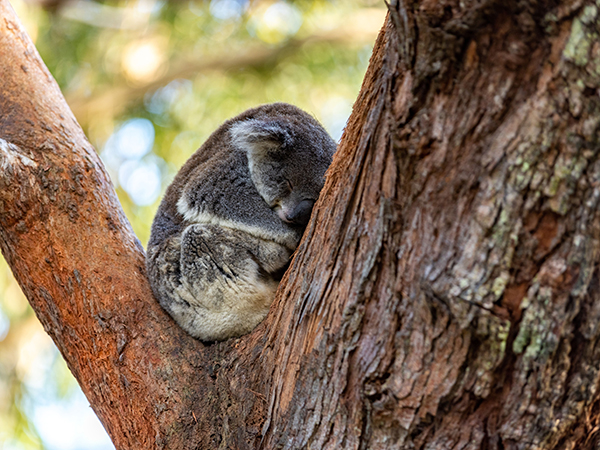
Over at the eastern edge of Gippsland, in Croajingolong National Park, you can wander along the lakeshores beneath koalas and around goannas (I keep my distance since one chased me here!). For those who are even more adventurous, the park is also the starting point for the 100-kilometre Wilderness Coast Walk , usually done over seven days.

the Croajingolong National Park, Gippsland
Wander along the lakeshores in Croajingolong National Park. (Image: Tourism Australia)

The best bush hikes in Gippsland

the Baw Baw National Park
The alpine heath of Baw Baw National Park. (Image: Everyday Nicky)

Deep in the Long Tunnel Extended Gold Mine at Walhalla, mining guide Richard tells me how this small town in the mountains east of Melbourne boomed when prospectors found gold here in 1862. These days, you’ll find most of the town’s treasure – its heritage – above ground, with the Walhalla Tramline Walk a wonderful way to explore it.

Just seven kilometres long, the walk takes you through decades of Gold Rush history, following the original rail trail from lush bushland to the mining sites, and through the charming village of just 20 residents with its wooden cottages and old shopfronts adorned with turn-of-the-century advertising posters. Blazing a trail where trailblazers once opened up the region, this is also the starting point for the 650-kilometre Australian Alps Walking Track.

Nearby, Baw Baw National Park has walks through gnarled snow gums and alpine heaths that show off the colourful wildflowers in summer and the pristine carpet of white in winter. Several trails are perfect for snowshoes, including a 45-minute route from St Gwinear up to vast views across the Latrobe Valley.

Further up into the mountains, the Toorongo and Amphitheatre Falls Loop Walk is an easy 2.2-kilometre path that serenades you with the sound of flowing water as you pass mossy rocks and tree ferns en route to two sets of waterfalls cascading over boulders in the remote wilderness.

The best cultural hikes in Gippsland

the Mitchell River National Park, Gippsland
Hike the Mitchell River National Park. (Image: Parks Victoria/Grace Lewis)

Across a pool in a natural sandstone amphitheatre, deep within a cave behind a waterfall, it’s said the Nargun has its lair. A fierce creature, half human and half stone, that abducts children and can’t be harmed by boomerangs or spears, the story of the Nargun has been told around the campfires of the local Gunaikurnai people for generations.

As a culturally significant place for women, hikers are asked not to go into the Den of Nargun, but a 3.4-kilometre loop walk leads you through a rainforest gully to the entrance where you can feel the powerful atmosphere here in Mitchell River National Park , along Victoria’s largest remaining wild and free-flowing waterway.

the bee-eaters at Mitchell River National Park
Bee-eaters at Mitchell River National Park. (Image: Parks Victoria/Grace Lewis)

The Den of Nargun is part of the Bataluk Cultural Trail , a series of important traditional Gunaikurnai sites through central Gippsland. Another location is Victoria’s largest cave system, Buchan Caves Reserve, with trails to important archaeological sites of human artefacts up to 18,000 years old. The FJ Wilson Interpreted Walk includes the naturally sculpted white limestone steps of the 400-metre-long Federal Cave, while the Granite Pools Walk goes among tall timber and moss-covered gullies.

the ancient rainforest of Tarra-Bulga National Park
The ancient rainforest of Tarra-Bulga National Park. (Image: Josie Withers)

Also important to the Gunaikurnai people is Tarra-Bulga National Park , known for its ancient myrtle beeches and enormous mountain ash trees. Just 40 minutes return, the Tarra Valley Rainforest Walk offers a taste of this verdant landscape, while the Grand Strzelecki Track takes you deep into the lost world of forest giants on an epic 100-kilometre trail rich with tradition.

A traveller’s checklist

Staying there

the WildernessRetreats in The Prom
Wilderness Retreats in The Prom. (Image: Christian Pearson)

Wilderness Retreats in Wilsons Promontory offers glamping-style tents with luxurious queen beds. Star Hotel is a reconstruction of a Gold Rush-era hotel from 1863 in the heart of heritage Walhalla. Caves House is a historic three-bedroom house with views over the Buchan River.

Eating there

the Carrajung Estate, Gippsland
Enjoy a post-hike lunch at Carrajung Estate. (Image: Everyday Nicky)

Kilcunda General Store serves great coffee and meals of local produce at the George Bass Coastal Walk. Alpine Trout Farm is located near Toorongo Falls in Noojee. Fish for your own lunch and barbecue it with the provided cookware.

Carrajung Estate is a short drive from Tarra-Bulga National Park. The winery’s restaurant offers a seasonal menu of regional ingredients and you can stay at The Lodge.

a seafood feast at Carrajung Estate, Gippsland
The table is set for a seafood feast at the estate.

Video credit: Tourism Australia