A third-generation butcher in Tasmania shares his passion for the trade

hero media
For a snapshot in time, we asked eight people around the country to reflect on Australia Now. Here, Marcus Boks, master butcher of Boks Bacon in Tasmania, shares his thoughts on what the global pandemic has taught him.

Keep reading our Australia Now series here.


I live in a little town called Margate, which is over the mountains from the Huon Valley in Tasmania. It’s about 15 minutes south of Hobart. My family are from the Huon Valley, but we have just moved from the Huon to Margate.

Why it’s great to live and work in Tasmania

I’ve lived in Tasmania for 50 years and I’m a third-generation butcher. I have my eldest son working with us now so the fourth generation is entering the business. It’s a family tradition that dates back to my grandfather in the Netherlands.


My Australian family grew up in the Huon valley and with everything that’s been happening in the world, we feel lucky to be here. It feels like a safe haven. There are so many tracks for bushwalking and I love that freedom of setting off into the landscape. The scenery is breathtaking. One of my favourite landmarks is Sleeping Beauty, a mountain that resembles a giant female sphinx lying under a rumpled blanket.


The Huon is a vibrant place to live. I can travel two minutes down the road and be at a secluded beach. I can be fishing or picking oysters the size of my hand off the rocks. We’ve had a lot of mainland people moving down here recently for a sea change.


One of my favourite places to visit is Hastings Caves. It is a massive magical dolomite cave with stalactites and stalagmites and a thermal pool. Not too far is the Airwalk down in the Tahune Forest, which is a big footbridge system that has been built through the trees.

What the global pandemic has taught him

The beautiful scenery and our ability to get back to nature has definitely helped us weather the extraordinary circumstances of the past few years. And in terms of selling Boks Bacon, business has never been better. It’s been a challenge to keep up with the demands. We had to lift production, but I have plenty of good workers, so that wasn’t a problem. COVID nudged a lot of people to seek pleasure in simple things, like artisan produce. Our bacon has no added water, which means more flavour. Boks Bacon is made following an old Dutch recipe that was brought to Tassie in the 1950s. It has developed even more of a cult following during COVID.
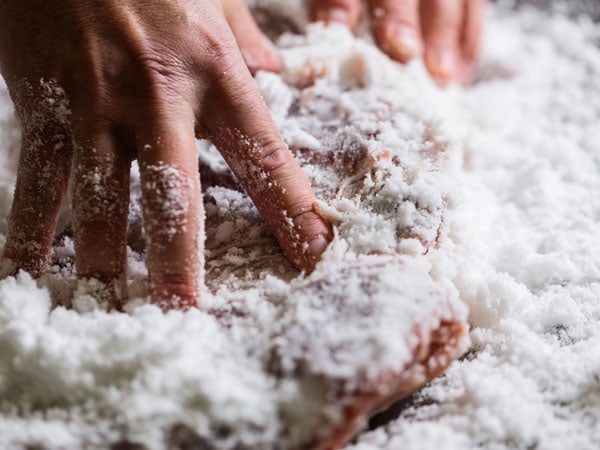
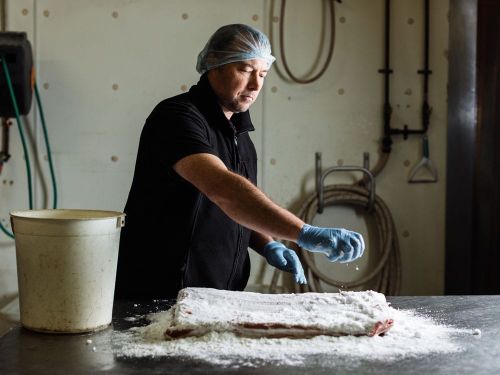
Boks Bacon being dry-cured
The first thing to note about Boks Bacon is that it dry-cured and not injected with brine, says master butcher Marcus Boks. (Image: Samuel Shelley)

As a community, we learned a lot during COVID. Tasmania has, in the past, been a bit divided: with Hobart in the south, Launceston in the north, you were either north or south. There was a real divide there. Now that COVID has happened and we closed borders it made Taswegians feel like we were all living in the best spot. It made us get together a bit more and become more of a unified state rather than a state split into two different halves. The only place we could go was within our own state. It has given Tasmanian people a very good reminder about what we have here.

The growth in popularity of food from Tasmania

In the last 10 years or so, people around the world have started to recognise how good the food is coming out of Tasmania. Interstate people have known about just how good the food and wine is here for a lot longer than the Tasmanians. COVID has shifted the focus to products such as ours. People have started looking for local product. They want to support us. A lot of the big producers don’t use Australian pork. The pork we use is all Australian; it’s free-range pork from ethical and sustainable farms in Tasmania and Victoria. Our bacon is 100 per cent Australian pork.


When I offer my bacon to someone who hasn’t had it before, the first thing I tell them is it is dry-cured, so not injected with brine. Some of the mass-produced bacon is injected with 25 per cent to 50 per cent brine, which means you are paying for a lot of water. It’s also already cooked so you lose all the flavour when it hits the pan. Our bacon is cold-smoked. But we developed a no-nitrite product in the past year and we want to eventually move over to doing all nitrite-free. People have started looking at what they are consuming.
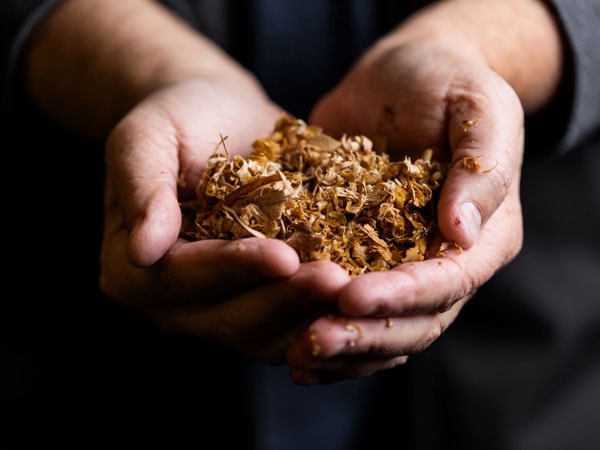
Boks Bacon is cold-smoked
Boks Bacon is cold-smoked in a wood-fired smoker using Tasmanian Oak.

I am so proud of the fact our bacon is still made using this old-fashioned recipe. It’s a product that has withstood the test of time. My grandfather came out from Holland with his family in 1951. He had spent a few years in a POW camp and after that he decided he was going to ship the family out and start anew. He came to Australia and he brought that recipe with him. He learned his trade in about 1930 and learned the recipe from an old butcher who learned the craft in the late 1800s. The recipe has gone from my grandfather Johannes Sr to my father Johannes Jr to me and now onto my son Justin.

hero media

Why the Central Coast is a foodie mecca

Underpinned by grassroots hospitality and award-winning organic produce, the Central Coast’s gastronomy scene is thriving, with the region quickly becoming one of the best destinations in NSW for epicures.

Revered for its rugged natural splendour and laid-back seaside charm, NSW’s Central Coast has soared in popularity in recent years, becoming a top choice for an affordable slice of weekend escapism for Sydneysiders. Just a short 45-minute drive north of Sydney, it’s the kind of place that, no matter how many times you visit, leaves you with the sense that there’s always more to uncover. But while the ocean pools, bushwalks and beaches have (rightly) taken the spotlight, it’s the Central Coast food offerings which have been quietly simmering in the background.

From fresh-as-it-gets seafood and juicy organic citrus you can pluck yourself, through to regenerative farming and reputable farm-to-fork dining, this coastal gem has become an idyllic foodie mecca. Here are some of the best ways to immerse yourself in grassroots hospitality and gastronomic glory on the NSW Central Coast.

vegetables in a basket at Bells Garden at Bells At Killcare
From picking your own, to farm-to-table, discover the best Central Coast food experiences. (Image: Remy Brand)

Central Coast oyster experiences

From humble grub to opulent delicacy, oysters have ascended into a league of their own. Epicureans are fascinated by them – willing to pay upwards of $35 per dozen (double at some of Sydney’s reputable fine dining restaurants) – and ‘shuck bars’ seem to be popping up at every milestone celebration.

But it’s rare to find places that really draw back the curtain on how they’re farmed and why everyone is mad for these molluscs. The Central Coast , however, is home to several of these venues. With its pristine waters, mild climate and nutrient-rich estuaries, it’s the perfect breeding ground for oysters.

Learn about oyster farming and, importantly, how to shuck them at Sydney Oyster Farm Tours . Nestled on the Hawkesbury River at Mooney Mooney, Sheridan Beaumont and her team offer a hands-on foodie experience where you can feast on dozens of oysters (white tablecloth and all) while wading through the calm waters. You can even bring your own bottle of bubbles to wash them down.

guests in the water for an experience at Sydney Oyster Farm - Central Coast food
Learn tricks of the trade at Sydney Oyster Farm Tours. (Image: Remy Brand)

Elevate your oyster knowledge even further by heading north over the Hawkesbury River Bridge to the Hawkesbury River Oyster Shed . Tour their scenic oyster leases and saltwater paddocks by boat to uncover the distinct characteristics of the Sydney rock oyster and creamy Pacific oyster. They’ve also partnered with Broken Bay Pearl Farm to offer a one-of-a-kind oyster and pearl farming guided tour, showcasing the Central Coast’s very own pearl oyster, the Broken Bay ‘Akoya’. But if you’re simply in the mood to devour a dozen delectable oysters while soaking in the tranquil river views, pull up a chair at the shed. It’s friendly in every sense of the word: pets, families and BYO welcome.

shucking oysters at Broken Bay Pearl Farm
Taste freshly shucked oysters at Broken Bay Pearl Farm. (Image: James Horan)

Central Coast farms to pick your own fruit

While the Central Coast is known for its breathtaking 40 beaches and 80-kilometre coastline, its lush hinterland is equally impressive – abundant with orchards and agriculturally rich farmland. And when it comes to the simple joy of picking your own fruit, the Central Coast is a ripe playground.

Family-owned Meliora Farm at Peats Ridge is an orchard that blends conventional, biodynamic and organic philosophies. Third-generation farmer Tim Kemp and his wife Elise are dedicated to honouring the family legacy by growing a rich variety of oranges, lemons, limes, mandarins and avocados. In late May, roam the sustainable and nutrient-dense property during ‘Pick Your Own’ weekends.

Eastcoast Beverages is another bountiful citrus orchard boasting over 60 hectares of fruit. From June you can learn about the cultivation of high-quality ingredients – like lemons, limes, grapefruit and oranges – by touring both the farm and factory before setting out and picking your own straight from the source. You can also sample an array of citrus-inspired sweet and savoury treats at their on-site cafe, Bambino’s .

If it’s just juicy oranges you’re after, Cedar Farm in Dooralong is a must-visit. Located about 30 minutes north of Peats Ridge, it features 15 flourishing orchards and over 3000 orange trees – with take-home bags during the season (from July) at low prices. Not bad for a fruity weekend haul.

woman picking oranges at Oranges at Dooralong
Pick your own citrus fruits on the Central Coast. (Image: James Vodicka)

Organic dining

What makes the Central Coast hinterland so special is the unwavering respect the communities have for their cherished backyard. Locally owned and operated farms are all striving for more sustainable practices and methods to both enhance biodiversity and reduce environmental impact, each with a heartwarming food philosophy.

The Food Farm in Wyong Creek believes good food is worth both the work and the wait. Devoted to regenerative farming, first-generation ‘farmily’ Tim Eyes and Hannah Greenshields are recognised for their grass-fed, grass-finished beef and pasture-raised, gold medal-winning chickens. With an open gate policy, The Food Farm encourages visitors to swing by and try some of their slow-grown produce at their small ‘honesty’ farm shop. With no staff, you can pick up a few quality cuts of meat and pasteurised eggs, leaving the owing amount in cash or via eftpos.

Keeping the spirit of generational organic farming alive is Fanelli Organics . Nestled in the Central Coast’s scenic and sleepy Mangrove Mountain, founders Eden and Louise Fanelli own over 45 hectares of plentiful farmland and orchards that produce a huge range of organic fruit and vegetables, like purple Dutch carrots, blood oranges, broccoli and Tuscan kale. A true home-grown operation, Fanelli Organics shares its fresh produce with local restaurants and community markets, including the beloved markets at Like Minds Cafe at Avoca Beach every Wednesday afternoon.

farmers holding fresh produce picked at Fanelli Organics
See where your food comes from at Fanelli Organics.

Paddock-to-plate dining

High-quality ingredients go hand in hand with premium dining, and the Central Coast is home to several paddock-to-plate restaurants that showcase its diverse and rich agriculture. Paired with warm, grassroots hospitality, there are culinary triumphs, new menus and revered chefs constantly popping up, putting the local dining scene firmly on the map.

Award-winning Mount White restaurant Saddles is a quintessential Australian dining destination, dedicated to country-style cooking and seasonal produce. Nestled in thick bushland with wraparound verandahs, floral gardens and an idyllic dam, the gourmet homestead and bakehouse is unlike any restaurant on the Central Coast. Here, head chef Reece Collins and his team serve up an impressive breakfast and lunch menu that oozes rustic charm. Pull up a comfy armchair on the expansive deck, listen to birdsong, and tuck into flavoursome dishes like the farmhouse Benedict with honey-cured ham, lemon myrtle hollandaise and Warrigal gremolata, or the hearty beef brisket pie with confit garlic potato purée and rainbow chard.

woman writing in notebook next to a table of food at Saddles, Central Coast food
Taste country-style cooking at Saddles. (Image: Destination NSW)

Delivering a slice of sophistication and luxury to the shores and bushland of Bouddi Peninsula is Bells at Killcare . One of the few boutique resorts on the Central Coast, it’s known for its premium service and five-star suites, as well as its bountiful kitchen gardens that boast an orchard, olive trees, avocado trees, free-range hens and a honey bee hive.

Cameron Cansdell has returned to Bells at Killcare as head chef, bringing his expertise to the casual yet refined menus that feature a raw bar with Oscietra caviar, freshly shucked Sydney rock oysters and Moreton Bay bugs, all served alongside optional matched wines. Sample some of Australia’s best regional wines and standout dishes, like roasted Wollemi duck with grilled leeks, rocket, grilled grapes and 10-year-aged balsamic, or the shareworthy salt-crusted snapper with herb salad and salsa, before roaming the picturesque gardens, wine in hand.

cocktail at Bells At Killcare
Sample incredible wine, cocktails and dishes at Bells At Killcare. (Image: Nikki To)

Plan your next visit to the delicious Central Coast.