8 Aboriginal sacred sites you must visit

hero media
Aside from being an ancient continent, Australia is home to the oldest continuous living culture on Earth. Explore some of the outback’s more accessible Aboriginal sacred sites and rock art locations and learn to Dream along the way.

Exploring the outback, driving through it, walking about in it and camping beneath its field of stars, allows us to connect with the heart of Australia. However, there’s a different – and deeper – way to experience the outback: through the eyes of the First Australians.


Here are a few sites, some less accessible than others, but well worth going that extra mile, that offers outback adventurers, awe-inspiring views, fascinating rock formations and luscious valleys – all in the name of understanding Australia’s Indigenous heritage more fully.

1. Mount Borradaile
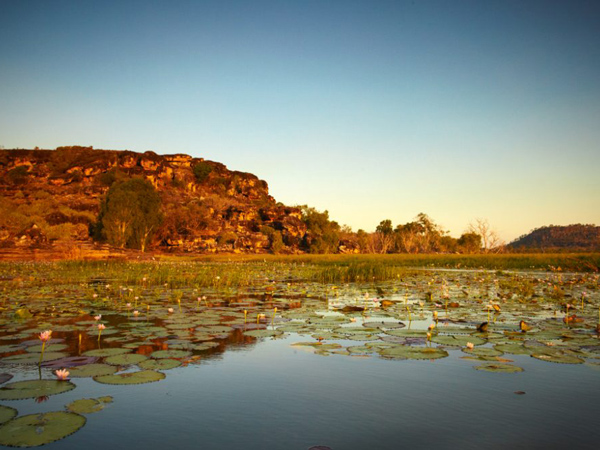
Mount Borriadaile Aboriginal sacred site
Mount Borradaile.

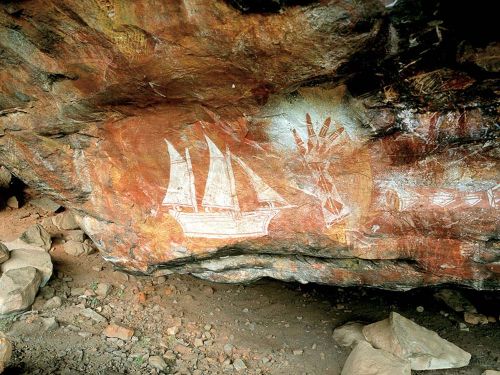
In the northwest corner of Arnhem Land, this national treasure depicts ancient human occupation dating back at least 55,000 years and allows you to become a student of pristine wilderness at the same time. The sacred area has ample fishing spots and crystal-clear, croc-free pools, as well as some of the most colourful and prolific rock art in the world – some of which even depicts the first contact between Aboriginal and European peoples, with sailing ships and rifles clearly recognisable.

2. Ubirr, Nourlangie Rock and Injalak Hill

Like Mount Borradaile, Ubirr, Nourlangie Rock and Injalak Hill in Kakadu feature breathtaking rock art that details ancient works of animals and tools, overlaid by more recent scenes of the first contact. They’re also home to excellent examples of “x-ray" paintings, as well as sacred creation beings like Ngalyod (the Rainbow Serpent), Namarrgon (the Lightning Man) and his wife, Barrginj.

3. Windjana Gorge
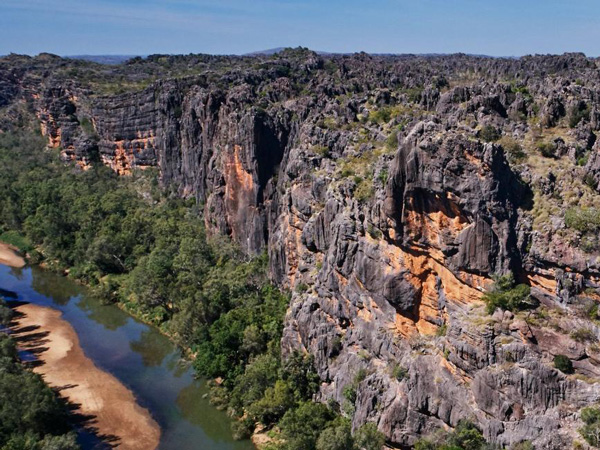
Windjana Gorge Australia
Windjana Gorge.

Next to Tunnel Creek National Park in the Kimberley, Windjana is a day trip from Derby or Fitzroy Crossing. Born from a 375 million-year-old Devonian reef system, the impressive Gorge was carved from the Napier Range by the Lennard River. Windjana’s walls rise to 100m in places, and its bed is more than 100m wide. In the wet season, caused in local Dreamtime legends by the spirit Wandjina (after whom the gorge is named), the river rages. In the dry, conditions are perfect for a little canoeing – and viewing of rock art in the Tunnel Creek cave system itself. The works in this part of the Kimberley tend to depict either Gwion Gwion (Bradshaw) figures or images of the Wandjina ancestral creation being.

4. The MacDonnell Ranges

The Eastern Macs (to the east of Alice Springs) is home to rock art sites sacred to the Arrernte in Emily Gap, Jesse Gap and Trephina and N’Dhala Gorges, while the Western Macs is home to the famous Larapinta Trail , as well as a myriad of other easily accessible highlights (Ormiston Gorge, Standley Chasm, Palm Valley etc). Of particular interest to the rock art-hounds are the Ochre Pits about 65km west of Alice, near Serpentine Gorge. Easy to access from the road, they were once an important source of paint and medicine.


And while you’re in the area, definitely consider a stay at the Gunya Titjikala community 120km south of Alice Springs for its deluxe tents, evening Dreamtime stories and valuable art collection.

5. Rainbow Valley
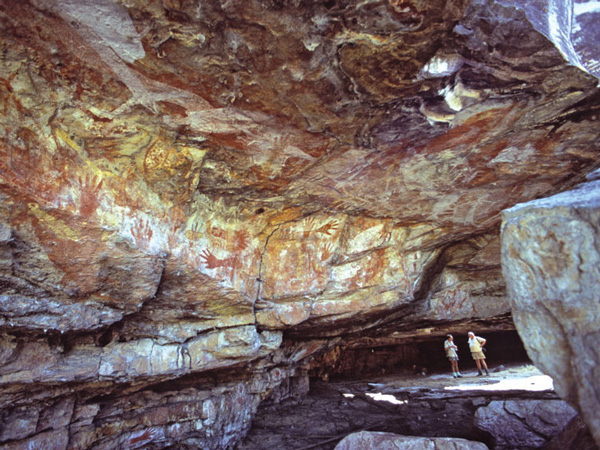
Rainbow Valley Australia
Rainbow Valley.

An important area for the Southern Arrernte of Central Australia, Rainbow Valley lies just under 100km south of Alice Springs and helps form the James Range. Its sandstone cliffs, shaped by water erosion, also hide countless petroglyphs (rock engravings), paintings, relics of stone tools and a large outcropping called “Ewerre", which is of particular significance and is a registered sacred site.

6. Cave Hill

Straddling the boundary of SA and the NT in the Musgrave Ranges, Cave Hill is in Anangu land and is the site of the Seven Sisters Tjukurpa creation story. Considered one of the most spectacular sites for rock art in Central Australia, the ceiling of the cave is covered in vibrant motifs that are to this day carefully and precisely retraced by traditional custodians to preserve their stories. The top of Cave Hill also provides excellent 360-degree views back to Uluru and distant Mt Connor.

7. Uluru
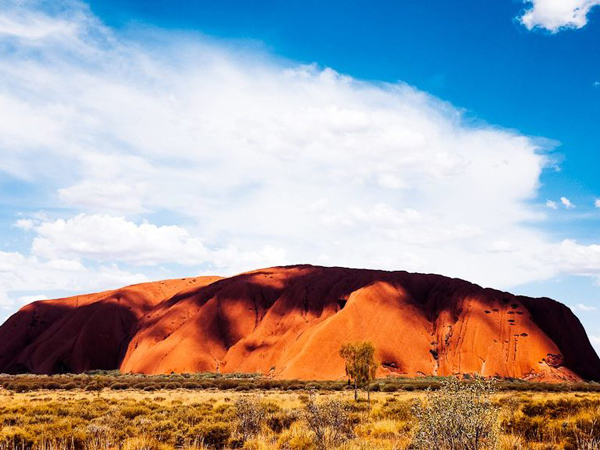
Uluru Northern Territory
Uluru.

This one perhaps is one of our most sacred sites. Uluru is a massive sandstone rock located right in the middle of the Northern Territory’s Red Centre. It was believed to have started forming over 550 million years ago. The traditional owners of Uluru, the Anangu community have long since urged people to circumnavigate the rock on foot, rather than climb it due to its spiritual significance and for their own safety. It wasn’t until October 2019 that the climbing ban officially came into effect – and with good reason.


Just in case you are wondering, we have 5 reasons the Uluru climbing ban makes total sense and we also have 11 things to do at Uluru that aren’t climbing.

8. Aboriginal Outback Protocol

There are several great articles on respecting Aboriginal protocols, here are some recommended reading:

Responsible Travel in the NT

How to buy Aboriginal Art ethically

In general, there should be no physical contact with items at Aboriginal sites, sacred or otherwise. Find out exactly what you are and aren’t allowed to take pictures of, and make sure you get consent (and permits) from the appropriate tribe/community before touring their land. Do not take anything from the land, like plants or sand because this is very disrespectful.

But don’t let protocols intimidate you overly; if you adhere to them faithfully and respectfully, there’s no reason why you can’t have an enlightening journey through the ancient outback.

If you want to explore more Outback holidays, head here for all you need to know.
hero media

Your Mandurah guide: art, dining & dolphins await in WA’s coastal gem

Discover the perfect road trip stopover between Perth and wine country.

Western Australia punches above its weight when it comes to coastal hot spots, but no other town or city has seen a tourism boom quite like Mandurah. Named Australia’s Top Tourism Town in 2023 , it’s the relaxed, beachside break you’ve been searching for. And it’s perfectly placed, sitting between Margaret River and Perth, as it’s just a 55-minute drive from Perth’s CBD. Which is why we’ve put together your ultimate Mandurah guide.

Aerial view of Mandurah.
Plan your perfect coastal escape to Australia’s Top Tourism Town of 2023.

The best things to do in Mandurah

Wetlands and rivers, ocean and inlet; Mandurah’s laid-back lifestyle centres around the aquatic. Its waterways cover twice the ground of Sydney Harbour – measuring some 134 square kilometres in total – and form a unique environment for oceanic and estuarine flora and fauna to thrive.

In the city’s estuary lives perhaps the region’s most famed inhabitants – a resident pod of 100 bottlenose dolphins – and the inlet’s silty bottom is home to the prized blue manna crab. Spot the former breaching and playing on an hour-long dolphin cruise through the channels, or try your hand at catching the latter by wading through the estuary’s shallows with a scoop net in hand.

While swimming at the circular Kwillena Gabi Pool, chance encounters with the local wildlife aren’t uncommon. The sheltered estuarine pool takes its name from the traditional custodians of the land, the Bindjareb people, and directly translates to ‘dolphin waters’. Jutting out of the eastern foreshore, it’s enclosed by a ring of net-free floating pontoons, which allow the dolphins to swim freely through the attraction.

If that’s a little too close for comfort, book a kayak tour with Down Under Discoveries . The dolphins have been known to cruise beside the paddle-powered crafts, which are a fun, family-friendly way to explore the city’s inner waterways.

Dolphins swimming in Mandurah.
Watch dolphins glide by as you explore Mandurah.

You don’t have to be on the water to appreciate the coastal city’s aquatic beauty, with 600 kilometres of cycleways and scenic walking trails traversing Mandurah’s estuary, inlet and coast.

Follow the 30-kilometre coastal trail and you’ll come face to face with one of Thomas Dambo’s headline-making ‘Giants of Mandurah  sculptures, Santi Ikto, along the way. There are five sculptures around Mandurah in total, hidden among gum-filled reserves or sitting sentry over the water.

Head to the Mandurah Visitor Centre to pick up a map to pinpoint their exact location and download the traveller’s companion to learn more about the sights along the way. Or join a three-hour e-bike tour from The Bike Kiosk and you’ll stop by two of the giants – Santi Ikto and Yaburgurt Winjan Cirkelstone – as you sightsee central Mandurah.

 The towering Santi Ikto, one of Thomas Dambo’s iconic Giants of Mandurah.
Meet Santi Ikto, one of the legendary Giants of Mandurah.

Where to eat in Mandurah

Mandurah’s culinary scene reflects its laid-back lifestyle, with large, honest meals and locally brewed beer. After visiting Lake Clifton’s 2000-year-old thrombolites, head to the peppermint and gum-shaded beer garden at Thorny Devil Brewery . Tuck into a platter of house-smoked meats and an ale pulled fresh from the tanks. Closer to town and right on the waterfront is Boundary Island Brewery ; here, woodfired pizza, pub-style seafood dishes and easy-drinking brews are centre stage.

On a Murray River Lunch Cruise , the focus is as much on the environment around you as the food you’re filling up on. Help yourself to the colourful salads and freshly cooked meats on the buffet as you meander up the winding, jarrah tree-lined waterway, stopping at the heritage Cooper’s Mill for a quick walking tour along the way.

Keep your eyes trained on the Creery Wetlands as you pass – you’ll spot much of the region’s migratory birdlife, and, as always, might see the playful bottlenose dolphins in the inlet.

The most memorable meals aren’t necessarily always the fanciest, and lunch aboard a self-skippered Mandurah BBQ Boat is a testament to that. All food and beverage prep is left up to you as you cruise through the canals, sausages and steaks sizzling away on the central hot plate.

If seafood is more your kind of fare, board the Wild Seafood Experience , where dolphin cruise meets long table lunch. Eight courses of crab, crayfish and scallops await.

A table filled with plates of crab, crayfish, and scallops.
Dine on the water with eight courses of ocean-fresh fare.

Where to stay in Mandurah

With so many waterways comes abundant waterside stays. Like the self-contained Seashells Mandurah on the shores of Comet Bay. The calm, oceanic outlook from the one-, two- and three-bedroom apartments and villas is as close to Maldivian as Mandurah gets. Families especially enjoy the property, bouncing between the protected cove and the beachfront pool for endless hours of fun.

Seashells Mandurah; on the shores of Comet Bay.
Stay right by the sea.

The Sebel Mandurah , just a hop, skip and jump from the Mandurah Ocean Marina, has a different outlook entirely, overlooking the estuary and lively foreshore on the other side. It’s also within walking distance of the Mandurah Performing Arts Centre , cinema and a swathe of waterfront bars and eateries.

But you can’t get any closer to the water than on a vessel from Mandurah Houseboats . You don’t need a skipper’s ticket to hire one, nor do you need comprehensive boating experience; just a full driver’s license and your undivided attention during the pre-departure tuition will do. Then you’re free to take to the estuaries and tributaries for a few nights of peaceful rest, surrounded by the very element that makes Mandurah so special.

A houseboat cruising in Mandurah along the river
Captain a houseboat to explore Mandurah at your own pace.

Plan your next WA getaway in Mandurah.