Got foreign currency floating around? There’s finally a way to get rid of it and some bang for your buck in the process with Accor Live Limitless.
Getting rid of foreign currency is complicated. While it often ends up taking up space in the drawer and gathering dust, you don’t want to quite literally throw away money. But Accor Live Limitless’ World’s Best Exchange Rate program finally presents a solution to that problem.
What is it?
Accor’s World’s Best Exchange Rate program is collecting up foreign currency from Australians to support local charities and community projects. And best of all, there is over $250,000 worth of prizes up for grabs for those who donate.
If you drop off your money at a collection point, you could find yourself the recipient of an amazing getaway, concert tickets, an Accor Live Limitless voucher, reward points and more. Plus, you’ll have the knowledge that your old coins and notes are going to a charitable cause. It’s an exchange rate that no money changer can offer.
Where?
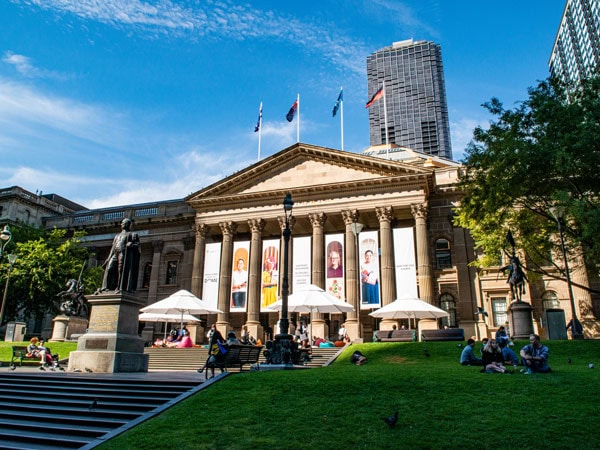
Hand in your spare currency at Victoria’s State Library for the chance to win over $250,000 worth of prizes.
You can hand in your foreign currency on the following dates and locations. Good luck!
Sydney 12-13 November at World Square
Melbourne 19-20 November outside the State Library
Auckland 21-22 November at Movenpick Hotel Auckland
Brisbane 28-29 November at Queen Street Mall
Want to see more stories from Australian Traveller in your Google search results?
Tick the box next to "Australian Traveller". That's it.
Elizabeth Whitehead is a writer obsessed with all things culture; doesn't matter if it's pop culture or cultures of the world. She graduated with a degree in History from the University of Sydney (after dropping out from Maths). Her bylines span AFAR, Lonely Planet, ELLE, Harper's BAZAAR and Refinery 29. Her work for Australian Traveller was shortlisted for single article of the year at the Mumbrella Publishing Awards 2024. She is very lucky in thrifting, very unlucky in UNO.
From natural wonders to historical sites, we’ve rounded up Victoria’s most epic icons that deserve a place on your itinerary.
Grampians (Gariwerd) National Park
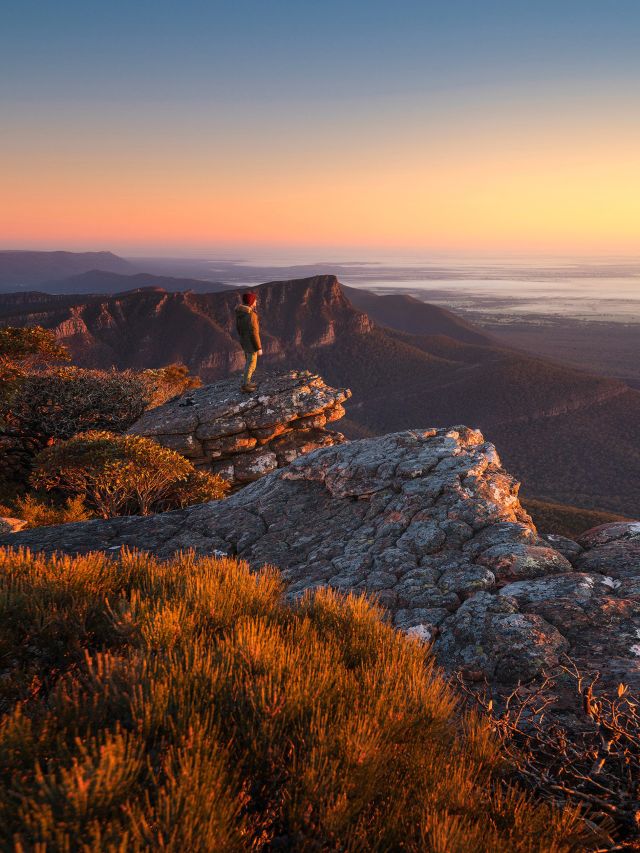
Mount William is the highest peak in the Grampians (Gariwerd) National Park. (Image: Matt Donovan)
From towering mountains to crystal cascades and ancient rock art sites, the Grampians (Gariwerd) National Park is a playground for both outdoor adventurers and nature lovers. Don’t miss the views from the highest peak Mount William or the iconic Pinnacle.
Murray River
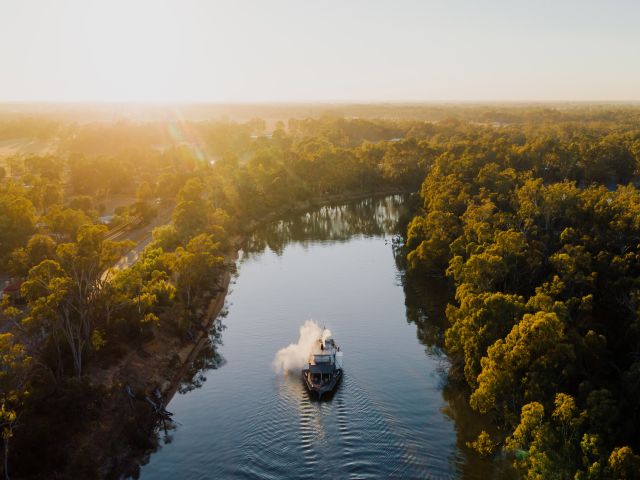
The wonders of the Murray are best experienced on board a paddle steamer. (Image: Visit Victoria)
A natural icon of majestic proportions, the Murray River flows for a staggering 2700 kilometres, making it one of the world’s longest navigable rivers. Meandering through Victoria before flowing out to sea at Goolwa in South Australia, the river is home to diverse wildlife, picturesque towns and secluded creeks and beaches.
Twelve Apostles, Port Campbell
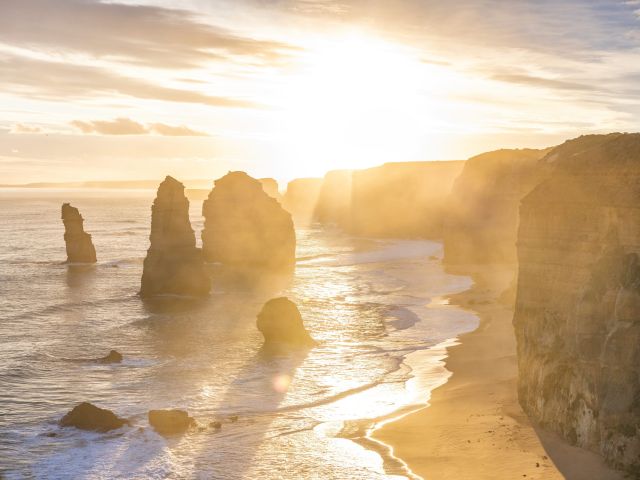
The Twelve Apostles are a star attraction on the Great Ocean Road. (Image: Tourism Australia/Two Palms/Harry Pope)
These limestone sea stacks are arguably Victoria’s most famous icon. After an $8-million upgrade to its lookout, The Blowhole near Loch Ard Gorge/Poombeeyt Kontapool (meaning breath of the whale) has recently reopened. A brand-new Twelve Apostles Visitor Experience Centre, complete with rooftop lookout, will open in 2026.
You Yangs, Geelong
Kangaroos enjoy dusk in the You Yangs. (Image: Tourism Australia)
Rising 300-plus metres from the flat volcanic plains between Melbourne/Naarm and Geelong, the You Yangs are massive granite boulders named for the local Wadawurrung word ‘Youang’, meaning ‘big hills’. Hiking, biking, rock climbing and horse-riding are popular within this regional park.
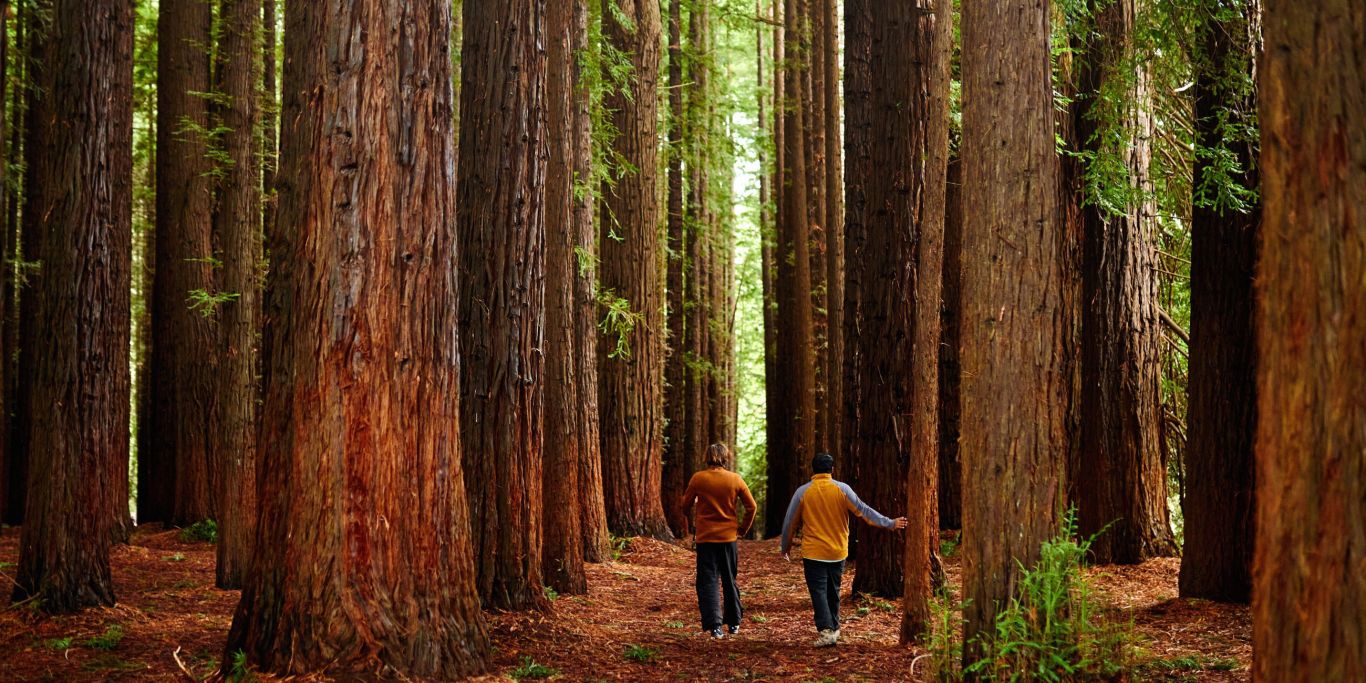
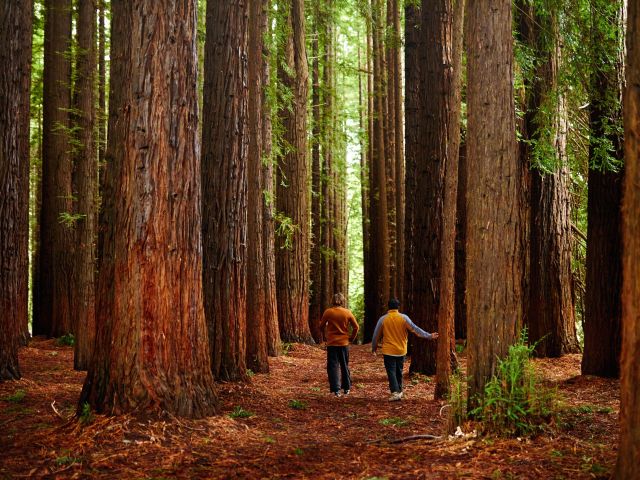
Near the town of Warburton, an extraordinary forest of some 1500 Californian Redwoods stands among native orchids, eucalypt trees and rich birdlife. Planted in the 1930s, these 55-metre-plus trees can live for 2000 years and will grow to be some of the world’s tallest.
Wilsons Promontory, Gippsland
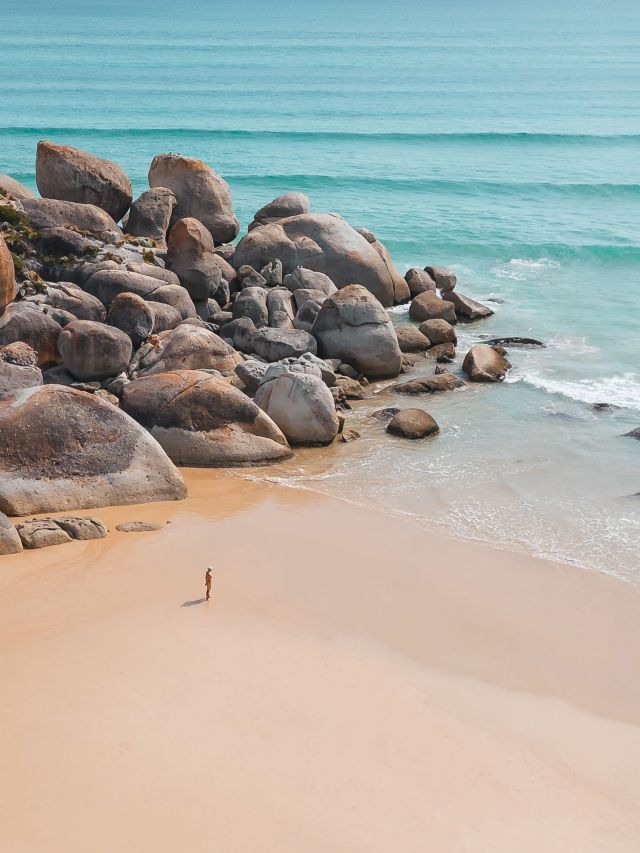
Wilsons Promontory is home to the incredible Skull Rock formation. (Image: Tourism Australia)
The Prom, as it’s known locally, is the southernmost tip of mainland Australia. This 50,000-hectare reserve comprises granite mountains and forest, fringed by sandy beaches and surrounded by a marine park rich in marine biodiversity. It’s also home to the incredible and imposing Skull Rock formation.
Hanging Rock Reserve, Macedon Ranges
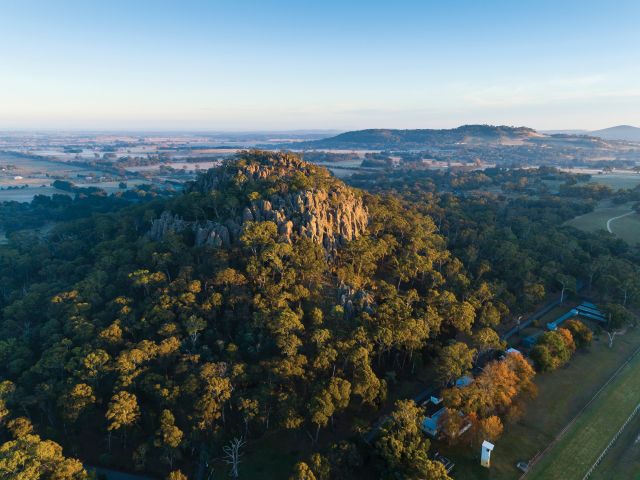
Enigmatic Hanging Rock. (Image: Visit Victoria/ Rob Blackburn)
This six-million-year-old volcanic rock was thrown into the national spotlight thanks to the 1967 novel and consequent 1975 film based on the fictional disappearance of schoolgirls in 1901. Mystery aside, visitors can walk the steep 105-metre summit, fish for trout and go twitching.
Sovereign Hill, Ballarat
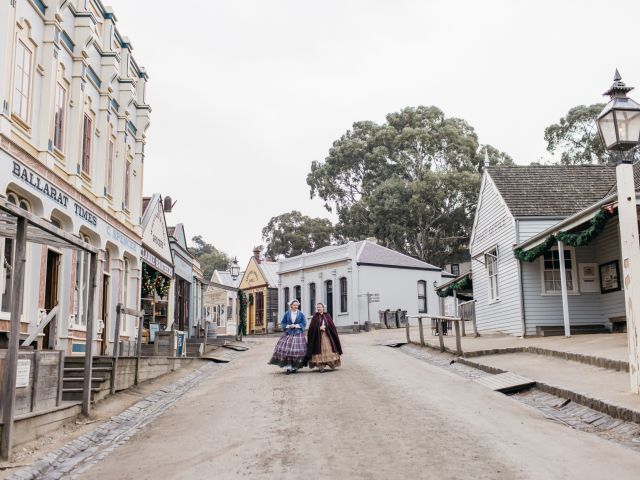
Step back in time at Sovereign Hill. (Image: Tourism Australia)
Cry ‘eureka!’ at Sovereign Hill, a living museum to the prosperous Gold Rush era of the 1850s, during which Ballarat produced the most gold in the world. Visitors to this much-loved attraction can walk historic streets, enter a gold mine and try panning for the good stuff, too.
The Great Stupa, Bendigo
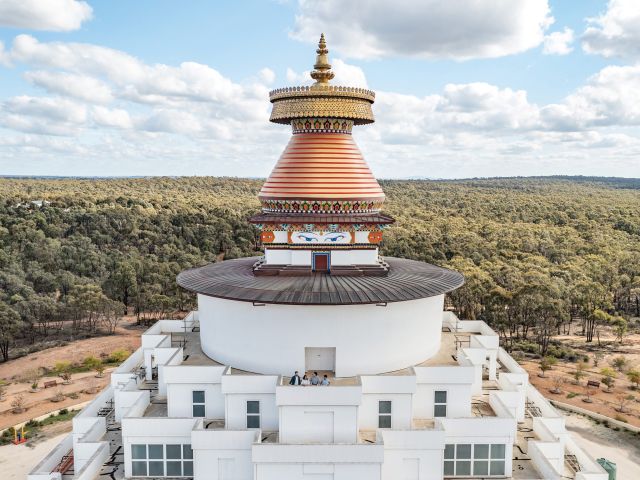
The Great Stupa in Bendigo. (Image: Tourism Australia)
Who’d have thought the largest Buddhist temple in the Western world would be tucked away in Bendigo’s bushland? Welcoming visitors to explore, this sacred Buddhist pagoda is an epicentre for Tibetan culture, architecture, art and interfaith harmony.
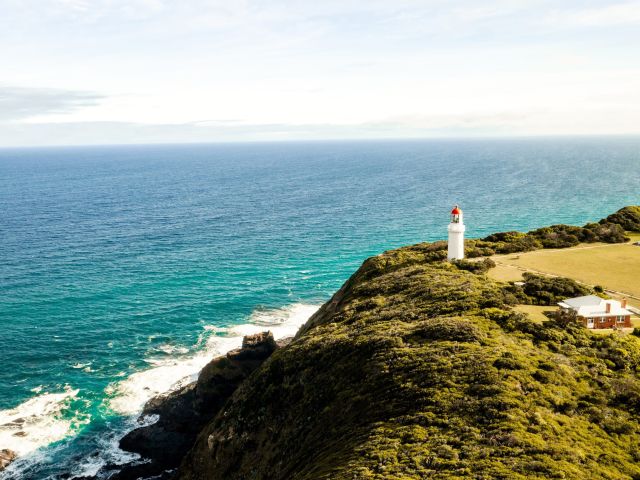
Ensuring the safe passage of ships in the notoriously treacherous Bass Strait since 1859, this heritage-listed lighthouse overlooks dramatic volcanic coast and wild beaches. The surrounding reserve is home to a plethora of wildlife including little penguins, seals and echidnas.