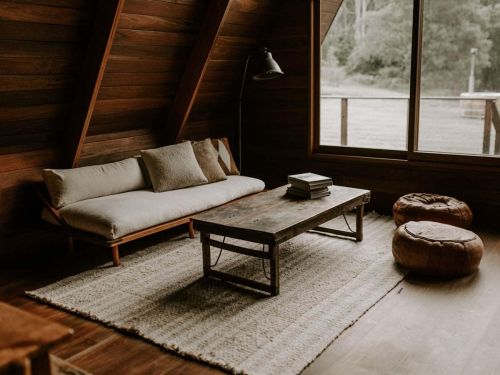
Featuring everything from off-grid shacks and luxurious glamping spots to architecturally designed cabins, new book Life Unhurried calls for a slower, more sustainable way of living and travelling. Here, its authors share their pick of eco stays.
1. Upland Farm, Denmark, WA
Best for… families
You won’t have to worry about disturbing the neighbours when you take the kids to this architecturally designed guest house, set on a 43-hectare working cattle farm in Western Australia’s Great Southern region.
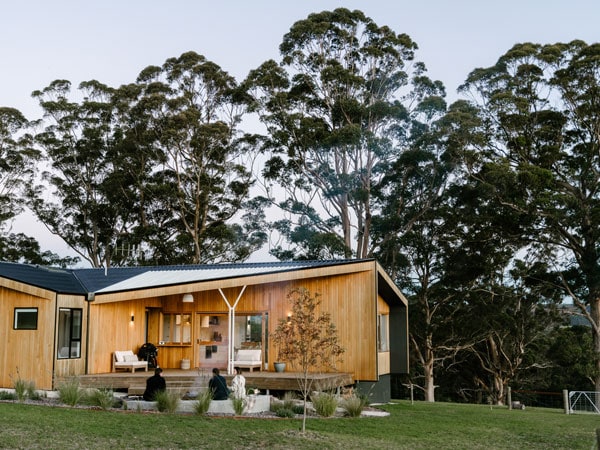
Clad in iron ash, the two-bedroom property overlooks neighbouring vineyards and is built to harness the natural heating and cooling provided by nature. Venture out to explore nearby forests, walking trails and beaches, then retreat back to the fireplace and a pre-ordered barbecue hamper for an easy night in.
2. Aframe Kangaroo Valley, NSW
Best for… views
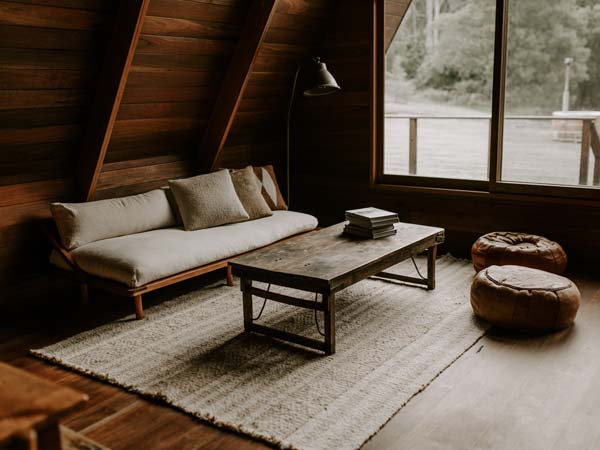
Aframe Kangaroo Valley feels a million miles from anywhere, yet you’re only two hours from both Sydney/Warrang and Canberra/Ngambri/Ngunngawal. It’s a utopia of Australiana; wedge-tail eagles soar overhead and wombats amble out from their warrens alongside Shuffles, the resident echidna. Tucked away in the south-western corner of a 6-hectare block that tumbles to a creek, this triangle-shaped abode is a creative dream realised for architect Ben Gray and partner, designer and founder of Hello May magazine Sophie Lord.
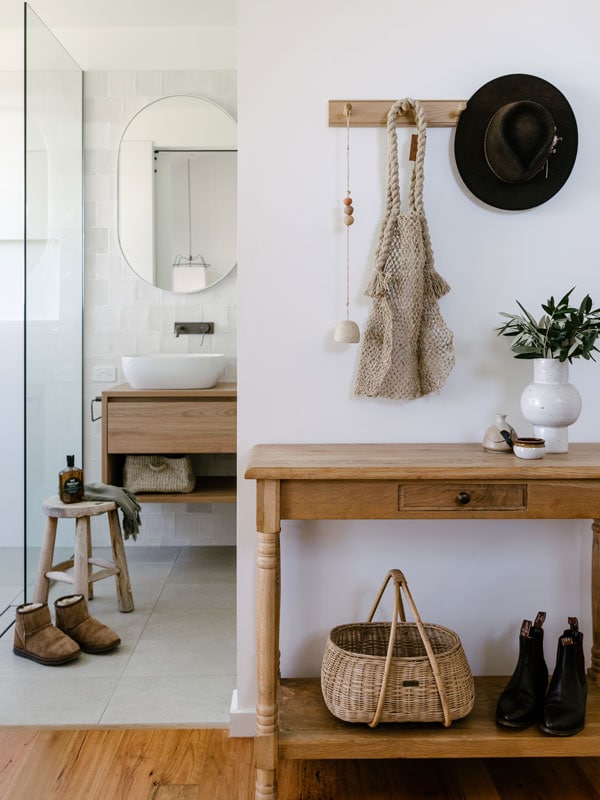
Soft furnishings champion natural fibres while the military green bedroom was inspired by Sophie’s childhood memories of camping in the Snowy Mountains with her dad and grandad, a former brigadier for the Australian Army during World War II. Curtains in the bedroom are made of recycled truck canvases and the woollen blanket on the bed is from the Army Disposals store.
While it’s hard to tear away from the storybook setting, just beyond your door the villages of the Southern Highlands beckon for adventure. You might drive over the historic Hampden Bridge and into the township of Kangaroo Valley where a hearty local breakfast from the General Cafe will fuel you up for a wander around the shops.
A canoe trip down the Kangaroo River is also one of the top things to do here or you might prefer to stay put and hike through fern gullies to swim in your own private creek.
3. The Shack at Sheepwash Bay, Tas
Best for… off-grid living
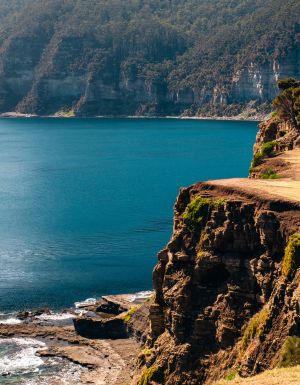
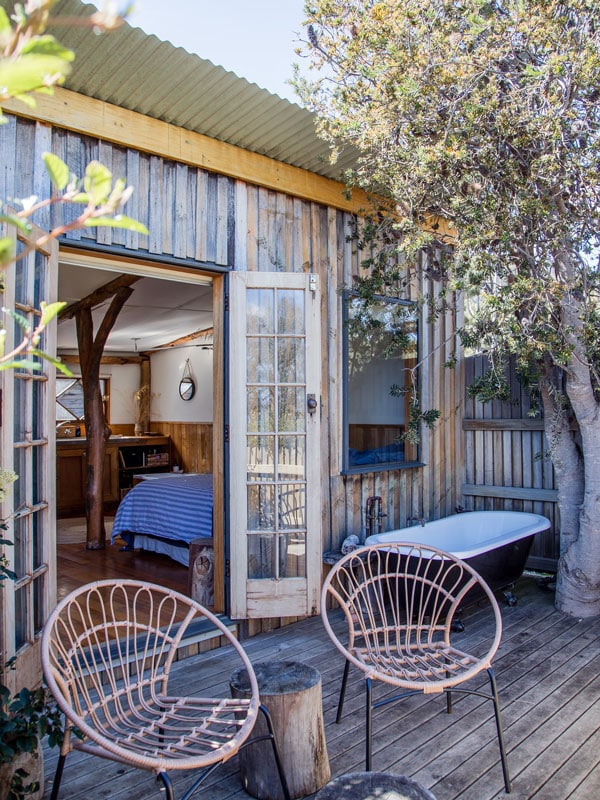
There’s beauty in imperfection, in ageing gracefully with the changing of the tides. This simple, earthy and intimate Bruny Island/lunawuni cabin is built from reclaimed timbers, with its sagging roof sympathetically restored to keep its original charm.
Wake to the smell of fresh wood-fired sourdough, baked in the shed next to you and delivered by owners John and Jenene. The day stretches ahead, like the kilometre of private water frontage beckoning with the opportunity to snorkel, swim, kayak or fish. Or you could just sit and watch the crabs scurry along the foreshore, the sea eagles flying overhead.
Check the map inside the shack and head out for a tramp across the 15-hectare property, returning for gin and tonics at sundown.
Jenene Oates and John Bullock embody the dream of living simply and their effervescent personalities are proof of the riches it can deliver. For more than a decade, they’ve lived here completely off-grid. Much of their food comes from their thriving vegetable patch, the chickens who wander about and John’s baking prowess. As well as providing handcrafted loaves to guests, John sells some of his creations in their roadside stall – a pair of vintage fridges – at the end of the dirt lane that links them to the township of Alonnah. But taking a bite out of their low-key lifestyle is just one of the benefits of staying here.
Facing out to an ever-changing bay and surrounded by peppermint forest, the Shack is an experience in eco living, with power drawn from solar panels and wind, and an inline pump bringing fresh rainwater for you to bathe in and drink. It’s a cosy space, kept toasty with a wood-burning fireplace and, when nature calls, you’ll find the composting toilet – with an unbeatable view – a few steps up a pathway.
4. Wander at The Overflow 1895, Qld
Best for… sustainable luxury
It started with a simple question: instead of creating 100 rooms in one location, what if you could create one luxurious, zero-impact room and place it in 100 locations? What would that mean for the environment? The experience for guests? Could it have the potential to completely change the hotel game?
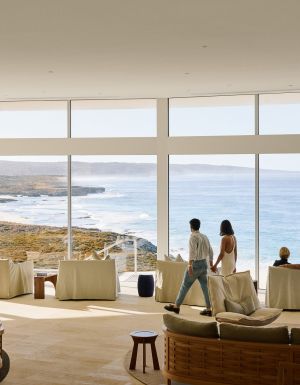
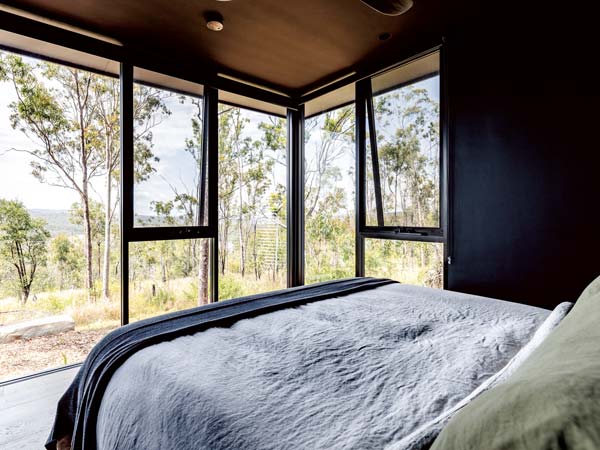
The answer can be found in the first five of those rooms, which sit sensitively within natural bushland on the banks of Lake Wyaralong in Queensland’s Scenic Rim – Yugambeh Country. The ‘hotel’ is known as Wander, and these one-and two-bedroom glass-fronted pavilions are at once private yet seamlessly immersed in the setting. Outdoor bathtubs beckon on the deck, king-sized pillow-top beds are made up with French flax linens, and low-combustion wood fireplaces ward off chilly nights. But it’s what’s going on behind the scenes in these ‘WanderPods’ that is most impressive.
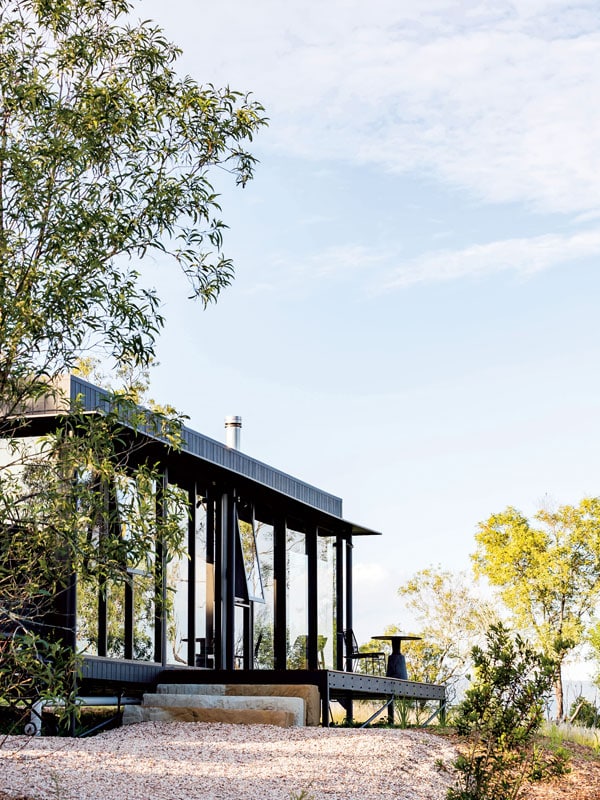
The pods are solar-powered and fed by rainwater, with greywater recycling and an advanced waste-water management system (meaning you’ll have a flushing toilet). Double glazing and UV-rated blinds and awnings help to moderate the temperature, natural cleaning products are used, and guests are encouraged to compost waste during their stay.
Here, facing the water as it reflects the sun’s golden glow, it’s not hard to see why the Scenic Rim was recently named one of the top 10 regions to visit. In this unexpected pocket of Australia – tucked between Brisbane/Meanjin and the Gold Coast hinterland – you can bushwalk, seek waterfalls and wild swimming holes, visit farm gates and enjoy a curated picnic with a bottle of wine made within eyeshot. Many of these experiences can be added to your booking with Wander. Private yoga, meditation and massage can also be arranged.
The absence of light pollution means the stars and the Milky Way shine brilliantly in their nightly performances above your head. Leave the curtains open when you climb into bed; you won’t want the show to end.
5. Ecopia Retreat, Kangaroo Island, SA
Best for… wildlife
Set within a registered wildlife sanctuary on Kangaroo Island, Mother Earth has been the ultimate architect in the creation of Ecopia Retreat.
Two rammed earth villas – designed and built by hand – are the stars of this off-grid escape, surrounded by ancient grass trees and visiting kangaroos. Created in harmony with, and of, the soil that lies beneath, there’s something completely organic and tactile about the buildings. A warmth that goes beyond the natural insulation created by the 30-centimetre-thick walls and double glazing.
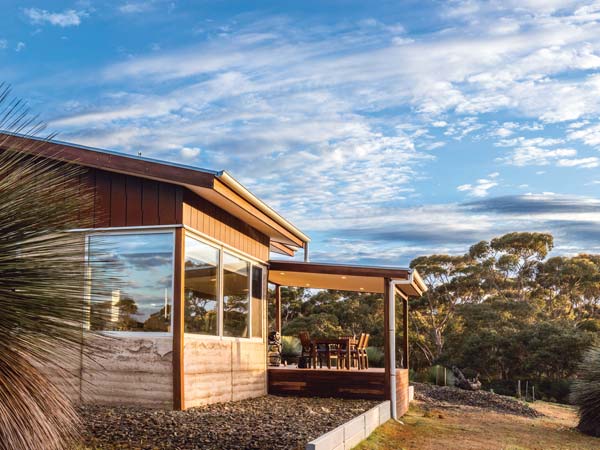
Once you’ve left your worries on the mainland and crossed over to Kangaroo Island on the ferry from Cape Jervis in South Australia, this 60-hectare wilderness retreat is found at the epicentre of the island. Instead of the wild Southern Ocean, the heartland becomes the shining star, with exclusive access to the Eleanor River that flows through the property.
The villas operate with solar panels and rainwater, and deep thought was given to the impact of every practical detail, from lighting right down to the energy efficiency of each appliance. It’s why you won’t find a microwave inside and the coffee machine switches itself off after nine minutes to conserve power.
But as earnest as Ecopia’s ethos is, there’s nothing austere about the experience here. With a bounty of gourmet produce available on the island, a welcome pack invites you in with sticky figs, fudge, olives and a bottle of local wine. You might like to add on an eat-and-drink package, filled with 100 per cent local supplies, or even organise a chef to come in and cook for you. Linen bedding and towels along with eco-friendly, bush medicine–infused body products and bath salts for soaking in the deep bathtub are all at hand.
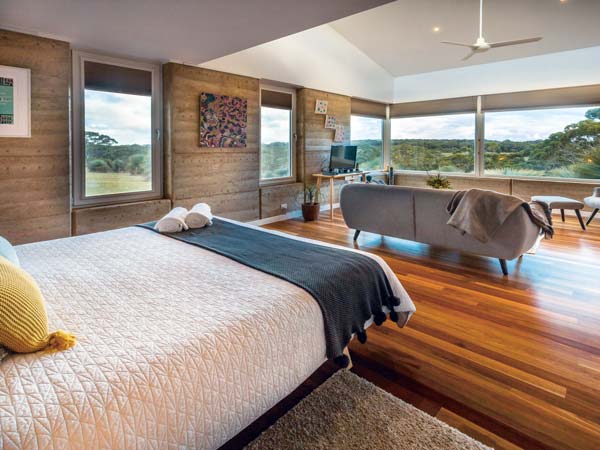
Walls are hung with a personal First Nations art collection, collected over 20 years. In many instances, Rob and Yael sat next to the artist as they painted their Dreaming or were gifted the pieces personally when they left Arnhem Land.
After a stay at Ecopia Retreat, you’re left wanting for nothing but more time to revel in the relaxed luxury of the experience. ‘It’s abundance but it’s abundance from within,’ as Yael explains.
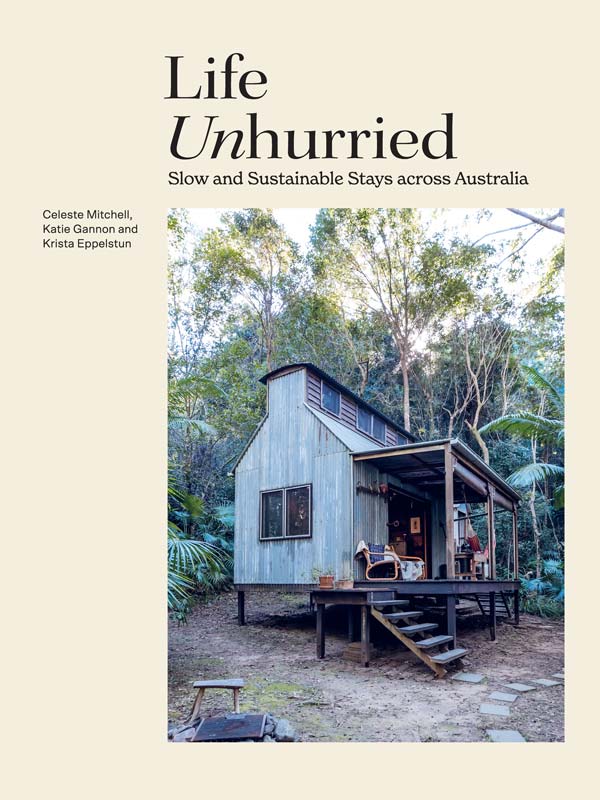
This is an edited extract from Life Unhurried by Celeste Mitchell, Katie Gannon and Krista Eppelstun published by Hardie Grant Explore. Available 7 September; RRP $50.