With a pregnant wife and baby son along for the ride, Quentin Long was cruising for trouble on his Sydney-Melbourne-Hobart voyage aboard Royal Caribbean Cruises ‘ Radiance of the Seas.
About Radiance of the Seas
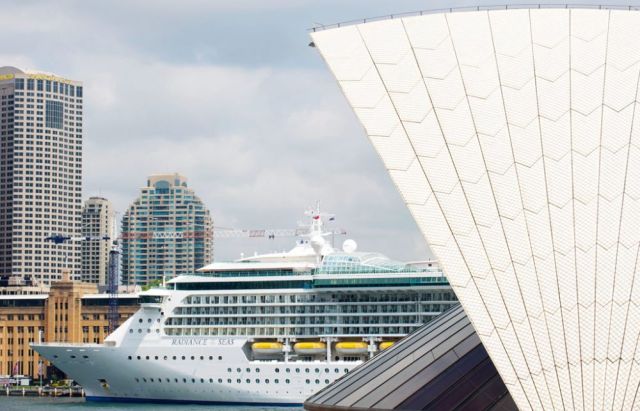
At 90,000 tonnes, Radiance of the Seas is a resort-style ship from big-ship specialist Royal Caribbean International.
Radiance first entered service in 2001 but was extensively refurbished before she made her Australian debut for the 2011/2012 season. Around $20 milllion was spent stripping out old fittings, restaurants and rooms and replacing them with some sparkly new ones, like Giovanni’s Table, the Chef’s Table and even a new Royal Babies and Tots nursery.
Staterooms and cabins on board Radiance of the Seas
We stayed in a Large Ocean View Stateroom on the fourth deck.
For a couple, it was compact, and we did make it harder on ourselves with an 11-month-old and his cot. This ate into the available space, but it was roomy enough to want to spend time in, winding down. The massive porthole made a huge difference to the light in the room – strange, but that one feature lifted the overall design. Waking up to the see the world or the Sydney Opera House was lovely.
Minor annoyances: the TV would have been better as a flat-screen, the shelf space was cramped and the bed base smashed my shins a few too many times.
Life on board Radiance of the Seas
OK, I really didn’t think this one through.
What responsible husband takes a pregnant wife with morning sickness (and a tendency for seasickness – joy!) on her first cruise with an 11-month-old? So I had a mixed experience, where the not-so-great stuff was mostly my own doing.
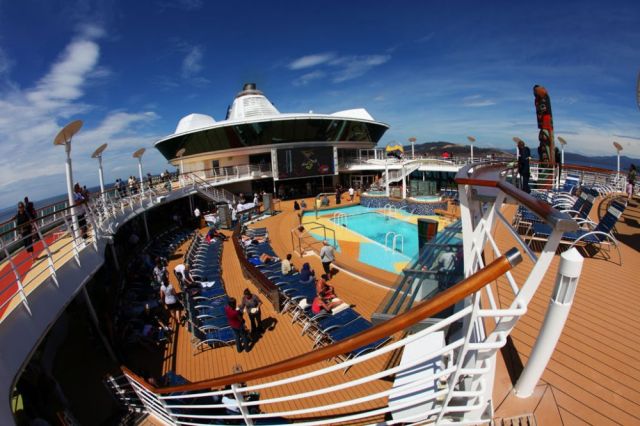
Against that backdrop, though, I had a ball. Royal Caribbean prides itself on being the friendliest, most fun, most upbeat floating resort company and that’s what it delivered. The scale of the ship meant that there was always somewhere to be, either in a crowd enjoying some form of entertainment or in a quiet nook just chilling.
The first two days of our cruise were really lost to figuring out how to make the ship work for us as a family, but by the time we reached Melbourne, we had sorted everything out and started to get into a much better rhythm… until we decided to disembark for a trip to Melbourne Zoo.
The infrastructure at Port Melbourne was poor (although in all honesty, Sydney embarkation was a nightmare, and Hobart was not too great either). We arrived at the bus to take us into the city, and were told that it was full and that this was the last bus. No-one got off to give their seat to a pregnant woman with a baby, leaving us with a 500m walk down the pier to try to find a taxi.
But that was not a representative experience. Our fellow cruisers ranged in age from about 30 to 80, with the vast majority in the 40-55 bracket, and the overall atmosphere on board was like being at the best beer garden in your neighbourhood: happy, energetic and relatively fun.
Our first taste of the better things that Radiance is doing was in the speciality restaurants. Service in the main dining room, Cascades, is unbelievably good if a little mechanical, cramped and very American (water on the table as you sit, salad before dinner and so on). The food in Cascades is similar: good except for the American food groups of salt and sugar, which are a little overrepresented in the meals.
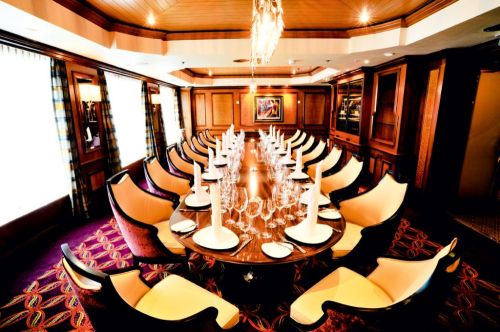
But the speciality restaurants are a revelation. Giovanni’s Table was so good we made several stop-offs. Set on the sixth deck, it’s removed from the hustle and bustle of the major thoroughfares, and with seating for about 50 is a far more intimate and sedate offering for a comfortable, secluded meal.
The antipasto platter of lovely prosciutto, olives, salami, artichokes, roasted capsicum and anchovies – washed down with Giovanni’s damn fine signature cocktail, a limoncello martini – was a great way to start one long grazing dinner. Fabulous fresh pastas of pappardelle with radicchio or the crab ravioli followed in their own good Mediterranean time. The wife had no room for a main but I managed to squeeze in some lovely giant prawns with potatoes and vegies.
The luxury of our long, drawn-out dinner when you’re a parent of an 11-month-old reveals another massive drawcard – the babysitting services. The children’s, teen and even baby programs are incredibly well done – officially called the Adventure Ocean Youth Program (3-11 years), Teen Program (11+) and the Royal Babies & Tots (six months to three years). I just loved being able to drop Master Oliver off with his dinner in the safe hands of the excellent crèche staff, then heading off to meet my long-lost lover.
That said, the initial days were a challenge. Again, probably first-cruiser errors, but we naively expected a cot to be in the room when we checked in. Three hours later, after our lovely room attendant had finally sought one out for us, we unpacked it to discover the most rank stench: yep, child formula vomit. Just a systems failure by the onboard crew, but not a great start.
When we at last had a decent cot sorted, we turned our attention to bottle sterilisation. It was weird: no-one on the ship could help us, when all we wanted was a microwave. Then when we asked the logical question – “What do other parents do?" – the shrug of the shoulders was sort of irritating. Somehow, we eventually figured out that the glass-cleaning system in the Windjammer Café had an extreme water temperature; not perfect, but the best solution available. So Master Oliver continued in his healthy ways.
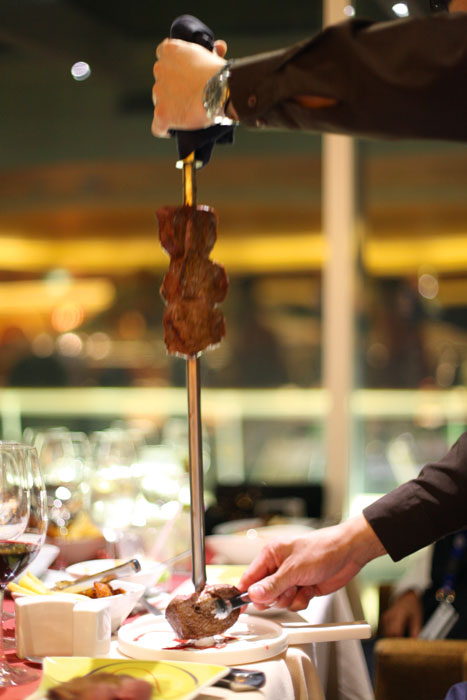
The trip across Bass Strait was smoother than anticipated so we tried another of the speciality restaurants, the Samba Grill – a traditional Brazilian churrascaria restaurant where grilled meat is sliced off the skewer. As with Giovanni’s, it was a great meal if a little too filling.
Meandering up the Derwent River to Hobart, we saw dolphins swim past on several occasions, like emissaries sent out to welcome us to their shores. The viewing area at the bow of the ship was spectacular as we approached Hobart, though it was less Kate and Leo and more sharp elbows at close quarters, as many passengers tried to make the most of the Kodak moment.
Strolling around the beautiful historic streets of Hobart on a gorgeous afternoon was like emerging from a cocoon; realising that the world was working and we were on holidays was smugly satisfying. That night, the ship was like a racecourse: hot tips for the shore excursions were buzzing through every conversation. There was only one winner: MONA, The Museum of New and Old Art.
We jumped in a cab to beat the ferry (and the inevitable queues) and while that didn’t make much difference in the end, MONA was worth it. (For the sake of brevity I will not give you the full review, but whatever you do, make sure it is on your bucket list.)
Departing Hobart for the coast of NSW, there was a full day at sea and two nights ahead of us. We did very, very little. I tried the Japanese restaurant Izumi for lunch and it was disappointing – the sushi was not particularly great. I suspect the cooked meals would be the way to go, and it would be better for dinner.
Cloudy weather meant a spectacular morning arrival in Sydney didn’t happen, but the harbour is always astonishingly pretty from the water first thing in the morning. A nice welcome home.
Three favourite things on board Radiance of the Seas
Specialty dining:
Loved the experience in Samba and Giovanni’s. Izumi was a little disappointing, but these two made up for it. Unfortunately the Chef’s Table was booked out – I would have loved to make the most of that, too.
The babysitters:
These lovely staff were great. Leaving your child with a total stranger from a different country is somewhat unnerving, but we were blown away by just how well they treated our little man.
Champagne Lounge:
I loved sitting at the bar while my wife and son caught up on sleep. I could work with a couple of beers and the friendly bar staff for company.
Three downsides on board Radiance of the Seas
Baby care:
A vomit-covered cot and the lack of sterilisation services for babies was a little challenging in the first two days.
Salt and sugar:
Many of the main dining options were over-sugared or too salty.
Port infrastructure:
Boarding at the spectacular Overseas Passenger Terminal in Sydney was a complete nightmare, with very long queues under full sun. The transport off in Melbourne was disappointing and Hobart’s “terminal" was a shed in the middle of relative no-man’s-land. Come on: we can and must do better.
Activities on board Radiance of the Seas
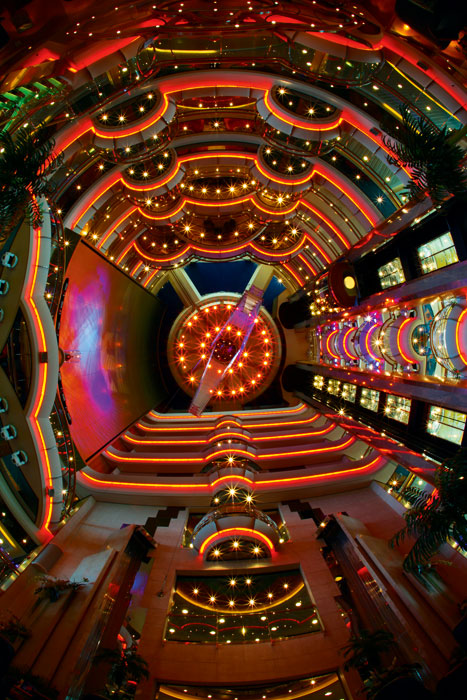
The daily regime of things to do is printed and slipped under your door every night so you can fall into bed and plan your next day’s fun. It’s rather competitive, with table tennis, darts, volleyball and a shuffleboard competition, to name a few.
Even more helpful are the electronic displays that tell you what’s happening right now at locations around the ship. That’s how I came to be in the Quill & Compass Pub for the darts comp one afternoon, finishing an honourable middle-of-the-field fifth.
The tango lessons were well attended. The instructors were suitably a) gorgeous Latin lovers and b) kindly instructors, which may explain the crowd on the dance floor. Sans pregnant wife I was destined to be the wallflower…
I never got up on the rock-climbing wall, never got on the putt putt course and never went to the movie theatre, but I did find my inner teenager in the games arcade. I also had an ambition to work out in the gym every day, which went totally unrealised, but my wife had a fantastic facial.
Additionally, I saw the remnants of the fruit sculpture workshop in the buffet, watched grown men splash out in the belly-flop competition at the main pool and saw an 80-plus-year-old woman join in judging the Hottest Man on Board competition by feeling the lucky contestants’ firm buttocks.
Didn’t really go for the Inch of Gold shopping spree, and when I turned up for the poker tournament, I was too late – the table was full. But there was truly something for everyone.
Radiance of the Seas Shore Excursions
At every port was a selection of organised tours, which we opted out of as they were coach-based (we needed to be able to pull the chute and get Master Oliver home to the ship if all hell broke loose). Tour charges are in US dollars so the prices quoted here are subject to change. Here are what I saw as the highlights.
Ghost Towns, Mines & Mountains: After a coach ride from Melbourne, jump in a 4WD and head out on an old mining and logging track, past old abandoned settlements, before arriving at the picturesque Walhalla. Eight hours, $199.
Melbourne City & River: See the Crown casino complex, stop off at the Shrine of Remembrance and then take a river cruise down the Yarra. Four hours, $69.
Historic Hobart, Port Arthur & Wildlife: The coach trip starts with a visit to a wildlife sanctuary for a Tassie devil experience and a guided tour of the Port Arthur Historic Site. The tour includes a brief tour of Hobart before you’re dropped back at the dock. Eight hours (it’s a 90-minute drive to Port Arthur), $129, lunch not included.
Hobart Highlights: Drop in on the Hobart Botanical Gardens, then visit the Rosny Hill lookout, the top of Mt Wellington (weather permitting) and Salamanca Place on this whistlestop three-hour tour, $45.
Mt Wellington Descent: Take the coach to the top of Mt Wellington before climbing on a mountain bike for the 20km descent down to Hobart. Lots of stops for photo ops and even some off-road excursions for the adventurous. Three hours, $109.
Food on board Radiance of the Seas
Radiance has 11 different places to eat and another six bars.
The bars all vary in theme and ambience, from the English-style Quill & Compass Pub to the sailing club vibe at the Schooner Bar.
The inclusive dining options are the main dining room, Cascades à la carte dining, the Windjammer Café buffet, Park Café deli eatery, and the Boardwalk Dog House for hot dogs. The Lattetudes coffee shop is not inclusive for your daily espresso coffee but the cakes and snacks are.
The speciality dining options come with an additional cover charge: Izumi Japanese (lunch US$3, dinner US$5); Rita’s Cantina Mexican (lunch and dinner US$3), Samba Grill Brazilian barbecue (dinner US$25), Giovanni’s Table (lunch US$15, dinner US$20), Chops Grille US steakhouse (dinner US$30), Chef’s Table degustation (dinner US$120).
It is worth taking out the Radiance dining package which includes a meal at all of the above, except the Chef’s Table and Rita’s, for US$70.
Radiance of the Seas Review details
Route:
Sydney, Melbourne, Hobart, Sydney.
Number of cabins:
1083 hotel rooms in total.
Breakdown:
246 interior staterooms, 825 with ocean views, of which 583 have a balcony. The room types are: one Royal Suite, six Owner’s Suites, 17 Grand Suites, 37 Junior Suites, 145 Superior Ocean View Staterooms (with balcony), 368 Deluxe Ocean View Staterooms (with balcony), six Family Ocean View Staterooms, 235 Large Ocean View Staterooms.