The best two-wheeler trips in Australia

hero media
Not all road trips require four wheels. Sometimes riding freely atop your two-wheeler can be just as exhilarating, especially in Australia.

Here are six of Australia’s best cycling and motorcycle trips to inspire you from our special 100 Amazing Road Trips around Australia series.

Two-wheel drives

95. New England High Country, NSW

I’d say there are no two ways about it, except that there are: a road trip to Armidale is ridiculously scenic. The first time we travel there is along Thunderbolts Way. Named in honour of the ‘gentleman bushranger’ who once roamed these parts, it twists, turns and careens through a scenic landscape marked strikingly by the unreal landscape of the Barrington Tops and invitingly by pretty, historic towns.
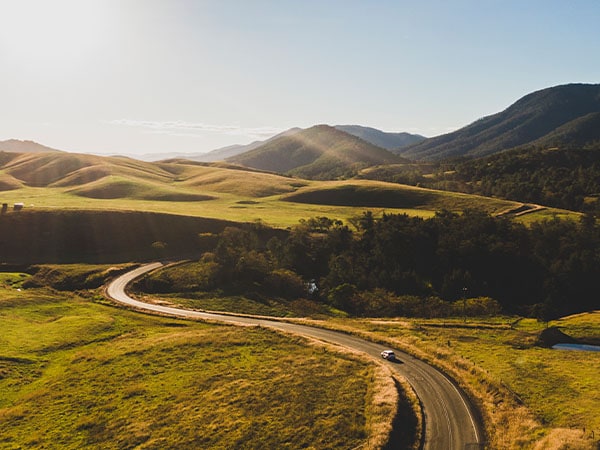
Landscape views of Thunderbolts Way, NSW, Australia
Travel along Thunderbolts Way.

In Walcha we look out for sculptures that comprise its open-air gallery and in Uralla we stop at The Alternate Root Cafe, admiring the original pressed-metal ceiling, deliberating over the inventive menu and perusing the wares made by local creative types. There are diversions along the way: to the eclectic Dobson’s Distillery , with its cinematic speakeasy vibes in the sleepy village of Kentucky, and to the pure air, walking trails and waterfalls of Oxley Wild Rivers National Park – a rugged gorge country that falls away dramatically from the gentler swathes of the tableland, the Great Dividing Range’s highest.
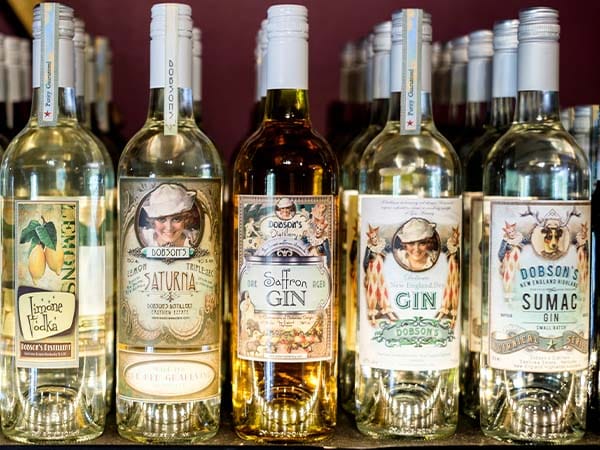
Dobsons Distillery- amworth
Browse the Selection at Dobson’s Distillery. (Image: Destination NSW)

Another time, we travel to Armidale from the quirky riverside town of Bellingen along the true-to-its-name Waterfall Way: ascending up into the mist-shrouded rainforest and stopping to go back in time at Dorrigo National Park, part of the Gondwana Rainforests of Australia World Heritage Area.
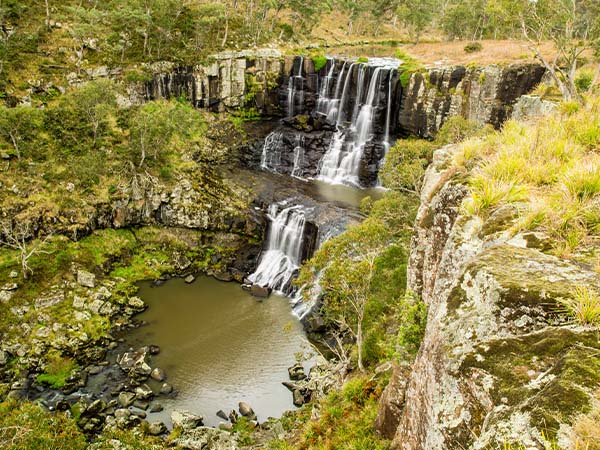
Ebor Falls, Waterfall Way in the New England region of New South Wales, Australia
We make our way to the true-to-its-name Waterfall Way.

Our destination, the lofty city at the heart of NSW’s New England High Country always packs a punch on arrival: with its wealth of cultural experiences, from the New England Regional Art Museum (NERAM) to historic Saumarez Homestead; and its cool but unpretentious pubs, cocktail bars and cafes including The Welder’s Dog , Charlie’s Last Stand and Goldfish Bowl. Combined with a stay in one of the country’s finest restored Art Deco hotels, Tattersalls , and its many outdoor pursuits it’s well worth the journey to get here. Even if that journey is reward in itself.
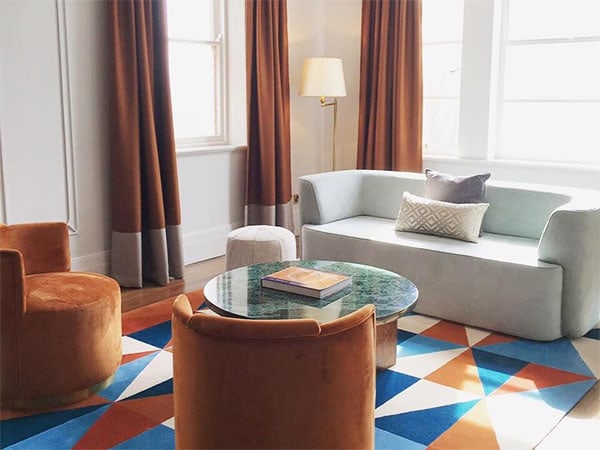
Tattersalls Hotel Guest Lounge (Photo: Sally Scott)

Distance:

474 kilometres (Sydney to Armidale via Thunderbolts Way); 156 kilometres (Bellingen to Armidale via Waterfall Way).

96. Cairns to Cape York by motorcycle, Qld

This most profound and adventurous immersion into tropical Australia is not beyond anyone with a motorcycle licence, a pinch of off-road riding experience and a hell-yeah attitude. A handful of companies, such as Cape York Motorcycle Adventures , offer fully supported, week-long trips that take riders to untainted wilderness and small settlements that most Aussies will never see (a support truck carries luggage or food). Burble through the Daintree, cruise the streets of Cooktown, and battle the Old Telegraph Track’s mythical ‘Gunshot’ en route to Australia’s extreme north.
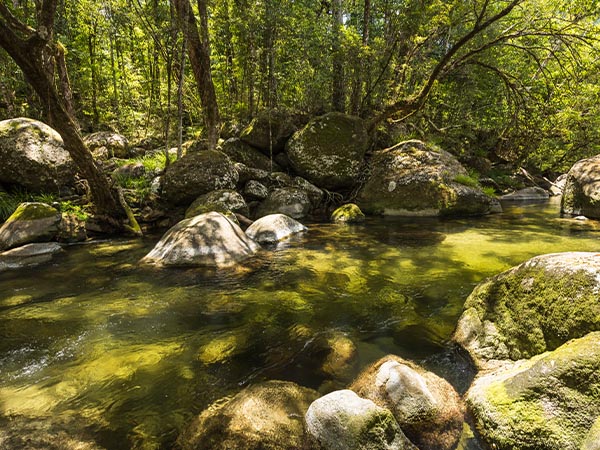
Daintree rainforest
Cruise your way through the vibrant and verdant Daintree rainforest. (Image: Tourism and Events Queensland)

When night falls, slump into a camp stretcher next to a roaring fire next to a babbling tropical creek. You’ll earn every kilometre, through sand and water crossings, but don’t worry, the guides can tailor the route to your ability, and the pay-off and stories last a lifetime.

Distance:

1800 kilometres (route dependent)
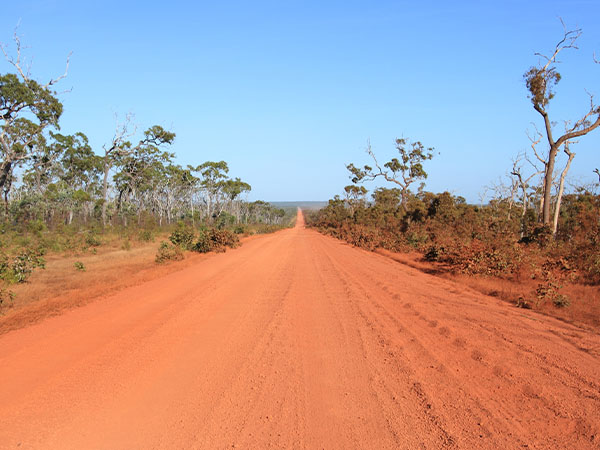
Red Outback Dirt Road, Australia
Cape York Motorcycle Adventures take riders to the untainted wilderness of Queensland.

97. Great Southern Rail Trail, Vic

It’s difficult to imagine a better way to connect with the laid-back townlets and the green, green grass of Gippsland than by rolling through on arguably the region’s best multiday cycleway: the Great Southern Rail Trail.

From Leongatha (135 kilometres southeast of Melbourne), the neutral-gradient gravel trail parts dairy-farm fields and leafy peppermint forests. Stop one is slow-food hub Koonwarra; its ethical soft-centre based around Paddlewheel, the local farmers market store, Milly & Romeo’s Artisan Bakery and Cooking School , and The Ethical Food Store (great for a locally-sourced lunch).
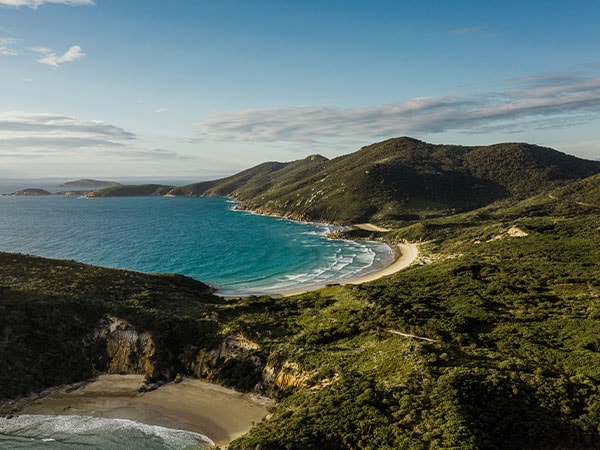
Green landscape, Gippsland, Australia
Roll through on Gippsland’s best multiday cycleway: the Great Southern Rail Trail.

Roll on over restored trestle bridges and witness the Strzelecki Ranges emerge from the foliage. Linger in Meeniyan for its galleries and coffee-and-cake options (especially Moo’s) and the Meeniyan Pantry & Cellar , an upmarket deli selling cheese, wine and local smallgoods. Gentle Gippsland ups and downs will then deliver you further along to Fish Creek, an artist hub with a cheeky grin.

A six-kilometre ride from town, The Church House Gourmet Retreat , featured on Grand Designs Australia, is a worthy place to rest your gently throbbing thighs. The shapely Art Deco-style Fish Creek Hotel (with a giant fish perched precariously on its roof) is the spot to shoot the breeze with fun Fish-Creekians.
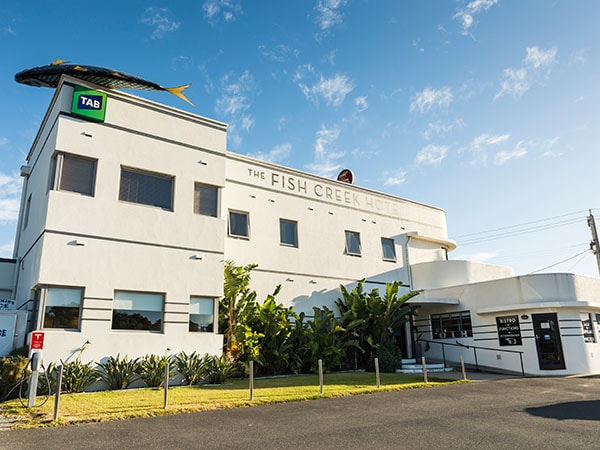
Exterior of Fish Creek Hotel, Victoria, Australia
Stay at the shapely Art Deco-style Fish Creek Hotel.

On day two, with Melbourne seemingly an aloof memory, ‘The Prom’ shows you her wild soul down in the distance all day. Leave the trail at the subtly signed Gurneys Cider (before Foster) to drink in the vistas (after a short, steepish ride up through fields) and head-lightening scrumpy cider made from wild apples. Freewheel through time-warped Toora before your tyres roll onto the long, long Port Welshpool Long Jetty and a rendezvous with your return lift (which can be provided courtesy of Australian Cycling Holidays ).

Distance:

72 kilometres (a gentle ride over two days)

98. Lakes Highway, Tas

On the edge of the escarpment a road sign warns of wiggles for seven kilometres. I grin under my helmet for the hundredth time since leaving historic Bothwell. Though, if that storm catches up to my BMW F 750 GS, it’ll be no joke. Lakes Highway is a scenic south-north route that weaves, at altitude, between countless lakes and shack-heavy fishing settlements. Raindrops speck my visor as I wind my way down from kooparoona niara – the original palawa name for Great Western Tiers – and hairpin through deep-green forest. Meander Valley is in sunshine. Lambs scatter and calves stare as I ride the backroads to my accommodation of Wandering Trout Taphouse in Mole Creek.

Distance:

Bothwell to Mole Creek via Highland Lakes Road/A5 is 150 kilometres.
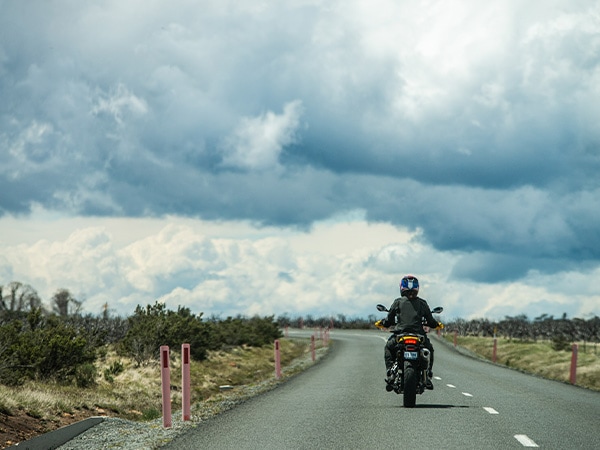
Riding high on Tassie’s Central Plateau, Australia
Raindrops speck my visor as I wind my way down from kooparoona niara. (Image: Chris Crerar)

99. Cycling the Clare Valley, SA

Those with a penchant for pedalling through picturesque landscapes, preferably with the reward of a glass of something crisp at the end, should make tracks for South Australia’s Clare Valley wine region, which has established itself as one of the country’s most attractive cycling spots. It’s most famous for its Riesling Trail, which winds for 33 kilometres through vineyards, farmland and bushland punctuated by cellar doors and villages; it was established in 1994 from an old railway line that was damaged in the Ash Wednesday bushfires some 11 years earlier. Those looking for something a little less languid and more challenging can embark on the 900-kilometre Mawson mountain bike trail, which cuts through Clare on its way from the Flinders Ranges to the Adelaide Hills.
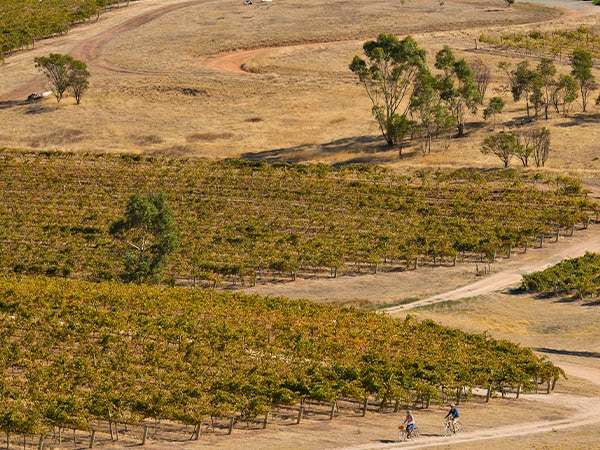
South Australia’s Clare Valley wine region, SA, Australia
Make tracks for South Australia’s Clare Valley wine region. (Image: South Australian Tourism; Adam Bruzzone)

Distance:

Route dependent

Stay:

In a cottage at historic farming property Bungaree Station.

100. Canberra’s cold climate wine region, ACT

Spending even the briefest time exploring the area that stretches between Yass and the ACT will instantly make you understand why there is an “it’s mine, no it’s mine" debate about which region can rightfully lay claim to it: technically it is part of NSW’s Southern Tablelands, but the whole area is also affectionately claimed by Canberra. The reason? Because it’s a picturesque, productive cold-climate wine region, with a burgeoning gourmet foodie scene bubbling along nicely in the background.

The shining gem of the region is Murrumbateman, which is best explored on two wheels and pedal power (the sleek, accommodating Abode Murrumbateman has bikes for guests to borrow), cruising between cellar doors at Clonakilla , Shaw Wines , Helm Wines and The Vintner’s Daughter . Fill your basket with a few top drops and grab the fixings for a perfect picnic: treats from Robyn Rowe Chocolates , fresh produce from Murrumbateman Village Market (every second Sunday) and a sourdough loaf or a sausage roll at Clementine Bakery in Yass.

Distance:

50 kilometres from Yass to Gundaroo.
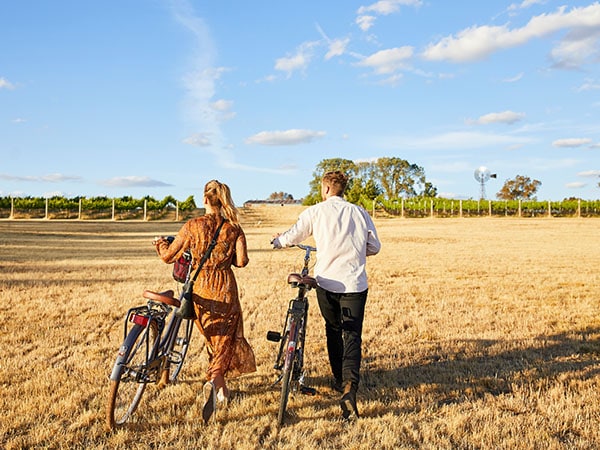
Cycling on the shining gem of the region, Murrumbateman, NSW, Australia
Pedal through picturesque landscapes of the Murrumbateman region.
Keep reading our special Top 100 Road Trips in Australia editorial series.
Carla Grossetti
Carla Grossetti avoided accruing a HECS debt by accepting a cadetship with News Corp. at the age of 18. After completing her cadetship at The Cairns Post Carla moved south to accept a position at The Canberra Times before heading off on a jaunt around Canada, the US, Mexico and Central America. During her career as a journalist, Carla has successfully combined her two loves – of writing and travel – and has more than two decades experience switch-footing between digital and print media. Carla’s CV also includes stints at delicious., The Sydney Morning Herald, and The Australian, where she specialises in food and travel. Carla also based herself in the UK where she worked at Conde Nast Traveller, and The Sunday Times’ Travel section before accepting a fulltime role as part of the pioneering digital team at The Guardian UK. Carla and has been freelancing for Australian Traveller for more than a decade, where she works as both a writer and a sub editor.
See all articles
hero media

Taking the route less travelled along the Great Ocean Road

The Great Ocean Road has captured the hearts of Australians with its astounding scenery since 1932, but going off-course can enrich your experience with untouched nature, foodie delights and charming towns. 

It’s a chilly 16 degrees. My husband pulls on a steamer and jogs – as all seasoned surfers do – into the water. We’re at Bells Beach , the legendary break on Victoria’s Surf Coast that’s home to the Rip Curl Pro, the world’s longest-running event in competitive surfing. Each year, over the Easter long weekend, up to 40,000 people descend on the region for the event. Today, though, we have the beach almost to ourselves, and the less-than-favourable temperature doesn’t deter my husband from surfing this famous break.  

Bells Beach
Bells Beach is known for its epic surf break and is at the start of the Great Ocean Road. (Image: Tourism Australia)

Torquay to Anglesea and Aireys Inlet 

Split Point Lighthouse
The red dome of Split Point Lighthouse in Aireys Inlet. (Image: Tourism Australia)

The nearby surf town of Torquay marks the starting point for the Great Ocean Road . Unfolding our map, which we have marked out with a highlighted route for our children to follow, we set off for lesser-known Anglesea, a chilled-out town 20 minutes south of here. Its wide, sandy beach is a gentler swimming option for our young family. Groms can learn to surf here with Go Ride a Wave, which also runs stand-up paddle boarding on the Anglesea River.  

Split point lookout
The lighthouse overlooks the Shipwreck Coast. (Image: Tourism Australia)

After a couple of nights in Anglesea, we hit the road again, first stopping at Aireys Inlet. Here we stretch our legs at Split Point Lighthouse, which was made famous by the 1990s television series Round the Twist, before driving under the Memorial Arch that welcomes us, officially, to the Great Ocean Road.  

This 243-kilometre coastal road was built by returned First World War servicemen and serves as a permanent memorial to those who fought and died during the war. Carved into rock using hand tools and horse-drawn carts, it was a huge engineering feat and provided much-needed access to isolated coastal communities. 

Lorne to Birregurra 

Lorne is a delightful beachside stop for lunch and browsing boutique stores. It’s also the gateway to Great Otway National Park , which comprises a varied landscape of old-growth forests, cool-temperate rainforests, heathy woodlands and rugged coast. With the highest rainfall in Victoria, the region is home to many waterfalls – 10 of which are within 10 kilometres of Lorne.  

Turning slightly off the main drag, we wind along a gum-shaded road to Erskine Falls. Here, our son leads the way through the hyper-green rainforest and down 200-plus stairs to the cascade that drops 30 metres into a lush fern gully. We hop over large boulders to get closer to the falls, enjoying the entire place to ourselves; it’s worth the return climb.  

From Sheoak Falls Picnic Area, there are walking trails to Henderson Falls, Phantom Falls, Won Wondah Falls and Kalimna Falls, some of which follow an old timber tramway from forest-logging days, which only came to an end in 2008.  

Erskine Falls
Erskine Falls is one of many falls within a day trip of Lorne. (Image: Visit Victoria)

You can follow your appetite north to the town of Birregurra, which is part of the Otway Harvest Trail that connects farm gates, markets, wineries, breweries and distilleries. It’s home to three-hatted modern Australian restaurant Brae , helmed by celebrated chef Dan Hunter, set among native gardens and an organic farm, and Otways Distillery, which produces small-batch spirits using local produce and botanicals.  

Brae restaurant
Brae is a three-hatted restaurant in Birregurra. (Image: Tourism Australia)

Apollo Bay to The Otways 

Back on track, the cliff-hugging stretch between Lorne and Apollo Bay is breathtaking. At Teddys Lookout, we overlook the winding road ahead and St George River spilling into the ocean. We spend languid days in Apollo Bay, a buzzy seaside town that boasts a three-kilometre-long, crescent-shaped beach with a backdrop of rolling green hills. One evening, as the sun sets, we take the steep 10-minute walk to Marriners Lookout, which affords panoramic views of the ocean, hinterland and town.  

A 15-minute drive along the road, Maits Rest is a lush rainforest gully that has been protected since the early 20th century. Wandering along the 800-metre boardwalk, we inspect the delicate moss-covered forest floor and the gnarled roots of 300-year-old myrtle beech trees, then crane our necks to see their canopies, some 50 metres above us. It’s therapy in nature.  

Cape Otway to the Twelve Apostles 

Twelve Apostles
One of the famous Twelve Apostles, limestone sea stacks that rise from the Southern Ocean. (Image: Ben Savage)

The southernmost tip of Cape Otway is a delightful detour, home to the 1848-built Cape Otway Lightstation, the oldest surviving lighthouse on mainland Australia. We climb the narrow winding staircase to the gallery deck, explore the keepers’ quarters and telegraph station, and enjoy a coffee and some ‘famous’ scones at the charming onsite cafe.    

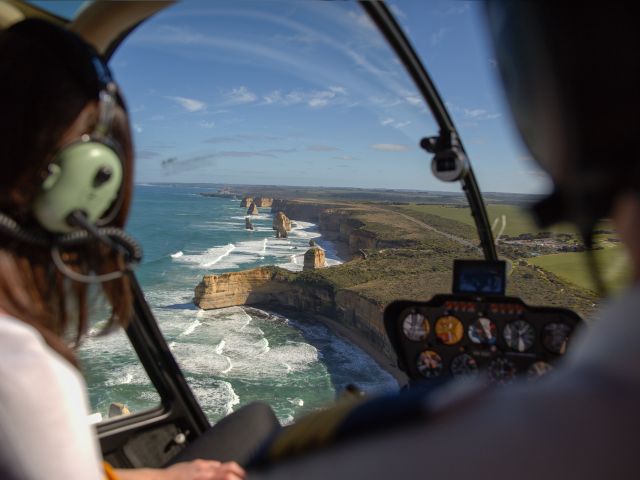
It’s a pinch-me moment to finally see the Twelve Apostles in person. This unmistakable cluster of limestone stacks rising abruptly from the sea were never 12, however. When coined this in the 1890s as a marketing ploy, there were only nine; today, only seven remain after two collapsed in 2005 and 2009. We admire these Aussie icons from the viewing platform, in awe of Mother Nature’s ever-evolving artwork.  

The Grotto
The Grotto is another natural attraction within Port Campbell National Park. (Image: Carmen Zammit)

Edging the wild Southern Ocean, this part of the coast – dubbed Shipwreck Coast – is made up of many sea-carved natural wonders including London Bridge, The Grotto and Gibson Steps. After exploring the lookout trails of Loch Ard Gorge/Poombeeyt Kontapool – its English name taken from the site of the 1878 shipwreck – we nestle into the sandy beach encircled by towering sandstone cliffs, as our children splash about on the water’s edge, and soak it all in.  

Port Campbell to Timboon 

Timboon Fine Ice Cream
Timboon Fine Ice Cream is part of a regional foodie trail. (Image: C McConville)

Just north of Port Campbell National Park, the region of Timboon is part of the 12 Apostles Food Artisans Trail, filled with purveyors of delicious foodstuffs such as Timboon Fine Ice Cream , Timboon Railway Shed Distillery and Apostle Whey Cheese. As an antidote to the indulgence, the 20-kilometre Poorpa Yanyeen Meerreeng Trail is a self-guided ride or walk between Port Campbell and Timboon through tall forests, over historic bridges and past sparkling lakes and farmland with grazing cattle.  

Warrnambool to Port Fairy 

Warrnambool building
A 19th-century building in Warrnambool. (Image: Peter Foster)

In Warrnambool, a town rich in maritime history, we take the four-kilometre Thunder Point Walk that traces the coast. The kids squeal when an echidna shuffles out from beneath the wooden boardwalk, and we stop to admire a seal lazing on a rock at the port.  

Further along, the streets of quaint fishing village Port Fairy are lined with 19th-century cottages, old stone churches and Norfolk pines. Follow the historic walking trail to see some of the 60-plus National Trust buildings. Port Fairy is also home to Port Fairy Folk Festival (6-9 March), one of the country’s longest-running music and cultural festivals. You could time your road trip with the event for a fittingly celebratory end to any journey.  

The Great Ocean Road can easily be done in three days, but we’ve spent a week on the road. The highlighted line on our now creased and well-worn map doesn’t follow the famous route precisely. It has sprouted branches in many directions, leading us to untouched rainforest and charming rural towns filled with culinary delights, and where we experienced some of our most memorable moments on the Great Ocean Road.    

A traveller’s checklist 

Staying there

Oak & Anchor
The Oak & Anchor in Port Fairy.

The Monty is a highly anticipated, newly refurbished motel with a chic Palm Springs-inspired aesthetic set across the road from the Anglesea River. Basalt Winery in Port Fairy grows cool-climate wines such as pinot noir and Riesling in rich volcanic soil. Stay among the vines in its tiny home, complete with a kitchen, lounge area and outdoor firepit. 

The Oak & Anchor Hotel has been a Port Fairy institution since 1857. Cosy up by the bar in winter or bask in the sunshine of the Lawn Bar in summer. The rooms are beautifully boutique with considered details, such as luxe baths for sinking into post-road trip. 

Eating there

The Coast in Anglesea is a modern Australian restaurant focused on local ingredients. Grand Pacific Hotel has been a local landmark in Lorne since 1879 and recently underwent a restoration. It serves a mix of traditional pub and Italian fare alongside ocean views.  

Graze is a cosy 40-seat dining room in Apollo Bay with a modern Australian menu complemented by regional wines. Apollo Bay Distillery offers tasting flights, a gin blending masterclass and serves woodfired pizzas.