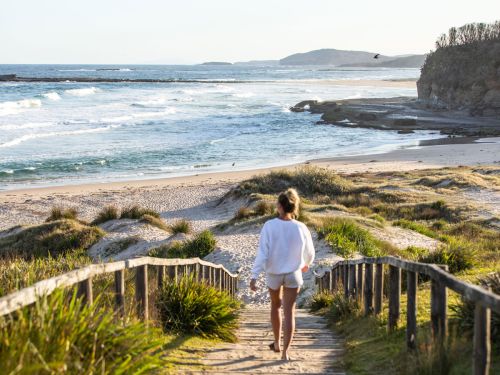
From ‘Season Swapping’ to ‘Detour Destinations’, there are many good reasons to steer towards new places.
I remember the first time we took a hard left onto an exit ramp leading off the Pacific Highway in favour of the Grand Pacific Drive towards the NSW South Coast. From this vantage point, whole new villages swing into view. Villages we’d bypassed on the highway for a decade while bound for Batemans Bay from Sydney. This scenic route twists along the Sea Cliff Bridge, past pretty seaside villages such as Gerroa and Gerringong, all the way to North Durras and Kioloa some 165 kilometres to the south.

‘Detour Destinations’ are one of several top travel trends forecasted for 2025 in the Unpack ’25 report by Expedia, Wotif and Stayz. And while the data-driven predictions based on flight searches had an international focus – think Reims over Paris, Cozumel over Cancun – Australians are also opting to explore under-the-radar local regions. Like Mackay over Melbourne. Or Bellingen over Byron Bay. Or, with its natural beauty manifesting in river towns and coastal treasures, the Clarence Valley as an alternative neck of the woods in NSW’s Northern Rivers.
Embracing a different route leads to new experiences
Now, instead of rolling past the pretty hippie-chic town of Thirroul, we stop and browse for antiques. And in addition to a stay at Paperbark Camp, located in a tranquil bush setting near Jervis Bay, we head to Shoalhaven Heads to dine at hatted restaurant Bangalay Dining. Or Nowra for a Djiriba Waagura Cultural Tour.
While our map might be more of a messy squiggle than the route devised by our car’s navigation system, there’s a certain amount of joy that comes from zigging when everyone else is zagging. It’s like playing our own version of Pacman, eating up new experiences across the countryside.
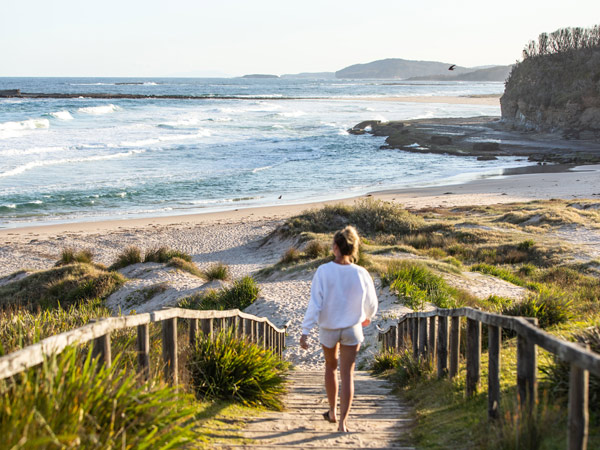
The 100 Beach Challenge, for example, is an initiative by the Shoalhaven City Council designed to encourage visitors to look beyond the area’s Insta-famous white-sand beaches.
Tourism manager Kristy Mayhew says savvy travellers are clueing on to the fact that the region is dotted with lesser-known treasures.
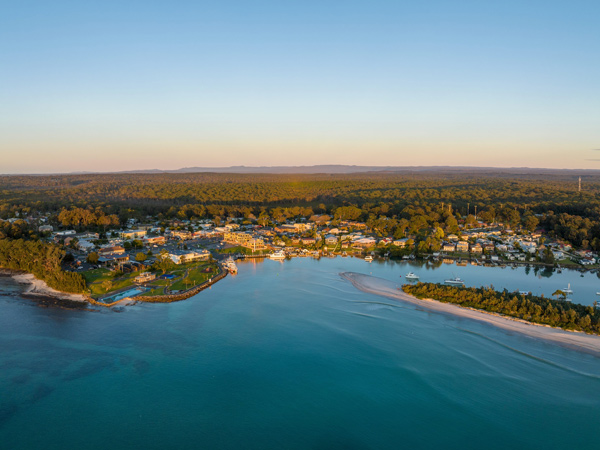
“The Shoalhaven is unique. Jervis Bay was No. 1 on Airbnb for Australian searches and No. 5 globally. But what people don’t realise is there’s more to the Shoalhaven that is just as beautiful. Sussex Inlet is just one example. It’s like Huskisson 20 years ago," Mayhew explains.
Need tips, more detail or itinerary ideas tailored to you? Ask AT.
AI Prompt
The benefits of ‘Season Swapping’ are stacking up
‘Season Swapping’ is another travel trend worth unpacking as Aussies consider travelling domestically during the off-season to save money and avoid the crowds. “Autumn in the Shoalhaven region is a beautiful time as the water is warm and there are a lot of wonderful wellness retreats," notes Mayhew.
“We don’t want to hero just one destination. We want people to travel consciously, stay longer, slow down, chill out and live like a local just a few hours from Sydney."
Instead of travelling to Darwin or Tropical North Queensland in the peak period (winter), why not experience the drama of a wet season, when the rainforest comes to life? And instead of fishtailing down the slopes of the Snowy Mountains on skis, head there in summer for the walks and wildflowers.
Savvy travellers are also heading away from the coast and into our hinterlands – from Queensland’s Atherton Tablelands to the Coffs Coast’s Orara Valley, where villages such as Glenreagh, Ulong, Coramba and Nana Glen turn on the country charm.
Regional glow-ups worthy of attention

With the trend for regional glow-ups or ‘townsizing’ showing no signs of slowing down, there’s no better time to find an excuse for a little ellipsis, a moment to pause. Instead of hammering down the Hume Highway to Canberra, add hidden gem Goulburn to your itinerary.
You’ll find surprises at every corner in Australia’s first inland city, with everything from museums to homesteads and heritage architecture. A good way to explore the country town is to hike around the Goulburn Wetlands or Bungonia National Park before visiting the Goulburn Regional Gallery or stopping for a pub lunch.
The Central Coast also falls into a similar category as rejuvenated venues such as the Woy Woy Hotel, Beachcomber Hotel & Resort in Toukley and Crowne Plaza Terrigal Pacific lure visitors who revel in their waterside locations.
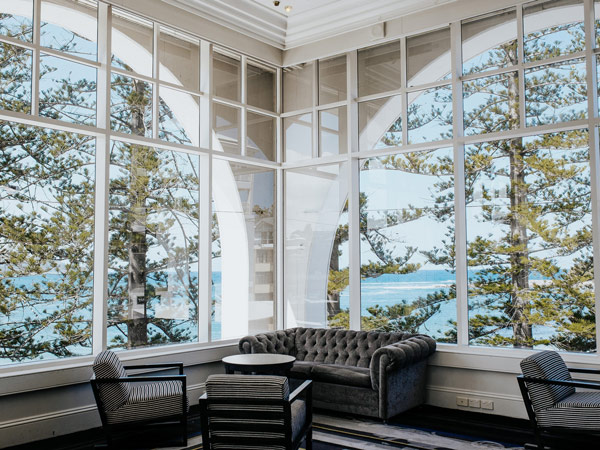
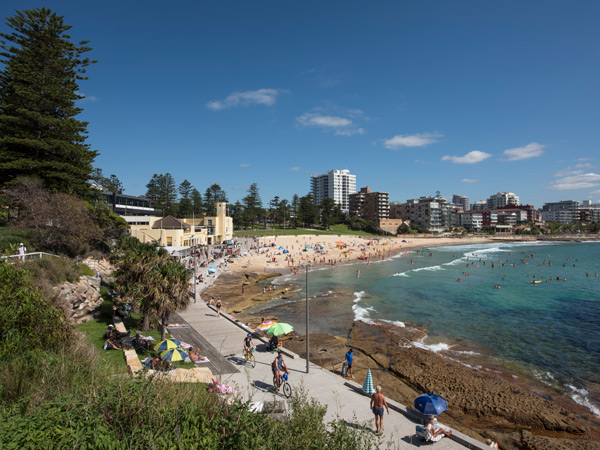
Ditto with Cronulla in Sydney’s Sutherland Shire. Although the beachside suburb features many of the same qualities that make Manly and Bondi so appealing, it tends to fly under the radar. While Cronulla might be best known for its surfing and beaches, a little-known fact is it’s home to the Curranulla, the oldest commuter ferry in the country. Australia’s oldest national park, Royal National Park, was also created in the south of Sydney in 1879.
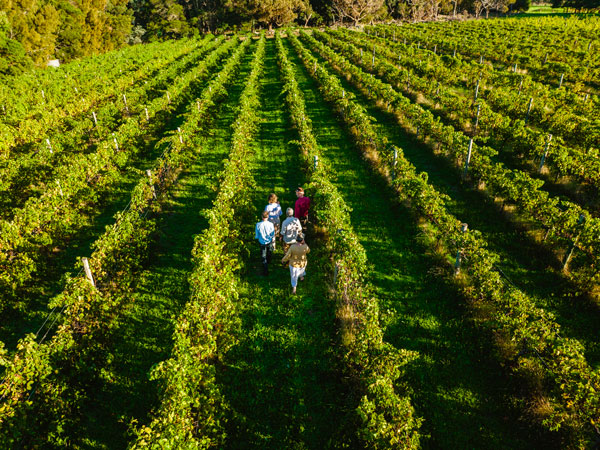
Visitors to Western Australia are also encouraged to travel further afield to the Great Southern region on the shoulder of orca season in April. Or to pinball through the Wheatbelt along the PUBLIC Silo Trail. While most visitors bookmark Margaret River wineries, the Great Southern is the largest wine-growing region in mainland Australia, and seen as a great alternative region for avoiding the crowds.
While many of these places might be considered Australia’s B-sides, they’re every bit as beguiling. Even if you’re not nearby, go and check out these rising stars and regions, which can be added to an itinerary or marked on the map as the main destination.
Weekly travel news, experiences
insider tips, offers, and more.
Want to see more stories from Australian Traveller in your Google search results?
- Click here to set Australian Traveller as a preferred source.
- Tick the box next to "Australian Traveller". That's it.