hero media

This is Mornington Peninsula’s most indulgent itinerary

The Mornington Peninsula blends vineyards, galleries, golf and delicious finds for an unforgettable getaway that indulges all penchants. 

Just over an hour from Melbourne, the Mornington Peninsula blends coast and country in a way that feels effortlessly indulgent. It’s a region where vineyard views meet acclaimed dining, art and culture is never far from the sea, and where hot springs bubble alongside rolling fairways. Whether your escape is a long lunch, an immersive art trail or a round of golf, the Mornington Peninsula has an itinerary to match. And there’s always a glass of good local pinot waiting for you at the end of the day.  

A creative trail through the Peninsula 

The Mornington Peninsula is a haven for artists and creatives. Its coastal views and rolling landscapes have long been a source of inspiration. Stay at the historical InterContinental Sorrento, a grand hotel established in 1875, recently renovated to blend heritage charm with contemporary elegance. With curated art lining the hotel’s corridors and rooms, you could spend hours simply wandering the halls, studying the walls. 

Pt Leo Estate outdoor gallery
Wander around Pt. Leo Estate’s outdoor gallery. (Image: Visit Victoria/Jesse Hisco)

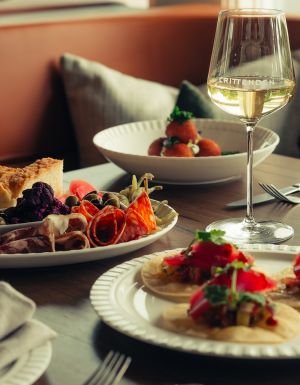
If looking for an outdoor gallery with sea views, head to Pt. Leo Estate, a landscaped vineyard home to a sculpture park featuring more than 70 large-scale works by both local and international artists, all easily accessible by connecting paths. After strolling through the vineyards, there are three dining options: fine dining at Laura, a relaxed meal at Pt. Leo Restaurant or a vino at the Wine Terrace. For something more hands-on, sign up for the Sip & Sketch experience. And if you book directly into the elegant Lancemore at Lindenderry Red Hill, you’ll enjoy free access to the sculpture park.  
food at Pt Estate
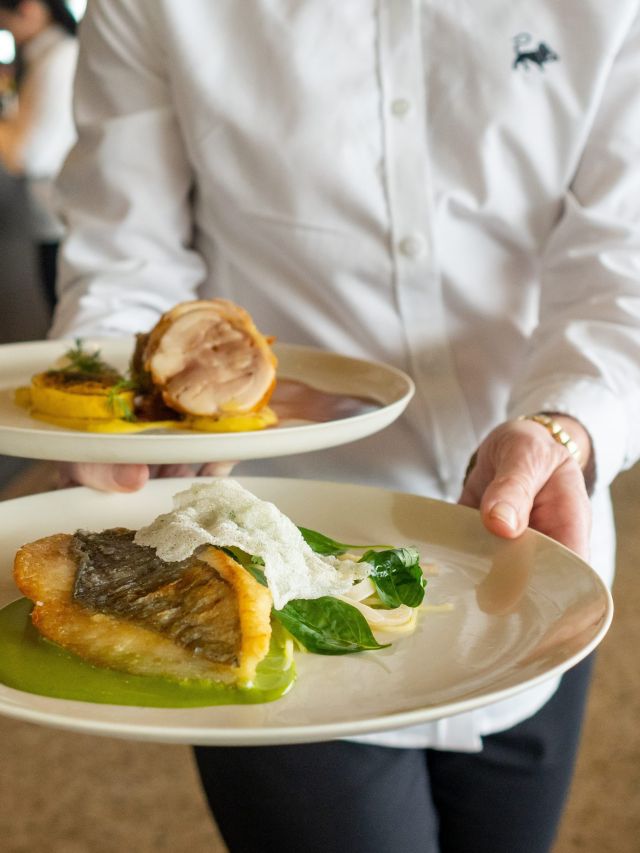
Pt Leo Estate boasts three elegant dining venues. (Image: Visit Victoria/Two Palms/Arianna Harry)

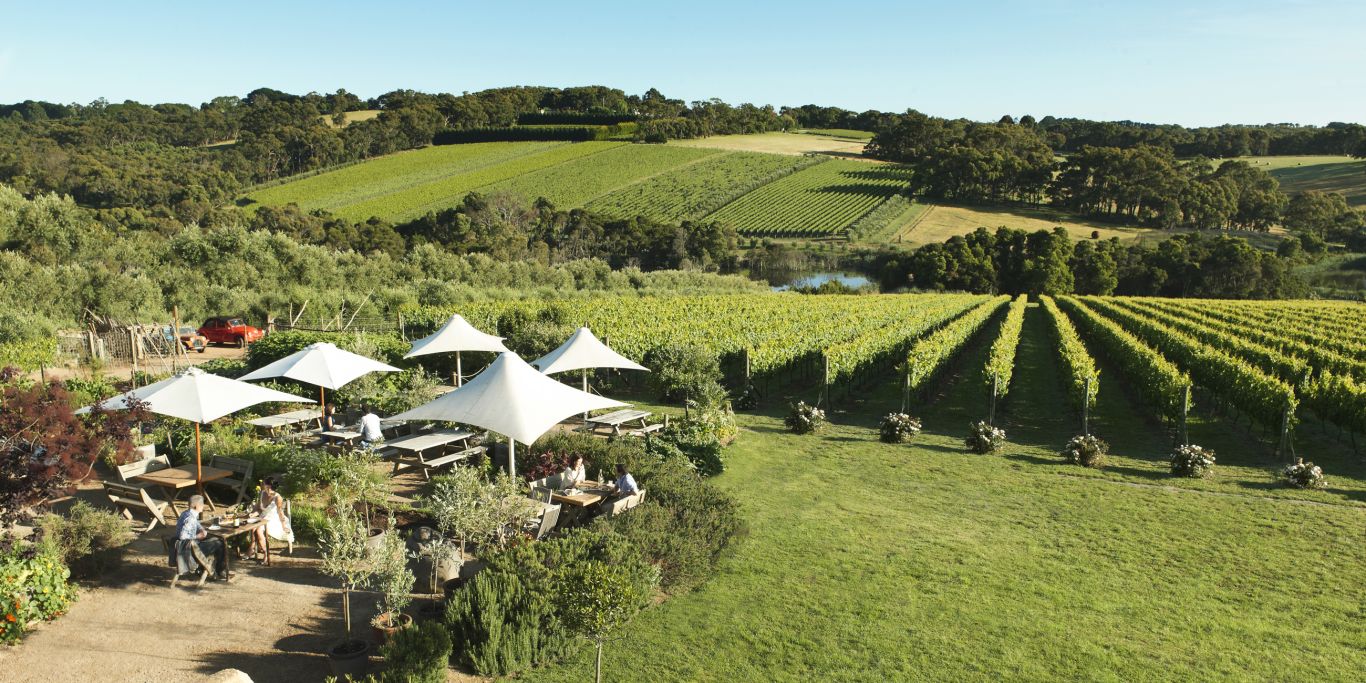
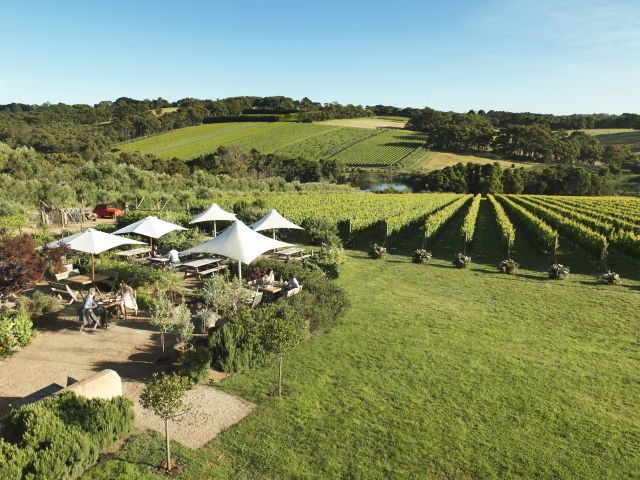
For those who like their art framed by rolling hills, vines and wetlands, Montalto is the place. More than 30 sculptures are dotted throughout the property. The vineyard offers a formal restaurant and casual tables among the seasonal produce in a setting that feels like Mr. McGregor’s Garden from Peter Rabbit. And there’s always the option to picnic on the lawn.  
Montalto Vineyard
Montalto Vineyard is an idyllic setting for afternoon wining and dining. (Image: Visit Victoria/Robyn Lea)

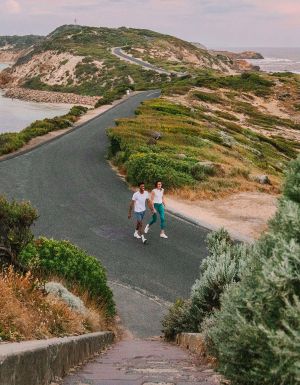
The Sorrento-Portsea Artists Trail offers a self-guided walk along bush paths and sea cliffs to see the same landscapes that once inspired brushstrokes of some of Australia’s most famous artists. Along the way, interpretive signs share insights into the area’s artistic past. And, if the peninsula’s weather turns a little wild, the region is brimming with galleries, particularly around Flinders, Sorrento and Red Hill. Artisan studios are open by appointment.  

Need tips, more detail or itinerary ideas tailored to you? Ask AT.

AI Prompt

A feast for food and wine lovers 

With more than 200 vineyards, around 60 wineries and cellar doors, plus an abundance of breweries, distilleries, orchards and family-run farms spanning generations, the Mornington Peninsula is a playground for food and wine enthusiasts.  
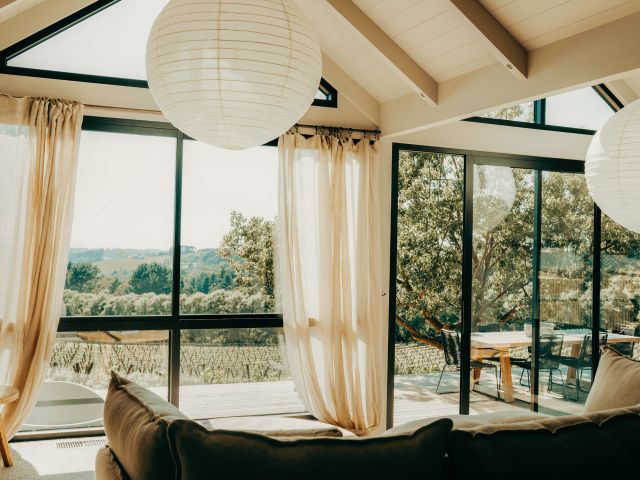
Cassis Red Hill
Luxurious stay, Cassis Red Hill.

The perfect base for a culinary inclined trip is Cassis Red Hill, where luxury accommodation is tucked between grape vines and olive trees. A quiet nod to the fishing village of Cassis in the south of France, this retreat is all about contemporary elegance – crisp linen, sunlit interiors and a private mineral plunge pool. 

Then, for a stand-out lunch, Green Olive at Red Hill offers a delicious way to enjoy the region. Graze on generous tasting plates with house-made relishes, lamb sausages, local cheese and just-picked garden produce. Pair it with a wine flight or order a picnic hamper to enjoy among the olive grove; there’s a picnic option for your dog, too. And for a playful twist, Green Olive is home to what is believed to be Australia’s only pickleball court set within a vineyard or orchard.  

Amid the many wineries with open cellar doors, Main Ridge Dairy offers a delicious detour – a goat dairy where you can sample handcrafted cheeses and even meet the resident goats. For a more refined experience, Paringa Estate is one of the peninsula’s most awarded wineries, offering fine dining with sweeping vineyard views and a menu crafted from seasonal, locally sourced ingredients.   

If you’re looking to step outdoors before a lingering lunch, during winter Flinders Truffles offer the chance to join their clever dogs and search for the black gold under oak trees. For an authentic taste of the region, time your visit with one of the Peninsula’s vibrant farmers’ markets.

Weekly travel news, experiences
insider tips, offers, and more.

From golf days to spa stays 
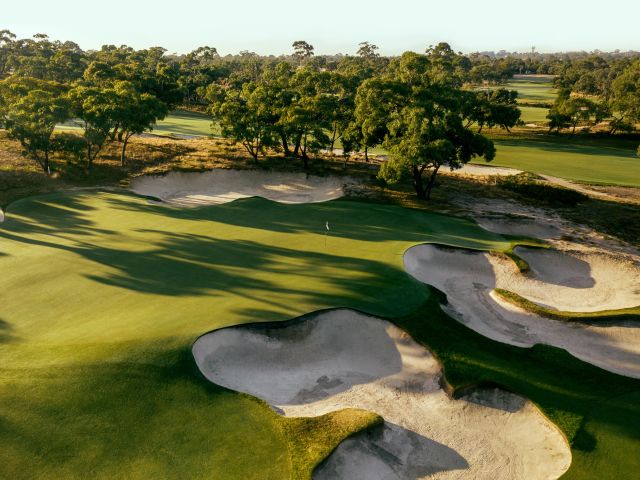
Kingswood CountryGolf Club
Peninsula Kingswood Country Golf Club. (Image: Visit Victoria)

With its champion courses, the Peninsula is a dream destination not only for those who love to tee off but for those who enjoy the post-golf wind down. Peninsula Kingswood Country Golf Club draws keen golfers from around the world, while Peppers Moonah Links Resort is a course that has hosted both a PGA tournament and two Australian Opens. For a true test of skill, The Dunes Golf Links is one of Australia’s top public courses. Each golf course offers accommodation, and staying onsite means maximum convenience, especially at The Dunes, where premium rooms have you sleeping right next to the fairway. Off-course indulgence is close at hand, too.  
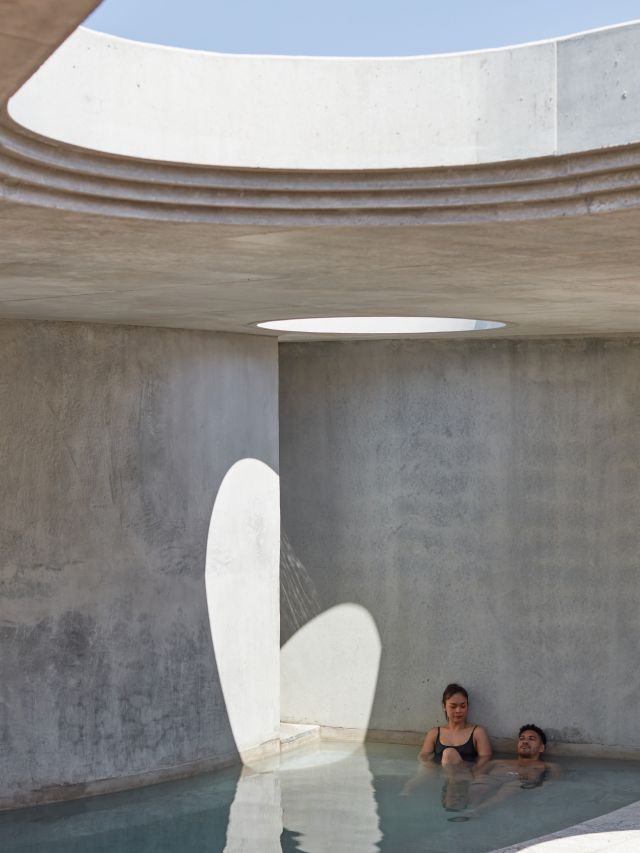
Alba Thermal Springs& Spa
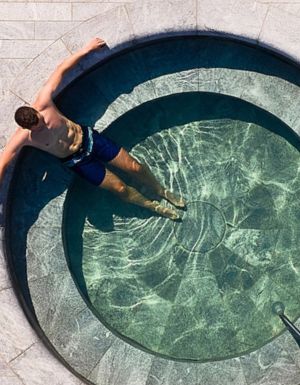
Soaking at Alba Thermal Springs & Spa. (Image: Visit Victoria)

Peninsula Hot Springs and Alba Thermal Springs are just next door, where thermal waters drawn from geothermal mineral springs deep underground provide the ultimate recovery after a day of perfecting your swing. These award-winning wellness sanctuaries offer everything from bathing pools to private plunges and spa treatments. 
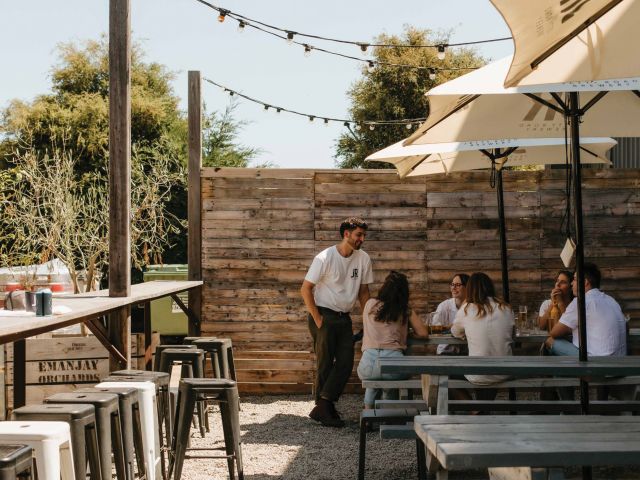
Jetty Road Brewery
Jetty Road Brewery.

After sinking the last ball, and the 19th hole beckons, the Peninsula serves up just as many dining options as it does golf courses. Just minutes away and right on the beach, Jetty Road Brewery is a laid-back spot perfect for a round of beers and typical pub fare. For something a little elevated, book a table at Epicurean. Here, a glass of local red pairs beautifully with handmade pastas and woodfired pizza, all served in a historical coolstore and packing shed dating back more than a century.   

Want to see more stories from Australian Traveller in your Google search results?

  1. Click here to set Australian Traveller as a preferred source.
  2. Tick the box next to "Australian Traveller". That's it.
Kellie Floyd
Kellie Floyd is a freelance writer with a deep curiosity for cultures and lands. She feels right at home in her hiking boots, exploring the great outdoors with her kids and firmly believes in the educational power of travel. Kellie loves to pen articles about her family and solo adventures, as well as sustainable travel. At home, you’ll find her snuggled up with a coffee in hand, reading about places she has yet to visit but knows she will someday.
View profile and articles
hero media

Inside Geelong’s glow-up from factory town to creative capital

    Chloe Cann Chloe Cann
    Abandoned mills and forgotten paper plants are finding second lives – and helping redefine a city long underestimated. 

    Just 15 years ago, Federal Mills was a very different place. Once among the most significant industrial sites in Victoria, the historic woollen mill was one of a dozen that operated in Geelong at the industry’s peak in the mid-20th century, helping the city earn its title as ‘wool centre of the world’. But by the 1960s global competition and the rise of synthetic fabrics led to the slow decline of the industry, and Federal Mills finally shuttered its doors in 2001. Within a few years, the abandoned North Geelong grounds had become makeshift pastoral land, with cows and goats grazing among the overgrown grass between the empty red-brick warehouses. It was a forgotten pocket of the city, all but two klicks from the bustle of the CBD.  

    Geelong cellar door wine bar
    Geelong has shed its industrial identity to become an innovative urban hub with reimagined heritage spaces. (Image: Ash Hughes)

    Federal Mills: from forgotten factory to creative precinct 

    Today, the century-old complex stands reborn. The distinctive sawtooth-roof buildings have been sensitively restored. An old silo is splashed with a bright floral mural, landscapers have transformed the grounds, and the precinct is once again alive with activity. More than 1000 people work across 50-plus businesses here. It’s so busy, in fact, that on a sunny Thursday morning in the thick of winter, it’s hard to find a car park. The high ceilings, open-plan design, and large multi-paned windows – revolutionary features for factories of their time – have again become a drawcard.  

    Paddock Bakery andPatisserie
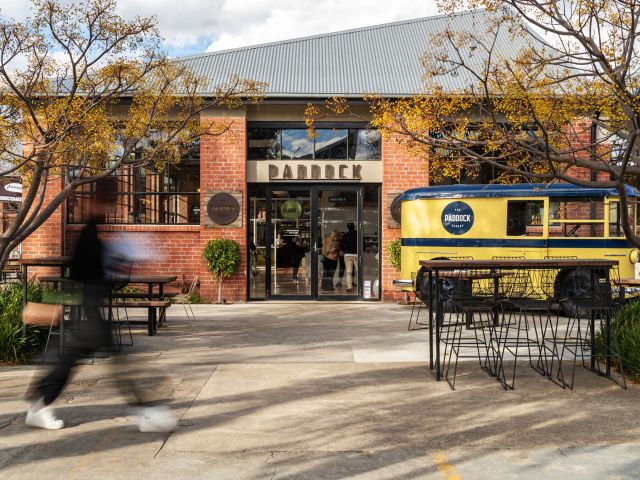
    Paddock Bakery and Patisserie is housed within the historic wool factory. (Image: Gallant Lee)

    At Paddock, one of the precinct’s newer tenants, weaving looms and dye vats have been replaced by a wood-fired brick oven and heavy-duty mixers. Open since April 2024, the bakery looks right at home here; the building’s industrial shell is softened by ivy climbing its steel frames, and sunlight streams through the tall windows. Outside, among the white cedar trees, families at picnic benches linger over dippy eggs and bagels, while white-collar workers pass in and out, single-origin coffee and crème brûlée doughnuts in hand. 

    Geelong: Australia’s only UNESCO City of Design 

    Paddock Bakery
    Paddock Bakery can be found at Federal Mills. (Image: Gallant Lee)

    “A lot of people are now seeing the merit of investing in Geelong,” says Paul Traynor, the head of Hamilton Hospitality Group, which redeveloped Federal Mills. A city once shunned as Sleepy Hollow, and spurned for its industrial, working-class roots and ‘rust belt’ image, Geelong has long since reclaimed its ‘Pivot City’ title, having reinvented itself as an affordable, lifestyle-driven satellite city, and a post-COVID migration hotspot.  

    And the numbers stand testament to the change. In March 2025, and for the first time in its history, Greater Geelong became Australia’s most popular regional town for internal migration, overtaking Queensland’s Sunshine Coast. Current forecasts suggest Geelong will continue to outpace many other Australian cities and towns, with jobs growing at double the rate of the population.

    Tourism is booming, too. The 2023-24 financial year was Geelong and The Bellarine region’s busiest on record, with 6.4 million visitors making it one of the fastest-growing destinations in the country. It’s not hard to see why: beyond the city’s prime positioning at the doorstep of the Great Ocean Road, Geelong’s tenacity and cultural ambition stands out.  

    As Australia’s only UNESCO City of Design, Geelong is swiftly shaking off its industrial past to become a model for urban renewal, innovation, sustainability and creative communities. The signs are everywhere, from the revitalisation of the city’s waterfront, and the landmark design of the Geelong Library and Heritage Centre and Geelong Arts Centre, to the growing network of local designers, architects and artists, and the burgeoning roster of festivals and events. That’s not even mentioning the adaptive reuse of storied old industrial buildings – from Federal Mills, to Little Creatures’ brewery ‘village’ housed within a 1920s textile mill – or the city’s flourishing food and wine scene.  

    The rise of a food and wine destination  

    boiler house
    Restaurant 1915 is housed within a restored former boiler house. (Image: Harry Pope/Two Palms)

    Traynor credits now-closed local restaurant Igni, which opened in 2016, as the turning point for Geelong’s hospo industry. “[Aaron Turner, Igni’s chef-patron] was probably the first guy, with all due respect, to raise the bar food-wise for Geelong,” he says. “People now treat it really seriously, and there’s clearly a market for it.” While Igni is gone, Turner now helms a string of other notable Geelong venues, including The Hot Chicken Project and Tacos y Liquor, all within the buzzy, street art-speckled laneways of the CBD’s Little Malop Street Precinct. Many others have also popped up in Igni’s wake, including Federal Mills’ own restaurant, 1915Housed within the cavernous boiler house, 1915’s interior is dramatic: soaring, vaulted ceilings with timber beams, exposed brick, a huge arched window. The share plates echo the space’s bold character, playing with contrast and texture, with dishes such as a compressed watermelon tataki, the sweet, juicy squares tempered by salty strands of fried leeks, and charred, smoky snow peas dusted with saganaki on a nutty bed of romesco. 

    Woolstore
    The Woolstore is a new restaurant and bar housed within a century-old warehouse. (Image: Amy Carlon)

     The Woolstore, one of The Hamilton Group’s most recent hospo projects, opened in February. It occupies a century-old riverside warehouse and exudes a more sultry, fine dining ambience. Much like Federal Mills, the blueprint was to preserve the original brickwork, tallowwood flooring and nods to the building’s former life. That same careful consideration extends to the well-versed, affable waitstaff as well as the kitchen. Head chef Eli Grubb is turning out an eclectic mix of ambitious and indulgent mod Oz dishes that deliver: strikingly tender skewers of chicken tsukune, infused with hints of smoke from the parrilla grill, and glazed with a moreish, sweet gochujang ‘jam’; nduja arancini fragrant with hints of aniseed and the earthy lick of sunny saffron aioli; and golden squares of potato pavé, adorned with tiny turrets of crème fraîche, crisp-fried saltbush leaves, and Avruga caviar, to name but a few stand-out dishes.  

    Woolstore menu
    Woolstore’s menu is designed for sharing.

    Breathing new life into historic spaces  

    On the city’s fringe, hidden down a winding side road with little fanfare, lies a long-dormant site that’s being gently revived. Built from locally quarried bluestone and brick, and dating back to the 1870s, the complex of original tin-roofed mill buildings is lush with greenery and backs onto the Barwon River and Buckley Falls; the audible rush of water provides a soothing soundtrack. Fyansford Paper Mill is one of few complexes of its time to survive intact. It feels steeped in history and spellbindingly rustic.  

    “We were looking for an old industrial place that had some charm and romance to it,” explains Sam Vogel, the owner, director and winemaker at Provenance Wines which moved here in 2018. When he first viewed the building with his former co-owner, it was in such a state of disrepair that the tradie tenant occupying the space had built a shed within it to escape the leaking roof and freezing winter temperatures. “To say it was run down would be an understatement,” he notes. “There was ivy growing through the place; the windows were all smashed. It was a classic Grand Designs project.” 

    Provenance Wines
    Provenance Wines moved to Fyansford Paper Mill in 2018. (Image: Cameron Murray Photography)

    The team has since invested more than a million dollars into their new home. Where paper processing machinery once sat, wine barrels are now stacked. Vaulted cathedral ceilings are strung with festoon lights, and hidden in plain sight lies a shadowy mural by local street artist de rigueur Rone – one of only three permanent works by the artist.

    While the award-winning, cool-climate pinot noir, riesling and chardonnay naturally remain a key draw at Provenance, the winery’s restaurant is a destination in itself. Impressed already by whipsmart service, I devour one of the most cleverly curated and faultlessly executed degustations I’ve had in some time. It’s all prepared in a kitchen that is proudly zero-waste, and committed to providing seasonal, ethical and locally sourced meat and produce under head chef Nate McIver. Think free-range venison served rare with a syrupy red wine jus and a half-moon of neon-orange kosho, shokupan with a deeply savoury duck fat jus (a modern Japanese take on bread and drippings), and a golden potato cake adorned with a colourful confetti of dehydrated nasturtiums and tomato powder, and planted atop a sea urchin emulsion.  

    handcrafted pieces
    Bell’s handcrafted functional pieces on display.

    The complex is home to a coterie of independent businesses, including a gallery, a jeweller, and its latest tenant, ceramicist Elizabeth Bell, drawn here by the building’s “soul”. “There’s so much potential for these buildings to have new life breathed into them,” says Bell, whose studio is housed within the old pump room. “Even people in Geelong don’t know we’re here,” she says. “It’s definitely a destination, but I like that. It has a really calming atmosphere.”  

    A Melbourne transplant, Bell now feels at home in Geelong, which offers something Melbourne didn’t. “If this business was in Melbourne I don’t think it would’ve been as successful,” she notes. “It’s very collaborative in Geelong, and I don’t think you get that as much in Melbourne; you’re a bit more in it for yourself. Here it’s about community over competition.”  

    Elizabeth Bell
    Ceramicist Elizabeth Bell has a store in Fyansford Paper Mill.