hero media

Tonight’s supermoon is just the beginning of an epic celestial line-up

Australia is in for an astronomical end to the year.

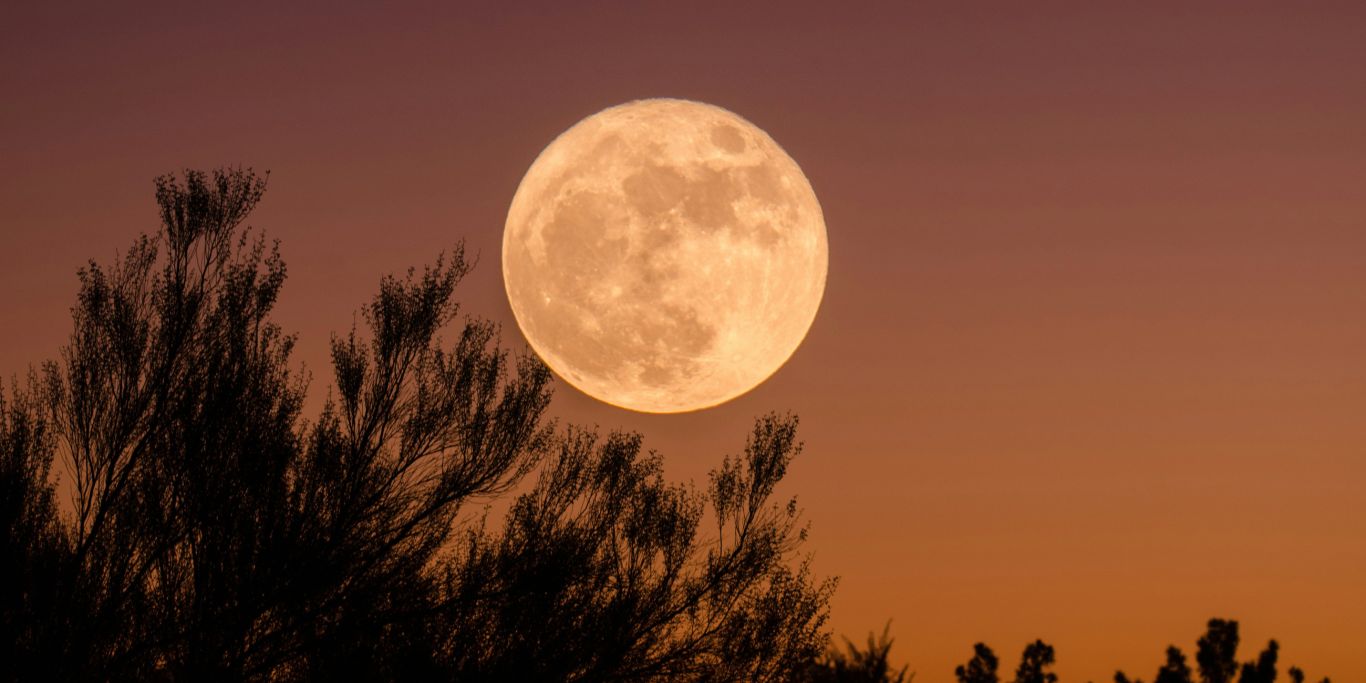
Get ready Australia, the first supermoon of 2025 is lighting up our skies tonight. Known as the harvest moon, it’s also the beginning of a months-long lunar spectacle, with several more celestial events on the near-horizon.

What is a harvest moon?
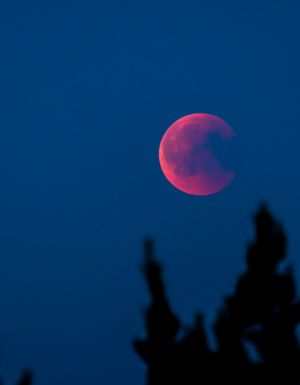
Supermoon/Harvest Moon Australia
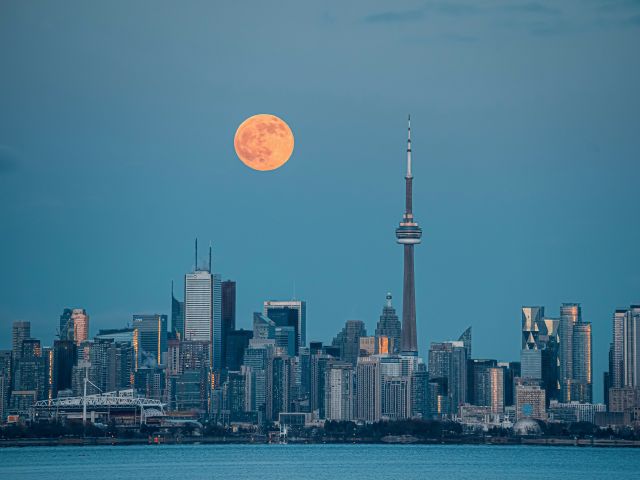
The harvest moon gets its name from the northern hemisphere’s autumnal equinox. (Image: Dave Xu/Unsplash)

The harvest moon gets its name from the northern hemisphere, representing the closest full moon to the autumnal equinox. Its bright light once helped farmers work late into the night, gathering their crops in time for a new season.

Characterised by its fully formed face and luminous orange glow, the harvest moon is also classified as a supermoon. And yes, this is different from a regular full moon. Just like Earth orbits the sun once a year, the moon orbits Earth roughly once a month. During this 27-day journey, sunlight hits different parts of the moon as it moves, taking it from a thin crescent to a perfect sphere or a full moon.

A supermoon only happens when that monthly full moon is also at its perigee – the point in its orbit closest to Earth. Sounds a bit complicated, right? In simple terms, a full moon is when the moon appears fully lit, but a supermoon is when it’s fully lit and at its closest point to Earth making it look bigger and brighter – like tonight!

How to see it
Supermoon/Harvest Moon Australia
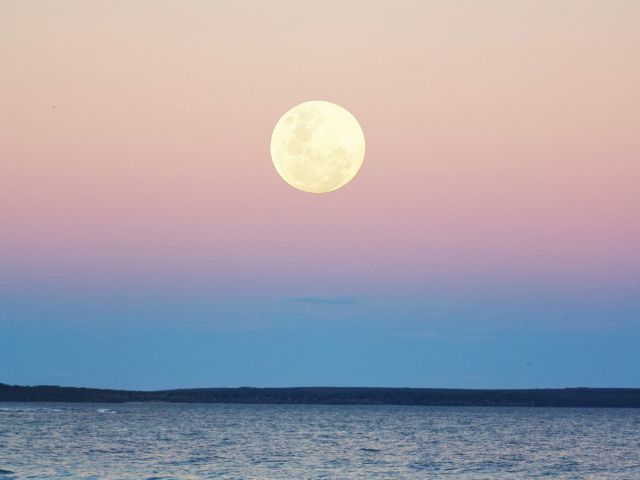
The moon appears at its largest near the horizon. (Image: Film Plus Digital/Unsplash)

When it comes to most astronomical events, the southern hemisphere (and Australia in particular) doesn’t have too much luck. But tonight, the scales are firmly tipped in our favour. The harvest moon will be very easy for us to see – as long as it’s not overcast. It will rise around sunset in the eastern sky and will be visible all night before setting in the west come sunrise.

While the moon will technically reach peak fullness around 3:45am on Wednesday, it will appear at its largest during dusk on Tuesday due to a phenomenon called ‘moon illusion’. This trick of the eye makes the moon appear bigger when it is low on the horizon compared to when it is high in the sky, a visual effect photographers should take full advantage of.

Other upcoming celestial events
Supermoon/Harvest Moon Australia
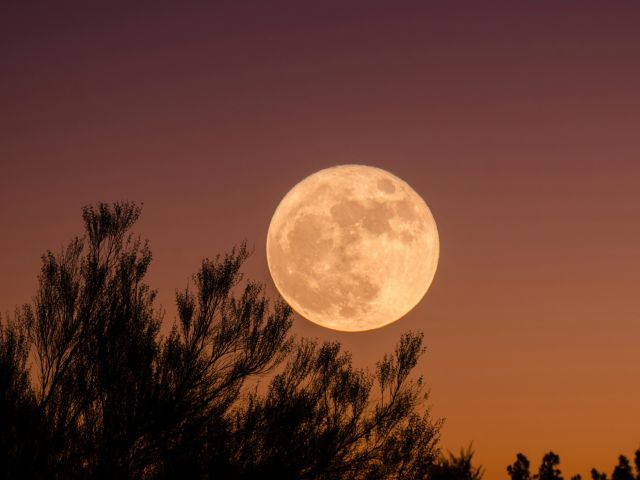
Australia is in for a months-long lunar spectacle. (Image: Ganapathy Kumar/Unsplash)

Our night sky has truly taken centre stage this year, from meteor showers like Eta Aquariids and the Perseids to a breathtaking strawberry moon in June and our first blood moon since 2022. And while the harvest moon might be stealing the spotlight tonight, it’s just the beginning of an epic celestial line-up.

Over the next three months, multiple astronomical events will light up our skies. After tonight’s harvest moon, there will be not one, but two more supermoons this year – both named after seasonal events in the northern hemisphere.

On 5 November, we’ll be treated to the Beaver Moon. Its name is drawn from Native American folklore, a symbol of the busy beavers readying their homes for winter’s arrival. Come 4 December, the third and final supermoon of 2025 will rise. Known as the Cold Moon, it marks the arrival of the north’s coldest and darkest months. For us, it’s more of a farewell!
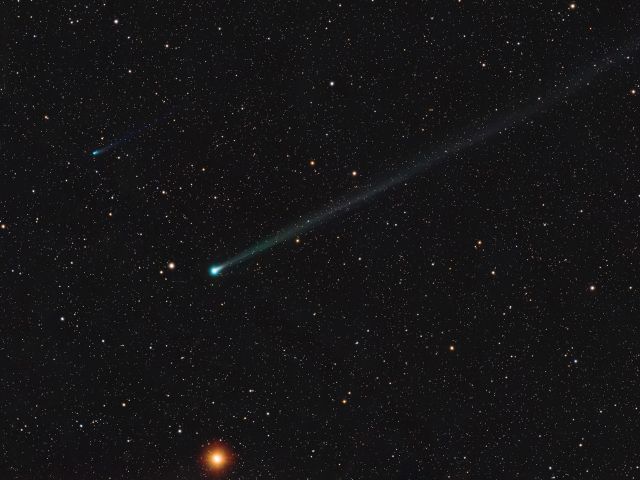
Comet C/2025 R2 (SWAN)
C/2025 R2 (SWAN) was only discovered a few weeks ago. (Image: Adam Block)

But that’s not all. A recently discovered comet known as C/2025 R2 (SWAN) will be passing Earth this October. While you’ll need binoculars to catch a glimpse of its bright green glow and exceptionally long tail, it’ll definitely be worth it, as SWAN won’t be back for another 600 years.

The excitement continues into 2026, with another supermoon scheduled for January and a total lunar eclipse in March. Best of all, you should be able to catch every single one from your balcony or backyard. It truly is a great time to be an Aussie astronomy lover.

Taylah Darnell
Taylah Darnell is Australian Traveller's Writer & Producer. She has been passionate about writing since she learnt to read, spending many hours either lost in the pages of books or attempting to write her own. This life-long love of words inspired her to study a Bachelor of Communication majoring in Creative Writing at the University of Technology Sydney, where she completed two editorial internships. She began her full-time career in publishing at Ocean Media before scoring her dream job with Australian Traveller. Now as Writer & Producer, Taylah passionately works across both digital platforms and print titles. When she's not wielding a red pen over magazine proofs, you can find Taylah among the aisles of a second-hand bookshop, following a good nature trail or cheering on her EPL team at 3am. While she's keen to visit places like Norway and New Zealand, her favourite place to explore will forever be her homeland.
See all articles
hero media

8 Red Centre locations to explore after seeing the new movie, Kangaroo

Spend a few days visiting the real-life Central Australian locations that inspired the new film everyone is talking about, and discover why Alice Springs is such an important part of Australian culture.

In the credits of the new Australian film Kangaroo , the first name under ‘cast’ should read ‘The Northern Territory ’. Not only is Alice Springs (and the surrounding landscape) integral to the movie itself, but the spiritual heart of Australia and its local Indigenous owners also inform the look and feel of every frame, explains Producer Trisha Morton-Thomas of Brindle Films, who also plays Charlie’s grandmother Gwennie.

“By setting Kangaroo in Alice Springs (Mparntwe), the film embraces how visible Aboriginal people are here, and the living Aboriginal culture that is woven through this community,” she explains.

still from kangarro film
See Kangaroo, then visit the real-life filming locations.

And while shooting in such a sacred part of the Northern Territory required extra planning, it was something the cast and crew were highly invested in.

“There are incredibly significant sacred sites and places of deep cultural stories in the area, that at times are very gender-specific, which we’ve kept out of the production,” she explains. “Even if overhead drone footage captures a sacred site that isn’t meant to be seen by other people outside of that clan, we’ve made sure to omit it from the film.”

If Kangaroo piqued your interest in a Central Australian holiday, we don’t blame you. Read on to discover eight places featured in the movie that you can visit in real life – and get planning. Don’t forget to pack sunscreen and a hat.

1. Alice Springs/ Mparntwe

artist at Many Hands Art Centre
Visit the galleries of Alice Springs, like Many Hands Art Centre. (Image: Tourism NT/ Helen Orr/ Many Hands Art Centre)

The red and dusty streets of the film’s fictional town of Silvergum were filmed on the outskirts of Alice Springs. And, while the art gallery featured in the film is fictional, Alice Springs is a hub of creativity. See the work of local artists at the Araluen Art Centre , Yubu Napa Art Gallery , Iltja Ntjarra (Many Hands) Art Centre and the famous Tjanpi Desert Weavers .

2. The Kangaroo Sanctuary & Kangaroo Rescue Centre

The Kangaroo Sanctuary Alice Springs, the inspiration for the Kangaroo move
Visit the movie’s inspiration at Kangaroo Sanctuary. (Image: Tourism NT/ Kangaroo Sanctuary)

Kangaroo was inspired by the journey of Chris ‘Brolga’ Barns, who founded the now world-renowned Kangaroo Sanctuary based in Alice Springs. For lead actor, Aussie Ryan Corr, the animals were central to the movie, alongside the landscapes.

“The animals in this story were a real calling point for me,” he explains. “What this story tries to tell us about the connection between humans and animals is beautiful.”

To gain a real insight into the fauna and flora of the Red Centre, you can visit the Kangaroo Sanctuary on a sunset tour, where you might even get the chance to hold a baby kangaroo.

3. Ormiston Gorge

woman walking along the edge of Ormiston Gorge near alice springs
Take a dip in Ormiston Gorge. (Image: Tourism NT/ @domandjesso)

The film captures the raw beauty of the West MacDonnell Ranges, known in the Arrernte language as Tjoritja. This national park is rich in Indigenous culture and stark geological wonders.

Only a 15-minute drive from Alice Springs, Tjoritja offers visitors the chance to camp, hike and swim among ancient landscapes (most attractions are less than a three-hour drive away).

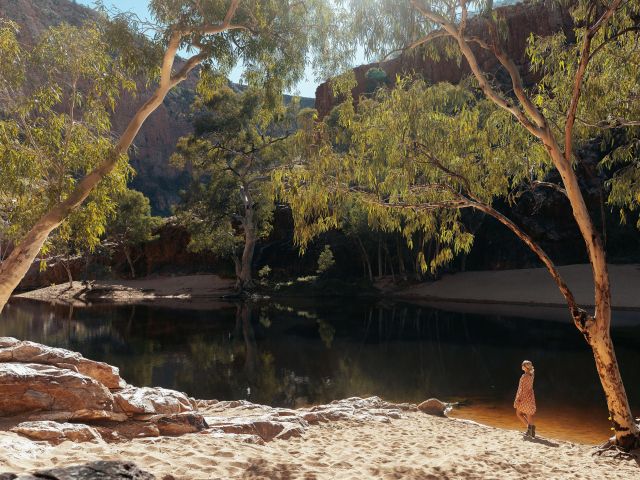
Ormiston Gorge , a cooling oasis in among the red desert sands, is one of the most popular destinations, no doubt because of the permanent swimming hole and towering red cliffs. From here, visitors can also embark on the beautiful Ormiston Pound Walk and the shorter – more accessible – Ghost Gum Walk. Bring your bathers – it’s safe for swimming.

4. Standley Chasm

woman walking through Standley Chasm near alice springs
Wander through Standley Chasm. (Image: Tourism NT)

The 1.2-kilometre walk to nearby Standley Chasm will be a highlight for any visitor as the imposing 40 metre-high chasm walls project strength and ancient wisdom.

Visit at midday to experience the path illumined by the midday sun. Not only will you fill your camera roll with vibrant red images of the gorge and its intoxicating shadows, but you can also camp nearby in a powered or unpowered site so you can watch the brilliance of the desert stars fill the night sky after dusk.

5. Simpsons Gap

three people walking on path through simpsons gap near alice springs
Walk the trails of Simpson’s Gap. (Image: Tourism NT/ Helen Orr)

Closer to Alice Springs, the photogenic Simpsons Gap is the perfect place to spot the endangered Black-footed Rock wallaby near the permanent watering hole. While swimming isn’t permitted, soaking up the sun and views certainly is.

Explore the area’s numerous walking trails, appreciate the soaring cliffs on either side of the ‘gap’ and pick out the shooting locations of Kangaroo in the area.

6. Ellery Creek Big Hole

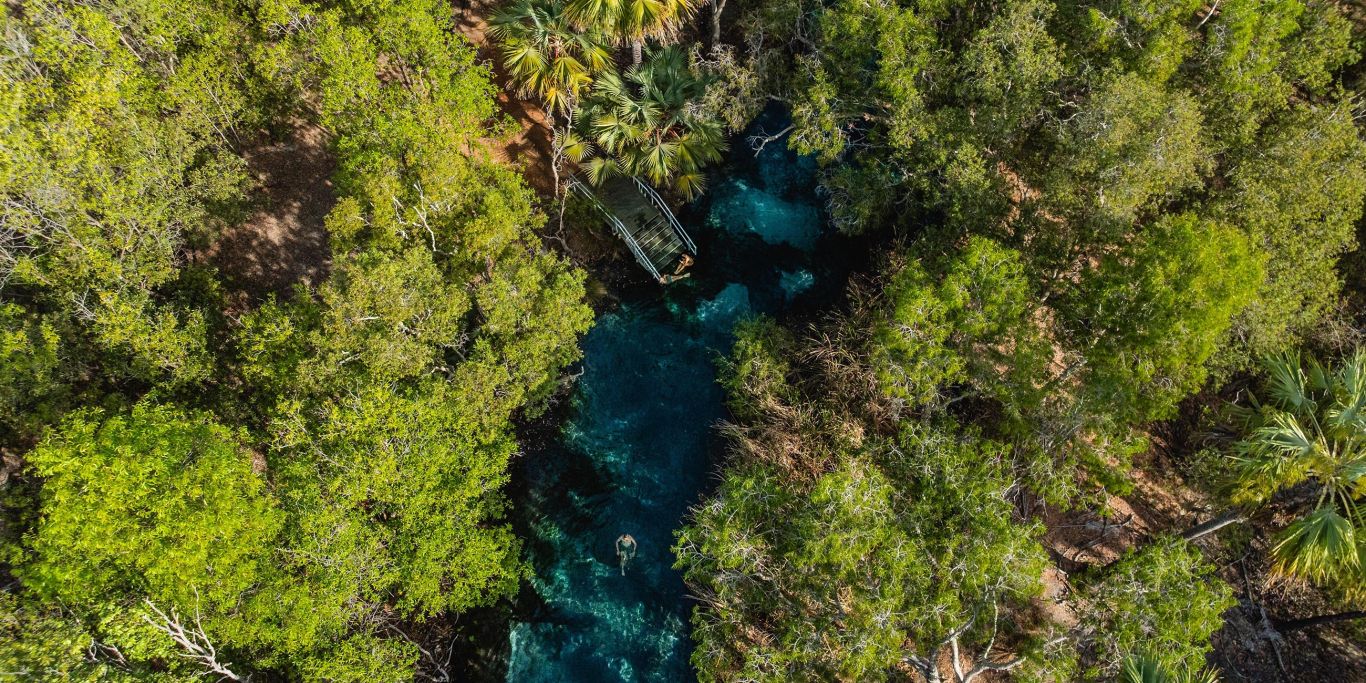
aerial of Ellery Creek Big Hole near alice springs
Dive into Ellery Creek Big Hole. (Image: Tourism NT/ Tourism Australia)

When it comes to classic Northern Territory landscapes, you can’t go past Ellery Creek Big Hole/ Udepata : tall gum trees sidling up to a refreshing watering hole (fed by the West MacDonnell Ranges and surrounded by rugged red cliffs.

Swim in the cooling waters, hike the cliff tops, watch for birds and even stargaze as you camp here overnight. It’s locations like this that attracted the film’s director Kate Woods to the project.

“It humbles you to be in this environment: it’s so beautiful, so old and so vast,” she explains. “I was thrilled to get a chance to … shoot such a beautiful story in the incredible landscape of the Northern Territory.”

7. Larapinta Drive

aerial of Larapinta Drive into alice springs
Drive along Larapinta Drive. (Image: Tourism NT)

There is no better way to get a feel for how the characters arrived at the fictional Central Australian town of Silvergum than to travel along the iconic state road, Larapinta Drive.

Connecting Alice Springs to the mighty King’s Canyon in the west, via the historic community of Hermannsburg, this road takes in the West MacDonnell National Park, Alice Springs Desert Park and artist Albert Namatjira’s house, among other attractions. Take your time, bring a camera and prepare for numerous stops along the way.

8. Todd River

competitors in Henley on Todd Regatta, alice springs
Join in the fun of the quirky Henley on Todd Regatta. (Image: Tourism NT/ TImparja Creative)

Meandering through Alice Springs like a lazy Western Brown snake, the Todd River is a central part of Alice Springs culture. Known as an ‘intermittent river’, the Todd can go from a dry dusty riverbed to a flowing waterscape in less than 15 minutes after heavy rainfall.

When it’s dry, the famous Henley on Todd Regatta fills the sandy riverbed with handmade ‘boats’ carried by sailors. This is the world’s only dry river boating event, and it’s referenced in the ‘Silvergum Boat Race’ in the movie. Inspired by the real-life event, the characters built quirky “Flintstones-style boats” and competed in teams.

See Kangaroo in cinemas now, and start planning your NT getaway at northernterritory.com.