Getting the best deal on hire cars

hero media
A guide to getting the best prices on hire cars in Australia

Driving a hard bargain

Our girl on the inside shifts from the skies to the dusty roads, bringing you all the best car hire tips for your next Australian adventure.


Renting a car can be a nightmare if you’re not careful. Even when you think you’re ahead of the game it’s often not the case: that traveller who leans across the counter to kiss the salesperson when his sedan has been upgraded to the 4WD he’s always dreamed of might not be laughing 500km later when he looks at his six-cylinder petrol bill. Overkill.


If it looks too good to be true, it probably is. Read the fine print, delve deeper. The car rental industry is crazily competitive, but if you do things by the numbers, you’ll be fine. Begin with a thorough car inspection: treat it as your own, logging each and every blemish. If it’s not noted, it’ll be your dilemma to deal with on your return. And always end your journey by filling the tank with the cheapest rates in town. Hire companies are not afraid to charge more than two dollars a litre if they have to fill up themselves.


The Internet is increasingly becoming the way to book. Sounds obvious enough, but when you’re saving up to $5 a day, it’s worth noting. And do shop around. Broker sites like www.vroomvroomvroom.com.au will let you quickly compare all the rates out there. Also, the big five of Hertz , Avis , Budget , Thrifty and Europcar can manipulate their rates according to supply and demand; some broker sites like www.holidayautos.com have fixed tariffs that can’t fluctuate, making car rental during peak periods less daunting.


Don’t automatically search for a specific car. These might be booked out and, in finding one, the cost will sting. Settle for something similar: it might, for all you know, be superior. If it’s readily available, it’s more affordable. Bargain.


Renters and readers, reward yourselves. Use your partner membership cards – are you an ANZ MasterCard holder, an auto club member or even a Virgin Blue frequent flyer? There are massive savings and points to redeem, so ask up front who your chosen car company is in partnership with. In-flight mags are also a prime source of car rental vouchers. Scanning them just prior to landing will save you money.


Insurance is expensive, but we of course urge all travellers to be covered at all times. Many people aren’t aware, however, that a lot of credit cards actually come with their own travel insurance – negating the need to purchase car hire insurance altogether. If you’re not with a credit card company that offers travel insurance, it might be time to switch.


If you’re wheeling and dealing your way around the airport, renting from terminals can cost a bomb, sometimes up to 15 percent more than at a downtown branch. But all the booths are usually right there: why not press hard and negotiate one company’s rates against another? Late at night, agents might be keen to rid their remaining cars, bettering his competitors’ costs. Think of it like an airline palming off last-minute seats: discounted fares do occur, as long as you’re not too shy to try your luck.


Going against the flow can also work wonders. Like migrating whales, the movement of rental cars between dealerships is seasonal, so booking Broome to Perth or Sydney to Cairns out of season will earn you a rate that’s hard to beat. Moving in the opposite direction to the masses is amazing anyway: the destination is deserted and beaches are your own. Sit back and picture the queues in Thredbo as you cruise the open, empty roads in Queensland. What a ride.

This luxe trawler tour is redefining Victoria’s seafood experience

Victoria’s ‘mussel capital’ is the source of exceptional shellfish used by top chefs far and wide. Step aboard a beautifully refurbished trawler to see how these plump and juicy bivalves are sustainably cultivated.

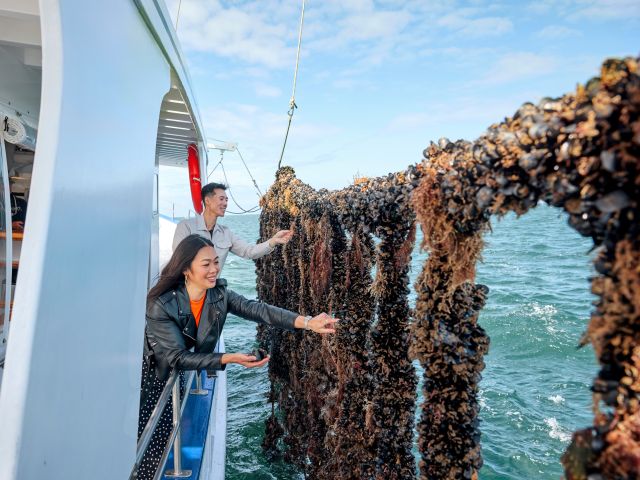
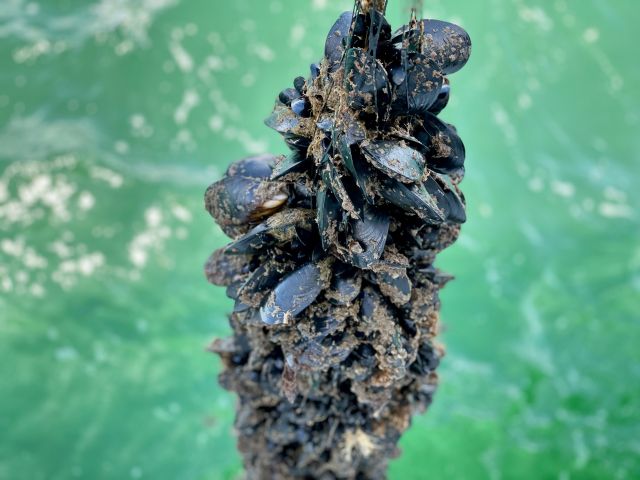
A curtain is slowly winched from the placid, teal waters just off Portarlington , like a floating garland beside our boat. The ropes heave with blue mussels, the star attraction of our tour. But as we reach to pluck our own, it’s quickly clear they’re not alone; a mass of weird and wonderful creatures has colonised the ropes, turning them into a living tapestry. ‘Fairy’ oysters, jelly-like sea squirts, and tiny, wriggling skeleton shrimp all inhabit this underwater ecosystem.

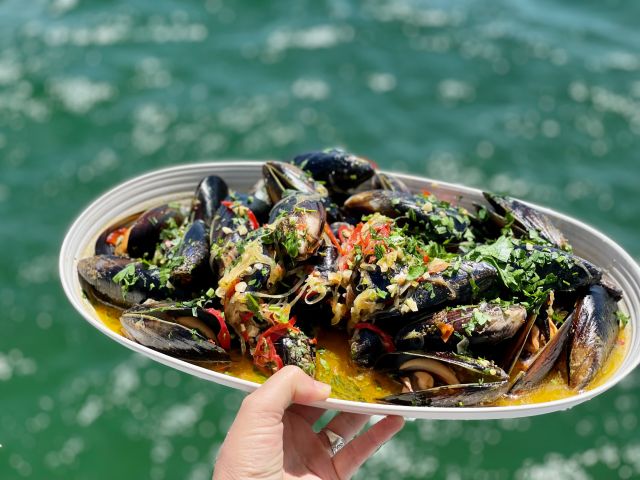
We prize our bivalve bounty from the ropes, and minutes later the mussels arrive split on a platter. The plump orange morsels are served raw, ready to be spritzed with wedges of lemon and a lick of chilli as we gaze out over the bay. They’re briny, tender and faintly sweet. “This wasn’t originally part of the tour,” explains Connie Trathen, who doubles as the boat’s cook, deckhand and guide. “But a chef [who came onboard] wanted to taste the mussels raw first, and it’s now become one of the key features.”

A humble trawler turned Hamptons-style dreamboat

inspecting bivalve bounty from the ropes
Inspecting the bounty. (Image: Visit Victoria/Hannyn Shiggins)

It’s a crisp, calm winter’s day, and the sun is pouring down upon Valerie, a restored Huon pine workhorse that was first launched in January 1980. In a previous life she trawled the turbulent Bass Strait. These days she takes jaunts into Port Phillip Bay under the helm of Lance Wiffen, a fourth-generation Bellarine farmer, and the owner of Portarlington Mussel Tours . While Lance has been involved in the fishing industry for 30-plus years, the company’s tour boat only debuted in 2023.

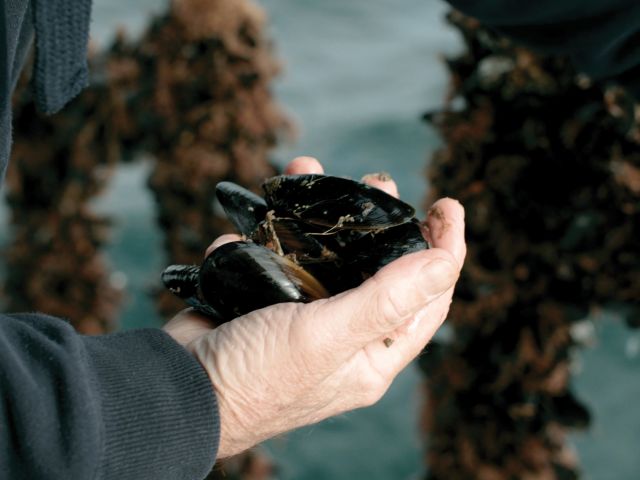
holding Portarlington mussels
See how these plump and juicy bivalves are sustainably cultivated.

It took more than three years to transform the former shark trawler into a dreamy, Hamptons-esque vessel, with little expense spared. Think muted green suede banquettes, white-washed walls, Breton-striped bench cushions, hardwood tables, bouquets of homegrown dahlias, and woollen blankets sourced from Waverley Mills, Australia’s oldest working textile mill. It’s intimate, too, welcoming 12 guests at most. And yet there’s nothing pretentious about the experience – just warm, down-to-earth Aussie hospitality.

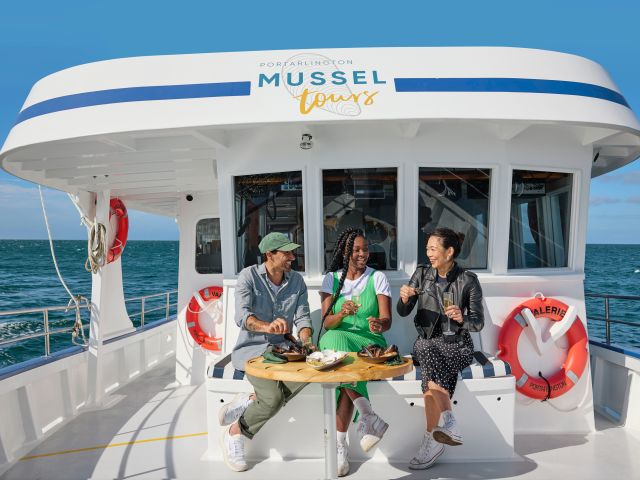
As we cruise out, we crack open a bottle of local bubbles and nibble on the most beautifully curated cheese platter, adorned with seashells and grey saltbush picked from the water’s edge that very morning. Australasian gannets soar overhead, and I’m told it’s not uncommon for guests to spot the odd seal, pod of dolphins, or even the occasional little penguin.

The sustainable secret behind Victoria’s best mussels

blue mussels off Portarlington
Blue mussels sourced just off Portarlington.

Connie and Lance both extol the virtues of mussels. They’re delicious. A lean source of protein and packed with omega-3 fatty acids, vitamin B12, iron, selenium, and zinc. They’re cooked in a flash (Connie steams our fresh harvest with cider and onion jam). And they’re also widely regarded as one of the most sustainable foods in the world.

Portarlington mussels with lemon and chilli
Mussels served with lemon and chilli.

“Aquaculture is [often] seen as destructive, so a lot of our guests are really surprised about how environmentally friendly and sustainable our industry is,” Lance says. “[Our mussels] would filter 1.4 billion litres of water a day,” he adds, explaining how mussels remove excess nitrogen and phosphorus from the water. “And through biomineralisation, we lock carbon into mussel shells.”

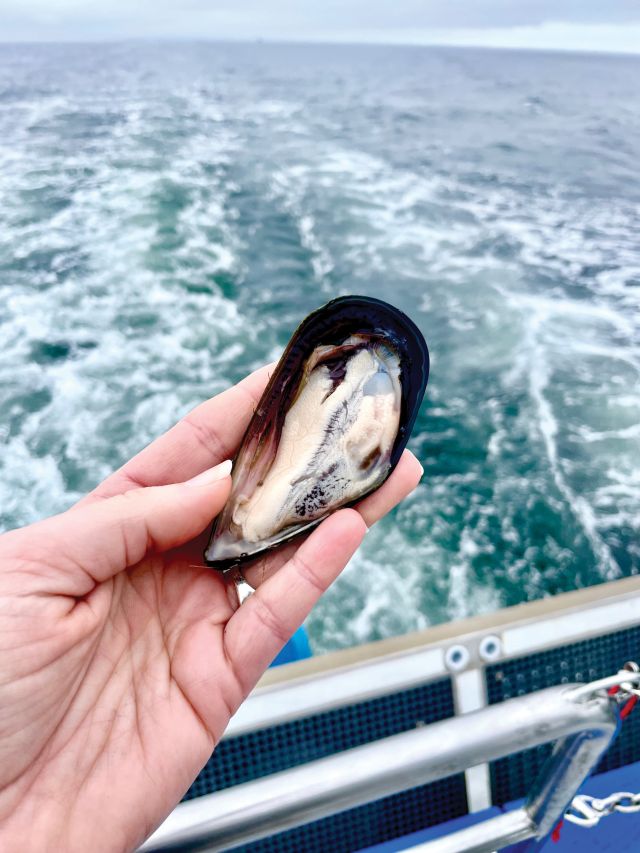
a hand holding a Portarlington mussel
Mussels are a sustainable food.

Despite their glowing list of accolades, these molluscs have long been seen as the oysters’ poorer cousins. “It was a really slow start,” explains Lance, who says that in the early days of his career, “you could not sell mussels in Victoria”.

But word has slowly caught on. Chefs as globally acclaimed as Attica’s Ben Shewry and even René Redzepi of Noma, Denmark, have travelled to these very waters just to try the shellfish at the source, sharing only the highest praise, and using Lance’s mussels in their restaurants.

guests sampling Portarlington mussels onboard
Sampling the goods onboard. (Image: Visit Victoria/Hannyn Shiggins)

According to Lance there’s one obvious reason why the cool depths of Portarlington outshine other locations for mussel farming. “The water quality is second to none,” he says, noting how other regions are frequently rocked by harvest closures due to poor water quality. “We grow, without a doubt, some of the best shellfish in the world.” And with Lance’s bold claims backed up by some of the industry’s greatest names, perhaps it won’t be much longer until more Aussies uncover the appeal of Portarlington’s mussels.