hero media

How to pack carry-on like a pro

Here’s how I finally mastered the art of travelling light. 

I’ve made every rookie packing mistake there is. I’ve lugged an overstuffed suitcase up the subway steps in New York, I’ve sat on my bag in a Seoul airport bathroom to get the zip shut, and I’ve even had my luggage stolen in Lyon (you can read about that sad ordeal here ). 

But over the years, and many, many packing regrets later, I’ve learned that travelling light is one of the greatest travel luxuries. Not the business-class lounge, not even a glass of fizz at take-off. The true luxury is walking straight past baggage claim like you own the place. 

Here’s how I’ve learned to pack carry-on only and actually enjoy it. 

Step 1: The mindset shift 

Packing light isn’t just about space; it’s about mindset. When I finally committed to carry-on travel, I realised most of what I used to pack was “just in case" stuff. Just in case it rained. Just in case there was a fancy dinner. Just in case I peed my pants every single day for two weeks. Just in case I suddenly became the kind of person who wears heels on cobblestones. Spoiler: I’m not. 

The golden rule? You don’t need to prepare for every possible version of the trip, just the one that’s most likely to happen. Once I let go of that “what if" anxiety, everything became lighter – literally. 

Step 2: Choose your bag wisely 
luggage
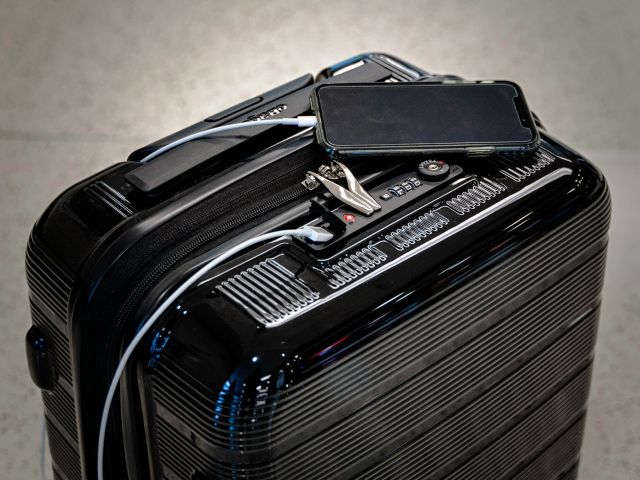
Choose a bag that works for your travel destination. (Image: Unsplash/Benjamin R.)

Your bag is your foundation, so pick one that works with you, not against you. I’m loyal to a hard case on four wheels – the kind that glides across airport floors like it’s on ice skates. But if you’re heading somewhere with cobblestones or stairs, a soft backpack might save your shoulders – and your sanity. 

Step 3: Make your packing list ruthless 

carryon packing list
Have a streamlined list of trusty wardrobe items. (Image: Unsplash/Sarah Brown)

I used to start with everything I wanted to bring and try to narrow it down. Now I start with nothing and justify every item. If it doesn’t work at least twice, it stays home. 

For example, for a winter trip, here is what I’d bring: 

  • One pair of jeans (they go with everything and can be dressed up or down). 
  • A long sleeve merino tee (I am perpetually freezing on planes, and merino wool is temperature regulating – a literal lifesaver. This is my fave ). 
  • Thermals that are lightweight to go under everything (and are breathable/quick drying so you can wash them in your hotel if you need, like these ). 
  • Three shirts, two jumpers. 
  • One dress that can do both day and night duty. 
  • Two pairs of shoes: sneakers and boots. 
  • A scarf (the Swiss Army knife of travel accessories). 
  • Wool socks (I know I’m rambling on about wool, but it’s truly the GOAT – see what I did there – fabric for travelling light). 
  • A coat that I will wear at all times to avoid overweight luggage. 

If I’m heading somewhere warm, I swap these for one breathable set of linen, one dress, two tops, a light jacket and some sandals. 

Toiletries get the same treatment. I decant everything into travel-size containers and skip the “what if I run out" panic. Unless you’re hiking in the outback, there will always be shops. 

Need tips, more detail or itinerary ideas tailored to you? Ask AT.

AI Prompt

Step 4: Master the art of the roll 

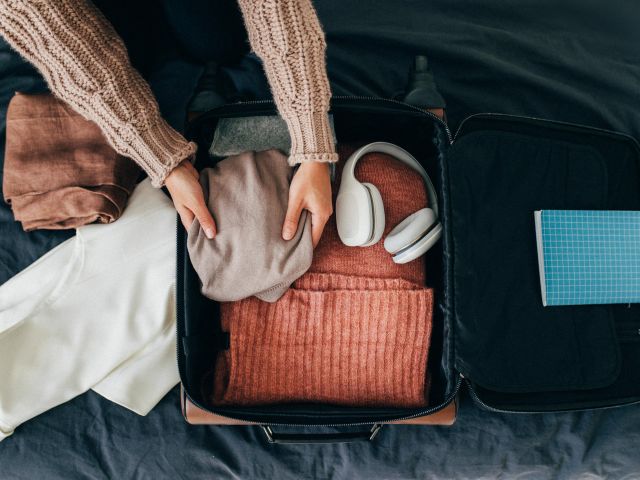
Ask 10 travellers how to pack and you’ll get 10 different methods – but rolling clothes genuinely works. It saves space, minimises creasing, and gives you that smug sense of order when you look at your perfectly lined-up rolls. 

For bulkier items like coats, I wear them on the plane (you can always stuff them under the seat). And for small things – socks, underwear, swimwear – I tuck them inside shoes or the corners of the case. Every millimetre counts. 

If you’re packing for longer than a week, packing cubes are a game-changer. They keep things contained and make mid-trip rummaging way less chaotic. Bonus: when you open your bag for airport security, it looks neat enough to impress even the most stoic customs officer. 

Step 5: Build a travel uniform 
packing light
Learning how to pack light is a useful travel hack. (Image: Getty Images/FreshSplash)

Now, I think of packing like creating a capsule wardrobe – neutral colours, pieces that mix and match, and materials that don’t wrinkle if you so much as look at them. My dream travel outfit formula: linen in summer, merino in winter. You can go from sightseeing to cocktails without missing a beat. 

Step 6: Don’t fear laundry 

The reason so many people overpack is that they don’t want to do laundry on the road. But honestly? Doing a quick wash mid-trip is far less annoying than lugging extra kilos of “just in case" clothing. 

Most hotels have a guest laundry or same-day service, and a travel-size detergent sheet can turn any bathroom sink into a washing station. I’ve even been known to use the hotel hairdryer to speed-dry my socks (pro move, if a little noisy). 

Step 7: The tech tangle 

tech in carryon
Always try to stick to the essentials, even when it comes to gadgets. (Image: Unsplash/Anete Lusina)

Electronics can eat up space fast, so streamline your gadgets. I stick to my phone, laptop and portable light for photos. I won’t lie, a powerboard with USB-C and USB-A ports is a necessity for me and saves me from carrying a spaghetti tangle of cords, plus noise-cancelling headphones are my sanity saviour. 

Oh, and a power bank. I never, ever forget a power bank – it’s the difference between arriving refreshed and arriving at five per cent battery with no idea how to get to your hotel. 

Weekly travel news, experiences
insider tips, offers, and more.

Step 8: The “airport survival" zone 

The best trick I’ve learned is to pack a small pouch that lives in the seat-back pocket: lip balm, hand sanitiser, pen, earplugs, face mist, a snack and a sleep mask. This way, you don’t need to rummage through your bag mid-flight like a raccoon looking for food. 

Step 9: Leave a little space 

There’s a special kind of heartbreak that comes from finding the perfect souvenir – then realising you have nowhere to put it. I always leave a small corner of my bag empty for a bottle of local wine, a handmade trinket, or, let’s be honest, a new piece of clothing I didn’t technically need but absolutely had to have. 

Worst case, you wear your bulkiest outfit home. It’s practically a travel tradition. 

Step 10: The carry-on mindset 

packing light
Knowing how to pack light boosts confidence. (Image: Getty Images/ozgurcankaya)

Packing carry-on only isn’t just about convenience. It’s freedom. It’s the joy of breezing through airports, skipping luggage carousels, and knowing exactly where everything you own is – because it’s right there with you. 

It’s also a quiet confidence boost. There’s something incredibly satisfying about realising you can live for two weeks with the same seven kilograms you used to take for a weekend. 

So next time you’re tempted to bring that extra pair of “maybe" shoes or the second jacket “just in case", remember this: the less you carry, the more you can enjoy where you’re going. 

Liked this? Pack with us for a wild Kimberley adventure. 

Emily Murphy
Emily Murphy is Australian Traveller's Email & Social Editor, and in her time at the company she has been instrumental in shaping its social media and email presence, and crafting compelling narratives that inspire others to explore Australia's vast landscapes. Her previous role was a journalist at Prime Creative Media and before that she was freelancing in publishing, content creation and digital marketing. When she's not creating scroll-stopping travel content, Em is a devoted 'bun mum' and enjoys spending her spare time by the sea, reading, binge-watching a good TV show and exploring Sydney's vibrant dining scene. Next on her Aussie travel wish list? Tasmania and The Kimberley.
View profile and articles
hero media

7 reasons to book a long weekend on the Mornington Peninsula

(Image: Supplied)

    Jade Raykovski Jade Raykovski
    A place of spectacular coastlines and rolling vineyards, the Mornington Peninsula is just an hour from Melbourne, yet feels like a world away.  

    Victoria’s Mornington Peninsula is often voted the number one short stay in Australia, and for good reason. From its beautiful coastline and scenic trails to exceptional food and wine, it’s the perfect escape any time of year, but especially as the weather grows cooler.  

    Picture afternoons relaxing in the soul-warming hot springs. Evenings by a cosy fireplace, sipping one of the region’s renowned Pinot Noirs and tucking into a delicious meal made from local produce. Now stop imagining, and start planning; here’s why the Mornington Peninsula should be your next long weekend adventure.  

    1. It’s easy to get to 

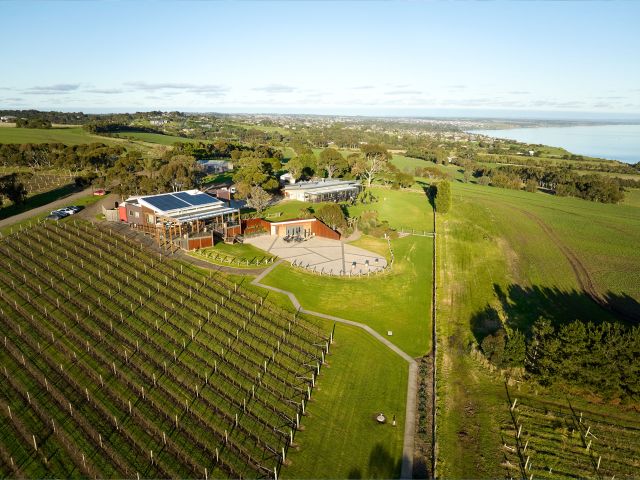
    An aerial view of Pt. Leo Estate on the Mornington Peninsula.
    Spend a long weekend on the Mornington Peninsula. (Image: CMcConville)

    At only an hour’s drive southeast of the city, the Mornington Peninsula offers unbeatable convenience. If you’re taking the Eastlink tollway to Peninsula Link, look out for eclectic roadside artwork such as Callum Morton’s high-rise hotel (hint: you can’t check in). 

    2. The coastline is stunning

    Mount Martha Bathing Boxes
    Stay in colourful, iconic beach huts along the coast.

    The Mornington Peninsula separates Port Phillip Bay to its west and Western Port Bay to its east, making it the only place in Victoria you can see a sunrise over one bay and sunset over another. 

    Its spectacular coastline varies from sandy swimming and surf beaches to dramatic rocky cliffs. Mt Martha Beach, known for its colourful beach huts and calm clear waters, was named in Tourism Australia’s Top 10 beaches for 2026. Nearby, Arthurs Seat Eagle  offers gondola rides to the peninsula’s highest point, where you can enjoy breathtaking vistas. 

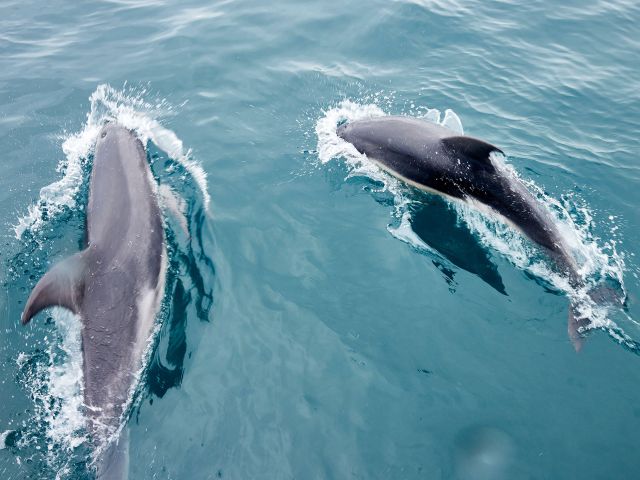
    For a different perspective from the water, embark on a once-in-a-lifetime experience swimming with the bay’s resident dolphins , or catch a ride with Searoad Ferries  from Sorrento to Queenscliff (the tip of the opposite Bellarine Peninsula). Pop into their new Sorrento terminal for sweeping views from its floor-to-ceiling windows and a bite to eat at Mediterranean restaurant ONDA. 

    3. Taste exceptional food and wine

    Crittenden restaurant mornington peninsula
    Treat yourself to the restaurant at Crittenden.

    While the Mornington Peninsula is now synonymous with cool climate wines like Pinot Noir and Chardonnay, it was originally renowned for apple production. There are many orchards still in operation, like fifth-generation Mock Red Apple ; taste craft ciders (the Mulled Spiced Cider is a must in winter), and don’t miss the famous apple pie. 

    Of course, it would almost be a sin not to dine at a winery restaurant, or at least try a local wine. Stop at Foxey’s Hangout  for casual share plates and a glass of Chardonnay on the deck; or for a more formal affair, the light-filled restaurant at Paringa Estate  offers a fine dining set menu on weekends, with picturesque estate views. 

    Pt. Leo Estate  has no less than three separate dining experiences to choose from, ranging from a wine terrace to contemporary fine dining, all sourcing seasonal Victorian and local Mornington Peninsula produce, and offering stunning vistas over Western Port Bay.  

    And opened in 2025, the restaurant at Crittenden  celebrates regional produce with a modern Australian menu that pairs beautifully with their sustainably crafted estate wines.

    4. Plenty of ways to enjoy the great outdoors

    A quiet moment on the green as he prepares for the perfect swing.
    Tee off at world-class golf courses with stunning coastal views.

    Bring your hiking boots, because from beachside strolls to breathtaking cliffside walks, the Mornington Peninsula boasts incredible scenic trails for all fitness levels.

    The Red Hill Rail Trail follows the old railway line between Merricks and Red Hill, while the Bushrangers Bay Walking Track is the go-to trail for rugged coastal scenery, linking Cape Schanck and the Boneo Road picnic area (part of the longer Two Bays Trail). 

    The region is also home to several national parks  providing plenty of opportunities to connect with nature, whether it’s a walk, picnic, or simply admiring the local flora and fauna. Golf lovers will rejoice with gorgeous courses such as the world-class Moonah Links  or Flinders Golf Club , one of Victoria’s oldest golf courses.

    5. Lean into wellness and relaxation

    From an aerial view, a woman drifts peacefully across still, crystal-clear water.
    Unwind in mineral-rich hot springs and soak in total relaxation.

    Soaking in one of the Mornington Peninsula’s mineral-rich hot springs is a must in the cooler months. Alba Thermal Springs and Spa  is the newer addition, with 25 contemporary geothermal pools, a sauna and steam room set amongst elegant coastal landscaping. Book a Night Owl session to watch the sunset from the pools, and extend your visit with a spa treatment or dining at their restaurant.  

    Across the road, the Peninsula Hot Springs offers two main bathing areas, cafes and a spa in a natural bush setting. The Bath House comprises over 70 bathing and wellness experiences, including their iconic Hilltop Pool, a reflexology walk, and Nepalese mineral showers; while the Spa Dreaming Centre is a serene adults-only sanctuary.  

    6. Get a culture fix

    Visit the Southern Hemisphere’s largest privately owned sculpture park at Pt. Leo Estate during long weekend on the Mornington Peninsula.
    Discover inspiring art across galleries and sculpture parks. (Image: Chris Conville)

    Wander the Southern Hemisphere’s largest privately owned sculpture park at Pt. Leo Estate, glass of red in hand, or pop into the Mornington Peninsula Regional Gallery  to view one of their seasonal exhibitions. Seawinds Garden  is also home to a sculpture collection by William Ricketts, surrounded by exotic and indigenous gardens.  

    If you’re more of a history buff, book a tour  of the Cape Schanck Lighthouse, or spend an afternoon at Point Nepean National Park . Here, you can explore walking trails through the traditional country of the Bunurong people, learn the history of the old Quarantine Station and discover military forts and tunnels. 

    7. Gorgeous accommodations

    Lancemore Lindenderry Red Hill
    Check into Lancemore Lindenderry Red Hill.

    The Mornington Peninsula’s standout accommodations are an experience in themselves. Escape to The Sanctuary  at Alba Thermal Springs and Spa, a luxe retreat perched in the dunes above the springs. Or indulge in the dramatic luxury of Jackalope Hotel , home to a vine-facing pool and spa and the chef-hatted Doot Doot Doot. 

    For a dose of European country charm, stay at Lancemore Lindenderry Red Hill , set amongst lush gardens and vines with a cellar door and chef-hatted restaurant. Or for more contemporary, yet still charming, surroundings, the InterContinental Sorrento Mornington Peninsula  is a historic hotel reimagined as a luxe coastal stay with European flair, including a pool deck and on-site bathhouse. 

    Start planning your long weekend at  visitmorningtonpeninsula.org