10 unique island wonders in Australia

hero media
Australia’s proximity to unique and beautiful islands is a privilege, with more than 8000 fringing our coast. Think wildlife sanctuaries. The world’s largest sand island. Epic mountain hikes and cultural heritage. All home to mind-blowing wild and natural beauty.

This article is part of our 100 Australian Wonders series. Throughout the series, we explore our nation’s wonders across culture, nature, food, islands and many more. We hope it inspires your own exploration of Australia’s many wonders.

1. Climbing Lord Howe Island’s Mt Gower

Travelling with: Celeste Mitchell

Heart in mouth, head in the clouds. Below, the iridescent coral lagoon that bracelets the island Sir David Attenborough once described as “so extraordinary it is almost unbelievable".

Above, a cloud forest where moss drips from the branches of mountain apples and providence petrels come thudding to the ground by your feet.

As one of Australia’s most iconic day hikes, climbing the primordial peak of Mt Gower on Lord Howe Island is a serious challenge, which delivers a huge amount of kudos upon completion. If you manage to score a clear view from the top, you’ll have even more bragging rights.

Wear the T-shirt that says “I climbed Mt Gower and survived" with pride.
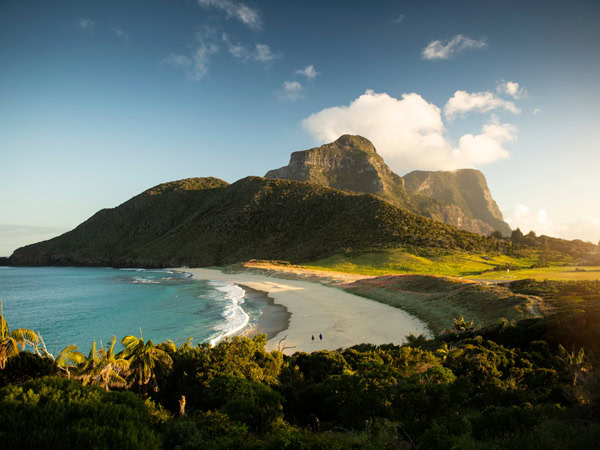
the scenic backdrop of Mt Gower in Lord Howe
Mt Gower is Lord Howe’s highest mountain. (Image: Tom-Archer.com)

2. Torres Strait in a day

Travelling with: Steve Magdwick

North of Cape York and with limited transport links, the Torres Strait was an unachievable dream for all but intrepid travellers until 2022 when Fraser Nai (Traditional Owner on Masig Island) co-founded Strait Experience.

It’s an ambitious day tour from Cairns, packing in cultural highlights of the archipelago’s ‘main’ islands, Ngurupai (Horn) and Waiben (Thursday).

Experience life in fast-forward on Zenadth Kes, as the Torres Strait is referred to locally, with everything from dance displays by Joey Laifoo’s Island Stars to a tour retracing Ngurupai’s intriguing Second World War history. A belly-stretching seafood buffet showcases the smorgasbord of flavours and cultures from Malay to Chinese.

It’s not a cheap day trip (thanks to charter flights) but it noticeably benefits these tiny island communities.
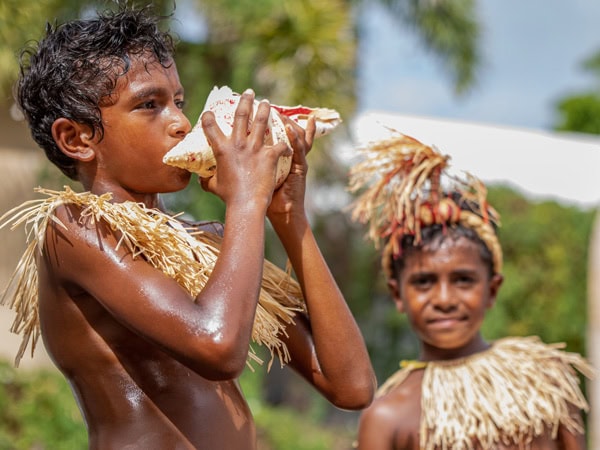
Indigenous children at Torres Strait
Visiting the tiny island communities of the Torres Strait is an enriching experience. (Image: Tourism and Events Queensland/ Phil Warring)

3. Little penguins of Phillip Island, Vic 

Travelling with: Imogen Eveson

Every night at sunset, the Penguin Parade begins on Phillip Island. As the sun paints the sky and limited numbers of hopeful onlookers try not to make a noise, the largest colony of little penguins in the world starts to waddle their way from a day spent roaming the ocean back to their burrows on Summerland Beach.
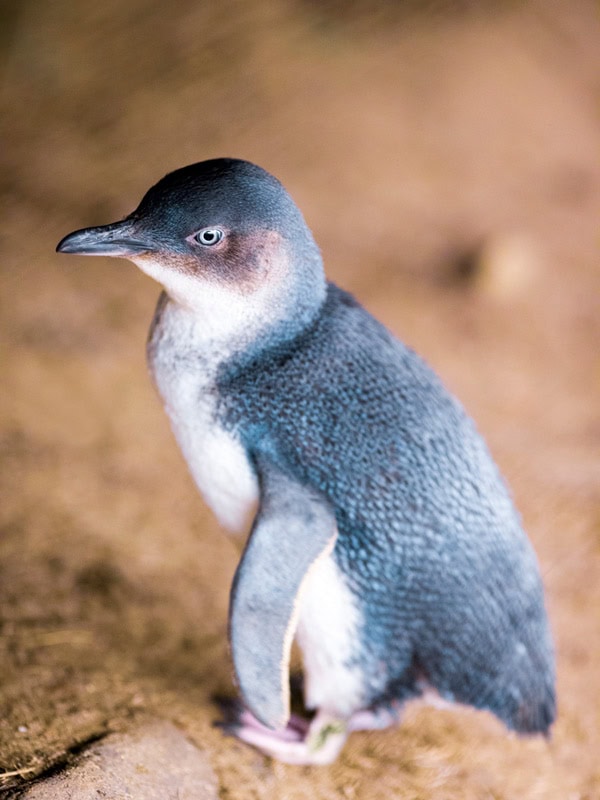
a little penguin on Phillip Island, Vic
See a little penguin on Phillip Island. (Image: Phillip Island Nature Parks/ Visit Victoria)

An hour is quickly over as these tiny seabirds go about their nightly routine, a fun and adorable experience that also contributes to vital conservation, research and education programs that keep little penguins thriving.
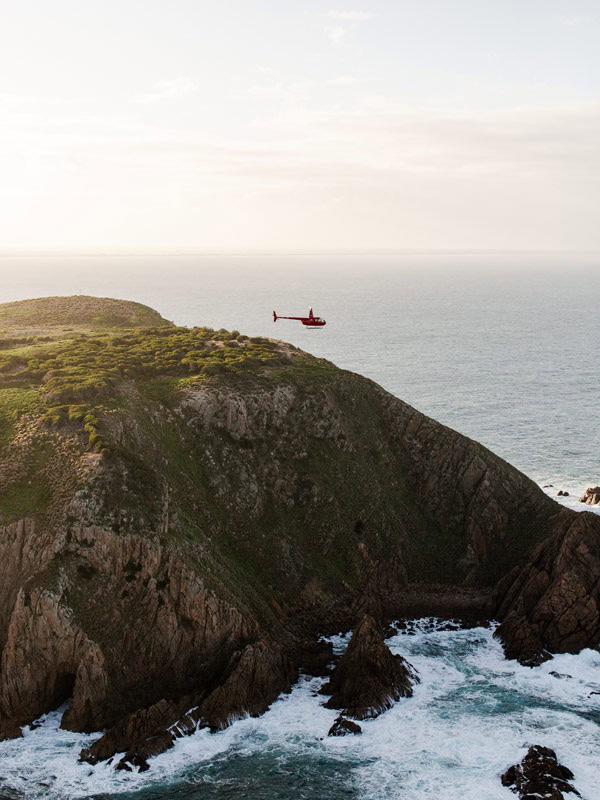
a helicopter above Phillip Island
The wonders of Phillip Island can also be witnessed from above. (Image: Tourism Australia/ The View From Here)

4. Whitehaven Beach, Qld

Travelling with: Megan Arksintall

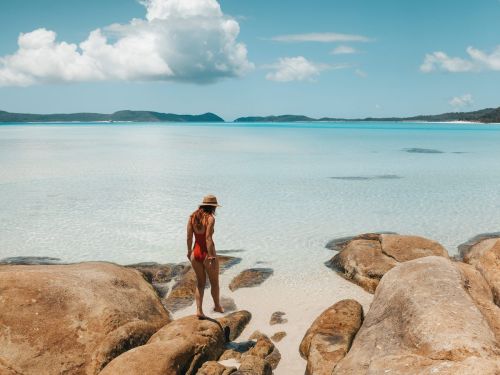
From above, it looks like someone has run amok with white-out and highlighters, so vivid are the colours of Whitehaven Beach. This seven-kilometre stretch of sand on Whitsunday Island is made up of 98 per cent pure-white silica and lapped by pristine, aqua-hued water.
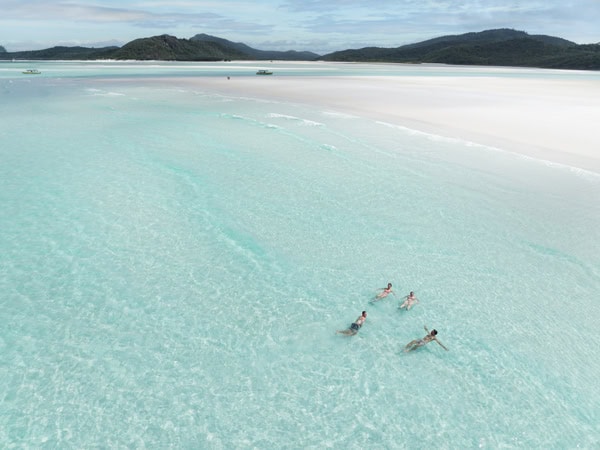
swimming at Hill Inlet
Go for a swim at Hill Inlet. (Image: Tourism and Events Queensland/ Courtney Atkinson)

At the northern end, Hill Inlet is a marbled beauty of sand and sea, an ever-changing landscape at the mercy of the shifting tides. These swirling whites and blues are best seen from the lookout at Tongue Point. Protected by Whitsunday Islands National Park, Whitehaven has appeared on many ‘best beaches’ lists and is the ultimate day trip from either Airlie Beach or Hamilton Island.
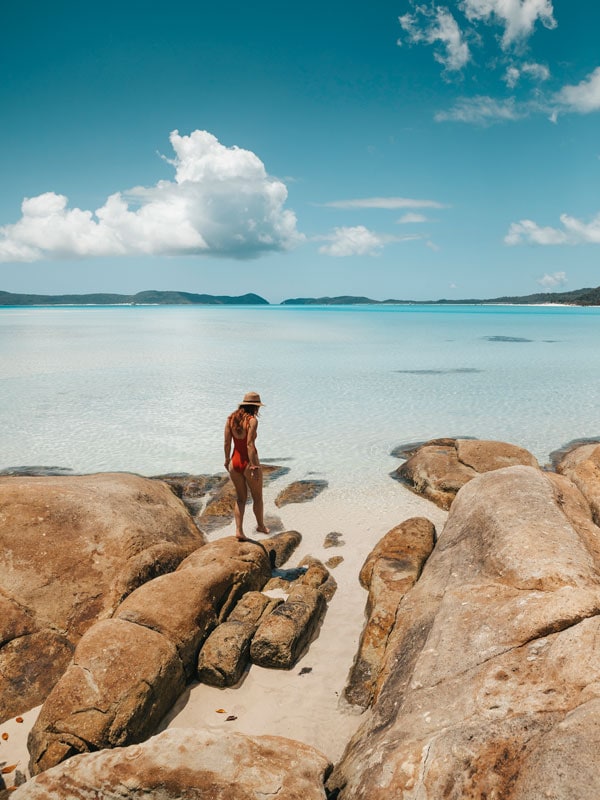
a person standing on a beach rock at Hill Inlet
Hill Inlet is a marbled beauty of sand and sea. (Image: Tourism and Events Queensland/ Katie Purling)

5. Cocos (Keeling) Islands

Travelling with: Emily Murphy

This remote pocket of paradise in the Indian Ocean is the very definition of utopia. Think beaches to yourself, water so clear it looks invisible, snorkelling with manta rays, dolphins and turtles.

But the Cocos (Keeling) Islands aren’t your typical tourist destination. A holiday here invites you to slow down, disconnect and embrace island time.

Visitors are few (only 144 visitors are allowed at once), there’s no mobile reception and locally run eateries can change their opening hours on a whim to go for a fish or a dive.
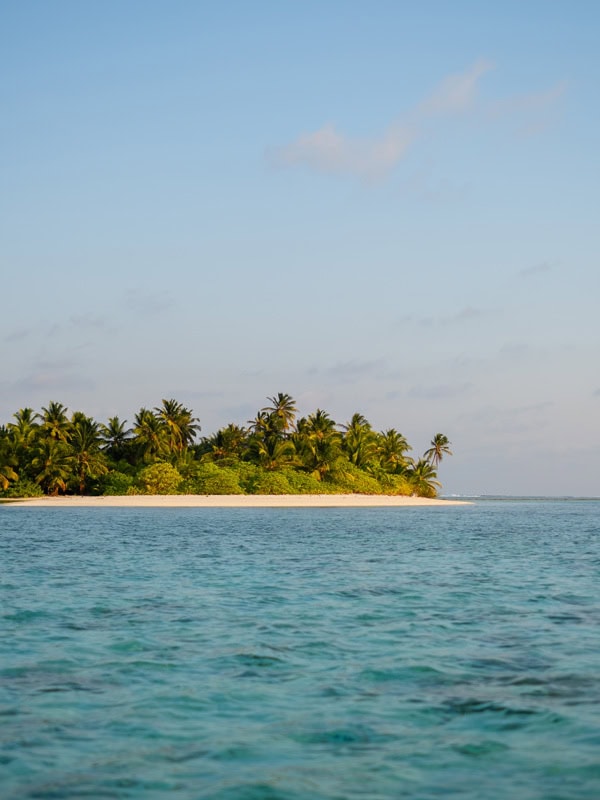
uninhabited islands on the Southern Atoll
Cocos (Keeling) is made up of uninhabited islands on the Southern Atoll. (Image: Cocos (Keeling) Tourism Association)

6. Brisbane’s islands, Qld

Travelling with: Carla Grossetti

A Google Earth view of Brisbane reveals the Brisbane River (Turrbal: Maiwar) snaking its way through the city. Zoom out on the city and its serpentine river and you will see where it empties into Moreton Bay on the Coral Sea.
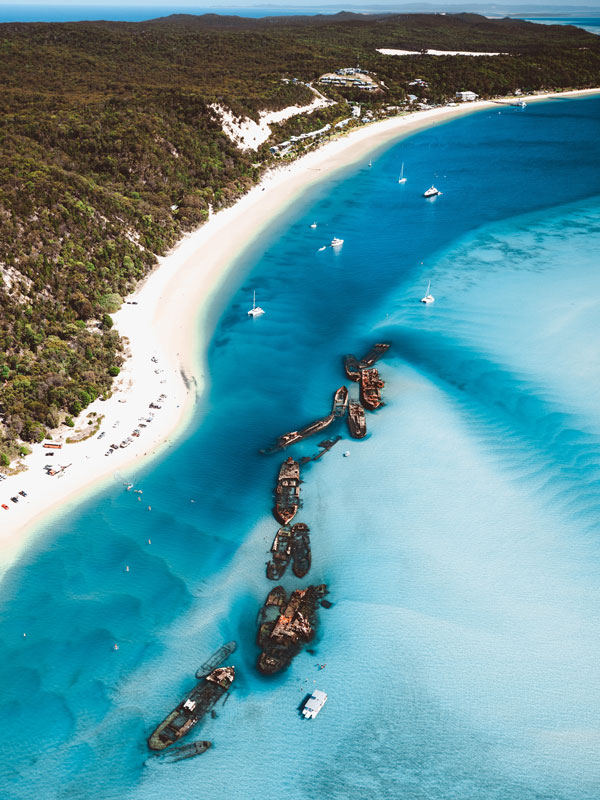
an aerial view of Moreton Island, Brisbane
Tangalooma wrecks are anchored on Moreton Island. (Image: Tourism and Events Queensland/ Kyle Hunter and Hayley Andersen)

Pull back even further and you’ll find a string of islands dotted off the Queensland coast that are just a short boat ride from Brissy. Island hop from Mulgumpin (Moreton Island) to Minjerribah (North Stradbroke Island), Bribie, Peel and Coochiemudlo islands before mooching around Russell, Macleay, Karragarra and Lamb, which make up the islands of Southern Moreton Bay. Another valid reason to put Brisvegas on the radar.

7. Kangaroo Island’s Ligurian honey bees, SA

Travelling with: Elizabeth Whitehead

It’s an ironic peculiarity that the purest strain of Ligurian bees resides on the opposite side of the world to their homeland. Twelve hives of Ligurian bees were brought from Italy to Kangaroo Island in 1881, chosen for their docile temperament and productivity.

The bees thrived – thanks to KI’s pristine landscape and climate that mirrors that of their ancestral home in northern Italy. This happenstance made Kangaroo Island the oldest bee sanctuary in the world, and as a result, a legacy of beekeeping has been instilled here.
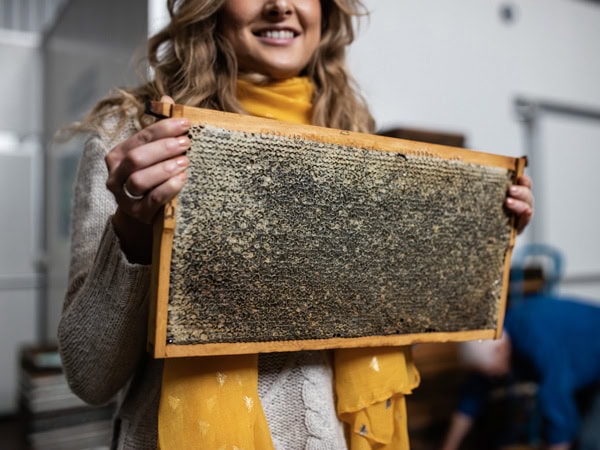
a beekeeper holds eaten honeycombs in Kangaroo Island
Kangaroo Island is the oldest bee sanctuary in the world. (Image: Tourism Australia)

This is evidenced by the passionate apiarists across KI who combine Italian bees with local botanicals to create a truly idiosyncratic honey – such as the organic Boobialla honey, with nectar harvested from native juniper and coastal beard heath.

Visit the Kangaroo Island Ligurian Bee Co. in Kingscote to learn all about this legacy.
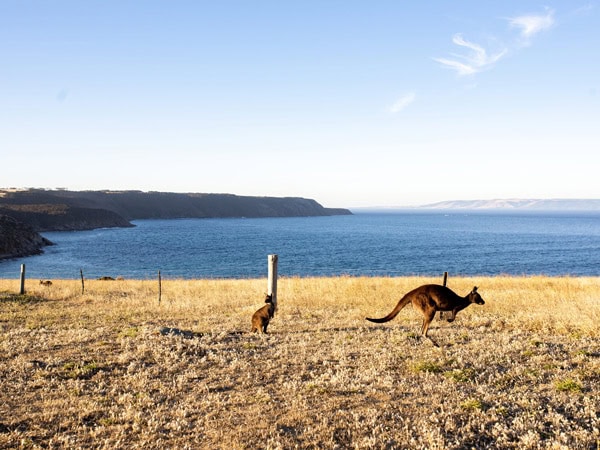
roos on Kangaroo Island
See resident roos on Kangaroo Island. (Image: Tourism Australia)

8. K’gari, Qld

Travelling with: Emily Murphy

K’gari dazzles at every turn whether it’s witnessed from land, sea or sky. Home to the Butchulla people, the name is derived from a Dreaming story about a princess named K’gari who fell in love with the place and never wanted to leave.

And much like Princess K’gari, visitors to the world’s largest sand island will be bewitched by its luminous lakes, fascinating sand sculptures, bountiful marine life and epic drives along the sandy 75 Mile Beach. The list goes on…
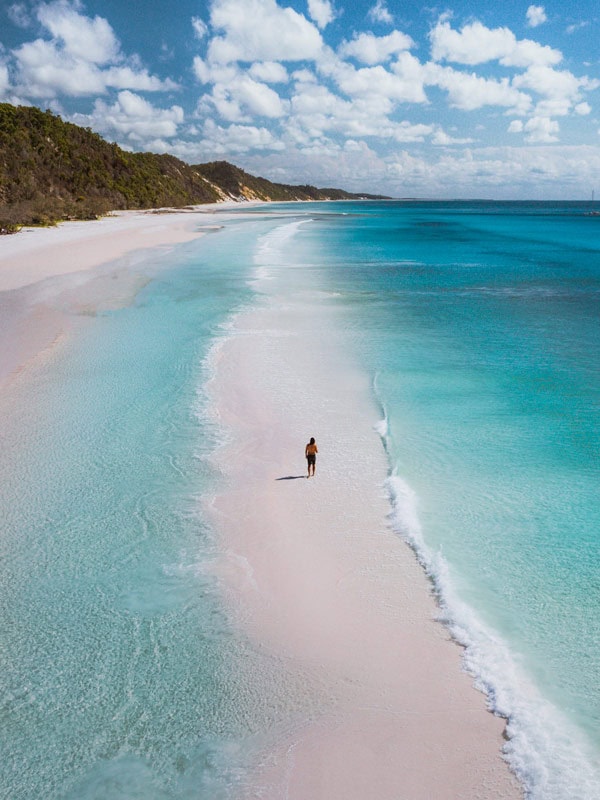
a man walking along the west coast of K'gari
Escape to the west coast of K’gari. (Image: Tourism and Events Queensland/ Kyle Hunter)

9. Lizard Island, Qld

Travelling with: Megan Arkinstall

Lizard Island claims a remote, exclusive location no other luxury resort can – nestled in the centre of intricate inner and outer reef systems of the Great Barrier Reef. Some 240 kilometres north of Cairns, the island is a stark desert-like landscape covered in rocky outcrops, hugged by translucent water that transposes into a tie-dye of blues.
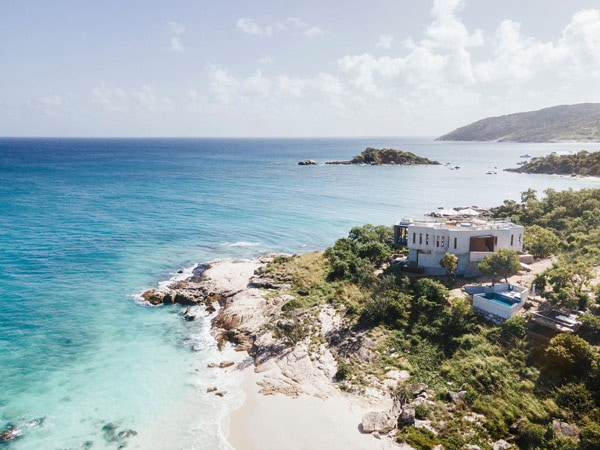
an aerial view of the Lizard Island, Great Barrier Reef
The House at Lizard Island is nestled at the heart of the Great Barrier Reef. (Image: Elise Hassey)

Beneath the shimmering surface: coral reef, giant clam gardens, a habitat of green sea turtles and the world-famous Cod Hole dive site.
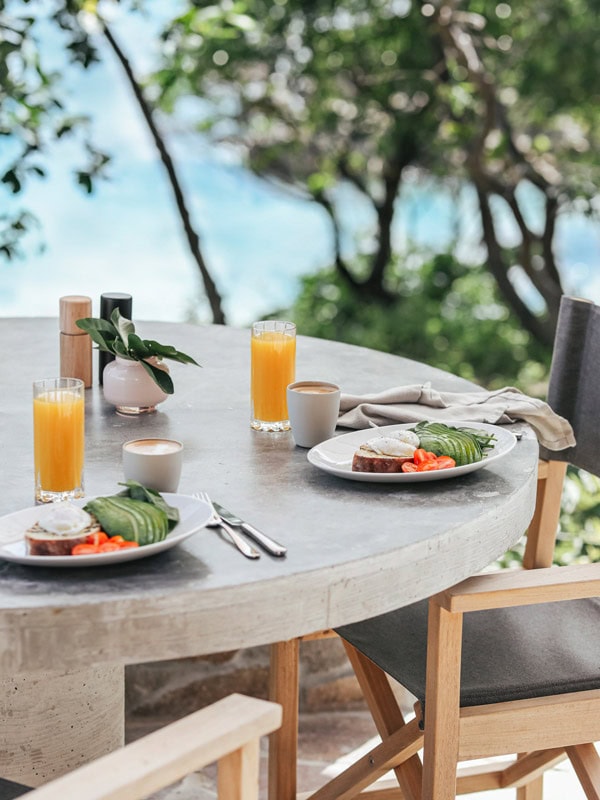
the outdoor dining at Lizard Island Resort
Wake up to oceanfront views. (Image: Elise Hassey)

The island comprises an all-inclusive resort of just 40 suites and The House at Lizard Island , both of which exude understated luxury with unrivalled nature-based experiences, and warrant a solid spot on your dream destination list.
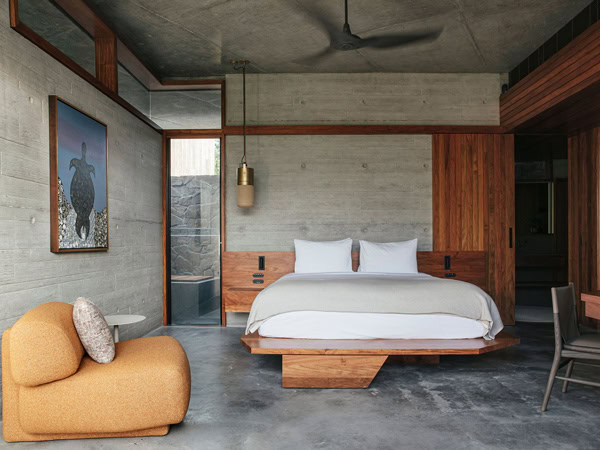
the bedroom at Lizard Island Resort
The House at Lizard Island delivers unbeatable luxury in a tropical setting. (Image: Elise Hassey)

10. Maria Island, Tas

Travelling with: Megan Arkinstall

This small island off the east coast of Tassie was given the nickname ‘Noah’s Ark’ in the 1970s after threatened species were brought here for protection, including Flinders Island wombats and Cape Barren geese. It is also home to one of the healthiest populations of Tasmanian devils.
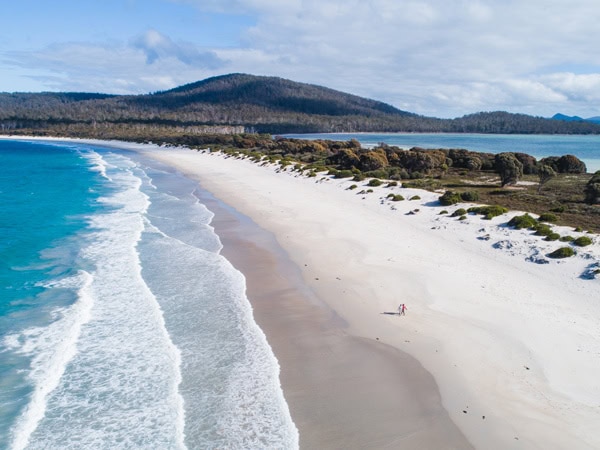
an aerial view of the white beach at Maria Island, Tas
Off the east coast of Tassie, you’ll find Maria Island. (Image: Tourism Tasmania/ Stu Gibson)

Witness the wildlife roaming freely during a guided four-day Maria Island Walk , which takes in empty white-sand beaches, mighty stands of Tasmanian blue gums and the towering dolerite peaks known as Bishop and Clerk, topped with tall woodland and rare cloud rainforests.
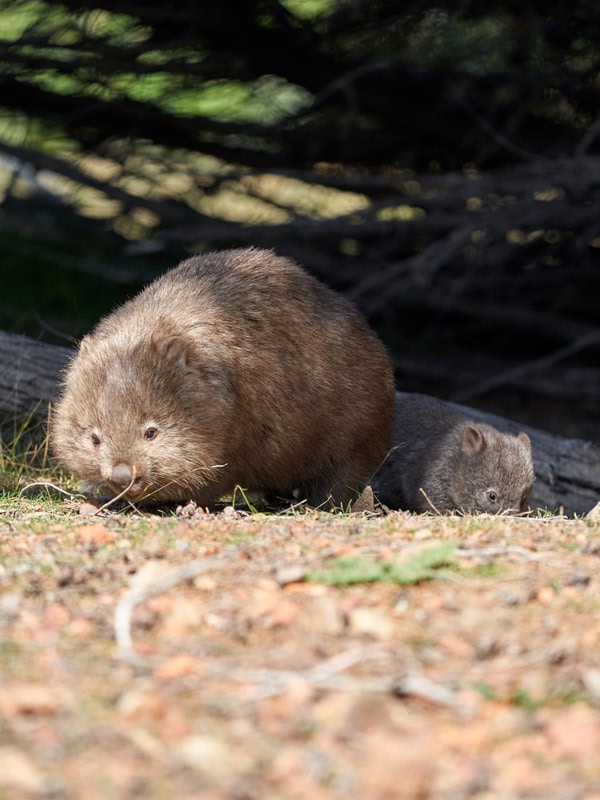
a wombat in Maria Island, Tas
Flinders Island wombats thrive on Maria Island. (Image: Robert King Visuals)
Keep reading our 100 Australian Wonders series; from road trips, outback and cultural wonders to foodie wonders and many more.
hero media

The Macedon Ranges is Victoria’s best-kept food and wine secret

Located just an hour north-west of Melbourne, the largely undiscovered Macedon Ranges quietly pours some of Australia’s finest cool-climate wines and serves up some of Victoria’s best food.

Mention the Macedon Ranges and most people will think of day spas and mineral springs around Daylesford, cosy weekends away in the countryside or the famous Hanging Rock (of enigmatic picnic fame). Or they won’t have heard of the Macedon Ranges at all.

But this cool-climate destination has been inconspicuously building a profile as a high-quality food and wine region and is beginning to draw serious attention from oenophiles and epicureans alike.

The rise of Macedon Ranges wine

liquid gold barrels at Kyneton Ridge Estate Winery
Barrels of liquid gold at Kyneton Ridge Estate Winery. (Image: Chloe Smith Photography)

With elevations ranging from 300 to 800 metres, Macedon Ranges vineyards are among the highest in the country. This altitude, combined with significant day/night temperature swings, makes for a slow ripening season, in turn nurturing wines that embody elegance and structure. Think crisp chardonnays, subtle yet complex pinot noirs and delicate sparkling wines, along with niche varietals, such as gamay and nebbiolo.

Despite the region’s natural advantages – which vary from estate to estate, as each site embodies unique terroir depending on its position in relation to the Great Dividing Range, soil make-up and altitude – the Macedon Ranges has remained something of an insider’s secret. Unlike Victoria’s Yarra Valley or Mornington Peninsula, you won’t find large tour buses here and there’s no mass marketing drawing crowds.

Many of the 40-odd wineries are family-run operations with modest yields, meaning the wineries maintain a personal touch (if you visit a cellar door, you’ll likely chat to the owner or winemaker themselves) and a tight sales circle that often doesn’t go far beyond said cellar door. And that’s part of the charm.

Though wines from the Macedon Ranges are just starting to gain more widespread recognition in Australia, the first vines were planted in the 1860s, with a handful of operators then setting up business in the 1970s and ’80s. The industry surged again in the 1990s and early 2000s with the entry of wineries, such as Mount Towrong, which has an Italian slant in both its wine and food offering, and Curly Flat , now one of the largest estates.

Meet the new generation of local winemakers

the Clydesdale barn at Paramoor.
The Clydesdale barn at Paramoor. (Image: Chloe Smith Photography)

Then, within the last 15 years, a new crop of vignerons like Andrew Wood at Kyneton Ridge Estate , whose vineyard in 2024 was the first in the Macedon Ranges to be certified by Sustainable Winegrowing Australia; Geoff Plahn and Samantha Reid at Paramoor , who have an impressive cellar door with a roaring fire and studded leather couches in an old Clydesdale barn; and Ollie Rapson and Renata Morello at Lyons Will , who rapidly expanded a small vineyard to focus on top-shelf riesling, gamay, pinot noir and chardonnay, have taken ownership of local estates.

Going back to the early days, Llew Knight’s family was one of the pioneers of the 1970s, replacing sheep with vines at Granite Hills when the wool industry dwindled. Knight is proud of the fact that all their wines are made with grapes from their estate, including a light, peppery shiraz (some Macedon wineries purchase fruit from nearby warmer areas, such as Heathcote, particularly to make shiraz) and a European-style grüner veltliner. And, as many other wineries in the region do, he relies on natural acid for balance, rather than an additive, which is often required in warmer regions. “It’s all about understanding and respecting your climate to get the best out of your wines,” he says.

farm animals atKyneton Ridge Estate
Curious residents at Kyneton Ridge Estate. (Image: Chloe Smith Photography)

Throughout the Macedon Ranges, there’s a growing focus on sustainability and natural and low-intervention wines, with producers, such as Brian Martin at Hunter Gatherer making waves in regenerative viticulture. Martin previously worked in senior roles at Australia’s largest sparkling winemaking facility, and now applies that expertise and his own nous to natural, hands‑off, wild-fermented wines, including pét‑nat, riesling and pinot noir. “Wild fermentation brings more complexity,” he says. “Instead of introducing one species of yeast, you can have thousands and they add different characteristics to the wine.”

the vineyard at Kyneton Ridge Estate Winery
The estate’s vineyard, where cool-climate grapes are grown. (Image: Chloe Smith Photography)

Most producers also focus on nurturing their grapes in-field and prune and pick by hand, thus avoiding the introduction of impurities and the need to meddle too much in the winery. “The better the quality of the fruit, the less you have to interfere with the natural winemaking process,” says Wood.

Given the small yields, there’s also little room for error, meaning producers place immense focus on quality. “You’re never going to compete in the middle [in a small region] – you’ve got to aim for the top,” says Curly Flat owner Jeni Kolkka. “Big wineries try to do things as fast as possible, but we’re in no rush,” adds Troy Walsh, owner and winemaker at Attwoods . “We don’t use commercial yeasts; everything is hand-harvested and everything is bottled here, so we bottle only when we’re ready, not when a big truck arrives.” That’s why, when you do see a Macedon Ranges product on a restaurant wine list, it’s usually towards the pointy end.

Come for the wine, stay for the food

pouring sauce onto a dish at Lake HouseDaylesford
Dining at Lake House Daylesford is a treat. (Image: Chloe Smith Photography)

If wine is the quiet achiever of the Macedon Ranges, then food is its not-so-secret weapon. In fact, the area has more hatted restaurants than any other region in Victoria. A pioneer of the area’s gourmet food movement is region cheerleader Alla Wolf-Tasker, culinary icon and founder of Daylesford’s Lake House.

For more than three decades, Wolf-Tasker has championed local producers and helped define what regional fine dining can look like in Australia. Her influence is palpable, not just in the two-hatted Lake House kitchen, but in the broader ethos of the region’s dining scene, as a wave of high-quality restaurants have followed her lead to become true destination diners.

the Midnight Starling restaurant in Kyneton Ridge Estate Winery
The hatted Midnight Starling restaurant is located in Kyneton. (Image: Chloe Smith Photography)

It’s easy to eat well, whether at other hatted restaurants, such as Midnight Starling in the quaint town of Kyneton, or at the wineries themselves, like Le Bouchon at Attwoods, where Walsh is inspired by his time working in France in both his food offering and winemaking.

The beauty of dining and wine touring in the Macedon Ranges is that it feels intimate and unhurried. You’re likely to meet the winemaker, hear about the trials of the latest vintage firsthand, and taste wines that never make it to city shelves. And that’s worth getting out of the city for – even if it is just an hour down the road.

dishes on the menu at Midnight Starling
Delicate dishes on the menu at Midnight Starling. (Image: Chloe Smith Photography)

A traveller’s checklist

Staying there

the accommodation at Cleveland Estate, Macedon Ranges
Stay at the Cleveland Estate. (Image: Chloe Smith Photography)

Soak up vineyard views from Cleveland Estate near Lancefield , embrace retro charm at Kyneton Springs Motel or indulge in lakeside luxury at the Lake House .

Eating there

Enjoy a four-course menu at the one-hatted Surly Goat in Hepburn Springs, Japanese-inspired fare at Kuzu in Woodend or unpretentious fine dining at Mount Monument , which also has a sculpture park.

Drinking there

wine tasting at PassingClouds Winery, Macedon Ranges
A tasting at Passing Clouds Winery. (Image: Chloe Smith Photography)

Settle in for a tasting at Boomtown in Castlemaine, sample local drops at the cosy Woodend Cellar & Bar or wine-hop around the many cellar doors, such as Passing Clouds .

the Boomtown Winery and Cellar Bar signage
Boomtown Winery and Cellar Bar. (Image: Chloe Smith Photography)

Playing there

a scenic river in Castlemaine
Idyllic scenes at Castlemaine. (Image: Chloe Smith Photography)

Wander through the seasonal splendour of Forest Glade Gardens , hike to the summit of Hanging Rock, or stroll around the tranquil Sanatorium Lake.

purple flowers hanging from a tree
Purple flowers hanging from a tree. (Image: Chloe Smith Photography)