Ken Duncan’s Panorama: Forbidden Australia

hero media
Ken Duncan’s Panorama: Forbidden Australia — As the lines of regulation are drawn and redrawn across the country, determining exactly what you can and cannot see of our most important national monuments, photographer Ken Duncan feels compelled to speak out.

I have never made a secret of the fact I’m a Christian – it’s the thing I am most proud of. However, I also respect each individual’s right to believe what they like. For me, the whole reason I do what I do is “to show the beauty of creation". And when I started out trying to get my photographic career off the ground, it was easy to achieve this vision. I sold all my worldly possessions, jumped in my old Austin Lancer and took off around Australia, free and easy and able to go wherever I liked, whenever I liked. How times have changed.


Where is this headed, you might be wondering? I don’t want to get too heavy – but my point is that these days, vast tracts of our nation are practically off-limits to you and me. These areas are growing by the minute. And one of the biggest chunks of all looms large in Central Australia: Uluru, the Olgas, and the surrounding Uluru-Kata Tjuta National Park. And there is a religious significance of sorts here. But I’ll come to that shortly.


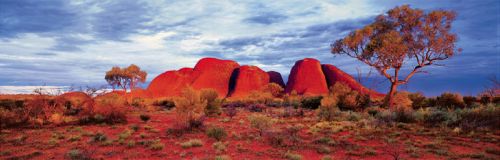
One of my images that you see here (Olgas Sunrise) was shot prior to access restrictions coming in, but these days this amazing view is no longer able to be witnessed.


In my last column I touched on the increasing amount of red tape and bureaucracy stifling photographers who want to show the world our nation’s immense beauty. At around the same time, the Director of National Parks announced the release of a Draft Plan of Management for the Uluru-Kata Tjuta National Park and called for public submissions. This plan is intended to guide park management over the next decade – and the big bouncing ball that has been paraded before the media in this whole spectacle is the fact they’re considering banning people from climbing the Rock. Yet there is so much more to the draft plan than that; this is just one of many freedoms that will be lost if this document is passed.


Before I go any further, I need to preface what I’m about to say by telling you that this is one of the hardest things I have ever written. The instant response to anyone with an opinion on Indigenous issues seems to be that you are branded a redneck. However, I’ve spent a lifetime working with Indigenous Australians, and I have great respect for them and for many of their beliefs. Many Aboriginal people have been very important to me personally on my journey. This has left me reticent about speaking out – but I feel that someone has to, or we will lose so many of the freedoms we once took for granted.


What is frustrating me so much is that the foundation of the whole Uluru-Kata Tjuta Draft Management Plan is a complex Indigenous religious concept called Tjukurpa. This is acknowledged on the Federal Government’s Department of Environment, Water, Heritage and the Arts website (www.environment.gov.au ). This esoteric belief system, which the draft plan states is recognised as the “fundamental guide to management" of the park, is the foundation of life for the traditional landowners, the Anangu, yet it is a concept that changes constantly between people and generations. The department’s website also declares that “Tjukurpa is not written down, but is an oral culture".


In effect, we have highly trained park rangers, who have spent years studying landcare management, yet they are at the mercy of this fluid and extremely complicated concept. Over the years I have seen areas that are sacred one minute become not sacred the next, and vice versa, to the point that nowadays 98 percent of Kata Tjuta is restricted and inaccessible. In fact, one of my images that you see here (Olgas Sunrise) was shot prior to access restrictions coming in, but these days this amazing view is no longer able to be witnessed. In a country that prides itself on the religious freedom afforded to its citizens, I find it incomprehensible that a World Heritage-listed Commonwealth national park can be run based on a religious concept. Personally, as a Christian I believe God created the whole area – but if I was to try and force everyone to believe that, I would never get away with it. And if I tried to collect royalties for ownership in the name of God I think people would start laughing at me.


One of the key areas of this 186-page Draft Management Plan that has me so annoyed is the issue of Indigenous Culture and Intellectual Property (ICIP). According to the draft plan, the Anangu regard all images of the landscape – photographs, films or artworks – as Indigenous cultural property. The plan also notes that the Anangu want appropriate control over how ICIP is used, including: recognising Anangu as the owners; Anangu sharing in the benefits (monetary and non-monetary) from the use of ICIP; and Anangu having the capacity to monitor use. This astounds me. No-one owns the copyright on natural formations. Even though the Indigenous people have been here 20,000 years, that’s a second on the clock compared to how long the Rock has existed.


I realise I’m pushing the same point over and over, but the fact is that I am so fed up with all the ridiculous rules and restrictions that exist, and Uluru is a prime example of a place where things are out of hand. There is not enough distinction about what is deemed commercial image usage, either. Under the proposed rules, if I go to Uluru-Kata Tjuta and take a wonderful photo, or paint a beautiful painting, or record some beautiful sounds to put into a musical piece, or write a poem about the place, then return home and someone offers me money for what I’ve done creatively, I become a criminal for accepting it – even if financial gain was not my original intent. Look, fair enough if a giant film crew were to come traipsing in to take over for weeks at a time – by all means, there need to be some guidelines there. But when it comes to you and me, making no more of an impact than the general visitor and in fact abiding by that old national parks motto, take only photographs and leave only footprints, I don’t understand the need for permits and permissions. We should be embracing exposure of our natural formations wherever possible, because it is going to help promote tourism worldwide and bring dollars to our country for all people. If we continue to make it hard for artistic people to tell their stories or share their feelings, it is seriously going to affect things in the long term.


One of the most important points highlighted in the Draft Plan of Management is the need for the conservation and protection of Uluru-Kata Tjuta, yet the very principles proposed under this so-called Tjukurpa management concept are quite the opposite, and they’re having a detrimental effect. For example, the excessive restrictions in place mean there are currently only two areas of Kata Tjuta that are publicly accessible. This is creating incredible environmental pressure on those two areas. There should be other areas opened up so the traffic can be dispersed and the two areas given time to rest. That is sound environmental management. Also, I wonder how many people realise that more than 1000 Desert Oaks were destroyed when they realigned the road from Uluru to Kata Tjuta so that visitors would be diverted from seeing one particular sacred area.


By the time you read this, the deadline for public submissions to the draft management plan will be well and truly over – and the final decision on the future of Uluru-Kata Tjuta will rest with Federal Environment Minister Peter Garrett and the Australian Parliament. Frankly, I am so over “Ulurules" and all the hoops I have to jump through to pull out my camera that I almost don’t want to go back there and put myself through the sanitised experience. The concerning thing is, it seems this style of management is slowly being rolled out on whatever parks the government can manage.


Unless we vow to watch this issue with eyes like hawks, it won’t be long before we’ve been locked out of our wonderful national parks altogether. The very areas which were originally annexed for the benefit of all Australians – both now and future generations.

Photo tips // Shooting the Red Centre

1. When you’re shooting Uluru or The Olgas, some of the best shots you’ll get are after the sun has set or before the sun has risen. Just after sunset, you get a beautiful afterglow. Often, many people pack up their gear and think the sunset is all over, and they end up missing the greatest shot of all. For shots like this you need a tripod, because generally you’ll end up doing long exposures.


2. Try to find some good foreground interest, because often with iconic locations you can tend to focus too much on the icon without placing it in its environment. Avoid being overwhelmed and try to find something to lead you in. A good sunset on its own can be rather boring.


3. If you have a car with a roof rack, standing on it can really help you at the sunset viewing spots, and it helps you get more perspective because you’re shooting from a higher angle. If you’re doing long exposures, be very careful of movement of the car; make sure no-one is even leaning against it.


4. If you’re shooting landscape aerials, it’s a good idea to put your camera on manual focus if possible and focus on infinity, then put a piece of gaffer tape on the lens to hold it in place so every shot is pin sharp. If you’re shooting out of a helicopter, be sure to keep the horizon level. And if you have to shoot through Perspex or glass, make sure you put the lens as close to it as possible to minimise reflections.

hero media

Why winter is the best time to be on the New South Wales coast

NSW’s beach towns take on a new kind of magic when the cooler months hit.

Autumn and winter cast a whole new light on the New South Wales coastline. The sun hangs lower, the shadows stretch longer and the air is crisp and fresh. The frenetic summer crowds are gone, and the rhythm slows to the pace of a leisurely winter bush walk through still, damp quiet. From wineries pouring winter reds to the annual whale migration up the ‘humpback highway’, here’s why winter on the New South Wales coast is better.

Winter on the NSW South Coast

Winter down south means misty dawns, sipping a flat white on the beach. The thrill of a whale spotting from the headlands and evenings spent slowly savouring Shoalhaven’s wines by the fire.

Start in Kiama, where waves crash into the famous Blowholes. This natural spectacle is achieved when underground pressure and swell unite, sending sea spray soaring above the basalt cliffs. This means, due to larger waves, you’re even more likely to see an explosive display in winter.

two people standing in front of kiama blowhole
See Kiama’s blowholes in full force. (Image: Destination NSW)

Inland, the Minnamurra Rainforest Walk in Budderoo National Park is all subtropical forest and trilling lyrebird song. Make sure to walk silently along the elevated boardwalks, past winter-swelled creeks and the tangled roots of fig trees. You might just hear one of the musically talented birds mimicking your footsteps.

Feeling adventurous? Book a session at Illawarra Fly Treetop Adventures for a wobbly walk through the canopy on Australia’s highest zipline.

Illawarra Fly Treetop Adventures on the new south wales south coast
Walk among the tallest trees. (Image: Destination NSW)

Next, it’s time to take the speed down a notch with a drive over to the historic village of Berry. It’s been a beloved stop for generations of Sydneysiders heading south, as has the obligatory stop at its famous doughnut van for crisped, cinnamon goodness. If you’re ready for something a little more chunky, stroll right past the boutiques (okay, go on, just one quick peek) to Milkwood Bakery . Their flaky pastries and all-day breakfasts are best enjoyed under cream-coloured fringed umbrellas.

Back in Kiama, you’ll also find modern Middle Eastern share plates at Miss Arda , and next-level burgers on The Hungry Monkey ‘s extensive menu: an ode to everything pattie-shaped.

End the day at The Sebel Kiama on the harbour. The apartment-style rooms come with full cooking facilities — a welcome addition for families looking to test out the local produce they picked up along the way. Including, but not limited to, vintages from nearby Crooked River Wines .

The Sebel Kiama exterior
Sleep by the harbour.

Winter on the Mid-North Coast

A trip up north is a gentle one at this time of year. You’ll still feel that sunshine warming your shoulders, but the lower temperatures make space for rainforest walks, vineyard lunches and long coastal hikes. All without that pesky humidity.

First stop? It has to be the town of Port Macquarie. Start by marking out a stretch of the nine-kilometre coastal walk you want to tackle (or do the whole thing), which winds from Town Beach to the lighthouse along rugged headlands and quiet beaches. Hot tip: binoculars. Don’t forget them if you want to partake in some close-up sightings of dolphin pods or whales migrating up the ‘humpback highway’.

Port Macquarie Coastal Walk, winter on the New South Wales coast
Wander the Port Macquarie Coastal Walk. (Image: Destination NSW)

Swap sea for canopy at the Sea Acres Rainforest Boardwalk , one of the last remaining pockets of coastal rainforest in the state. The accessible elevated trail passes under climbing ferns and tangled strangler figs, and is alive with scarlet robins, goannas and diamond pythons – if you’re lucky, you might see one slipping through the leaf litter.

Afterwards, lunch is sorted at Cassegrain Wines , where crisp whites and elegant reds are grown using a blend of French winemaking tradition and Australian innovation. After a tasting, saddle up for a horse ride through the estate.

port macquarie koala hospital
Meet Koala Hospital inhabitants at their temporary home. (Image: Destination NSW)

The beloved Koala Hospital is rebuilding, so meet its furry patients in their temporary bushland abode at Guulabaa – Place of Koala . Here, you can see rehabilitation up close and learn how one of Australia’s most iconic animals is being carefully rewilded and protected.

Back in town, Whalebone Wharf  serves up fine dining with serious views to go with your oysters. Prefer something breezier? Bills Fishhouse + Bar does everything from blue swimmer crab toast to zucchini noodles drizzled in basil and wattleseed pesto. Down by the waterfront, Little Shack slings ceviche, mushroom burgers and fish tacos with casual aplomb.

At the end of it all, check in to Mercure Centro Port Macquarie , right in the heart of town. From here, everything’s walkable. Just park the car, pop your keys in your pocket, and stroll down to the beach.

bed at Mercure Centro Port Macquarie
Check in to Mercure Centro Port Macquarie.

Winter on the Central Coast

On the Central Coast, expect to explore oyster farms that sit on estuaries, beaches that stretch empty for miles, and the kind of surprise sightings of whale sprays that can stop a hiker in their tracks.

The best way to settle into this slower rhythm is with the Bouddi Coastal Walk , an 8.5km trail that dips through rainforest and eroding cliffs. It’s made for unhurried walkers and long-lens photographers.

Up the coast in Terrigal, it’s prime time to spot humpbacks on the move. Join a cruise or find your own perch — Crackneck Lookout and Norah Head Lighthouse are both local favourites.

a humpback whale breaching on the central coast
Spot migrating humpback whales. (Image: Destination NSW)

Travelling with kids? It would be sacrilege not to visit the Australian Reptile Park . Here, Elvis the saltwater crocodile reigns supreme, and the venomous snake talk somehow manages to be simultaneously terrifying and fascinating.

If that isn’t enough to wear them out, zip and climb your way through Treetops Adventure Central Coast , a ropes course in the canopy of Ourimbah State Forest. Afterwards, steady your nerves with a garden tasting at Firescreek Botanical Winery , where fruit- and flower-infused wines are served under the trees.

Switch earth for sea and hop on a boat tour with Broken Bay Pearl Farm . Once you’re out on the water, you’ll learn how pearls are cultivated and have a hands-on lesson in grading and shucking.

woman holding a pearl at Broken Bay Pearl Farm
Get a hands-on pearl lesson. (Image: Destination NSW)

As the day winds down, grab a seat at Yellowtail in Terrigal , which takes seasonal native produce and presents it with Asian flair. Prefer something simple? Award-winning Mount White restaurant Saddles is a quintessential Australian dining destination. Find an impressive breakfast and lunch menu, dedicated to country-style cooking and seasonal produce.

Stay the night at Pullman Magenta Shores , between the ocean and the lake. There are plenty of ways to relax, with a massage at the day spa, a poolside beanbag and a round or two at the golf course.

restaurant at Pullman Magenta Shores central coast
Eat well at Pullman Magenta Shores’ restaurant. (Image: Destination NSW)

Winter in Wollongong

Wollongong does contrast pretty well. One moment you’re walking beneath an enormous Buddha, the next you’re ordering soju a few blocks from the surf. It’s a town where skydivers land on beaches, trails lead to paddocks and winter days stretch long and clear beneath the Illawarra cliffs.

If you’re coming from the north, start by crossing over the Sea Cliff Bridge. Curving dramatically out like a jutting ‘C’ out above the water means you won’t be able to resist pulling over (safely, in designated lookouts) to gaze down at the waves crashing on the cliffs below.

Just inland is the serenity of the Nan Tien Temple , the largest Buddhist temple in the Southern Hemisphere. You can trace the prayer path, explore the temple gardens and sip delectable Kam Quat Tea in the quiet light at the Dew Drop Inn Tea House.

monk teaching tai chi at Nan Tien Temple
Learn about Buddhist practices. (Image: Destination NSW)

Next, dust off that cowboy hat. It’s time for the Darkes Forest Riding Ranch . Take a guided canter via trail rides among peppermint gums and paddocks. If you’re happier to look at animals than ride them, Symbio Wildlife Park has red pandas dozing in trees, kangaroos that hop up to you and lessons on conservation.

The brave among you shouldn’t miss Skydive Australia – Wollongong . A free fall over the coast via tandem jumps before tumbling down to the sand is a breath-stopping thrill. Prefer to keep your feet on the ground? Check out the program at Wollongong Art Gallery , which delivers contemporary and Aboriginal exhibitions in the centre of town.

monkey at Symbio Wildlife Park
Hang out with the locals at Symbio Wildlife Park.(Image: Destination NSW)

As evening settles in, nab a table at Baby Face Kitchen . It has an ever-changing set menu, with dishes like hand-picked mud crab with white asparagus and salty brown butter, to sheep’s milk and honey ice cream. For something more casual, Dagwood Bar + Kitchen brings the fun with Korean fried chicken, sake cocktails and weekly all-you-can-eat bao buns.

Check in to Novotel Wollongong Northbeach , right by the sand. With a beachfront pool and ocean views, it’s an ideal base for whatever pace you choose.

Novotel Wollongong Northbeach
Fall asleep listening to the waves.

Winter on the New South Wales coast starts with a cosy place to stay. Start planning your adventure at all.com.