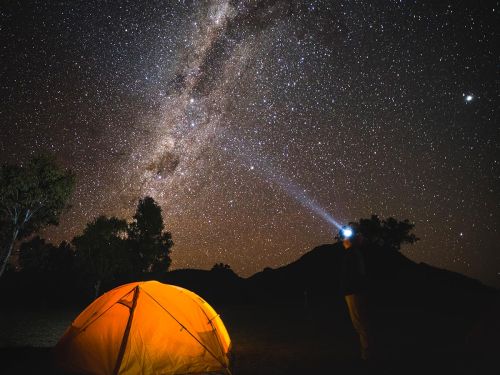
Few things in this universe are more breathtaking than the Milky Way, and there are few better countries to gaze at it from than Australia.
There is nothing quite like leaving the city lights behind and swapping them for the twinkling lights of the Milky Way. The most wonderous expression I’ve ever seen on a face was on that of my boyfriend – a born and bred Rio local – who had never seen the stars outside of human light pollution before our road trip to Mungo National Park. I had warned him he would be blown away by the night sky, and he simply didn’t believe me. Until I made him get out of the tent at 1 am and take a look up.
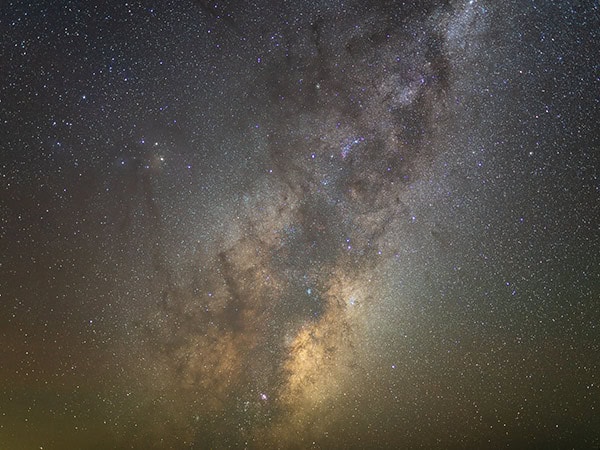
The Milky Way in particular forms a fascinating and beautiful blanket splashed across the dark sky around Australia. For Astronomers, this spiral galaxy has provided a gives us a closer view of galaxy structure and content than any others, simply because we’re a part of it. For many Indigenous people, the Milky Way is associated with a river in the sky where the ancestor spirits live.
Spend a night soaking in its wonder at these places around Australia.
1. East MacDonnell Ranges, NT
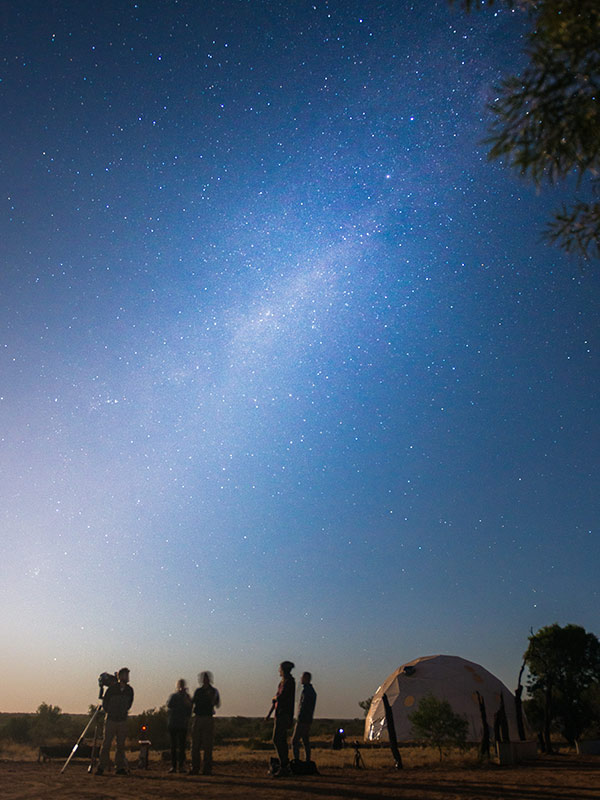
The best views of the night sky come when you leave all man-made lights behind. That’s why heading into Central Australia is always a good idea for gazing at the Milky Way. Get a close-up look by heading to Earth Sanctuary, just outside Alice Springs. This award-winning, carbon-neutral outback venue overlooks the dramatic landscape of the East MacDonnell Ranges and offers Astro tours. With an experienced guide, look through telescopes to spot planets, constellations and unearthly phenomena like dark nebulae.
2. Lincoln National Park, SA
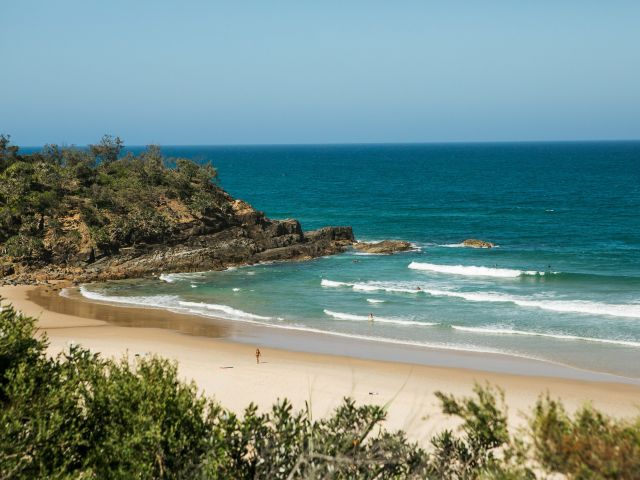
Who says you have to be in the outback to see a clear night sky? Although remote and free of light pollution, Lincoln National Park is a place of stunning beaches and bays on the south-eastern tip of the Eyre Peninsula. Plenty of secluded campsites allow you to spend a night (or more) immersed in nature. Spend your days swimming and surfing, then lay out under the Milky Way, star clusters and nebula. All clear and crisp once the sun drops.
Need tips, more detail or itinerary ideas tailored to you? Ask AT.
AI Prompt
3. Warrumbungle National Park, NSW
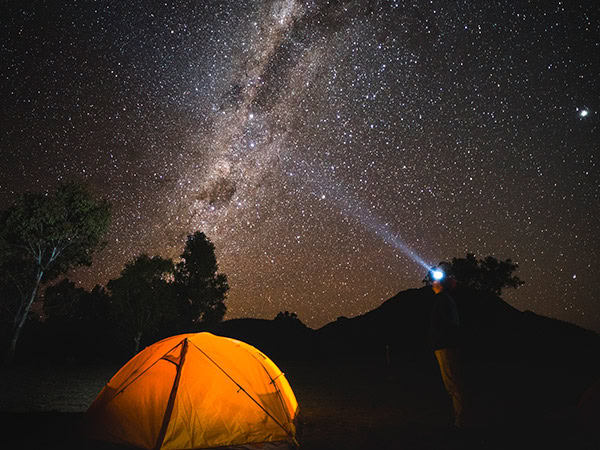
Warrumbungle National Park owns the title of Australia’s first Dark Sky Park, thanks to its remote location and perfect climate of high altitude and low humidity. It’s impossible to miss the Milky Way even with bare eyes, but get a really good look by booking a ticket with Coonabarabran Star Gazing to see Siding Spring Observatory at the edge of the park. It’s here you’ll find the largest optical telescopes in Australia. Make the most of it by booking a camping spot, most of which include picnic tables, barbecue facilities, showers and toilets.
4. Charleville, Qld
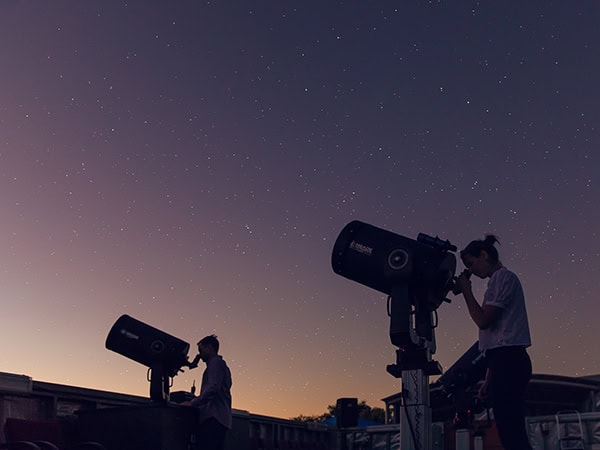
Head into Queensland’s outback to leave the big city lights behind, but also to gain a different insight into the Milky Way and surrounding stars. Charleville’s Cosmos Centre has a range of star-gazing tours, with the Universal Dreaming tour providing a particularly standout experience. Discover some of the ways many different ancient cultures connected with the night sky as you sit around a fire pit (you’ll even get to toast marshmallows while you listen). You’ll need to book ahead for this as it’s only upon request.
5. Kati Thanda-Lake Eyre National Park, SA
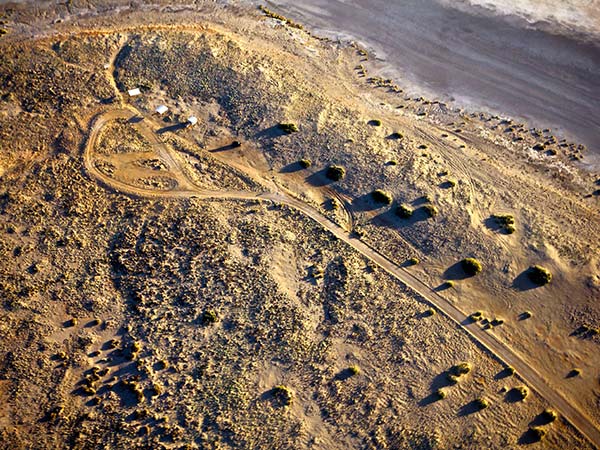
Typically, you might expect to head up as high as possible to catch a clear glimpse of the night sky. But, in fact, being Australia’s lowest point – up to 15 metres below sea level – makes Kati Thanda-Lake Eyre National Park one of the darkest areas in Australia. This means that star-gazing is at an optimum, but also that the Milky Way can be found reflecting on the water’s surface whenever the elusive lake is full. Stay the night in one of several classic outback hotels, or bring the tent and set up in Halligan Bay Point Campground for bush camping, or Muloorina Station to enjoy toilets and some facilities.
6. The Dish, NSW
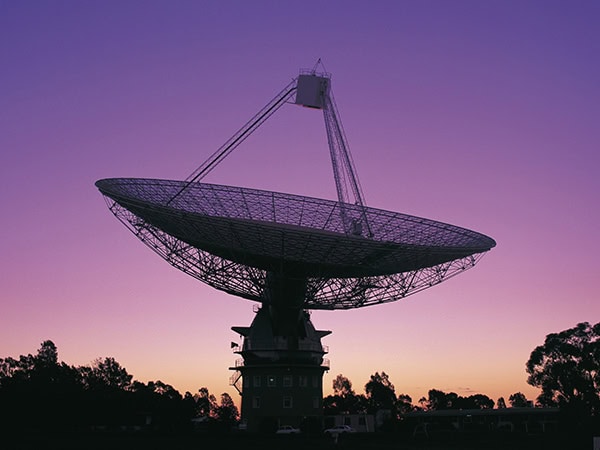
If you somehow missed the classic Aussie movie The Dish back in 2000, I strongly recommend you watch it before you arrive. It’s a fun way to learn the true story of how this CSIRO Parkes Radio Telescope played an important part in communicating with the Apollo 11 mission. Located in Goobang National Park, part of its charm is due to seemingly being in the middle of nowhere – a great sign for stargazing and spotting the Milky Way. You’ll find free campgrounds here, and it’s recommended to visit in autumn when the night sky is typically clearest.
Weekly travel news, experiences
insider tips, offers, and more.
7. Uluṟu-Kata Tjuṯa National Park, NT
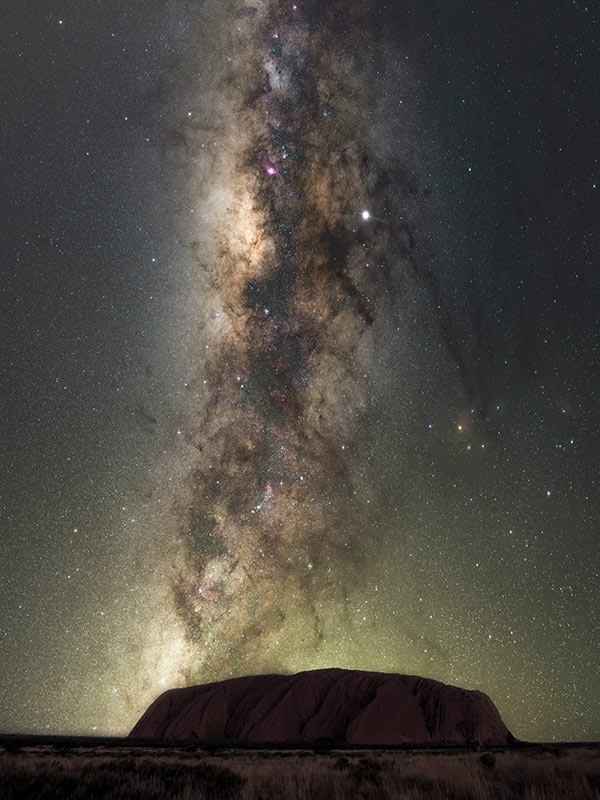
Few things could be more iconically Australian than seeing Uluru at night, framed by the Milky Way. In fact, settling into one of several vantage points along walking trails in the park from sunset means you’ll watch the rock and sky transform their colours through purple and orange hues as the sun drops to reveal all the starry twinkles of the universe. With little to no light pollution, the stars come out in full force. Every night is different – you may even see the rings of Saturn or a shooting star. There are a few tour options to help you see even better, including Uluru Astro Tour.
8. Gravity Discovery Centre Observatory, WA
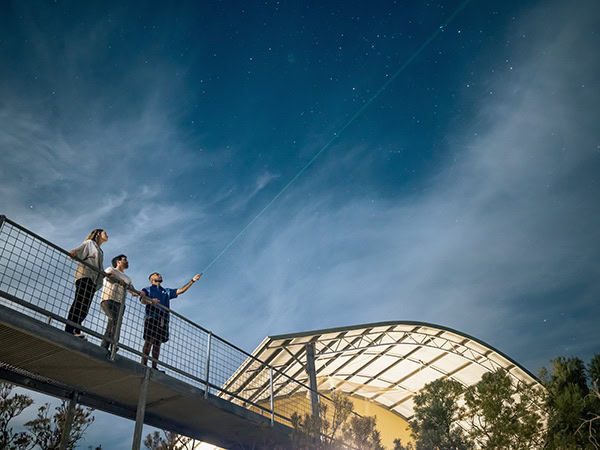
It’s pretty safe to say that all observatories in Australia are good places to start if you want to catch the Milky Way up close. Gravity Discovery Centre Observatory in Gingin allows members of the public to use its state-of-the-art technology every Friday and Saturday night. There are a few guided tour options, including lecture-style tours about fascinating parts of the universe and Aboriginal Astronomy. The latter partners with Indigenous Tours to showcase the connection between cultural storytelling and Astronomy.
9. Karlu Karlu Reserve, NT
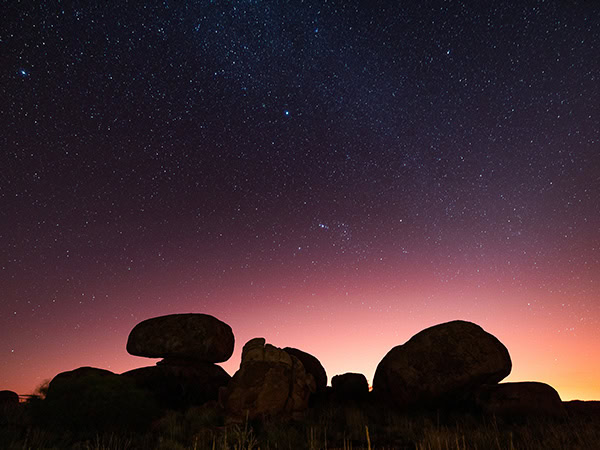
One of the outback’s more unique sights is the stacked, round boulders known as Karlu Karlu / The Devil’s Marbles. They cut a pretty impressive figure at any time of day, but silhouetted against a blazing Milky Way is particularly spectacular. This remote red desert has plenty of campsites so you can spend all night staring skywards. If you haven’t quite had your fill of the universe, you can also drive an extra hour to Wycliffe, known as the UFO capital of Australia. Cue X-Files music.
Can’t get enough of the night skies? Discover the best spots around Australia for stargazing.
Want to see more stories from Australian Traveller in your Google search results?
- Click here to set Australian Traveller as a preferred source.
- Tick the box next to "Australian Traveller". That's it.