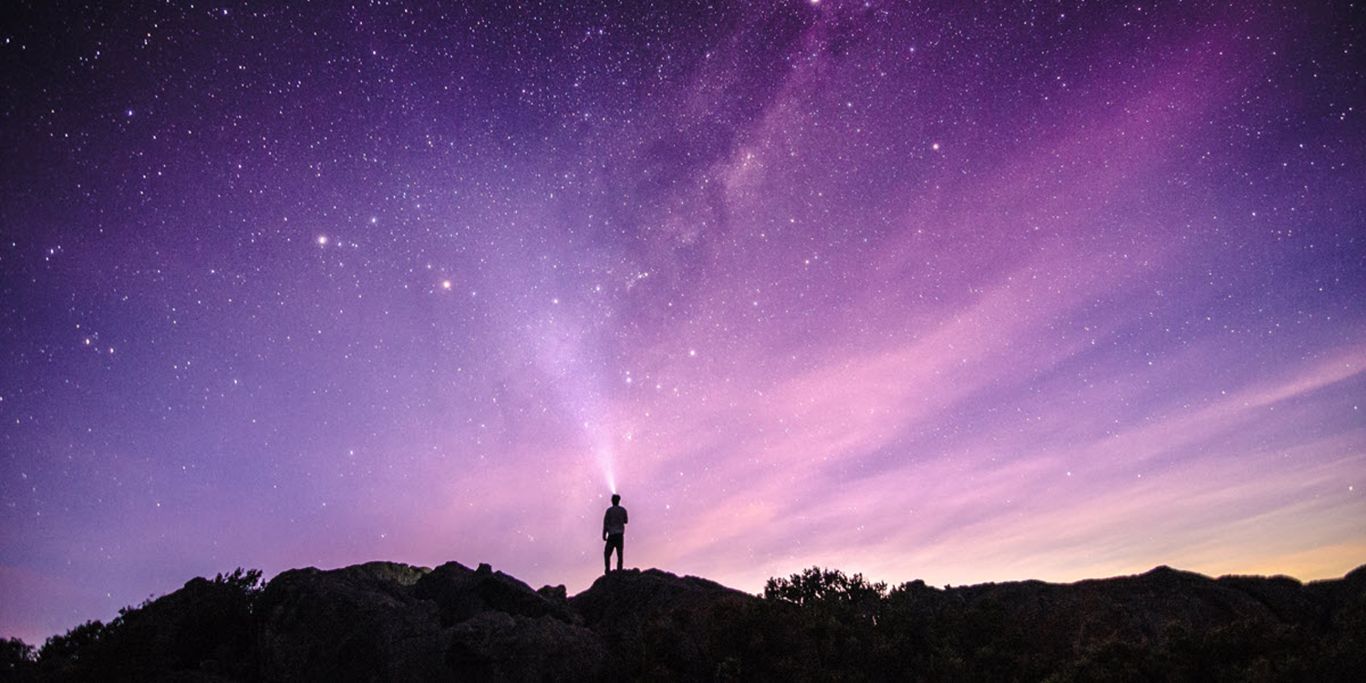

Our most stellar natural light shows are utterly enchanting – once you know where to find them.
We’re a sun-loving nation, home to some of the world’s most extraordinary daylight attractions. But our starry nights are seriously underrated. Dotted with state-of-the-art observatories, dark sky parks that limit light pollution and spectacular scenic vantage points, Australia is a stargazer’s wonderland. Allow us to shine a light…
1. Uluṟu, NT
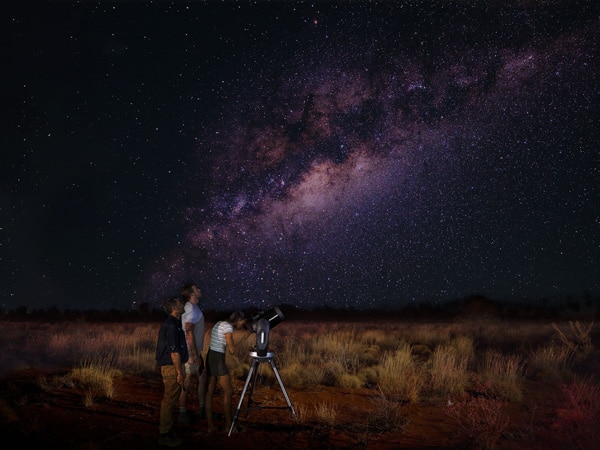
For a deeply spiritual experience, it’s hard to beat peering up above Uluṟu-Kata Tjuta National Park towards an infinite blanket of twinkling lights. Free of artificial luminosity and big-city pollution, the sacred land offers magnificent views of the Milky Way, Southern Cross, Magellanic Cloud galaxies and other constellations.
Ayers Rock Resort runs Astro Tours that explore the evolution of our universe using telescopes, so it’s a great pick if you’d like some guidance.
2. Kunanyi/Mount Wellington, Tas
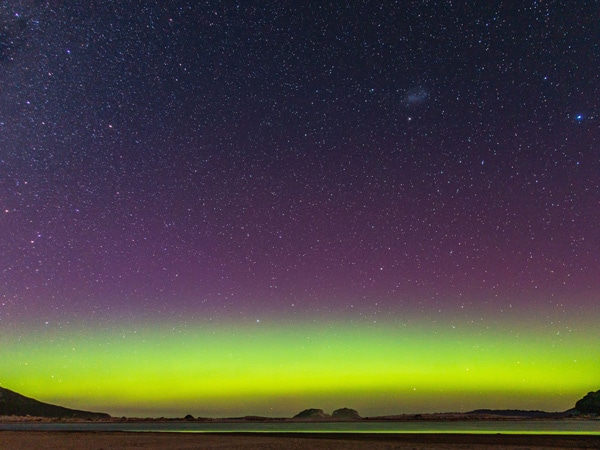
It’s no secret Tassie is the best place to view the southern hemisphere’s fantastical Aurora Australis, also known as the Southern Lights, but did you know Hobart’s Mount Wellington is an ideal viewing spot?
Wait for a dark, clear night, and climb hard because the higher you get, the more likely you’ll spot the elusive lightshow. For your best bet, bring a camera – a slow shutter will capture it easier than your peepers.
3. Sydney Observatory, NSW
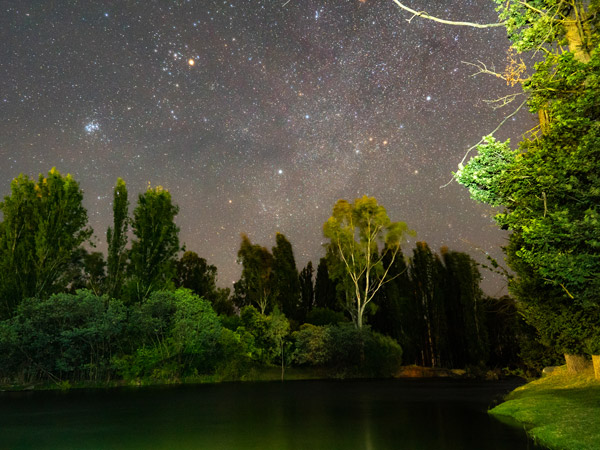
Explore the night sky from the depths of one of Sydney’s most colourful corners at the Sydney Observatory in Millers Point. The heritage-listed building, striking in its old sandstone glory, provides a sweeping vantage point plus plenty of fascinating relics to stickybeak in its museum as your astrological enlightenment lingers into the evening. Nightly tours run from Wednesday to Saturday.
4. Mudgee Observatory, NSW
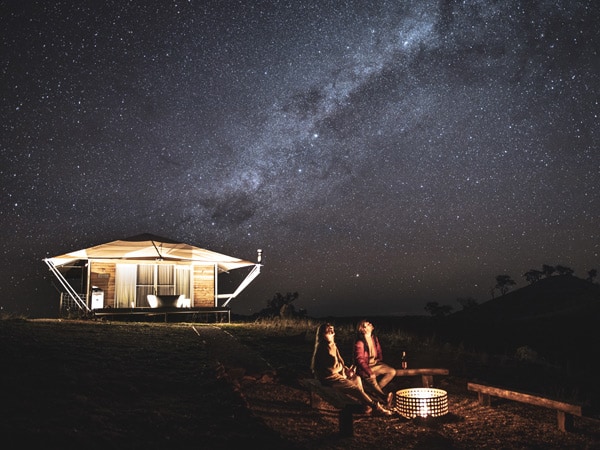
Once you’ve ticked off the very best Mudgee wine tours and experiences, head to the west of the region to experience the Mudgee Observatory. Telescopes and binoculars are on hand to sharpen your vision and there’s also a planetarium and theatre that screens educational films. Tours are also scheduled regularly, so check the website for up-to-date session times.
5. Grampians National Park, Vic
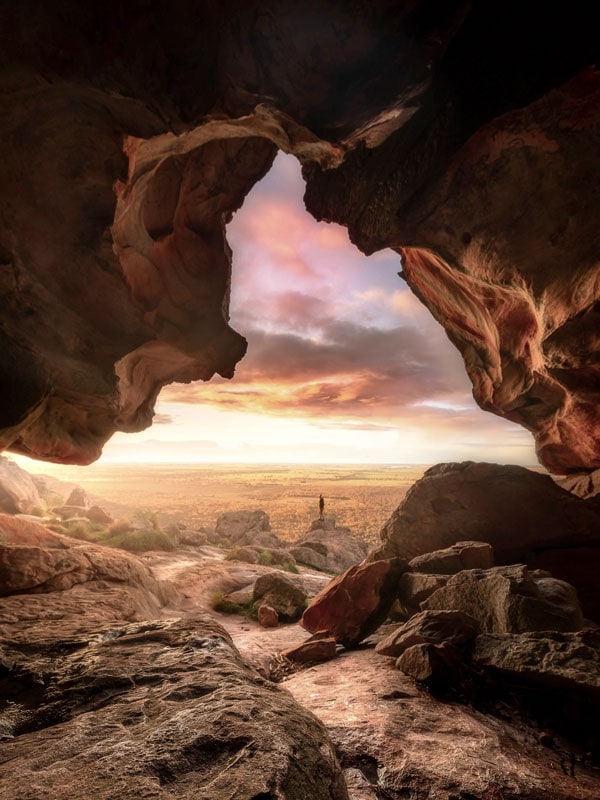
After a day spent wandering through walking trails, waterfalls and sensational bushland, make tracks to Reed Lookout in Victoria’s Grampians National Park for a magical light show. The sky gets extremely dark out there, and there’s nothing but clear yonder to stare into, so the popular lookout spot will throw up sensational stargazing conditions all year round. The Hollow Mountain Lookout provides another amazing vantage point.
6. Leon Mow Dark Sky Site, Vic
If you’re an avid stargazer, you’ll be all over dark sky parks and just how magnificent they are. The wide-open spaces offer killer clear skies due to the limitation of street lights, lights turning off at a certain hour each night and the removal of upward-facing lights.
Leon Mow Dark Sky Site is a great example, located near Heathcote in Victoria. You’ve got to become a member of the Astronomical Society of Victoria to access it but once you do, you’ll be spoilt with telescopes, amenities including a kitchen, showers and toilets, and invitations to members’ parties that celebrate the wonders high above.
7. Springbrook Research Observatory, Qld
Fancy spending your Friday or Saturday night under a blanket of stars? The Springbrook Research Observatory on the Gold Coast opens its doors to the public twice a week and loves turning visitors into avid stargazers. The hinterland hotspot consists of a primary dome with a viewing rooftop, as well as loads of telescopes to help you zoom in on all the magic.
Need tips, more detail or itinerary ideas tailored to you? Ask AT.
AI Prompt
8. Yagurli Tours, Burketown, Qld
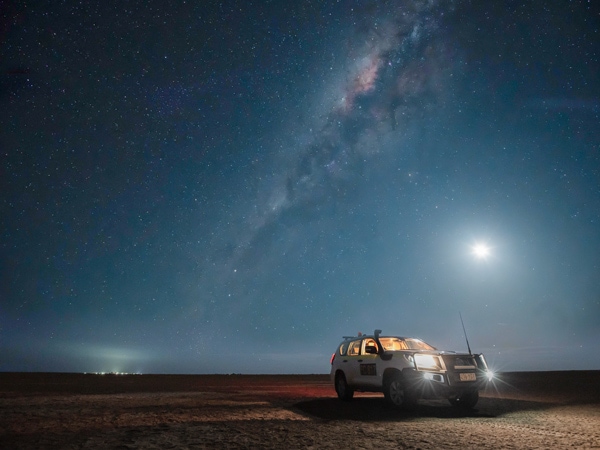
Learn more about the night sky and the Indigenous land it looms over with Yagurli Tours in Queensland’s Burketown. Local guides are on hand to share Dreamtime stories and tales from Australia’s largest salt pans, located right on site. Telescopes come with every tour as do light snacks and mozzie spray.
9. Arkaroola Dark Sky Sanctuary, SA
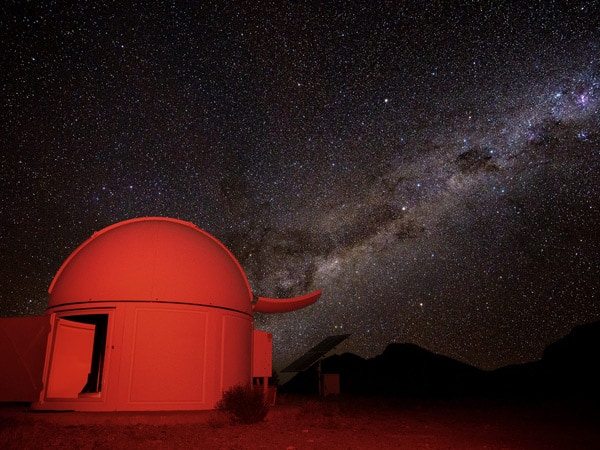
One of the country’s most famous dark sky parks, Arkaroola Dark Sky Sanctuary in South Australia, is a remote gem providing a choose-your-own-adventure stargazing journey.
Pick from three Astronomy Experiences spanning telescope use or simply sitting in a camping chair and looking up, as well as the Ridgetop Sleepout, an overnight stay that takes in some of the grounds’ best vantage points.
10. Wilpena Pound, SA
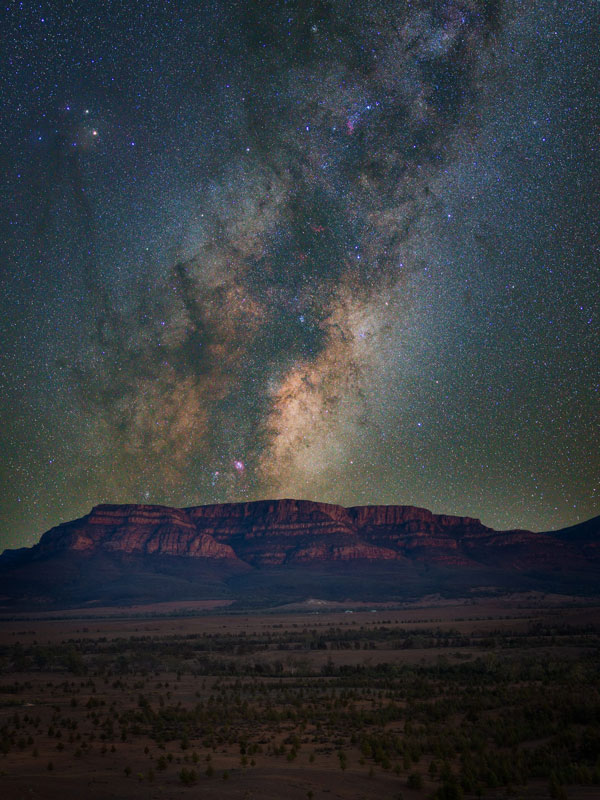
A spectacular amphitheatre of mountains located 429 kilometres from Adelaide, Wilpena Pound is a natural wonder, and its majesty should be seen to be fully comprehended.
While you’re at it, just look up for crystal clear stargazing. Mountain ranges and gorges on ground level, a moving light show up above, the scene is staggeringly beautiful and deeply enriching.
11. Lake Ballard, WA
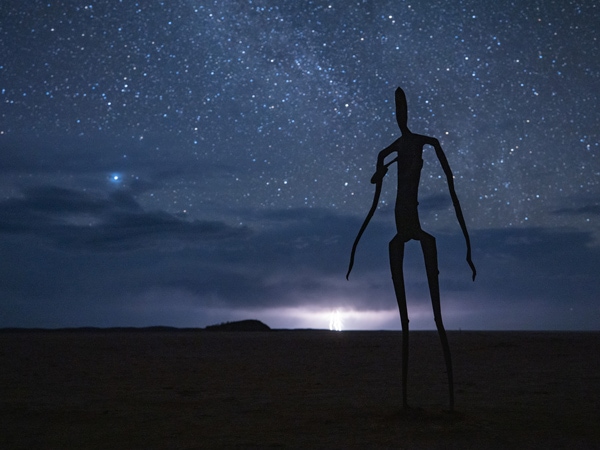
Located in Menzies, Lake Ballard and its 51 steel sculptures produce the most surreal stargazing experience in Western Australia.
All speckled and electric up high as a rugged land dotted with otherworldly artwork mystifies down low, Lake Ballard’s sculpture masterpiece is the result of British artist Sir Antony Gormley getting 51 locals to strip naked and pose for digital scans which were cast into moulds. Weird, wonderful stuff.
12. Lucky Bay, Esperance, WA
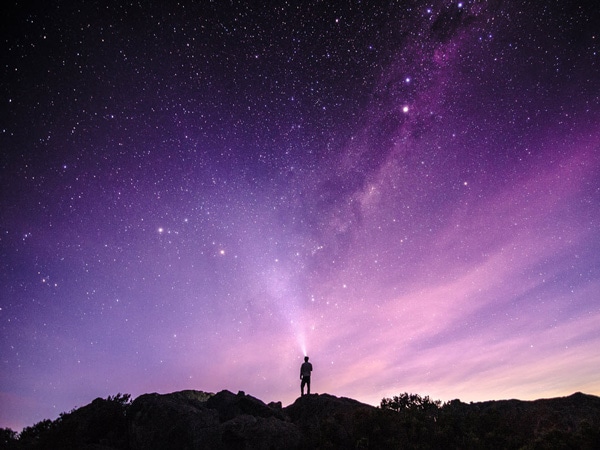
Another spot for anybody chasing the Aurora Australis, plus those keen to see kangaroos on a beach, is Lucky Bay in Esperance. The postcard-perfect swimming spot with clear night skies and no light pollution delights star seekers while the Southern Ocean glistens below to create a marvellous medley of pure magic.
13. Earth Sanctuary, NT
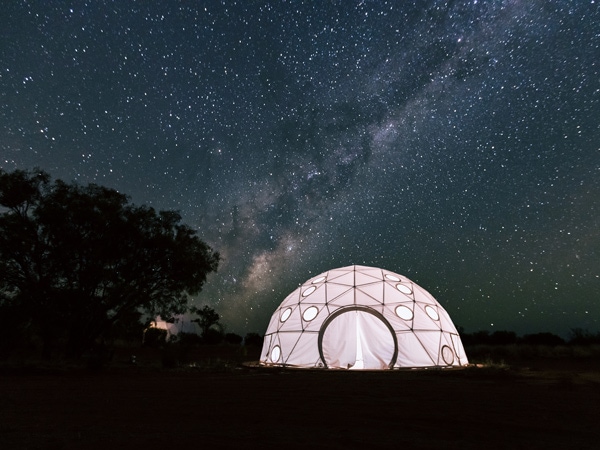
A smorgasbord of astrology tours is on offer from Earth Sanctuary in the Northern Territory, where remote nothingness and little artificial light create stellar conditions for nightly gazing.
Choose to go on a one-and-a-half-hour big group tour or keep things cosy by spending the night with a small group outdoors and keeping watch up from sunset to sunrise.
14. Franklin, Tas
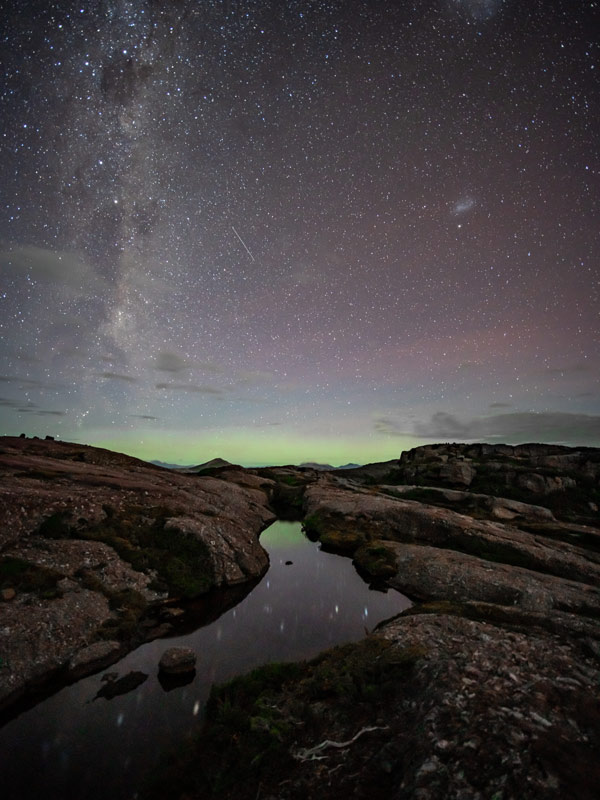
If you’ve already ticked off Kunanyi/Mount Wellington in Tassie, try the little town of Franklin next. The Aurora Australis flutters its stuff over this way on occasion, and if you don’t catch it, you’re almost guaranteed a glimpse of the Milky Way all year round.
Weekly travel news, experiences
insider tips, offers, and more.
15. Warrumbungle National Park, NSW
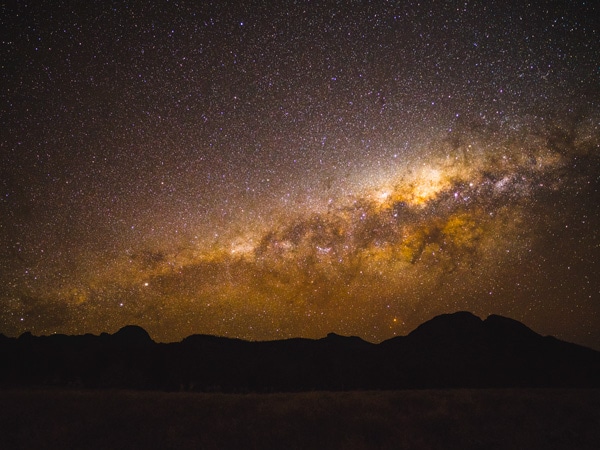
Another brilliant dark sky park that bans light pollution, Warrumbungle National Park is a two-hour drive from Dubbo. No artificial light means the Milky Way can radiate down uninterrupted, making for sensational scenes if you’re camping in the park’s rich bushland.
Walking tracks will keep your days busy, but it’s the spectacular volcanic mountain vistas that decorate all the starry goodness at night that really put this place on the map.
16. Broken Hill, NSW
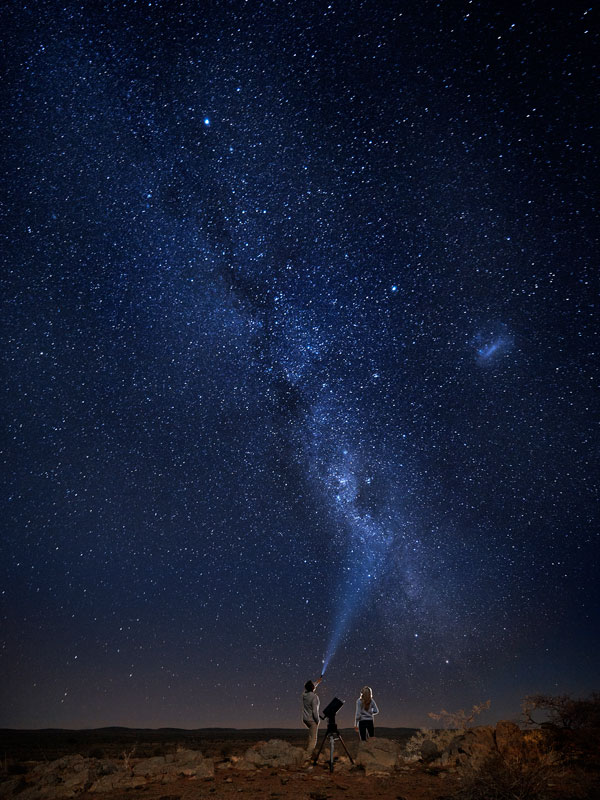
The country’s oldest mining town is isolated from other towns and city lights, helping it produce magnificent conditions for stargazing. Broken Hill is also home to Outback Astronomy, a company that specialises in stargazing and runs its own guided Sky Shows.
Passionate astrology experts walk you through everything that’s going on up above and show you how to look out for the constellations yourself once you’re back home.
17. Perth Observatory, WA
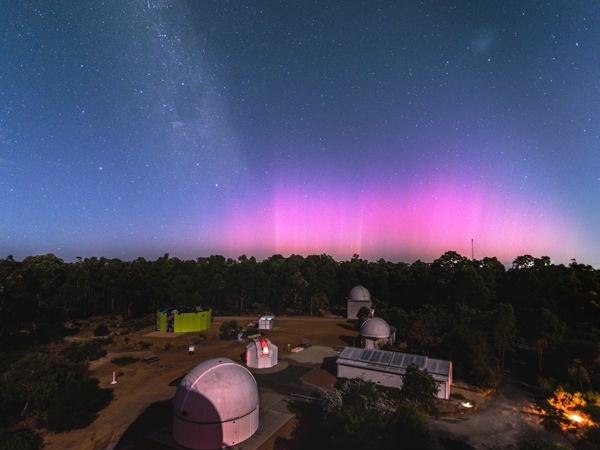
Just 25 kilometres east of Perth lies the Perth Observatory, where a team of astronomy buffs will teach you everything you need to know about constellations and the night sky.
Plus, their extensive collection of telescopes offers front-row seats to the likes of dying stars (yep, they’re a thing), nebulae, star clusters, the moon, our surrounding planets and more. If you’re keen to dive deep into the world of astrology, this place is a must.
18. Great Ocean Road, Vic
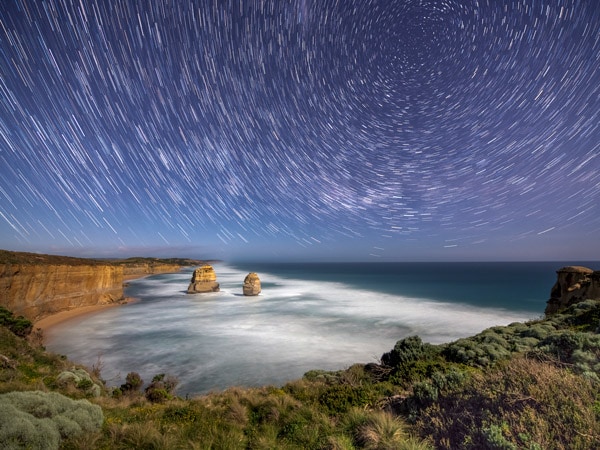
There’s jaw-dropping beauty to be found right along the snaking coastal stretch, but the vast skies above the Great Ocean Road equally delight. Look up to spy the Milky Way on a clear night and even Saturn and Jupiter sometimes.
While any location along the stretch will do, catching a light show directly above The Twelve Apostles never fails as a memorable road trip activity.
19. Mangrove Mountain, NSW
Journey inland from the Central Coast to find Mangrove Mountain, right near Peats Ridge, and sensational stargazing conditions. Its elevated ground well and truly eliminates potential light pollution, and you’ll likely spot the Milky Way if it’s clear night.
20. Wave Rock, WA
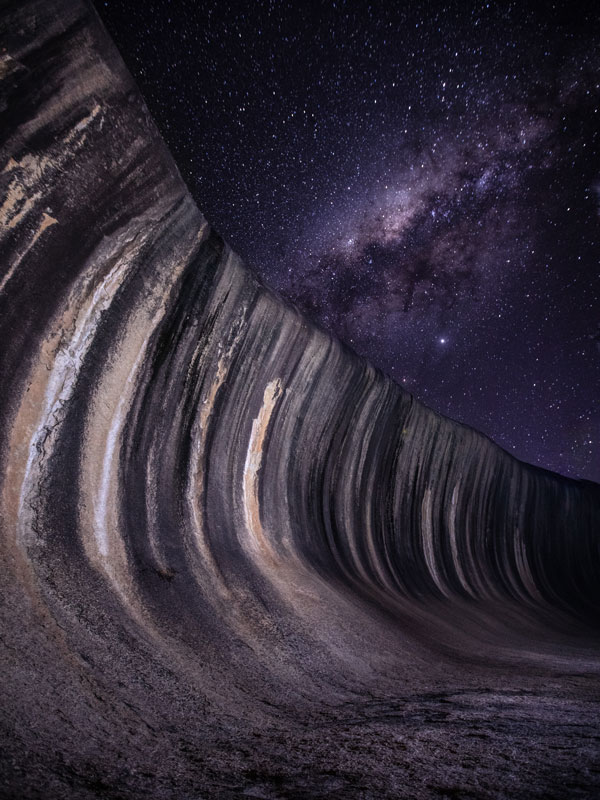
The remote landmark is better known during the daylight hours for its vividly hued granite cliffs but Wave Rock, in the tiny town of Hyden, is also a spectacular spot at night.
Pollution-free conditions make for an unobstructed sky in which to look for scattered constellations. However, it’s the unique streaks that bounce off the rock itself, created when rainwater hits the surface, that make for incredible photographs.
21. Mount Stromlo Observatory, ACT
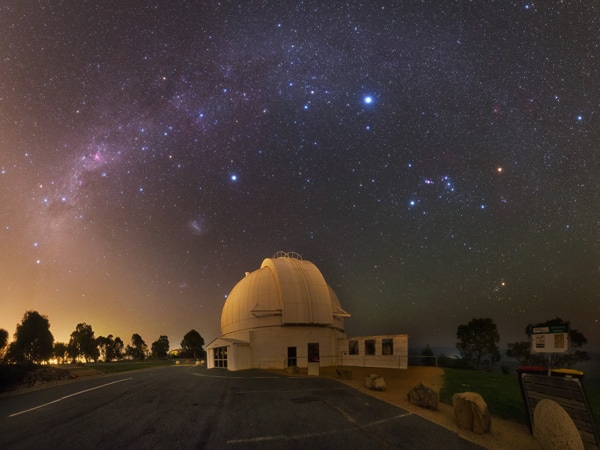
Free stargazing nights are regularly staged at Mount Stromlo Observatory, a Canberra hot spot run by the Canberra Astronomical Society. Guests are invited to soak up stargazing tips from its members and marvel at the Observatory’s 188-centimetre dome set amid rich greenery.
Want to see more stories from Australian Traveller in your Google search results?
- Click here to set Australian Traveller as a preferred source.
- Tick the box next to "Australian Traveller". That's it.