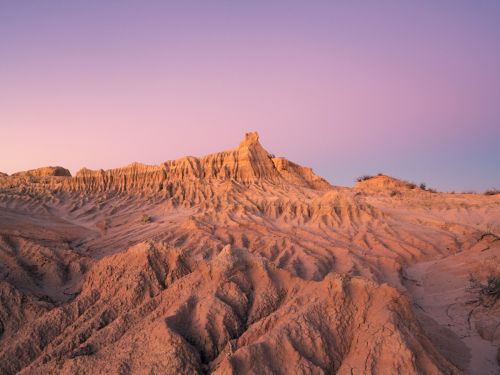
This lunar-like national park is hiding in plain sight

hero media
The World Heritage-listed site must be seen to be believed.

I’m sure I speak for many of us when I say I’ve always wondered what it would be like to visit the moon. Seeing it in the evening sky always conjures up feelings of whimsy and wonder in me – a mystic, dreamy place just begging to be explored. Unfortunately, also like the majority of us, I can’t afford to just jump in a rocket and zoom on up there.

But what if I told you there’s a place right here on Earth that effortlessly encapsulates this ethereal atmosphere? I didn’t believe it either, until I visited Mungo National Park myself, one of Australia’s most underrated national parks.

Where is Mungo National Park?

Mungo National Park is in Ouback NSW, just over 200 kilometres from the Victorian border town of Mildura or a 10-hour drive from Sydney. The World Heritage-listed site spans 240,000 hectares across the picturesque Riverina Murray region.

Mungo National Park in NSW
Mungo National Park spans 240,000 hectares. (Image: Destination NSW)

For those in the know, Mungo is definitely worth the road trip, with many people travelling to the region purely to witness its lunar-like landscapes. But this ancient, Ancestral place flies relatively under the radar in the grand scheme of things, often overlooked in favour of its Aussie counterparts.

Don’t believe me? Well, while places like Kakadu National Park, Blue Mountains National Park and Daintree National Park see from 200,000 to 6 million visitors a year, just 37,000 people visit Mungo annually. But for what it lacks in numbers, Mungo more than makes up for in beauty, history and cultural significance.

Why visit Mungo National Park?

While the topography of Mungo National Park alone is reason enough to visit, its history is equally as staggering. This is a place where megafauna once roamed, a land that lays claim to the oldest collection of fossilised human footprints ever uncovered – dating back to the Ice Age.
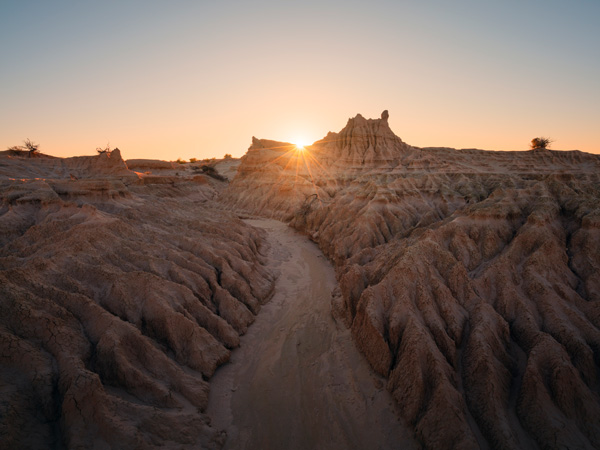
Mungo National Park in NSW
Mungo is a culturally significant site for its Traditional Owners. (Image: Destination NSW)

The archaeological discoveries of Mungo Man and Mungo Lady also rewrote history. Discovered in 1968 and 1974 respectively by geologist Jim Bowler, the remains are the oldest known examples of ritual burials in the world, dating back over 40,000 years.

The findings also scientifically proved that Aboriginal culture has existed here since time immemorial. Mungo National Park is on the Traditional Lands of the Paakantji, Ngiyampaa and Mutthi Mutthi people and remains a culturally and spiritually significant site for Traditional Owners. It is symbolic of Australian history, representing the timeless connection First Nations people have with Country.

Must-see sights in Mungo National Park

Mungo can be experienced in a variety of ways, with many visitors opting to explore the national park on their own. I recommend joining at least one of the Indigenous-led guided tours with NSW National Parks and Wildlife Service . It’s a great way to learn about the land’s history and culture, as well as get the most out of your time at Mungo. Here are a few highlights.

Lake Mungo

Middens found in Mungo National Park in NSW
Ancient middens can still be found within the sand dunes. (Image: Destination NSW)

Lake Mungo is one of 17 arid lake beds within the region. It held a vast amount of water and marine life around 50,000 years ago, but has long since dried and fossilised. The now eroded sand dunes that tower around the park’s circumference continuously reveal evidence of an area once thriving with prehistoric life.

Mungo Woolshed

Built in 1869 using an ingenious drop-log cypress pine construction, this historic woolshed harks back to when Gol Gol pastoral station brought thousands of sheep to the region. The farming activity on this dramatic but delicate land helped archaeologists discover the secrets buried beneath its red-ochre surface.

Walls of China
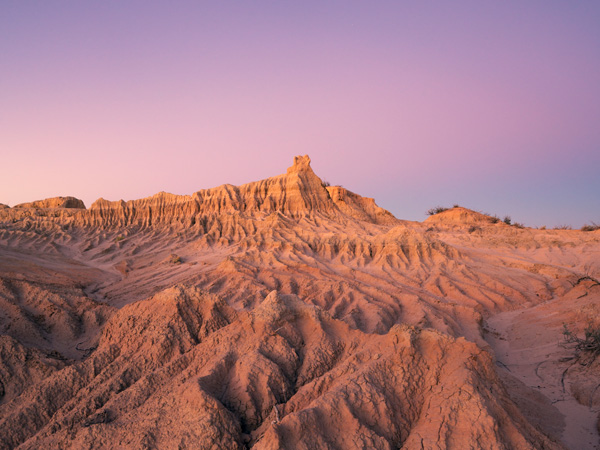
Mungo National Park in NSW
The awe-inspiring Walls of China attract many visitors. (Image: Destination NSW)

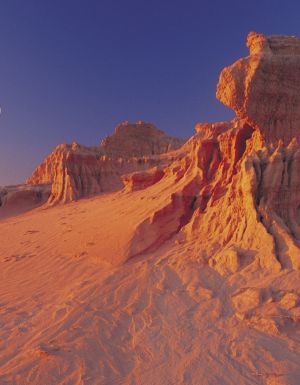
Arcing around the eastern edge of the lake, the Walls of China is Mungo’s star attraction, where visitors most often describe a lunar-like appearance. Its low curve of sandy hills, or lunette, rises up out of the Earth like pinnacles, sculpted by millennia of sand-soaked winds.

Red Top Lookout

Head to Red Top Lookout in time for sunset for unparalleled views over Mungo. The fading light renders its tapestry of deep ravines and rising hills in all shades of orange, pink and purple, mirroring the magic of the moon.

Mungo Loop Track
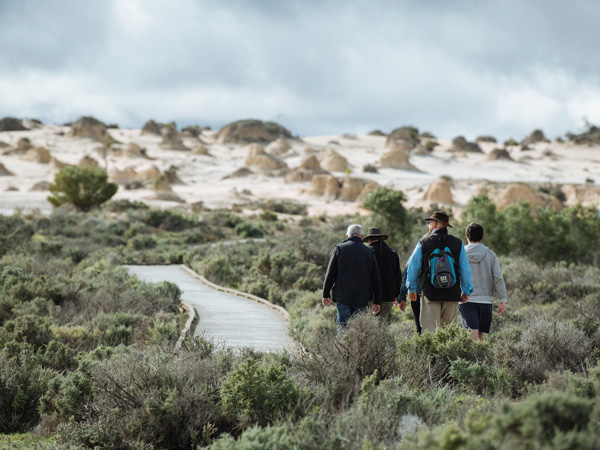
Mungo National Park in NSW
See the highlights along the Mungo Loop Track. (Image: Destination NSW)

Get acquainted with this awe-inspiring desert landscape by driving, or better yet, cycling the 70-kilometre Mungo Loop Track. Cross the ancient lakebed to the Walls of China before tracing its shores, taking in the iconic dunes and mallee trees of Outback NSW.

The Meeting Place

Head to the Meeting Place at Mungo Visitor Centre to learn about Mungo Man and Mungo Lady. While the remains are kept private for cultural reasons, the lunette-shaped viewpoint here commemorates their resting place and that of countless Aboriginal Ancestors. You’ll also see casts of the park’s ancient fossilised human footprints.

Mungo wildlife

Mungo National Park in NSW
Mungo is home to adorable red kangaroos. (Image: Destination NSW)

Many species call Mungo home, and spotting them is like a game of wildlife bingo. There are over 100 species of bird here, from mulga parrots to pink cockatoos. It’s also a prime place to see red kangaroos and emus. If you’re lucky, you may also spot short-beaked echidnas, fat-tailed dunnarts, pygmy possums, carpet pythons, mallee dragons and more.

How to get to Mungo National Park

The closest major city centre to Mungo National Park is Mildura in Victoria, around a 2.5-hour drive away. You will inevitably encounter unsealed roads that are usually in good condition, but always check traffic updates and carry adequate food and water.
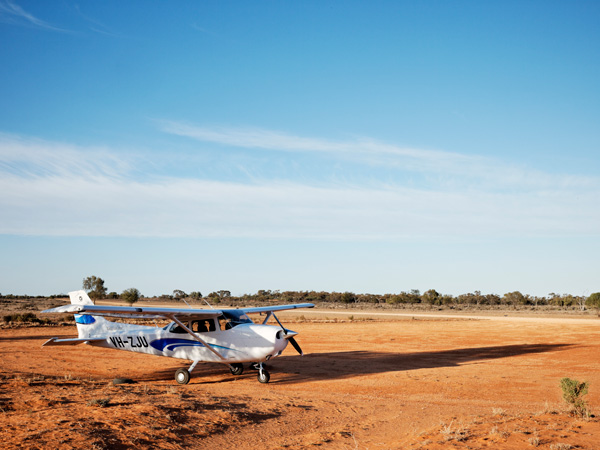
A small plane in Mungo National Park in NSW
Take a scenic flight to see Mungo from above. (Image: Destination NSW)

If you’re coming from Sydney, it’ll take you up to 11 hours to reach Mungo. You can stop in trending detour destinations like Goulburn and Wagga Wagga to rest and refuel. I’d also highly recommend flying with Murray Darling Scenic Flights from either Echuca or Swan Hill. You’ll see Mungo in all its glory from above, as well as nearby natural landmarks like Lake Tyrrell, one of Australia’s most mesmerising pink lakes.

Where to stay at Mungo National Park

Mungo Lodge is a 10-minute drive from the Mungo Visitor Centre. The sprawling 77-hectare property is well-appointed with large family rooms, deluxe cabins and glamping tents, as well as an onsite restaurant and bar.
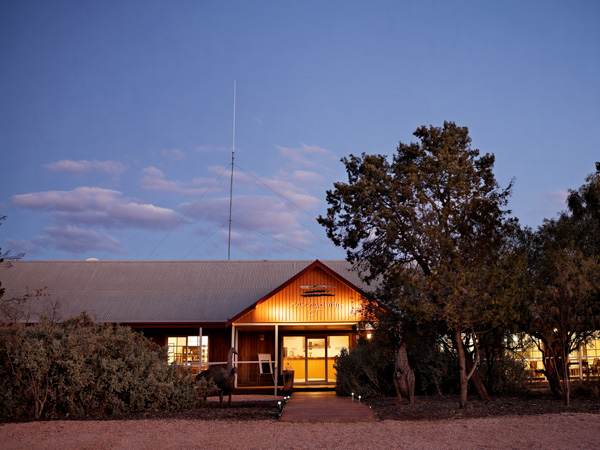
Mungo Lodge in Mungo National Park in NSW
Book a stay in one of Mungo Lodge’s cosy cabins. (Image: Destination NSW)

The Mungo Shearers’ Quarters offer rustic accommodation in the heart of the park. Stay in a cosy cabin with access to communal kitchens and bathrooms. BYO bedding.

Two kilometres out of Mungo National Park is Main Camp . Located off Arumpo Road, the campground boasts plenty of unpowered sites and includes picnic tables, barbecues and non-flush toilets. Pre-booking is not available.

Taylah Darnell
Taylah Darnell is Australian Traveller's Writer & Producer. She has been passionate about writing since she learnt to read, spending many hours either lost in the pages of books or attempting to write her own. This life-long love of words inspired her to study a Bachelor of Communication majoring in Creative Writing at the University of Technology Sydney, where she completed two editorial internships. She began her full-time career in publishing at Ocean Media before scoring her dream job with Australian Traveller. Now as Writer & Producer, Taylah passionately works across both digital platforms and print titles. When she's not wielding a red pen over magazine proofs, you can find Taylah among the aisles of a second-hand bookshop, following a good nature trail or cheering on her EPL team at 3am. While she's keen to visit places like Norway and New Zealand, her favourite place to explore will forever be her homeland.
See all articles
hero media

Where to eat, sleep and visit on Grand Pacific Drive, and beyond

The ultimate road trip begins and ends on NSW’s stunning Grand Pacific Drive.

Whales, charming villages, fine wine and stunning natural vistas: there’s a lot to love about a road trip along the Grand Pacific Drive in New South Wales. Winding from the Royal National Park through Wollongong, Shellharbour, Kiama and Shoalhaven before heading inland to the Southern Highlands, this scenic drive makes for an unforgettable road trip.

But like all great road trips, it’s not just about the drive but the stops made along the way. From incredible farm-to-plate (and grape-to-glass) dining options to unbeatable natural vistas and quaint towns with beautiful accommodation, there’s plenty to explore en route.

Shellharbour Marina
Spend time in Shellharbour Marina.

Where to eat

What is a road trip without incredible food? Whether you’re after fresh seafood, slow-cooked paddock-to-plate feasts or delicious wines, you’ll find something around every bend along Grand Pacific Drive.

Restaurant Santino is a local Wollongong secret we can’t keep quiet any longer. With a fresh take on Italian cuisine, servings are hearty and flavours are comforting. The chitarra with blue swimmer crab, garlic, chilli, parsley and crustacean oil is a crowd favourite.

Keep it local in Shellharbour with a menu all about fresh local produce at Relish on Addison . From South Coast oysters and blue swimmer crab linguine to crispy pork belly, surf and turf takes on an elevated meaning here.

Kiama’s neighbourhood wine and cocktail bar, Little Betty’s , is just as good for a tasty share plate as it is for creative cocktails. The signature Grilled Octopus with burnt honey, garlic confit and sautéed Asian greens is worth a trip on its own.

Only the best will do in Shoalhaven, where multi-award-winning Bangalay Dining uses native Australian ingredients to bring its dishes to life. Start with the Smoked trout croquette before moving on to the sautéed potato gnocchi. Don’t forget the white chocolate mousse for dessert.

Meanwhile, the Southern Highlands are full of culinary highlights. From dining on incredibly fresh, local fare (we’re talking ingredients plucked from the team’s on-site kitchen garden or sourced through local producers) at Eschalot Restaurant in Berrima to creating gin blends at Millsheds Distillery .

bangalay dining shoalhaven
Taste native flavours at Bangalay Dining.

Exploring nature

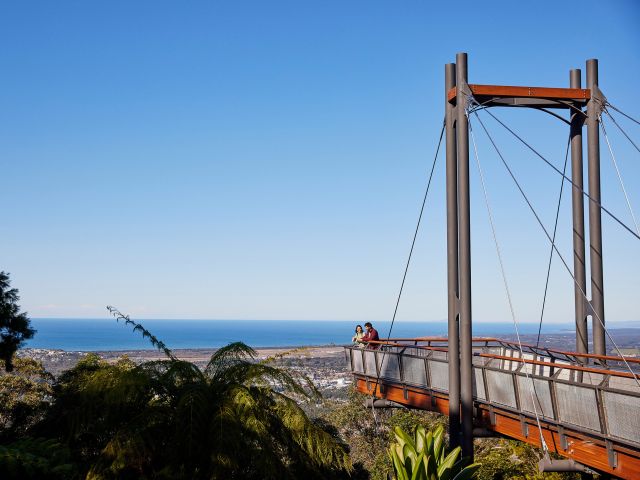
Scenery is everything when hitting the road, and Grand Pacific Drive serves it up in spades. Drivers don’t even have to leave the car to enjoy the iconic ocean views from Seacliff Bridge (but several lookouts make it easy to stop).

Seaside Kiama boasts stunning beaches and famous blowholes. But travellers can also swap ocean for rainforest when taking the Minnamurra Rainforest walk, culminating in a picturesque waterfall. Or soar overhead at Illawarra Fly Treetop Adventures .

The scenic coastal drive along Sea Cliff Bridge, Clifton.
Cruise along the stunning Grand Pacific Drive.

Between May and November, 30,000 whales make their way passed the South Coast between May and November. Spot them from the coastal shores or join a whale-watching cruise from Shellharbour Marina or Jervis Bay. Dive in with Woebegone Freedive .

Shellharbour’s Killalea Regional Park is home to a traditional bush tucker and medicine walk with Aboriginal tour group, Gumaraa . Learn Indigenous healing practices and gain a deeper appreciation for the rich heritage and wisdom of the land’s Traditional Owners.

Wollongong is the perfect place for hikers, with the 6.5-kilometre Wodi Wodi track serving up views, settler history and a variety of landscapes in one loop. If you prefer, skip the walk and pull up at Bald Hill Lookout for expansive views south towards Wollongong (and a hang-glider or two).

For something truly unique, join the Highland Cow experience at The Swallow’s Nest in the Southern Highlands. In a brand-new offering, get a taste of farm life and help groom and feed these gorgeous creatures.

kiama coast walk people with dog
Wander the Kiama Coast Walk.

Unique experiences

No need to choose between an adrenaline rush or a culture fix, Grand Pacific Drive serves up both.

Soar into aviation history at Shellharbour’s HARS Aviation Museum .  Tour the museum, then join a guided walk onto the wing of the record-breaking Qantas Boeing 747 and see the significant historic aircraft up close.

If ever there was a place to skydive, it’s in Wollongong. Dive from 15,000 feet (tandem, of course) with Sky Dive Wollongong and see the coastal beauty of this region from above.

Shoalhaven’s Bundanon Art Museum has to be one of the most unique offerings in the country. The legacy of artist Arthur Boyd and more than just a gallery, find eco-accommodation, fine dining, award-winning architecture and community here.

Kiama’s Crooked River Estate is about more than just delicious wine.  Grab a picnic blanket and enjoy casual food and drinks with live music at Kick Back Fridays , every week.

Between June and August, the Southern Highlands’ Robertson attracts novice truffle hunters. Join the hunt at family-owned and operated Robertson Truffles (alternatively, you can order truffle treats online, if your sense of adventure isn’t up for it).

Freshly dug truffles at Terra Preta Truffles, Braidwood.
Discover hidden gems beneath the soil in the Southern Highlands. (Image: Destination NSW)

Where to stay

Road trips are the ultimate promotion for slow travel, encouraging visitors to take their time, enjoy the journey and stop along the way to really immerse themselves in local towns.

Find history and elegance at Berida Hotel in the Southern Highlands. Intimately set amongst gardens, but still close to the main street of Bowral, this 1920s private residence turned boutique hotel is the perfect stay.

Stay in one of Barranca’s private villas with views of rolling farmland overlooking the dramatic escarpment at Kangaroo Valley or be surrounded by native bushland (a short walk from the beach) in Jervis Bay.

Speaking of beachside escapes, Headlands Hotel Austinmer Beach delivers unrivalled access to Wollongong’s beaches. These serviced apartments enjoy coastal views from spacious balconies.

For something completely different again, check in at Cicada Luxury Camping . Stay in safari-style or large bell tents, each with a private fire pit and top-notch kitchen facilities. Outside, enjoy spectacular countryside views.

Cicada Luxury Camping
Unwind at Cicada Luxury Camping. (Image: DNSW)

Discover more and plan your ultimate road trip along the Grand Pacific Drive and beyond at grandpacificdrive.com.au/grand.