October is the peak time to view this astronomical event.
2025 has been a dazzling year of astronomical events. The planetary parade alongside a host of meteor showers like the Perseid has delighted stargazers, perfectly in line with the growing astrotourism trend. The astronomical events are set to continue this year, with the Orionid meteor shower set to peak later this month.
October 2025 is set to be a particularly good year for viewing the Orionid meteor shower, as it lines up with a new moon, which means darker skies and therefore better visibility from Earth.
What are comets and meteor showers?
2025 has been a dazzling year for watching astronomical events. (Image: Getty Images / Adventure_Photo)
World-renowned astrophotographer and educator Adam Block from the Steward Observatory, part of the Department of Astronomy at the University of Arizona, explains that comets are remnants from the early part of the solar system, made from both water ice and other frozen gases.
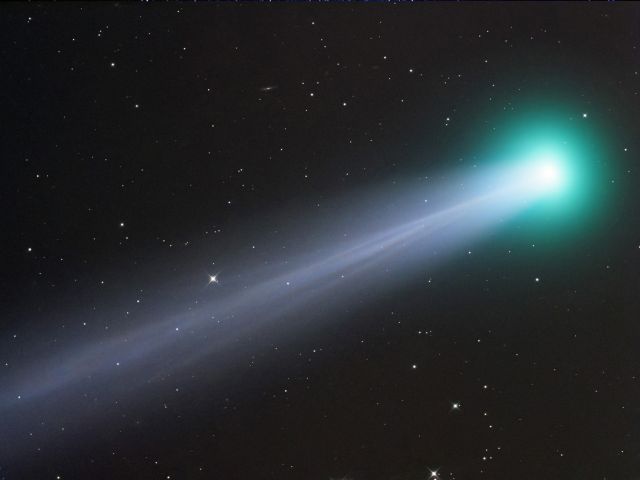
“Basically, you have a ball of rock with a trail of gas coming out behind it. It’s the sun that controls all of that; the solar wind blows the gas back," he tells Australian Traveller. “But it’s not just gas; there are also particles of dust released and liberated from the surface of this dirty iceball."
That gas and dust particles released from the surface form a tail behind the comet, creating a trail in space.
“If the Earth runs through that stream of dust, those dust particles will enter the Earth’s atmosphere at around 30 kilometres per second, so they literally burn up in the upper atmosphere," he says.
Simply put, the resulting light trail is the meteor.
The Orionids and Halley’s comet
A comet is an icy, dusty celestial body that orbits the sun. (Image: Adam Block)
Halley’s Comet is one of the most famous comets. Last seen in 1986, it appears roughly every 75 years, with its expected return in 2061. Even though Halley’s Comet isn’t visible in the sky right now, the Orionids are one of the two meteor showers that it creates.
When is the best time to see the Orionids?
The Orionids meteor shower occurs from 26 September to November.
According to Adam, the best time to view the Orionids is after midnight, when the Earth is turned and facing the same direction as we are travelling through space, and it directly encounters the meteoroid stream.
October 20-21 will offer the best viewing opportunities because of the new moon, which offers extra dark skies. Adam also advises heading away from city lights.
How to see the Orionid meteor shower
The good news, according to Adam, is that you don’t need a telescope or optical aid to witness the event; you just need “a dark sky, a clear view and some patience."
For the Orionids, the average is roughly 20 meteors per hour. But given you can’t see the whole sky at once, Adam says you’re doing well if you see a meteor once every five or 10 minutes.
And if you’re lucky, he says you might even see a fireball, also known as a bolide.
Rachael Thompson is Australian Traveller's Evergreen Editor and a self-proclaimed cheese and Chablis connoisseur. In her role, she creates and manages online content that remains relevant and valuable over time. With a background in publishing and e-commerce in both interior design and travel, Rachael is dedicated to curating engaging content that informs and inspires. She began her career at Belle magazine, then went on to become Senior Content Producer at Homes to Love focusing on Australian House & Garden and Belle, followed by Editor at Bed Threads. Her work has also appeared in Qantas Travel Insider. When she's not writing, editing, or optimising content, Rachael enjoys exploring the city's newest restaurants, bars, and hotels. Next on her Aussie travel wish list are Uluṟu-Kata Tjuṯa National Park and Lord Howe Island.
A new wave of retreats, hotels, glamping sites and more is encouraging visitors to savour their time spent along the Great Ocean Road.
Long holding a place as one of Australia’s most rewarding drives, cliffs, curves and shifting coastal light continue to draw travellers to Victoria’s coastline year after year. What has evolved more quietly is the range of new accommodation along the Great Ocean Road to add new dimensions to the drive.
Rather than competing for attention, these stays are shaped by their settings. They sit beside rivers, among vines, on the edge of lakes and close to town centres where local life unfolds at an unhurried pace. Together, they point to a way of travelling the Great Ocean Road that values time spent in place, as much as distance covered.
1. The Monty, Anglesea
Settle into The Monty’s unique style.
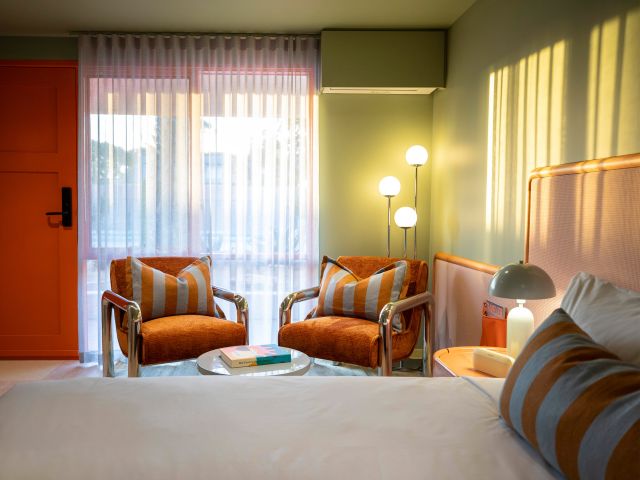
Anglesea has always appealed to travellers drawn to a quieter stretch of coast, where surf culture, bushland and river scenery blend into one. The Monty complements that character with a recent rebrand and refresh with traditional beach road trip nostalgia in mind. Mid-century retro decor means rooms are contemporary and funky, without being over-styled.
A highlight of the stay is Nina Cantina, the on-site Mexican restaurant overlooking the Anglesea River. Opening in 2026, it will undoubtedly become a popular gathering point, bringing together locals, day trippers and overnight guests. Watch the river flow while tucking into plates of tacos, before enjoying a digestion swim in The Monty’s pool.
Mornings in Anglesea often begin quietly. Kangaroos are a familiar sight on the nearby golf course, and walking tracks wind through heathland that reflects the natural landscape of the Surf Coast. From here, the road south feels like a continuation rather than a departure, easing travellers into the next stretch of the journey.
2. Basalt Retreats, Port Fairy
Discover this new adults-only retreat.
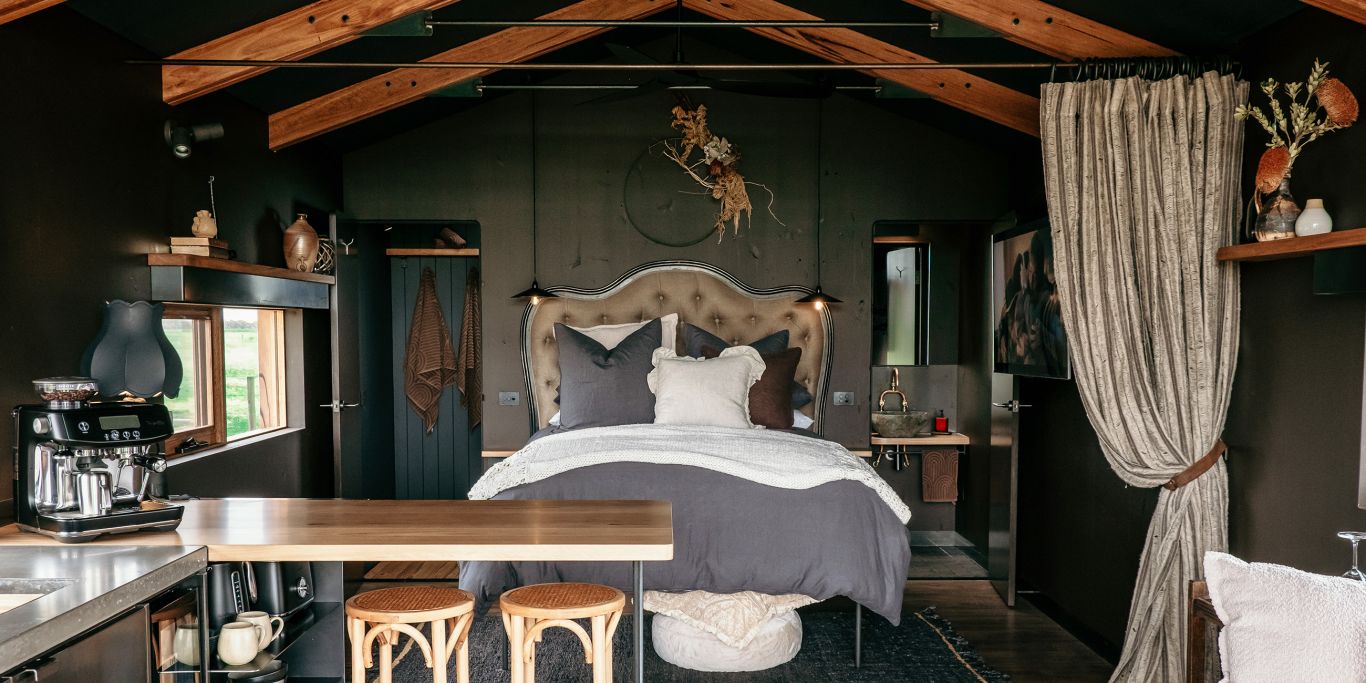
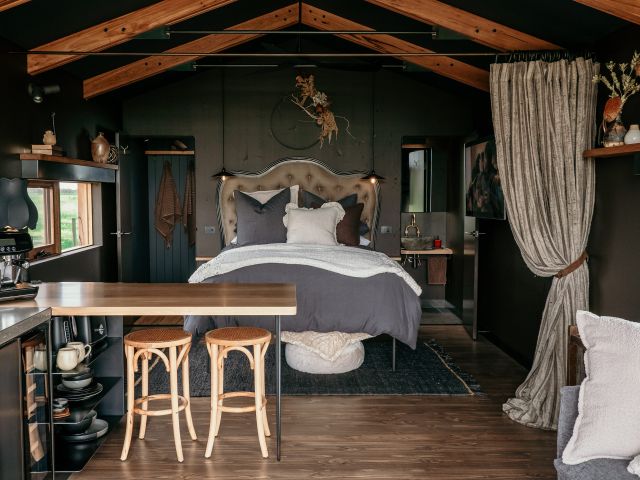
Near Port Fairy, Basalt Retreats is an adults-only delight set among a 24-year-old vineyard at Basalt Wines . The accommodation is a mixture of luxury and linens (and ultra comfy beds), allowing the long stretches of grapes to take centre stage. As the sun sets, Basalt Retreats settles into stillness. With minimal light pollution, the night sky becomes part of the experience, and star-searchers will delight in the uninterrupted views of our vast universe.
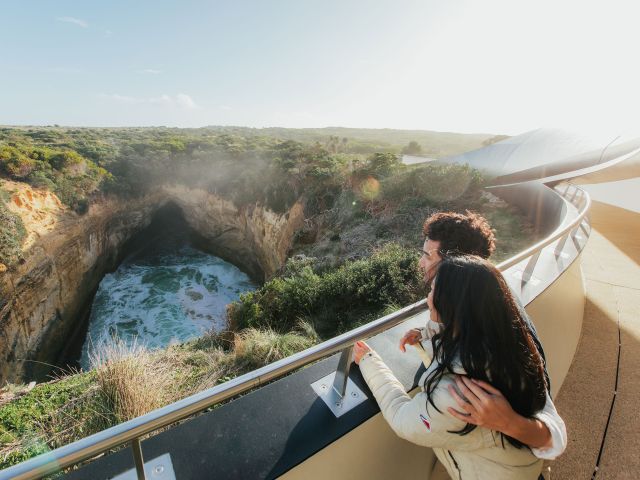
See Poombeeyt Koontapool from the lookout.
Staying along the Great Ocean Road western region gives you en route access to coastal landmarks. A visit to Poombeeyt Koontapool at Loch Ard Gorge is a must for those fascinated by natural blowholes, with enough walking trails to tucker out the most seasoned hiker.
The Poorpa Yanyeen Meereeng Trail between Timboon and Port Campbell reveals how wetlands, farmland and coastline connect across the region, best appreciated on foot or by bike.
3. Lake Colac Holiday Park, Colac
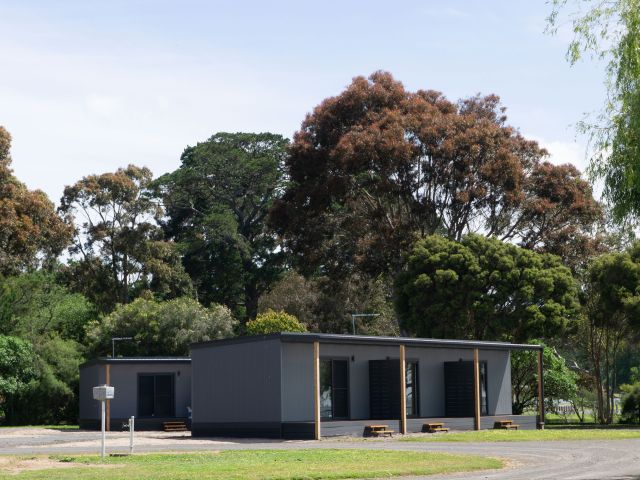
Book into a cabin at Lake Colac Holiday Park.
Lake Colac Holiday Park introduces new cabin accommodation set along the edge of a broad volcanic lake. The cabins are modern and light-filled, designed to make the most of the water views and open skies.
Lake Colac plays an important role in local life, hosting community events and everyday rituals alike. Staying here offers insight into the agricultural heart of the Great Ocean Road region, where the pace is shaped by seasons rather than sightseeing schedules.
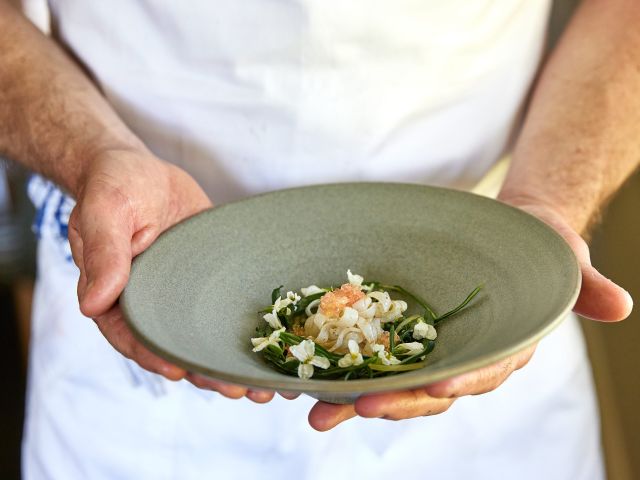
Have a delicious lunch, then join a farm tour at Brae Restaurant. (Image: Visit Vic)
Colac’s central location places visitors within reach of standout regional experiences. Otways Distillery’s Birregurra cellar door reflects the surrounding forest in its approach to spirits. While Brae Restaurant’s guided farm and kitchen garden tours offer a closer look at the land that underpins its acclaimed dining. Together, they highlight the strong connection between produce, place and people.
4. Glamping tents, Apollo Bay Recreation Reserve
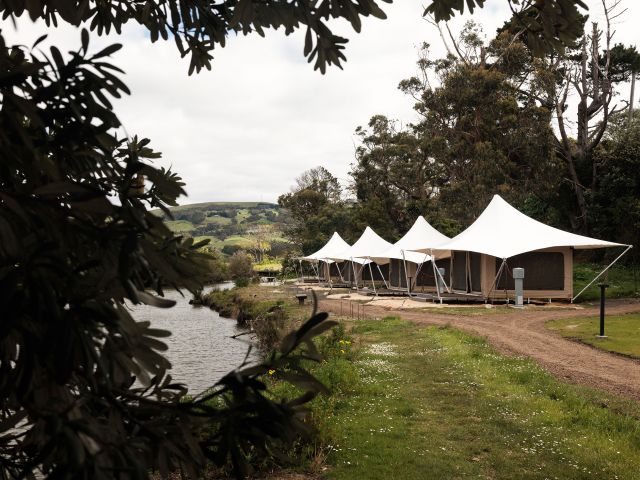
Take a breather in Apollo Bay with brand new glamping tents.
Back on the coast, Apollo Bay has always been known to be a natural place to take a breather, sitting roughly at the Great Ocean Road’s midway point. The brand-spanking new glamping tents at the Apollo Bay Recreation Reserve offer comfortable accommodation that remains closely connected to the outdoors. With ensuite bathrooms and thoughtfully designed interiors, the cabin-tent hybrids offer enough privacy and luxuries to make the trip feel more luxurious than your standard camping affair.
Set near the river and within walking distance of the town centre, the location allows guests to move easily between beach walks, forest drives and relaxed meals.
A session at The Corner Sauna fits naturally into a stay here. The wood-fired sauna has become part of Apollo Bay’s way of life, offering warmth and restoration after time spent in the elements (also known as a frolic at the beach).
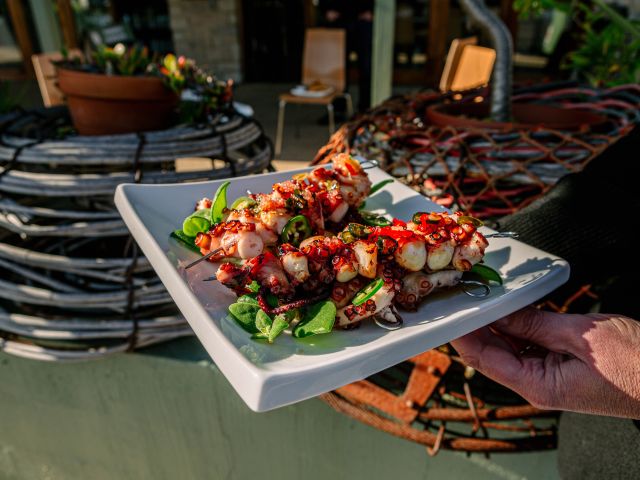
Enjoy fresh seafood at Apollo Bay Fishermen’s Co-op.
Apollo Bay has enough to entertain and dazzle travellers more than your average town. Graze on fresh seafood at local cafes – like Graze or Apollo Bay Fishermen’s Co-op – before venturing to nearby waterfalls. Spend hours kayaking among real-life seals, try your hand at surf lessons taught by understanding and patient guides, or simply spend your days reading a book while the surf crashes in front of you.
Together, these new accommodation openings highlight the Great Ocean Road’s continued evolution. With more places that invite travellers to slow down and stay a little longer, the journey becomes less about rushing between landmarks and more about engaging with the unique towns along the way.