Planets align: The celestial show over Australia you can’t miss

hero media
Six planets will be visible in a rare planetary alignment.

This week, Australians will have the chance to witness a rare celestial event: a planetary parade featuring Venus, Mars, Jupiter, Saturn, Uranus and Neptune. These six planets will align in a dazzling display across the night sky, offering stargazers a spectacular start to 2025.

What is a planetary parade?

A planetary alignment, or a
Six planets will be visible in a rare planetary alignment. (Image: Getty Images/buradaki)

A planetary parade occurs when multiple planets in our solar system align closely along the same region of the sky, appearing near each other from our perspective on Earth. While the planets won’t be in a perfectly straight line, they will appear clustered together, creating a visually striking phenomenon for observers on Earth.

This planetary alignment in 2025 will feature four of the brightest planets visible to the naked eye: Mars, Jupiter, Saturn and Venus. Uranus and Neptune will also be visible, just not without a pair of binoculars or telescopes and a keen eye to spot them.

How to see it

The planetary parade will reach its peak visibility on the evening of Tuesday 21 January and the following few nights. Weather permitting, the best time to view the alignment is shortly after sunset, as the planets will appear low on the western horizon.

Astronomers recommend heading out at dusk to catch Venus and Saturn before they dip below the horizon. Mars and Jupiter will remain visible for longer, with Jupiter shining especially bright as the largest planet in the solar system.

To see the planetary parade, face west and look for the brightest objects in the sky. Venus will be the easiest to spot near the horizon, glowing with its characteristic bright white light. Above Venus, you’ll find Saturn, while Jupiter sits in the north and Mars in the north-east. Neptune and Uranus sit between Venus and Jupiter, but they are much dimmer, so again, you will need binoculars or a telescope to see them.

Need tips, more detail or itinerary ideas tailored to you? Ask AT.

AI Prompt

Where to see it
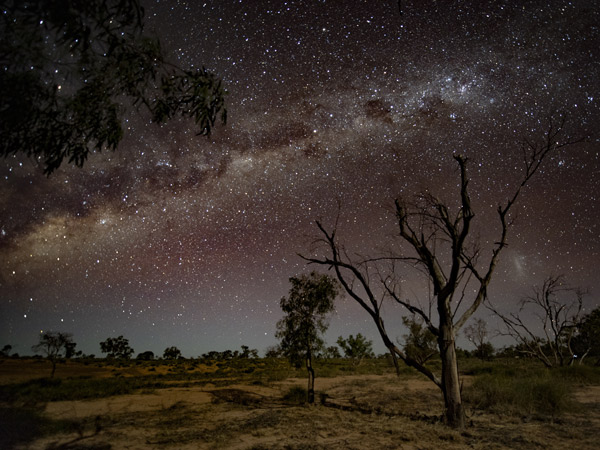
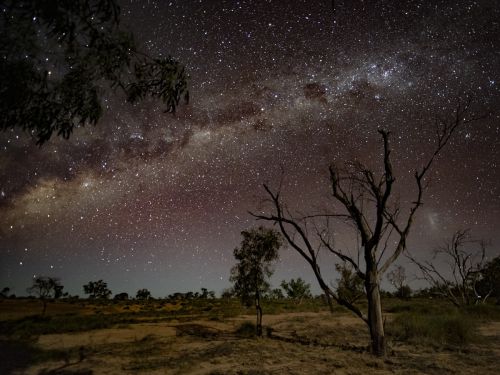
Seen is the Milky Way stitching over the sky in outback Queensland
Outback Queensland is a great spot to watch the planetary alignment. (Image: Getty Images/Ian Hitchcock)

For those in major cities, light pollution may make it harder to see the full display. To get the best view, head to a darker location away from city lights. National parks, beaches or rural areas provide ideal conditions for stargazing.

Warrumbungle National Park in Central West NSW is Australia’s first (and only) Dark Sky Park, so if you’re able to make the trip there, it will be well worth it.

The country also has a number of other dark sky locations such as the Australian Age of Dinosaurs Museum of Natural History in Winton, Queensland, the Arkaroola Wilderness Sanctuary in the Flinders Ranges of Outback South Australia and Carrickalinga on the Fleurieu Peninsula in South Australia which became Australia’s first International Dark Sky Community in May last year.

Tips for viewing

  1. Timing is key: The planets will appear shortly after sunset, so plan to head outside just as the sky begins to darken.
  2. Bring binoculars: Only four of the six planets are visible to the naked eye, but binoculars or a telescope can enhance the view of the other planets too, especially for spotting Saturn’s rings or Jupiter’s moons.
  3. Check the weather: Clear skies are essential for optimal viewing, so check the forecast for your area before heading out.

Events like the planetary parade are a reminder of the beauty and scale of our solar system. These alignments don’t happen often, so they’re worth taking the time to enjoy.

Whether you’re a seasoned astronomer or a casual stargazer, this celestial event promises to be a breathtaking sight. So grab a blanket, find a dark spot and let the wonders of the night sky unfold before your eyes.

Emily Murphy
Emily Murphy is Australian Traveller's Email & Social Editor, and in her time at the company she has been instrumental in shaping its social media and email presence, and crafting compelling narratives that inspire others to explore Australia's vast landscapes. Her previous role was a journalist at Prime Creative Media and before that she was freelancing in publishing, content creation and digital marketing. When she's not creating scroll-stopping travel content, Em is a devoted 'bun mum' and enjoys spending her spare time by the sea, reading, binge-watching a good TV show and exploring Sydney's vibrant dining scene. Next on her Aussie travel wish list? Tasmania and The Kimberley.
View profile and articles
hero media

8 incredible hikes just outside of Melbourne

Just over an hour from Melbourne, spectacular walking and hiking trails encompass ancient landscapes, forested ridgelines and volcanic peaks.

Just a short drive from the city, the urban sprawl gives way to rolling hills, mineral springs, and lush forests that will have you feeling like you’re in the bucolic countryside of France. Encompassing Daylesford, the Macedon Ranges, Castlemaine and the Central Goldfields, this pocket of Victoria is a region where nature, art, and wellness intertwine. Heritage towns hum with creativity, good food and wine, and welcoming locals. While Daylesford hikes, and those nearby, offer the chance to take a pause and reconnect with nature.

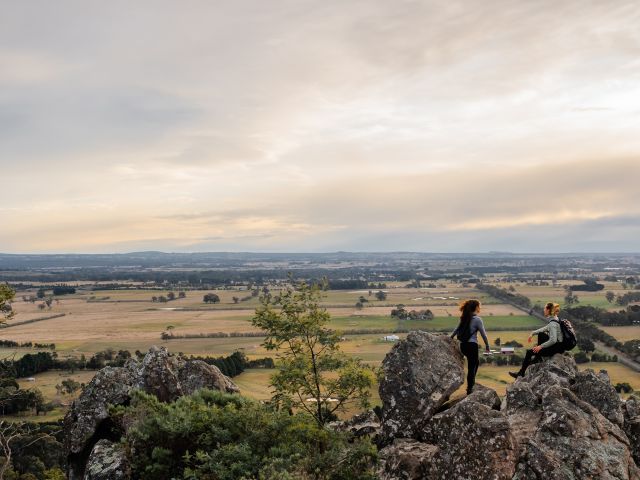
1. Hanging Rock Summit Walk

Hanging Rock Summit Walk
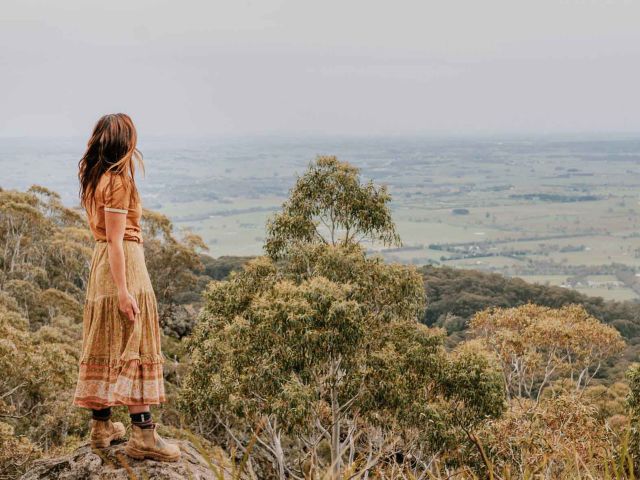
Take in views across the Macedon Ranges.

Etched into folklore, few places in Australia carry as much mystique as Hanging Rock. Rising dramatically from the plains near Woodend, this volcanic mamelon offers a beautiful nature walk. The walk begins at a gentle pace, weaving through shaded woodland before it gets a little steeper as the path starts to climb and twist to the summit. From here, you’ll have views that stretch across the Macedon Ranges. The walk is roughly 1.8 kilometres return, but the real reward lies in standing among the weathered boulders, feeling the age and energy of the earth beneath your feet.

2. Macedon Ranges Walking Trail

Macedon Ranges Walking Trail camel's hump lookout
Walk to Camel’s Hump. (Image: Clair Derwort)

The Macedon Ranges Walking Trail traverses around 19 kilometres of forest and mountain landscapes. The full trail is a six-hour circuit, with most of the walk being a grade three; however, you don’t have to tackle it all at once. There are shorter walks that will take you through the tall mountain ash forests, to tranquil picnic areas, and sweeping views from Camels Hump and the Memorial Cross. The best times of year to head out are autumn, when the mountain turns into a tapestry of crimson and gold, and spring, when wildflowers brighten the trail.

3. Mount Alexander Traverse

Mount Alexander Traverse
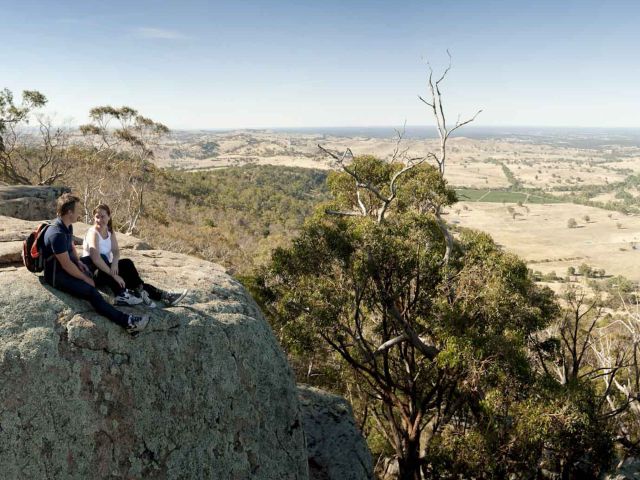
Take in the serenity.

Towering above the goldfields near Castlemaine, Mount Alexander is a granite giant that offers some great bushwalking trails. The Mount Alexander Traverse winds along the mountain’s rocky spine through dry eucalypt forest that opens up in sections to reveal beautiful panoramas across Loddon Valley and all the way to the distant Grampians. Once a site of ancient volcanic activity (and later a gathering place for the Dja Dja Wurrung people), the mountain’s granite tors are now quiet and create a beautiful, serene atmosphere for a moment of reflection while walking.

4. Murmuring Walk

Murmuring Walk daylesford hikes
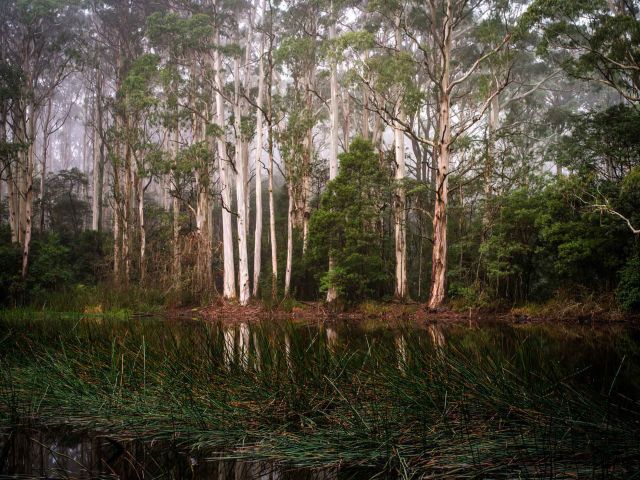
Circle the picturesque Sanatorium Lake.

Located an easy drive from Daylesford, Murmuring Walk offers something a little different. Circling Sanatorium Lake, this free audio-guided walk aims to immerse you in the rhythms of Dja Dja Wurrung, Taungurung and Wurundjeri Woi Wurrung Country by blending the sounds of nature with a multi-layered soundtrack. There are two routes to explore while you listen: a shorter loop around the lake itself and a longer circuit that extends deeper into the woodland.

5. La Gerche Forest Walk

La Gerche Forest Walk
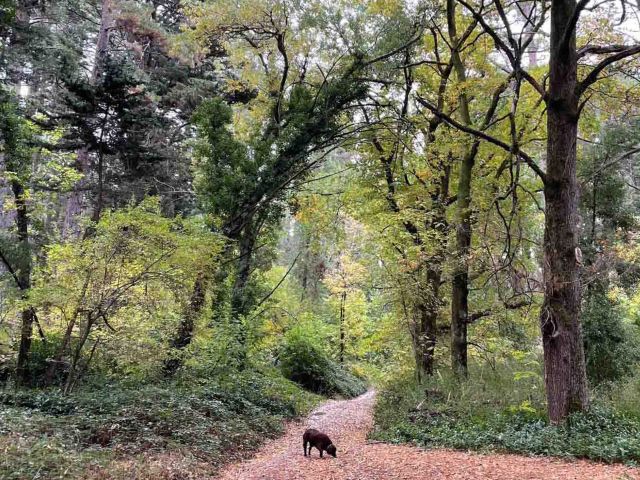
Walk into history on the La Gerche Forest trail.

Located in Creswick, the La Gerche Forest Walk honours the legacy of John La Gerche, a 19th-century forester who championed the regeneration of the then gold-rush-ravaged land. Today, over 100 years later, his replanting efforts have grown into a living cathedral of towering pines, oaks, and native gums. As you meander along the 2.2-kilometre circuit, you’ll find interpretive panels along the way that help tell the story of La Gerche’s vision, so you can learn as you wander.

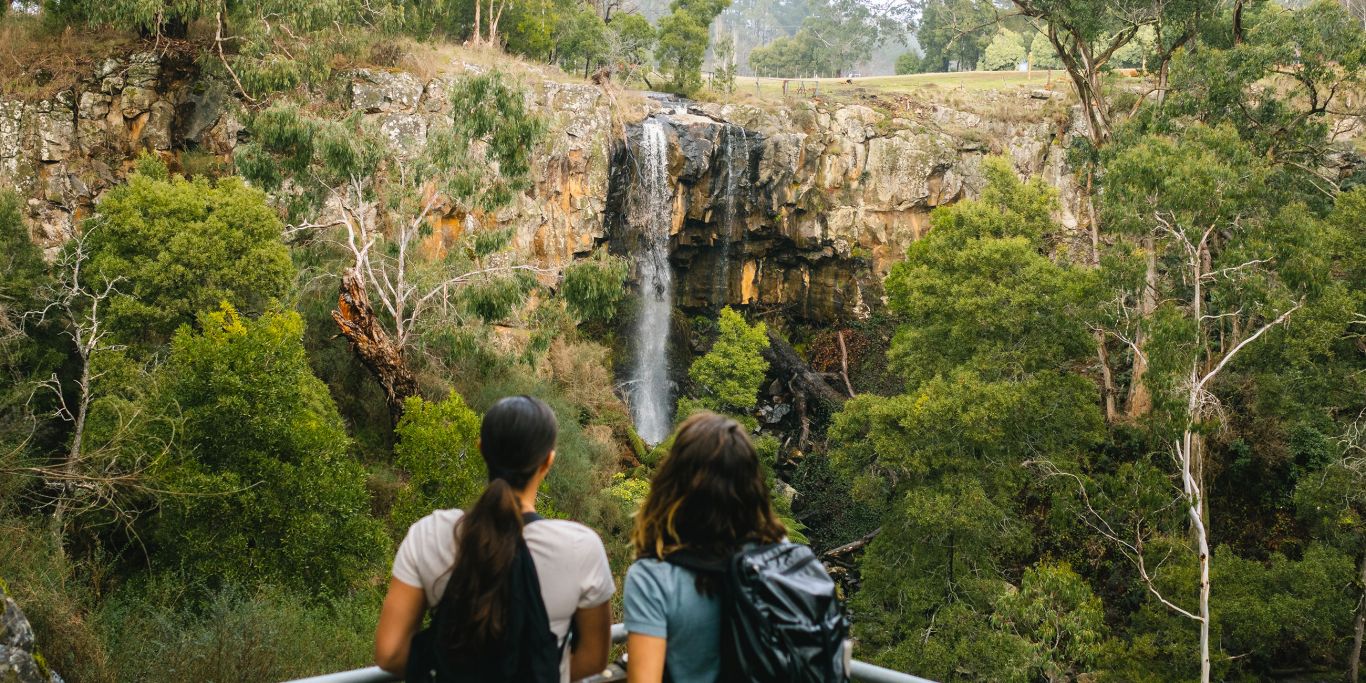
6. Sailors Falls Loop

Sailors Falls Loop
See these spectacular falls. (Image: Visit Victoria)

Just outside Daylesford, Sailors Falls tumbles through a fern-lined gorge, fed by mineral springs. Thought to be named after the sailors who jumped ship to seek gold in the area during the 1850s gold rush, the loop walk begins at the car park and descends through a cool, shaded gully to the base of the falls. From here, you’ll make the climb back via the mineral springs. It’s a short but enchanting walk – about 1.5 kilometres in total, so make a day of it by packing a picnic to sit by the springs; you’ll feel worlds away from the city.

7. Paddys Ranges Loop Walk

Further north, the Paddys Ranges State Park loop reveals a different side of Victoria’s Heartland – dry forest, golden light and hints of a gold-rush past. This protected reserve is a stronghold of box-ironbark woodland, providing vital refuge for endangered species. In spring, the forest floor is awash with the colour of over 230 species of wildflowers, so a springtime walk is a must-do. As you walk the 4.5-kilometre loop trail, keep an eye out for remnants of old mine shafts and rusted relics from the prospectors who once sought their fortunes here.

8. Mount Franklin Summit Walk

Mount Franklin Summit Walk
Take in forests and waterfalls along the way to the top of Mount Franklin.

An extinct volcano turned picnic ground, Mount Franklin (known as Lalgambook to the Dja Dja Wurrung people) is one of the region’s quiet marvels. The summit walk follows a narrow, winding path through native forest to the crater’s rim, where you’ll get glimpses of farmland and forest below. It’s a moderate climb – just over an hour return, so it can easily be done if you’re camping in the surrounding reserve for a weekend nature retreat.

The trails of Victoria’s Heartland offer a chance to reconnect with the landscape, local history and yourself. Start planning your next adventure at daylesfordmacedonlife.com.au.