Discover the 11 best seaside towns for mouth-watering seafood

hero media
From rustic oyster shacks to smart casual beachside restaurants specialising in pipis, these 11 seaside towns give local seafood the royal treatment it deserves.

Home to an encyclopaedic range of fresh seafood envied worldwide, Australia’s coastline is the gift that keeps on giving. And while our state capitals are typically lavished with attention for their creative treatment of seafood, seaside towns across the country have slowly become destination dining spots in their own right, enabling diners to devour the freshest oysters, octopus, mussels, abalone and prawns you can get. Here are 11 of the best.

1. Apollo Bay, Vic
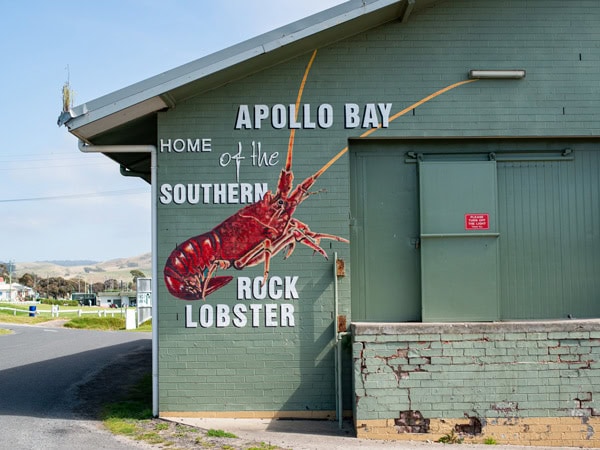
the exterior of al fresco seafood feast at the Apollo Bay Fishermen’s Co-op
Enjoy an al fresco seafood feast at the Apollo Bay Fishermen’s Co-op. (Image: Visit Victoria)

Home to a cluster of cute cafes, boutiques and cosy pubs, this little seaside village is a prime pitstop for those tackling the Great Ocean Road.

It also just so happens to be the crayfish capital of the state and a haven for those seeking wildly fresh seafood.

The annual Apollo Bay Seafood Festival  is a major drawcard, but you’ll find a seafood bounty here year-round. Sample Apollo Bay Bakery’s  famous scallop pie, stuffed with whole Bass Strait scallops and roe. Unwrap a portion of Apollo Bay Seafood Cafe’s  fish and chips with your toes in the sand of the village’s eponymous beach.

Wander to the edge of town for sunset and an al fresco seafood feast at the Apollo Bay Fishermen’s Co-op . Or go upscale and out of town to visit Chris’s Beacon Point Restaurant , known for its seafood-leaning menu and beautiful views.

2. St Helens, Tas
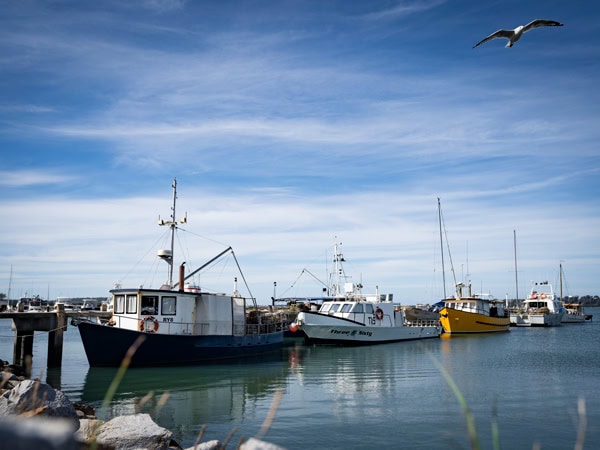
boats docked at Georges Bay, St Helens
St Helens is a seafood powerhouse. (Image: Flow Mountain Bike)

The state’s saltwater game-fishing capital and an area known for its crays, St Helens in North East Tasmania, is a seafood powerhouse, not least because it boasts a wild array of dining options.

From humble waterfront fish punts where you can purchase fish freshly plucked from the ocean, or enjoy hot salty chips and battered fish, through to fine dining French restaurants  that capitalise on the rich local oceanic pickings. Or cast your own line on a fishing charter .

Sea urchin is also commercially harvested in these parts, but it can be tricky to locate.

3. Portarlington, Vic
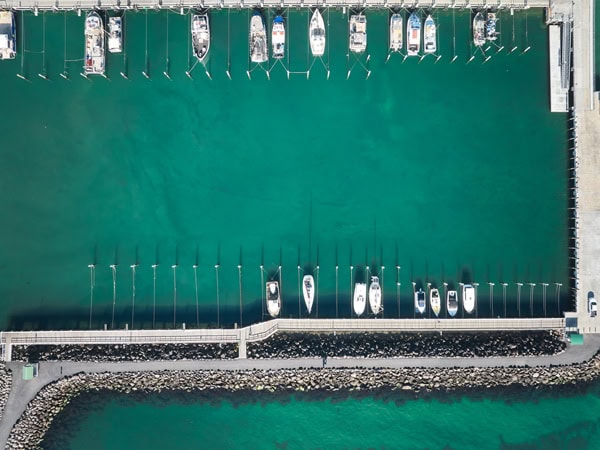
an aerial view of the Portarlington Pier
The seaside town of Portarlington is a haven for seafood. (Image: Visit Victoria)

The beautiful Bellarine is often overlooked in favour of its more swanky wine country cousin, the Mornington, which sits on the other side of Port Phillip Bay. But here you can expect the same alluring mix of hotels, restaurants and cellar doors, in addition to a thriving seafood industry.

In particular, Portarlington is known as the mussel capital of Victoria, if not the country, harvesting 60 per cent of Australia’s mussels. Gorge on these plump, sweet molluscs at rustic foreshore cafe The Little Mussel ; pick up a couple of freshly farmed kilos to take home and lavish with butter, garlic and white wine from pier pop-up Mr Mussel ; or head straight to the source with local farmer Lance and harvest (then devour) some for yourself.

Come January, the town celebrates these little bivalves with its annual Portarlington Mussel Festival .

4. Port Lincoln, SA
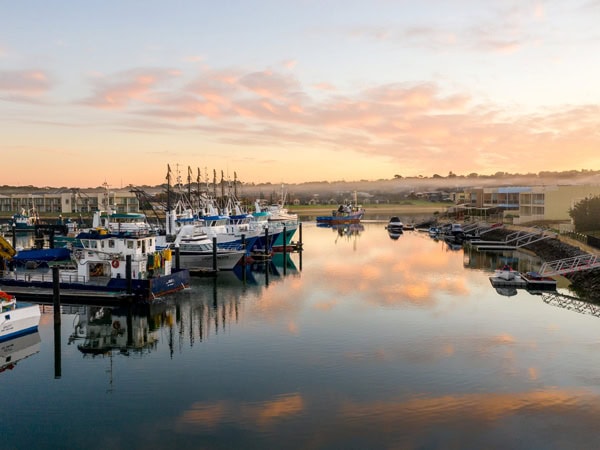
the Port Lincoln marina at sunset
Port Lincoln is known as the seafood capital of Australia. (Image: Isaac Forman)

Okay, technically speaking, it’s not a town, but it would be practically sacrilegious to pay homage to Australia’s best seafood spots without naming Port Lincoln.

Located on the biggest natural harbour in the country, and home to the largest commercial fishing fleet in the southern hemisphere, it’s known as the seafood capital of Australia.

In fact, the entire Eyre Peninsula has been referenced as Australia’s so-called ‘seafood frontier’ and is a dreamy little spot for a seafood safari.

The range of local catch here is huge, with everything from bluefin tuna to abalone, sand crabs, scallops, octopus, kingfish, sardines and more, sourced from the cool depths of Boston Bay.

Savour freshly shucked oysters and fish dressed up in every which way – from curries to risotto to a simple pan-sear – at Fumo 28 . Demolish a seafood platter at Del Giorno’s . Or experience true ocean-to-plate dining at The Fresh Fish Place’s  in-house eatery.

5. Yamba, NSW
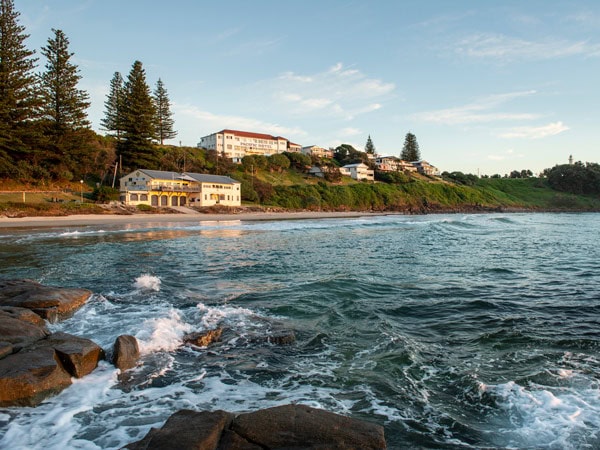
sunrise at Yamba Beach, NSW
Cruisy coastal vibes are one of Yamba’s main drawcards. (Image: Destination NSW)

This unassuming little town on the NSW north coast has long drawn keen surfers and in-the-know holidaymakers for its beautiful beaches and cruisy coastal vibes. Yet, perhaps its biggest draw is hidden in plain sight.

Part of the most productive fishing region in the state, the Clarence Valley, as well as NSW’s largest fishermen’s co-op , a trip to Yamba is a seafood lover’s dream.

Highlights include octopus, of which Yamba is the biggest producer on the East Coast, and the famous local Yamba king prawns.

But you can also find a whole host of other seafood here, from ocean school whiting to blue spotted flathead, Balmain bugs and the sweet Clarence River school prawns.

Keen anglers will have ample opportunity to land their own catch, whether deep-sea fishing or casting off from the beach or estuary. Or take the more relaxing route to a fish supper at one of the town’s stellar local restaurants.

6. Geraldton, WA
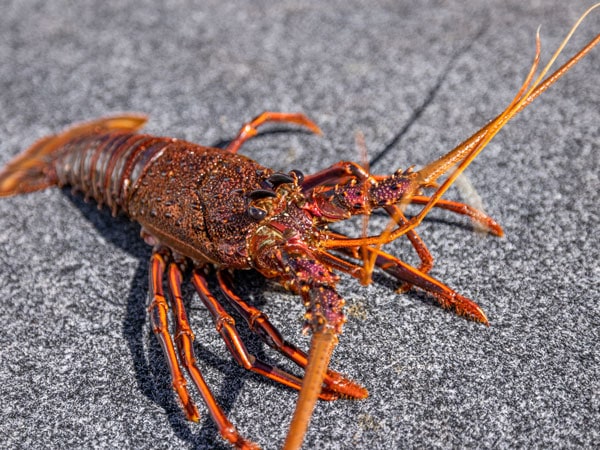
a rock lobster in Geraldton, WA
Geraldton is rich in rock lobsters. (Image: Tourism Western Australia)

A rising star in Western Australia’s tourism scene, in the belly of the state’s midwest, Geraldton still lies a touch under the radar. But its triple threat of beautiful beaches, wildly fresh seafood and rich Aboriginal culture has earned it a rightful place as one to watch.

Western rock lobster is prized in these parts, and the Geraldton Fishermen’s Co-operative (GFC) is the largest processor and exporter of rock lobsters in the world.

And 60 kilometres west of Geraldton lies an archipelago whose name graces countless fine dining restaurant menus across the country – the Abrolhos Islands.

These pristine isles harbour an abundant supply of wild saucer scallops, known in the industry as some of the chunkiest, firmest and sweetest that exist.

Buy your rock lobster, octopus and pink snapper straight off the boat at Brolos Fresh , on the harbour, or head to neighbour Barnacles on the Wharf for freshly cooked fish and chips or the signature lobster roll.

7. Port Douglas, Qld
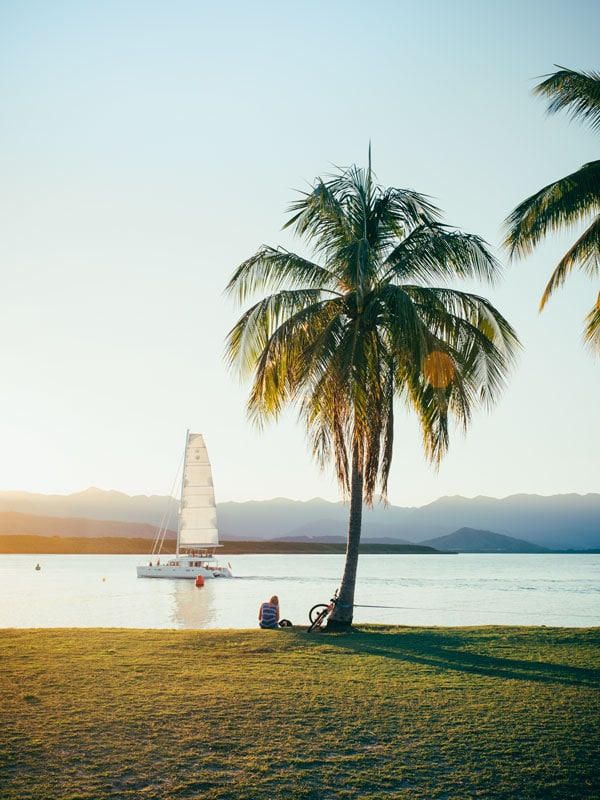
a beach in Port Douglas, QLD
Port Douglas packs a delicious punch. (Image: Tourism and Events Queensland)

Don’t be deceived by Port Douglas’ small size. This tiny tropical town packs a delicious punch when it comes to impressive food and wine experiences. And beautifully prepared seafood is where Port Douglas really shines.

Salsa  is a firm local favourite, and Nautilus , with its secluded deck enveloped by lush greenery and seafood-forward degustation menu, is another frontrunner. Melaleuca , meanwhile, is the place to go for Asian-inspired seafood dishes and a modern indoor-outdoor dining space.

Mud crabs are something of a local delicacy, in their plumpest prime from August through summer. You’ll find them on many local restaurant menus, but Wrasse & Roe  is known for doing a mean wok-tossed, chilli-laced rendition.

More intrepid travellers can head out and comb the coastline for muddies themselves, or try spearfishing under the expert guidance of Kuku Yalanji elders .

8. Mooloolaba, Qld
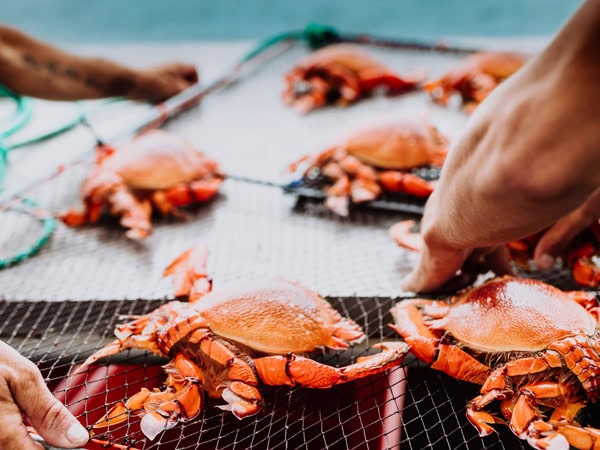
spanner crabs in Mooloolaba
Spanner crabs are harvested in the pristine waters of Mooloolaba. (Image: Tourism and Events Queensland)

A holiday on the Sunny Coast promises the holy trinity of surefire summer holidays: Tiffany Blue waters lapped by white sands, warmly welcoming towns and a glut of great local seafood.

While you can find all kinds of crustaceans and fish (think swordfish, calamari, goldband snapper, oysters and Balmain bugs) on this iconic stretch of Aussie coastline, the jewel in this town’s crown is, without doubt, the Mooloolaba king prawn. Such is the pride in this locally sourced prawn that in 2008, locals gave these crustaceans a rebrand, changing the name from ‘eastern king prawn’.

Feast on plate loads of these juicy, moreish and delicately sweet fruits of the sea at perennially popular haunt Prawn Star . Putting a whole new spin on the term ‘trawler to table’, this wharf-based eatery features a pared-back menu, serving up cold seafood platters (prawns, oyster, crayfish, bugs and sashimi salmon only) from the seats of its permanently moored floating restaurant, housed within a bespoke timber fishing trawler.

Mooloolaba is graced with plenty of top-notch dining options, many of which feature seafood heavily.

9. Stanley, Tas
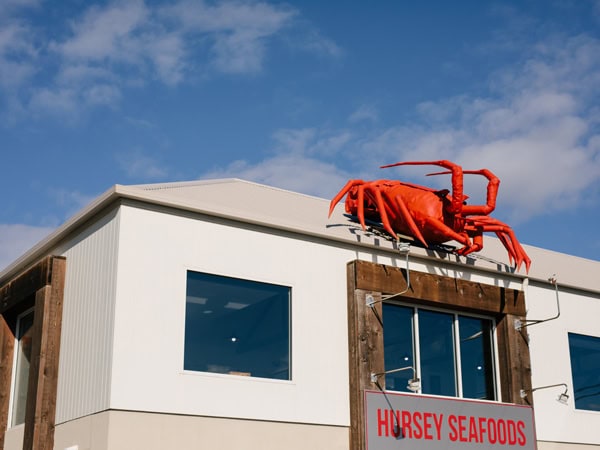
the Hursey Seafoods in Tas
Order freshly caught crayfish at Hursey Seafoods. (Image: Lusy Productions)

With its trademark cool, clean air and waters, it’s practically a given that Tassie would offer gold-standard seafood to boot.

A state that lives and breathes the ‘locally sourced’ mantra, you could head in almost any direction and find fresh seafood still dripping with saltwater. But Stanley in the isle’s remote northwestern corner is a standout for three reasons: oysters, abalone and crayfish.

Tasmania has the world’s largest wild abalone fishery, responsible for some 25 per cent of the total annual global production – yet much of it is exported. At Hursey Seafoods , however, this revered mollusc is on high rotation, pan-seared and drenched in garlic butter. Freshly caught crayfish is another speciality here, as the large fibreglass cray on its roof attests.

Tarkine Fresh Oysters  in neighbouring Smithton is home to seriously fresh oysters, best devoured in a ‘Tarkine Taster’ with 12 different toppings.

10. Narooma, NSW
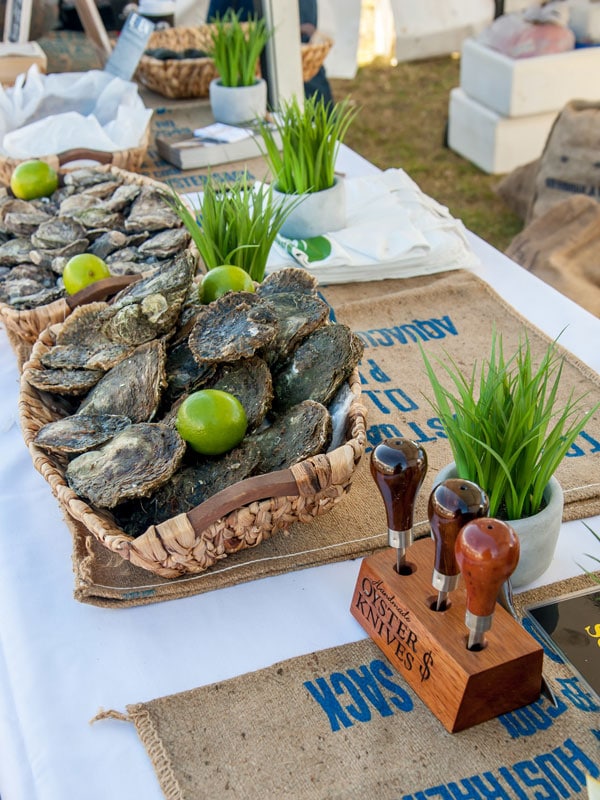
fresh oysters at the Narooma Oyster Festival
Don’t pass up the chance to slurp fresh oysters. (Image: Narooma Oyster Festival)

Surrounded by ocean, lakes and rivers, Narooma is an obvious candidate for seafood supremacy. And with its sailboats bobbing around in the marina, pelicans gliding overhead, and oyster sheds tucked in by the water’s edge, this sleepy town in southern New South Wales is easy on the eye too.

As the annual Narooma Oyster Festival might suggest, the briny bivalves are a staple here, and there are a number of oyster farm gates to visit. Narooma Bridge Oysters is a rustic little spot right next to the water’s edge, with supremely fresh takeaway oysters on offer.

For something a little more upscale, pull up a pew at The Oyster Farmer’s Daughter , which offers cocktails, a smattering of hot seafood dishes and occasional live music.

With a fleet of new eateries opened by hospo heavyweight Merivale in 2021, including scenic seafood-centred The Quarterdeck , the region’s allure has dialled up a few notches.

11. Goolwa, SA
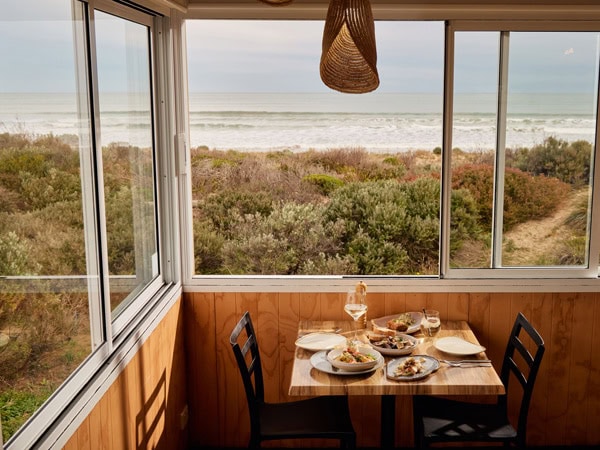
a dining setup at Kuti Shack overlooking Goolwa Beach
Dine on Goolwa pipis at Kuti Shack. (Image: South Australian Tourism Commission / Fleurieu Peninsula Tourism)

The bountiful Fleurieu Peninsula strikes again. Beyond its booming boutique wine industry and long-cemented paddock-to-plate dining philosophy, this bucolic maritime region has yet another string to its bow: pipis.

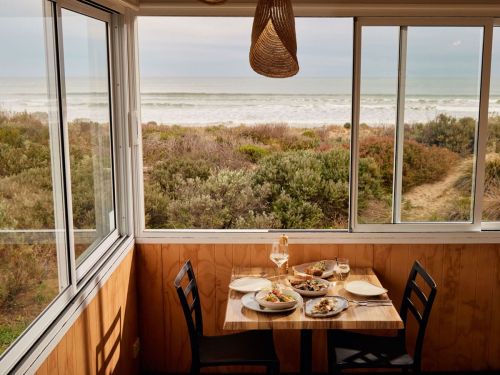
At smart-casual restaurant Kuti Shack , nestled in the dunes at Goolwa Beach, overlooking the very stretch of sand where it hand harvests the Goolwa pipi, these slightly sweet, slightly nutty plump little bivalves are afforded the special treatment they deserve.

Dine on crowd-pleasing pipi linguine, pipis drenched in XO sauce, or any number of other seasonal catches such as flathead tacos, kingfish sashimi or tiger prawn gow gee.


Chloe Cann
Chloe Cann is an award-winning freelance travel and food writer, born in England, based in Melbourne and Roman by adoption. Since honing her skills at City St George's, University of London with a master's degree in journalism, she's been writing almost exclusively about travel for more than a decade, and has worked in-house at newspapers and travel magazines in London, Phnom Penh, Sydney and Melbourne. Through a mixture of work and pleasure, she's been fortunate enough to visit 80 countries to date, though there are many more that she is itching to reach. While the strength of a region's food scene tends to dictate the location of her next trip, she can be equally swayed by the promise of interesting landscapes and offbeat experiences. And with a small person now in tow, travel looks a little different these days, but it remains at the front of her mind.
See all articles
hero media

The Macedon Ranges is Victoria’s best-kept food and wine secret

Located just an hour north-west of Melbourne, the largely undiscovered Macedon Ranges quietly pours some of Australia’s finest cool-climate wines and serves up some of Victoria’s best food.

Mention the Macedon Ranges and most people will think of day spas and mineral springs around Daylesford, cosy weekends away in the countryside or the famous Hanging Rock (of enigmatic picnic fame). Or they won’t have heard of the Macedon Ranges at all.

But this cool-climate destination has been inconspicuously building a profile as a high-quality food and wine region and is beginning to draw serious attention from oenophiles and epicureans alike.

The rise of Macedon Ranges wine

liquid gold barrels at Kyneton Ridge Estate Winery
Barrels of liquid gold at Kyneton Ridge Estate Winery. (Image: Chloe Smith Photography)

With elevations ranging from 300 to 800 metres, Macedon Ranges vineyards are among the highest in the country. This altitude, combined with significant day/night temperature swings, makes for a slow ripening season, in turn nurturing wines that embody elegance and structure. Think crisp chardonnays, subtle yet complex pinot noirs and delicate sparkling wines, along with niche varietals, such as gamay and nebbiolo.

Despite the region’s natural advantages – which vary from estate to estate, as each site embodies unique terroir depending on its position in relation to the Great Dividing Range, soil make-up and altitude – the Macedon Ranges has remained something of an insider’s secret. Unlike Victoria’s Yarra Valley or Mornington Peninsula, you won’t find large tour buses here and there’s no mass marketing drawing crowds.

Many of the 40-odd wineries are family-run operations with modest yields, meaning the wineries maintain a personal touch (if you visit a cellar door, you’ll likely chat to the owner or winemaker themselves) and a tight sales circle that often doesn’t go far beyond said cellar door. And that’s part of the charm.

Though wines from the Macedon Ranges are just starting to gain more widespread recognition in Australia, the first vines were planted in the 1860s, with a handful of operators then setting up business in the 1970s and ’80s. The industry surged again in the 1990s and early 2000s with the entry of wineries, such as Mount Towrong, which has an Italian slant in both its wine and food offering, and Curly Flat , now one of the largest estates.

Meet the new generation of local winemakers

the Clydesdale barn at Paramoor.
The Clydesdale barn at Paramoor. (Image: Chloe Smith Photography)

Then, within the last 15 years, a new crop of vignerons like Andrew Wood at Kyneton Ridge Estate , whose vineyard in 2024 was the first in the Macedon Ranges to be certified by Sustainable Winegrowing Australia; Geoff Plahn and Samantha Reid at Paramoor , who have an impressive cellar door with a roaring fire and studded leather couches in an old Clydesdale barn; and Ollie Rapson and Renata Morello at Lyons Will , who rapidly expanded a small vineyard to focus on top-shelf riesling, gamay, pinot noir and chardonnay, have taken ownership of local estates.

Going back to the early days, Llew Knight’s family was one of the pioneers of the 1970s, replacing sheep with vines at Granite Hills when the wool industry dwindled. Knight is proud of the fact that all their wines are made with grapes from their estate, including a light, peppery shiraz (some Macedon wineries purchase fruit from nearby warmer areas, such as Heathcote, particularly to make shiraz) and a European-style grüner veltliner. And, as many other wineries in the region do, he relies on natural acid for balance, rather than an additive, which is often required in warmer regions. “It’s all about understanding and respecting your climate to get the best out of your wines,” he says.

farm animals atKyneton Ridge Estate
Curious residents at Kyneton Ridge Estate. (Image: Chloe Smith Photography)

Throughout the Macedon Ranges, there’s a growing focus on sustainability and natural and low-intervention wines, with producers, such as Brian Martin at Hunter Gatherer making waves in regenerative viticulture. Martin previously worked in senior roles at Australia’s largest sparkling winemaking facility, and now applies that expertise and his own nous to natural, hands‑off, wild-fermented wines, including pét‑nat, riesling and pinot noir. “Wild fermentation brings more complexity,” he says. “Instead of introducing one species of yeast, you can have thousands and they add different characteristics to the wine.”

the vineyard at Kyneton Ridge Estate Winery
The estate’s vineyard, where cool-climate grapes are grown. (Image: Chloe Smith Photography)

Most producers also focus on nurturing their grapes in-field and prune and pick by hand, thus avoiding the introduction of impurities and the need to meddle too much in the winery. “The better the quality of the fruit, the less you have to interfere with the natural winemaking process,” says Wood.

Given the small yields, there’s also little room for error, meaning producers place immense focus on quality. “You’re never going to compete in the middle [in a small region] – you’ve got to aim for the top,” says Curly Flat owner Jeni Kolkka. “Big wineries try to do things as fast as possible, but we’re in no rush,” adds Troy Walsh, owner and winemaker at Attwoods . “We don’t use commercial yeasts; everything is hand-harvested and everything is bottled here, so we bottle only when we’re ready, not when a big truck arrives.” That’s why, when you do see a Macedon Ranges product on a restaurant wine list, it’s usually towards the pointy end.

Come for the wine, stay for the food

pouring sauce onto a dish at Lake HouseDaylesford
Dining at Lake House Daylesford is a treat. (Image: Chloe Smith Photography)

If wine is the quiet achiever of the Macedon Ranges, then food is its not-so-secret weapon. In fact, the area has more hatted restaurants than any other region in Victoria. A pioneer of the area’s gourmet food movement is region cheerleader Alla Wolf-Tasker, culinary icon and founder of Daylesford’s Lake House.

For more than three decades, Wolf-Tasker has championed local producers and helped define what regional fine dining can look like in Australia. Her influence is palpable, not just in the two-hatted Lake House kitchen, but in the broader ethos of the region’s dining scene, as a wave of high-quality restaurants have followed her lead to become true destination diners.

the Midnight Starling restaurant in Kyneton Ridge Estate Winery
The hatted Midnight Starling restaurant is located in Kyneton. (Image: Chloe Smith Photography)

It’s easy to eat well, whether at other hatted restaurants, such as Midnight Starling in the quaint town of Kyneton, or at the wineries themselves, like Le Bouchon at Attwoods, where Walsh is inspired by his time working in France in both his food offering and winemaking.

The beauty of dining and wine touring in the Macedon Ranges is that it feels intimate and unhurried. You’re likely to meet the winemaker, hear about the trials of the latest vintage firsthand, and taste wines that never make it to city shelves. And that’s worth getting out of the city for – even if it is just an hour down the road.

dishes on the menu at Midnight Starling
Delicate dishes on the menu at Midnight Starling. (Image: Chloe Smith Photography)

A traveller’s checklist

Staying there

the accommodation at Cleveland Estate, Macedon Ranges
Stay at the Cleveland Estate. (Image: Chloe Smith Photography)

Soak up vineyard views from Cleveland Estate near Lancefield , embrace retro charm at Kyneton Springs Motel or indulge in lakeside luxury at the Lake House .

Eating there

Enjoy a four-course menu at the one-hatted Surly Goat in Hepburn Springs, Japanese-inspired fare at Kuzu in Woodend or unpretentious fine dining at Mount Monument , which also has a sculpture park.

Drinking there

wine tasting at PassingClouds Winery, Macedon Ranges
A tasting at Passing Clouds Winery. (Image: Chloe Smith Photography)

Settle in for a tasting at Boomtown in Castlemaine, sample local drops at the cosy Woodend Cellar & Bar or wine-hop around the many cellar doors, such as Passing Clouds .

the Boomtown Winery and Cellar Bar signage
Boomtown Winery and Cellar Bar. (Image: Chloe Smith Photography)

Playing there

a scenic river in Castlemaine
Idyllic scenes at Castlemaine. (Image: Chloe Smith Photography)

Wander through the seasonal splendour of Forest Glade Gardens , hike to the summit of Hanging Rock, or stroll around the tranquil Sanatorium Lake.

purple flowers hanging from a tree
Purple flowers hanging from a tree. (Image: Chloe Smith Photography)