The Chairman’s Lounge: Did Alan Joyce really destroy Qantas?

hero media
Investigative journalist Joe Aston’s “blistering exposé" on the machinations of former Qantas CEO Alan Joyce and Chairman Richard Goyder in The Chairman’s Lounge sparked controversy for its precise accusations of greed at the expense of customers and staff through the pandemic.

The most common questions I’ve been asked in the past three months are, ‘Have you read The Chairman’s Lounge?’ and ‘What did you think of it?’. To be blunt, Aston’s chronicling of Qantas’ survival of the pandemic and then many challenges and failings on the road to record profits was like revisiting a nightmare for me.
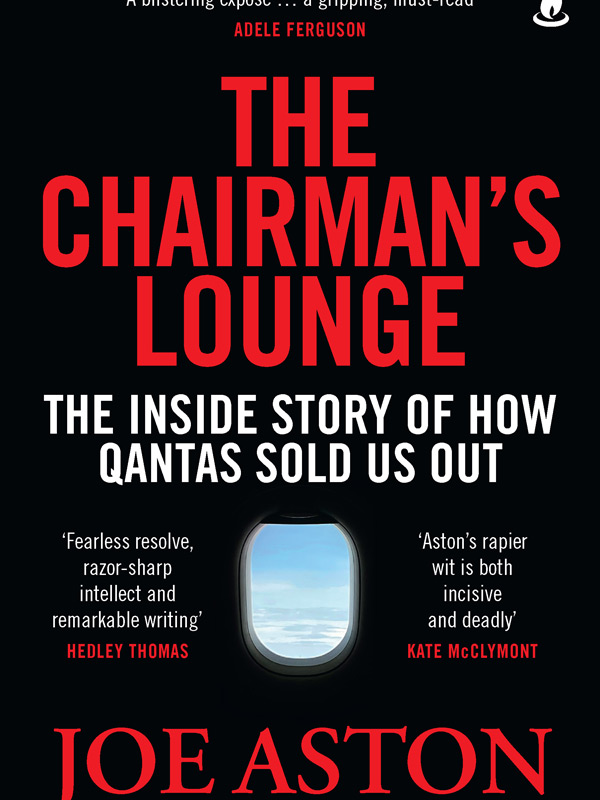
the book cover of The Chairman's Lounge inside story of how Qantas sold us out by Joe Aston
The Chairman’s Lounge by Joe Aston. (Image: Simon & Schuster Australia)

Firstly, don’t hate me, but I have sympathy for Alan Joyce

Remembering the pressure of those COVID times for me and my business makes me feel sick. I have great empathy for any travel executive or operator, Joyce included, who was forced to make decisions when faced with these unique and unprecedented challenges. Every interaction either personally or at events I attended with Joyce led me to believe he really did care about the Qantas brand, customers and most of all, people. Most of the Qantas staff I spoke with, particularly prior to 2021, felt very positive towards him. Joyce’s achievements are now largely forgotten and in their place are the disastrous last years of his tenure.
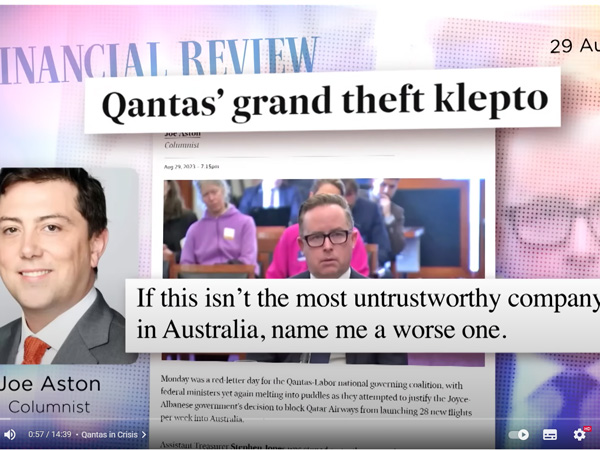
the front page of ABC Media Watch featuring Former Qantas CEO Alan Joyce
An ABC Media Watch segment on former Qantas CEO Alan Joyce.

And for Aston, a well-known Joyce-hater (he denies this, a claim not many, me included believe) and poison pen columnist, to write his Qantas obituary as a 332-page “scathing, unflinching takedown" is a shame. He damns Joyce with faint praise and diminishes many of his achievements. Aston appeared to take delight in flaying Australian executives in public while his ability to run a business has never been tested.

How can he really sit in judgment when he has not sat in the chair? In my experience, and to quote renowned business podcaster Scott Galloway, “Boards and CEOs are never as dumb as you think they are and you are never as smart as you think you are".
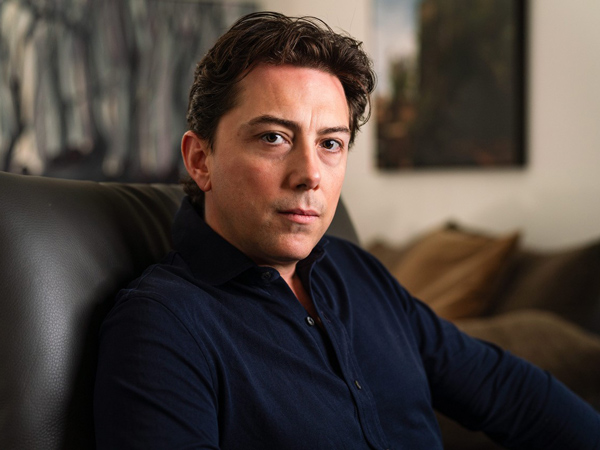
Investigative journalist Joe Aston
Investigative journalist Joe Aston and author of The Chairman’s Lounge. (Image: Stephen Blake)

I enjoyed the read but I feel Joyce deserved a more even-handed telling of his story.

Stranger still for me, I attended many of the events noted in the book. Just as the wheels were starting to come off for Joyce and the Qantas brand, one particular interaction I had with former Chairman Richard Goyder distils the entire 2020 – 2023 episode into one fateful sentence.
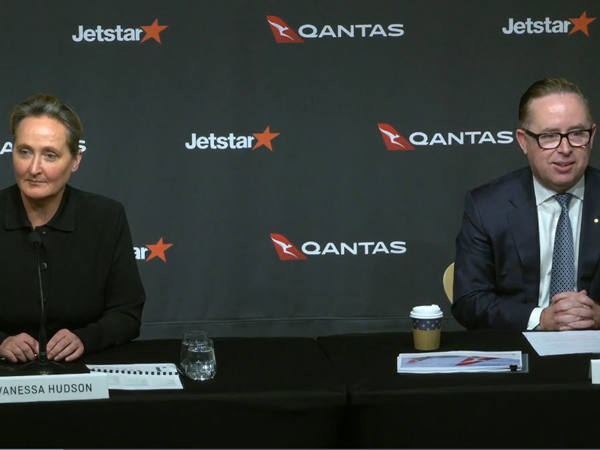
Qantas CEO Vanessa Hudson sitting beside Alan Joyce
Qantas CEO Vanessa Hudson alongside Alan Joyce.

“We ripped $1 billion of costs out of the business."

This was Goyder’s response to me on the 23rd of June 2022 in Perth. I happened to be standing in line with him at a cocktail event to celebrate the inaugural Perth to Rome flight scheduled to take off the next day. I said I wanted to have a better business coming out of COVID and I asked, “Do you think Qantas is?" He replied in a nanosecond: “Mate, absolutely. We ripped $1 billion dollars of costs out of the business."

I was shocked. Goyder unequivocally equated stripping out $1 billion dollars in costs with a better business. Yet the media world was awash with negative Qantas stories: lost baggage, inability to use credits, hours-long wait times on call centres, flight cancellations.

Roy Morgan has just reported the Qantas brand had slipped from the 6th most trusted brand in the country to the 16th in just three months. (It was just the beginning of the brand freefall from highly trusted to almost least trusted).

Meanwhile, the courts had decided that Qantas had illegally sacked its international ground-handling staff. Yet Goyder was absolutely convinced that Qantas was a better business as evidenced by the reduced costs.
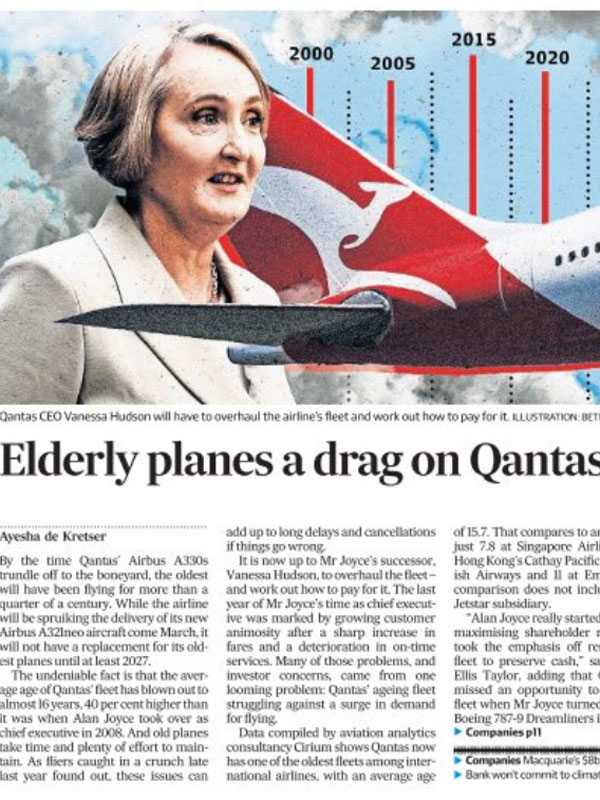
Mr Joyce's successor Vanessa Hudson on Australian Financial Review front page
Joyce’s successor Vanessa Hudson will have to overhaul the fleet.

So what actually did Joyce and Goyder do to “sell us out"?

Aston details many crimes and misdemeanours in The Chairman’s Lounge. These are probably the four most egregious found in the book.

1. Airfare credits were treated like a free loan

Qantas failed to tell customers they were entitled to a cash refund until the Australian Consumer Commission (ACC) instructed them to be more transparent. Then the refund option was buried in the communication to customers and by virtue of chronic understaffing, made hard to get.

2. Illegally sacking baggage handlers in 2020

Not only was this illegal, but a bad decision made even worse by Joyce and his in-house legal execs’ intransigence and arrogance insisting on launching appeals within an hour of a judgement. They did not pause to absorb a judgement that clearly indicated they were legally “cooked", to use a technical term.

Aston suggests the appeals were not designed to necessarily win but to delay any compensation payments to boost profits and Joyce’s bonus in 2023.

3. Claiming to have not collected bonuses to only come back and collect them later

In 2023 Joyce was intent on collecting delayed long-term bonuses from 2021 and 2022 when the airline was making huge losses which he had claimed to have forfeited.

For clarity, Qantas’ losses were $1.7 billion and $1.8 billion in 2021 and 2022.

4.  Stripping $1 billion in costs for bonuses while ruining the product

As evidenced by my conversation with Goyder, Qantas didn’t let the COVID crisis go to waste.

Not only did Joyce illegally achieve the cost savings in the case of the baggage handlers, but he also failed to make provisions for the return-to-service costs in staffing, training, and actual hardware.

The disastrous under-investment in customer experience triggered the brand freefall.

Is The Chairman’s Lounge a fair report?
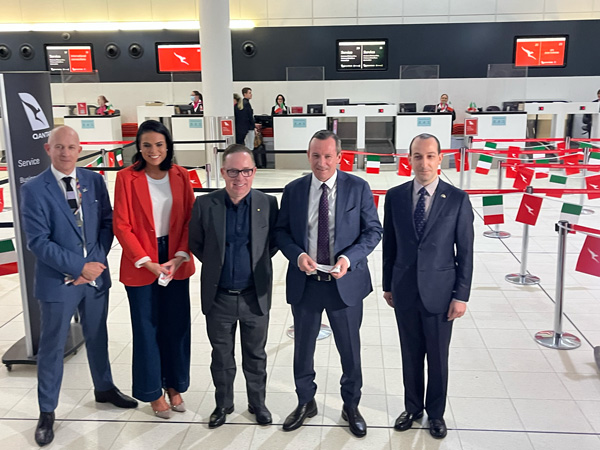
former Qantas CEO Alan Joyce with the Qantas team
Former Qantas CEO Alan Joyce with the Qantas team. (Image: Quentin Long)

Many CEOs would think spinning the message, striving to reduce costs and investment to boost short-term profits to inflate your own bonuses or even claiming historical unpaid bonuses from loss-making years in future profit-making years as relatively normal in the no-holds-barred world of capitalism and free markets. It doesn’t pass the pub test and disgusts me, but many, many CEOs have been far more greedy, ruthless and jaw-droppingly self-serving.

Full-contact capitalism only works when the right guardrails are in place. In this case, it was reassuring that one arm of accountability, the law, turned up and adjudicated the illegal sacking of workers.

But why did it take a union to roll the dice in court, three times, to be the only guardrail for what seemed an exhaustive list of line calls at best, outright greed and disgust for customers at worst?

Aston correctly points out that the guardrails for these decisions were the remit of the Qantas board and, again correctly, in particular Richard Goyder.

Goyder eventually fell on his sword as well, departing 16 September 2024.

Qantas flies up and on
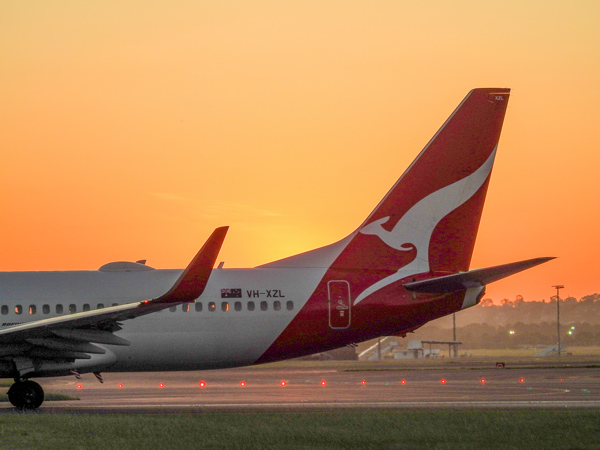
the Qantas plane at sunset
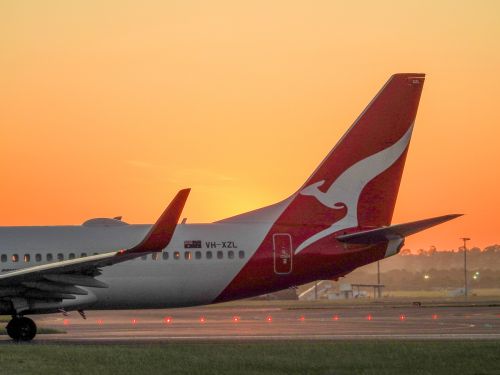
Qantas continues to fly despite its brand challenges. (Image: Getty/SCM Jeans)

As for our national carrier? Well, Joyce definitely didn’t kill it as Qantas is still flying.

On the 4th September 2023, the day before Joyce’s early departure, the Qantas share price closed at $5.65.

On the 16th September, when Goyder left it closed at $7.03.

At the time of writing in January 2025 it is trading at $8.86 off a record high of $9.40 on the 13th  January 2025.

So it is healthy financially (some would say more than when Joyce was in charge).

There is still some way to go for the national carrier to restore public trust. That’s the nature of trust: easy to lose, hard to regain. According to Roy Morgan, in December 2024 it was fourth in the most distrusted brands. Aussies love Qantas which is why it hurts even more when the flying kangaroo lets us down. But the nadir has been reached (well it appears to have been). In the fullness of time, I think we will fall back in love.

Quentin Long
Quentin Long is the Co-Founder and Managing Director of Australian Traveller Media. Quentin is a sought-after travel media commentator. He is Australia’s most trusted source for travel news and insights, having held weekly radio segments across the country since 2006, and regularly appearing on Channel 9’s Today and A Current Affair programs from 2010. Don't ask him his favourite travel experience as that's like asking him to choose a favourite child. However he does say that Garma Festival is the one travel experience that changed him the most.
See all articles
hero media

3 wild corners of Australia that let you reconnect with nature (in comfort)

The country’s rawest places offer some of its most transformative, restorative experiences.

Australia offers sublime opportunities to disappear into the ancient, untouched wilderness, worlds away from modern stress. Wild Bush Luxury offers a collection of experiences that are a portal into the continent’s wildest, most undiscovered landscapes, from wide floodplains to vast savannas, where the only distractions are birdsong, frog calls, curious wallabies and the daily drama of sunset. With a focus on conservation and Indigenous knowledge, these all-inclusive experiences allow guests to slow down and quiet their minds for intimate encounters with the natural world.

1. Bamurru Plains

safari tent at Bamurru Plains wild bush luxury
Let nature take front row.

In the remote Top End, just outside Kakadu National Park on the fringes of the spectacular Mary River floodplains, you’ll find Bamurru Plains , a peerless Australian safari camp. After a quick air transfer from Darwin to the camp’s private airstrip, you’ll be whisked away via 4WD to a vivid natural wonderland of shimmering floodplains, red earth, herds of peacefully grazing water buffalo and 236 bird species (Bamurru means magpie goose to the Gagadju people).

Accommodations consist of 10 mesh-walled bungalows and two luxe stilted retreats where guests enjoy panoramic, up-close views that invite them into their rightful place in the landscape (and binoculars to see it even better). Being an off-grid experience designed to help guests disconnect, the only distractions are birdsongs, frog calls, curious wallabies, the occasional crocodile sighting and the daily drama of the spectacular golden sunset.

It’s a place where nature’s vastness rises to the level of the spiritual, and Bamurru’s understated, stylish,  largely solar-powered lodgings are designed to minimise human impact and let nature take front row.  Guests relax in comfort with plush linens, an open bar, communal tables that allow for spontaneous connections and curated dining experiences from the in-house chef using local ingredients and bush-inspired cooking methods.

Bamurru Plains airboat tour
Zoom across the floodplains. (Image: Adam Gibson)

It’s a restorative backdrop for days spent zooming across the mist-covered floodplains in an airboat, birding with expert guides, taking an open-sided safari drive or river cruise through croc country. Spend time at the Hide, a treehouse-like platform that’s perfect for wildlife spotting.

In fact, nature is so powerful here that Bamurru Plains closes entirely during the peak monsoon season (October to April), when the floodplains reclaim the land and life teems unseen beneath the water. Yet Wild Bush Luxury’s ethos continues year-round through its other experiences around Australia – each designed to immerse travellers in a distinct Australian wilderness at its most alive and untouched.

2. Maria Island Walk

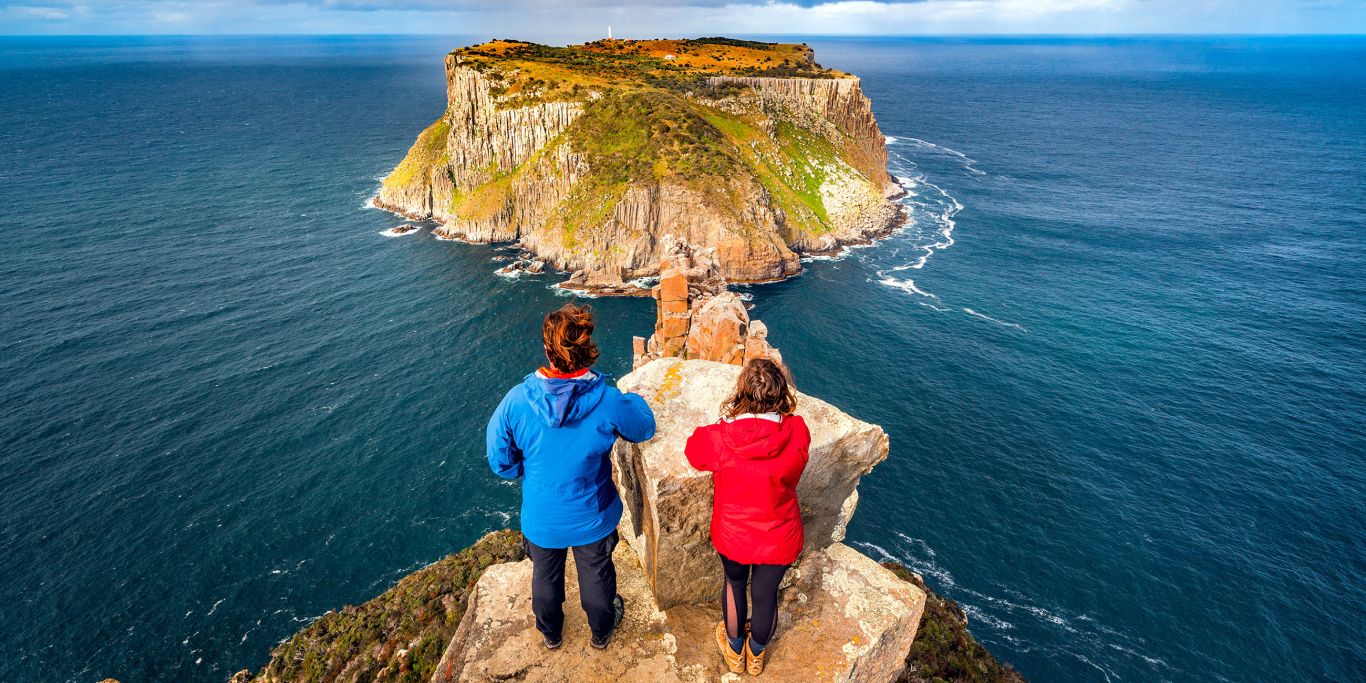
woman on a headland of Maria Island Walk
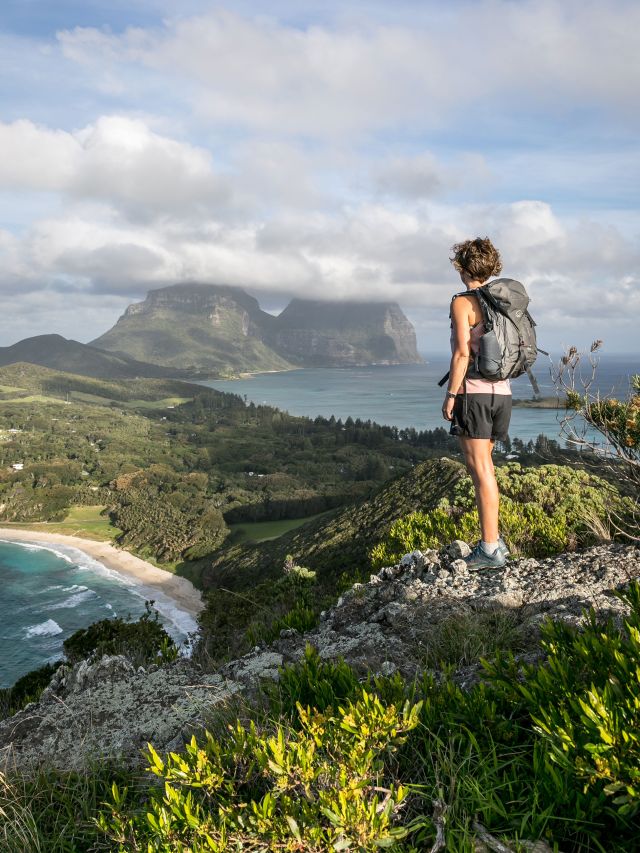
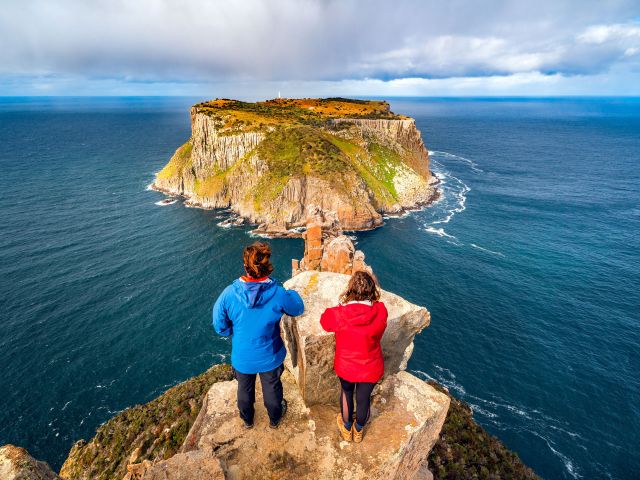
Maria Island Walk offers sweeping coastal scenes.

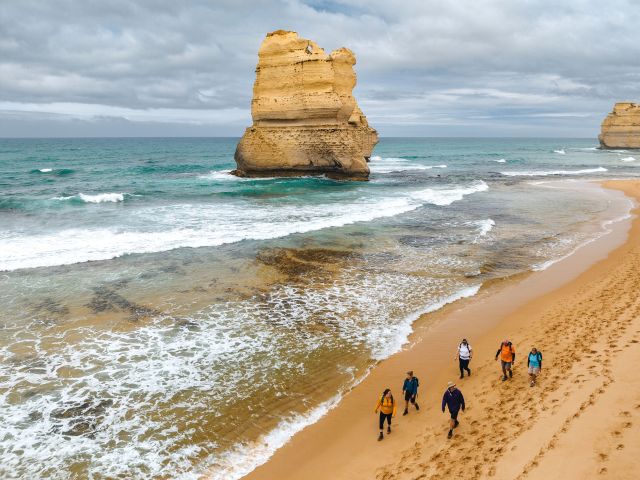
Off Tasmania’s rugged east coast, the iconic Maria Island Walk is an intimate four-day journey through one of the country’s most hauntingly beautiful and unpopulated national parks, encompassing pristine beaches, convict-era ruins, and wildlife sightings galore. Accessible only by a small ferry, Maria Island feels like a place reclaimed by nature, which is exactly what it is: a penal settlement later used for farms and industry that finally became a national park in 1972.

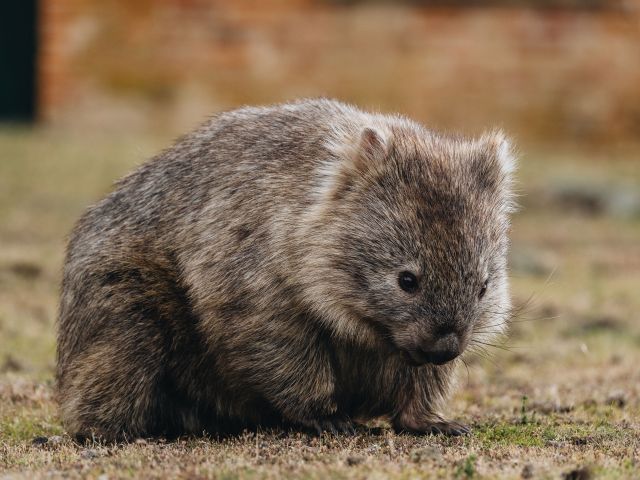
These days, the island is known as ‘Tasmania’s Noah’s Ark’ and its only human inhabitants are park rangers. It’s a place where wombats amble through grassy meadows, wallabies graze beside empty beaches, dolphins splash in clear water just offshore and Tasmanian devils – successfully reintroduced in 2012 after near-extinction on the mainland – roam free and healthy.

Each day unfolds in an unhurried rhythm: trails through coastal eucalyptus forests or along white-sand bays, plateaus with sweeping ocean views, quiet coves perfect for swimming. Midway through the journey, you’ll explore Darlington, a remarkably preserved 19th-century convict settlement whose ruins tell stories of human ambition at the edge of the known world.

At night, sleep beneath a canopy of stars in eco-wilderness camps – after relaxing with Tasmanian wine and locally-sourced meals, and swapping stories with your fellow trekkers by candlelight.

3. Arkaba

two people standing next to a 4wd in Arkaba
Explore Arkaba on foot or on four wheels.

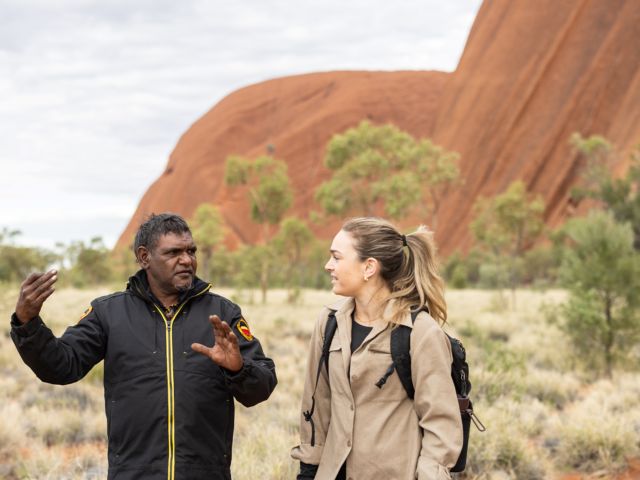
For a bush immersion with more of an outback flavour, Arkaba offers a completely different type of experience. A former sheep station and historic homestead in South Australia’s striking Flinders Ranges that has been reimagined as a 63,000-acre private wildlife conservancy. It’s now patrolled mainly by kangaroos and emus.

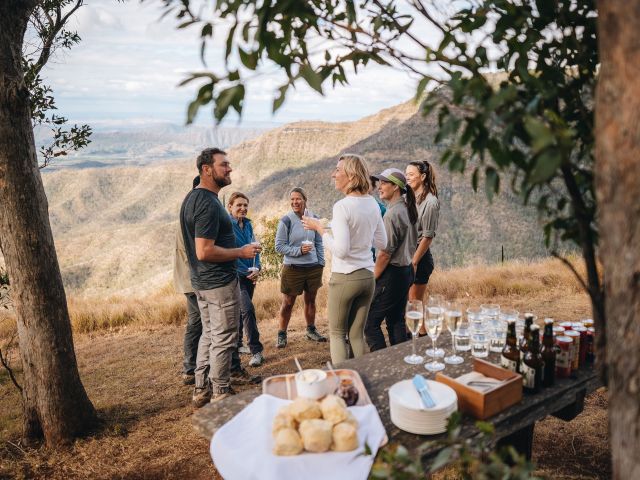
Small-scale tourism (the homestead has just five ensuite guestrooms) helps support rewilding projects, and guests become an essential part of the conservation journey. Days begin with sunrise hikes through ancient sandstone ridges or guided drives into the ranges to spot yellow-footed rock-wallabies. And end with sundowners on a private ridgetop watching the Elder Range glow vibrant shades of gold, crimson and violet as the air cools and time stands still.

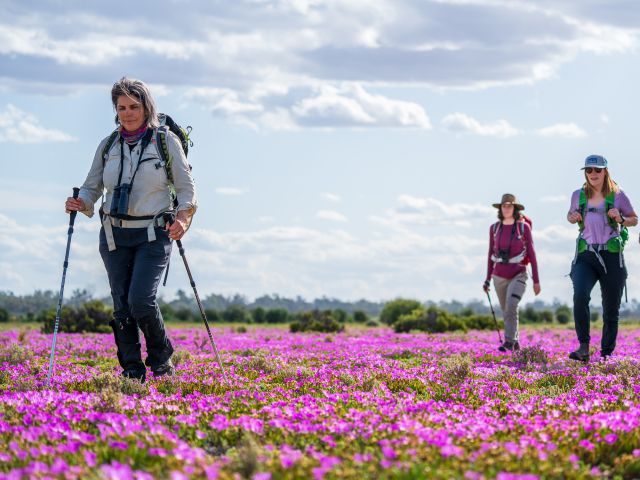
Here, you can join conservation activities like tracking native species or learning about Arkaba’s pioneering feral-animal eradication projects, then unwind with chef-prepared dinners served alfresco on the veranda of the homestead, which is both rustic and refined. The highlight? Following Arkaba Walk, a thriving outback wilderness where emus wander and fields of wildflowers grow.

It’s an unforgettable immersion in Australia’s vast inland beauty, a place where the land’s deep and complicated history – and astounding resilience – leave their quiet imprint long after you return home. In a world where genuine awe is rare, Wild Bush Luxury offers a return to what matters most in the untamed beauty of Australia’s wilderness.

Disconnect from the grind and reconnect with nature when you book with at wildbushluxury.com