The nation’s most prestigious network of guided multi-day hikes has expanded to 15 with the addition of two spectacular new experiences – the Uluṟu-Kata Tjuṯa Signature Walk and the Kangaroo Island Signature Walk, both operated by the Tasmanian Walking Company.
Launched in 2013 as part of Tourism Australia’s Signature Experiences program, Great Walks of Australia represents the gold standard in nature-based tourism – think all-inclusive, fully guided adventures through the country’s most breathtaking wilderness areas.
Hiking to the heart of Australia
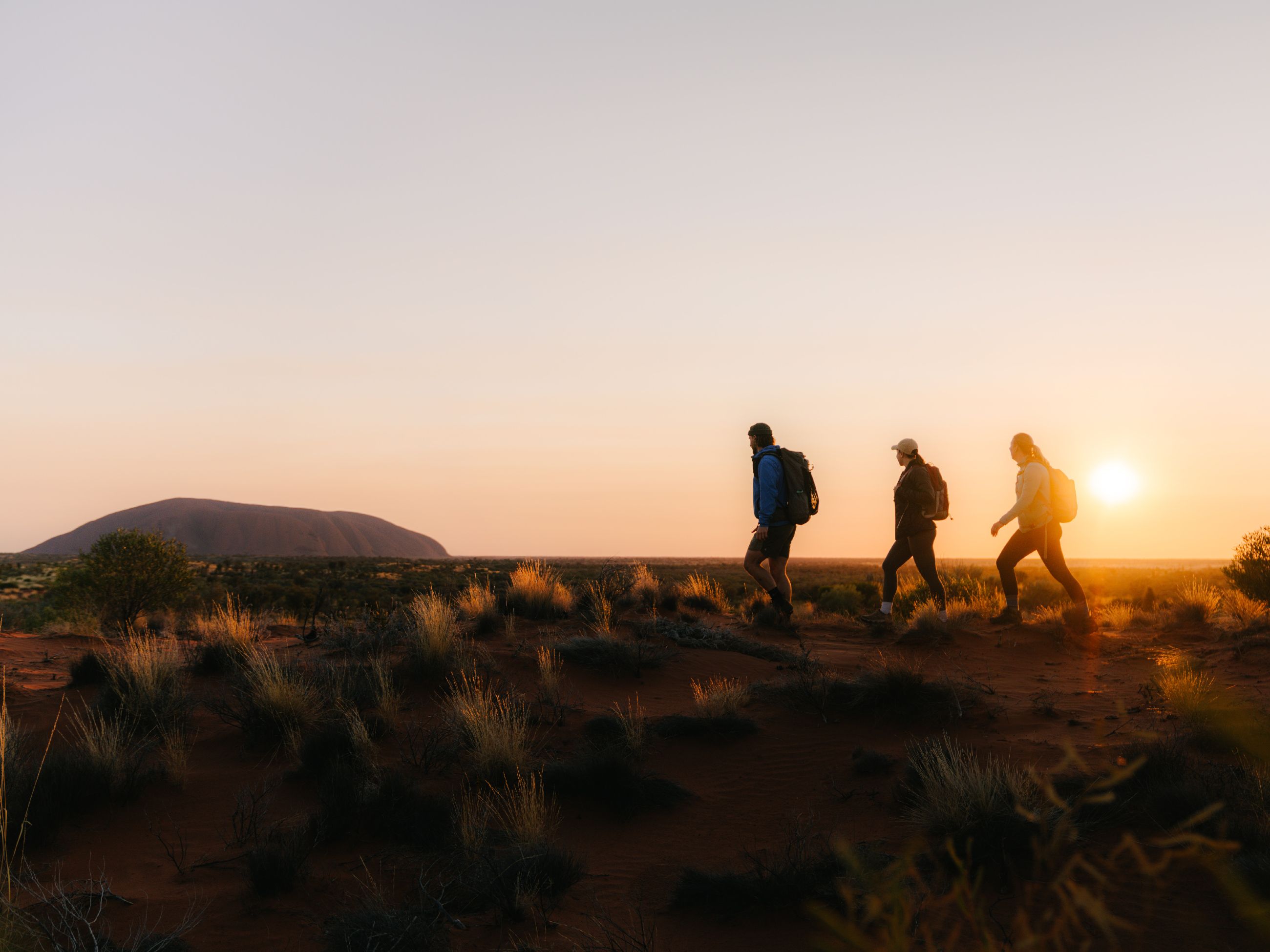
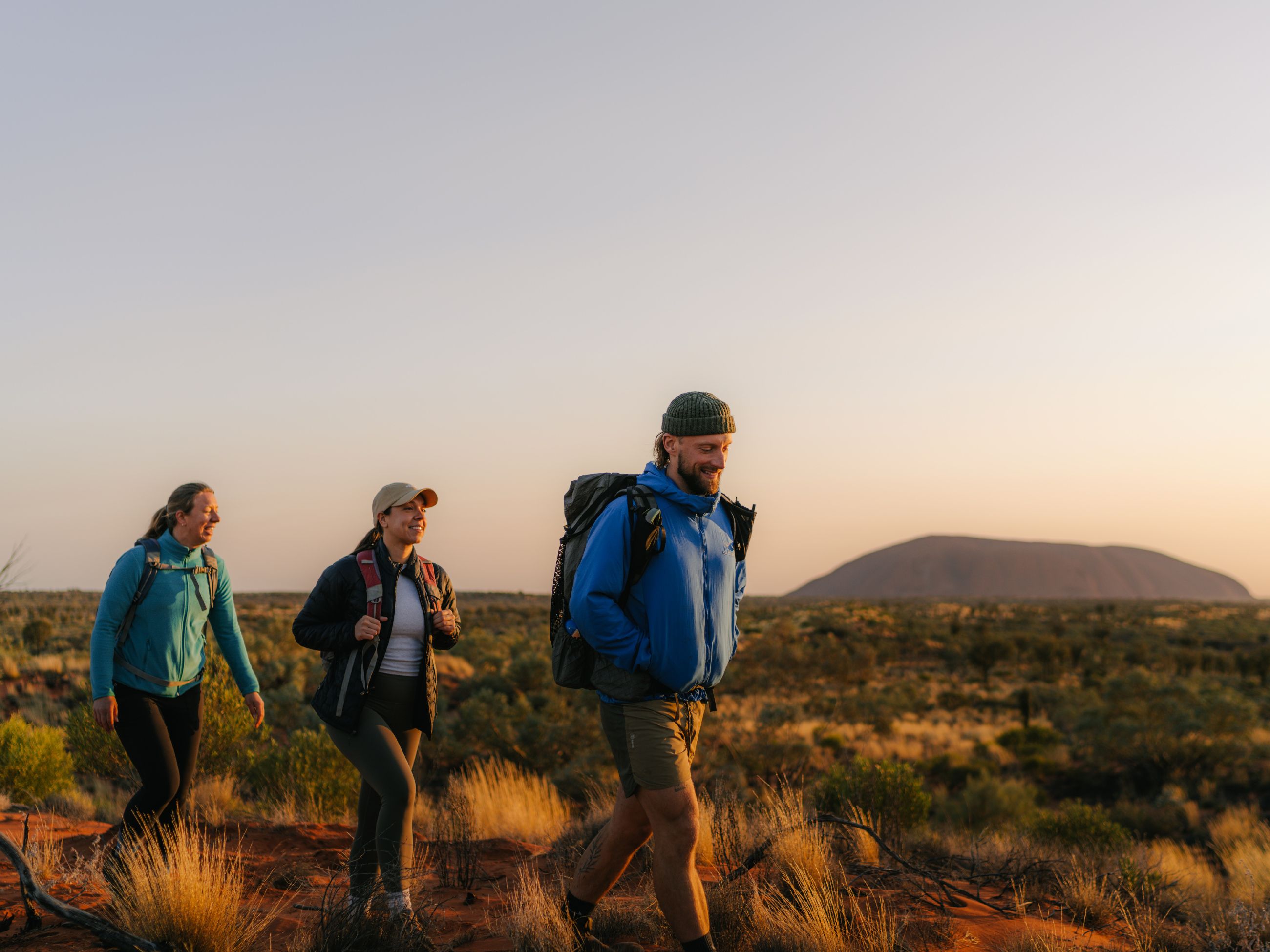
The Uluṟu-Kata Tjuṯa Signature Walk is a first-of-its-kind experience. (Image: Tasmanian Walking Company)
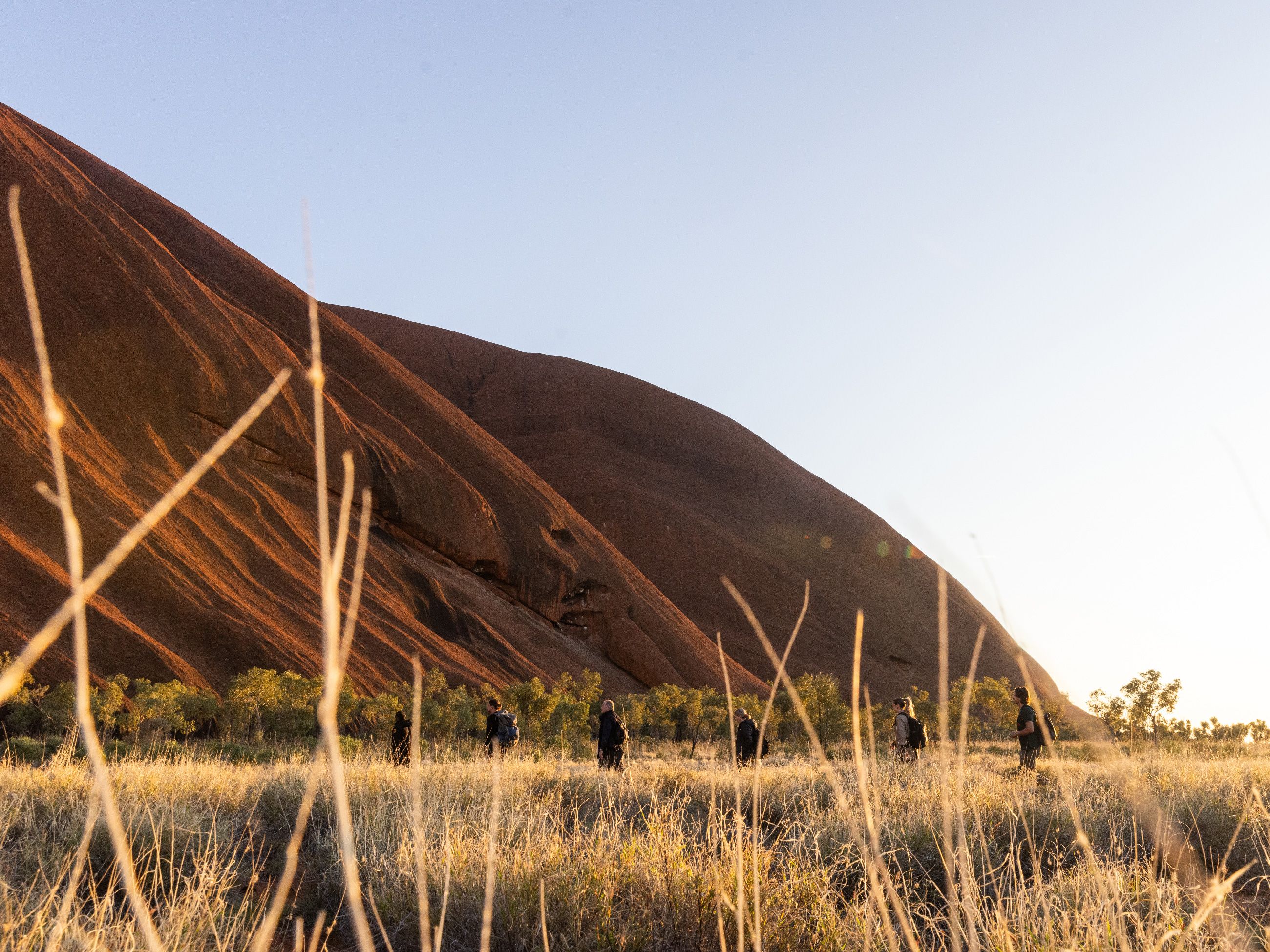
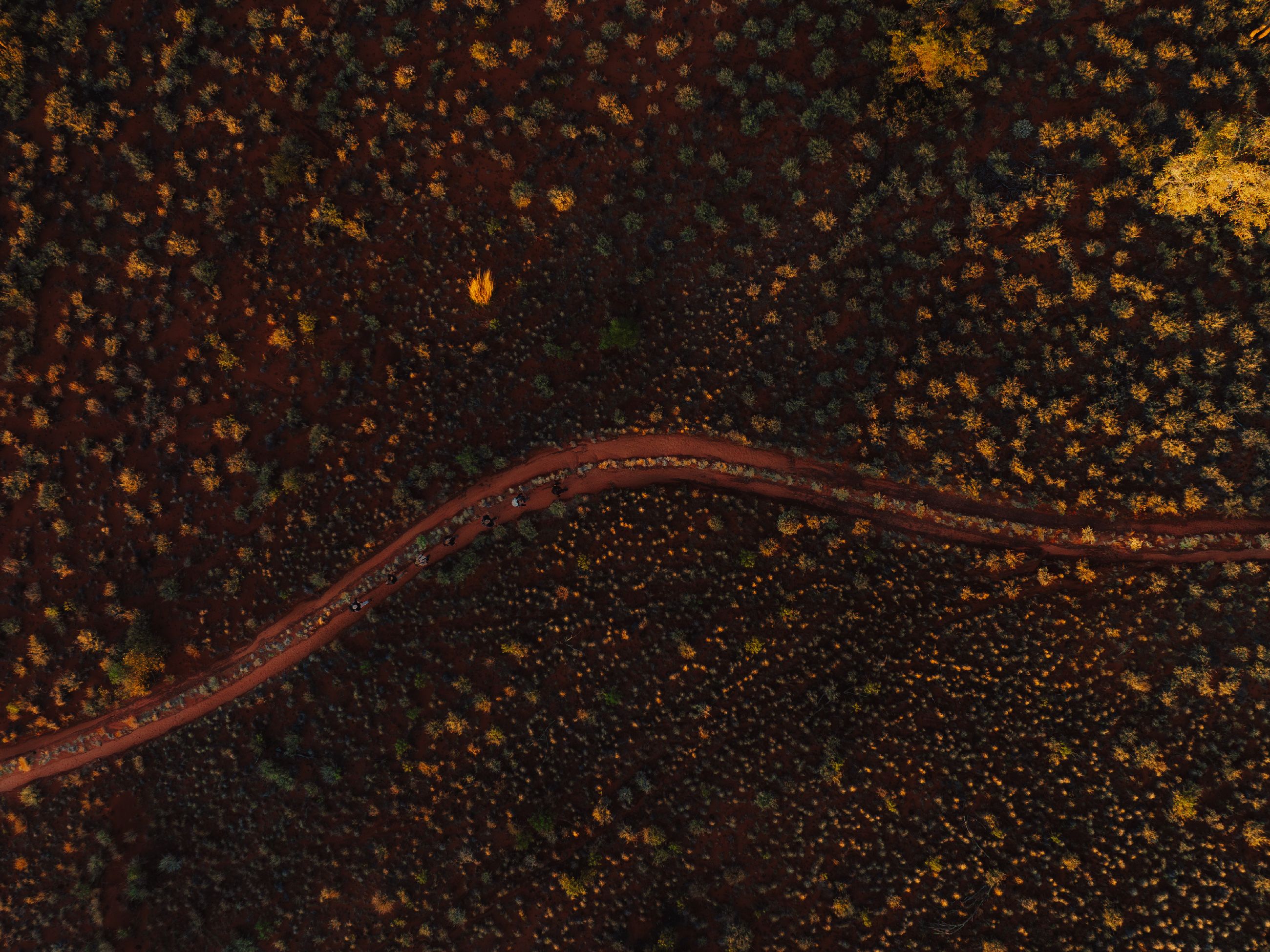
The five-day journey traverses 54 kilometres. (Image: Michael Peters)
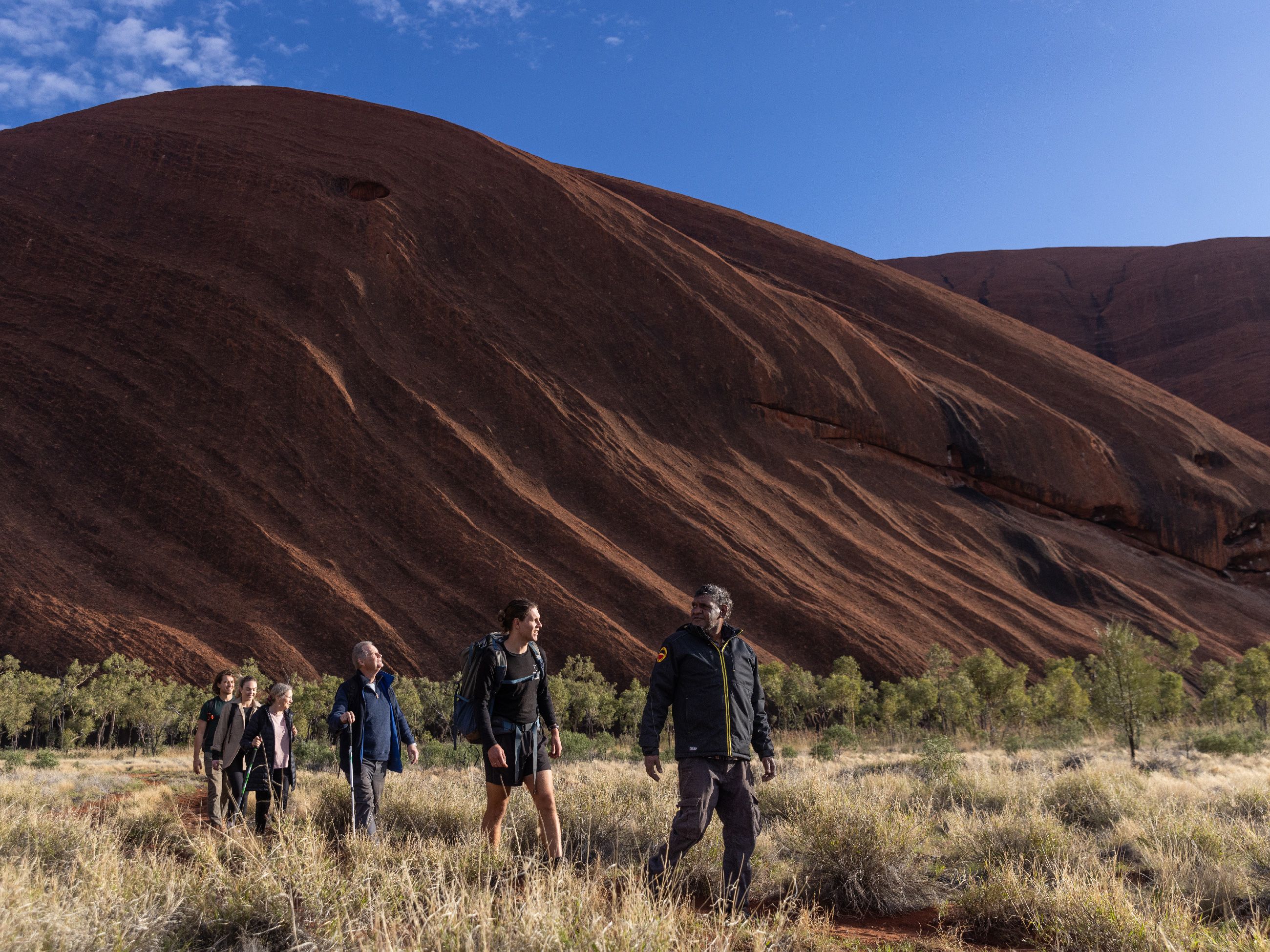
This walk redefines what it means to travel respectfully on Country. (Image: Tasmanian Walking Company)
Explore from the domes of Kata Tjuṯa to the base of Uluṟu. (Image: Michael Peters)
The walk is a decade in the making. (Image: Tasmanian Walking Company)
A decade in the making, the Uluṟu-Kata Tjuṯa Signature Walk is a first-of-its-kind experience offering exclusive overnight stays inside the World Heritage-listed national park. Developed in partnership with Aṉangu Traditional Owners, the five-day journey traverses 54 kilometres from the domes of Kata Tjuṯa to the base of Uluṟu, blending premium comfort with deep cultural connection.
Walkers stay in new eco-sensitive camps and a private lodge, feast on chef-prepared meals under desert skies, and learn stories passed down over tens of thousands of years. Guided by Indigenous partners and expert storytellers, this walk redefines what it means to travel respectfully on Country.
The island is back
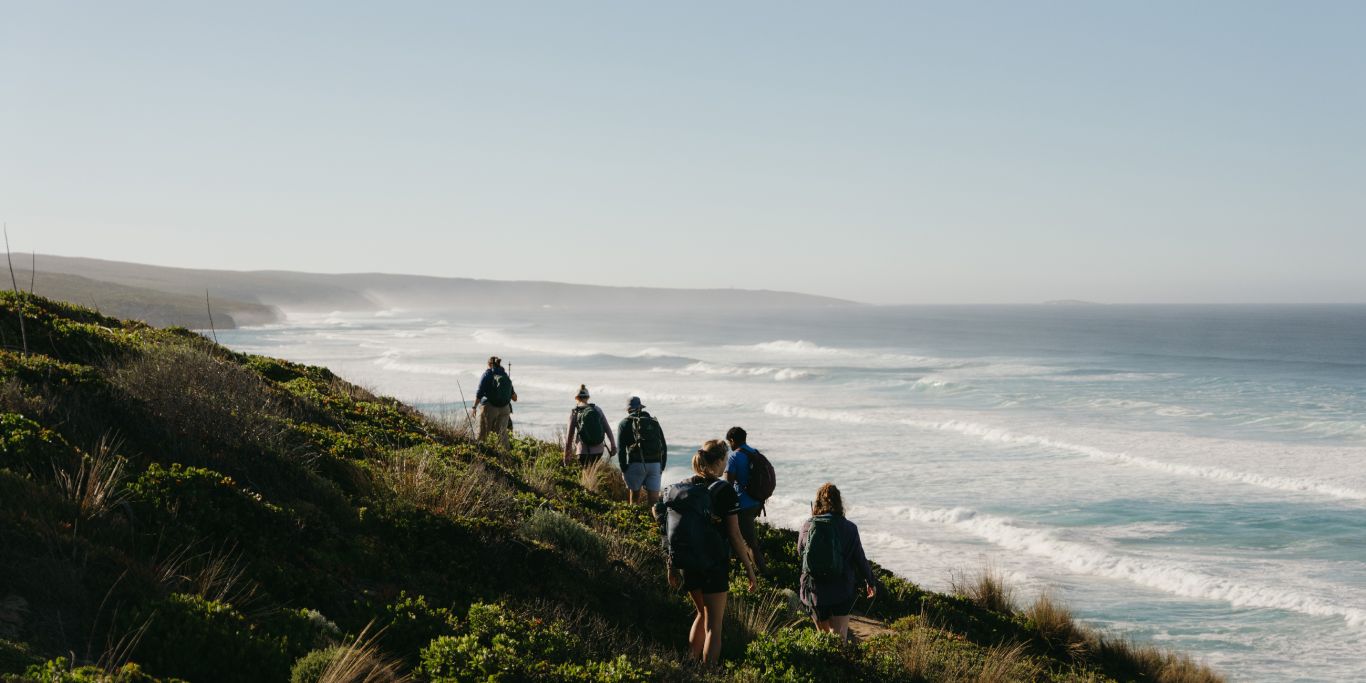
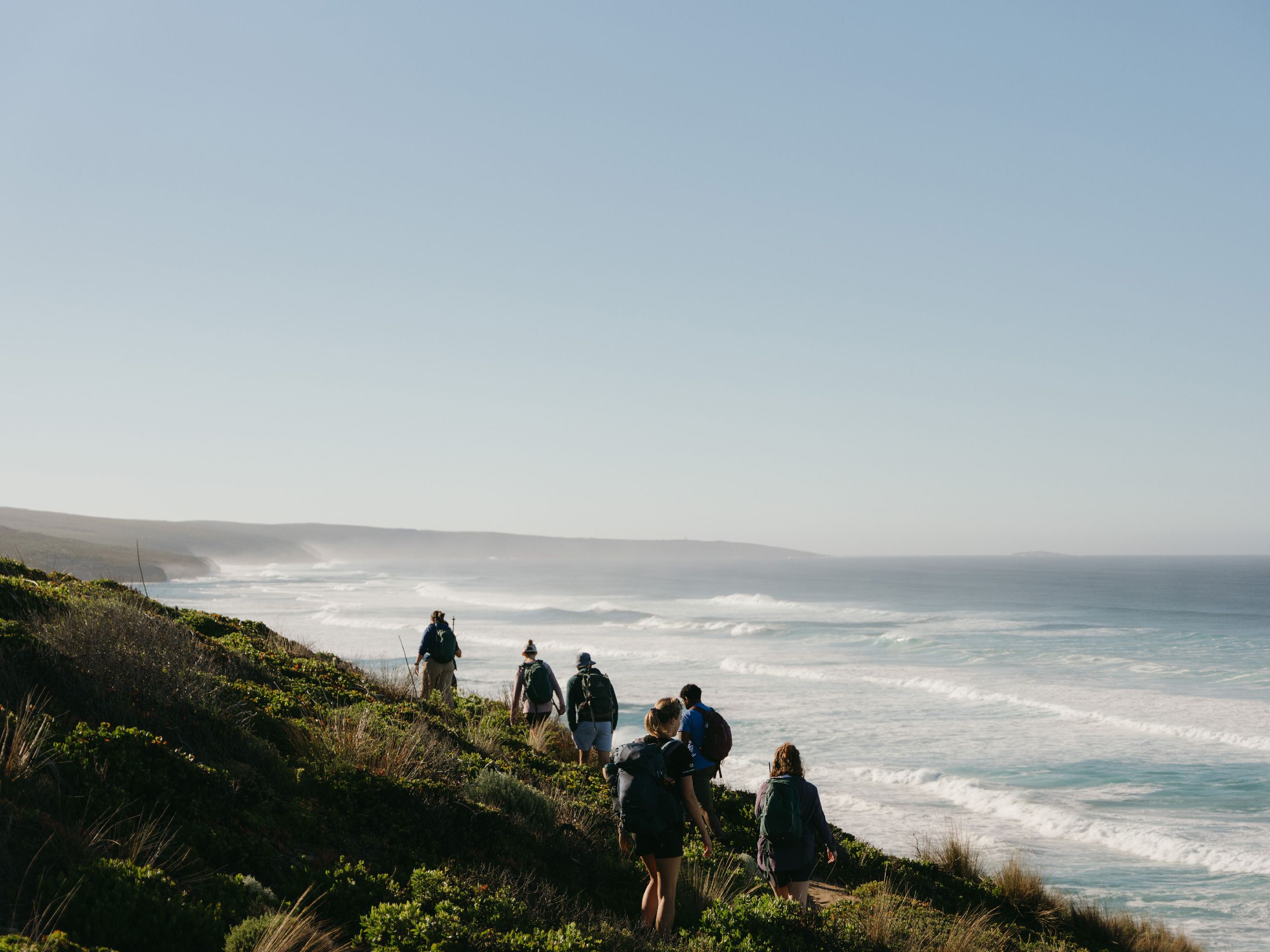
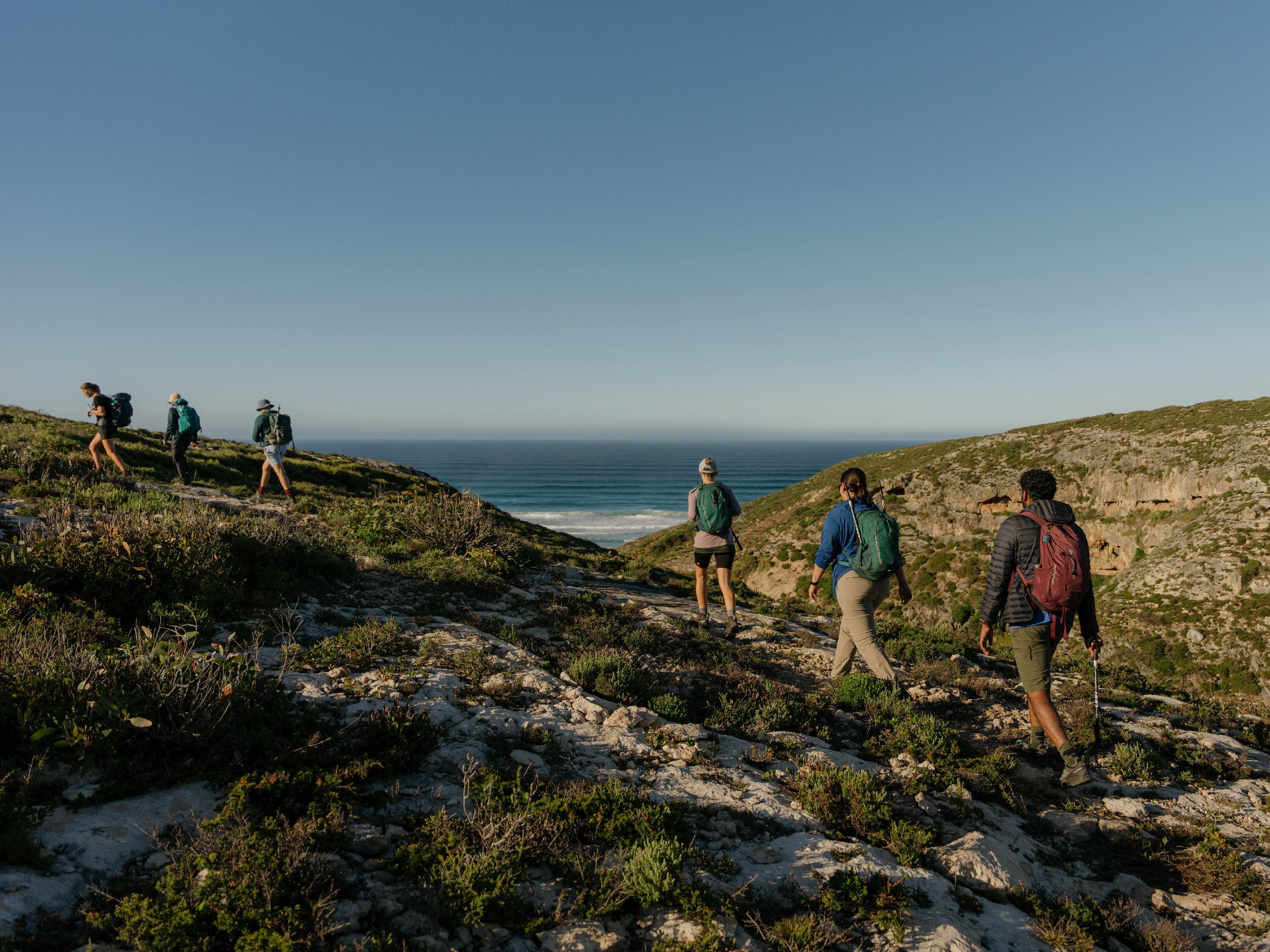
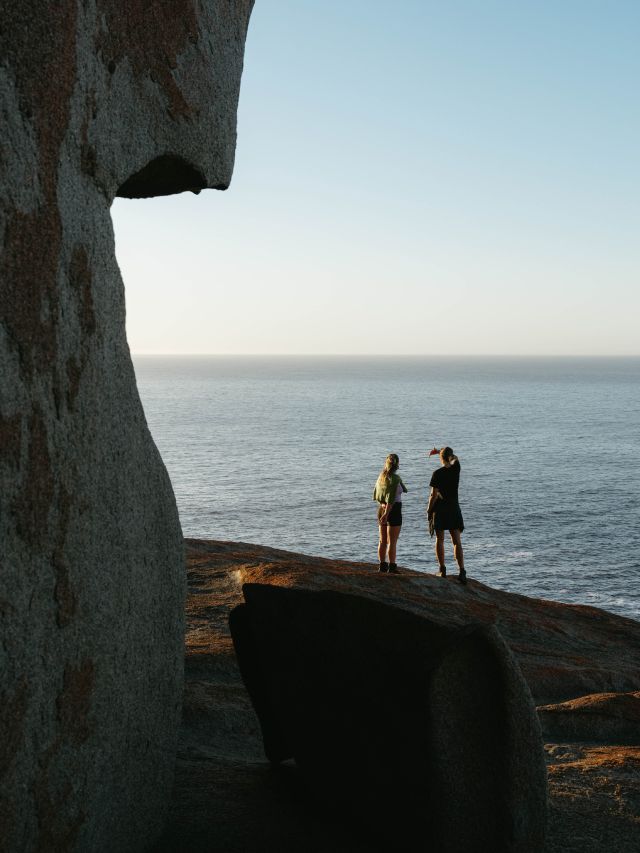
The Kangaroo Island Signature Walk celebrates SA’s wild southwest coast. (Image: Declan Hartley Brown)
The 4-day guided journey goes through Flinders Chase National Park. (Image: Declan Hartley Brown)
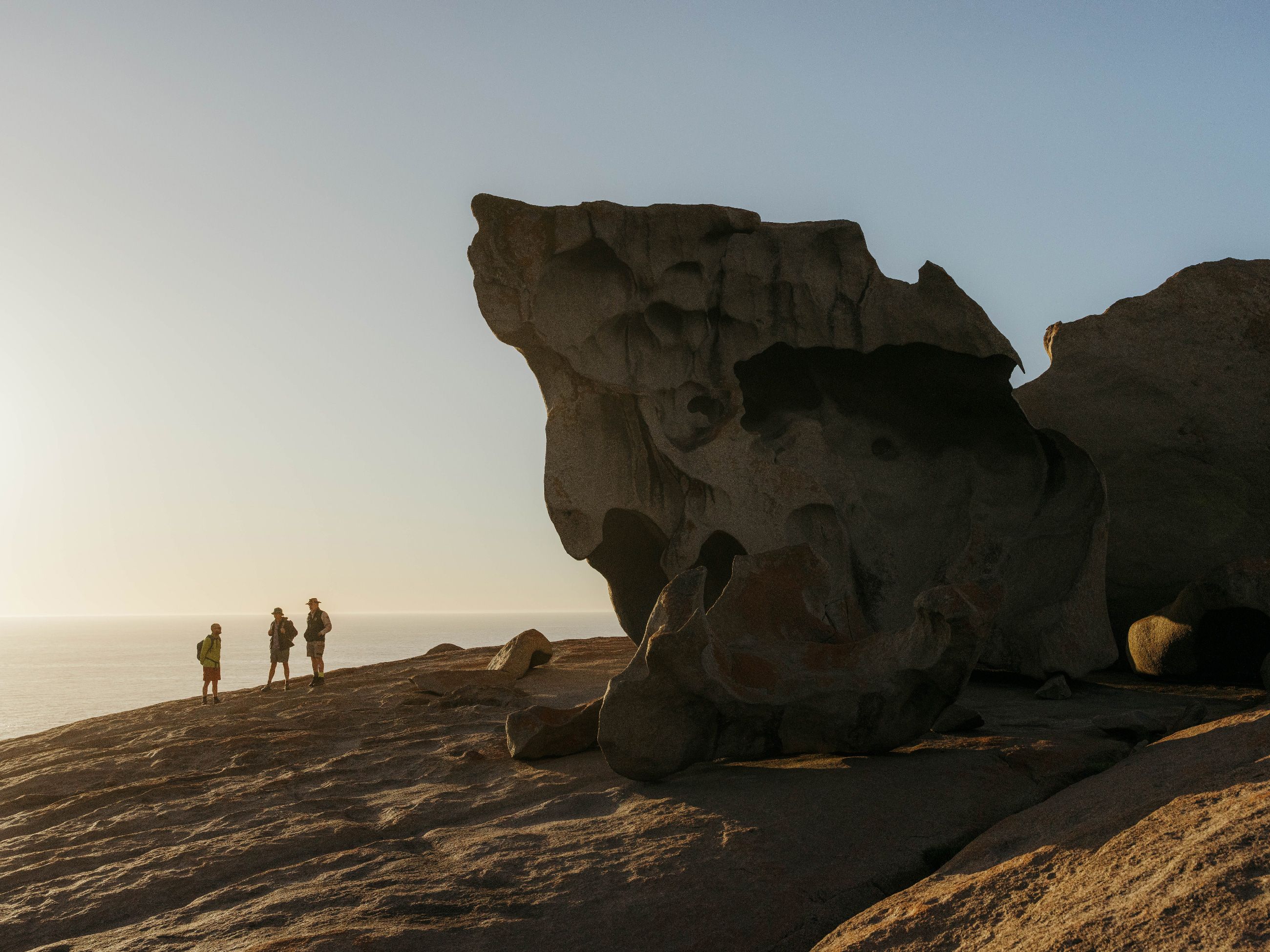
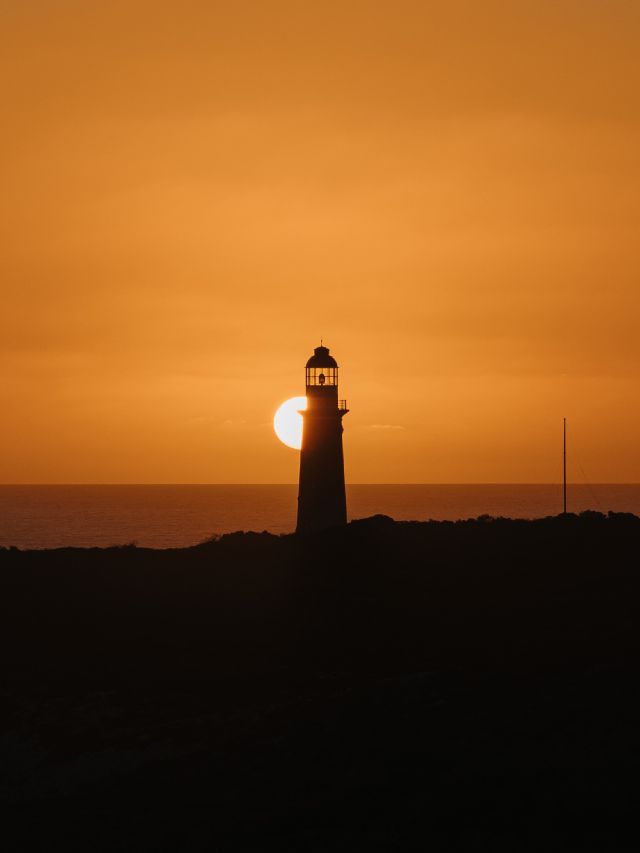
Across the water, the Kangaroo Island Signature Walk celebrates South Australia’s wild southwest coast on a four-day guided journey through Flinders Chase National Park. Traversing the most scenic stretches of the 46-kilometre Kangaroo Island Wilderness Trail, the experience pairs rugged cliffs and ancient forests with heritage lighthouse accommodation at Cape du Couedic, chef-prepared local produce and premium South Australian wines.
Guests walk lightly, supported by expert guides, and can expect encounters with sea lions, wallabies and echidnas along the way. True to the Tasmanian Walking Company’s sustainability ethos, the walk is 100 per cent carbon neutral and certified under Advanced Ecotourism Australia.
A new chapter for Great Walks of Australia
Stay in heritage lighthouse accommodation at Cape du Couedic on the Kangaroo Island Signature Walk. (Image: Declan Hartley Brown)
Executive Officer of Great Walks of Australia, Genevieve Matthews, says the new additions add “both heart and a new edge" to the collection.
“One experience has guests journeying through the ancient landscape of Australia’s Red Centre, and the other set along the spectacular rugged coastline of South Australia," she said.
“These new additions to the collection extend the offering to our loyal walking community, showcasing some of the most globally recognised and breathtaking landscapes in the country."
Tasmanian Walking Company co-owner Brett Godfrey said it was a privilege to share these landscapes through responsible tourism.
“Both Uluru-Kata Tjuta Signature Walk and Kangaroo Island Signature Walk represent not only world-class hiking experiences, but also a profound respect for the landscape, cultural heritage, and environment in which they take place," Godfrey said.
Tick the box next to "Australian Traveller". That's it.
Emily Murphy is Australian Traveller's Email & Social Editor, and in her 4+ years at the company she has been instrumental in shaping its social media and email presence, and crafting compelling narratives that inspire others to explore Australia's vast landscapes. Her previous role was a journalist at Prime Creative Media and before that she was freelancing in publishing, content creation and digital marketing. When she's not creating scroll-stopping travel content, Em is a devoted 'bun mum' and enjoys spending her spare time by the sea, reading, binge-watching a good TV show and exploring Sydney's vibrant dining scene. Next on her Aussie travel wish list? South Australia and The Kimberley.
The Northern Territory isn’t just different – it’s a whole new world. From the friendly locals and varied landscapes to its cultural layers, there’s nowhere else in Australia quite like it.
The Northern Territory has to be experienced to be believed. The majesty of Uluṟu doesn’t quite hit until you’re standing before it. The untouched beauty of Arnhem Land strikes the heart in a way you can’t imagine. The quirky and friendly locals and the festivals they throw impart stories that won’t be forgotten. And that’s just the beginning. From natural hot springs and local larrikins to deep cultural ties and ancient stories, these are the experiences to be discovered only in the NT.
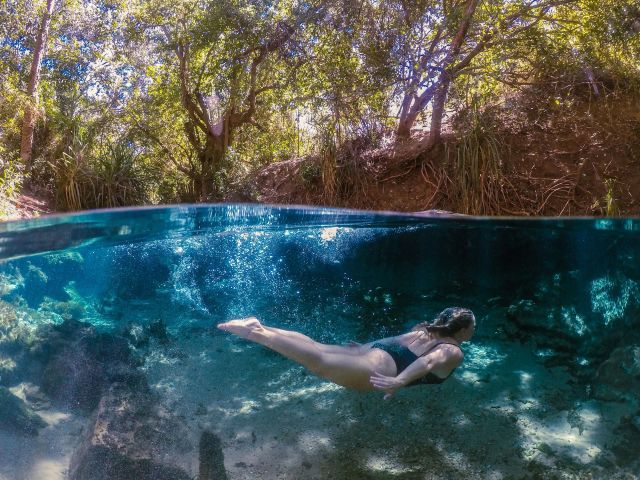
The NT’s natural hot springs are truly picturesque. Katherine’s crystal clear thermal springs sit on the banks of the Katherine River, framed by nature. Picnic grounds and scenic walking tracks make it easy to linger.
In Elsey National Park, the teal waters of Bitter Springs have long been popular with locals. It’s not uncommon to spot turtles as you drift with the gentle current, palm trees waving on the banks. The park also contains Mataranka Thermal Pool, a sandy-bottomed swimming hole sitting at a cosy 34°C year-round.
2. Explore the Red Centre Light Trail
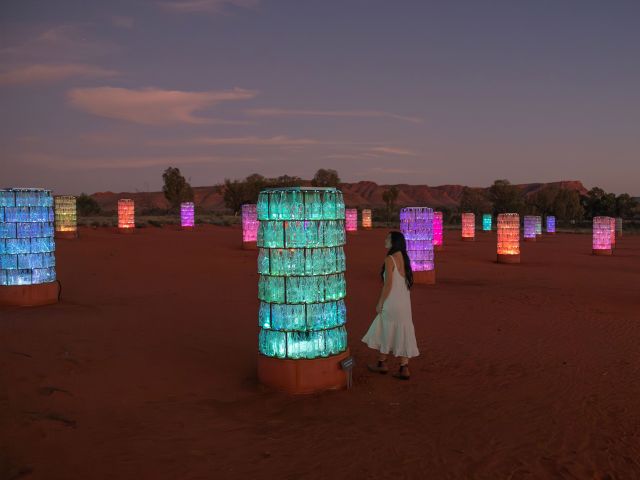
Head to Kings Canyon to see the Light Towers. (Credit: Tourism & Events NT)
Uluṟu-Kata Tjuṯa National Park is more than just a place; it’s earned its name as Australia’s cultural heart. Here, a wealth of stories is held by its Traditional Owners, the Aṉangu. And while there are many ways to connect, in more recent years, the Red Centre Light Trail has offered visitors one more way to interpret all this landscape holds.
Wander the Light Towers at Kings Canyon and watch the Field of Light transform the land before Uluṟu as day turns to night. Also, be sure to take in Wintjiri Wiṟu by light artist Bruce Ramus, sharing the Aṉangu’s Mala story.
Arrive in April to experience Parrtjima, a free annual 10-night festival of light, featuring installations, workshops and more.
3. See unrivalled views from a helicopter
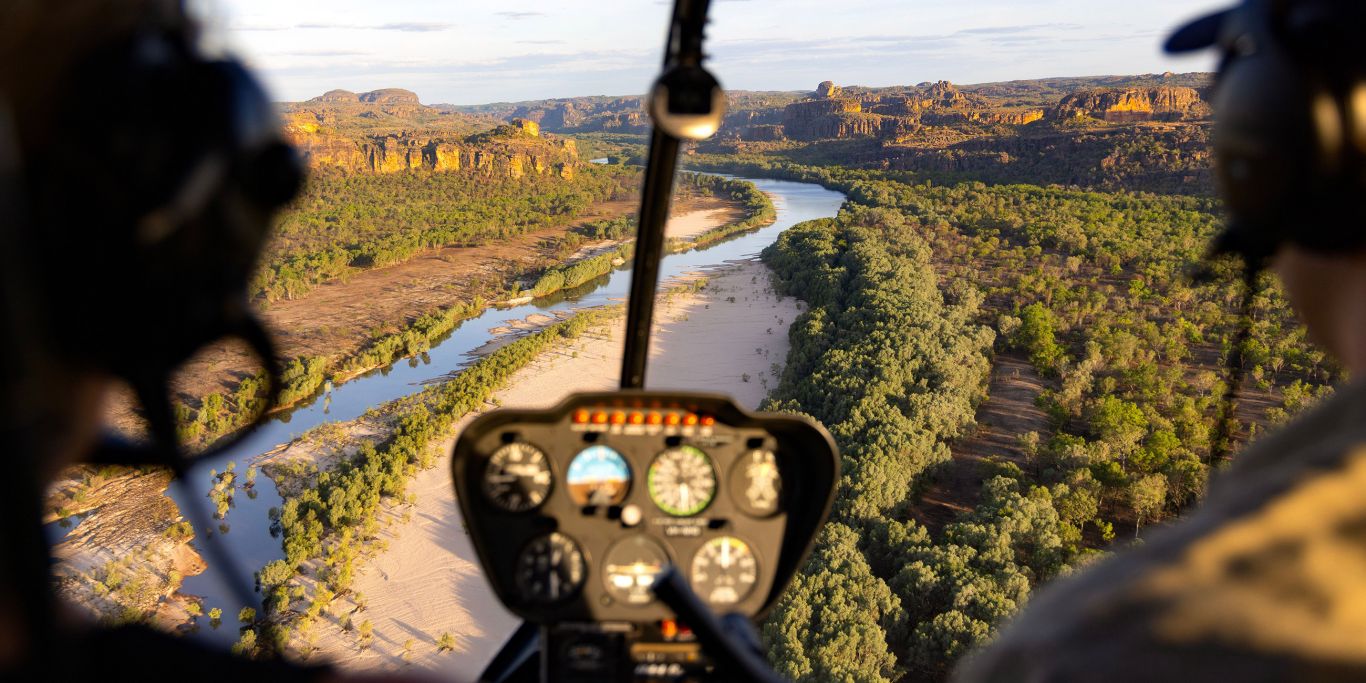
See Kakadu from the air. (Credit: Tourism & Events NT/ Sean Scott)
There’s no better place in the world to hit the skies in a helicopter. Soar over thundering waterfalls, world-famous wetlands and the floodplains of Kakadu National Park. A bird’s-eye view brings a special type of magic to this one-of-a-kind landscape.
You can also meet local characters on the pub crawl of a lifetime as you fly between some of the NT’s best and most remote pubs.
4. Discover the start of Western Arrarnta art
Book ahead to visit Hermannsburg Potters. (Credit: Tourism & Events NT/ Felix Baker)
Hermannsburg is one of the most unique towns in Australia. This historic mission town holds several claims to fame, including being the birthplace of Western Arrarnta art – a renowned style of Indigenous art using vibrant, naturalistic watercolours to depict Central Australian desert landscapes. Book ahead from April to September to visit Hermannsburg Potters, a collective of dedicated Western Arrarnta artists.
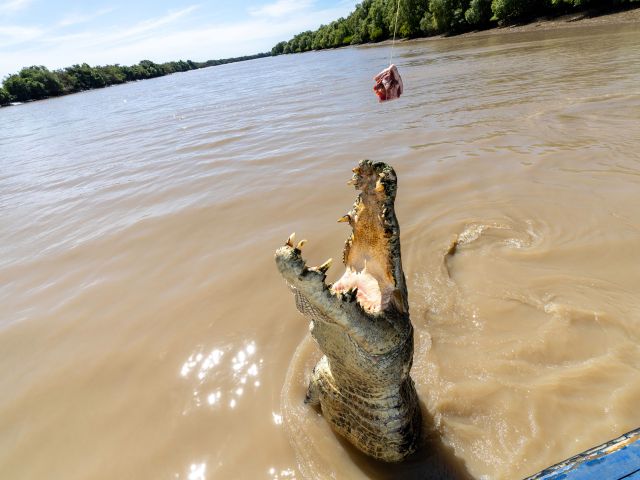
Spot wild crocs up close. (Credit: Tourism Australia)
The NT is the only territory that feeds wild crocs, putting the ‘wild’ in wildlife spotting experience. Join a cruise along the Adelaide River, just an hour from Darwin, to see these not-so-gentle prehistoric giants in their natural habitat.
Be sure to stop into Humpty Doo or Noonamah for lunch on your way back to Darwin. Here, you’ll experience a real NT roadhouse.
6. Experience local Indigenous cultures
Time a trip to Nhulunbuy for the Garma Festival. (Credit: Tourism & Events NT)
The NT offers some of the best opportunities to experience the world’s most ancient living culture. Head to Nhulunbuy in East Arnhem mid-year for the Garma Festival, Australia’s largest Indigenous gathering, with four days of song, dance and art sharing Yolngu culture. Stop into Buku-Larrnggay Mulka Centre in nearby Yirrkala while you’re there, current home of the Yirrkala Church Panels. Painted in 1963, they form one of the first ‘title deeds’ to Country.
Join a celebration of Indigenous music, art, culture and sport at the Barunga Festival, 80 kilometres from Katherine, every June. And year-round, book an Indigenous-led tour through Ubirr, one of the oldest rock art sites in Australia.
7. Meet the larrikins of Alice Springs
Henley on Todd Regatta might be one of the NT’s whackiest events. (Credit: Tourism & Events NT/
Head to Alice Springs at any time of year and you’ll be guaranteed to meet some colourful locals. But to really get to the heart of the eccentricities, mark a few dates on your calendar.
March brings one of the best Pride events in the world, fabAlice. Inspired by the iconic Aussie movie The Adventures ofPriscilla, Queen of the Desert, which was filmed in Alice Springs over 25 years ago, the festival has a strong focus on the art of drag and celebrates LGBTQI+ communities, as well as self-expression in general.
Come August, Todd River’s typically dry, sandy bed comes alive with the world’s only dry river boating event, the Henley on Todd Regatta.
8. Swim in a waterfall with no one else around
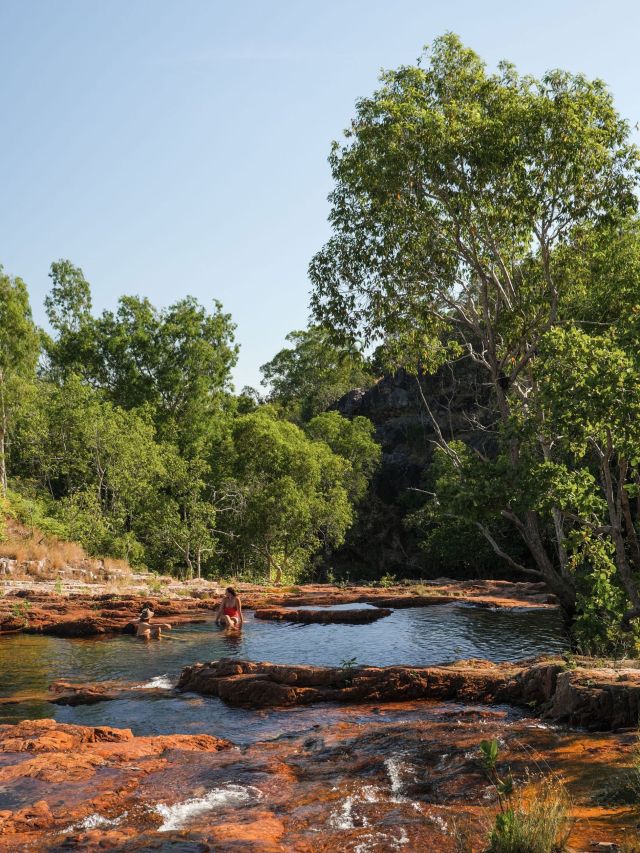
Swim in the Upper Cascades with no one else around.
So few of Australia’s most beautiful places remain untouched, but that’s not true in the NT. Take a short hike through monsoon forest in Litchfield National Park (just over an hour’s drive outside of Darwin) to reach the secluded Cascades swimming area. Here, take a dip in the lower or upper cascade pools, both surrounded by rugged bushland. And you’ll probably have it all to yourself.