A must-read guide to the Three Sisters Walk

hero media
No trip to the Blue Mountains is complete without taking in the jaw-dropping vistas along the Three Sisters Walk.

Rising from the valley floor of the World Heritage Listed Blue Mountains National Park, the Three Sisters are breathtaking, ancient and folded deeply into the lore of the local Gundungurra and Darung People.

The best way to admire the sandstone maidens is by following the approachable Three Sisters Walk, which is helpfully dispersed with lookouts offering different vantage points. While the short, bush-hemmed trail is open to everyone, read on for a few things to know before you go.

What to expect of the Three Sisters Walk

Duration: 25–45 minutes
Distance: 0.8 kilometres return
Difficulty: Easy

Perhaps the best-known icon of the Blue Mountains, the Three Sisters spoils visitors with their monolithic sandstone splendour as they rise nearly one kilometre above sea level. Offering up the best vantage points to take in the sisters’ bush-enclosed beauty, this walk also lays out vistas across the soft-blue haze of the Jamison Valley and leads walkers under eucalypt canopies where bird songs melodically soundtrack the trail.
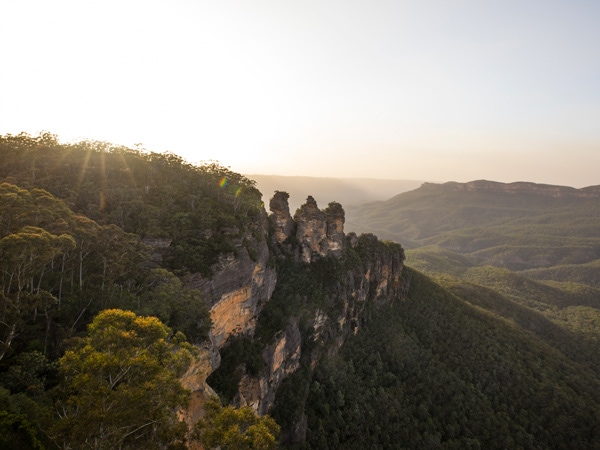
views of the Three Sisters and the Jamison Valley, Blue Mountains National Park
Admire the monolithic sandstone splendour of the Three Sisters. (Image: Destination NSW)

Keep an eye out for the superb lyrebird and vibrant rosellas, as well as spotted tail quolls and the Blue Mountains water skink. Along the way, take your time to absorb the views from Oreades Lookout, Lady Game Lookout and, if you’re eager, take a detour to Spooners Lookout. Pets are not allowed and smoking is prohibited.
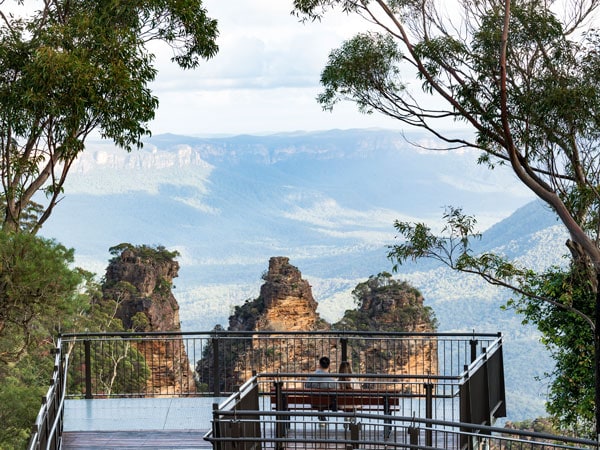
scenic views across the Jamison Valley from Echo Point Lookout in the Blue Mountains
Absorb the views from Echo Point Lookout. (Image: Time Out)

How accessible is the Three Sisters Walk?

This is a family-friendly walk and fairly achievable for smallish children or those that can be carried. For those with limited mobility, seating and rest spots are dispersed frequently along the track.

Prams and wheelchair access with assistance is easy from Echo Point to Oreades Lookout with smooth terrain and no significant slopes. However, beyond this point it’s not recommended as there are some stairs. There is no wheelchair access from Lady Game Lookout to Honeymoon Bridge.
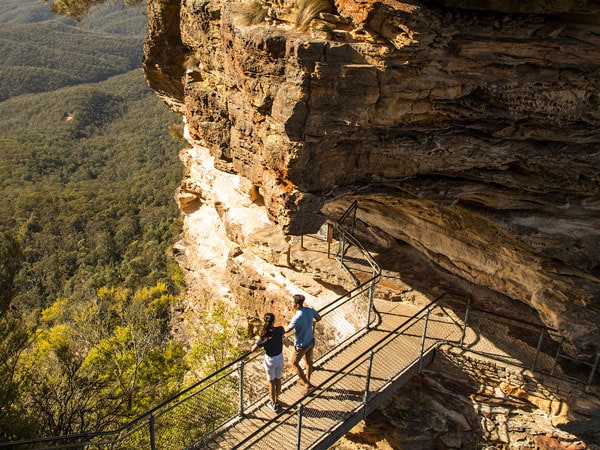
a couple enjoying views from Honeymoon Bridge overlooking the Jamison Valley along the Three Sisters Walking Trail
Honeymoon Bridge is a scenic spot to stop along the trail. (Image: Destination NSW)

Highlights of the Three Sisters Walk

Dramatic valley views and serene bushland make it a popular entry-level trail. In fact, the Three Sisters Walk is often considered to be up there with the best of Blue Mountains hikes.

From here, you can embark on spin-off walks that are longer and some more challenging, such as the Prince Henry Cliff Walk, Dardanelles Pass Loop Track and the Grand Cliff Top Walk. However, if you only have time for one, the Three Sisters Walk is a fantastic option.
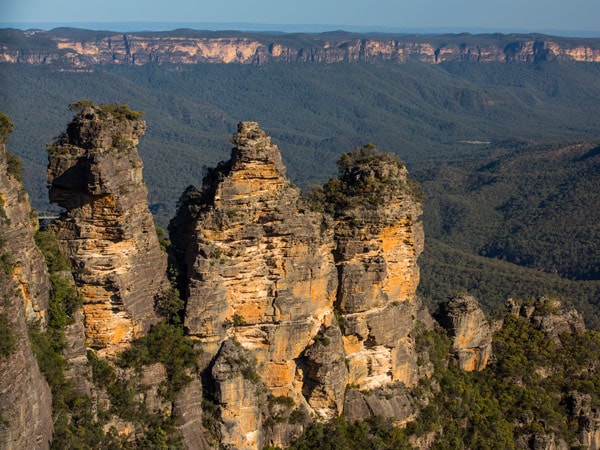
the Three Sisters and the Jamison Valley, Blue Mountains National Park
Three Sisters is an iconic landmark in the Blue Mountains National Park. (Image: Destination NSW)

Echo Point

Starting at the Echo Point Visitor Centre, make your way to Echo Point Lookout, where you’ll be treated to panoramic views of the Three Sisters and Jamison Valley. Also, spot the Ruined Castle and Mt Solitary.
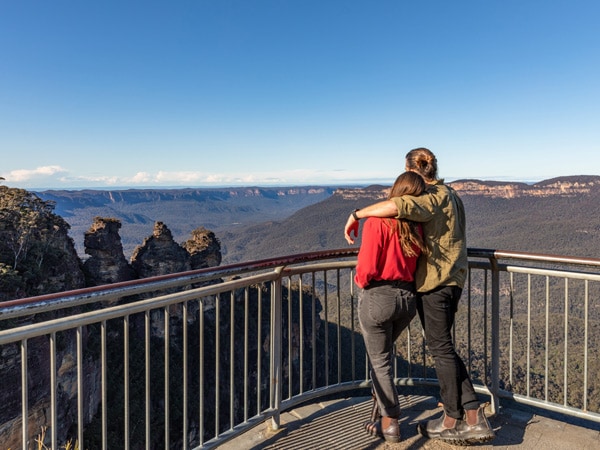
a couple admiring the Three Sisters view from Echo Point Lookout in the Blue Mountains
Take in panoramic views of the Three Sisters from Echo Point Lookout. (Image: Destination NSW)

Oreades and Lady Game lookouts

Sweeping views of the valley unfurl as you step out onto the viewing platform at Oreades Lookout. There’s plenty of room at this lookout to get your money shot and soak up those mountain vibes. Then its another 50 metres to reach Lady Game Lookout, where you find yourself at an even closer vantage point. Another stone archway to the side of the lookout leads onto the Giant Stairway.

Giant Stairway

Leading into the Jamison Valley by way of nearly 1000 steps, the Giant Stairway lives up to its name. If you’re not keen to tackle the full staircase, you need only take a handful of steep steps to reach the first of the Three Sisters via Honeymoon Bridge.

Honeymoon Bridge

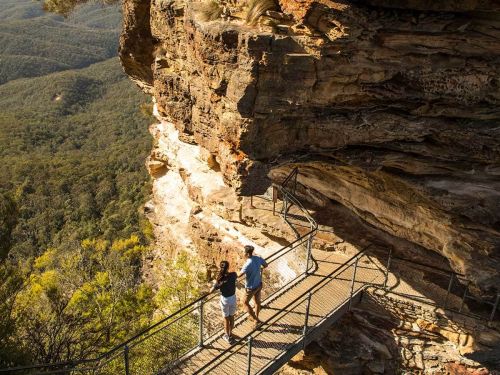
This is the last part of the walk and, of course, optional for the vertigo prone. It connects walkers to an overhang on the First Sister, where you can look back to the Giant Stairway. There’s not much space on the other side, so take a quick snap and head back across.
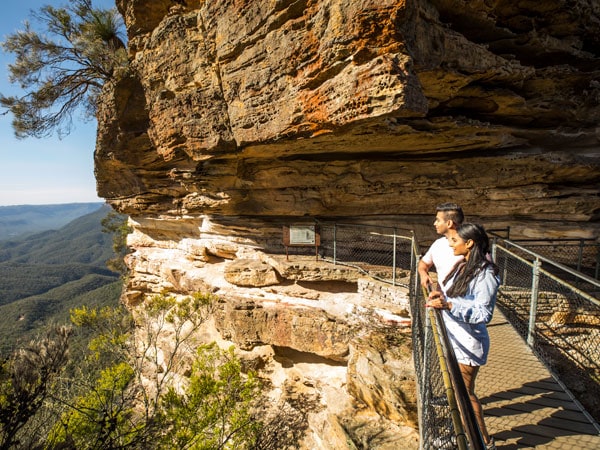
a couple overlooking the view from Honeymoon Bridge
Honeymoon Bridge is the final section of the trail and the one that gets you closest to the sisters. (Image: Destination NSW)

Spooners Lookout

A short detour from your return journey will lead you to Spooners Lookout, from where you may marvel at the Three Sisters welded to the valley below. It’s just five minutes extra, but worth the extra steps. The lookout is also accessed from Echo Point Visitor Centre and is wheelchair-friendly.

About the Three Sisters

Long a significant part of the landscape for the Gundungurra and Darung People, the Three Sisters continue to embody deep cultural importance for Traditional Custodians.

The Dreaming story of the Sisters does vary between groups, however, as told by Sharon Brown of the Burragurrang Clan of the Gundungurra Nation, the tale speaks of three beautiful sisters, Wimalah, Meeni and Gunedoo, who were in love with three brothers from the neighbouring nation of the Dharruk people.
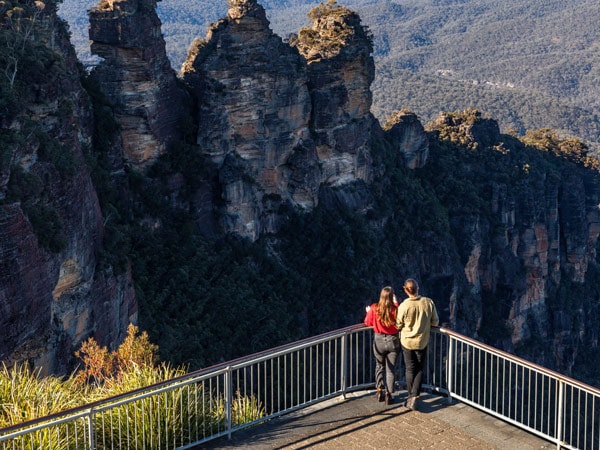
an aerial view of the Three Sisters from Echo Point Lookout in the Blue Mountains
The Three Sisters are of deep cultural importance to the traditional custodians of the region. (Image: Destination NSW)

Tribal law forbade their union, but this failed to deter the brothers, who fought to win the sisters by force. Eventually the skirmish led clever man (Kuradjuri) to turn the sisters to stone for their own safety, with the full intention of restoring them to flesh and blood once the fighting had ceased.

Unfortunately for the sisters and their would-be lovers, Kuradjuri died in the battle, and so they remain stone-bound and unmarried for eternity.
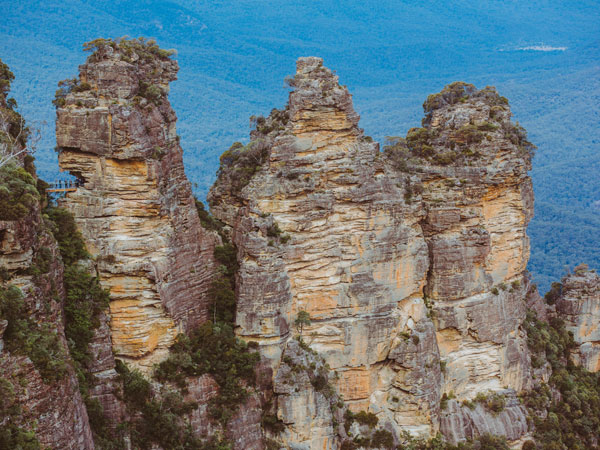
the Three Sisters, Blue Mountains
The Three Sisters rose from the northern escarpment of the Jamison Valley. (Image: Tourism Australia)

In a geological and perhaps less thrilling interpretation of events, the Three Sisters were formed from Hawkesbury sandstone by land erosion and volcanic activity around 200 million years ago.

Today, their rough-hewn and craggy beauty is shrouded in a touch of mystery and their engaging Dreamtime story continues to draw visitors from sunrise to sunset as they ponder whether the entrapped sisters will ever be free to love.
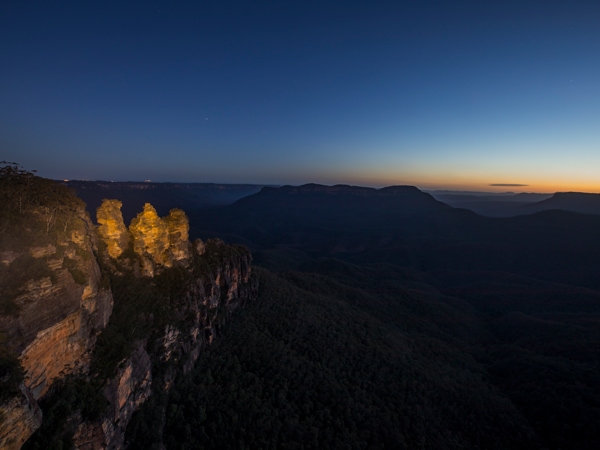
sunrise views over Three Sisters and the Jamison Valley, Blue Mountains National Park
The sun rises over Three Sisters and the Jamison Valley. (Image: Destination NSW)

Safety information

As with all bushwalking, it’s important to be properly prepared. While the Three Sisters Walk is a short and relatively easy track, if you decide to add on another walk or tackle the Giant Stairway, be sure to pack enough water, wear sun protection and let someone know where you’re going.
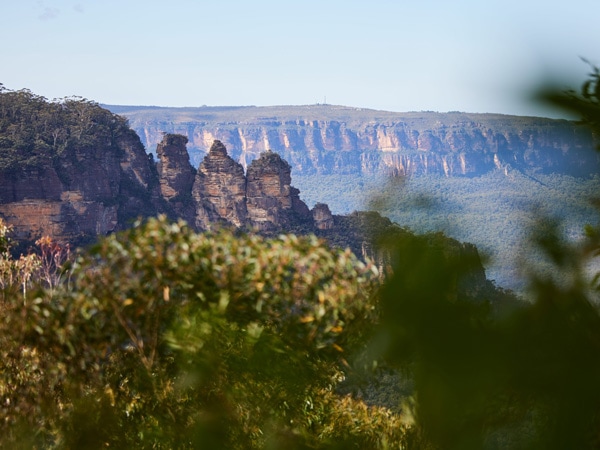
The Three Sisters in the Blue Mountains
Capture the magnificent beauty of the iconic Three Sisters. (Image: Destination NSW)

Parts of the Three Sisters Walk are close to cliff edges. Use caution and common sense, especially during busy periods, and keep children close at all times. Also, you can check the National Parks website ahead of your trip to make sure there are no closures or bushfire alerts.
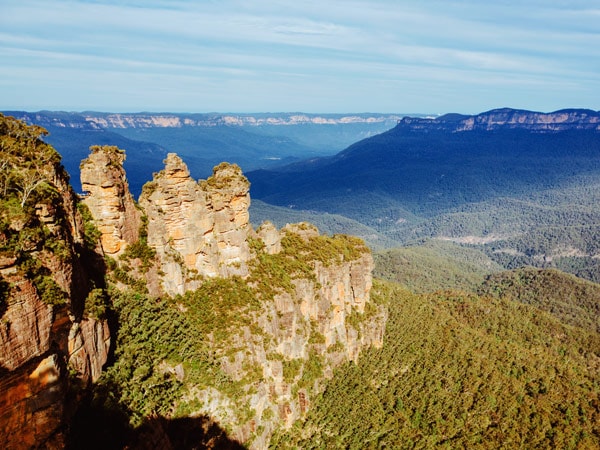
an aerial view of the Three Sisters, Blue Mountains,
Be sure to prepare before you go to the Three Sisters Walk. (Image: Tourism Australia)

Getting there and parking

Just an hour and a half from Sydney, you can reach the Three Sisters Walk from Echo Point Visitor Centre in Katoomba.

Parking is available at the Echo Point car park and on nearby streets, and there are designated disabled spaces. The car park does fill up on weekends, so try to arrive early and allow plenty of time.
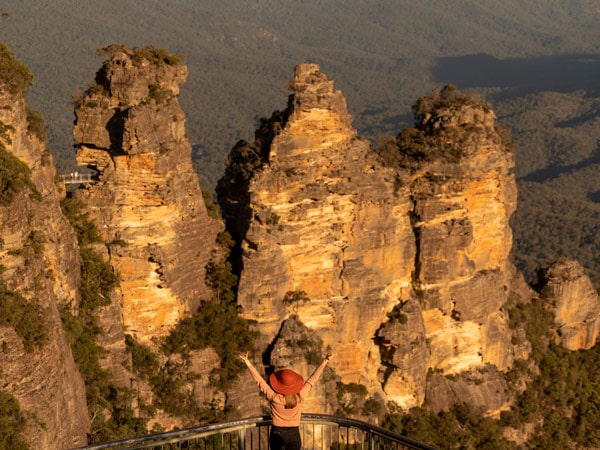
a woman posing with arms raised with Three Sisters in the background
Strike a pose in front of the spectacular sandstone backdrop. (Image: Tourism Australia)

Things to do nearby

There’s plenty to do around Katoomba and around once you’ve completed the Three Sisters Walk, with plenty to add to your day’s itinerary. Pop across the valley to Scenic World, where you can ride the world’s steepest railway. Cool off at a local waterfall, or hit nearby Leura’s eclectic collection of boutiques and shops.

If you’re here on a weekend, you should also check to see if any of the local markets are running. Or head over to Mountain Culture Beer Co, one of the best watering holes in the Blue Mountains, for a delicious craft beer and fried pickles.
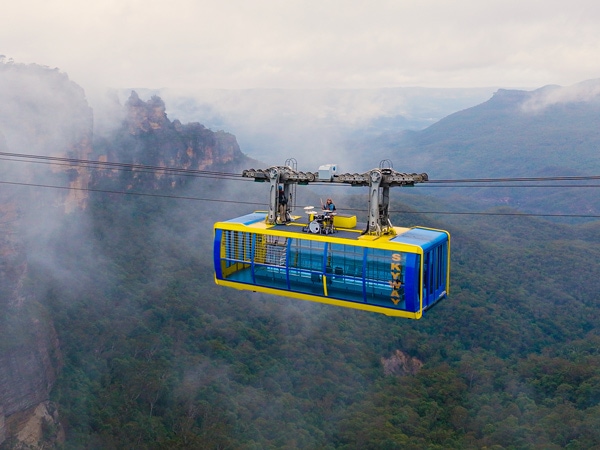
a cable car soaring above sandstone ridges and Eucalyptus forests
Soar above Jamison Valley on the Scenic World cable car. (Image: Destination NSW)
Lara Picone
Working for many of Australia’s top publications, Lara Picone has had the distinct pleasure of writing, editing and curating content about the finer things in life for more than 15 years. Graduating from Macquarie University with a Bachelor of Arts in Communication, her editorial foundation began at Qantas: The Australian Way magazine, before moving on to learn the fast-paced ropes of a weekly magazine at Sunday Magazine and picking up the art of brand curation at donna hay magazine. Pivoting a near-problematic travel lust into a career move by combining it with storytelling and a curious appetite, her next role was as Deputy Editor of SBS Feast magazine and later Online Editor of SBS Food online. She then stepped into her dream job as Editor of Australian Traveller before becoming Online Editor for both International Traveller and Australian Traveller. Now as a freelancer, Lara always has her passport at-the-ready to take flight on assignment for the Australian Traveller team, as well as for publications such as Qantas Magazine, Escape and The Weekend Australian. As ever, her appetite is the first thing she packs.
See all articles
hero media

7 great day trips from your Coffs Coast homebase

Make this dazzling stretch of beaches and natural wonders your home base for a grand adventure

Whether you’re setting out solo, bringing a mate, or packing in the whole family, no road trip along Australia’s East Coast is complete without at least a few days spent exploring the Coffs Coast. A stunning stretch of NSW coastline nestled between ancient high-elevation rainforests and magnificent, undiscovered beaches, Coffs offers amazing biodiversity, stunning natural beauty, and heaps of local charm, without the crowds. Pull up in Coffs Harbour , your perfect home base for these unforgettable day-trips.

1. Southern Beaches

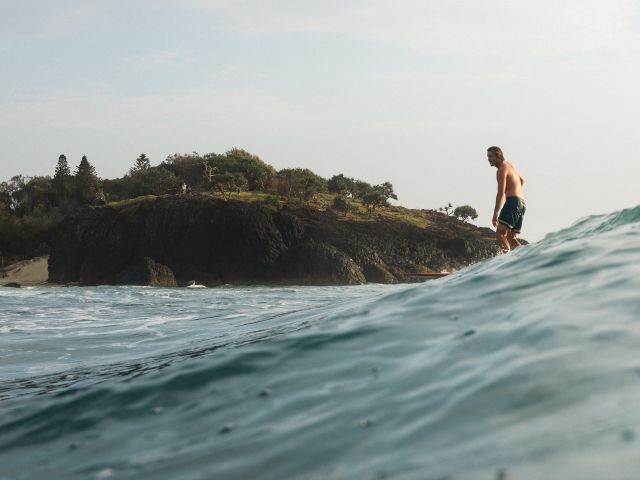
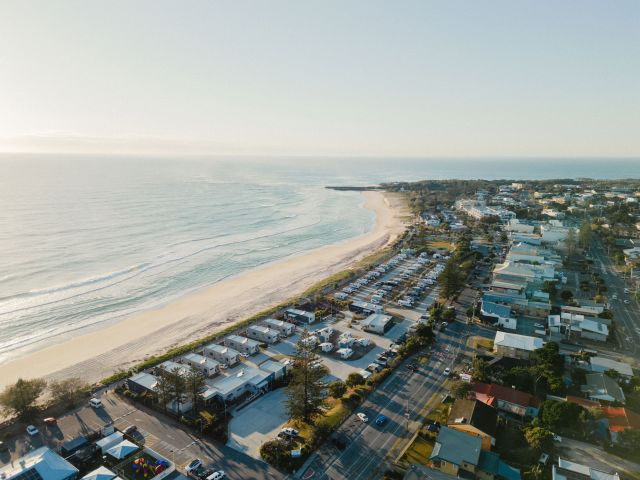
The Coffs region boasts 30 of Australia’s most beautiful, unspoiled beaches, directly abutting a dramatic tableau of mountains and rainforests. Drive South of Coffs Harbour to find up-and-coming surf destinations where it’s still possible to catch an empty wave. First up is the picturesque Sawtell village . Wander the famous fig-tree-lined main street packed with laid-back places to eat and drink. Enjoy panoramic views and seasonal whale sightings at Bonville Headland on the Southern end of the beach.

Nearby Bongil Bongil National Park boasts seven kilometres of empty beach, along with hiking and cycling trails through beachfront rainforests – keep an eye out for koalas living in the trees. Boambee Beach and Boambee Creek Reserve are great for families, with shallow waters perfect for kayaking and SUPing, plus an off-leash dog beach.

family eating lunch in sawtell
Experience small-town charm in Sawtell.

2. Orara Valley Tourist Trail

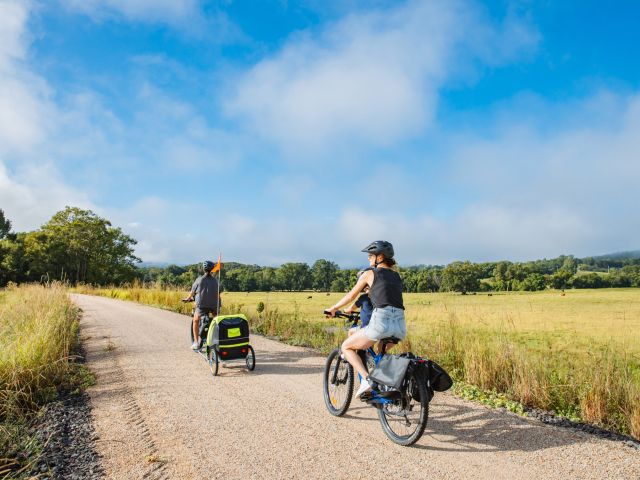
The Orara Valley Tourist Trail has it all: hinterland bushwalks, birdwatching, horse riding, pristine swimming holes and rolling green pastures dotted with dairy farms and historic villages. And it’s only 15 minutes west of Coffs Harbour.

Sample produce at a roadside stall, stop into Coramba Hotel for a quintessential country pub lunch, or try the Idle in Cafe in Nana Glen for coffee and scones. Then spend the afternoon kayaking the Orara River or mountain biking on Mt Coramba. If you’re feeling adventurous, follow the 4WD touring route along the Orara Escarpment in Bindarri National Park , a rugged landscape with dazzling views that winds through untouched eucalypt rainforests and waterfalls.

A family sitting by the Orara Valley Tourist Trail.
Explore the green heart of Coffs.

3. Dorrigo National Park

Enjoy a classic day trip from Coffs to forest bathe in some of the oldest subtropical rainforests in the world at Dorrigo National Park, part of the World Heritage-listed Gondwana Rainforests. These million-year-old ecosystems promise rare bird sightings, towering strangler figs, and epic walking tracks and picnic spots. Try the 6.6 km Wonga Walk to experience dreamy Crystal Shower Falls (where you can walk behind the falls) and the Skywalk Lookout, which offers spectacular views of the valley and coast. Then stop in Dorrigo town for a homey lunch. It’s worth noting that a section of the road between Ulong and Dorrigo – which dates to the 1880s – is unsealed, adding to the area’s end-of-the-earth allure but making travel difficult in adverse weather conditions. Alternatively, head to Dorrigo via the delightful township of Bellingen .

Three people standing at the SkyWalk lookout.
Wander the Skywalk.

4. Northern Beaches

For another tranquil expanse of sun, sand and surf breaks, head north to Woolgoolga (Tourism Australia’s Best Mainland Beach for 2025. Taste the coffee and local-produce breakfast at one of several cafes, then spot whales during their migration season along the Woolgoolga Whale Trail to the headland. Emerald Beach offers clear blue waters and another headland walk, perfect for taking in views of South Solitary Island, a dramatically rocky-cliffed island with a historic lighthouse. Red Rock, some 40km north of Coffs and named for its striking coastal rock formations, boasts a gorgeous estuary reserve that’s perfect for languorous days spent picnicking, swimming, fishing, and connecting with the relaxed local pace.

Freshly caught seafood by the beach, with sparkling ocean views.
Enjoy fresh seafood overlooking Woolgoolga Beach.

5. Jetty precinct

You could easily spend a whole day exploring the Jetty precinct – from its foreshores to the marina to Muttonbird Island. Start with fresh fish and chips from local institution Coffs Harbour Fisherman’s Co-op , before browsing the popular Harbourside Markets held every Sunday on the foreshores.

Take a scenic walk along the breakwall to Muttonbird Island , a cultural and ecological treasure with panoramic views and rich Gumbaynggirr heritage. The Giidany Miirlarl Education Space shares the island’s ancient stories, or join a guided moonlight tour to see the seasonal return of the muttonbirds.

Back at the Jetty Strip, find a buzzing mix of cafes, bars and restaurants with cuisines from around the world, open from morning until late. Don’t miss The Jetty Pavilion , a favourite for its unique menu blending modern Australian cuisine with vibrant world flavours.

walk to muttonbird island from coffs harbour
Walk the path where land meets sea and sky.

6. Grafton

Head inland from mid-October to early November to catch Grafton’s jacaranda season, when the town’s streets and parks are covered in purple. Even better, time your trip between 24 October and 2 November to attend the famous Jacaranda Festival, with special food items, performances and more. At any time of year, follow the self-guided Grafton Heritage Trail to discover the town’s historic buildings, landmarks and stories. Or get the blood pumping with a trip along the longest mapped white-water trail in Australia – the Clarence Canoe and Kayak Trail. Book a tour with Exodus Adventures .

woman walking through jacaranda trees in grafton
Time your Grafton trip to see the jacarandas in full bloom. (Image: @myclarencevalley)

7. Nambucca

Just south of Coffs Harbour sits Nambucca, the ideal town for a relaxed, coastal day trip. Hire a canoe, kayak or boat to explore over 80 kilometres of waterways stretching from the hinterland to the ocean. For those who prefer to stay on dry land (or double up their adventure for the day), stretch your legs along the V-Wall – a scenic coastal walk along the Nambucca River – dotted with boulders painted by the community, sharing messages, art and local stories. Stop along the way to buy Sydney rock oysters direct from local farmers, or try your own hand at fishing. Before heading back to Coffs, refuel on fresh seafood and wood-fired pizzas at Matilda’s in Nambucca .

a boat zooming through Nambucca Heads
Explore Nambucca’s waterways. (Image: Seen Australia)

Visit coffscoast.com and download the Coffs Coast Explorer App for more daytrips and trails.