8 breathtaking Lord Howe Island walks and hikes

hero media
Whether you’d like to test your mettle or adopt an unhurried pace, these are the best walks and hikes for discovering the beauty of Lord Howe Island.

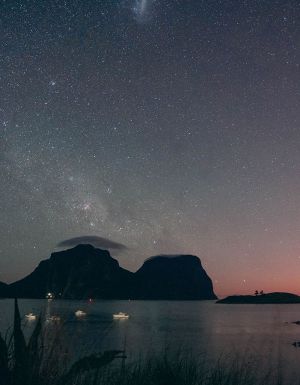
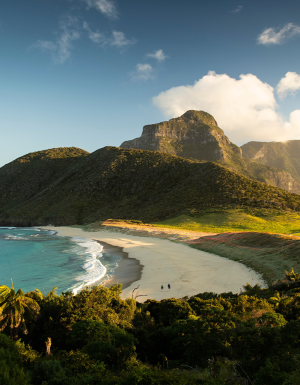
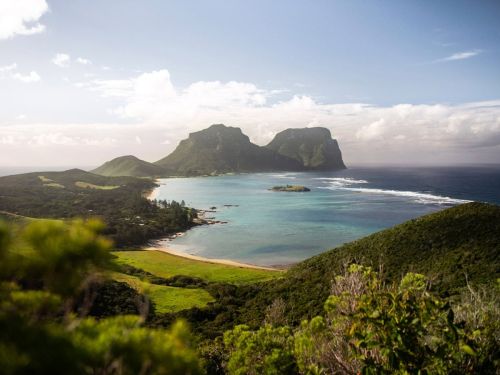
Looming from the sea as if a mirage, the UNESCO World Heritage Lord Howe Island easily evades comparison to any other island. Fringed by impossibly clear, cyan-hued waters and with lush sub-tropical forests draped over soaring mountains, it offers some of the most dramatic and beautiful terrain in Australia.

With heart-snatching views, adrenalin-spiking trails, and sparkling hidden coves, the island is crisscrossed with incredible treks and walks. From multi-day challenges to gentle strolls, these are the best Lord Howe walks and hikes.

1. Seven Peaks Walk

Distance: 45km

Time: 5 days

Difficulty: Moderate to hard (with options)

Terrain: Bush trails with steep and rope sections, rocky and beach walks

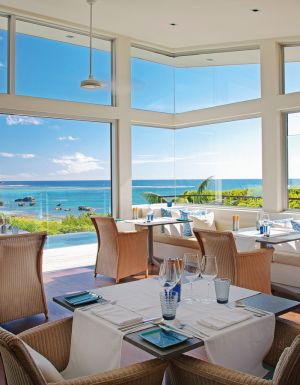
The king of all Lord Howe hikes, this five-day, six-night adventure is part of the Great Walks of Australia  collection and is run by the wonderful people at Pinetrees Lodge.
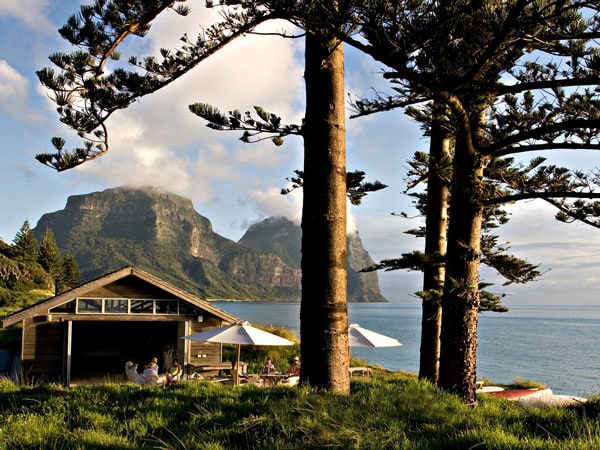
the Pinetrees Lodge on Lord Howe Island
Experience laid-back luxury on the picturesque Lord Howe Island. (Image: Pinetrees Lodge)

You’ll hit all the high notes as you’re guided by United Nations ecologist, Luke Hanson, who is as knowledgeable as he is deeply enthusiastic about his island home.
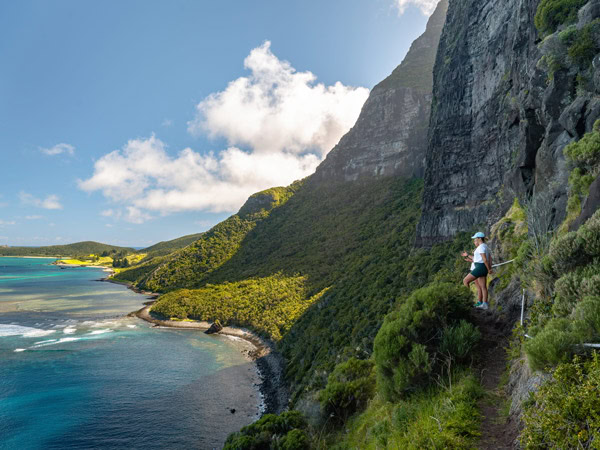
a hiker traversing the Seven Peaks Walk
Tackle the Seven Peaks Walk. (Image: Tourism Australia)

You’ll take in spectacular vistas from North Head and Mount Eliza, Kims and Malabar Hill, and cool off in the crystalline waters of the island’s pristine beaches.
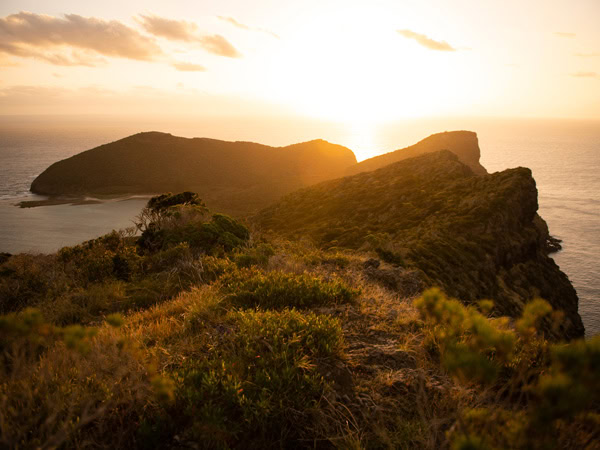
sunset views over the North Head, Lord Howe Island
The sun peeks over North Head, Lord Howe Island. (Image: tom-archer.com)

Packed into the itinerary is also a water day, where hikers may swap boots for boats and choose their own aqua adventure, be it beach lounging, kayaking or snorkelling the outer reef.
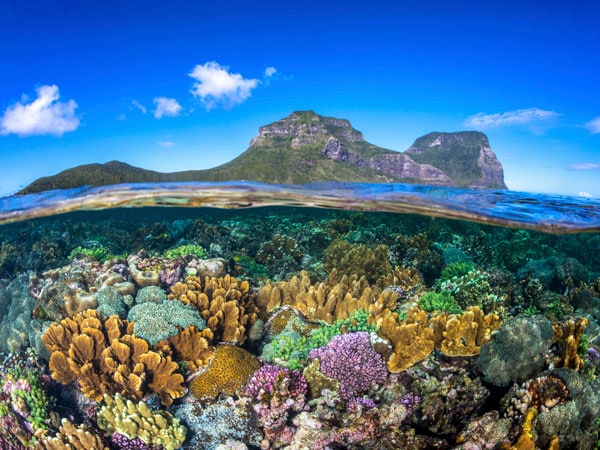
colourful coral gradens surrounding Lord Howe Island with views ofMount Lidgbird and Mount Gower
Swim past colourful coral gardens. (Image: Jordan Robins)

The final and most challenging day featuring the formidable Mount Gower summit comes with an optional bail out to explore off-track spots on Mount Lidgbird instead.
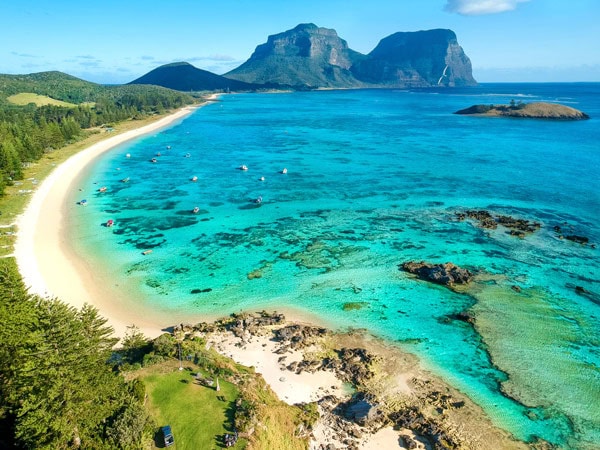
an aerial view across Lord Howe Island to Mount Gower
Take in the beautiful scenery across Lord Howe Island to Mount Gower. (Image: Mark Fitzpatrick; Destination NSW)

2. Mt Eliza

Distance: 600m

Time:

Difficulty: Moderate

Terrain: Rocky and steep

Pretty little Mount Eliza climbs upwards to a lofty 147 metres above sea level. It’s a rocky and steep scramble to the top, but up here you’ll be rewarded with a sweeping lay of the island’s north section.
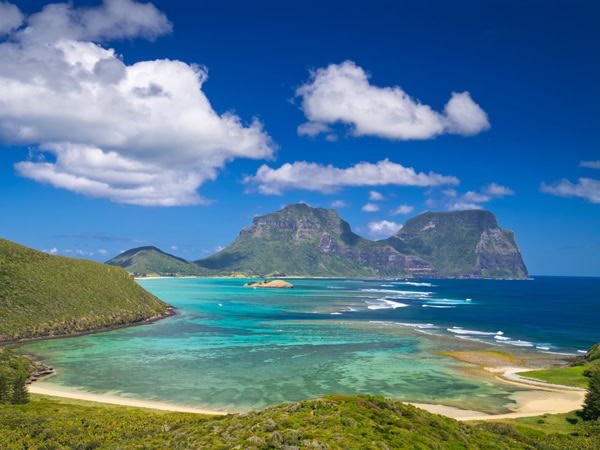
Mt Lidgbird and Mt Gower as seen from Mt Eliza
Take in spectacular views from the summit of Mt Eliza. (Image: photosbyash via Getty Images)

Twitchers will be disappointed that between September and March the track is closed on account of nesting sooty turns and their newborns. At all other times, follow the track up Eliza from the North Bay picnic area.
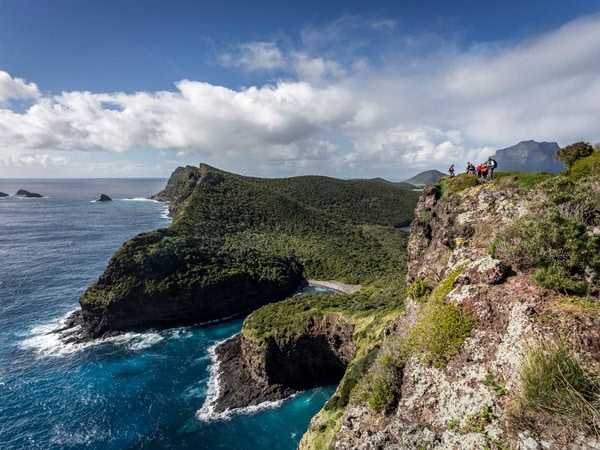
coastal views from the Seven Peaks Walk, Mt Eliza
Be rewarded with sweeping vistas of the island’s north section. (Image: Pinetrees Lodge)

3. Mount Gower

Distance: 4.5 kilometres (one way)

Time: 8–10 hours

Difficulty: Demanding

Terrain: Steep, narrow, rocky

A colossal sentinel overseeing the paradise below, Mount Gower presents an irresistible, boast-worthy challenge for experienced hikers. But no matter how mountain-ready you are, you’ll only be able to hike Gower with a licenced guide and for good reason, as conquering the summit requires an intimate understanding of the landscape and its climate.
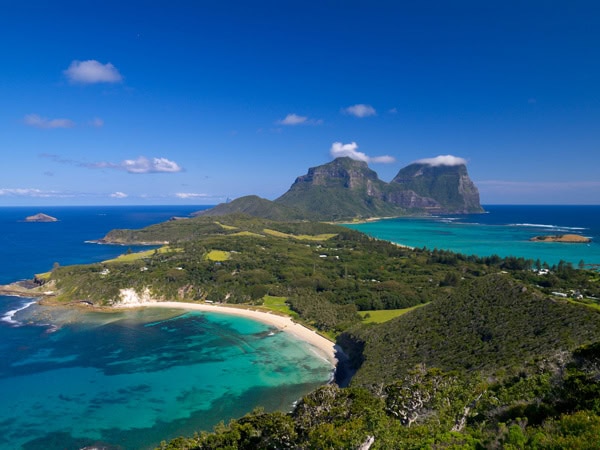
Mt Gower as seen from Malabar lookout
Hike Mount Gower and admire the paradise below. (Image: photosbyash via Getty Images)

Taking around eight hours up and back, the difficulty pays dividends when you eventually reach the cool, mist-shrouded and fern-festooned forest at 875 metres high.
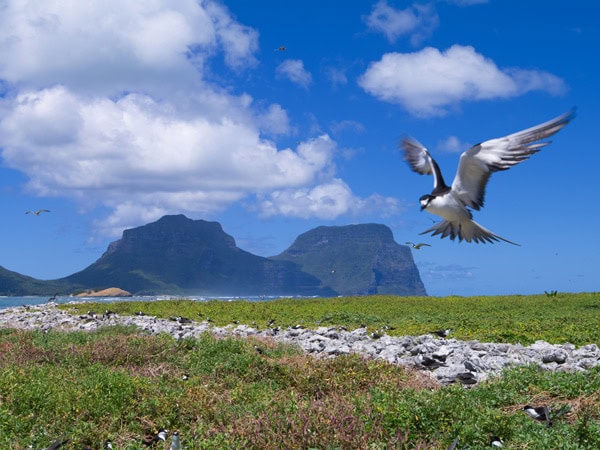
a Sooty Tern flying above North Bay on Lord Howe Island
Spot native birdlife at North Bay on Lord Howe Island. (Image: photosbyash via Getty Images)

Along the way, you’ll be tested with a vertiginous rope section and steep, rocky trails. But you’ll also be treated to clear views of Balls Pyramid and Mount Lidgbird, as well as native birdlife and you’ll return to sea level with a sizeable feeling of accomplishment.
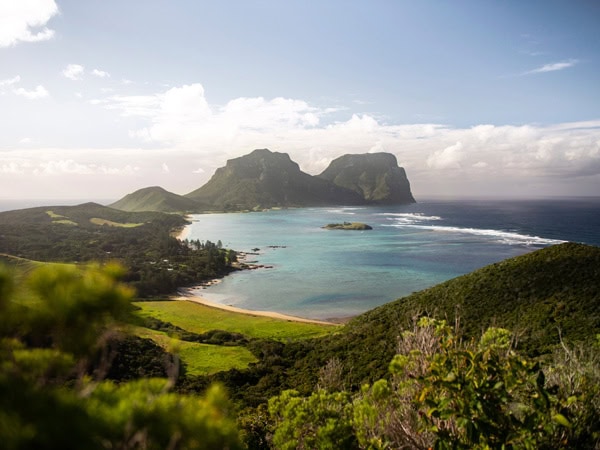
coastal views across Mount Lidgbird and Mount Gower, Lord Howe Island
The views across Mount Lidgbird and Mount Gower are nothing short of spectacular. (Image: tom-archer.com)

4. Malabar Hill to Dawsons Point Ridge

Distance: 1.5km (one way)

Difficulty: Moderate

Terrain: Steep with rocks and tree roots

Begin this walk from Neds Beach after a reviving morning swim. You’ll ascend a grassy slope up to Pooles lookout from which you can spend a few moments soaking in the large format beauty before following the track onto Malabar Hill, which rises 208 metres.
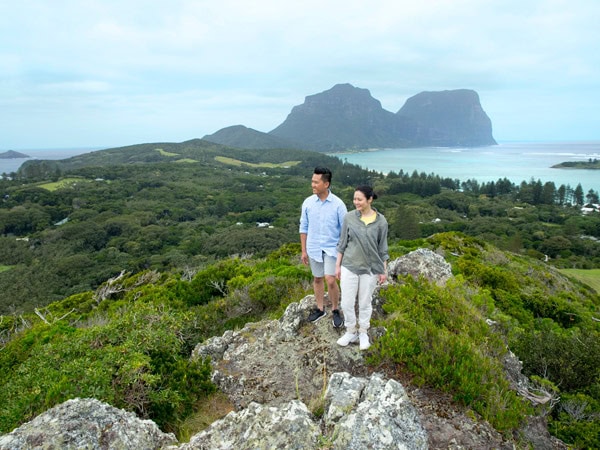
a couple admiring Lord Howe Island on top of Malabar Hill
Walk up the Malabar Hill for panoramic views. (Image: Destination NSW)

The cliff-hugging track pauses at Kims Lookout en route to Dawsons Point Ridge, where a right hand turn will lead you down stairs to North Bay, where you can conclude your hike with another deserved dip.
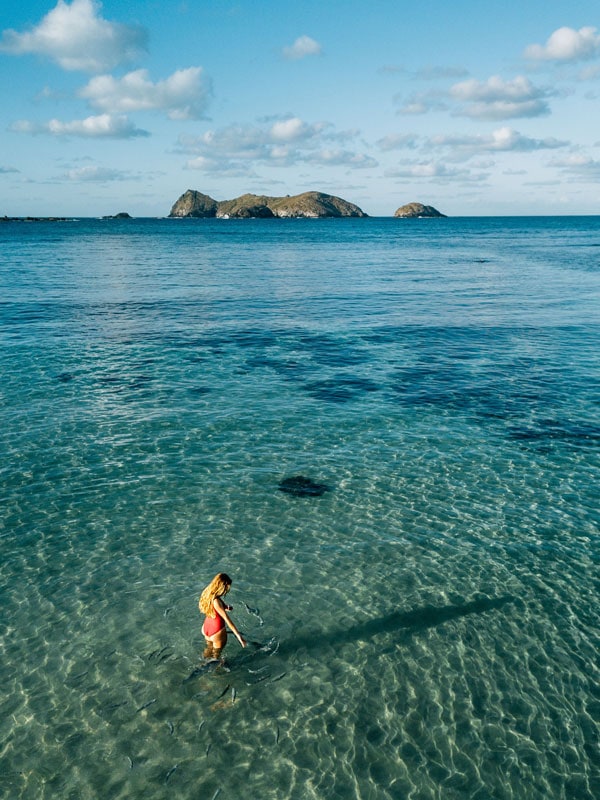
a woman fish feeding at Ned's Beach, Lord Howe Island
Head to Ned’s Beach for an early morning swim. (Image: Tourism Australia)

5. Goat House Cave

Distance: 2.1km (one way)

Time: 3–4 hours

Difficulty: Difficult

Terrain: Steep and rocky

Pack your lunch and your valour for this walk to Goat House Cave on Mount Lidgbird. You’ll need both sustenance and fortitude to complete this, at times, vertigo-inducing hike. Ropes are required in parts and exposure to the elements on the way to the cave may tap into your reserves of resolve, but if you push onwards the attention-seeking views will more than compensate.
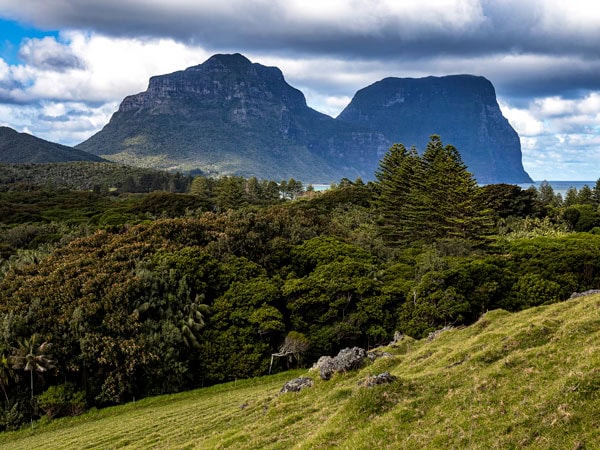
Mt Gower and Mt Lidgbird on Lord Howe Island
Follow the scenic route on Mount Lidgbird. (Image: colbourne49 via Getty Images)

The walk begins sedately enough with a boardwalk section through Soldiers Creek Valley, but as the pandanus and endemic kentia palms give way to the more exposed Smoke Tree Ridge and Intermediate Hill, you’ll get an inkling things are looking up – way, way up. It’s a thigh-burning ascension with the final climb a work of willpower for those not entirely OK with heights, but at the top, Lord Howe’s best view is laid out for you.
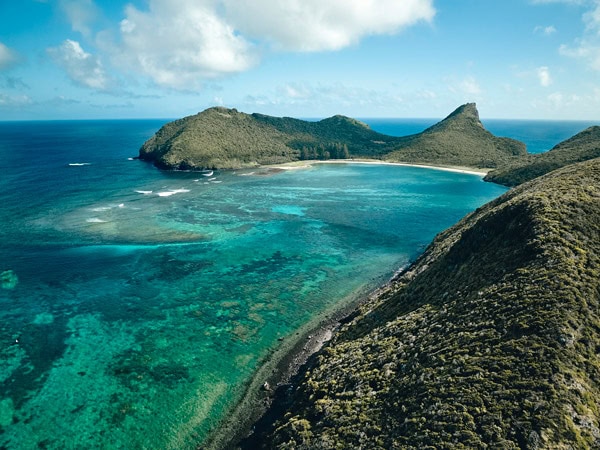
an aerial view of Lord Howe Island
Capture the best view of Lord Howe Island. (Image: Destination NSW/Eugene Tan)

6. Intermediate Hill

Distance: 1km

Difficulty: Moderate

Terrain: Steep

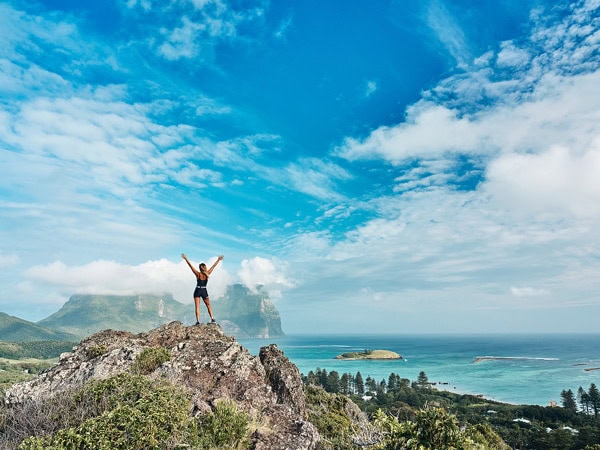
It’s quite the uphill burn, but given the comparatively formidable peaks elsewhere on the island, the 250-metre summit of Intermediate Hill is, well, intermediate. The viewing platform at the top is worth tomorrow’s stiff legs, though, with vast and sweeping blues and greens punctuated by the Balls Pyramid sea stack. You can go back the way you came, or if you’ve not quite had enough of a challenge, follow the steep descent via Smoking Tree Ridge.
a woman standing on top of Lord Howe Island
Soak up panoramic ocean views from the summit. (Image: Destination NSW/Eugene Tan)

7. Old Gulch and the Herring Pools

Distance: 300-metres plus extra

Difficulty: Easy to moderate

Terrain: Boardwalk and rocks

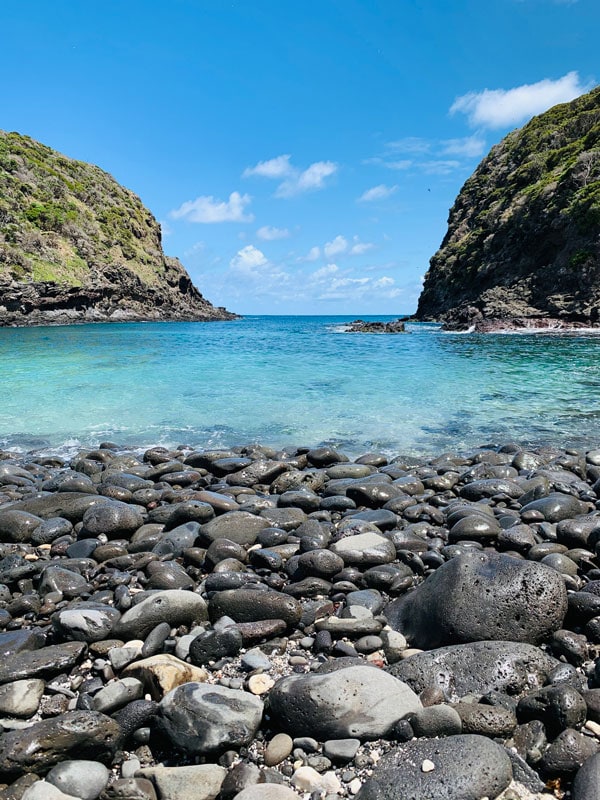
From North Bay, a leisurely stroll along the boardwalk will lead you to the crystalline, rocky cove of Old Gulch, which is pleasant enough if you’d like to stop there. But, not far beyond is one of the island’s hidden treasures. You’ll need a low tide and a south wind to rock hop it around the eastern ledge to the Herring Pools. These deep and beguiling coral-lined plunge pools are fascinating to snorkel, so bring your mask for the dip. You can either return the way you came or – if you’re an experienced swimmer – jump off the ledge and swim the 300 metres back to shore.
the rocky cove of Old Gulch
Stroll along the crystalline, rocky cove of Old Gulch.

8. Little Island

Distance: 3km

Difficulty: Easy

Terrain: Mostly flat

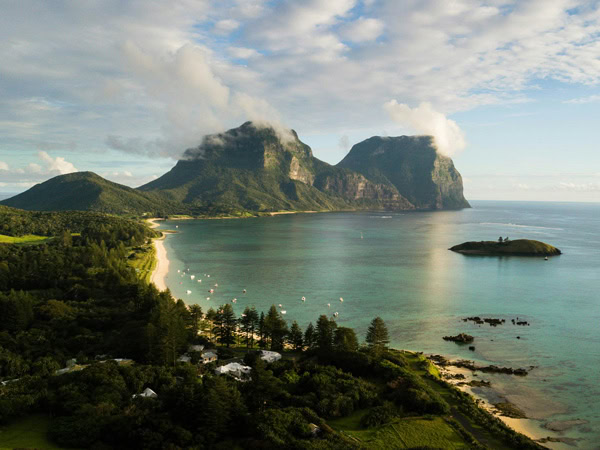
While the southern end of the island has some of Lord Howe’s most intimidating peaks (looking at you, Mt Gower and Mt Lidgbird), there are also plenty of accessible spots for a gentle walk. Beginning at the southern end of Lagoon Road, this flat wander through the forest of banyan trees and kentia palms deposits you at a grassy clearing in the immense shadow of the twin peaks.
an aerial view of Mt Lidgbird and Mt Gower
The hike deposits you at a grassy clearing so you can take in the views. (Image: Unsplash/Dylan Shaw)

One of the most incredible moments of the island happens here between March and September, when the rare Providence Petrels swarm around the mountain tops at sunset. Holler out to the birds with a special call the locals will share with you and watch the seabirds clumsily tumble from the sky to satiate their curiosity.
scenic coastal views on Lord Howe Island
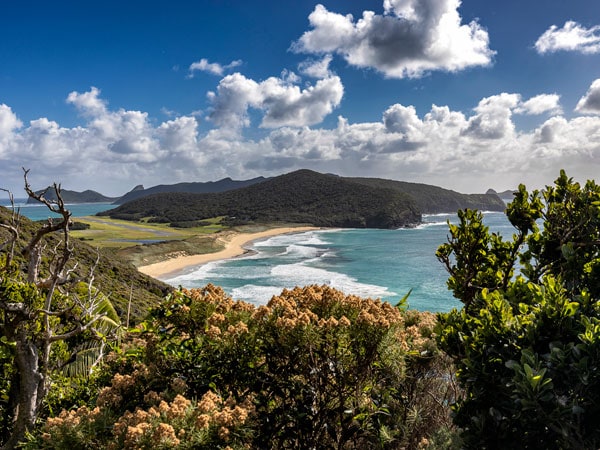
The UNESCO World Heritage Lord Howe Island boasts cyan-hued waters and lush sub-tropical forests. (Image: colbourne49 via Getty Images)
Check out the best Lord Howe Island Accommodation.
Lara Picone
Working for many of Australia’s top publications, Lara Picone has had the distinct pleasure of writing, editing and curating content about the finer things in life for more than 15 years. Graduating from Macquarie University with a Bachelor of Arts in Communication, her editorial foundation began at Qantas: The Australian Way magazine, before moving on to learn the fast-paced ropes of a weekly magazine at Sunday Magazine and picking up the art of brand curation at donna hay magazine. Pivoting a near-problematic travel lust into a career move by combining it with storytelling and a curious appetite, her next role was as Deputy Editor of SBS Feast magazine and later Online Editor of SBS Food online. She then stepped into her dream job as Editor of Australian Traveller before becoming Online Editor for both International Traveller and Australian Traveller. Now as a freelancer, Lara always has her passport at-the-ready to take flight on assignment for the Australian Traveller team, as well as for publications such as Qantas Magazine, Escape and The Weekend Australian. As ever, her appetite is the first thing she packs.
See all articles
hero media

8 ways to discover a new side of Port Stephens

Aussies might think they know what Port Stephens is all about – but it’s time to take another look.

You might’ve driven through this NSW coast town. Maybe even stopped for fish and chips or a quick dip. But spend a long weekend in the new Port Stephens , and you’ll seriously regret not doing it sooner. We’re talking treks across beaches, reef dives and up-close time with rescued koalas.

All in all? It only takes a day before you see Port Stephens in a whole new light, and not much longer until it’s locked in as your favourite family destination.

1. Stockton Sand Dunes

Port Stephens incredible Stockton Sand Dunes are the largest moving sand mass in the Southern Hemisphere. They shift like an endless magic trick across the Worimi Conservation Lands , a 4200-hectare coastal co-managed by the Traditional Owners.

Tear over them in a 4WD. Rev through valleys soft as melting ice cream on a quad. Carve down 30-metre slopes on a sandboard. However you choose to cross them, you’re guaranteed a seriously wild ride.

Four rugged 4WDs kick up trails of golden dust as they charge across the sweeping desert landscape.
Chase thrills across shifting sands. (Image: Destination NSW)

2. Scale Tomaree Head Summit Walk

A short climb through bushland opens up to the coastal drama of Tomaree Head . Spot Zenith, Wreck and Box Beaches. See the Fingal Island lighthouse and offshore rookeries where Australia’s rarest seabird, the Gould’s petrel, nests.

History buffs can’t miss the WWII gun emplacements. And if you’re hiking between May and November, bring binoculars. Travelling whales might just be breaching below.

Friends enjoying a scenic walk along the Tomaree Head Summit Walk in Tomaree National Park, Port Stephens.
Climb Tomaree Head for jaw-dropping coastal views. (Image: Destination NSW)

3. Watch out for whales

You’ve seen the spouts of migrating humpbacks and southern right whales from shore. Set sail from Nelson Bay to see them up close. Cruise straight into the action, with tail-slaps, barrel rolls and all.

And they’ve got competition from the local show-offs. Port Stephens bottlenose dolphins leap and play. Some tours even spot pudgy fur seals, spending lazy days soaking up the sun on Cabbage Tree Island.

A whale’s tail on the sea’s surface.
Watch for ocean tails. (Image: Destination NSW)

4. Port Stephens Koala Sanctuary

Pop into the Port Stephens Koala Sanctuary  to learn about the rescued koalas who climb, nap, snack and heal in this natural patch of bushland. Wander the immersive Sanctuary Story Walk to discover more about their habits, then head to the SKYwalk – a treetop platform constructed for spotting these eucalyptus-loving locals. Peek into the hospital’s viewing window, where sick or injured koalas may be resting in their recovery enclosures.

Not enough time around these adorable marsupials? Stay overnight in silk-lined glamping tents.

Koala sleeping in a tree at Port Stephens Koala Sanctuary, One Mile
See koalas in their natural habitat. (Image: Destination NSW)

5. Diving Port Stephens

Port Stephens has some of NSW’s best dive spots. At Fly Point, float through sponge gardens and coral castles thick with nudibranchs (AKA sea slugs). Halifax Park has blue gropers and crimson-banded wrasse, while Shoal Bay’s seagrass meadows hide pipefish, cuttlefish and octopus.

Accessible only by boat, Broughton Island is home to a vast array of marine (and bird) life. Snorkel with blue devilfish and stingrays at sites like The Looking Glass and North Rock. More experienced divers can head out with one of the many PADI-certified operators.

At nearby Cabbage Tree Island, expect to see shaggy-faced wobbegongs cruising along.

A couple suited up and ready to dive into adventure.
Suit up and dive into Port Stephens’ vibrant marine life. (Image: Destination NSW)

6. Irukandji Shark and Ray Encounters

Not quite ready to dive in? Irukandji Shark and Ray Encounters is the perfect way to spot local marine life without getting too deep. But there’s no obnoxious glass tank tapping here. Instead, this interactive aquarium allows guests to wade into natural-style lagoons that mimic the real thing.

Gently pat Port Jackson and bamboo sharks, hand-feed rays, and feel their sandpapery skin with your fingertips. It is all under expert guidance. If you want to go deeper, pop on a wetsuit and swim alongside tawny nurse sharks, white-tipped reef sharks and zebra sharks in the lagoon.

Family enjoying an animal feeding experience at Irukandji Shark and Ray Encounters, Anna Bay.
Meet the ocean’s friendliest faces at Irukandji. (Image: Destination NSW)

7. Fish the estuaries

Fishing fanatics will fall for Port Stephens hook, line and sinker. Here, one of the largest estuary systems in the whole state sees tidal rivers and mangrove ecosystems. Waterfronts are thick with oysters, and residential fish that might include anything from bream, whiting and flathead, to blue swimmer crabs, kingfish and longtail tuna.

If you prefer to choose your own adventure and fish offshore, you can hire a boat from one of the marinas and set your own course.

three men fishing on a boat in port stephens
Join a tour or chart your own fishing trip. (Image: Destination NSW)

8. Taste new Port Stephens flavours

With plenty of activity to fill your days, refuelling on delectable cuisine becomes equally important. And Port Stephens answers the call.

Pop into Holbert’s Oyster Farm for fresh-farmed Port Stephens rock oysters and Pacific oysters, Australian king and tiger prawns, as well as a variety of tasty sauces to try them with.

Take a group to Atmos for an authentic Greek experience over large shared dishes and Greek-inspired cocktails. Or feast on sea-to-plate, modern Australian dishes at the pet-friendly Restaurant 2317.

A plate of fresh oysters.
Slurp your way through the region’s best oysters. (Image: Destination NSW)

Start planning your Port Stephens getaway at portstephens.org.au .